


Brain-Inspired AI Chips
Co-Founded by Naveen Rao, Unconventional AI recently emerged from stealth with $475M in seed funding led by Andreessen Horowitz and Lightspeed, with participation from Sequoia, Lux Capital, DCVC, Future Ventures, Jeff Bezos, Playground Global, & others (Naveen also personally invested $10M), at a $4.5B valuation.
Unconventional AI is building a new computational substrate designed for biology-scale efficiency — running neural networks directly on the nonlinear physics of silicon instead of simulating them through traditional digital abstractions.
“My motivation in this space is.. about this obsession of ‘why can we not build a computer that acts like biology?’ ”
“There’s nothing magical about nature. There’s nothing magical about being able to think at 20 watts. But it’s a bit embarrassing. We’re at megawatts, not handfuls of watts.”
“You’re talking about, you know, a trillion dollars of GPUs. Where the fuck are you gonna get the power for that?”
→ Listen on X, Spotify, YouTube, Apple

Recorded & hosted by Playground Global in Palo Alto with Peter Barrett, General Partner, this Sourcery Founder + Investor discussion features:
Naveen Rao — CEO & Co-Founder, Unconventional AI
Founder of Nervana, acquired by Intel for $400M+
Founder of MosaicML, acquired by Databricks for $1.3B (fmr Chief AI Officer at Databricks)
Konstantine Buhler — Partner at Sequoia Capital
Molly O’Shea — Founder of Sourcery (Moderator)
As AI demand accelerates, computation is approaching a collision with global energy supply. Unconventional’s thesis: achieving step-function efficiency gains requires rethinking compute itself.
Instead of forcing stochastic neural networks onto deterministic digital machines, the company is engineering silicon circuits with similar nonlinear dynamics — effectively creating a “silicon wind tunnel” for intelligence.
Playground has backed Naveen across all three of his startups — from Nervana (acquired by Intel) to MosaicML (acquired by Databricks), and now with Unconventional AI.
In this conversation, we cover:
Why energy — not capital — is becoming AI’s true bottleneck
The return of analog-inspired computing
What it takes to build a new computing paradigm
How investors underwrite formation-stage deep tech
Where the AI supercycle goes next
𝐓𝐈𝐌𝐄𝐒𝐓𝐀𝐌𝐏𝐒
00:00 Introduction to Unconventional AI
01:01 Playground
02:57 The Future of Computation and Moore's Law
04:38 The Evolution of AI and Computation
05:59 Naveen's Journey: Nervana, Mosaic ML, Databricks, → Unconventional AI
07:33 The AI Supercycle
12:31 Layers of the AI Stack
15:31 Conviction in Unconventional AI
31:01 Building a Team
36:01 Understanding the Scale of the Problem
37:11 Capital vs. Power Bottleneck
38:37 Founder Principles
41:33 Sequoia Investing Principles
45:00 Circular AI Deals and Market Dynamics
46:33 Professional Race Car Driving
50:58 Q&A Session: joules/token, neuromorphic, recurrence
01:08:33 Final Thoughts
Brought to you by:
Brex—The intelligent finance platform: cards, expenses, travel, bill pay, banking—wrapped into a high-performance stack. Built for scale. Trusted by teams that move fast. visit → brex.com/sourcery

Turing—Turing delivers top-tier talent, data, and tools to help AI labs improve model performance, and enable enterprises to turn those models into powerful, production-ready systems. Visit: turing.com/sourcery
Deel—Deel is the global people platform that helps startups hire, manage, pay, and equip anyone, anywhere. Trusted by more than 35,000 fast-growing companies, Deel is the people platform that just works, so teams can scale without the chaos. Visit: deel.com/sourcery
Public-–Investing platform Public just launched Generated Assets, which lets you turn any idea into an investable index with AI. With Generated Assets, you can build, backtest, refine, and invest in any thesis with AI. Gone are the days of one-size-fits-all ETFs. Try it today: public.com/sourcery
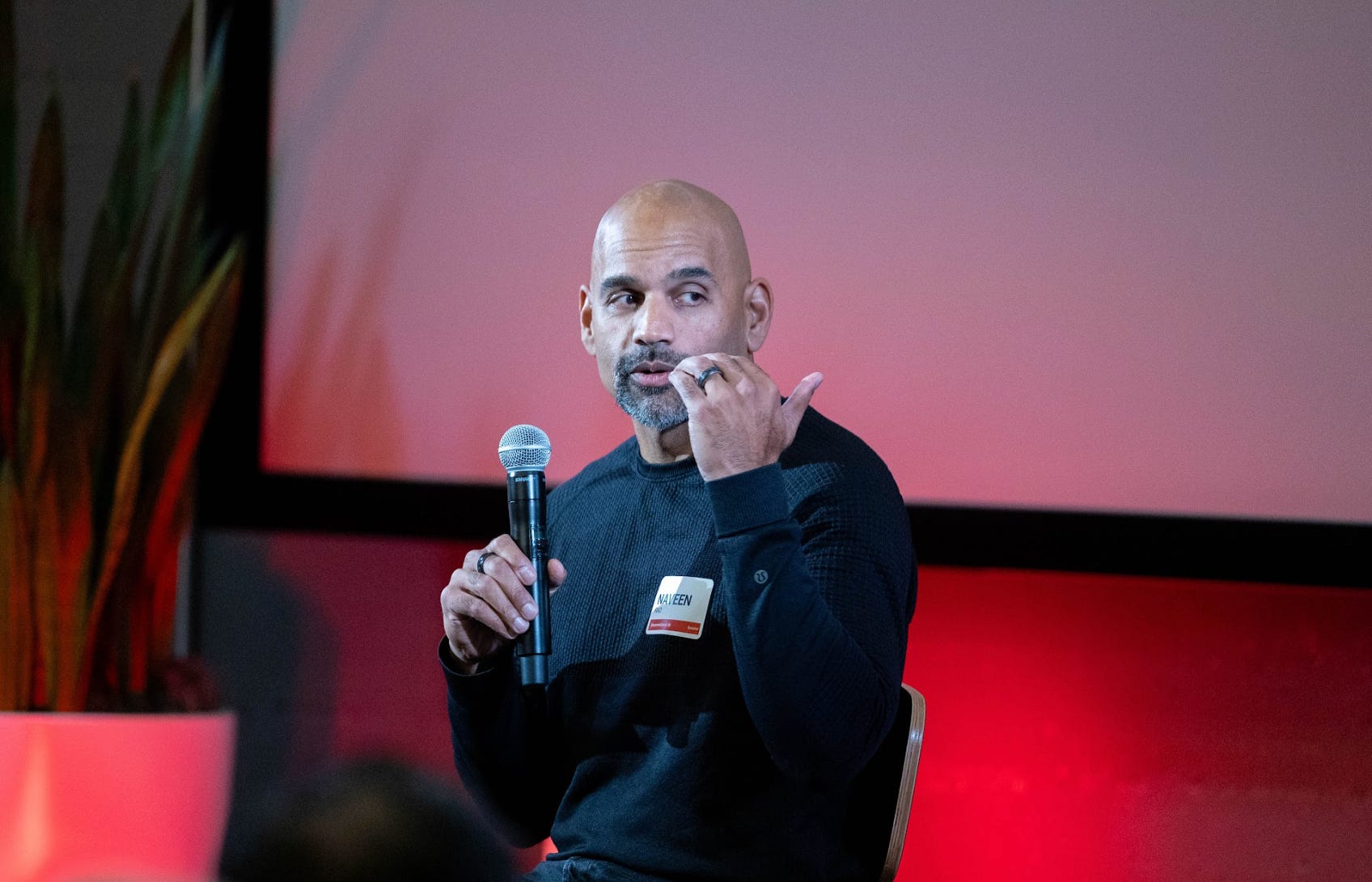
Brain-Inspired AI Chips
Unconventional AI brain-inspired chips, known as neuromorphic computing, are designed to mimic the neural structure and energy efficiency of the human brain to overcome the power and scalability limitations of traditional CPUs and GPUs.
Unlike conventional systems, these chips operate asynchronously, using "spikes" of electricity only when needed, which allows them to achieve massive energy savings—up to 100x more efficient for certain AI inference tasks.
Unconventional AI & the Case for a New Compute Substrate
At Playground Global in Palo Alto, Naveen Rao outlined a technical thesis that challenges one of the deepest assumptions in modern computing: that digital architecture is the natural foundation for artificial intelligence. For more than half a century, computing advanced by abstracting away physics. Transistors became logic gates, logic gates became processors, and software insulated engineers from the variability of the physical world. Precision and determinism became synonymous with progress. AI is beginning to test that paradigm.
Unconventional AI, Rao’s third major company, emerged from stealth with $475 million in seed funding at a $4.5 billion valuation, led by Andreessen Horowitz and Lightspeed with participation from Sequoia Capital, Lux Capital, DCVC, Future Ventures, Jeff Bezos, Playground Global, and others. Rao personally invested $10 million. The scale of the financing reflects a growing belief that the next era of AI may require something more fundamental than incremental hardware gains. It may require rethinking the machine itself.
Rao has been circling this idea for decades, viewing the evolution of compute less as a linear progression and more as a series of architectural resets.
“My motivation in this space is.. about this obsession of ‘why can we not build a computer that acts like biology?’ ”
Biology as an Engineering Benchmark
The human brain operates on roughly 20 watts. Modern AI systems require vastly more power, particularly as training clusters scale and inference becomes continuous. Rao does not treat this comparison as inspirational rhetoric. He treats it as an engineering signal. If intelligence can exist within that energy envelope, then physics is clearly not the limiting factor. Architecture is.
As AI diffuses across industries and becomes embedded in everyday workflows, power consumption moves from an operational concern to a structural constraint. Compute can be financed. Electricity must be generated, transmitted, and sustained. The industry is rapidly approaching a point where efficiency is no longer about margins. It is about feasibility.
“There’s nothing magical about nature. There’s nothing magical about being able to think at 20 watts. But it’s a bit embarrassing. We’re at megawatts, not handfuls of watts.”
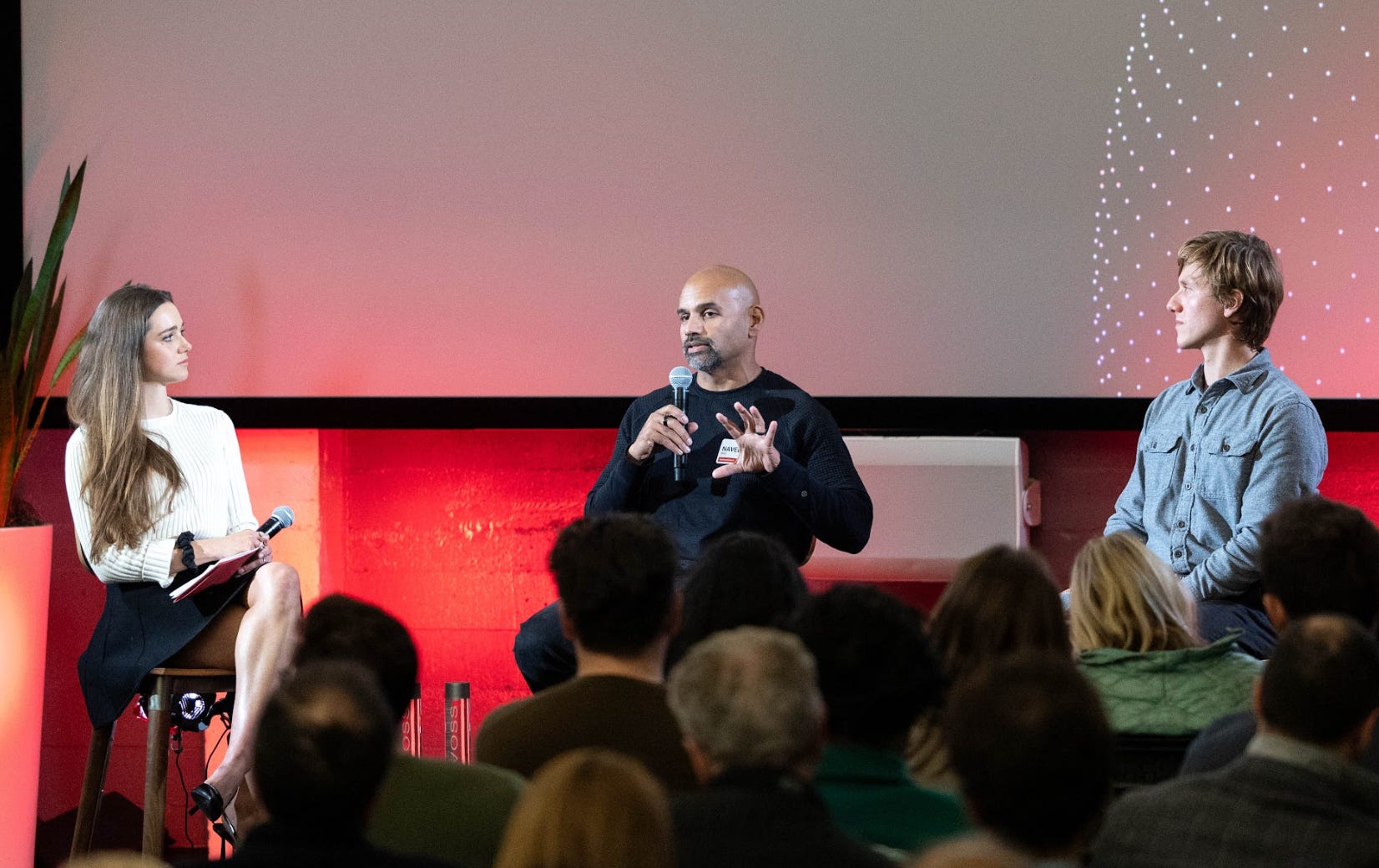
Stochastic Intelligence on Deterministic Machines
Digital systems became dominant because reliability and precision enabled software to scale globally. Analog approaches historically struggled with noise and predictability, making them unsuitable for traditional workloads. Neural networks complicate that historical tradeoff because they are inherently probabilistic systems that learn through estimation rather than exact calculation. Running those workloads on machines engineered to eliminate variability introduces inefficiencies that were once negligible but are now becoming material at scale.
At the physical level, silicon already behaves according to continuous dynamics. Voltage fluctuates, time matters, and state evolves. Digital computing works by suppressing those properties. Rao’s thesis is that abstraction itself now carries an energy penalty, and that the industry may need to stop fighting the physics underneath the machine.
“Every physical thing in the world has dynamics, has time associated with the physics.. And that’s something that we have not utilized in computing.”
“How do we get to that point? It’s gonna take us a while to build engineered systems like that.”
Sequoia Partner Konstantine Buhler placed the shift in a broader historical context, arguing that the industry may be approaching a transition comparable to mechanization.
“We’re on the precipice of a similar revolution, but for the mind.”
“I think you look 20 years out and the vast majority of cognitive work is done by machines, just like the vast majority of physical work is done by machines.”
If that trajectory holds, efficiency stops being incremental and becomes foundational.
“If that’s a lot of nines, we’re gonna be investing in a lot of companies that are solving those important problems.”
Biology-Inspired Without Literal Mimicry
Although Unconventional AI draws insight from biological intelligence, Rao is explicit that the company is not attempting to recreate a brain in silicon. Biology and semiconductors are fundamentally different substrates, and manufacturability matters as much as theoretical elegance. The objective is to identify which characteristics of biological systems produce efficiency and translate those properties into hardware that can scale economically.
“Biology’s built out of very different stuff than silicon. We are choosing silicon because we can manufacture it.”
The opportunity, in Rao’s view, is not simply to extend the current paradigm but to open a new one that could define the next era of computing.
“I think we have the opportunity to completely open up a new paradigm that could exist for another 80 years.”
That ambition carries significant capital requirements.
“To get to actual first product, it’s probably a billion and a half is my guess.”
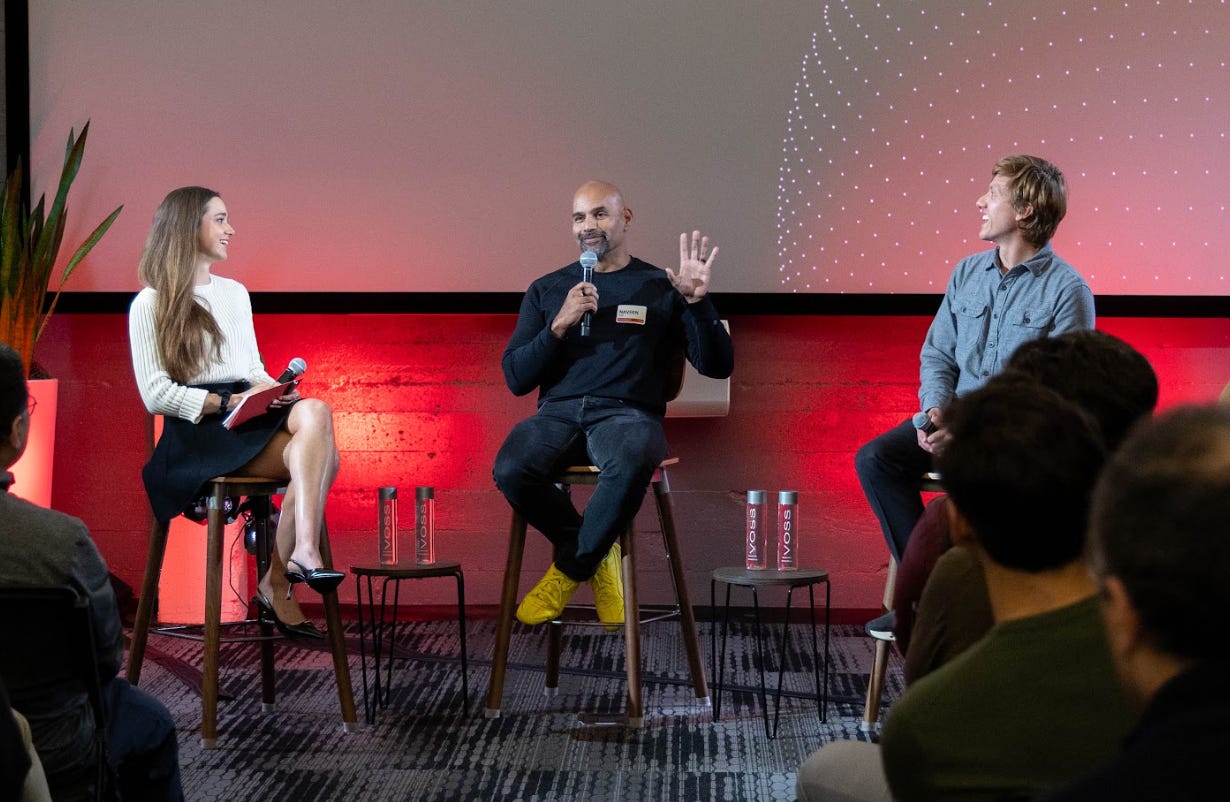
Circular Funding & the Bet on Future Demand
The current AI infrastructure cycle has produced increasingly complex financial relationships between model providers, cloud platforms, capital partners.. and the government. Companies are simultaneously customers, investors, and suppliers within the same ecosystem. To some observers, the structure resembles financial engineering designed to accelerate valuation ahead of proven demand.
Rao acknowledges the optics but views the behavior through a longer technological lens. Infrastructure cycles have historically been built ahead of usage, often appearing excessive until demand catches up.
“There are some games definitely being played.”
“The bet is that, yeah, I know we talk about it looks bad or whatever, but the bet is that the demand will come.”
He pointed to earlier technology waves as precedent.
“I saw a very similar thing happen in the early two thousands. There were all kinds of crazy shenanigans that happened.
Some of the biggest businesses in the world now came out of that.”
For investors like Sequoia, what ultimately matters is whether the underlying market proves durable.
“When we think about investing in a company at formation stage, we think about two things:
1.) We think about a unique and compelling insight in a big market,
2.) and we think about an outlier founder.”
. . .
“The insight is just such a powerful one.”
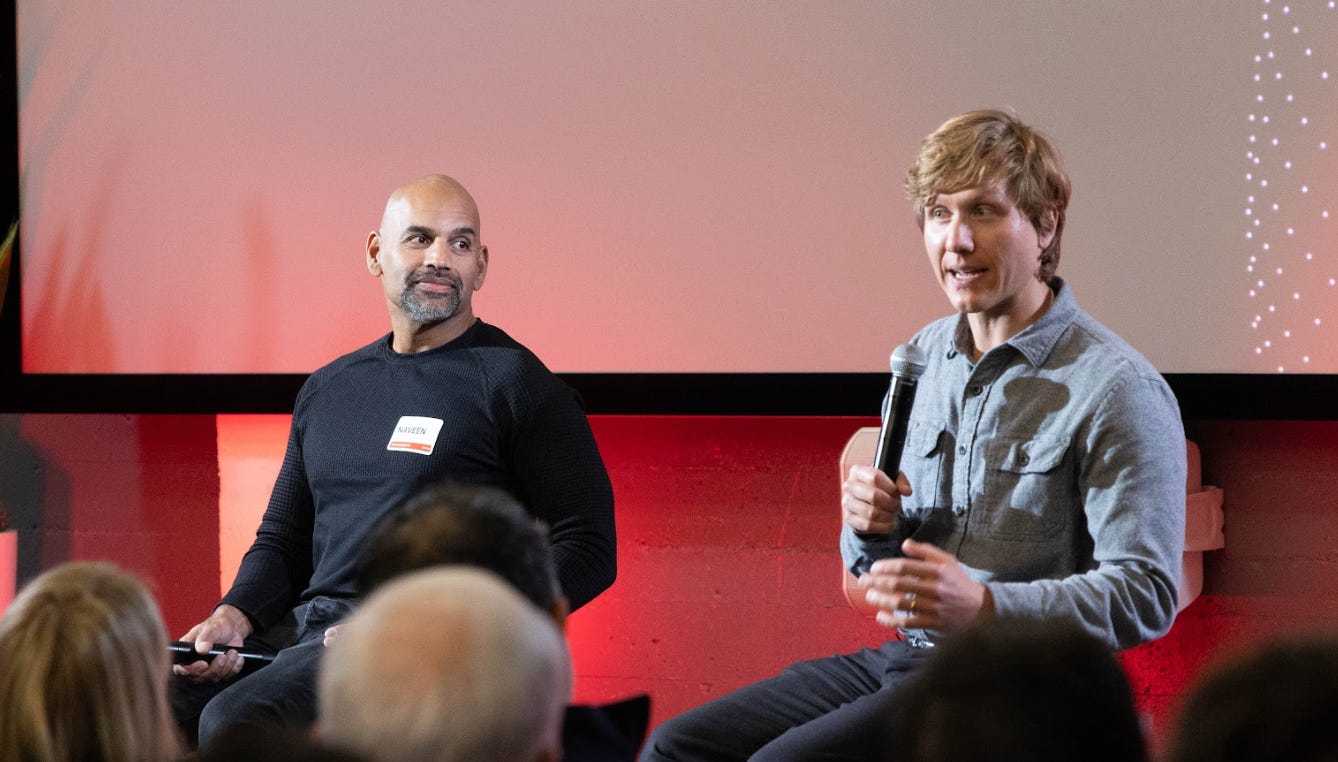
Energy as the Hard Constraint
Rao’s most forceful argument centers on power. The industry often speaks about scaling compute through capital expenditure, but electricity obeys physical limits that financing alone cannot overcome. Generation capacity, transmission infrastructure, and grid stability introduce constraints that cannot be solved purely with money.
“You’re talking about a trillion dollars of GPUs.
Where the fuck are you gonna get the power for that?”
He followed with an unusually direct assessment of current infrastructure ambitions.
“None of this is physically realizable.”
If the constraint is truly physical rather than financial, the logical response is architectural change. That is the formation-stage bet investors believe they are making.
The industry has spent decades optimizing digital computation. Unconventional AI is operating from a different premise: that the path forward may require abandoning the assumption that intelligence belongs on digital machines at all.
→ Listen on X, Spotify, YouTube, Apple
Brought to you by Brex:

The material presented on Molly O’Shea’s website are my opinions only and are provided for informational purposes and should not be construed as investment advice. It is not a recommendation of, or an offer to sell or solicitation of an offer to buy, any particular security, strategy, or investment product. Any analysis or discussion of investments, sectors or the market generally are based on current information, including from public sources, that I consider reliable, but I do not represent that any research or the information provided is accurate or complete, and it should not be relied on as such. My views and opinions expressed in any website content are current at the time of publication and are subject to change. Past performance is not indicative of future results.
Paid Endorsement. Brokerage services by Open to the Public Investing Inc, member FINRA & SIPC. Advisory services by Public Advisors LLC, SEC-registered adviser. Crypto trading provided by Zero Hash LLC, licensed by the NYSDFS. Generated Assets is an interactive analysis tool by Public Advisors. Output is for informational purposes only and is not an investment recommendation or advice. See disclosures at public.com/disclosures/ga. Matched funds must remain in your account for at least 5 years. Match rate and other terms are subject to change at any time.