

“Every single company is going to sell intelligence.”
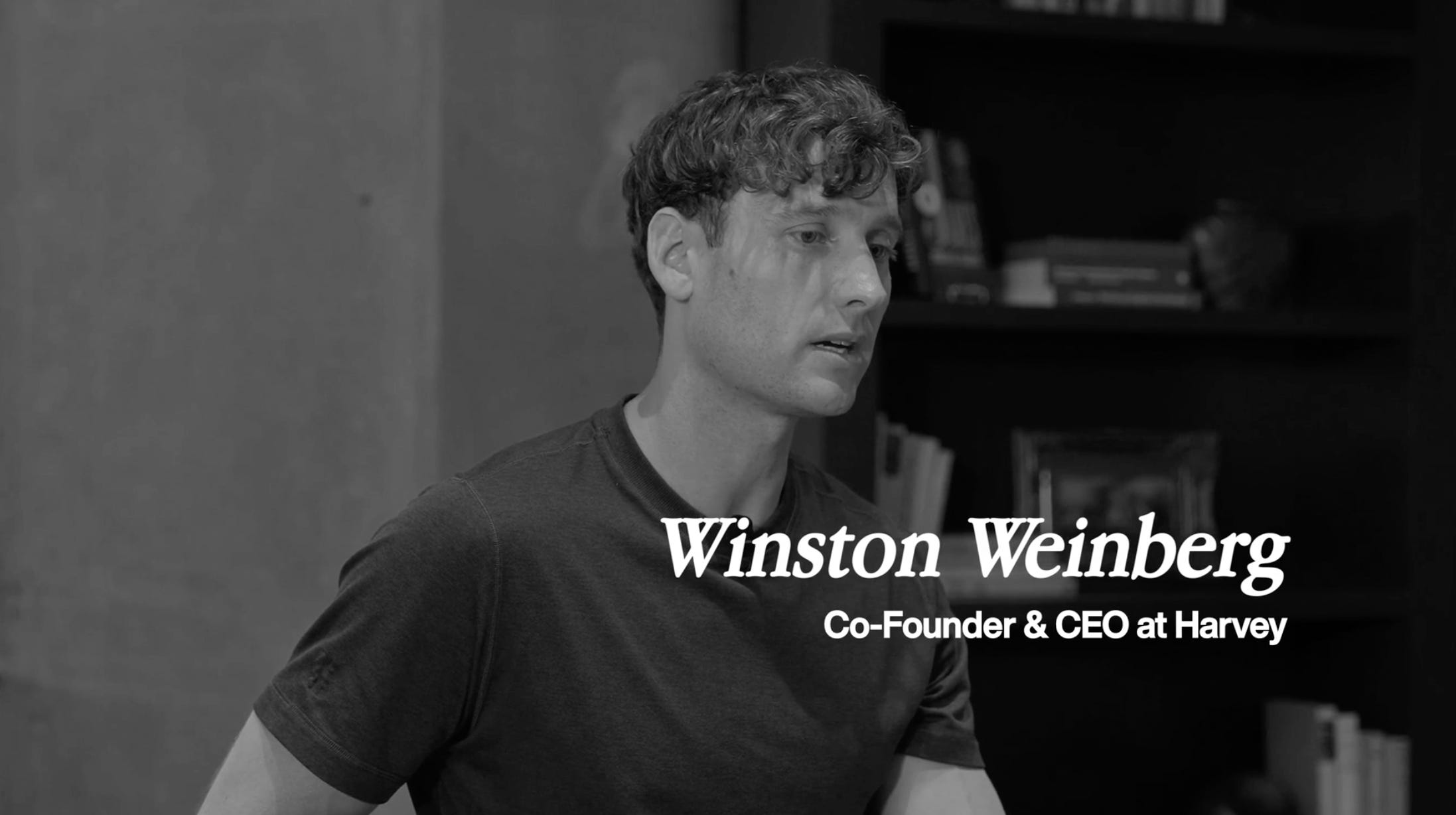
Winston Weinberg is the CEO and co-founder of Harvey, the $11 billion AI platform now used by 2/3 of the AmLaw 100, and 500+ in-house legal teams including: HSBC, Bridgewater, Carvana, Blue Owl.
→ Listen on X, Spotify, YouTube, Apple
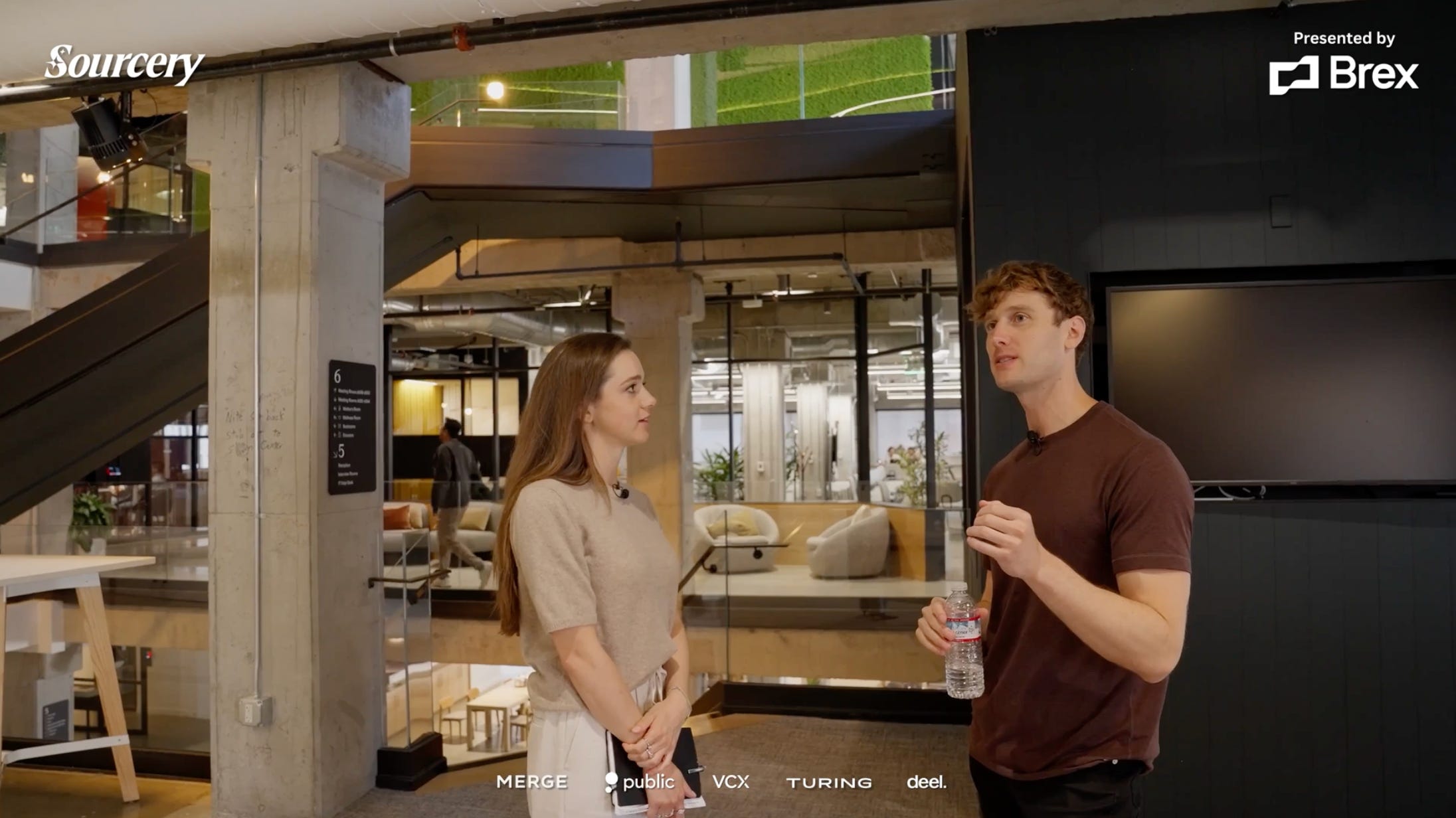
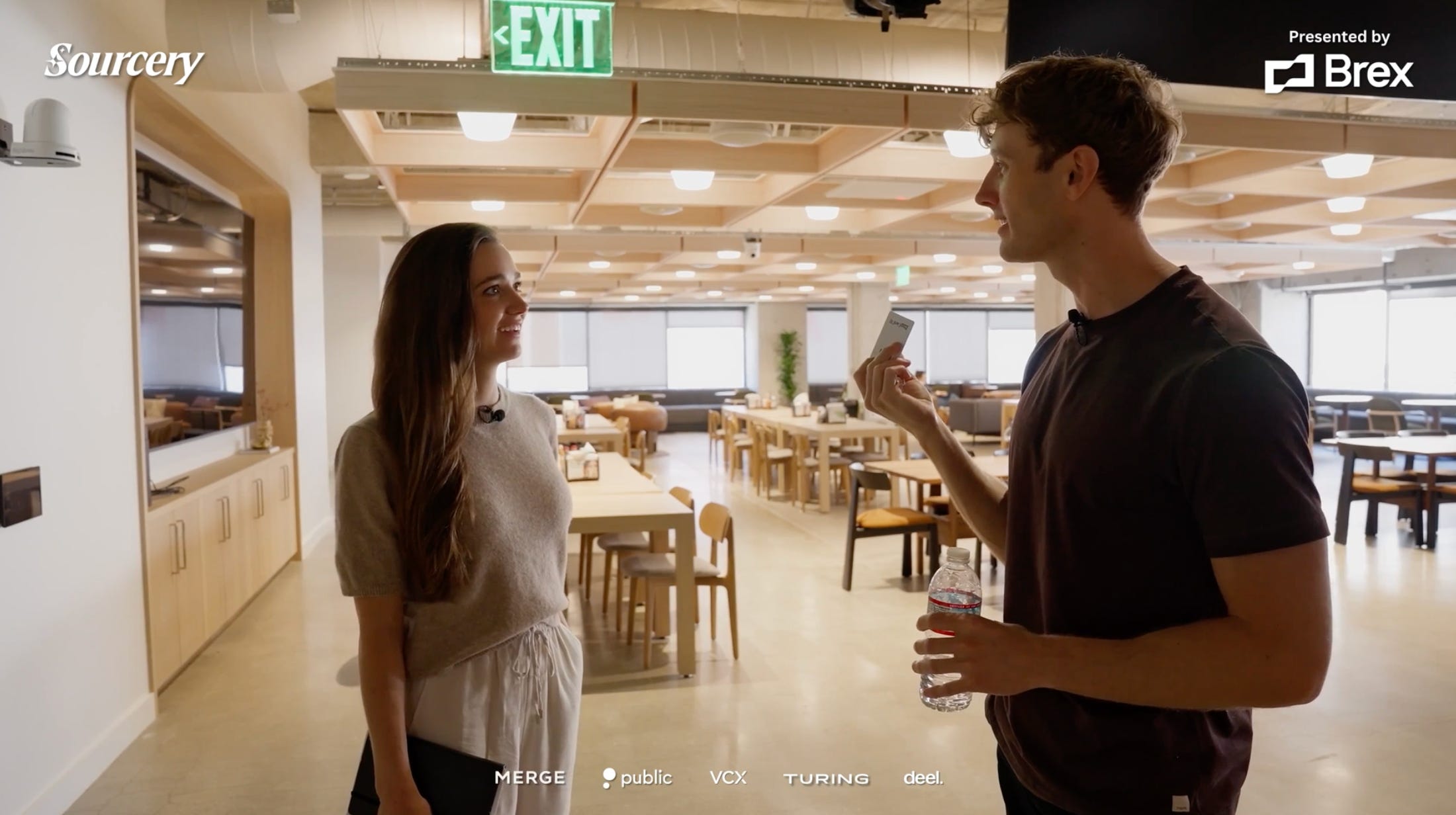
In this episode, Winston walks me through Harvey’s San Francisco HQ and then sits down to break down the state of the business:
Passing $300M ARR this month (up from $100M last August)
Reaching nearly 2,000 customers
Scaling to 960 employees across 12 global offices
How token usage jumped from 1 trillion in January to an est. 13 trillion this month
“If you don’t constantly change, you are gonna get so behind that you die as a company right now.”
Winston covers the shift to cloud agents, why Harvey’s real competition is the foundation labs (not other legal tech companies), how to reinvent a company every 6 months, the future of vertical models, the billable hour problem coming for every AI buyer, and why every company will eventually sell intelligence.

𝐓𝐈𝐌𝐄𝐒𝐓𝐀𝐌𝐏𝐒
(00:00) Winston Weinberg, Co-Founder & CEO at Harvey
(00:45) Inside Harvey HQ
(03:17) Harvey by the numbers
(04:11) How Harvey expands globally
(05:16) Why Harvey employs 200+ lawyers
(06:30) The philosophy behind Harvey's office
(07:35) The loudest lunch culture in tech
(09:03) Winston's favorite room
(10:04) Eight Airbnbs before a real office
(12:58) Inside a $300M ARR company
(14:20) Tripling revenue in under a year
(15:35) What $1B+ unlocks
(17:36) Building an AI native company
(21:10) Convincing lawyers to join tech
(22:14) The biggest adjustment for lawyers in tech
(23:26) Build vs buy
(26:59) What SaaS got away with that AI can't
(28:39) Financing 13 trillion tokens
(30:05) Why the labs can't just copy Harvey
(31:18) Competing with OpenAI and Anthropic
(32:03) Will the labs start acquiring?
(32:50) Does every task need frontier intelligence?
(34:23) Why legal benchmarks are broken
(35:30) Ordering the same meal 467 times
Brought to you by:
Brex—The intelligent finance platform: cards, expenses, travel, bill pay, banking—wrapped into a high-performance stack. Built for scale. Trusted by teams that move fast. visit → brex.com/sourcery

Turing—Turing partners with frontier AI labs to improve model capabilities in coding, reasoning, tool use, & multimodality, as well as with Fortune 500 enterprises to build & deploy end-to-end agentic AI systems in mission-critical workflows Visit: turing.com/sourcery
VCX—VCX is the public ticker for private tech, allowing investors of all sizes to invest in venture capital. View The Portfolio at GetVCX.com
Deel—Deel is the global people platform that helps startups hire, manage, pay, and equip anyone, anywhere. Trusted by more than 35,000 fast-growing companies, Deel is the people platform that just works, so teams can scale without the chaos. Visit: deel.com/sourcery
Public-–Investing platform Public just launched Generated Assets, which lets you turn any idea into an investable index with AI. With Generated Assets, you can build, backtest, refine, and invest in any thesis with AI. Gone are the days of one-size-fits-all ETFs. Try it today: public.com/sourcery
Merge—The leading provider of customer-facing integrations and agentic tools for frontier LLMs, Fortune 500 organizations, and B2B SaaS companies. Visit: https://merge.dev
Harvey at 4 Years Old: $300M ARR, 13 Trillion Tokens, & The Lab Race
I spent an afternoon at Harvey’s San Francisco headquarters last week with co-founder and CEO Winston Weinberg. The company turns 4 years old in August, operates 12 offices globally, and has passed $300M in ARR this month. Below is an 8-part breakdown of where Harvey stands, the metrics driving the business, and what Winston sees coming next.
Harvey is Ripping.
Harvey employs roughly 960 people & serves about 2,000 customers. ARR sits at around $300M, up from $100M last August. That’s 3x growth in just 10 months.
The growth was not driven by go-to-market. “It’s 100% product,” Winston told me. He pointed to a single infrastructure decision as the catalyst: a full switch to cloud agents earlier this year that pushed usage growth into a different gear.
The customer mix has also shifted. In-house corporates are now 42% of revenue and growing faster than law firms. Financial services leads as the fastest-growing vertical, followed by pharma. Harvey is now verticalizing the product because, in Winston’s framing, “the compliance and legal needs of a bank are very, very different than even private equity.”

From 1 Trillion to 13 Trillion Tokens
The usage data is the clearest signal of the curve Harvey is on. “Our token usage in January was one trillion for the month of January. And this month it’ll probably be ~12 or 13 trillion,” Winston said. That’s roughly 12x growth in monthly token consumption in under a year.
DAU over MAU moved from around 36% at the start of the year to between 51% and 52% today. Queries per user are doubling quarter over quarter. Hours spent in the product are also doubling, which Winston said is now a better signal than queries because individual outputs are growing into documents that run 100 pages or more.
The unlock was infrastructure, not features. “The main switch we did is just went over to cloud agents. We switched our entire infrastructure to that. And once we did that, usage literally just started doubling quarter over quarter.” That switch aligns with Harvey’s broader public push into agentic workflows, including Spectre, the internal agent infrastructure co-founder Gabe Pereyra detailed earlier this year.

Pat Grady’s Observation: Constant Reinvention
Before the interview, I reached out to Pat Grady at Sequoia, a significant Harvey investor. The one point he emphasized was that Winston has been able to reinvent the company over and over again. When I raised it with Winston, he framed it as a structural condition of building in AI today.
“Every six months, I’d say, I start to get like this weird feeling of like things are just breaking,” Winston said. The pattern is consistent: pressure builds, 3 big changes become clear, the changes get made, the pressure releases.
“If you do not constantly change, you are just gonna get so behind that you die as a company right now.”

The single biggest lever, by his account, is hiring. That includes external hires, promotions, role changes, and in some cases moving people out of roles they’ve outscaled. When Winston sees an executive starting to break, the first thing he does is a calendar audit, lining every meeting against the week’s stated priorities to expose the ones that aren’t actually relevant.
Real Competitor Is the Labs?
The conventional read on Harvey’s competitive landscape names Legora, Spellbook, and Thomson Reuters CoCounsel. Winston’s read is different. Harvey’s win rate in Europe, where Legora is reportedly strongest, sits at “over 70%” per Winston.. “I think our main competitor is the labs.”
Anthropic’s launch of Claude for Legal in May, and reports of an OpenAI legal release in the works, are sharpening the dynamic. Winston was direct on what the next phase looks like: “It is a race for how quickly can we build the best product that is like verticalized, and then how do we build the best vertical models.” He added that the more traction any vertical sees, the more labs will reenter it. “Every single company on Earth is competing against them.”
His view on acquisitions reflects the same posture. “If you are making an acquisition, the number one thing you should be looking at is just talent,” he said, arguing that legacy technology has limited value in a market where strong teams can rebuild the same surface area from scratch faster than ever.




Every Company Will Sell Intelligence
The most expansive thesis Winston offered was on the economics of AI applications. “I think every single company is going to sell intelligence,” he said. The product layer, in his framing, becomes intelligence allocation: routing the right model to the right task at the right cost.
Frontier models are expensive and general. Vertical models, in Winston’s view, can match or beat frontier performance on specific legal tasks while costing 100x less. “There’s a world in which GPT-10 is more expensive than a lawyer.. that’s a very possible world.” Harvey has begun investing heavily in post-training, using synthetic data pipelines that internal lawyers can no longer reliably distinguish from documents drafted by real attorneys.
Winston drew a direct line from the billable hour, which breaks legal bills into 6-minute increments to justify cost, to where the broader AI market is headed. “I just spent a billion dollars on tokens. Where’s my ROI, right?” Vertical companies, he argued, have the structural advantage here: they can show ROI at the token level for specific tasks in a way horizontal players cannot.
200 Lawyers Inside a Tech Company
Roughly 25% of Harvey’s headcount has a legal background. Over 200 employees are lawyers. Only about 25 of them practice in a commercial-services capacity. The rest are embedded across product, go-to-market, applied research, and customer-facing teams as legal engineers and forward-deployed engineers.
The org design is deliberate. Lawyers across product and GTM serve as a translation layer between Harvey’s customer base, which still operates with the workflows and vocabulary of big law, and the engineering and research teams building the platform. Legal engineers and forward-deployed engineers in particular have become load-bearing for adoption, customizing deployments for firm-specific workflows and managing the human side of change inside customer organizations.
Internal usage is also a focus area. Many of the lawyers on staff now use Harvey directly to scale their own work, and “we use Harvey internally for a lot of stuff. So we’re trying to scale that up,” Winston said. The combined model of practicing lawyers, former practitioners turned PMs, and engineers with no legal background is the operating shape Harvey has been deliberately building around.

Recruiting from Big Law
Recruiting lawyers into a tech company was hard at the start. “It was really, really hard in the beginning, and now it’s quite easy,” Winston told me. The early archetype was specific: “We hired a lot of people who I think really love law. They loved the practice of law, but they didn’t love working in big law.” Today the funnel is broader because the internal career paths are legible, with many former lawyers fully transitioned into product roles.
The cultural delta from big law shows up in how Harvey runs performance and in how new hires physically present in the office. “Law firms very rarely fire people,” Winston said, describing meritocratic performance management as one of the harder adjustments for incoming lawyers. The visible transition was also literal.. “the first week they would wear a full suit and a tie. And then about maybe the next Monday the tie would come off, and then like three days after that, it’s like the suit came off, and then it would eventually be like hoodie and sweatpants.”
The broader office culture is reinforced through ritual. “We have an insanely loud lunch culture,” Winston told me, and the noise level between 12 and 1:30 is loud enough that he refuses to schedule external customer calls during the window. The behavior traces back to the early Airbnb era, when the entire team ate together every day, and has persisted through every office move since.
Weekend office presence is also high, with employees regularly working out of the building on Saturdays.

Why Legal Benchmarks Are Broken (& What’s Coming Next)
I closed by asking Winston what he was most excited about. His answer was benchmarks. “Why are the current benchmarks for most verticals bad?” he said, identifying it as the biggest question the market isn’t asking. His critique of the existing legal benchmarks: most are bar-exam-style multiple choice, which doesn’t measure end-to-end legal work.
The reference point is coding. Coding agents are the only vertical with a credibly saturated benchmark stack, and that’s part of why coding has pulled ahead as the dominant LLM use case. “We’re missing this in most verticals other than coding,” Winston said. Harvey’s response is the Legal Agent Benchmark (LAB), open-sourced in May, which tests long-horizon agentic work across 1,200+ tasks and 24 practice areas, with collaborators including NVIDIA, OpenAI, Anthropic, Mistral, and DeepMind.
What comes next..
In this Harvey mini-series co-founder Gabe Pereyra & Niko Grupen, Harvey’s Head of Applied Research, join us next to break down LAB, the new benchmark data, and the technical architecture behind legal agents at production scale.

The material presented on Molly O’Shea’s website are my opinions only and are provided for informational purposes and should not be construed as investment advice. It is not a recommendation of, or an offer to sell or solicitation of an offer to buy, any particular security, strategy, or investment product. Any analysis or discussion of investments, sectors or the market generally are based on current information, including from public sources, that I consider reliable, but I do not represent that any research or the information provided is accurate or complete, and it should not be relied on as such. My views and opinions expressed in any website content are current at the time of publication and are subject to change. Past performance is not indicative of future results.
Paid Endorsement. Brokerage services by Open to the Public Investing Inc, member FINRA & SIPC. Advisory services by Public Advisors LLC, SEC-registered adviser. Crypto trading provided by Zero Hash LLC, licensed by the NYSDFS. Generated Assets is an interactive analysis tool by Public Advisors. Output is for informational purposes only and is not an investment recommendation or advice. See disclosures at public.com/disclosures/ga. Matched funds must remain in your account for at least 5 years. Match rate and other terms are subject to change at any time.