

Automating Everything That Moves.
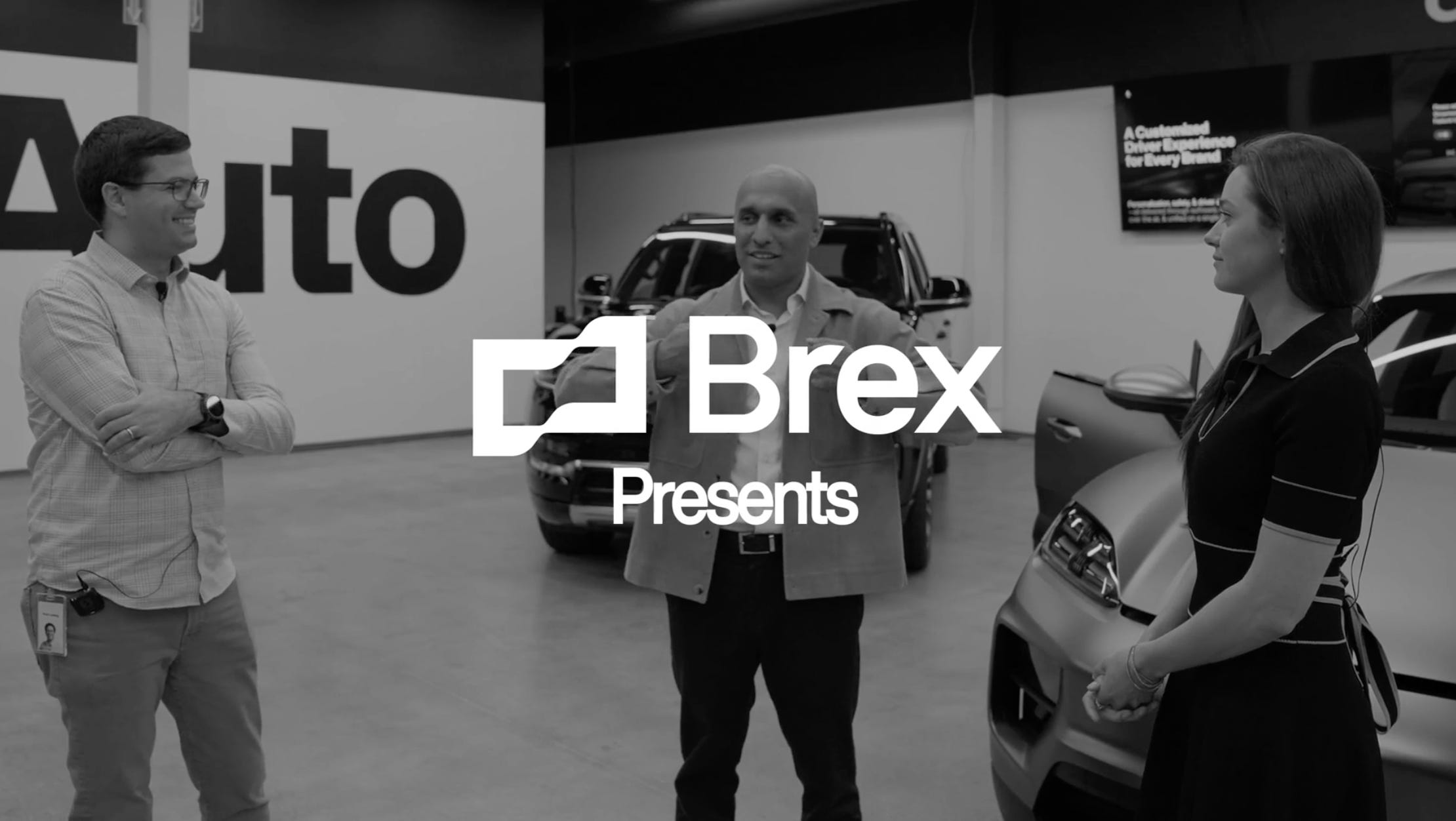
We got rare access inside Applied Intuition’s autonomous commercial garage with Co-Founders CEO Qasar Younis & CTO Peter Ludwig, where they’re building AI systems that power cars, trucks, mining equipment, defense systems, and more.
→ Listen on X, Spotify, YouTube, Apple
In a never-before-seen tour to the public, Applied Intuition showcases where/how real machines across industries are being rebuilt with AI.
Valued at $15B, Applied Intuition is one of the most important companies in physical AI, powering 18 of the top 20 global automakers and deploying autonomy across automotive, trucking, construction, agriculture, and defense.
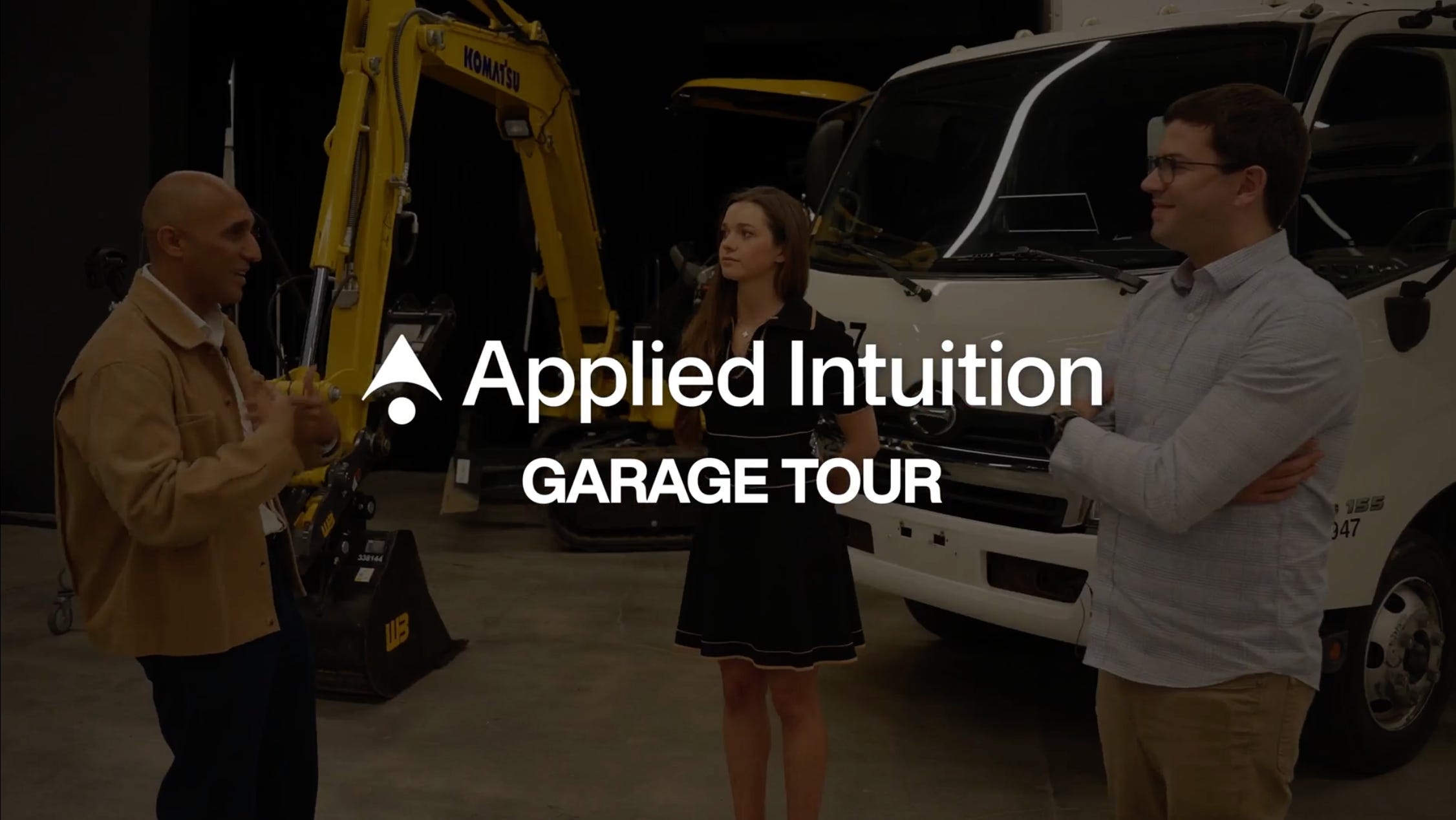
Inside this garage, you’ll see:
• Self-driving cars, trucks, & heavy machinery
• Autonomous mining & construction operations
• Defense systems & remote-controlled fleets
• A unified operating system running across every machine
Qasar and Peter break down how one platform can run everything from a car to a boat to a mining site, and why the future of AI is no longer just software, but systems that move the real world.
ICYW: This is what “atoms” looks like.
𝐓𝐈𝐌𝐄𝐒𝐓𝐀𝐌𝐏𝐒
(00:00) Inside Applied Intuition physical AI garage
(03:00) Cars are a wiring mess
(04:31) Why modern architecture matters
(06:30) From simulators to autonomy
(07:50) Real-time autonomous operations
(08:34) AI solving labor shortages
(10:09) The mobile AI command center
(12:50) How defense became a core focus
(16:20) Becoming more public
(17:10) Connecting mines, ports, and roads
(19:07) Driverless trucks in Japan
(20:09) Why they don’t operate in China
(21:40) Which country is adopting fastest?
(23:00) Scaling a 1400-person AI company
(25:43) New vs old AI players
(27:49) "Bits are out, Atoms are in"
(29:40) Physical AI is just getting started
(32:06) The "Japan corner"
Brought to you by:
Brex—The intelligent finance platform: cards, expenses, travel, bill pay, banking—wrapped into a high-performance stack. Built for scale. Trusted by teams that move fast. visit → brex.com/sourcery

Turing—Turing delivers top-tier talent, data, and tools to help AI labs improve model performance, and enable enterprises to turn those models into powerful, production-ready systems. Visit: turing.com/sourcery
VCX—VCX is the public ticker for private tech, allowing investors of all sizes to invest in venture capital. View The Portfolio at GetVCX.com
Deel—Deel is the global people platform that helps startups hire, manage, pay, and equip anyone, anywhere. Trusted by more than 35,000 fast-growing companies, Deel is the people platform that just works, so teams can scale without the chaos. Visit: deel.com/sourcery
Public-–Investing platform Public just launched Generated Assets, which lets you turn any idea into an investable index with AI. With Generated Assets, you can build, backtest, refine, and invest in any thesis with AI. Gone are the days of one-size-fits-all ETFs. Try it today: public.com/sourcery
Merge—The leading provider of customer-facing integrations and agentic tools for frontier LLMs, Fortune 500 organizations, and B2B SaaS companies. Visit: https://merge.dev
Inside Applied Intuition’s Garage: Physical AI at Scale
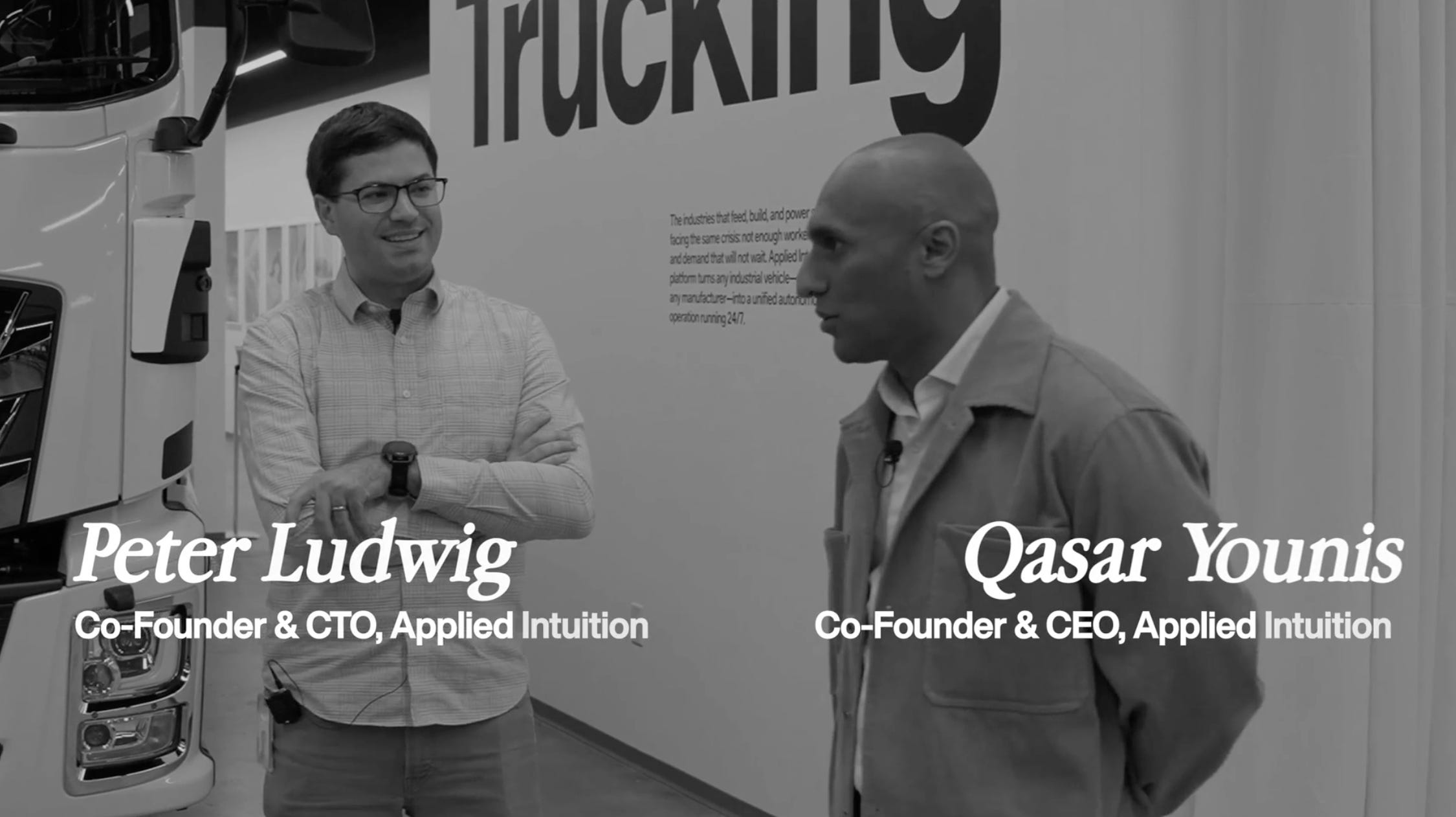
Applied Intuition just held its first-ever Physical AI Day in Sunnyvale, opening the garage doors for the first time. For nearly a decade they’ve been quietly building across automotive, defense, trucking, mining, construction, and agriculture.
Founded in 2017, valued at $15 billion, nearly $1 billion raised, Applied Intuition now has round 1,400 employees across 18 global offices, and roughly 1,000 of them engineers. They’re helping develop driverless trucks running in Japan, a data engine deployed on U.S. Navy warships, and autonomous mining equipment running live in real quarries.
Most of the industries Applied Intuition operates in share a common problem: they were built layer by layer over decades, each new capability bolted onto whatever came before it. Nobody designed a modern car’s software architecture from scratch. Nobody designed a mining operation’s technology stack from scratch. They accumulated. Every new supplier added their own wiring, their own compute, their own communication protocols. Every new defense program added another siloed system on top of the last. The result, across automotive, trucking, defense, mining, and agriculture, is a sprawling patchwork of legacy architecture that was never meant to be intelligent, autonomous, or connected.
It’s a similar problem to what aerospace faced before SpaceX rethought rocket manufacturing from first principles. The rocket industry had decades of accumulated complexity, with systems designed around constraints that no longer existed, costs that were accepted as fixed, and processes nobody had bothered to question. SpaceX didn’t improve the old architecture. They replaced it. Applied Intuition is making a similar bet across nearly every physical industry.
Since the core thesis is physics is consistent across machines, Applied Intuition is on a mission to create one platform that can power autonomy across all of them. CTO Peter Ludwig put it simply: “The same operating system and platform really runs across all of these vehicle types.”
The Platform
Products fall into three categories: tools & infrastructure, operating systems, & autonomy. The Vehicle OS abstracts hardware and software from one another, letting developers build vehicle applications without needing to know the underlying hardware. The self-driving system covers L2+ highway assistance through full autonomy. The data engine & simulation tooling were originally built to sell to the entire autonomous vehicle industry & now serve commercial + defense.
Customers include:
18 of the top 20 global automakers
The U.S. military & its allies
→ Listen on X, Spotify, YouTube, Apple

Automotive
The garage opened with a fully disassembled production vehicle, electronics laid bare across a table. Every supplier sells not just their component but all the wiring that goes with it, all the way to compute. Multiply that across every system in a car and you get what was on that table.
“If you’re a company that sells a backup camera, you’re not only going to sell the backup camera, you’re going to sell all the wiring that goes to some compute. And then you have to do that for your windows, the sunroof.. that’s why all this is complex.” - Younis
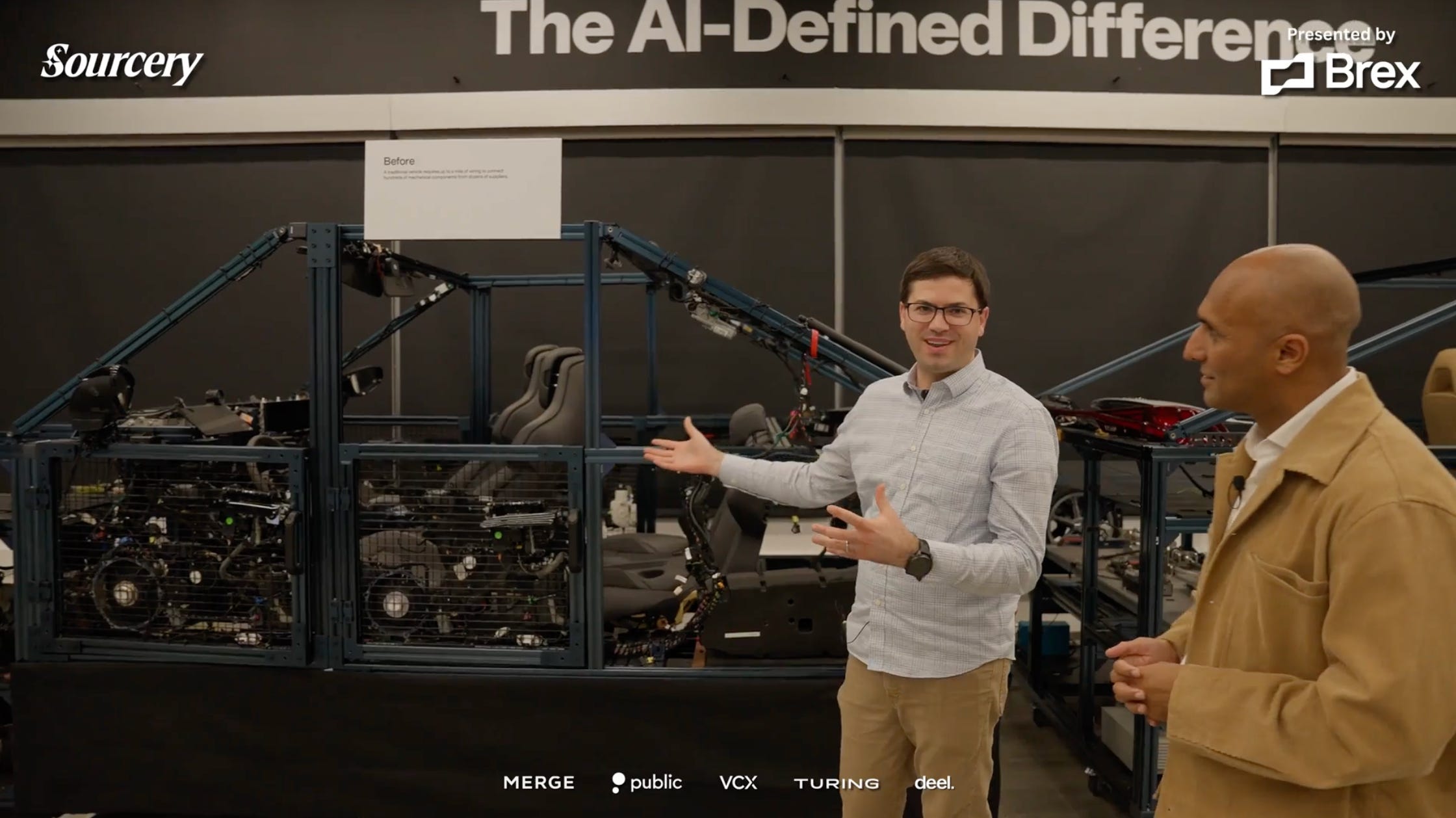
Vehicle OS consolidates that into a unified high-performance compute architecture.
“Making a vehicle with an old architecture fully autonomous is a lot harder than doing that on a modern architecture. And so when we’re working with our customers, one of the goals is -- you want to modernize and simplify the architecture, and then you can add autonomy and all of the AI capabilities on top of it.” - Ludwig
It also changes what manufacturers can do with fleet data.
“In an old car, you might have an airbag sensor and maybe you get a little icon on the dashboard that you don’t really know what it means. On a modern car, you can have a much more sophisticated diagnostic system and then also with AI, we can surface that to the manufacturer and they can understand across their entire fleet what are the aggregation of the problems that they’re having and root cause those things.” - Ludwig
In March 2026, Applied Intuition announced a collaboration with NVIDIA as a recommended software provider for OEMs building L2+ highway driving systems on NVIDIA hardware. The stack covers ICE, hybrid, and fully electric powertrains, is optimized for the NVIDIA DRIVE AGX Orin and upcoming Thor, and incorporates NVIDIA Cosmos World Foundation Models for data augmentation.
“Advanced driver assistance is becoming a baseline expectation for mass-market vehicles. Our work with NVIDIA raises the bar across the full range of powertrains -- from ICE and hybrid to fully electric -- giving automakers a clear, confident path to deploy L2+ autonomy by combining NVIDIA’s hardware leadership with software designed to meet regulatory, safety and manufacturing realities.” - Varun Mittal, President of Applied Intuition
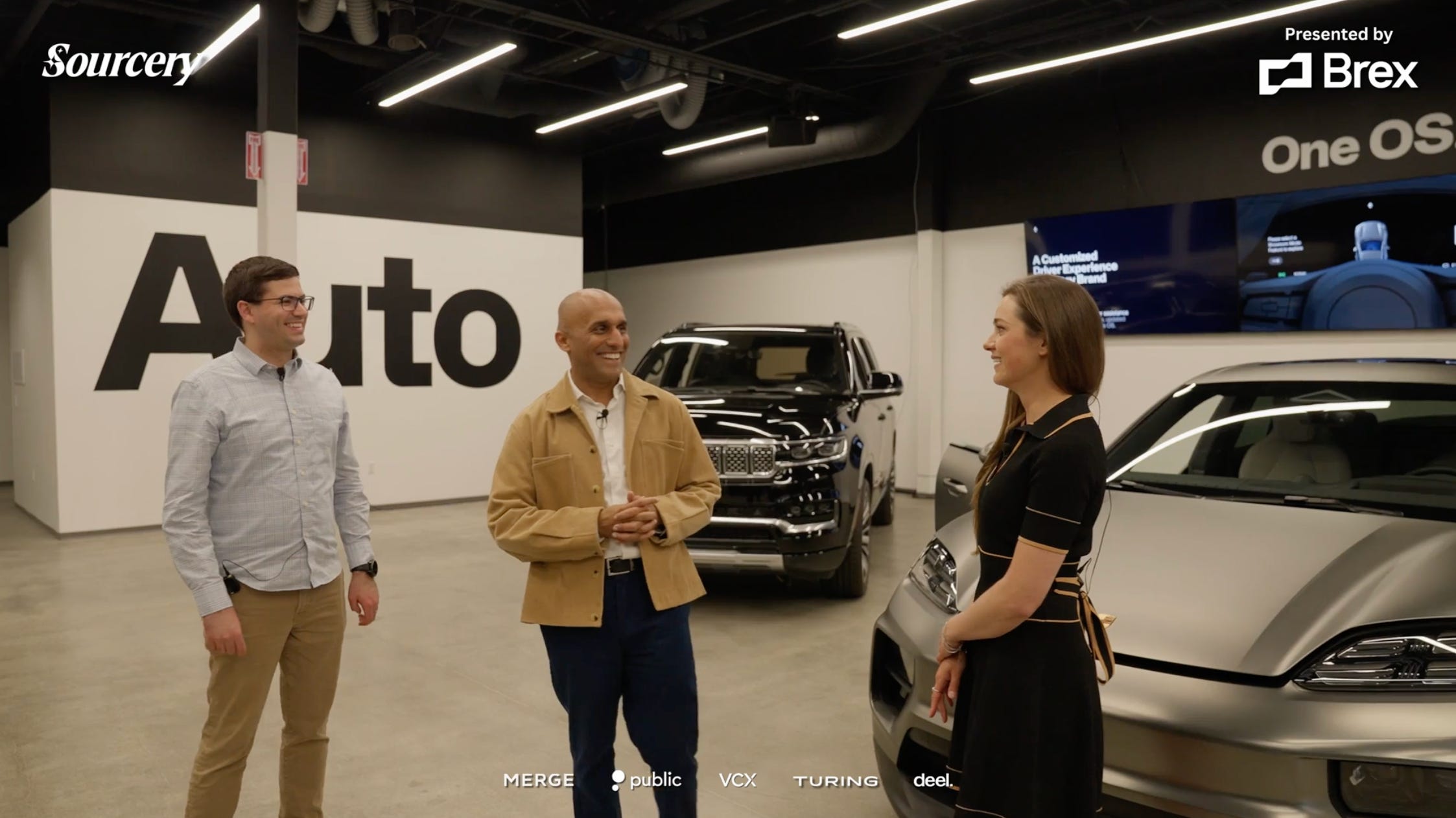

Trucking
The global freight trucking market was valued at around $2.7 trillion in 2025, with trucks carrying over 60% of worldwide logistics (Global Market Insights). In the U.S. alone, 3.54 million drivers haul 11.46 billion tons of freight annually, moving over 70% of all freight by weight. This critical sector moves over $700 billion in goods yearly, covering nearly every economic sector, including manufacturing, agriculture, and retail. (Geotab, PTPT). It is one of the largest and most structurally important industries on the planet, and one of the least modernized. Most fleets still run on disconnected systems, manual dispatch, and driver-dependent operations with no real path to software-defined infrastructure.
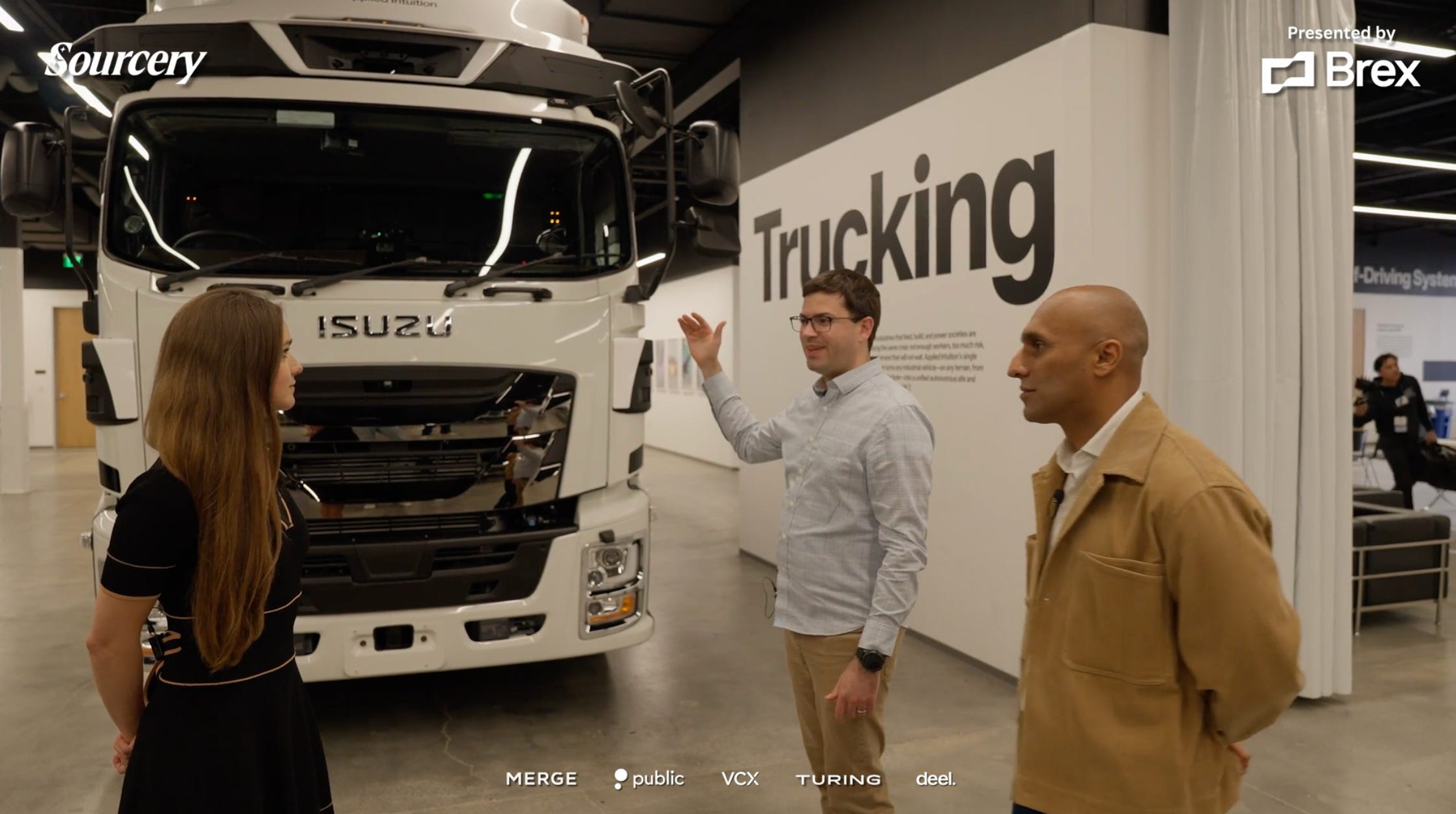
Applied Intuition is running driverless trucks in Japan with Isuzu. The Generation 2 truck was on display at Physical AI Day, one step before full commercial production with rollout targeted within the year.
“This is basically one step before this is fully productionable, and so they will produce this, this is being commercialized in the next year. Japan’s an awesome market for self-driving trucks because there’s a very aging population and there’s a big need for this.” - Ludwig
On March 31, 2026, Applied Intuition and the TRATON GROUP announced TRATON ONE OS, a software-defined vehicle platform powering all new vehicles across Scania, MAN, International, and Volkswagen Truck and Bus. More than a year in co-development, it delivers predictive maintenance, over-the-air updates, and adaptive middleware as a foundation for autonomous driving capabilities. ECU hardware testing starts April 2026, full rollout targeted for 2028.
“With TRATON ONE OS, we combine strong building blocks from Applied Intuition, TRATON and the open source community to create a worldwide cutting-edge EE platform, delivering fast new functions and services to the customer, while still preserving what makes each of our brands unique.” - Stefan Teuchert, SVP EE Platform, TRATON GROUP
“We have driverless trucks running in Japan right now. In the near future, it’s only a matter of time that we have a mine, a road, and a port all connected and we have automation in all three of those.” - Younis

Defense
Applied Intuition entered defense early & expanded significantly with its February 2025 acquisition of EpiSci, an AI and autonomy software company focused on national security. EpiSci brought expertise in autonomous fighter jets, drones, networked communications, and multi-domain operations. They are known for the X-62 VISTA program, which demonstrated AI-controlled aerial combat including a flight with the Secretary of the Air Force.
“The EpiSci team is tackling true systems problems. They are tackling the technical aspects of perception, planning, control, and RF communication in a holistic way. This is what dynamic operating environments require.” - Ludwig
“This work that we do may be, out of all the verticals, the most important. It is our responsibility as a company to field the best technology for the U.S. and its allies, and I think it’s an incredibly important mission.” - Younis
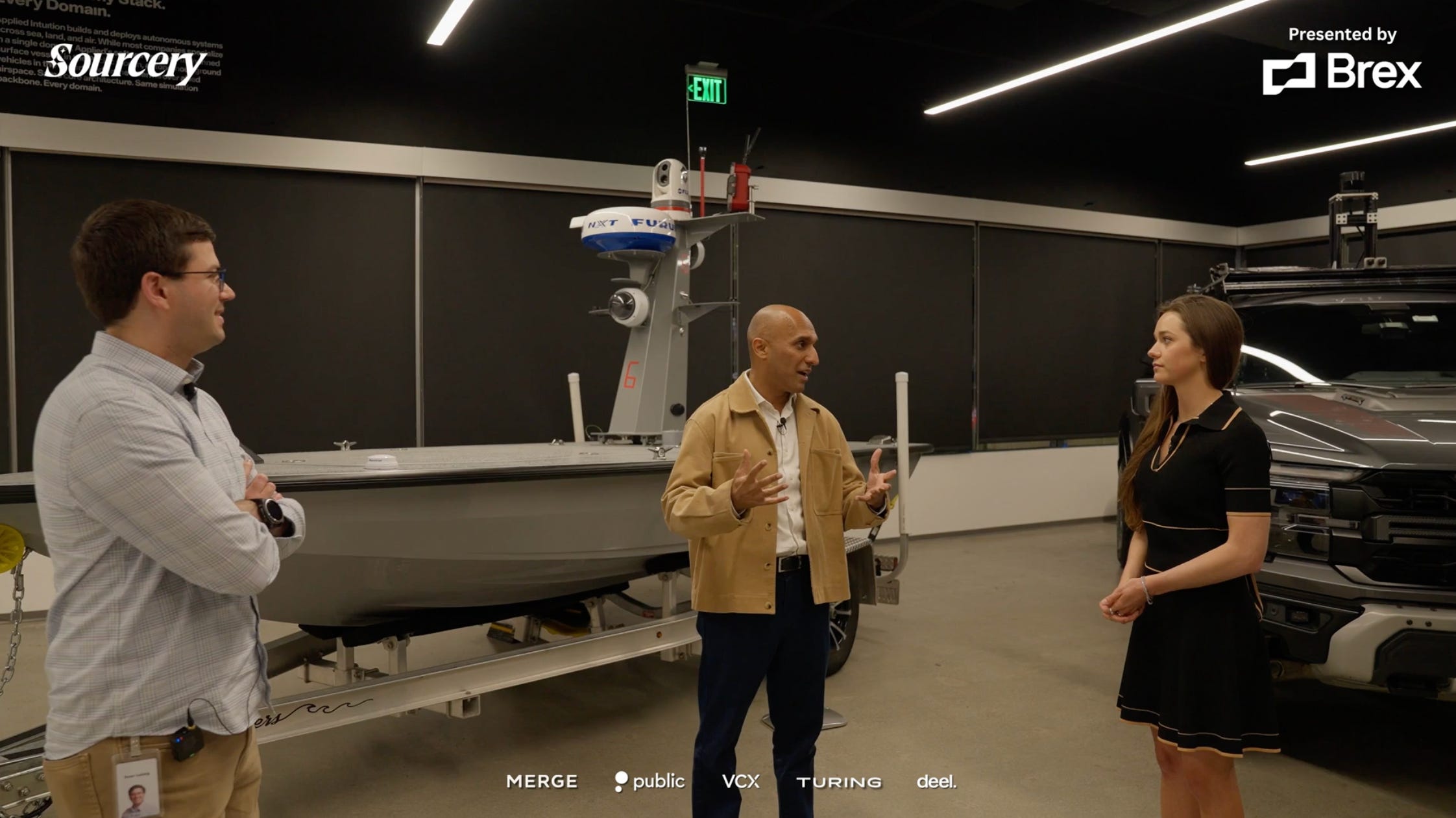
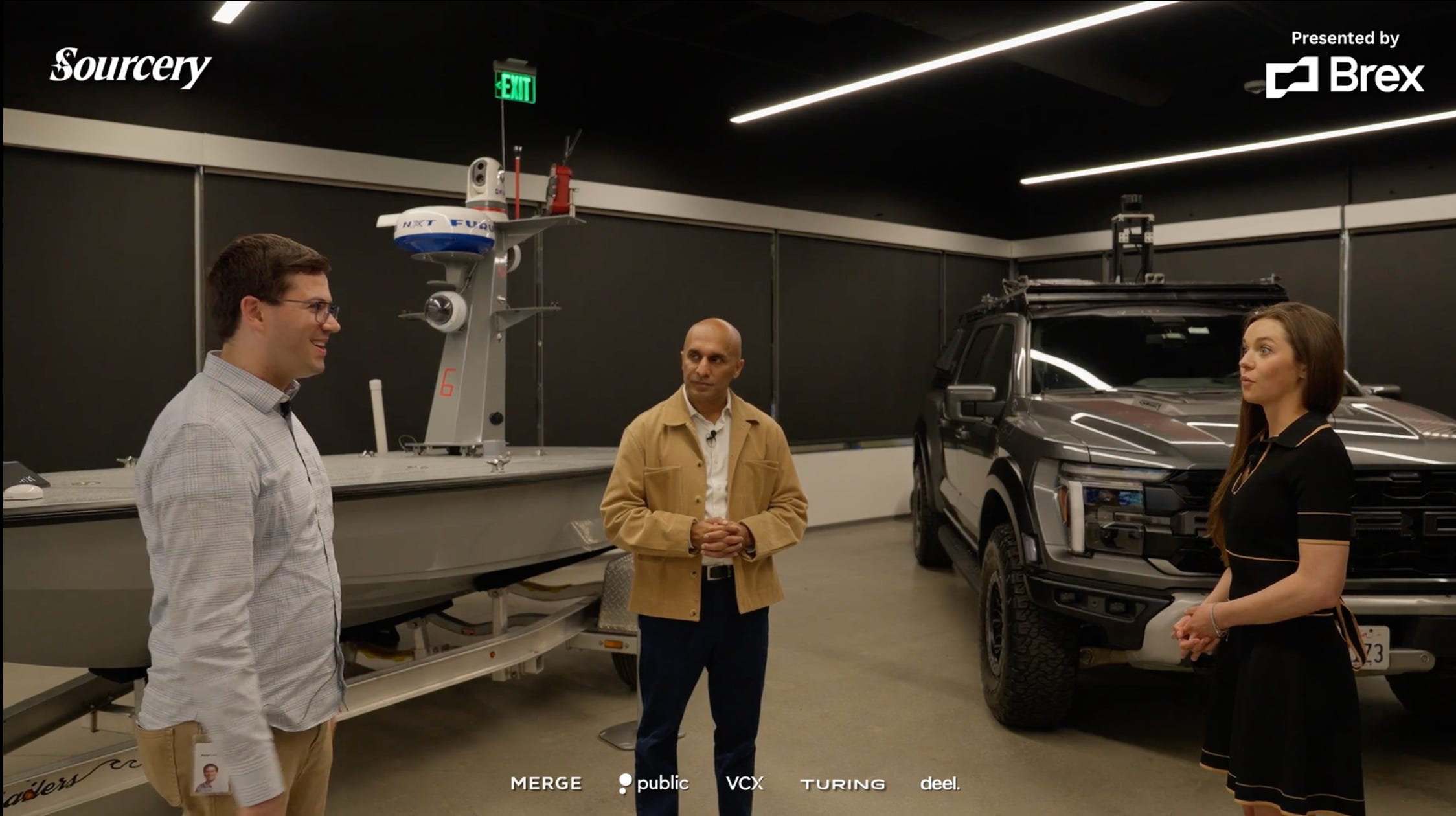
The company now works across the Army, Air Force, Navy, & with prime contractors. Autonomous ground vehicles include a Ford F-150 Raptor platform outfitted in collaboration with Sierra Nevada Corporation with an anti-drone missile launcher.
“We are taking commercially available products which we sell in all these other verticals, and we’re also selling them in defense.. we can frankly deploy more robust systems because they’re already in field and in production for a fraction of the cost.”
“I think one way to think about this in defense is imagine if the department of war said, let’s build a chat app. How long and how many dollars would it take to compete with WhatsApp or Signal? This is extremely difficult. So there are real advantages in the commercial ecosystem.” - Younis
On March 19, 2026, Applied Intuition delivered DECK, the Data Edge Collection Kit, the U.S. Navy’s first large-scale data engine, part of the Navy’s PAE RAS program. DECK performs real-time automated detection and classification using shipboard sensors, manages satellite bandwidth, and allows AI models to be updated over the air with minimal sailor intervention.
“If you do not build a data engine, you do not build an AI-enabled force. That is why the Navy is deploying DECK... it turns ships into learning systems, not static platforms. This is how we move from demonstrations to dominance.” - Secretary of the Navy John Phelan, AFCEA West, February 12
“DECK turns ships into data-generating, continuously improving platforms and gives the DOW a real data engine at sea, not another one-off system. That’s how you deliver AI to the fleet at operational speed.” - Younis
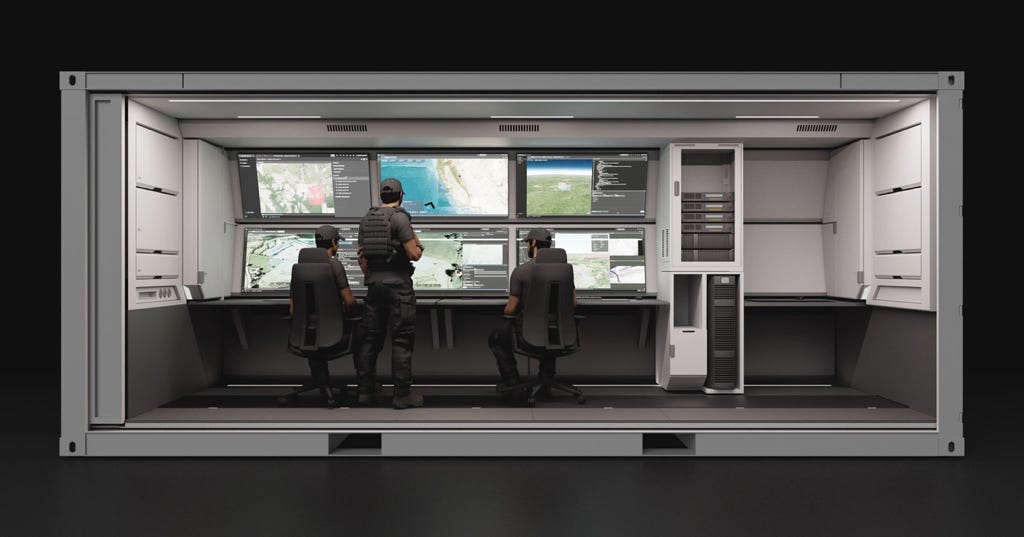
On March 31, 2026, Applied Intuition launched Applied Edge, a field-deployable mobile operations center packaging rugged compute, 5G/Starlink communications, and the Axion autonomy toolchain into a shipping container transportable by C-130. It supports SCIF/SAPF configurations, data, & workflows persist between test events.
“All of the development tools & infrastructure that we are typically able to use to build interesting defense technologies at an office environment, all of that is packaged up & can run completely offline, off the grid, in a shipping container.” - Ludwig

Mining & Construction
The global mining market was valued at around $2 trillion in 2025 (Research And Markets). It is one of the most dangerous and labor-intensive industries on earth, and among the least automated. The global mining automation market sits at under $4 billion today, growing at 8.4% annually (MarketsandMarkets), a small fraction of the overall industry, which means the runway for automation is substantial.
Only 1% of mines currently operate autonomously.
“Mining accounts for 8% of work-related deaths on the planet.” - Younis
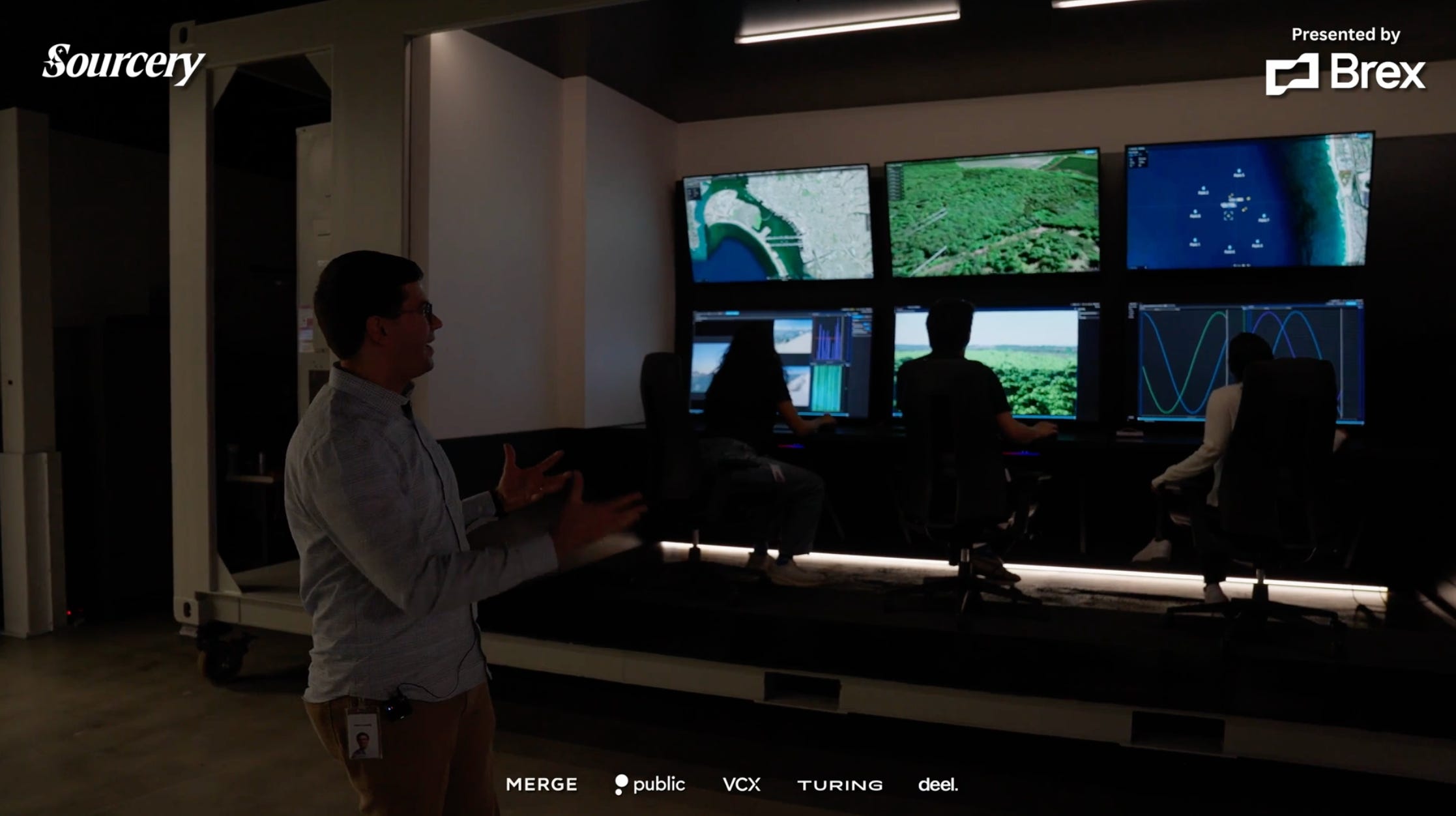
“The future of mining & eventually construction is going to be these fully autonomous operations where labor shortage is a real problem in the industry. And so this allows a very small number of people to control a huge number of vehicles.” - Ludwig
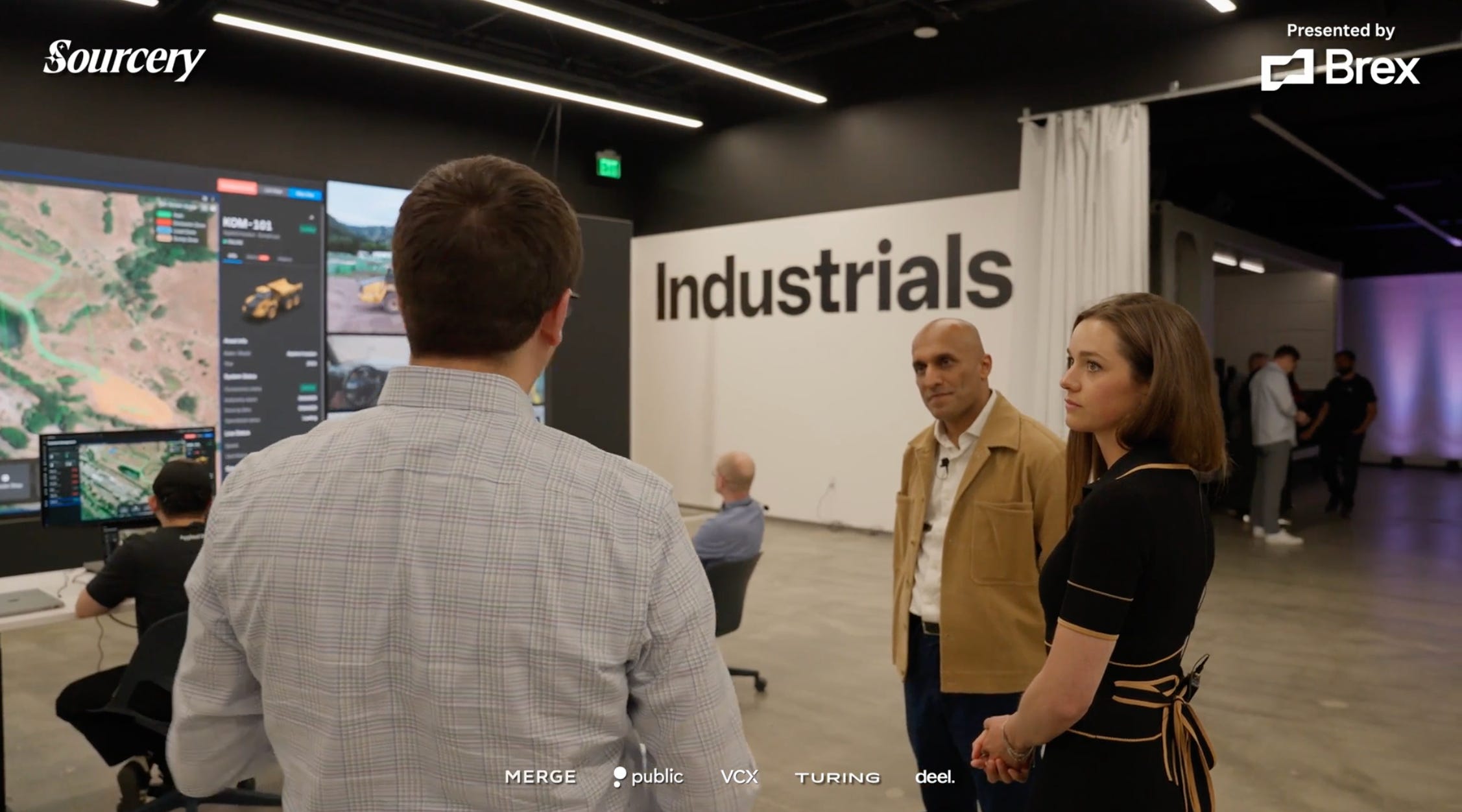
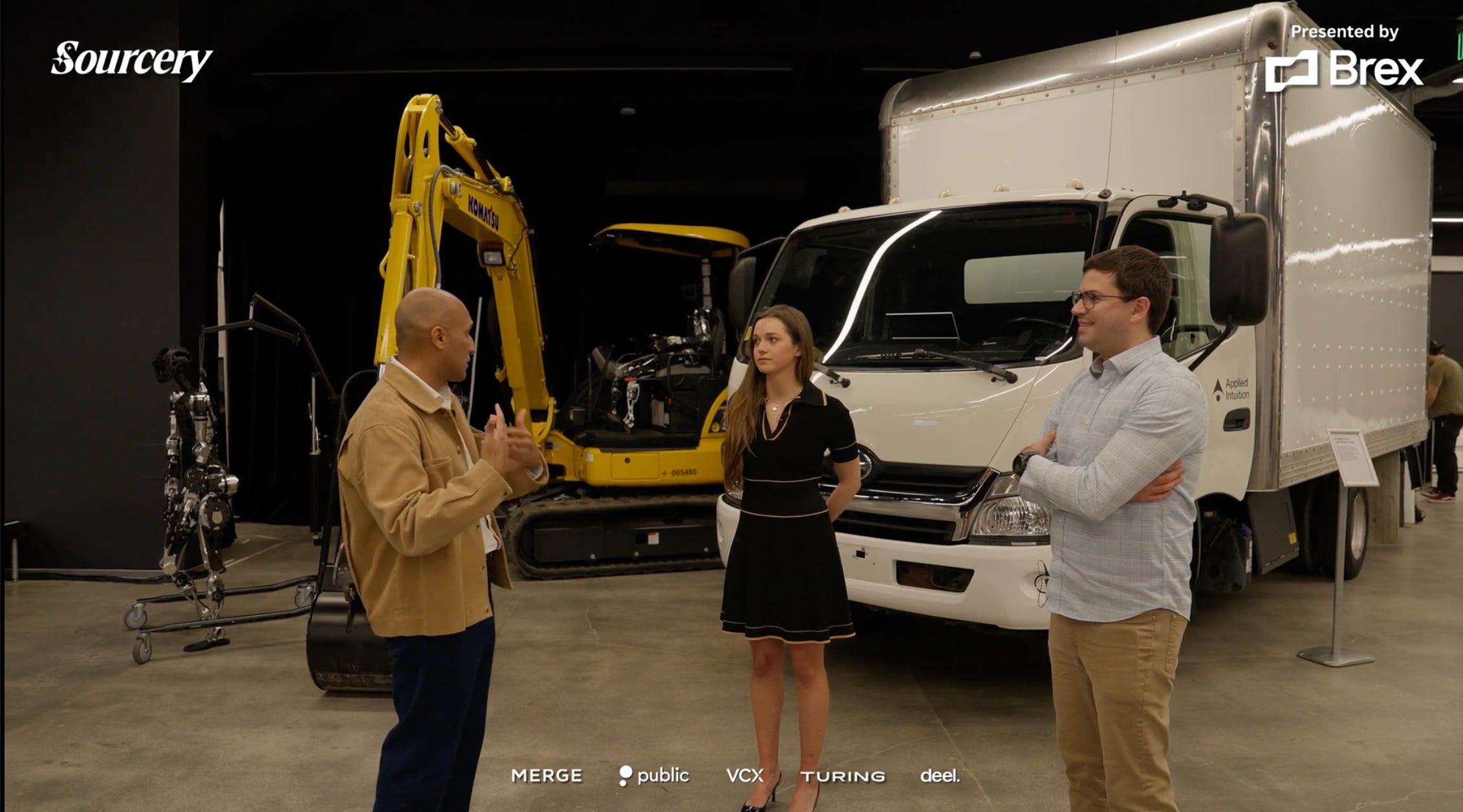
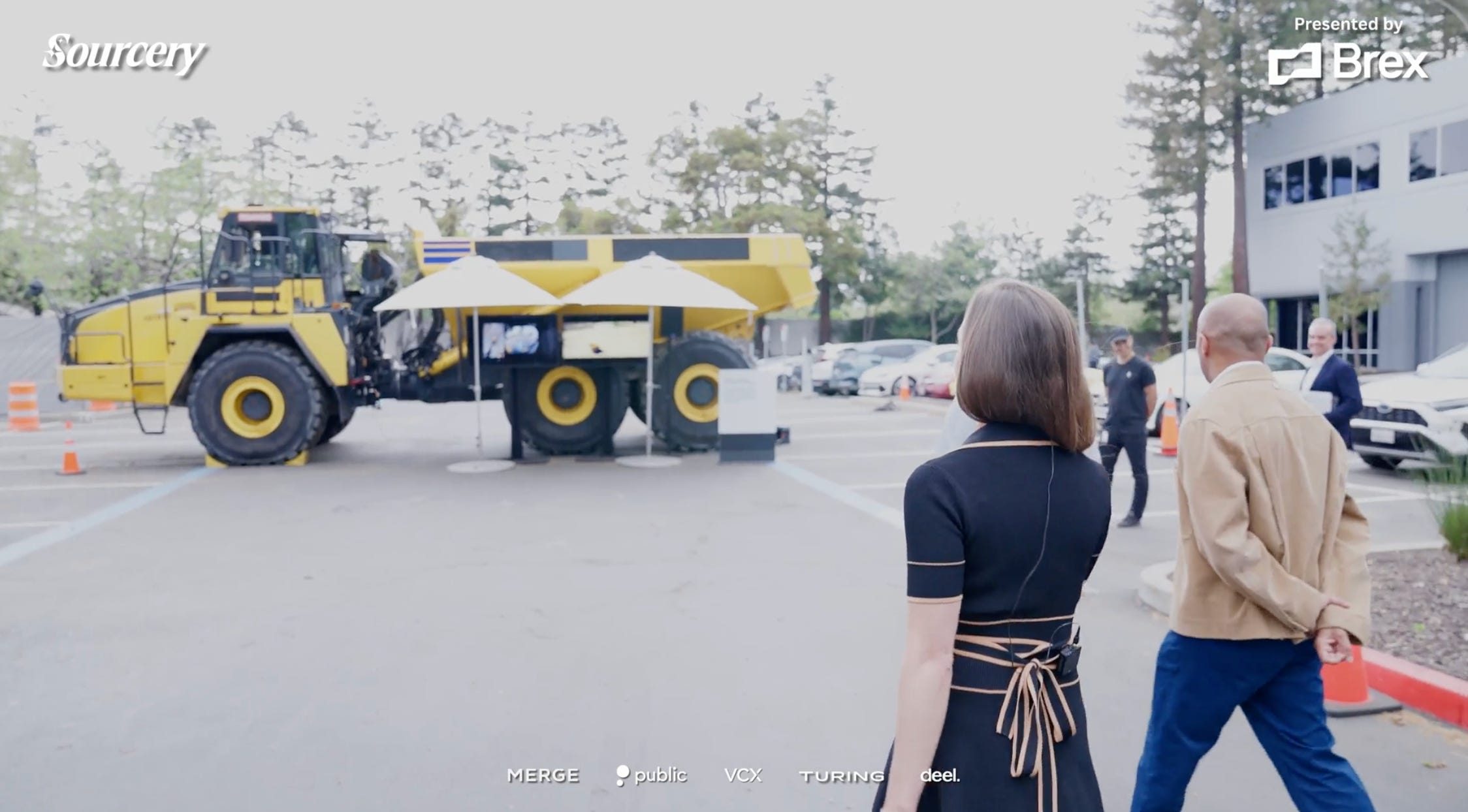
Outside the garage sat a Komatsu truck. Ludwig: “You might think this looks like a big truck. This is actually a small truck.” Younis: “This is the smallest truck we could get in this parking lot.” The actual mining trucks Applied Intuition operates are considerably larger.
At Physical AI Day, the company streamed live footage of autonomous Komatsu equipment completing a full load-haul-dump cycle at a remote test site, supervised by a small team in Sunnyvale.
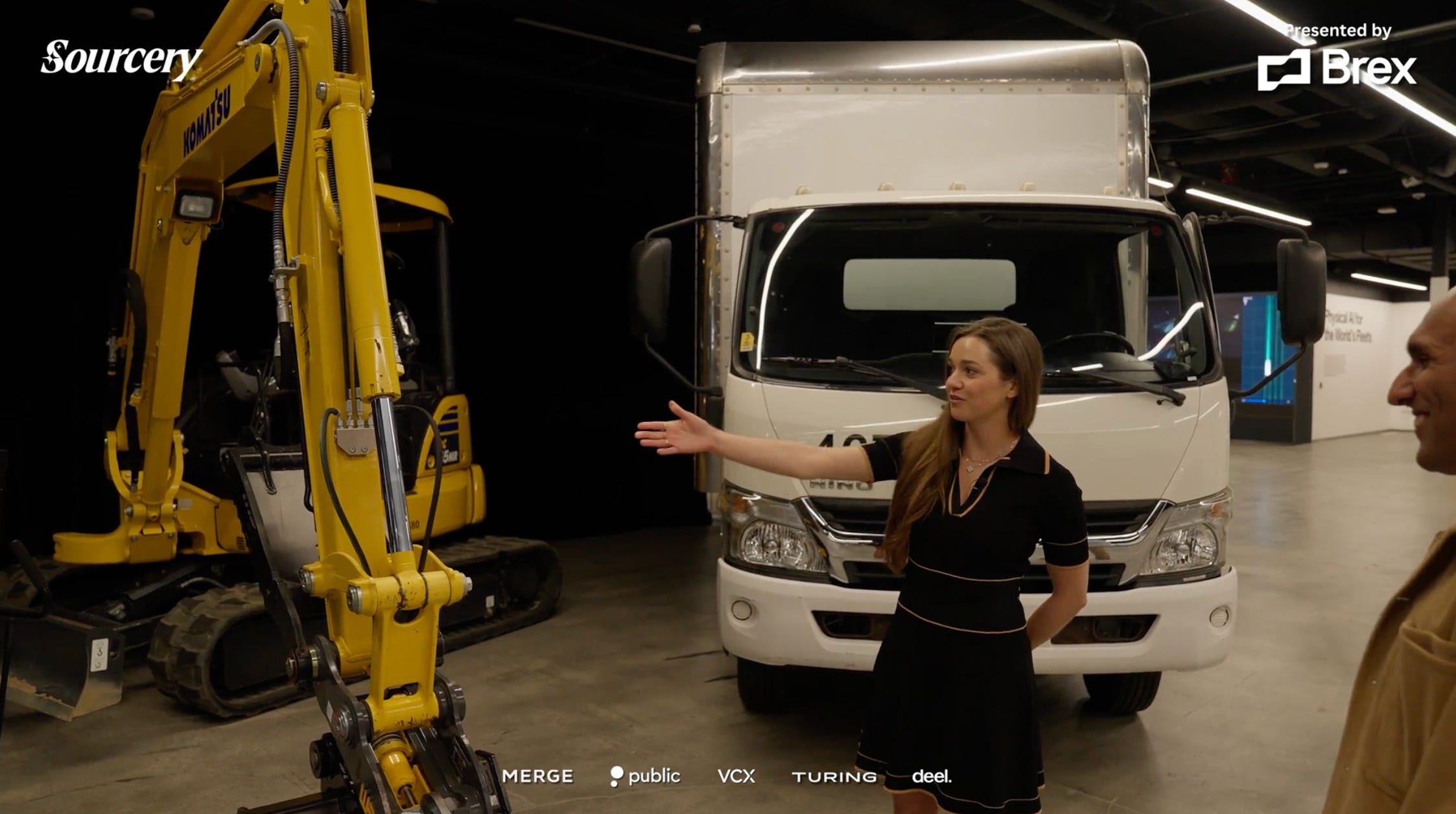
Also on display was an autonomous skid steer.
“Skid steers, there’s like a hundred different tools that can be placed on the front of these. Once it’s autonomous, you can do anything with it.” - Ludwig
“The interoperability of our platform is really important because we can go from a mine, then to self-driving trucks, which ultimately go to a port. And we think automating all of that is really where there’s going to be a huge unlock in productivity.” - Younis
Agriculture & the Jobs Question
The global agriculture market was valued at $12 trillion in 2024 (Research And Markets), making it one of the largest industries in the world. It is also one of the most structurally exposed to the labor crisis. The average American farmer is 58 years old. Farms around the world face a critical labor gap as younger generations migrate to urban areas for higher-paying jobs & leave the farming population aging. (Markets).
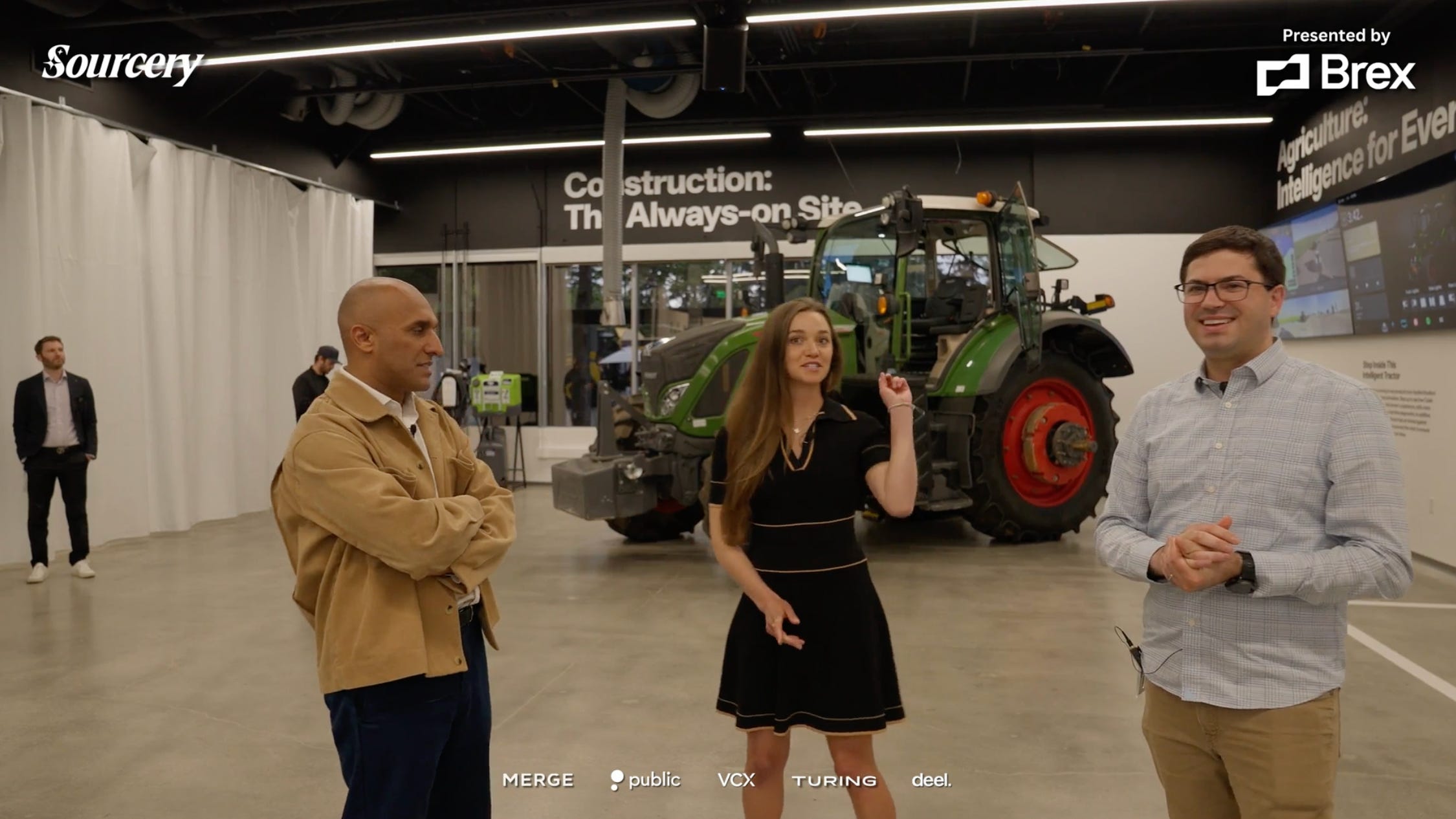
Now, the global smart agriculture market was valued at $22.9 billion in 2024, growing at 10.8% annually, driven primarily by labor shortages and the urgent need to maintain food production with a shrinking workforce (Global Market Insights).
Applied Intuition’s autonomy platform extends to agricultural equipment on the same underlying architecture as everything else it builds.
“The AI kind of problem, consternation, heartache & kind of hand wringing that exists right now with what happens with white collar workers.. it’s quite different in the physical AI community because farmers are aging.
People don’t want to work in mines in far away places. These are dangerous jobs. And so AI really in these industries is being kind of pulled out of our hands, because they’re real problems that they’re dealing with. There’s not a new group of people who really want to become farmers. It’s just not there.” - Younis
Global Footprint
Applied Intuition operates across approximately 18 locations. Largest international offices are in Tokyo and Munich. Additional offices span London, Stuttgart, Stockholm, Bangalore, Seoul, and several U.S. cities including Detroit, Washington D.C., and Ann Arbor.
Japan has been the fastest-growing market. Younis attributes it to building a genuinely local team: “Our presence in Japan is a very local presence. It’s not like we just took a bunch of Silicon Valley engineers and put them there.”
Expansion is sequential: Australia is a recent addition targeting mine-to-port autonomy, the Middle East is active, and Latin America is next via mining. China is explicitly excluded, citing defense work and IP considerations.
“The expansion in every one of these global offices is always kind of rate limited by.. we take the folks that are in the Bay Area for granted in the sense of they understand equity, they want to work in high growth startups.
Whereas if you go abroad, they really look at the FANG as a dream job.” - Younis

The Model
Applied Intuition started selling simulators to the autonomous vehicle industry in 2017, then expanded into the full software stack, Vehicle OS, and defense over time. It positions itself as a B2B infrastructure provider to manufacturers, not a competitor to them. Both founders grew up in Detroit.
“General Motors headquarters & General Dynamics land systems technical headquarters are like two or three miles apart. And in between is my high school. The reason is the technology they use to build a tank and the technical experience and the engineers that you need are actually quite similar to the ones you need in the car business.”
“I think we’re as much Midwest as we are Silicon Valley. Even though when people meet us, we’ve spent most of our lives in Silicon Valley.. I worked at Y Combinator, Peter worked at Google. But I think we’re heavily inspired by our roots.”
“We were so hesitant to get into this space. We really thought we don’t want any perception of competition with our own customers. But competition is only when you’re taking out of the same bucket. Our customers are selling to consumers or businesses. We’re selling to other manufacturers.” - Younis
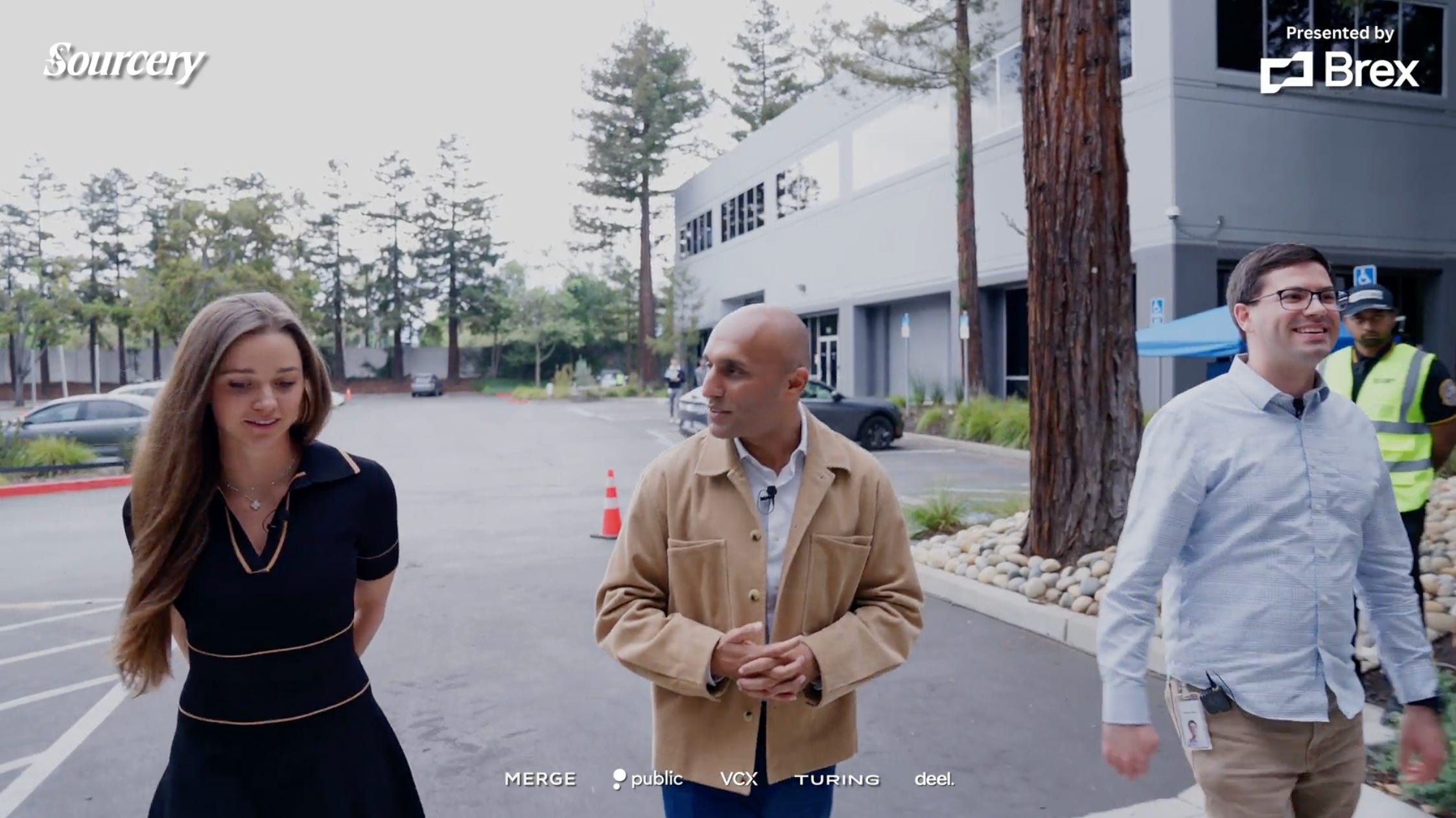
“We’re able to use what’s called end-to-end technology. So we can take raw sensor data in and actually put out vehicle control signals. And we have large scale data collection across a bunch of industries -- not only automotive, but also trucking and mining and construction. And we can combine all of this data together to create these self-driving models.”
“If you look at Waymo, Waymo used to be in self-driving trucks & then they closed that team down because the old way of building self-driving, those are two almost discrete systems. Today, we have the same team working on self-driving on all these different form factors.” - Ludwig
Applied Intuition is privately held, valued at $15 billion, and has raised nearly $1 billion. It is headquartered in Sunnyvale, California.
→ Listen on X, Spotify, YouTube, Apple
The material presented on Molly O’Shea’s website are my opinions only and are provided for informational purposes and should not be construed as investment advice. It is not a recommendation of, or an offer to sell or solicitation of an offer to buy, any particular security, strategy, or investment product. Any analysis or discussion of investments, sectors or the market generally are based on current information, including from public sources, that I consider reliable, but I do not represent that any research or the information provided is accurate or complete, and it should not be relied on as such. My views and opinions expressed in any website content are current at the time of publication and are subject to change. Past performance is not indicative of future results.
Paid Endorsement. Brokerage services by Open to the Public Investing Inc, member FINRA & SIPC. Advisory services by Public Advisors LLC, SEC-registered adviser. Crypto trading provided by Zero Hash LLC, licensed by the NYSDFS. Generated Assets is an interactive analysis tool by Public Advisors. Output is for informational purposes only and is not an investment recommendation or advice. See disclosures at public.com/disclosures/ga. Matched funds must remain in your account for at least 5 years. Match rate and other terms are subject to change at any time.