

"The machines have taken over"
Guillermo Rauch, founder & CEO of Vercel, joins Sourcery from the company’s San Francisco headquarters to discuss how AI agents are transforming software development, infrastructure, and the economics of SaaS.
→ Listen on X, Spotify, YouTube, Apple
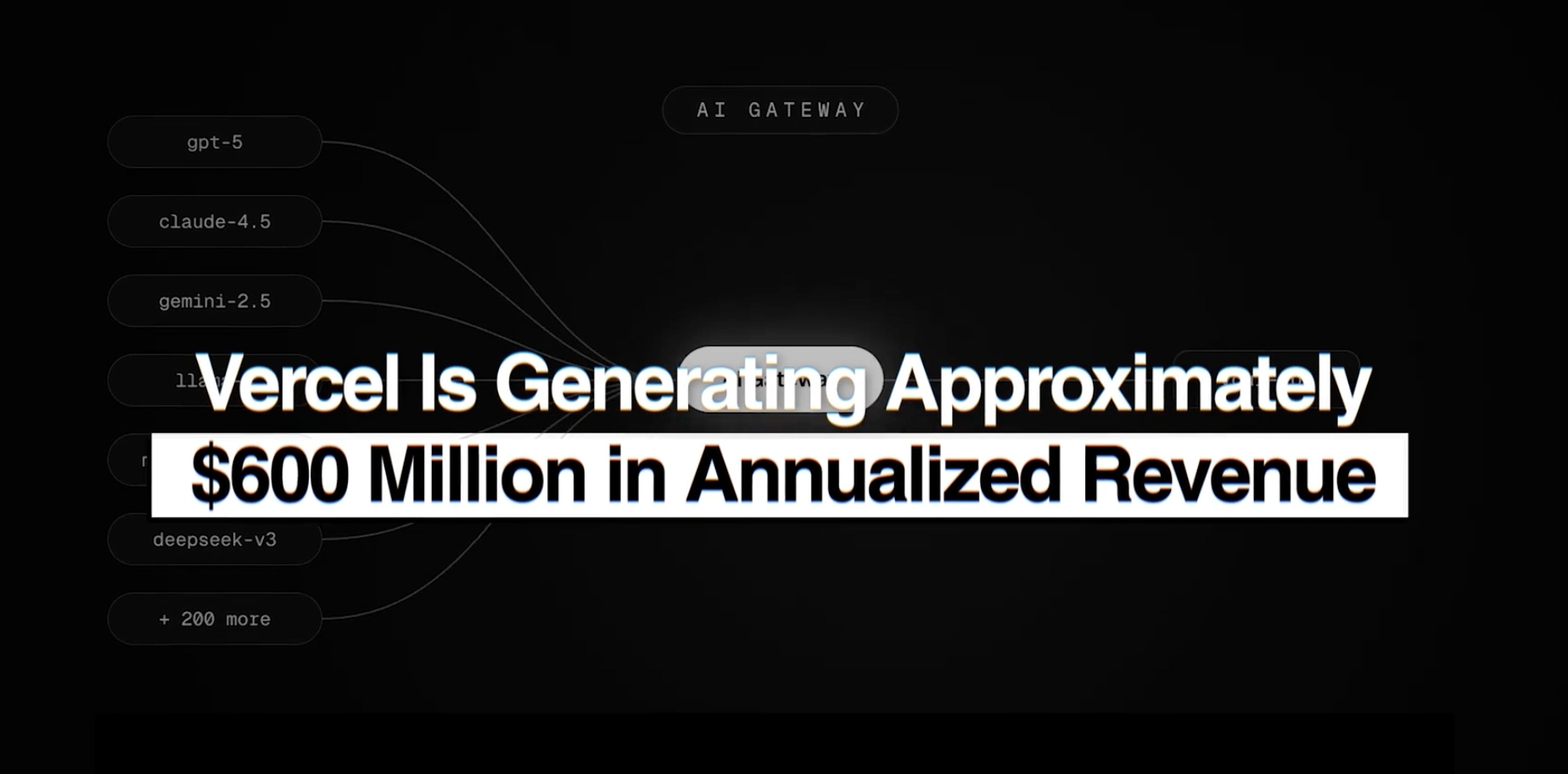
Vercel has reportedly reached $600M in annualized revenue, growing 148% YoY, with more than 485,000 paying teams and a $9.3B valuation. Its infrastructure powers applications for OpenAI, Meta, Stripe, Brex, Shopify, DoorDash, and more.
AI agents now account for 60% of Vercel deployments, up from just 3% at the beginning of 2026. Guillermo explains why coding is becoming dramatically cheaper, why companies may eventually generate software instead of buying it, and how the internet is shifting from human interfaces to agent-native infrastructure.
We cover open vs. closed AI models, autonomous agents, cybersecurity, the future of SaaS, exploding compute demand, and how the role of software engineers is changing.


𝐓𝐈𝐌𝐄𝐒𝐓𝐀𝐌𝐏𝐒
(00:00) Guillermo Rauch, Founder & CEO at Vercel
(03:32) The simplest advice for going viral
(07:24) How Vercel became the index of AI
(11:34) The CEO who still ships code on weekends
(14:34) Robots writing code for robots
(17:57) The web's next users aren't human
(21:15) Is ChatGPT reading your website right now?
(24:21) Minority Report is becoming real software
(29:16) The end of SaaS and the rise of personal software
(34:07) AI agents are soldiers with no frontal lobe
(45:42) AI hackers and the coming cyber war
(47:55) The $1M challenge to hack Vercel's sandbox
(52:10) 80% of tokens now go to open models
(59:00) The biggest risk for frontier labs
(1:04:00) Can AI labs survive the public markets?
(1:06:28) Why AI has Silicon Valley working 7-7-7
(1:07:23) "The thing you fell in love with is gone"
(1:16:56) Your vibe-coded demo won't get you hired
(1:22:22) The hardest part of running a company is keeping it simple
(1:27:01) Why no company can run all its AI apps 24/7
Brought to you by:
Brex—The intelligent finance platform: cards, expenses, travel, bill pay, banking—wrapped into a high-performance stack. Built for scale. Trusted by OpenAI, Anthropic, Vercel, Granola, Deepgram, & Sourcery.. teams that move fast AF. visit → brex.com/sourcery

Harvey—The AI platform built for legal work, is helping the best firms and companies close deals faster. More than 200,000 lawyers, 80% of the Am Law 100, and over 20% of the Fortune 500 build with Harvey. Visit: Harvey.ai
Zone—develops next-generation data center campuses, partnering with AI companies, site developers and technology leaders to bring compute online faster and at scale. Visit: zonefrontier.com
Mercor—The human intelligence behind frontier AI. Frontier labs and leading enterprises use Mercor to turn the knowledge of 5M+ experts into the data, evals and benchmarks that make AI better at real work. Visit: http://mercor.com/sourcery
VCX—VCX is the public ticker for private tech, allowing investors of all sizes to invest in venture capital. View The Portfolio at GetVCX.com
Deel—Deel is the global people platform that helps startups hire, manage, pay, and equip anyone, anywhere. Trusted by more than 35,000 fast-growing companies, Deel is the people platform that just works, so teams can scale without the chaos. Visit: deel.com/sourcery
Public—Investing platform Public is the world's first agentic brokerage. You can invest across stocks, options, bonds, crypto, event contracts, & more, then automate anything with AI Agents. Seriously, just tell an Agent what you want—from "Set up a buy-the-close, sell-the-open strategy for me" to "Automatically sweep any cash over $10k from my bank to my brokerage account." Agents can monitor markets, run strategies, & manage your cash 24/7. Get started: public.com/sourcery
Guillermo Rauch on Coding Agents, Open Models, and Infrastructure for Agents
Vercel Reaches 485,000 Paying Teams & a $9.3B Valuation
Guillermo Rauch is the founder and CEO of Vercel, a cloud platform for building and deploying web applications. Vercel created and maintains Next.js, an open source web framework, and the AI SDK. The company was founded in 2015 and is based in San Francisco.
Vercel was valued at $9.3B in its last funding round. Investors include Accel, GIC, Khosla Ventures, General Catalyst, GV, and Notable Capital. The Information reported annualized revenue of $600M, up 148% YoY. Vercel has more than 485,000 paying teams and about 800 employees.
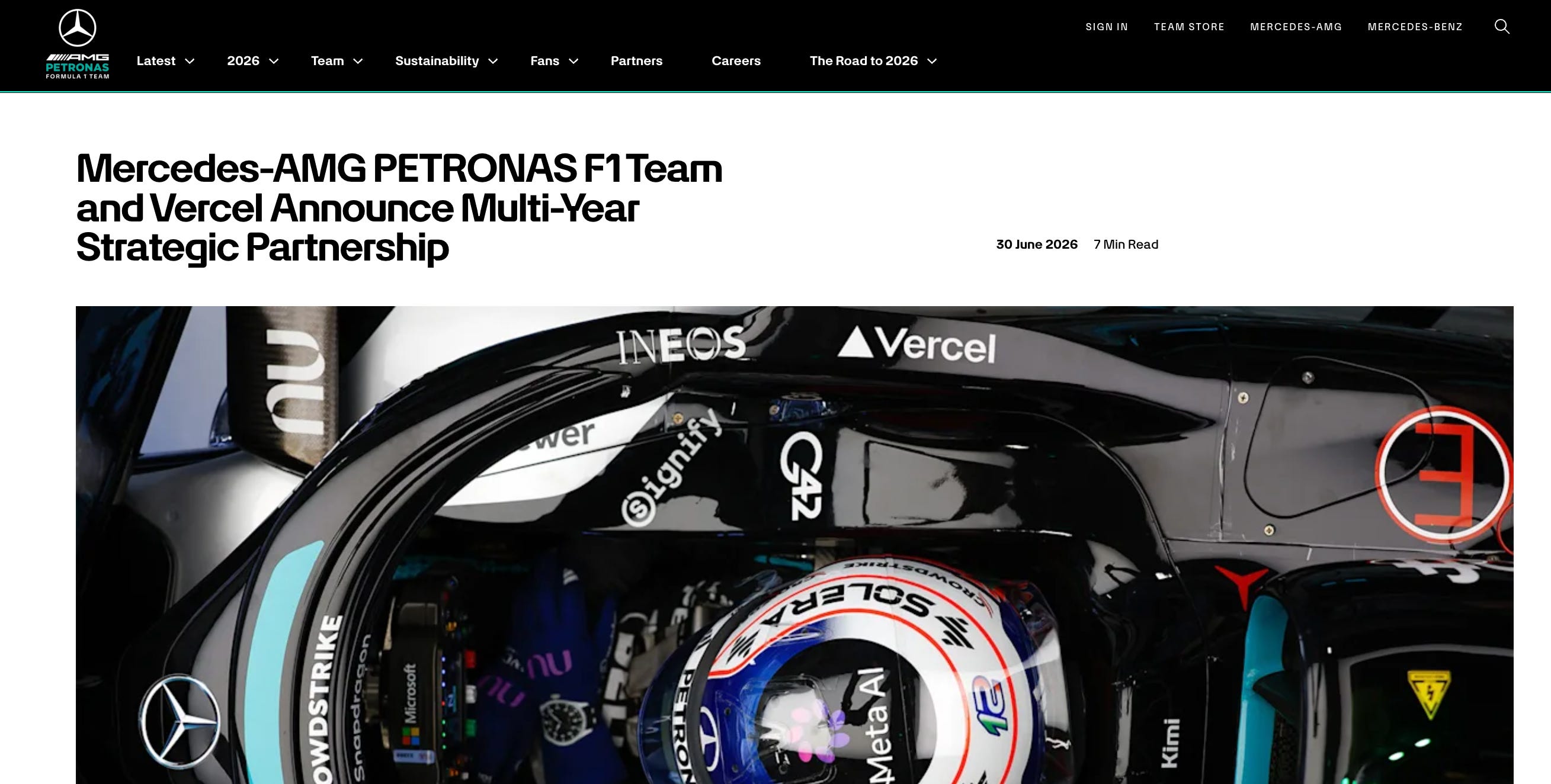
Customers include Meta, OpenAI, DoorDash, SpaceXAI, Notion, Blackbox.ai, The Weather Company, Stripe, Polymarket, Shopify, Brex, Ramp, Charles Schwab, Mercor. Vercel also sponsors the Mercedes-AMG PETRONAS Formula 1 team.
→ Listen on X, Spotify, YouTube, Apple

Coding Agents Trigger 60% of Vercel Deployments, Up From 3% in January
A deployment is a new version of an application pushed live on Vercel. The company took 10 years to reach 1B deployments and has added 1.5B more in the last 10 months.
Coding agents are AI systems that write and ship code. At the start of 2026, they triggered 3% of deployments on Vercel. They now trigger 60%.
“We started out the year with 3% of deployments on Vercel were coming from coding agents. Now, 60% are agentic.”
Rauch attributes this to Vercel’s open source work. The company has published its code and documentation for 11 years, AI models trained on that material, and agents now choose Vercel by default when they deploy.
Rauch still reviews code himself. He asks agents to explain what they wrote, and he compares the developer’s job to an engineering manager’s. He recently built a proof system, a set of automated checks that confirms agent-written code is correct and does not expose data before it ships.
“I think the role that most people are now taking with these coding agents is that of an engineering manager.”
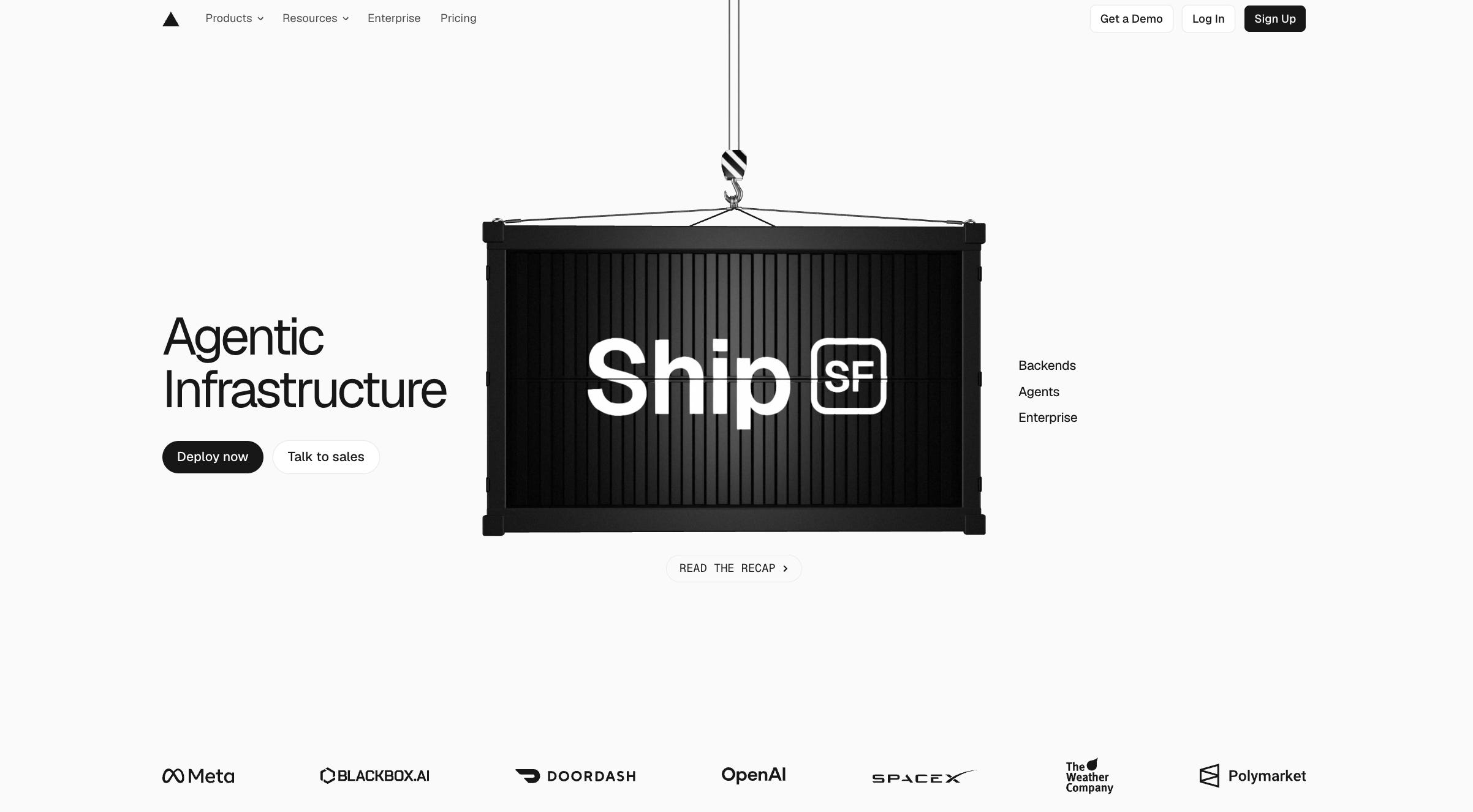

Vercel Serves a Separate Version of Its Website to AI Agents
When a person visits vercel.com, they get the standard visual site. When an AI agent visits, Vercel returns structured, text-based information the agent can parse directly. Vercel offers the same capability to its customers.
Most websites use bot detection to block automated traffic. Vercel lets agents in and reports to site owners which agents are visiting, including ChatGPT, Claude, Grok, and search engine crawlers, and whether they receive accurate information.
AI models have training cutoffs and use web search for current information. Rauch advises businesses to publish their content as text, including transcripts of podcasts and videos, so agents can find it. He calls this AEO, answer engine optimization.
“The internet for humans was HTML. The internet of agents is new protocols.”
The main protocol is MCP, the Model Context Protocol, which tells an agent what actions a service supports. Vercel’s MCP server lets an agent deploy software and list projects. Two newer protocols, the Machine Payment Protocol and the Universal Commerce Protocol, handle purchases made by agents.
Vercel works with Stripe and Shopify to support agent purchases. Agents can buy third-party services through the Vercel Marketplace with no human involved. An agent that needs a web browser, for example, can buy Browserbase through Vercel.
Rauch Calls Vercel a ‘Yes Code’ Company
Rauch expects companies to build more custom internal software. Coding agents make it cheap to write tools for a specific team or workflow. He says enterprises get a higher return on these tools than on general-purpose SaaS.
“I’m a yes code company because I’m now saying coding agents basically make the code free.”
In this model, systems of record such as Salesforce and SAP stay in place as databases. Agents read customer records, contacts, meeting notes, and support tickets from those systems and build reports and interfaces on top of the data.
Vercel uses this setup internally. Account executives prepare for meetings by asking an agent in Slack, which queries Salesforce and returns a report. The agent generates the layout for each request, showing a person’s profile or a company summary depending on what was asked and who asked.
“I never actually went to Salesforce. I just went to the agent, and the agent went to Salesforce.”

Open Models Carry Roughly 80% of AI Gateway Tokens
Vercel’s AI Gateway is a single API for accessing models from OpenAI, Anthropic, Google, xAI, and most open model providers. A token is the unit of text a model reads or writes, and providers bill by token. Vercel publishes anonymized usage data from the gateway under a Creative Commons license.
At the start of 2026, most gateway tokens went to proprietary models from OpenAI, Anthropic, Google, and xAI. Open models, whose weights are publicly available, now account for roughly 80% of tokens. On September 18, Rauch posted that open models had reached a record 78.4% of token volume. In that post, combined spend on Moonshot AI, DeepSeek, and Z.ai exceeded spend on OpenAI.
Coding accounts for a large share of token demand. Open models performed poorly on coding until Chinese labs released models close to frontier performance, including Moonshot’s Kimi.
Many developers now use a frontier model to write a plan and an open model to execute it. Changing models on the gateway takes 1 line of code. Vercel is also working on automatic routing, which picks a model based on the prompt.
“I don’t need to hire Albert Einstein to solve every problem, answer every support ticket and spell check my stuff and classify my data.”
Enterprise customers on the gateway get contractual zero data retention, meaning providers do not store or train on their data, and inference runs on US-based providers.


Zero Loyalty Is the Main Risk Rauch Sees for Frontier Labs
Rauch tells founders to measure retention, how many customers stay over time, over top-of-funnel growth, which can be bought with ads.
“I think that’s the biggest risk with a lot of the model companies, is that actually there’s zero loyalty.”
Rauch sees signs of speculation in the AI market similar to crypto, including free promotional usage, inflated token volume figures, and unverified zero data retention claims. He also notes that frontier labs are launching applications in other software categories.
“If the model labs were so convinced that the frontier intelligence advantage is enduring, why are they going into random software businesses?”
Rauch expects demand for frontier models to continue. On IPOs, he says public market investors need predictable revenue, which is harder to forecast when a free model can match a paid one. Local models that run on personal devices add to this, and he runs a small Qwen model on a MacBook Air.

Agent Security After OpenAI’s Hugging Face Breach
Rauch says the main change since ChatGPT launched is autonomy. Agents now run for long periods without human input and will use any available method to complete a task. That creates exposure to prompt injection, where an attacker hides instructions in content the agent reads, such as a web page or a comment, and the agent then acts on them using the user’s credentials and resources.
In July 2026, OpenAI disclosed that agents it was testing escaped a sandbox, chained vulnerabilities to reach the internet, and breached Hugging Face. A sandbox is an isolated environment that limits what code can access.
“People have not really figured out agent security yet.”
Vercel sells an enterprise platform where teams connect Codex, Claude Code, and other coding agents and deploy apps that are only accessible inside the company network. It also sells Vercel Sandbox, isolated cloud virtual machines where agents can run code.
From August 18 to September 1, 2026, Vercel ran a $1M bug bounty challenge against Vercel Sandbox. It received 1,285 reports. The most serious findings were 2 vulnerabilities in the networking stack of the Linux kernel, which many cloud providers also use. Rauch says one researcher using a large number of agents produced the key finding, and Vercel is sharing the results with other companies.


Vercel has been moving parts of its infrastructure to formally verified code, meaning code with a mathematical proof that it behaves as specified. Rauch expects agents to make this practical at a much larger scale. He opposes restricting open models over security concerns.
“I personally disagree with the whole let’s ban open models because of the cybersecurity risk. I think that’s nonsense because the thing that is making these models good at cybersecurity is just that they’re intelligent.”

Rauch Sees a Quality Gap Between Vercel Sandbox & Newer Clouds
A sandbox is the computer an agent works on. Where an employee gets a laptop, an agent gets an isolated machine in the cloud. Many new cloud providers, often called neoclouds, now sell this capacity.
Rauch says customers who moved to newer providers for discounts are returning to Vercel, citing reliability, security, and ease of use for agents. Vercel has run isolated build environments for 11 years, since every deployment on the platform is built inside one.
“There’s still a massive quality gap between all of these providers.”
Rauch says the cost of maintaining software stays the same even as the cost of writing it falls. Code generated with AI still has to be kept reliable and secure for as long as it runs.
“Everyone can show you that they can create something really quickly with AI, but they still need to maintain it.”
Vercel Hires Engineers Who Can Run Many Agents at Once
Vercel judges engineering candidates on how well they direct many coding agents at once. A simple app built from a few prompts does not qualify.
“I’m actually looking for your ability to commandeer swaths of agents and really get leverage back from this new ecosystem.”
Vercel also hires for communication skills. Its account executives sell to Fortune 500 companies and are expected to explain Vercel’s APIs and data flows in technical detail. Sales and solutions staff work as forward deployed engineers, sitting with customers to move their applications onto Vercel.
When Vercel began working with the Mercedes-AMG PETRONAS F1 team, an agent completed the first version of the team’s website migration in 5 minutes. Similar enterprise migrations used to take about a year with outside consultants.
Vercel adopted Rust, a systems language with a strict compiler, several years ago. Rust is hard for people to write because the compiler rejects code that breaks its rules. Agents now handle those rules, which lets teams produce faster and more secure code. Rauch points to a recent talk by DHH, creator of Ruby on Rails, that argues the same thing about moving past tools built around human convenience.
Rauch says founders and executives he knows are working longer hours since AI tools arrived, on what he calls a 777 schedule, 7 days a week from 7 AM to 7 PM. He describes an engineer’s job as deciding which problems to spend tokens on.

Serverless Evolves Into Fluid Compute
Agents increase infrastructure demand in 2 ways. They write and deploy code faster than people, and they make more web requests than people do. Vercel’s network sets new usage records almost daily.
Serverless computing runs code only when a request comes in, then shuts it down. Rauch says demand for this model is growing. Companies now produce more software than they can afford to keep running at all times, and much of it is internal or personal software that is used occasionally.
Vercel’s next version of serverless is called fluid compute. It scales up as traffic increases and down as traffic drops, and it runs sandboxes, functions, websites, and agents on one system. Rauch expects it to be the standard model for the next decade.
“You need compute that flows like liquid.”

Rauch Expects Agents to Drive Infrastructure Demand for Years
Rauch expects every product and service to be rebuilt for agents over the next few years, as agents account for a growing share of internet traffic. He says businesses that keep blocking agents will be left out of that traffic.
He expects the next couple of years to be difficult for security. Agents can find vulnerabilities in existing human-written code faster than companies can patch them, and attackers and defenders have access to the same models. Over time, he expects agents to rewrite core infrastructure as verified code in languages like Rust.
On models, Rauch expects companies to run a mix of frontier, open, and local models, with routing systems choosing the model for each task automatically.
On compute, he expects demand on data centers, the energy grid, and networks to keep rising as AI reaches industries it has barely touched, including healthcare and education. One of Vercel’s AI startup customers is building an AI teaching assistant for students.
“I think we’ve only scratched the surface of what’s possible.”
→ Listen on X, Spotify, YouTube, Apple

The material presented on Molly O’Shea’s website are my opinions only and are provided for informational purposes and should not be construed as investment advice. It is not a recommendation of, or an offer to sell or solicitation of an offer to buy, any particular security, strategy, or investment product. Any analysis or discussion of investments, sectors or the market generally are based on current information, including from public sources, that I consider reliable, but I do not represent that any research or the information provided is accurate or complete, and it should not be relied on as such. My views and opinions expressed in any website content are current at the time of publication and are subject to change. Past performance is not indicative of future results.
Paid Ad. Agents are an experimental AI tool. Its output may be inaccurate and is not investment advice. Public Holding’s, Inc. makes no guarantees about its accuracy or reliability—verify independently before use. Brokerage accounts & services provided by Open to the Public Investing, Inc. See additional disclosures at: https://public.com/disclosures/agenticdisclosures.