

Navigating The AI Paradigm Shift
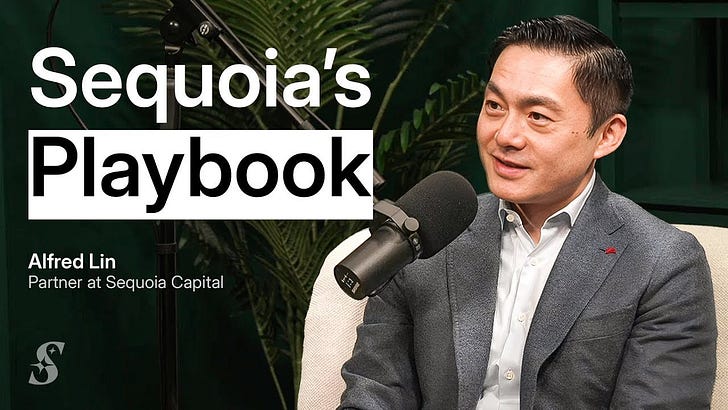
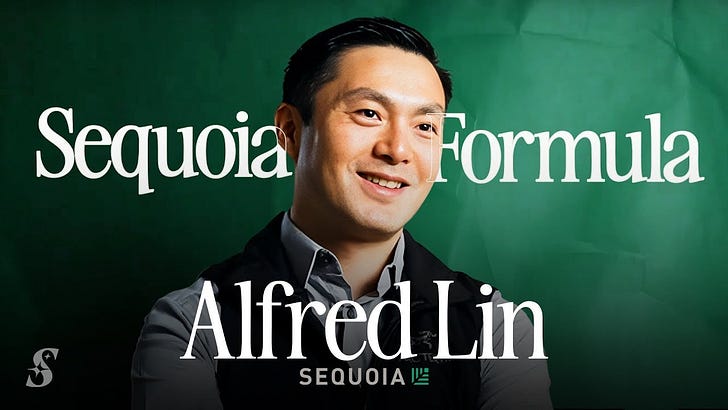
Alfred Lin, Partner & new Co-Steward of Sequoia Capital (& #1 investor on the Midas) List, joins Sourcery for a conversation on AI, founder-market fit, enduring companies, & how Sequoia measures this moment of accelerating technological change.
→ Listen on X, Spotify, YouTube, Apple
For more than five decades, Sequoia has backed many of the most consequential companies in technology, from Apple and Nvidia to Airbnb, DoorDash, Stripe, and more. But as Alfred explains in this conversation, Sequoia does not think about the 54-year-old firm the way many others do. Rather than optimizing around AUM, Sequoia focuses on DPI and being a net liquidity provider to LPs. Since 2020, the firm has distributed more than $43 billion back to investors (as of Oct 27, 2025).
In this conversation, Alfred breaks down why AI is the biggest paradigm shift of his career, why the narrative that “AI will kill SaaS” is too simplistic, why startups are reaching meaningful scale faster than ever, and why the most vulnerable companies are the ones that fail to embrace change.
We also discuss what’s happening in boardrooms right now, how moats evolve during platform shifts, why the next generation of great companies may be dramatically larger than the last, and how Sequoia identifies outlier founders across companies like Airbnb, DoorDash, Kalshi, Zipline, Clay, Commure, Nominal, Physical Intelligence, Crosby, OpenAI, and Citadel Securities.
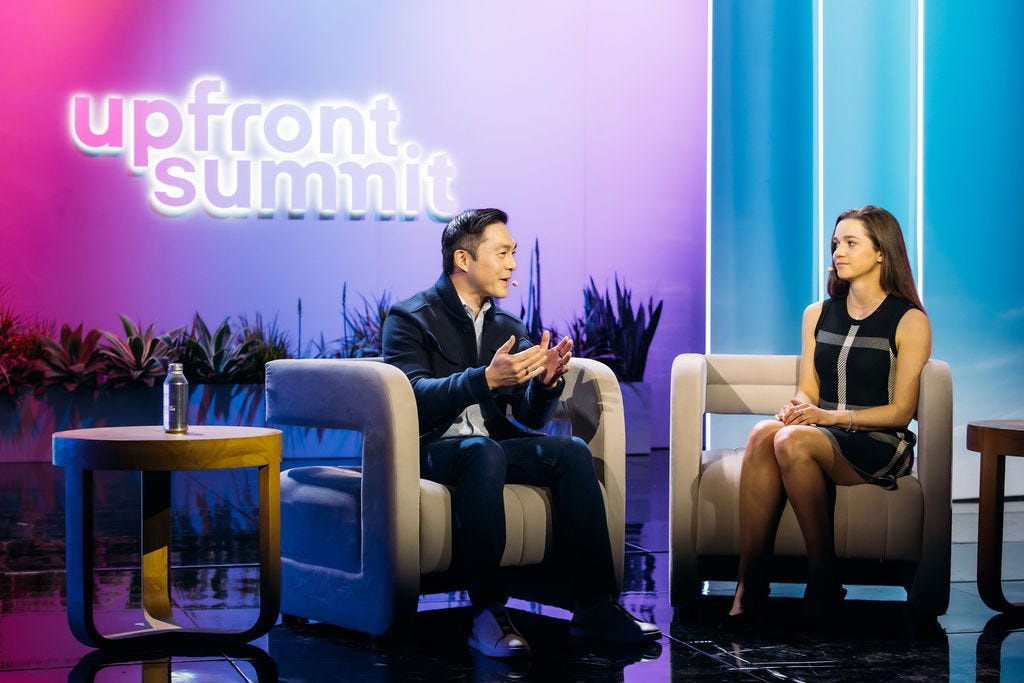
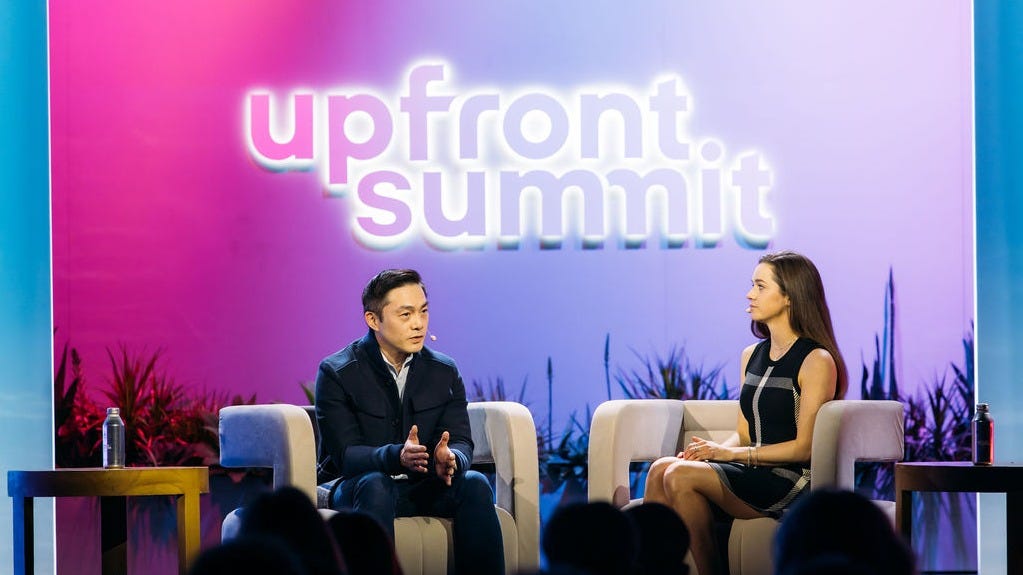
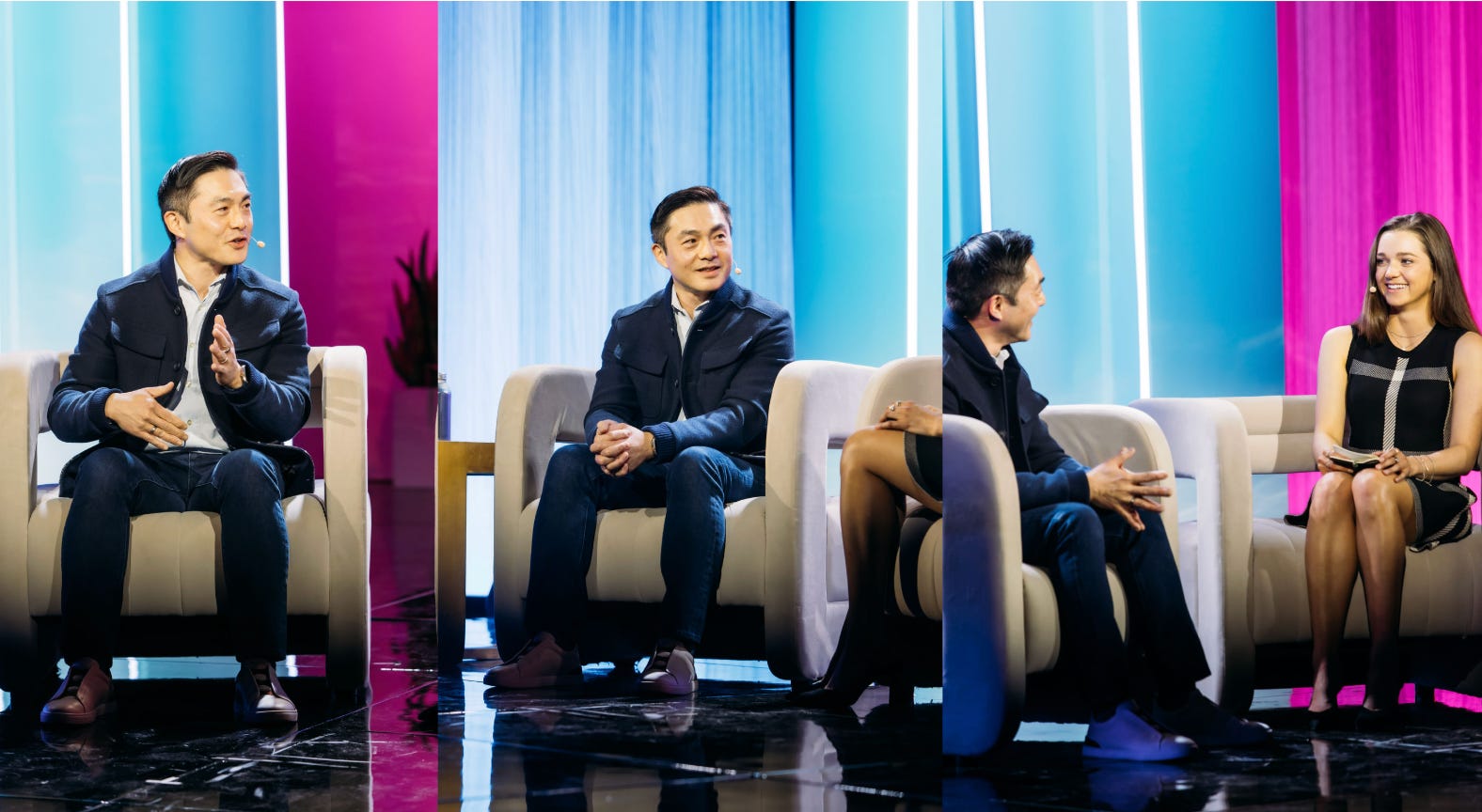
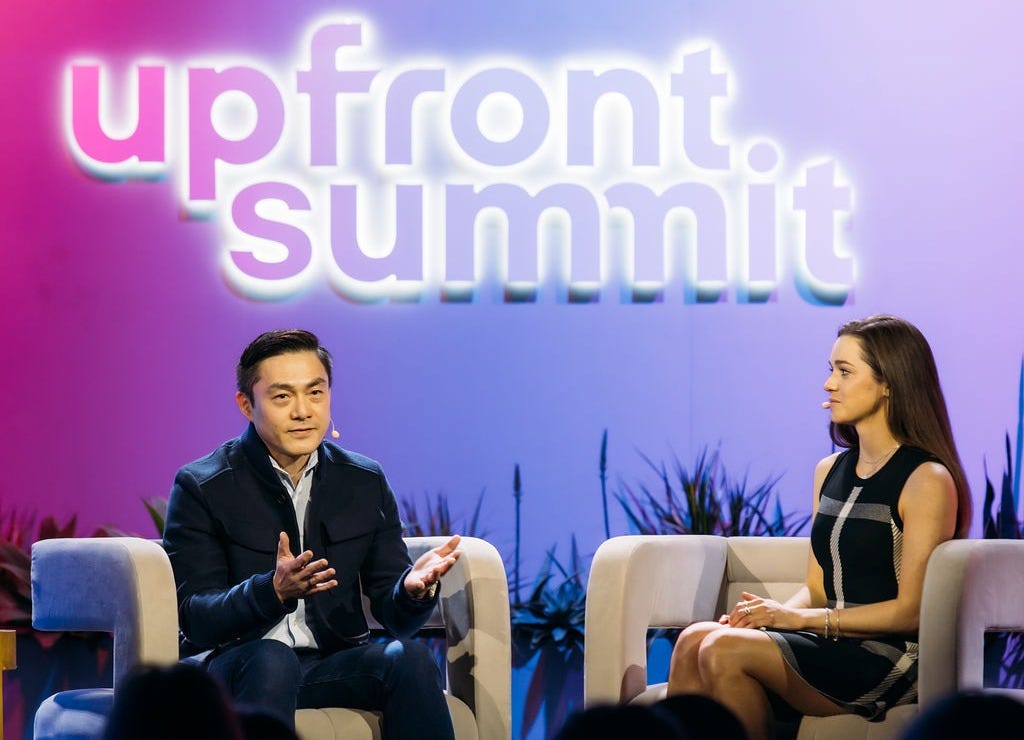
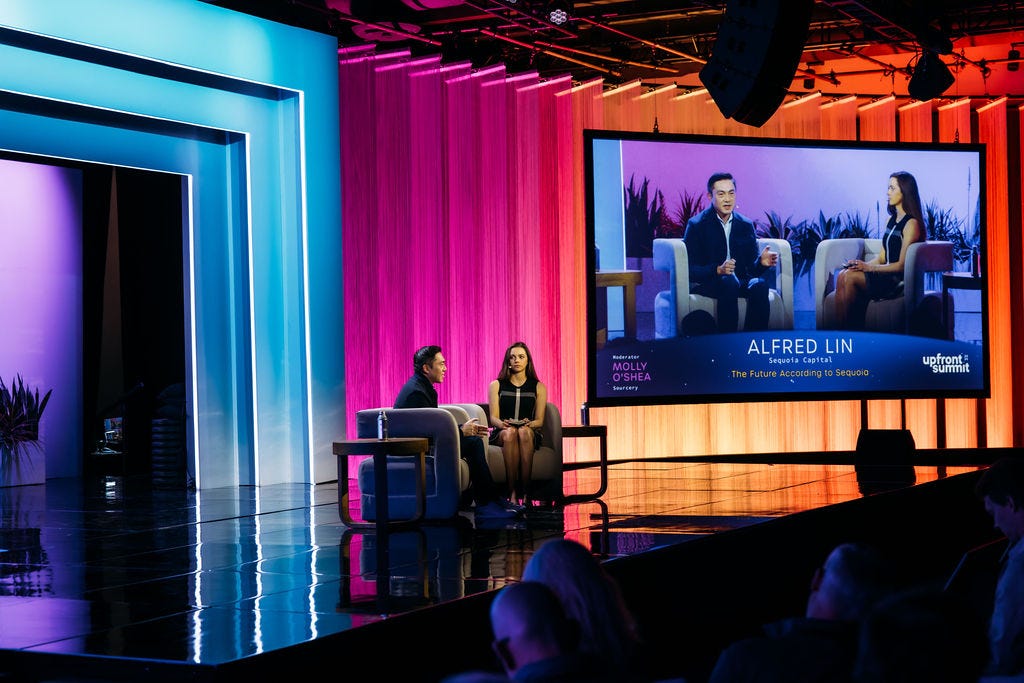
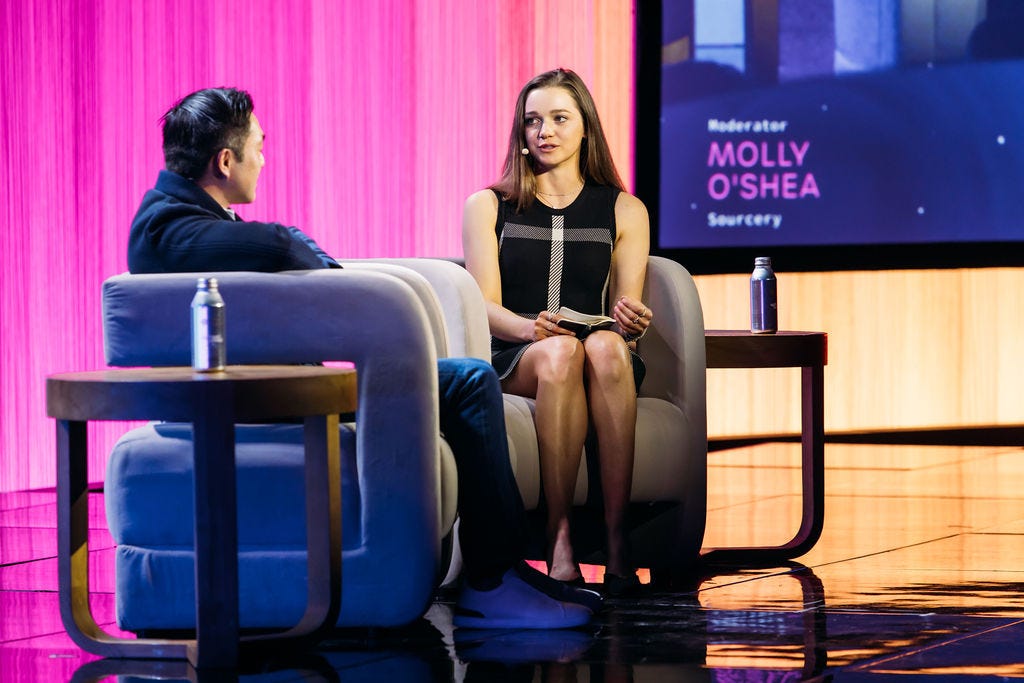
Recorded live February 26th at the Upfront Summit 2026.
Special thank you & many shoutouts to Valerie for handling us (& our tequila shots) 😂
Topics include:
Why AI is accelerating startup growth and product velocity
Why “AI kills SaaS” is the wrong framework
How moats change during paradigm shifts
What Alfred is hearing in boardrooms right now
Which companies are most vulnerable in the AI era
Founder-market fit and the importance of a founder’s “spike”
Why the next generation of companies could be much bigger than today’s giants
Subscribe to Sourcery for more conversations with the people building the future of technology, finance, and markets.
𝐓𝐈𝐌𝐄𝐒𝐓𝐀𝐌𝐏𝐒
(00:00) Alfred Lin, Partner & Co-Steward at Sequoia Capital
(01:00) The metric Sequoia actually cares about
(02:54) $43B distributed since 2020
(05:41) The biggest wave Alfred has seen in his career
(08:19) Amazon did not k*ll Walmart
(10:09) Paradigm shifts and changing moats
(14:38) Boardroom conversations about the future
(17:11) Companies that fail to adapt fall behind
(19:31) From waterfall development to agile teams
(23:06) Sequoia’s AI investment strategy
(24:48) Managing context switching between portfolio companies
(26:00) Becoming Co-Steward of Sequoia Capital
(29:31) How to navigate the AI wave

Brought to you by:
Brex—The intelligent finance platform: cards, expenses, travel, bill pay, banking—wrapped into a high-performance stack. Built for scale. Trusted by teams that move fast. visit → brex.com/sourcery

Turing—Turing delivers top-tier talent, data, and tools to help AI labs improve model performance, and enable enterprises to turn those models into powerful, production-ready systems. Visit: turing.com/sourcery
Deel—Deel is the global people platform that helps startups hire, manage, pay, and equip anyone, anywhere. Trusted by more than 35,000 fast-growing companies, Deel is the people platform that just works, so teams can scale without the chaos. Visit: deel.com/sourcery
Public-–Investing platform Public just launched Generated Assets, which lets you turn any idea into an investable index with AI. With Generated Assets, you can build, backtest, refine, and invest in any thesis with AI. Gone are the days of one-size-fits-all ETFs. Try it today: public.com/sourcery
The Future According to Sequoia

Why the Next Companies Could Be $10 Trillion
Every major technology cycle reshapes both how companies are built and how investors evaluate them. The internet transformed distribution, mobile reshaped product design, and cloud computing rewrote software economics. Artificial intelligence now appears to be accelerating each of those dynamics simultaneously — compressing development cycles, increasing productivity, and expanding the potential scale of technology companies.
Few venture investors have operated through as many of these transitions as Alfred Lin, Partner & new Co-Steward of Sequoia Capital and the #1 ranked investor on the Forbes Midas List. His portfolio spans early partnerships with companies like Airbnb, DoorDash, Zipline, as well as more recent investments in companies such as OpenAI, Kalshi, Nominal, Citadel Securities, & Clay.
We unpack how Sequoia is analyzing the current AI cycle, from why startups are scaling faster than previous generations to how the definition of a “legendary” venture outcome continues to expand. Before getting into the specifics of AI, however, Lin emphasized the key differentiated structural point about how Sequoia evaluates itself as a venture firm.
Alfred’s Partnerships


AI Is the Fastest Technology Cycle Yet
Lin has invested through multiple technology waves, including the rise of the internet, the mobile revolution, the transition to cloud computing, and the emergence of SaaS. What stands out about the current AI moment, he argues, is the speed at which companies are building and scaling.
AI tools have dramatically lowered the barriers to product development, enabling startups to launch products, iterate on them, and reach meaningful revenue far faster than in previous eras. The traditional milestones of company formation — building a product, reaching product-market fit, and scaling revenue — are happening on compressed timelines.
“You see companies today going from zero to 10 million ARR in very, very fast timeframes with which we have not seen in the past.”
The implication is that the startup ecosystem may become more dynamic and experimental than ever before. Companies can test ideas faster and pivot more quickly, but the speed of innovation also increases the difficulty of building durable competitive advantages.
$1T → $10T
Another implication of the AI wave is the potential for dramatically larger technology companies. When Lin joined Sequoia in 2010, the largest companies in the world were valued in the hundreds of billions. Today, several technology firms have already crossed the multi-trillion-dollar threshold.
“When I joined Sequoia the largest market cap company was probably $300B or $400B dollars. Today we have companies that are worth $4-5T.”
If those companies continue to compound at their current pace, Lin believes the next phase of technology giants could reach an entirely new scale.
“If you give it another five to 10 years… those companies continue to compound, it’ll be worth $10 trillion or more.”
That shift is already influencing how Sequoia thinks about legendary outcomes. Inside the firm’s Valentine conference room hangs a wall dedicated to its most successful investments. When Lin first joined the firm, an investment needed to generate $100 million in gains to qualify for the wall. Today, the threshold has increased to well over $1 billion, and Lin expects the definition of a legendary outcome to continue expanding.

Why “AI Will Kill SaaS” Is the Wrong Narrative
One of the most common narratives surrounding AI today is that it will replace traditional SaaS companies entirely. Lin pushes back strongly on that framing, arguing that history suggests technology shifts rarely eliminate previous categories outright.
“The simple narrative is AI is gonna kill SaaS. And I just don’t think that’s the case.”
Lin recalls making a similar prediction himself in the late 1990s, when he left his PhD program in statistics to pursue opportunities created by the internet. At the time, he believed e-commerce would destroy traditional retail.
“When I dropped out of my PhD program in statistics… I made the proclamation that e-commerce was going to destroy brick and mortar.”
“Amazon was going to kill Walmart. And that just didn’t happen.”
“Walmart is 20 times larger today than it was in 1997.”
Instead of eliminating physical retail, the internet forced retailers to evolve. Companies that embraced the new paradigm survived — and in some cases thrived. Lin believes the same pattern will likely unfold with AI.
Most Vulnerable Companies Right Now
While Lin avoids naming specific companies that may struggle in the AI transition, he points to a clear pattern among the organizations most at risk.
“The companies that are most vulnerable are the companies that don’t embrace change.”
Every major technology transition reshapes the nature of competitive advantages. In legacy enterprise software, distribution often revolved around selling to CIOs and embedding products deeply inside organizations. SaaS shifted that model toward bottom-up adoption, where individual users began adopting products before companies formally purchased them.
AI may once again change how products are built, distributed, and adopted. For founders and incumbents alike, the key question is not whether change will occur — it is how quickly companies adapt to it.

Founder Spikes & the Sequoia Playbook
Despite all the technological shifts underway, Sequoia’s core philosophy of venture investing has remained surprisingly consistent. The firm continues to prioritize founder-market fit and unique founder insight above nearly everything else.
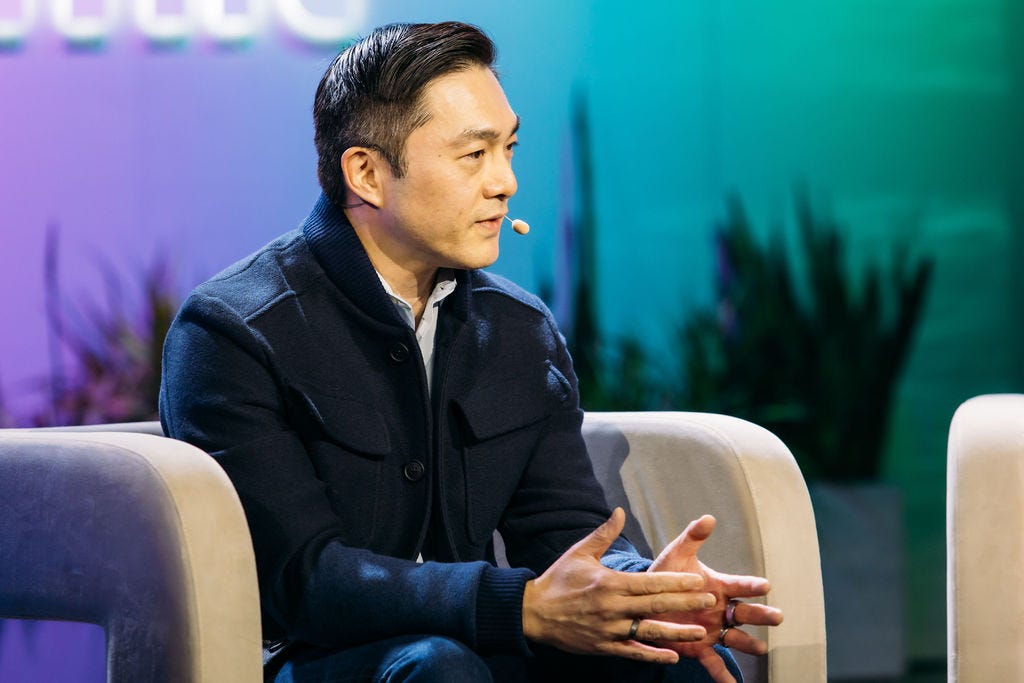
Lin describes looking for what he calls a founder’s “spike” — a rare capability, experience, or perspective that differentiates the founder from everyone else.
“What is your spike? Why are you different than everybody else in the world?”
“We try to magnify that spike.”
Rather than attempting to smooth out a founder’s weaknesses, Sequoia focuses on amplifying their strengths while ensuring weaknesses do not become fatal liabilities. In some cases, AI may even help compensate for those weaknesses by automating skills that previously required years of development.
Navigating the Mid-Game of Technology Shifts
For investors, the most challenging aspect of technological transitions is that the end state is often clearer than the path to get there. Lin describes this dynamic as playing the “mid-game.”
“We know what the end state is going to be… all these companies that shift will embrace AI.”
“But who wins & who doesn’t along the way — that’s the mid-game.”
This uncertainty is precisely where venture investors attempt to generate outsized returns. By partnering early with founders navigating these transitions, firms like Sequoia aim to identify the companies that will ultimately define the next era of technology.
“Inevitable ≠ Imminent. So many board conversations are about the end-state without regard to the opening or the midgame, where the crucible decisions are made.
End Game Play, Will Manidis: "The middle is two thousand years long and counting and we are somewhere in it and the eschaton is not ours alone to force.
Know your vocation. Play the game. Burn the clock."

Alfred’s Latest X Articles:

Next Decade of Company Building
Despite the uncertainty surrounding AI’s long-term impact, Lin remains deeply optimistic about the opportunities ahead. While AI is already automating many repetitive tasks, he believes its greatest impact will come from enabling entirely new forms of creativity, productivity, and company building.
“The fact of the matter is a lot of our most mundane tasks will get automated away.”
“That is great. See it as an opportunity to do the things that you are uniquely good at.”
In an environment where technology continues to accelerate and tools become more powerful, the defining advantage may not simply be access to infrastructure or capital. Instead, it may be the insight, creativity, and ambition of founders willing to build something entirely new.
For Sequoia, that pursuit remains constant.
“We’re only as good as our next investment.”
→ Listen on X, Spotify, YouTube, Apple
Cheers!

Read / Watch More Alfred:


The material presented on Molly O’Shea’s website are my opinions only and are provided for informational purposes and should not be construed as investment advice. It is not a recommendation of, or an offer to sell or solicitation of an offer to buy, any particular security, strategy, or investment product. Any analysis or discussion of investments, sectors or the market generally are based on current information, including from public sources, that I consider reliable, but I do not represent that any research or the information provided is accurate or complete, and it should not be relied on as such. My views and opinions expressed in any website content are current at the time of publication and are subject to change. Past performance is not indicative of future results.
Paid Endorsement. Brokerage services by Open to the Public Investing Inc, member FINRA & SIPC. Advisory services by Public Advisors LLC, SEC-registered adviser. Crypto trading provided by Zero Hash LLC, licensed by the NYSDFS. Generated Assets is an interactive analysis tool by Public Advisors. Output is for informational purposes only and is not an investment recommendation or advice. See disclosures at public.com/disclosures/ga. Matched funds must remain in your account for at least 5 years. Match rate and other terms are subject to change at any time.