

Exploring Earth Intelligence
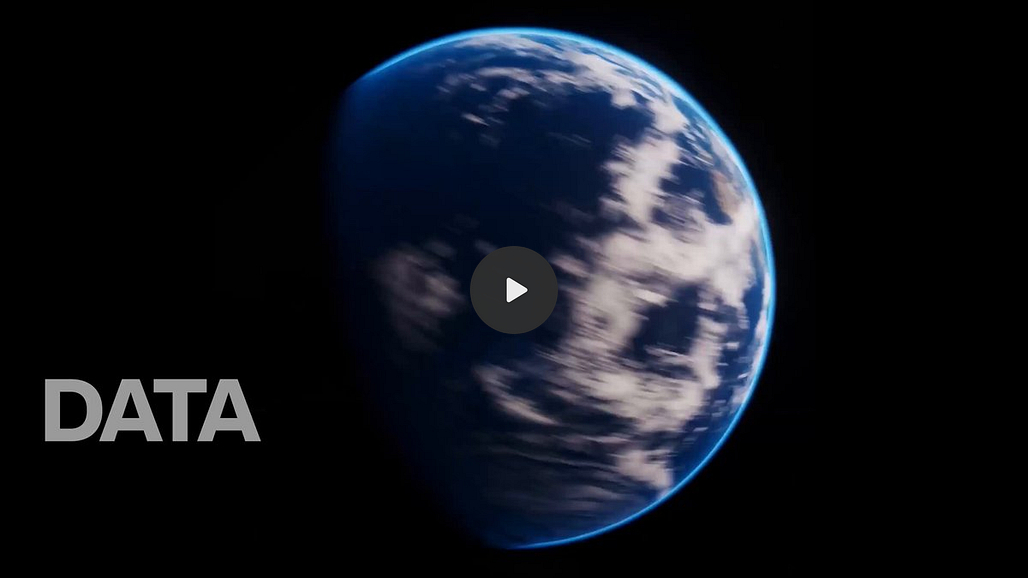
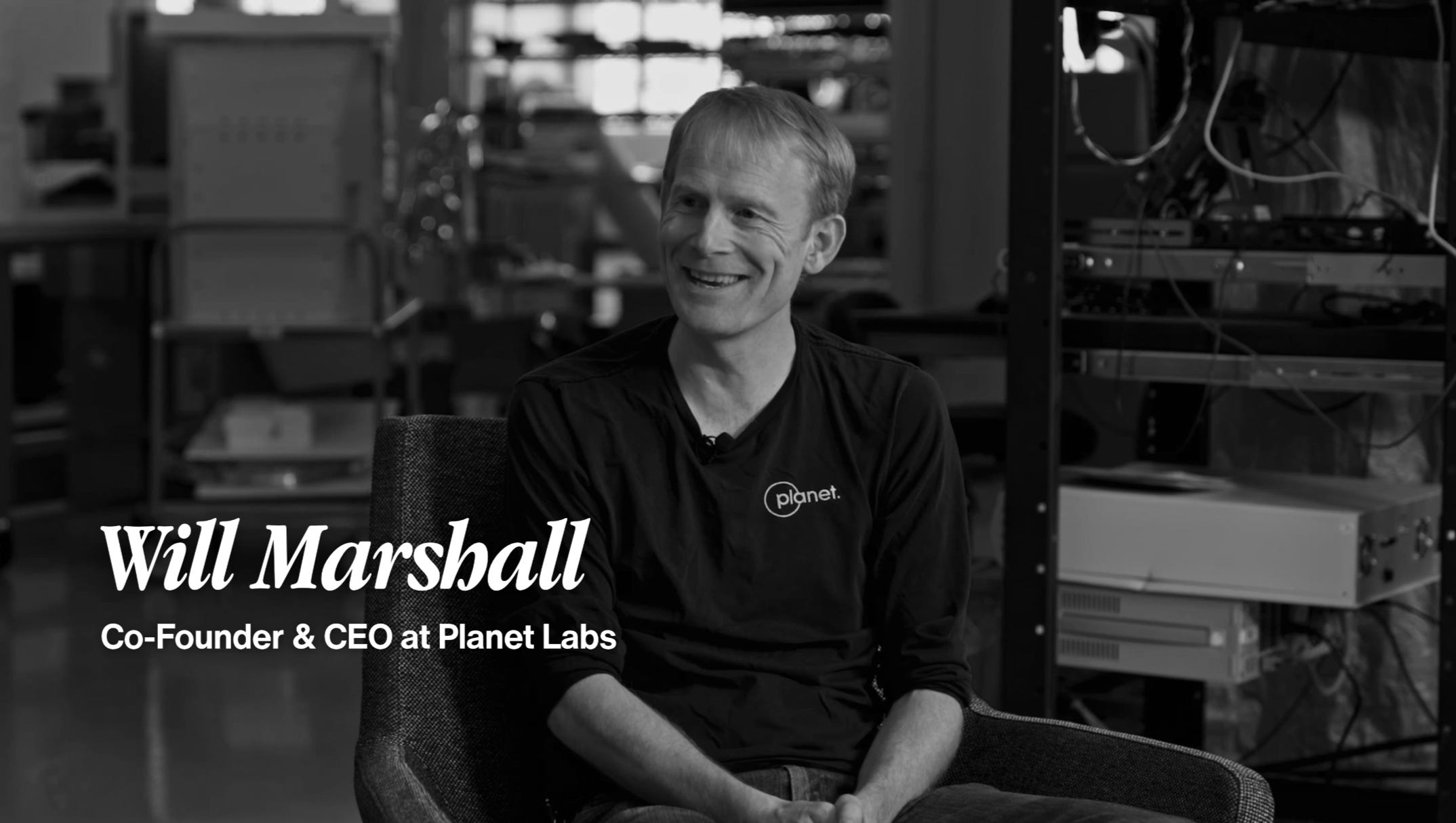
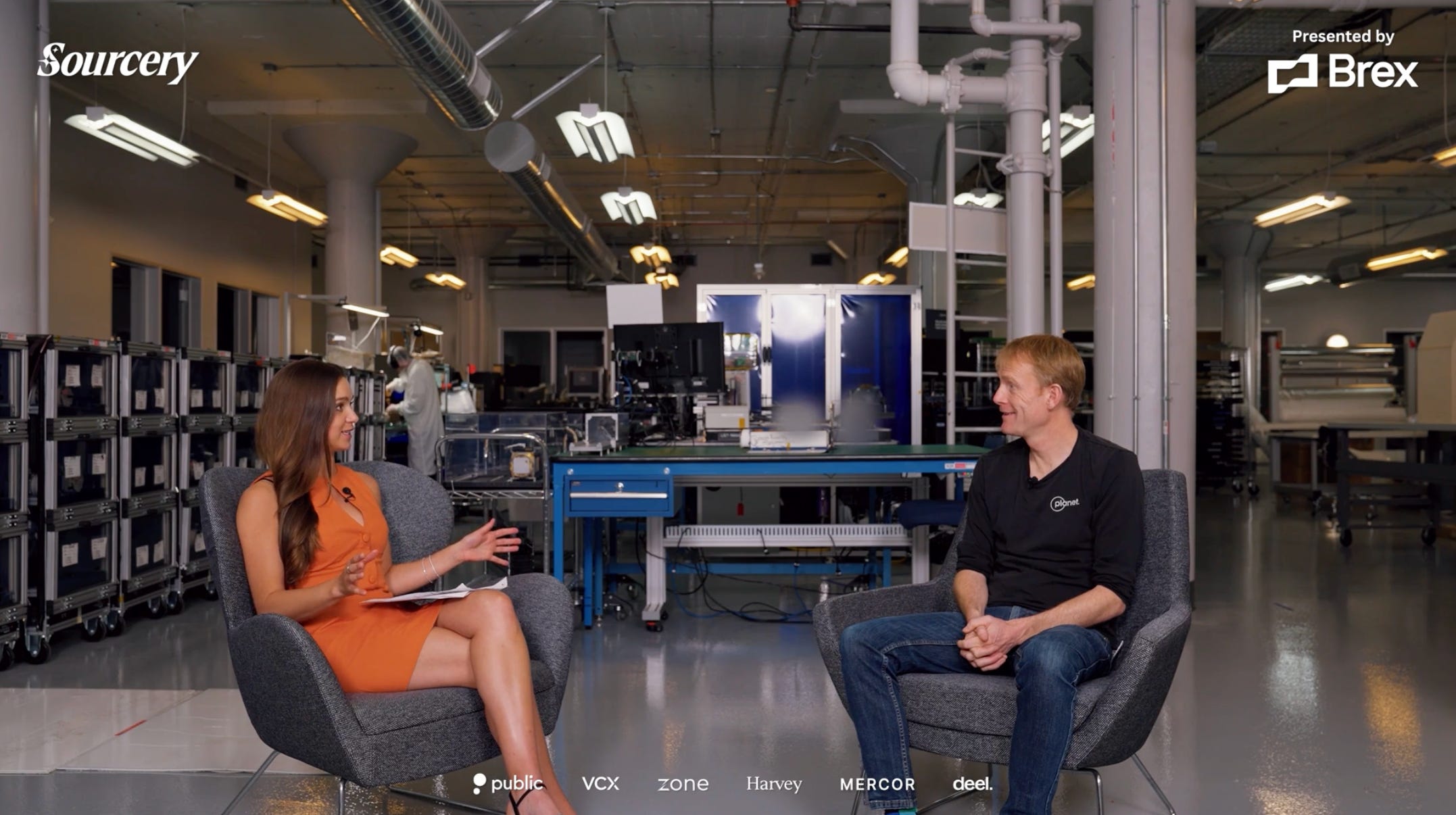
I visited Planet Labs (NYSE: PL) in San Francisco to tour its satellite manufacturing facility and sit down with Co-Founder & CEO Will Marshall.
→ Listen on X, Spotify, YouTube, Apple
Planet has built more than 700 satellites, second only to SpaceX, and operates the only constellation capable of imaging Earth’s entire landmass daily, generating roughly 4 million images per day for defense, government, and commercial customers.
Will explains Planet’s work with Google on Project Suncatcher and NVIDIA-powered compute in orbit, why AI data centers in space could eventually be cheaper than on Earth, and how its satellite intelligence supports Ukraine, the US Navy, and governments building sovereign space capabilities.
We also discuss Planet’s growing defense business, AI-powered Earth monitoring, its manufacturing expansion in San Francisco and Berlin, the search for extraterrestrial life, and lessons from 15 years of building Planet.
𝐓𝐈𝐌𝐄𝐒𝐓𝐀𝐌𝐏𝐒
(00:00) Will Marshall, Co-Founder & CEO at Planet Labs
(00:49) “We go where the cool people are”
(01:46) What it takes to image Earth every day
(04:13) Why information is power in modern war
(07:39) Why countries want their own satellites
(08:34) How Wall Street and Big Tech are watching from space
(10:22) The new face of warfare
(11:16) The most surprising uses of satellite imagery
(14:49) Imaging any point on Earth within 30 minutes
(17:24) What if you could ask a satellite a question?
(19:41) Every AI story comes back to compute
(20:38) Do data centers in space make sense?
(25:32) Why satellites are so sensitive
(26:55) The NASA maverick who made Planet Labs possible
(28:37) Who's on Planet Labs no-go list
(29:18) Will's prediction on finding aliens
(33:34) Inside NASA's alien hotline
(35:05) How a childhood hero inspired Will’s space career
(38:21) Why persistence matters most

Brought to you by:
Brex—The intelligent finance platform: cards, expenses, travel, bill pay, banking—wrapped into a high-performance stack. Built for scale. Trusted by OpenAI, Anthropic, Vercel, Granola, Deepgram, & Sourcery.. teams that move fast AF. visit → brex.com/sourcery

Harvey—The AI platform built for legal work, is helping the best firms and companies close deals faster. More than 200,000 lawyers, 80% of the Am Law 100, and over 20% of the Fortune 500 build with Harvey. Visit: Harvey.ai
Zone—develops next-generation data center campuses, partnering with AI companies, site developers and technology leaders to bring compute online faster and at scale. Visit: zonefrontier.com
Mercor—The human intelligence behind frontier AI. Frontier labs and leading enterprises use Mercor to turn the knowledge of 5M+ experts into the data, evals and benchmarks that make AI better at real work. Visit: http://mercor.com/sourcery
VCX—VCX is the public ticker for private tech, allowing investors of all sizes to invest in venture capital. View The Portfolio at GetVCX.com
Deel—Deel is the global people platform that helps startups hire, manage, pay, and equip anyone, anywhere. Trusted by more than 35,000 fast-growing companies, Deel is the people platform that just works, so teams can scale without the chaos. Visit: deel.com/sourcery
Public—Investing platform Public is the world's first agentic brokerage. You can invest across stocks, options, bonds, crypto, event contracts, & more, then automate anything with AI Agents. Seriously, just tell an Agent what you want—from "Set up a buy-the-close, sell-the-open strategy for me" to "Automatically sweep any cash over $10k from my bank to my brokerage account." Agents can monitor markets, run strategies, & manage your cash 24/7. Get started: public.com/sourcery
Planet Labs CEO Will Marshall on Earth Intelligence, Sovereign Satellites, & Data Centers in Orbit
Planet Doubles Satellite Production at Its San Francisco HQ
Planet Labs (NYSE PL) builds satellites at a mass manufacturing facility in the middle of San Francisco, a few blocks from Anthropic, OpenAI, and Google’s Gemini team. The company was founded in 2010 by 3 NASA scientists, including Co-Founder and CEO Will Marshall, who moved the team up from NASA Ames near Mountain View.
The facility tour covers Planet’s origins in a garage, the gowning area and clean room, and a testing area that runs satellites through vibration, shock, and thermal conditions they will face during launch and in orbit. A new Dove production line sits on the third floor, part of an expansion that doubled Planet’s manufacturing capacity in San Francisco.
Planet has built 718 satellites, the second most of any company after SpaceX. The company’s approach traces to a NASA experiment that put phones into space, which led to shrinking satellites the size of a double-decker bus down to small, mass-produced spacecraft launched in larger numbers at lower cost.
“We have put up enough satellites to image the entire Earth every day, which is the first fleet that has ever done that.”
→ Listen on X, Spotify, YouTube, Apple
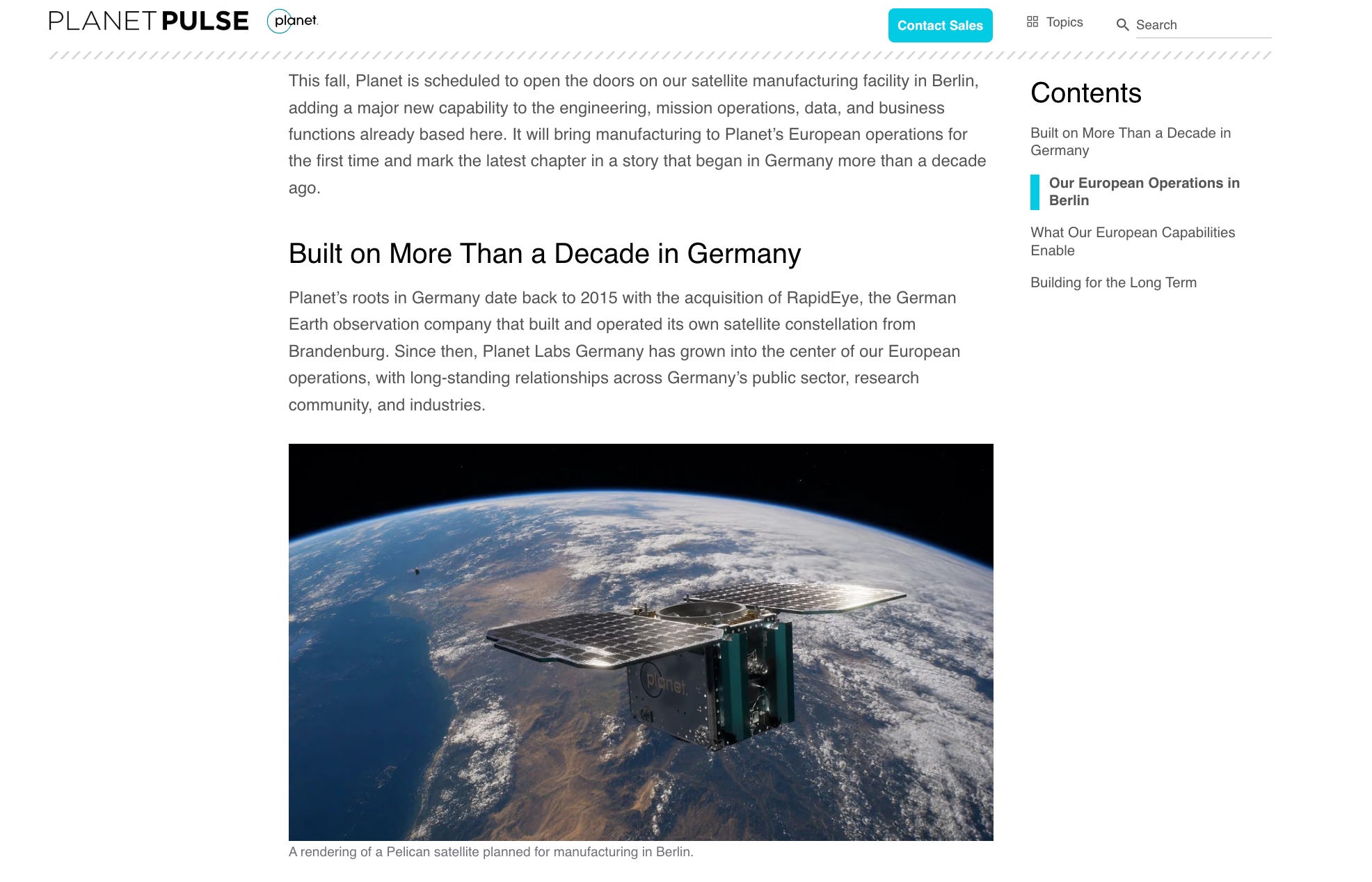
Berlin Facility Scales to Up to 60 Pelican Satellites a Year
Planet opened a second manufacturing facility in Berlin on September 22, 2026, previewed by German Economy Minister Katherina Reiche. The site doubles Planet’s production capacity for its high-resolution Pelican satellites, with the first satellite scheduled for completion before the end of 2026 and capacity to scale to up to 60 satellites per year.
The Berlin facility also houses mission operations, IT, legal, marketing, HR, and sales. Planet has a launch agreement with Isar Aerospace to fly a Pelican on an Isar rocket, which would be Germany’s first launch of a German-built satellite on a German-built rocket.
Germany’s economy ministry stated the facility receives no government subsidies. The expansion follows a €240M multi-year agreement funded by the German government for dedicated capacity and direct downlink on Pelican satellites over specified European regions.
“We opened a manufacturing facility there, and we doubled our capacity there as well, so that we can build satellites there too. And that’s all because we’re seeing a lot of countries needing our data really quickly.”

Geopolitics & AI Drive Demand for Earth Observation Data
Marshall points to 2 forces behind Planet’s growth, the fragmentation of the geopolitical environment and the rise of AI. Both depend on information about the physical world.
“We’re seeing two big trends in the world. One is the geopolitical changes that are happening, the fragmentation, the changes to the geopolitical environment. And the second is AI.”
Planet sells information. Its fleets collect roughly 30 TB of data and 4M images per day, with about 3,000 images archived for every point on Earth’s landmass. Customers use that data across agriculture, security, disaster response, and finance.
Marshall’s umbrella term for where this goes is Planetary Intelligence, combining Planet’s global sensing, historical Earth data, AI models, and eventually compute in space into a system that understands what is happening in the physical world in near real time. Planet positions it as the physical-world counterpart to generative AI.
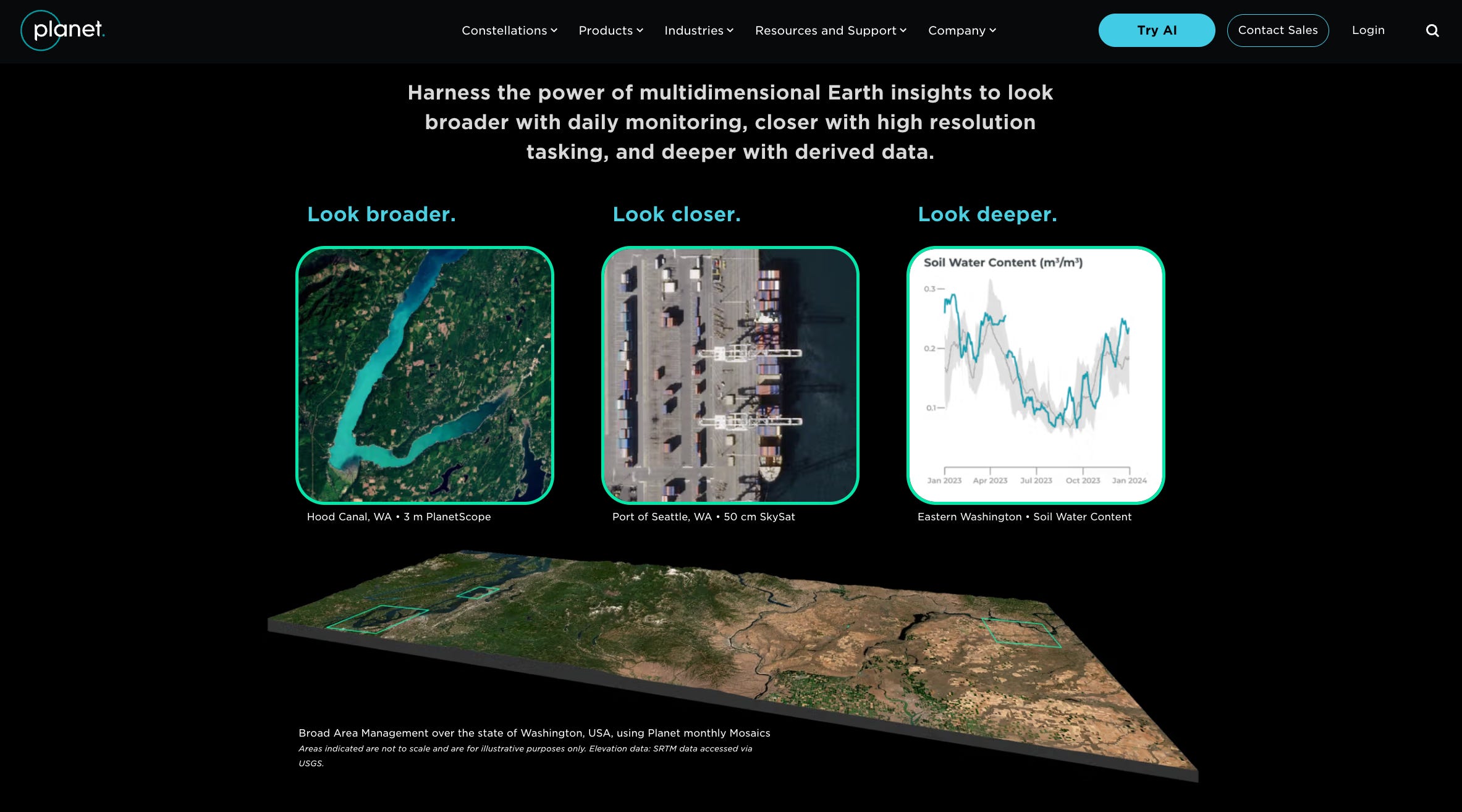
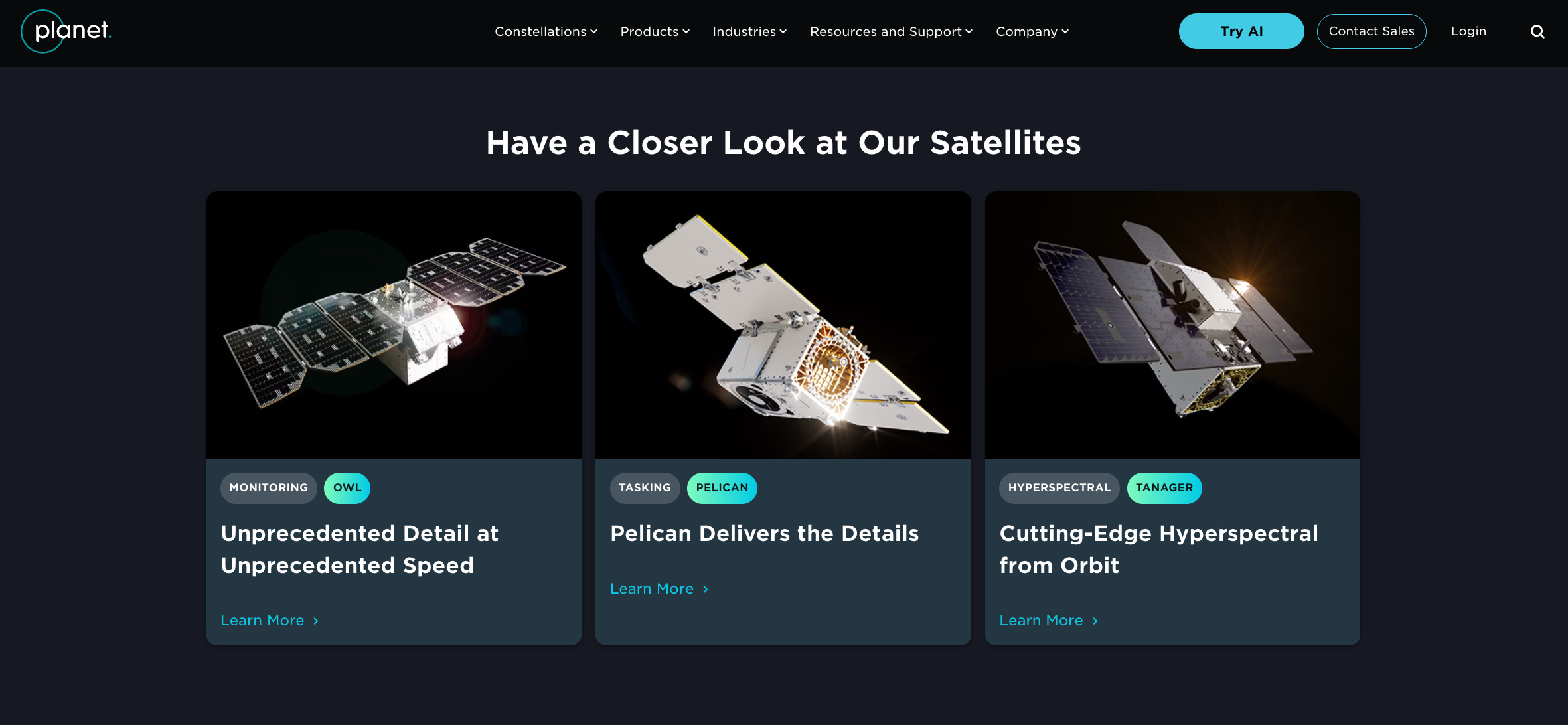
Dove, Pelican, Tanager, & Owl Cover Daily Scan, High Resolution, & Hyperspectral
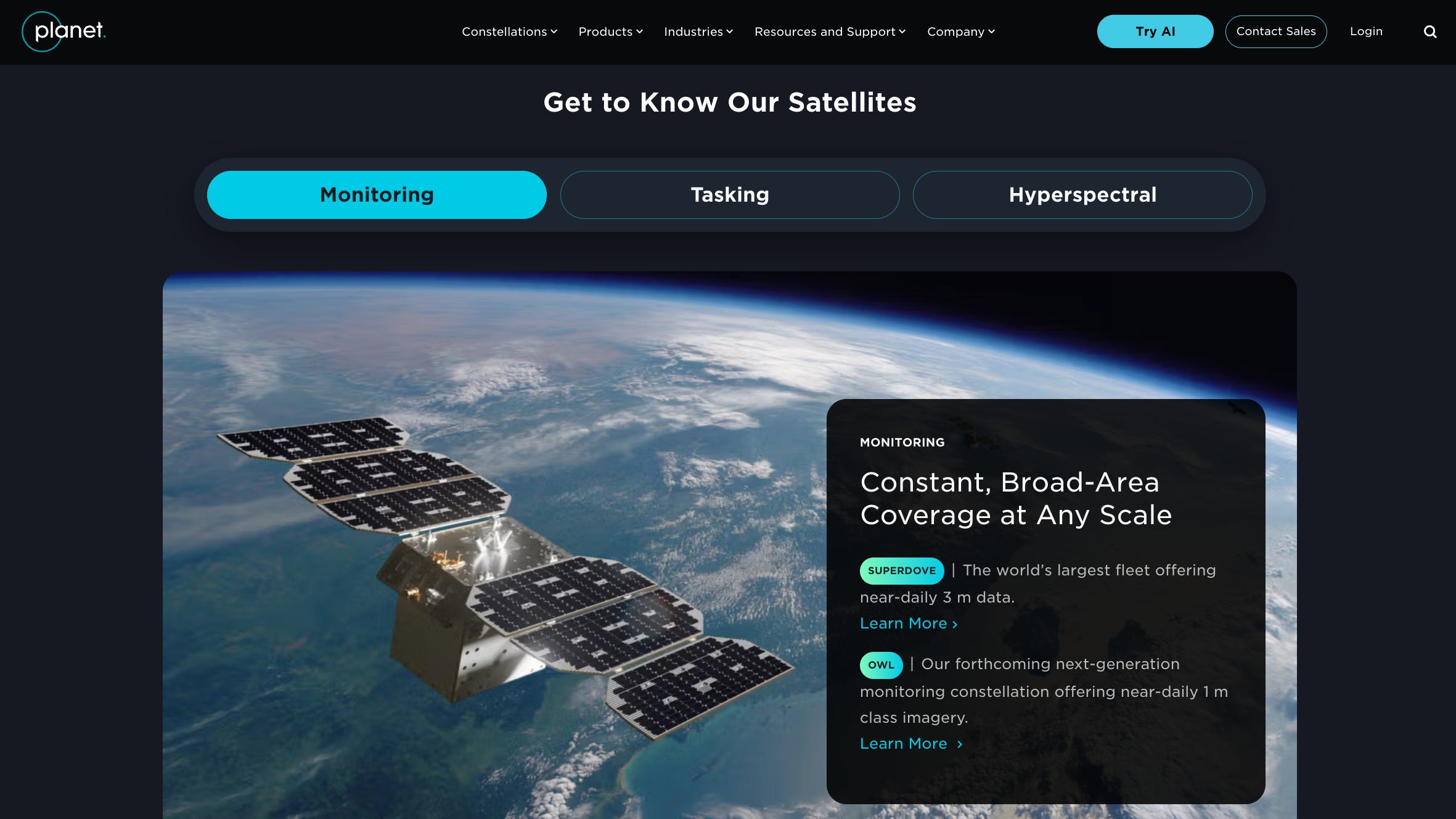
The Dove fleet is the daily scan, imaging about 200M square kilometers including all of Earth’s landmass and key ocean territory, in 8 spectral bands at 3 meter resolution. Planet is the only operator running a constellation that images Earth’s full landmass every day. Planet’s SuperRes product uses AI to render this 3m imagery as a 2m-class visual product for human interpretation, while the sensor’s native optical resolution stays at about 3m.
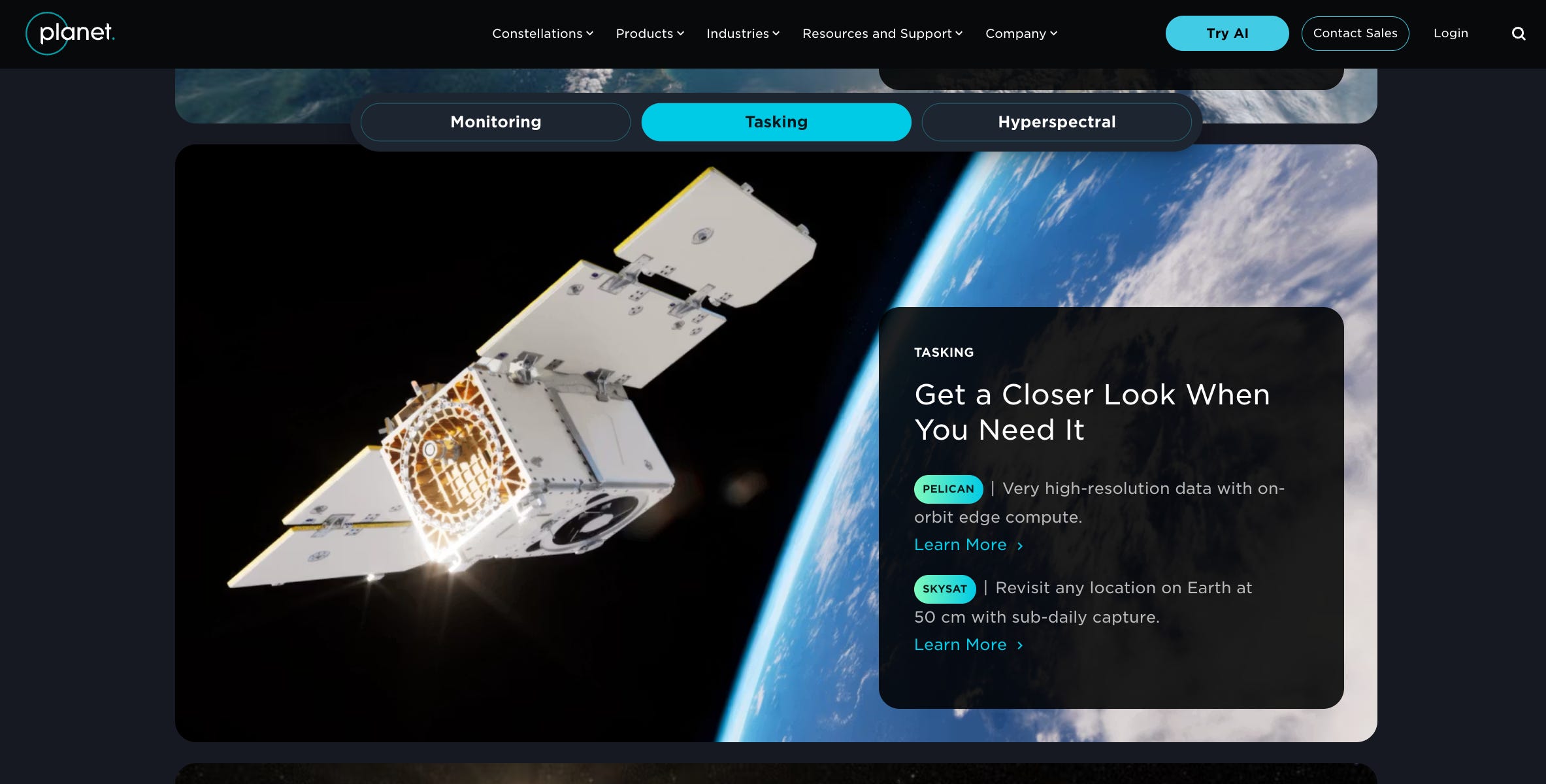
The Pelican fleet is Planet’s highest resolution system at 30cm, tasked by customers to image specific locations. Each Pelican weighs about 215kg. Planet had 10 Pelicans on orbit as of September 2026, and its target is a 30 minute turnaround from request to analyzed image anywhere on the planet.
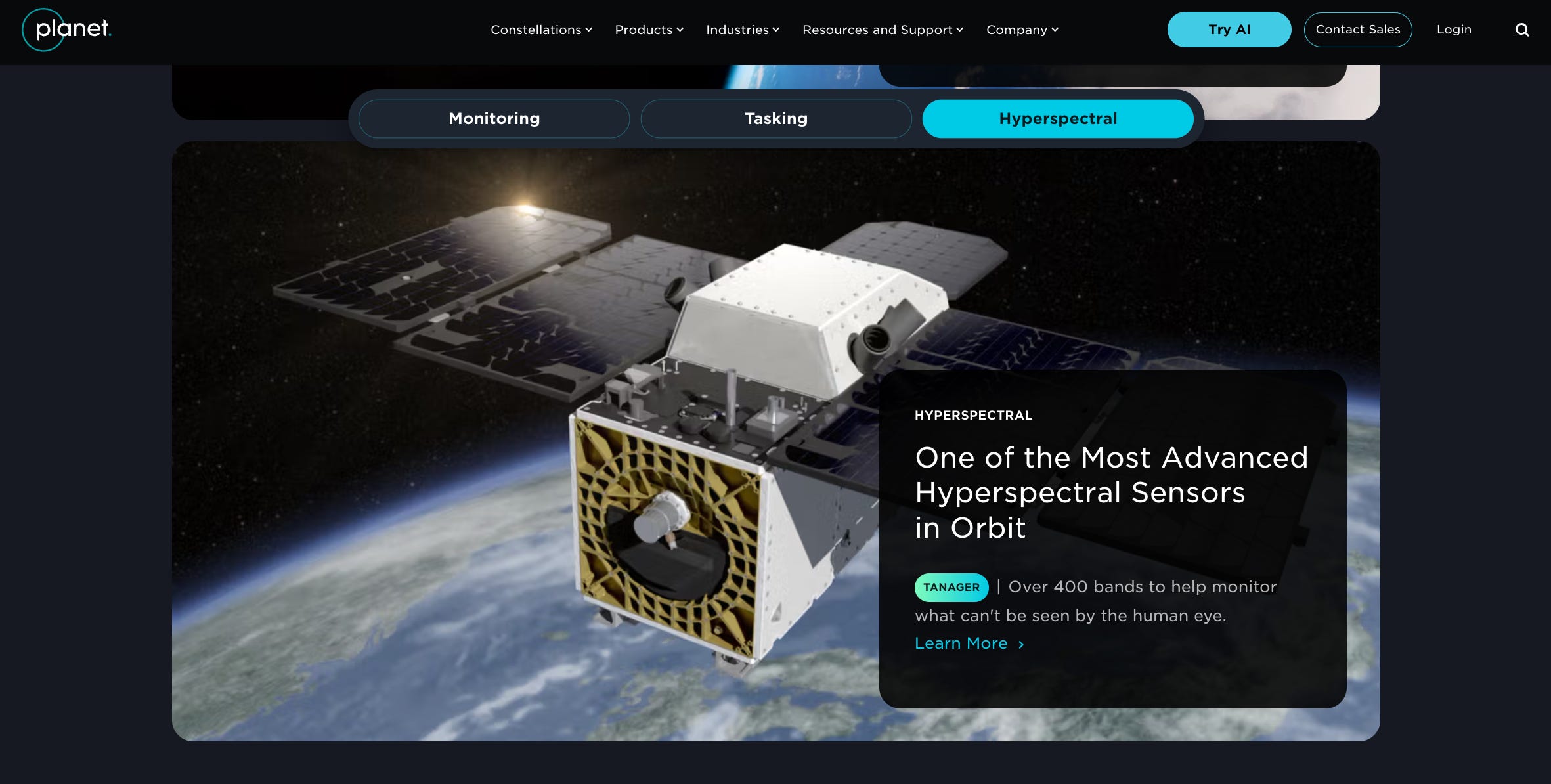
The Tanager fleet is hyperspectral, capturing more than 400 narrow spectral bands per point. Tanager-2, built with Carbon Mapper, launched October 1, 2026 with 426 bands at 30 meter resolution, and Planet plans at least 3 more Tanager satellites.
“There’s this type of blue or green such that you can identify tree species, crop species.”
Tanager data identifies crops and tree species, separates camouflage from real vehicles, and detects methane leaks invisible to the eye. Operators use the alerts to shut off leaks, which cuts emissions and saves them lost product.
Planet’s next fleet, Owl, is designed for near-daily 1-meter class imagery of Earth’s entire landmass with a 60+ km swath and NVIDIA GPUs onboard. Owl is planned to upgrade the SuperDove constellation over time, with a technology demonstration scheduled for late 2026. On Planet’s Q2 call, Marshall said customer feedback is pushing the company to accelerate Owl, which targets roughly 10X more data and latency as low as an hour in key areas.

Satellites Function as National Security & Economic Infrastructure
Satellites act as the sensors of a country. The US gets early warning of missile launches from space, and GPS guides its munitions.
“In many ways, satellites are like the sensors of countries. They are acting as their eyes and their ears.”
Civilian infrastructure runs on the same systems. Phone maps, card payments, satellite map layers, and weather forecasts all depend on satellites. The space economy is a few hundred billion dollars a year, and the economic activity that depends on it is much larger.
“People don’t realize how much it’s baked into our lives today.”
Persistent Monitoring & Early Warning Lead Defense Growth
Planet reported record quarterly revenue in fiscal Q2 2027, citing satellite services and defense and intelligence demand. Commercial and civil government segments are also growing, with defense growing fastest. As of late October 2026, Planet shares traded near $13, down more than 70% from their 52-week high, for a market cap of roughly $5B.
Ukraine uses Planet data to monitor threats before they reach its borders, guide its drones, and plan and assess long-range operations. Planet imagery also captured the Russian troop buildup ahead of the full-scale invasion. Marshall says satellite data is also playing a role in Iran.
“Ukraine has two distinct advantages. One is they really care about their country and they don’t want it invaded, and the second is they have information advantage, and information is power.”
The US Navy uses Planet to monitor about 13M square kilometers of the South China Sea for illegal fishing, North Korean vessels breaking oil embargoes, and Chinese island building, and shares that picture with allies including the Philippines. Admiral Paparo at INDOPACOM uses Planet data to monitor Chinese military and industrial facilities for early warning, including any move on Taiwan.
NATO has used Planet’s SkySat imagery since 2024 under its Alliance Persistent Surveillance from Space program, and in June 2025 signed a 7-figure contract pairing PlanetScope broad area monitoring with AI analytics to strengthen its indications and warnings capability. NATO also uses Planet to track dark vessels in waters around the EU.
This work runs through Planet’s Global Monitoring Service, which continuously watches large regions for changes and automatically tips and cues Pelican satellites to zoom in on anomalies. Planet describes the shift as moving from imaging a given coordinate to watching a region and flagging when something changes. The National Geospatial-Intelligence Agency awarded Planet a contract in August 2026 to deploy GMS.
“We give everyone a peripheral vision of what’s going on to help them see threats earlier.”
Satellite Services Deliver Sovereign Satellites in Months
The US administration has asked allies to carry more of their own defense burden, and the first requirement for many of those countries is understanding threats in their region. Countries that started out buying Planet data now buy dedicated satellites for sovereign control. Planet builds them, launches them, and hands operations to the customer. Planet calls this business Satellite Services, and management described it as transformative for fiscal 2026.
“In the case of Sweden, we managed to launch the first satellite for them, the first reconnaissance satellite the country had ever had, in 4 months after we signed the contract.”
Sweden signed a multi-year, low 9-figure agreement with Planet. Its first sovereign satellite launched May 3, 2026 on a SpaceX rideshare and was handed over to the Swedish Armed Forces in Planet’s fiscal Q2. Planet says the timeline accelerated Sweden’s program by 4 years. Planet delivered dedicated capacity under the German-funded contract within 2 months of signature.
In Japan, SKY Perfect JSAT signed a $230M agreement for a constellation of 10 Pelican satellites that JSAT will own, with launches beginning in 2027. Planet retains licensing rights to imagery from those satellites to serve its own customers.
Planet does not sell to countries on US, EU, or UN embargo lists, and an internal employee group reviews deals against the company’s values.

Hedge Funds & Hyperscalers Buy Earth Observation Data
On the commercial side, Planet works with agriculture companies including John Deere, Bayer, and BASF on crop yields. Hedge funds buy Planet data for signals on stocks and commodities, drawing on global crop yield and infrastructure development data.
“We’ve even had some of the hyperscalers around here buy our data. Why? Because they want to monitor not just their data center construction, but they want to monitor their competitors’ data center construction.”
In August 2026, Planet renewed a contract with a hyperscaler AI developer for global monitoring of data center and semiconductor facility construction, using Pelican imagery to track construction milestones.
Civil government customers include counties and states responding to wildfires, NASA for Earth science, and Brazil, where Planet scans 8M square kilometers of the Amazon daily and alerts federal authorities to illegal mining, deforestation, and trafficking. After the LA fires, AI processing of Planet imagery produced building-by-building damage assessments for emergency response and insurance claims with AXA.

Planet’s AI App Makes Satellite Imagery Queryable in Natural Language
Planet’s agentic AI app moved to open beta in 2026. Users ask questions in plain language, and the app searches Planet’s archive, runs change detection, incorporates public information, and returns locations, analysis, and reports. Planet calls the concept Queryable Earth.
“You can just ask questions and get answers. That is going to totally explode the number of users.”
NASA has about 1,000 people who know how to analyze satellite data. Most potential users, from farmers to journalists to county officials, do not. Marshall compares the shift to giving a computer an operating system after years of selling it with no software.

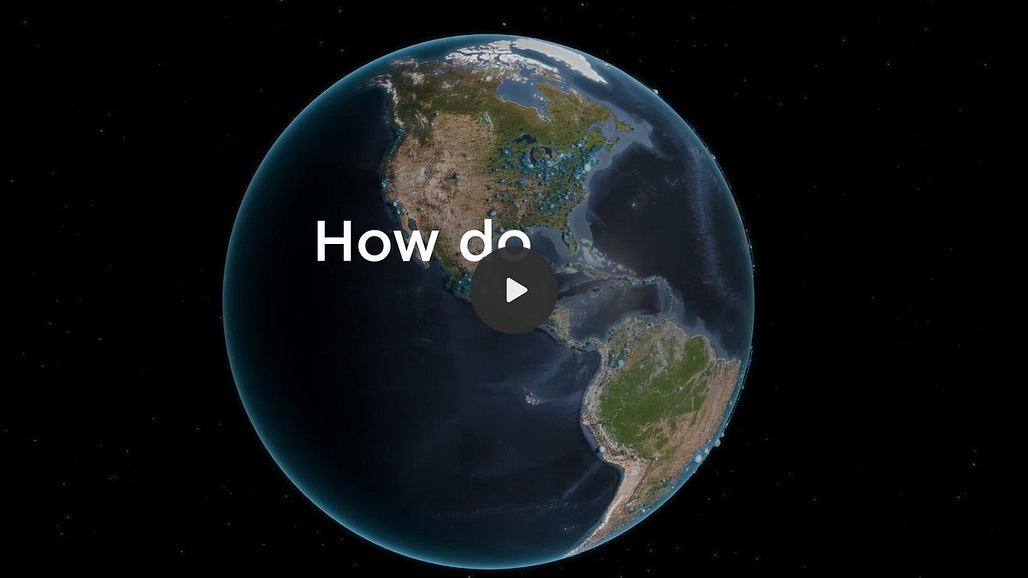
Planet is also developing Large Earth Models, its equivalent of LLMs trained on Earth observation and other sensor data, built to understand a specific flood today against that location’s history. Marshall describes Planet’s archive plus Landsat as a physical-world equivalent to Wikipedia for model training. Planet is working with NVIDIA to turn its daily imagery into AI embeddings, a searchable vector map of Earth, and Marshall has cited collaborations with Anthropic and Google on training AI with Planet data.
Planet runs its compute mainly on Google Cloud with some workloads on AWS. Its largest solution today is GMS, which already uses AI.
Planet is moving processing into orbit. On March 25, 2026, Pelican-4 imaged an airport over Alice Springs, Australia and used an onboard NVIDIA Jetson Orin module to detect airplanes. During the LA fires, Planet imaged the area within a couple of hours of ignition, but downlink and processing pushed delivery several hours into the fire. Onboard compute is designed to cut that window to minutes.


Google Suncatcher & the $200 to $300 per Kg Threshold for Space Data Centers
Planet launched the first demonstration satellite for Google’s Project Suncatcher on October 1, 2026 aboard SpaceX’s Transporter-18, alongside Tanager-2 and 18 SuperDoves. The prototype tests Google TPUs in orbit, and the spacecraft has been commissioned and is performing well.
Planet and Google studied the economics of orbital data centers about 8 or 9 years ago, comparing ground costs for energy, buildings, and permitting with launch and satellite costs. The study found space becomes cheaper once launch reaches about $200 to $300 per kg. Marshall estimates SpaceX’s current cost at just over $1,000 per kg, 3X to 4X above that threshold.
“Data centers is all an energy problem.”
On the ground, solar is the cheapest power per dollar, but clouds and nightfall force operators to add batteries, gas, or nuclear, which adds permitting and time. A satellite in sun-synchronous orbit faces the sun continuously.
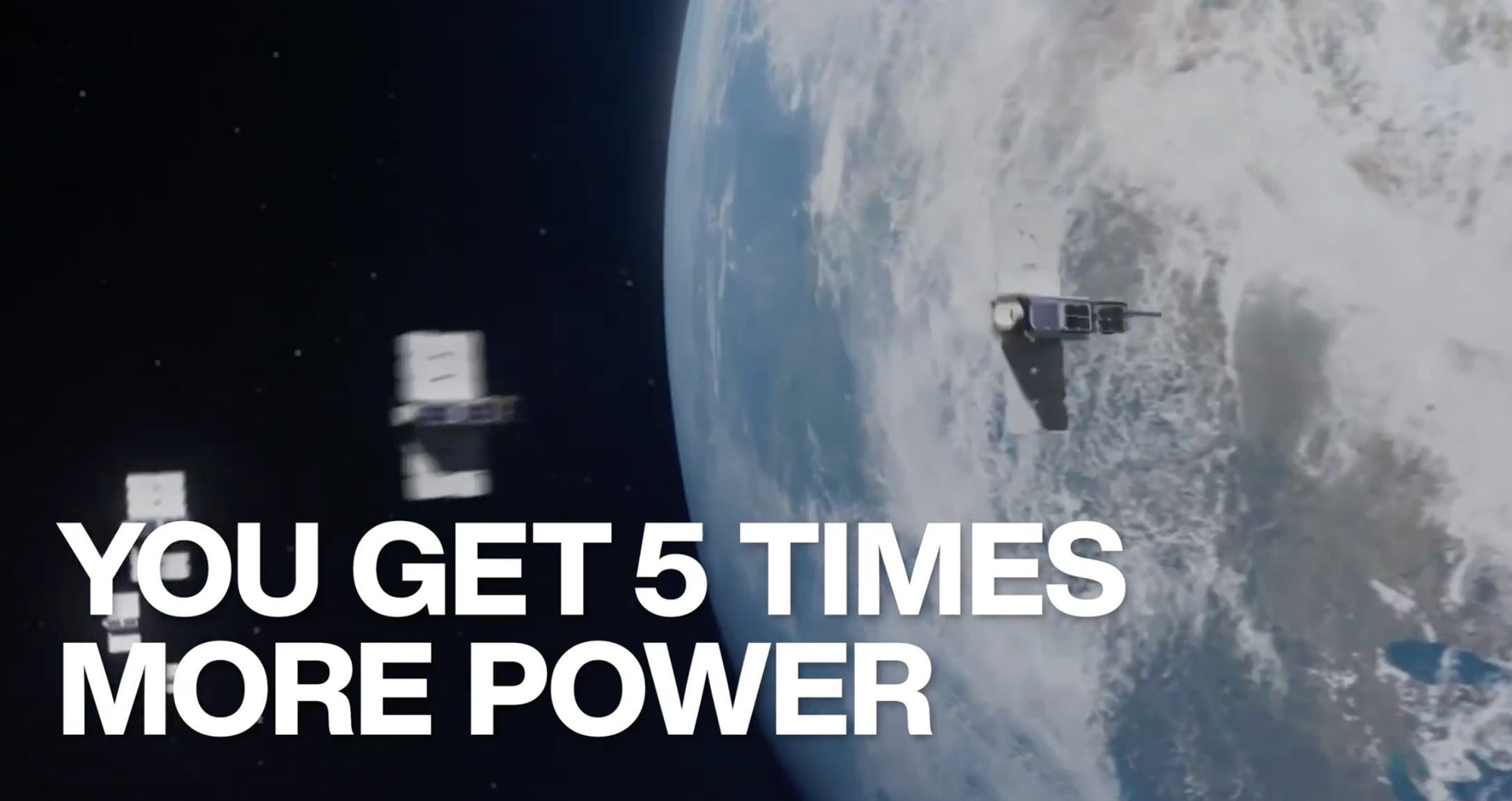
“In space, for each solar panel, you get 5 times more power than you get on the ground.”
Chips in orbit would be cooled with radiators facing deep space, with commands and results sent by radio. Orbital data centers would run as clusters of large satellites with rolled-out solar arrays, linked to each other and to the ground by lasers. Marshall cites Google CEO Sundar Pichai’s view that most compute will move to space within 10 years, and puts Google’s annual compute spend at about $200B, close to the size of the entire space sector today.
Marshall’s broader thesis is Distributed Intelligence Infrastructure in Orbit, where sensors, compute, and interconnected infrastructure move into space together, sensing Earth continuously, processing observations in near real time, and returning answers to the ground. Compute is the first piece, with power beamed from space to follow later.



Planet Has Supplied Imagery for UAP Investigations & Found No Aliens
Planet has imaged more of Earth than any other operator and has not found evidence of aliens. The US government’s office for investigating unidentified anomalous phenomena requested Planet imagery, and Planet provided it. Most flagged objects, including flying devices and other anomalies, have ordinary explanations.
A friend of Marshall’s at NASA ran the agency’s line for public reports of alien sightings, which he called “the fruitcake line.” More than 90% of those calls came from people seeing Venus and not recognizing it. Some sightings remain unexplained, but Marshall puts the odds of any being alien as very low, applying the standard that extraordinary claims require extraordinary evidence.
“The universe is remarkably silent. We haven’t seen any aliens yet, and that’s shocking.”
Astronomers have now identified more than 6,300 exoplanets, and none show obvious signs of life. The gap between that count and the absence of contact is the Fermi paradox, named for physicist Enrico Fermi. Marshall expects evidence of life beyond Earth within roughly 6 to 7 years, found by reading exoplanet atmospheres with the James Webb Space Telescope and ground telescopes, the same spectroscopy Tanager uses to fingerprint methane on Earth. An atmosphere with Earth’s 20% oxygen would be a strong signal, since oxygen reacts with nearly everything and only persists when life keeps replenishing it.
No search has yet detected radio signals or other signs of technological civilizations. One explanation scientists take seriously is that civilizations destroy themselves once their technology advances far enough, first with nuclear weapons and now with AI, which brings risks from cyberattacks, weapons development by bad actors, and loss of control. Marshall borrows Buckminster Fuller’s term Spaceship Earth for a planet that is the only known home of life.
“It’s our cosmic duty to take care of the Earth.”
Owl, Berlin Output, JSAT Pelicans, & Suncatcher Results Lead Planet’s Roadmap
Several milestones land in the next 12 to 18 months. Berlin is scheduled to complete its first Pelican before the end of 2026 and scale toward up to 60 satellites per year from 2027. The Owl technology demonstration is slated for late 2026, and the Isar Aerospace flight carrying a German-built Pelican is targeted for early 2027.
JSAT’s 10-satellite Pelican constellation begins launching in 2027, adding capacity that Planet can also sell to its own customers. At least 3 more Tanager satellites are planned with Carbon Mapper, and the Pelican fleet continues building toward a 30 minute request-to-answer turnaround anywhere on Earth.
On Suncatcher, Planet and Google are running the TPU tests now and plan to publish results as they come in.
“We will test that TPU, and we’ll see how that goes, and we’ll tell the world more about that as we go.”
Planet’s onboard compute roadmap moves from today’s NVIDIA Jetson Orin modules toward more powerful Jetson Thor processors, with a stated goal of eventually running large language models in orbit. Combined with Owl’s daily 1m scan, that would let satellites detect, classify, and report changes on the ground before any raw imagery is downlinked.
Half of Planet’s First 10 Employees Remain 15 Years Later
Planet was founded on a mission to image the entire world every day and make change visible, accessible, and actionable. Early on, venture investors told the founders the plan was not possible because no company had ever launched that many satellites.
“Our team has been at this for years, and we knew that we were on a mission that was really important to help the planet.”
The team kept going. 15 years later, Planet has built 718 satellites, operates the only constellation that images Earth’s full landmass every day, and is listed on the NYSE.
“I’d say persistence and endurance is the biggest thing that actually distinguishes entrepreneurs that succeed and don’t.”
The founding team has largely stayed. At Planet’s 10th anniversary, 7 of its first 10 employees still worked at the company, and at the 15th about half remain. Marshall says those early employees could work anywhere and stay for the mission and the chance to work on satellites every day.
→ Listen on X, Spotify, YouTube, Apple

The material presented on Molly O’Shea’s website are my opinions only and are provided for informational purposes and should not be construed as investment advice. It is not a recommendation of, or an offer to sell or solicitation of an offer to buy, any particular security, strategy, or investment product. Any analysis or discussion of investments, sectors or the market generally are based on current information, including from public sources, that I consider reliable, but I do not represent that any research or the information provided is accurate or complete, and it should not be relied on as such. My views and opinions expressed in any website content are current at the time of publication and are subject to change. Past performance is not indicative of future results.
Paid Ad. Agents are an experimental AI tool. Its output may be inaccurate and is not investment advice. Public Holding’s, Inc. makes no guarantees about its accuracy or reliability—verify independently before use. Brokerage accounts & services provided by Open to the Public Investing, Inc. See additional disclosures at: https://public.com/disclosures/agenticdisclosures.