

"Cult classic, not a bestseller."
IYKYK: After nearly a decade building in stealth, Qasar Younis (CEO) & Peter Ludwig (CTO) of Applied Intuition join Sourcery to break down how they’ve quietly built one of the most important AI companies in the world reaching a $15 billion valuation.
→ Listen on X, Spotify, YouTube, Apple
Founded in 2017, Applied Intuition is building the infrastructure layer for vehicle intelligence and physical AI, powering systems across automotive, defense, trucking, construction, mining, and agriculture. Today, 18 of the top 20 global automakers and major U.S. Department of Defense programs rely on their software.
The company has raised nearly $1B in total funding, including a $600M Series F at a $15B valuation, co-led by BlackRock and Kleiner Perkins, with participation from global investors such as Franklin Templeton, Qatar Investment Authority, Abu Dhabi Investment Council, Premji Invest, Stripes, Greycroft, BAM Elevate, & 137 Ventures.
Existing investors include Fidelity Management & Research Company, General Catalyst, Lux Capital, BOND, Elad Gil, Addition, and Tribe Capital, alongside early backing from Marc Andreessen.
What makes the company especially unique: despite raising over $1B, Applied Intuition has largely not relied on that capital to fund operations, instead building a profitable, capital-efficient business with long-term customer contracts and deep integration across industries
In this conversation, we cover:
• Why physical AI is fundamentally different from software AI
• How breakthroughs like transformers unlocked real-world autonomy
• The company’s horizontal-first strategy across industries
• Why they stayed quiet for years—and why that changed
• How they deploy autonomy in defense and industrial environments
• What hiring looks like in the AI era
Applied Intuition is building the infrastructure for AI in the real world.

𝐓𝐈𝐌𝐄𝐒𝐓𝐀𝐌𝐏𝐒
(00:00) Qasar & Peter, Co-Founders Applied Intuition
(01:15) Most startups are just "hobby projects"
(03:55) Becoming more public
(07:33) The breakthroughs that reshaped their strategy
(11:01) A moon rover simulator?
(11:37) Expansion playbook
(13:55) Raised $1B… Didn’t Use It
(15:04) Hiring in the AI era
(18:17) A team full of ex-founders and CTOs
(19:28) From manual to autonomous in 10 days
(23:18) Why great products drive results
(25:44) Books that shape thinking & why old books matter
(29:38) Turning books into company playbooks
Brought to you by:
Brex—The intelligent finance platform: cards, expenses, travel, bill pay, banking—wrapped into a high-performance stack. Built for scale. Trusted by teams that move fast. visit → brex.com/sourcery

Turing—Turing delivers top-tier talent, data, and tools to help AI labs improve model performance, and enable enterprises to turn those models into powerful, production-ready systems. Visit: turing.com/sourcery
VCX—VCX is the public ticker for private tech, allowing investors of all sizes to invest in venture capital. View The Portfolio at GetVCX.com
Deel—Deel is the global people platform that helps startups hire, manage, pay, and equip anyone, anywhere. Trusted by more than 35,000 fast-growing companies, Deel is the people platform that just works, so teams can scale without the chaos. Visit: deel.com/sourcery
Public-–Investing platform Public just launched Generated Assets, which lets you turn any idea into an investable index with AI. With Generated Assets, you can build, backtest, refine, and invest in any thesis with AI. Gone are the days of one-size-fits-all ETFs. Try it today: public.com/sourcery
Building a $15B Physical AI Company for the Real World
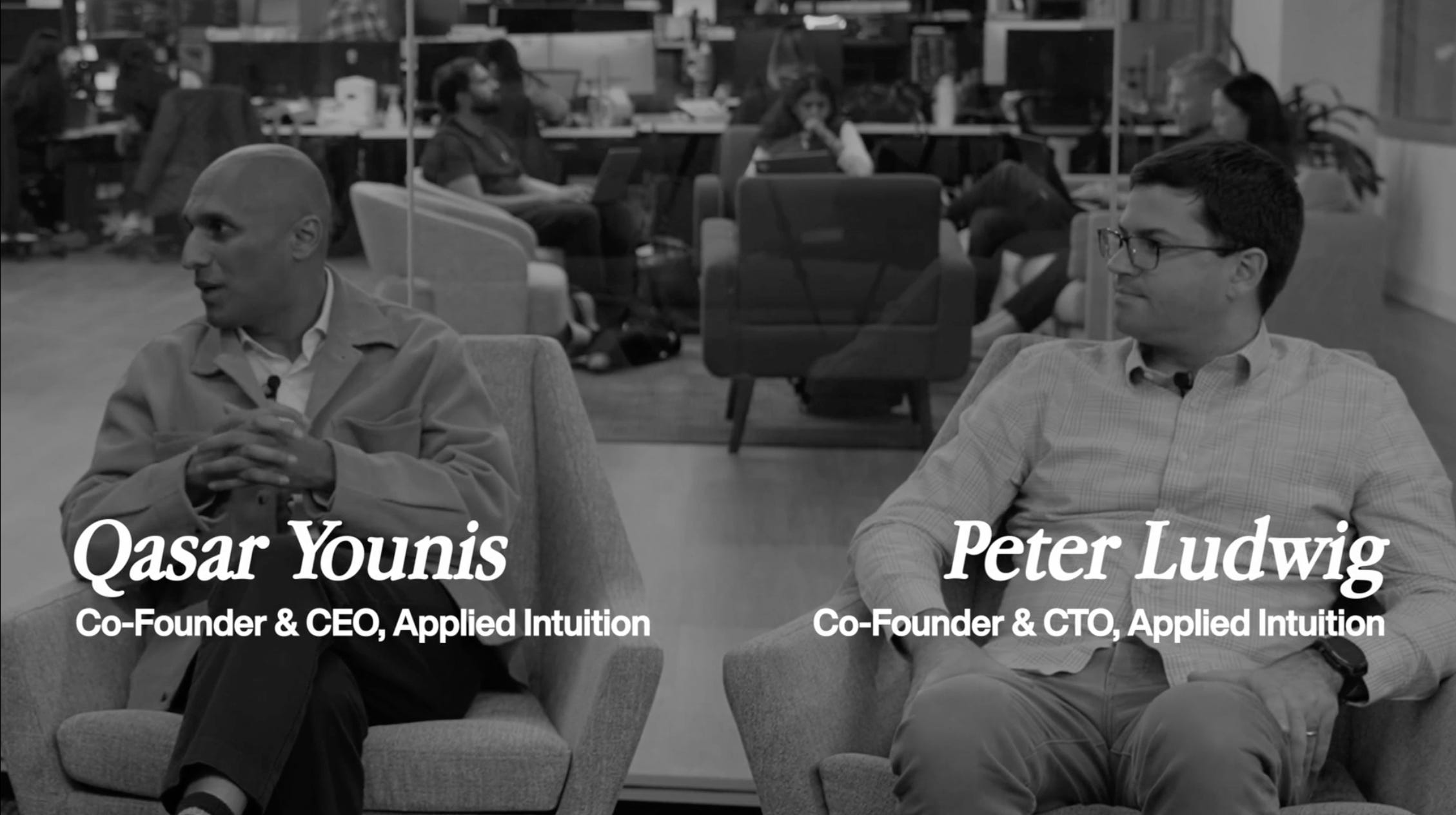
Qasar Younis (CEO) and Peter Ludwig (CTO) have quietly built one of the most consequential AI companies of this cycle.
Applied Intuition, now valued at $15 billion, sits at the center of a shift away from software-only AI toward what they describe as “physical AI”: intelligence that operates machines across the real world. Their systems power everything from passenger vehicles to defense systems, construction equipment, and industrial robotics. Today, 18 of the top 20 global automakers rely on their software, alongside major programs within the U.S. Department of Defense.
Despite raising nearly $1 billion in capital, the company has taken a fundamentally different approach than most AI startups. As Younis puts it, “We’ve raised close to a billion dollars… and we’re not using it to pay payroll.”
This is not a growth-at-all-costs company. It is a systems company, built deliberately over time.
From Simulation Tools to Physical AI Infrastructure
Applied Intuition did not start as a self-driving company. In fact, the founders made a deliberate decision to avoid going directly into autonomy.
“We started out building tools. We built simulators and data management offerings and large scale distributed compute offerings,” Ludwig explains.
This horizontal foundation allowed the company to embed itself across industries early. By working with automotive companies, defense contractors, and industrial players, Applied Intuition accumulated a unique vantage point on how AI would actually be deployed in the real world.
That vantage point became critical when the technology caught up.
Two breakthroughs shifted their strategy. The first was the emergence of transformers, initially applied to large language models. The second was the rise of end-to-end deep learning systems capable of directly controlling machines.
“That was the moment when we actually decided to really enter the self-driving space ourselves… not just for cars, but for any kind of machine,” Ludwig says.
This marked the transition from tooling provider to full-stack physical AI company.
Why Physical AI Is Fundamentally Different
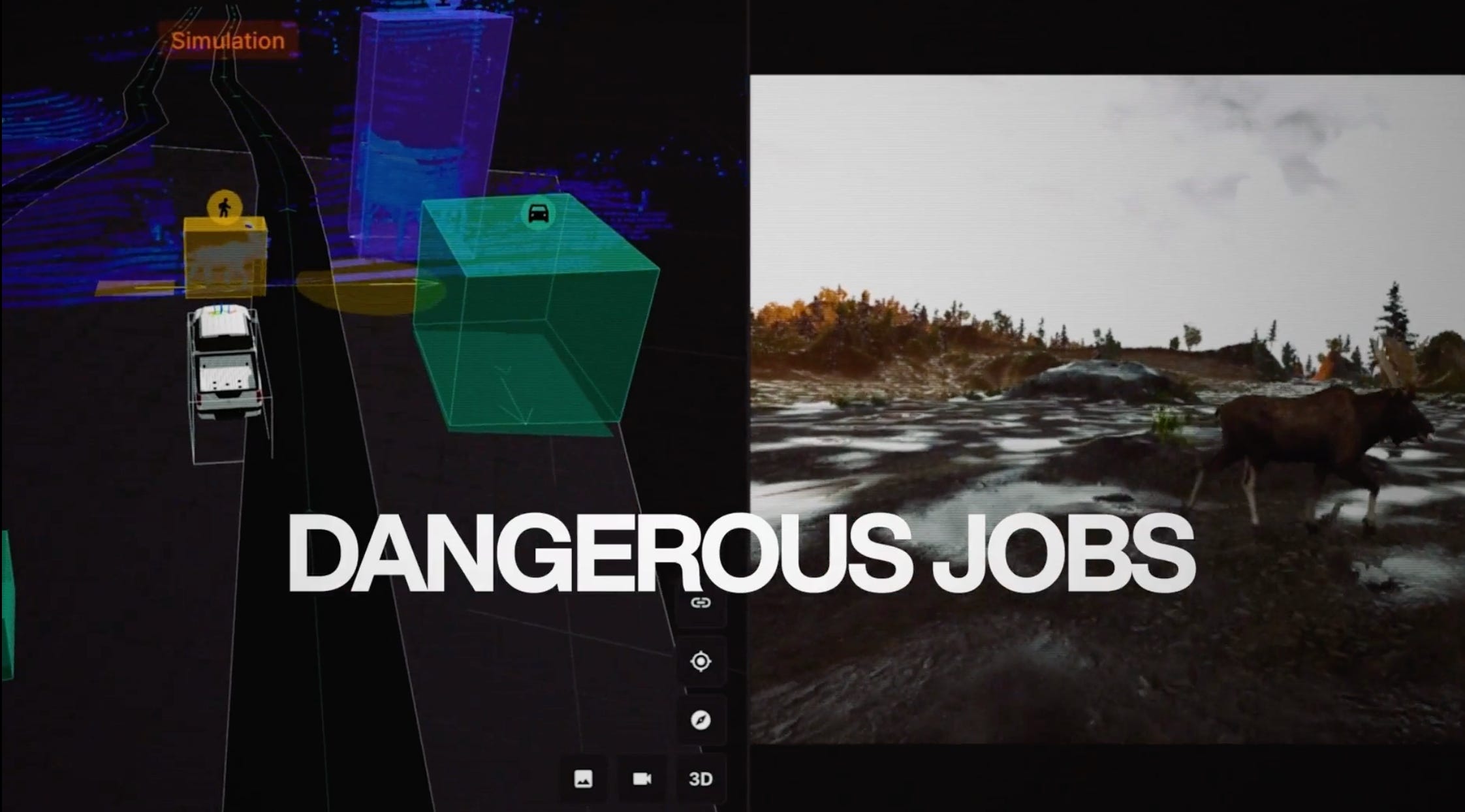
A core insight from the conversation is that physical AI is not just a harder version of software AI. It is a different category entirely.
“Physical AI is very different… the machines are different, the geographies and regulatory environments are different, and the diffusion is way, way slower,” Younis explains.
Unlike LLMs, which can scale through browsers and APIs, physical AI must integrate into fragmented real-world environments. Each deployment involves different hardware, different safety requirements, and different operational constraints.
This makes distribution slower, but also more defensible.
Time becomes a competitive advantage. Companies that have been building for years, integrating across industries, and learning from real-world deployments develop a compounding edge that is difficult to replicate.
Applied Intuition has leaned into this dynamic. Nearly a decade into building, they position longevity as a core part of their moat.

A Different Kind of Company
Younis is blunt about what he sees across the broader startup ecosystem.
“I think most companies in the Bay Area are more hobby projects than they are serious businesses.”
That critique reflects a deeper philosophical difference. Applied Intuition is not optimized for narrative or visibility. It has historically avoided attention altogether, only recently becoming more public as recruiting needs scaled.
The company’s operating model reflects this mindset. Financial performance is treated as an output, not an input.
“We don’t have good financials because we focus on financials. We have good financials because we focus on the products.”
This product-first orientation has enabled them to build long-term customer relationships across industries where reliability matters more than speed.

Deployment Speed in the Real World
Despite the inherent complexity of physical AI, the company has demonstrated the ability to move quickly when needed. In one example, Applied Intuition deployed autonomous capabilities onto military vehicles in less than 10 days after receiving them.
“We had a very small team retrofit our system onto the vehicles… and in 10 days we showed them autonomous operation,” Ludwig recounts.
The broader lesson, according to Younis, is that timelines in complex industries are often artificially inflated.
“This view that everything requires many years of planning is just false… we don’t have the luxury of waiting three or five or ten years.”
Speed, when paired with deep technical infrastructure, becomes a strategic weapon.

Hiring in the AI Era
According to Ludwig, there are now two distinct categories of high-value contributors.
“There’s two types of people…
Experts in using AI tools
Individuals who can actually push forward the state of the art,”
This reflects a broader transition in software development. The ability to leverage AI systems is becoming as important as traditional specialization.
Applied Intuition’s hiring strategy mirrors its broader philosophy. It prioritizes people who are motivated by real-world systems, not just abstract models. Engineers interested in cars, defense systems, or industrial machinery are often a better fit than those drawn purely to consumer AI.


Investor Base & Capital Strategy
Applied Intuition’s cap table reinforces its positioning as a long-term infrastructure company. The company has attracted backing from leading venture firms, crossover investors, and sovereign capital.
Early support from Andreessen Horowitz, General Catalyst, and Lux Capital was followed by growth investors such as Elad Gil, Addition, and BOND. More recent rounds brought in global institutions including BlackRock, Kleiner Perkins, Franklin Templeton, and major sovereign wealth funds.
Unlike many AI companies, Applied Intuition has actually not relied on fundraising to sustain operations. Instead, it built a revenue-generating business early, allowing it to preserve capital while scaling.
This combination of deep capital backing and operational discipline is rare, particularly in a category as capital-intensive as autonomy.

The Shift to AI for Atoms
The broader implication of Applied Intuition’s trajectory is that the next phase of AI will extend beyond software.
The current wave has been defined by text, images, and code. The next wave will be defined by machines.
Applied Intuition is positioning itself at the center of that transition, building the systems that allow AI to operate in the physical world.
This is really an infrastructure story, and like many infrastructure companies, it has been built largely out of sight.. flying under the radar.
For nearly a decade, Applied Intuition focused on embedding itself into industries where AI adoption is slow, complex, and high-stakes. That foundation is now compounding.
The result is a company that may not be widely known, but is deeply integrated into the systems that will define the next era of AI.
Or, as the conversation makes clear, this is not a fluffy AI company riding the supercycle wave, or creating another hype narrative.
This is serious AI for atoms.
→ Listen on X, Spotify, YouTube, Apple

The material presented on Molly O’Shea’s website are my opinions only and are provided for informational purposes and should not be construed as investment advice. It is not a recommendation of, or an offer to sell or solicitation of an offer to buy, any particular security, strategy, or investment product. Any analysis or discussion of investments, sectors or the market generally are based on current information, including from public sources, that I consider reliable, but I do not represent that any research or the information provided is accurate or complete, and it should not be relied on as such. My views and opinions expressed in any website content are current at the time of publication and are subject to change. Past performance is not indicative of future results.
Paid Endorsement. Brokerage services by Open to the Public Investing Inc, member FINRA & SIPC. Advisory services by Public Advisors LLC, SEC-registered adviser. Crypto trading provided by Zero Hash LLC, licensed by the NYSDFS. Generated Assets is an interactive analysis tool by Public Advisors. Output is for informational purposes only and is not an investment recommendation or advice. See disclosures at public.com/disclosures/ga. Matched funds must remain in your account for at least 5 years. Match rate and other terms are subject to change at any time.