


$1B & Launching Base Core
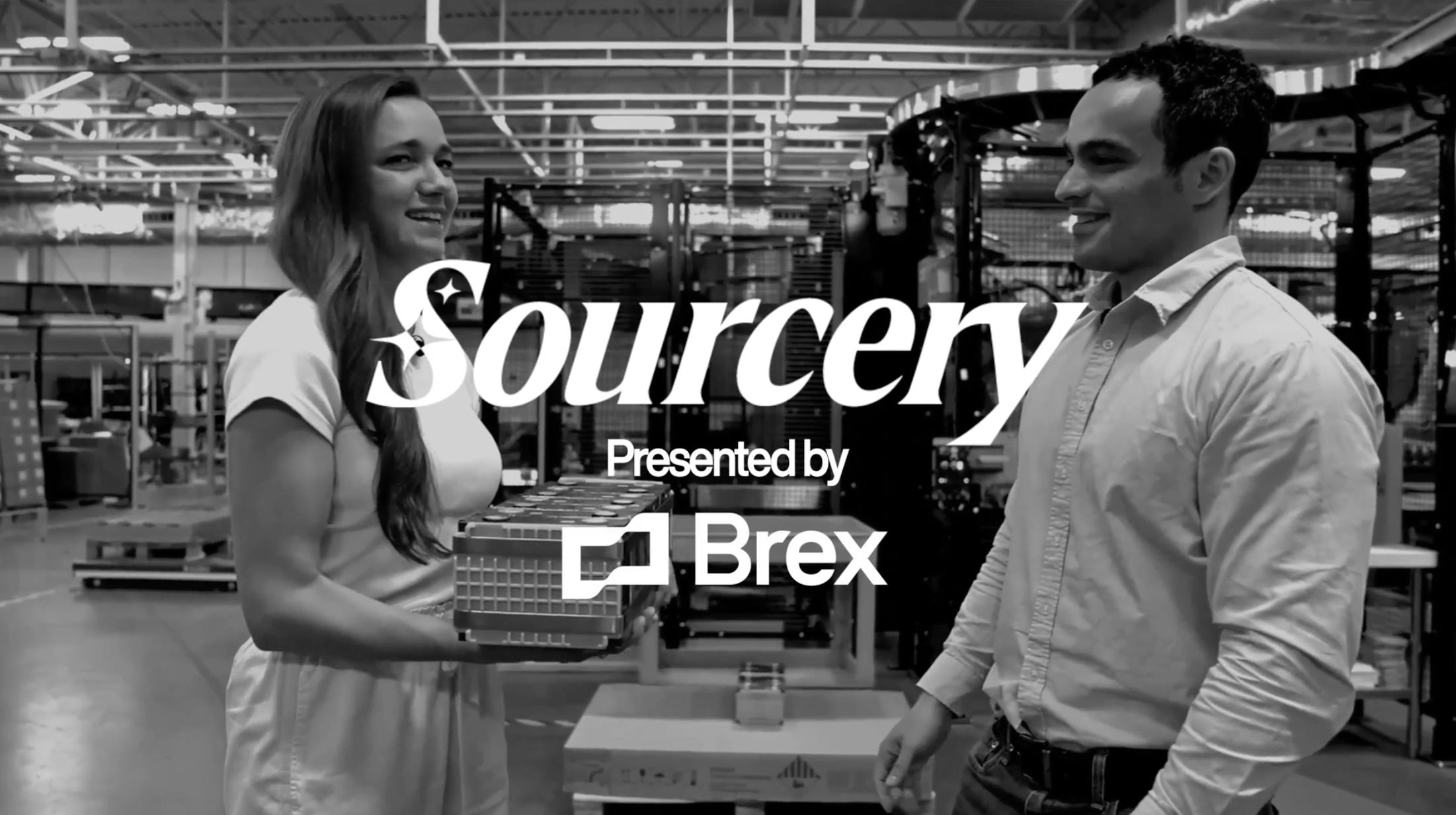
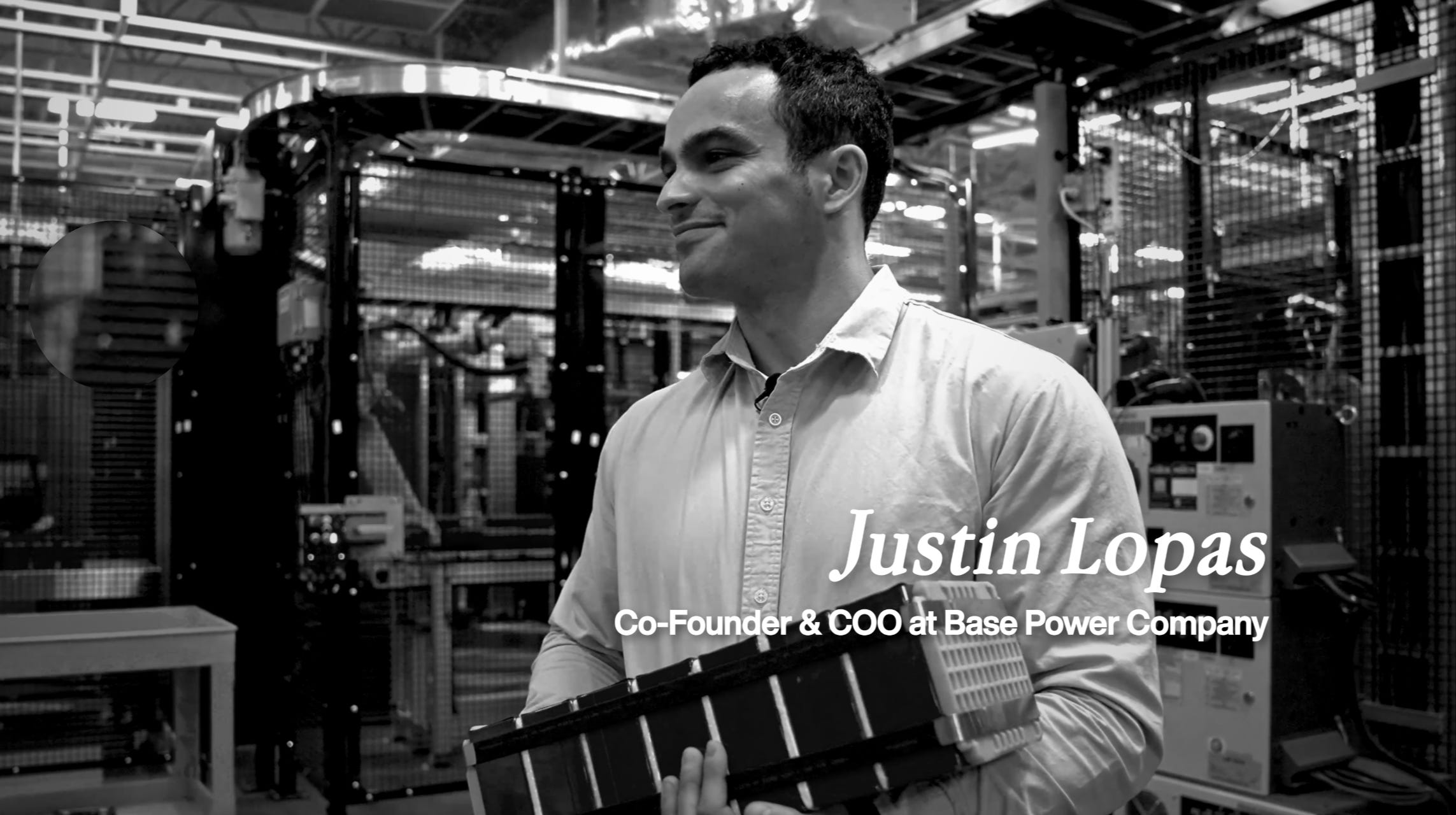
Justin Lopas, Co-Founder & COO of Base Power, joins Sourcery at Factory 1 in Austin for the launch of Base Core and the company’s $1 billion Series D.
→ Listen on X, Spotify, YouTube, Apple
The round values Base at $13 billion post-money and is led by Ribbit, Addition, Valor Equity Partners, and JPMorganChase’s Strategic Investment Group. Existing investors Thrive Capital, a16z, Lightspeed, Trust Ventures, and CapitalG re-invested, bringing total capital raised past $2.5 billion.
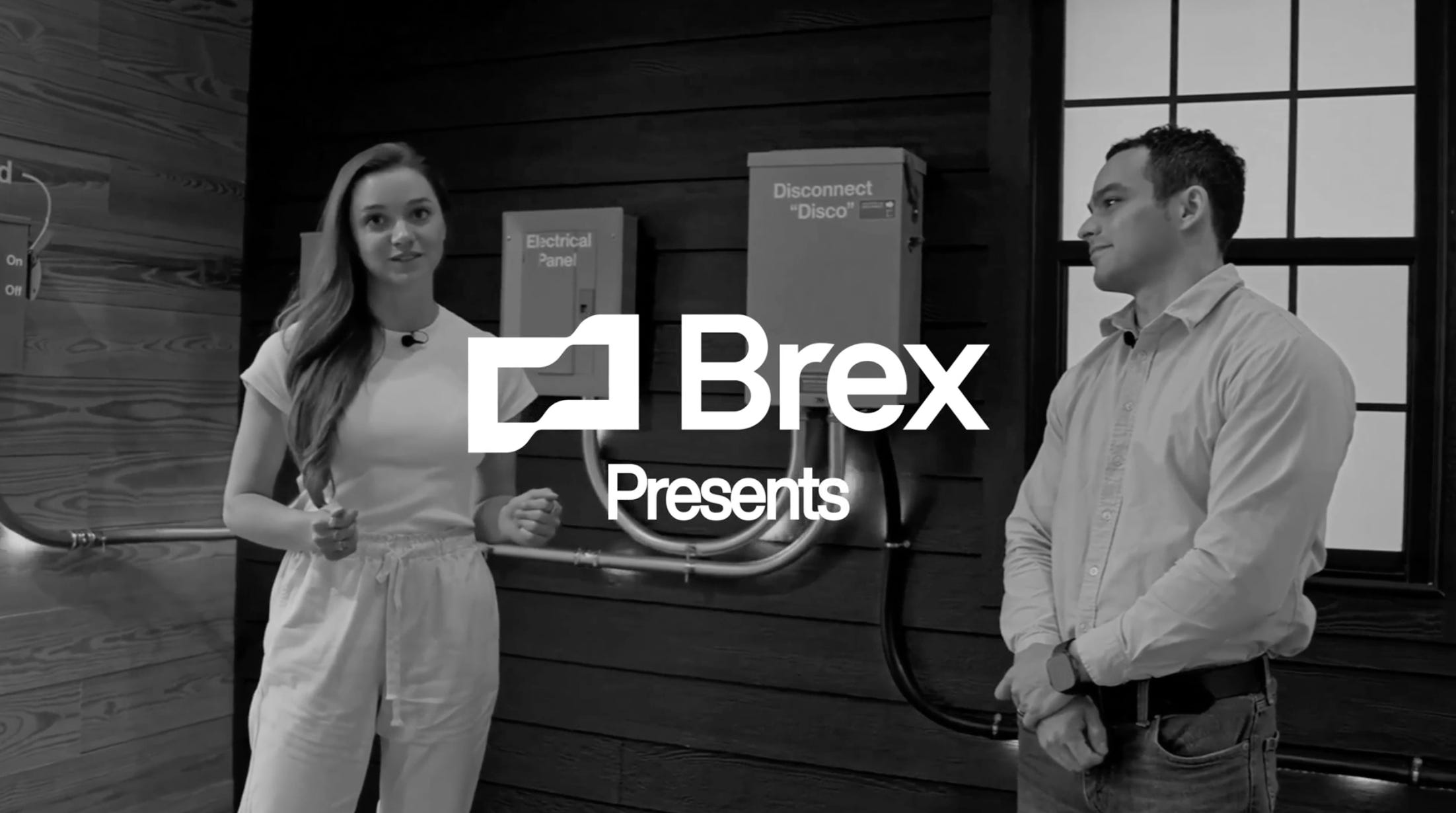
Base Core is the largest standalone home battery on the market at 40 / 80 kWh. Justin walked me through the factory floor, the install demo, and why Base builds the hardware itself.
“It is so critical to bring manufacturing back to the US, especially for critical infrastructure.”
We cover:
› The $1B Series D at a $13B post-money valuation
› Base Core, 40 kWh of storage and 20 kW on the inverter
› Whole home backup versus circuit-level backup
› Retail choice markets versus utility partnership markets
› Installing batteries around data centers to offset interconnection load
› 4,000 units per week by the end of the year
› Over 100 installs a day
› 100% US and Mexico supply chain
› Factory 1 built in under 6 months
→ BASE POWER IS HIRING
DISCLAIMER: This was a delightfully last minute & very BTS visit/recording, I am so happy we were able to film something in the short timeframe ‘off-hours.’ Hope you enjoy.
𝐓𝐈𝐌𝐄𝐒𝐓𝐀𝐌𝐏𝐒
(00:00) Justin Lopas,Co-Founder & COO at Base Power Company
(01:06) Base Power raises a $1B Series D
(02:26) Meet Base Core
(05:42) Demo: Whole-home backup in action
(07:06) How Base Power's business model works
(08:55) Inside Base Power's Factory
(11:28) Why Base Core is 3x larger than other home batteries
(12:05) Inside the manufacturing line
(13:23) Can humanoid robots build batteries?
(14:13) Why Base Power manufactures its own batteries
(15:47) Inside the robotic assembly line
(18:09) How lithium-ion batteries work
(21:40) Scaling production to 4,000 units a week
(22:33) Installing 100+ systems a day
(23:03) COO or Electrician?
(23:53) From oil rigs to Base Power
Brought to you by:
Brex—The intelligent finance platform: cards, expenses, travel, bill pay, banking—wrapped into a high-performance stack. Built for scale. Trusted by OpenAI, Anthropic, Vercel, Granola, Deepgram, & Sourcery.. teams that move fast AF. visit → brex.com/sourcery

Turing—Turing partners with frontier AI labs to improve model capabilities in coding, reasoning, tool use, & multimodality, as well as with Fortune 500 enterprises to build & deploy end-to-end agentic AI systems in mission-critical workflows Visit: turing.com/sourcery
VCX—VCX is the public ticker for private tech, allowing investors of all sizes to invest in venture capital. View The Portfolio at GetVCX.com
Deel—Deel is the global people platform that helps startups hire, manage, pay, and equip anyone, anywhere. Trusted by more than 35,000 fast-growing companies, Deel is the people platform that just works, so teams can scale without the chaos. Visit: deel.com/sourcery
Public-–Investing platform Public just launched Generated Assets, which lets you turn any idea into an investable index with AI. With Generated Assets, you can build, backtest, refine, and invest in any thesis with AI. Gone are the days of one-size-fits-all ETFs. Try it today: public.com/sourcery
Base Power Raises $1B at $13B & Launches ‘Base Core’
About 2 weeks ago I stopped by Base Power’s Austin headquarters with Co-Founder & COO Justin Lopas for a casual walkthrough (that quickly turned into an entire podcast episode tour) of Base Core & a tour of Factory 1, the converted printing plant where the company builds every module and inverter it deploys.
Today, Base is announcing a $1 billion Series D at a $13 billion post-money valuation alongside the launch of Base Core, the largest standalone home battery on the market at 40 / 80 kWh.
→ Listen on X, Spotify, YouTube, Apple
From SpaceX & Anduril to a Battery Company in Austin
Base Power was founded in 2023 by Zach Dell and Justin Lopas and is headquartered in Austin, Texas. Dell spent time at Blackstone underwriting energy deals including lithium mining, then invested at Thrive Capital, where he watched SpaceX, OpenAI, and Anduril scale. Lopas spent nearly 4 years at SpaceX as a manufacturing engineer on Falcon thrust structures and as lead engineer for Starship manufacturing, then ran manufacturing at Anduril from 2020 to 2023, managing a team of over 150 people. The two met on a factory tour at Anduril.


Vertically integrated like good ole SpaceX, the company designs + builds the battery, the inverter, & the disconnect box in house, writes its own manufacturing execution software, & runs its own delivery & install logistics.
The company launched service in Austin and its deregulated suburbs, then expanded into Houston in the CenterPoint territory and into Dallas-Fort Worth. Early distribution came through a partnership with Lennar, one of the largest homebuilders in the country, and a first utility partnership with Bandera Electric Cooperative. Base owns the batteries and charges an install fee starting at $695 plus a monthly rate, then aggregates the fleet into a virtual power plant that arbitrages price spreads and sells ancillary services into ERCOT.


The deployment curve has been pretty damn impressive. Base passed 100 MWh of residential capacity in the fall of 2025, reached 300 MWh in operation at more than 60 installs a day by March 2026, and has now passed 500 MWh at more than 100 installs a day.

The Path From $68M to a $13B Valuation
Base raised a $68 million Series A in 2024. In April 2025 it closed a $200 million Series B co-led by Andreessen Horowitz, Lightspeed, & Valor Equity Partners, with participation from Thrive Capital, Altimeter, Terrain, and Trust Ventures. Lee Fixel of Addition and Antonio Gracias of Valor joined the board. That capital was earmarked for the first Texas factory and national expansion.

In October 2025 the company raised a $1 billion Series C led by Addition, one of the largest venture rounds in Austin history, with CapitalG, Spark, BOND, Lowercarbon, and Ribbit joining alongside a16z, Thrive, and Lightspeed. Reporting at the time put the post-money valuation around $4 billion.

The Series D announced today is $1 billion at a $13 billion post-money valuation, led by Ribbit, Addition, Valor Equity Partners, & JPMorganChase’s Strategic Investment Group, with participation from Altimeter, D1 Capital Partners, Sands Capital, Coatue, Layer Global, and Energy Impact Partners. Thrive Capital, a16z, Lightspeed, Trust Ventures, and CapitalG re-invested. Total capital raised is now over $2.5 billion. The valuation roughly tripled in 10 months.
“Since our initial investment, the Base team has executed on an ambitious plan to become America’s Power Company. Power demand has surged in that time, & Base has emerged as one of the fastest & most cost effective ways to add capacity to the grid.” — Antonio Gracias, Founder, CEO & CIO of Valor Equity Partners.
The capital goes toward national expansion and hiring.

Launching Base Core!
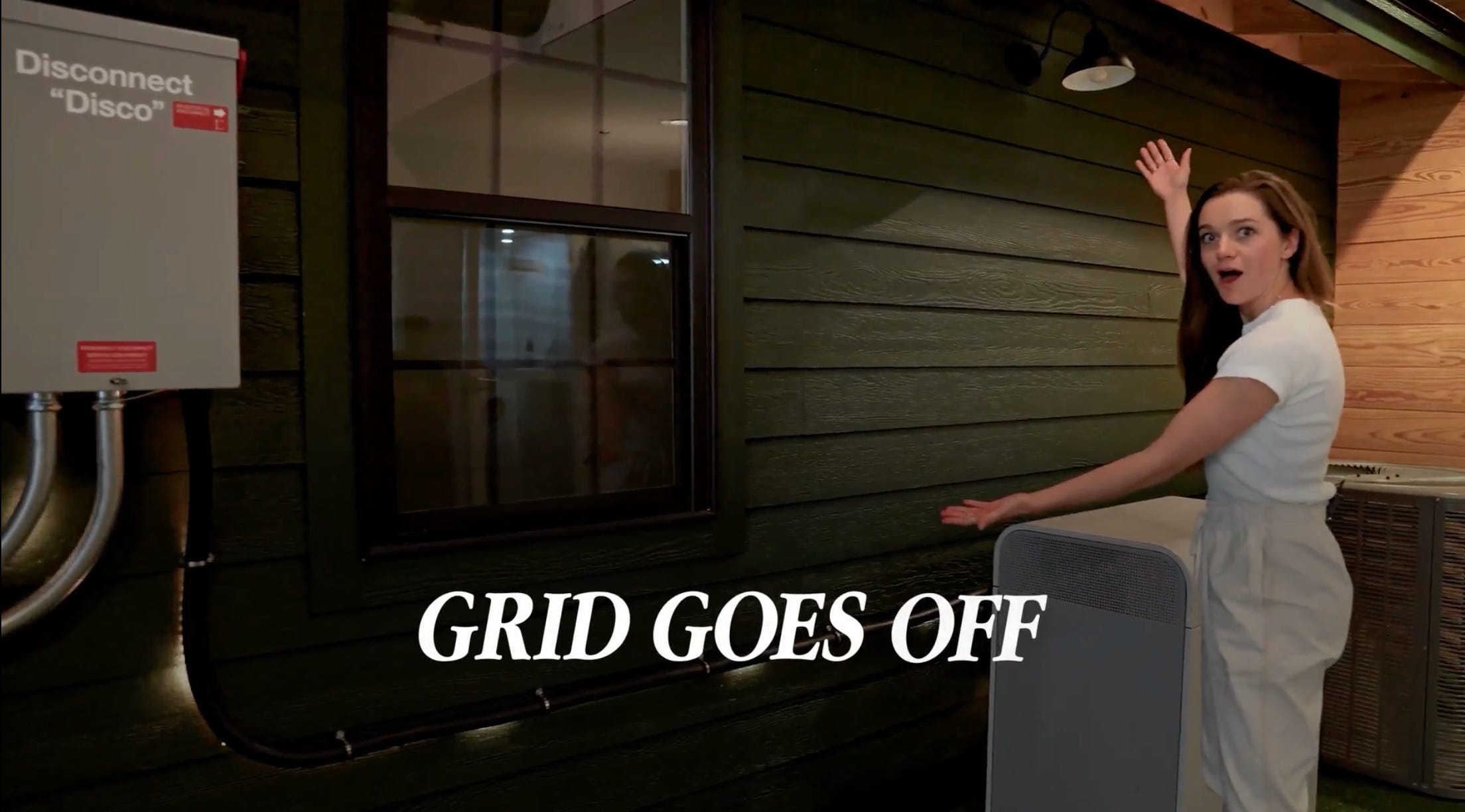
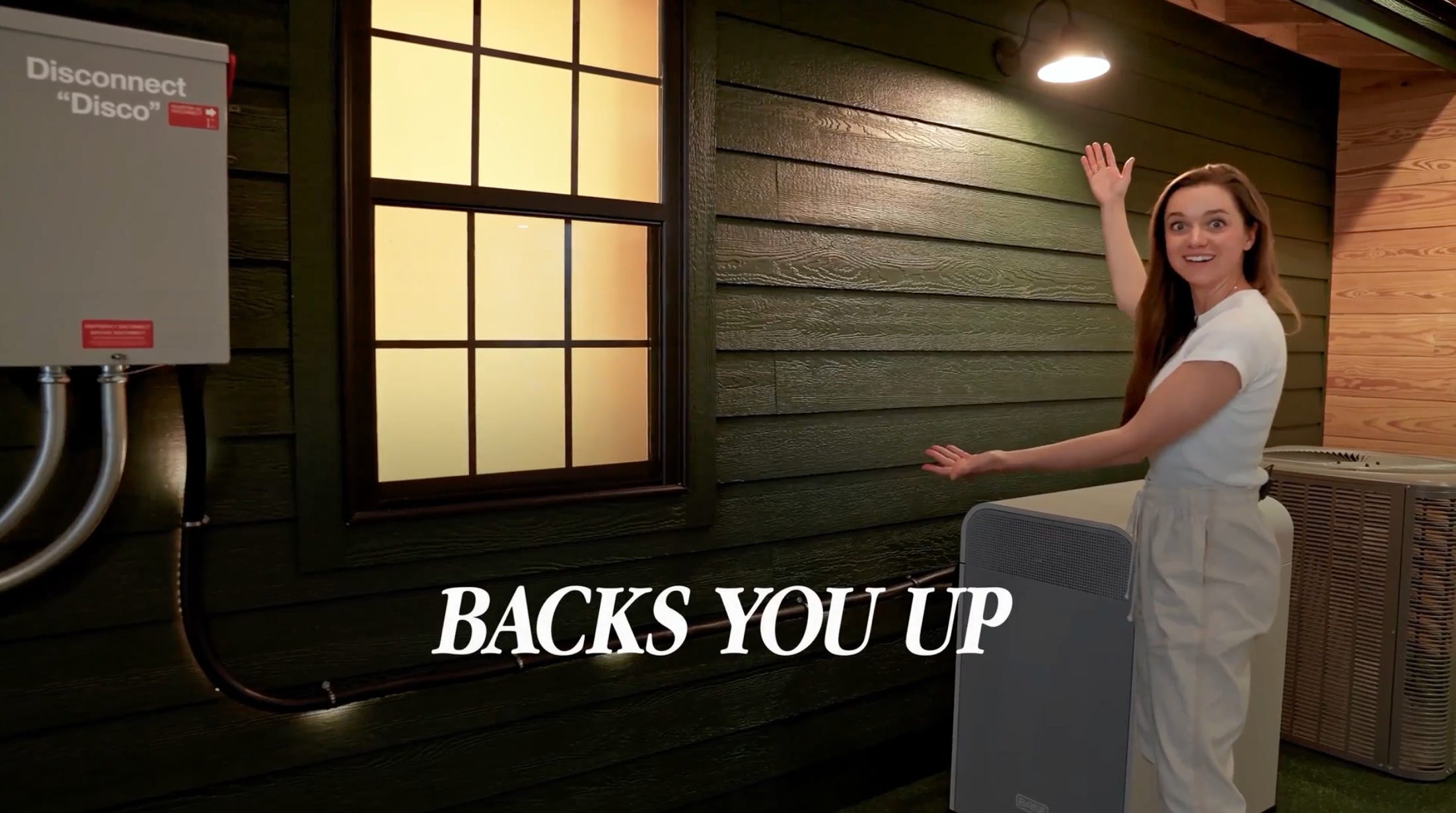
Base Core is a 40 kWh battery with a 20 kW inverter, sold at 40 and 80 kWh configurations. It is the largest standalone home battery on the market. Four battery modules and one inverter stack inside a ground-mounted enclosure, with a Base-designed disconnect box mounted on the wall between the utility meter and the electrical panel. Power flows from the meter into the disconnect box and out to the panel, which gives the system whole home backup.
Many home batteries back up selected circuits chosen at install time. “That’s a bummer, and so we said, ‘Why don’t we back up everything in the home and build a system that can do that?’”

The install is split into two visits. An electrician wires the disconnect box in 1 to 2 hours, and the next day a two-person delivery crew stacks the modules and plugs in the quick connects. “It’s almost like plugging in an EV.” The crew turns the system on from a phone app. There is also a generator input for outages that run past the battery’s duration.
Base Core carries about 3X the capacity of a conventional home battery, and install costs do not scale with capacity. “This is like three times larger than what you would find in a traditional home battery, and that’s purposeful. We wanna put as much power and as much energy on a home as we can because our install costs are basically the same whether or not we install 5 or 40 kilowatt hours.” Each module is friction stir welded shut into a sealed unit that survives submersion.
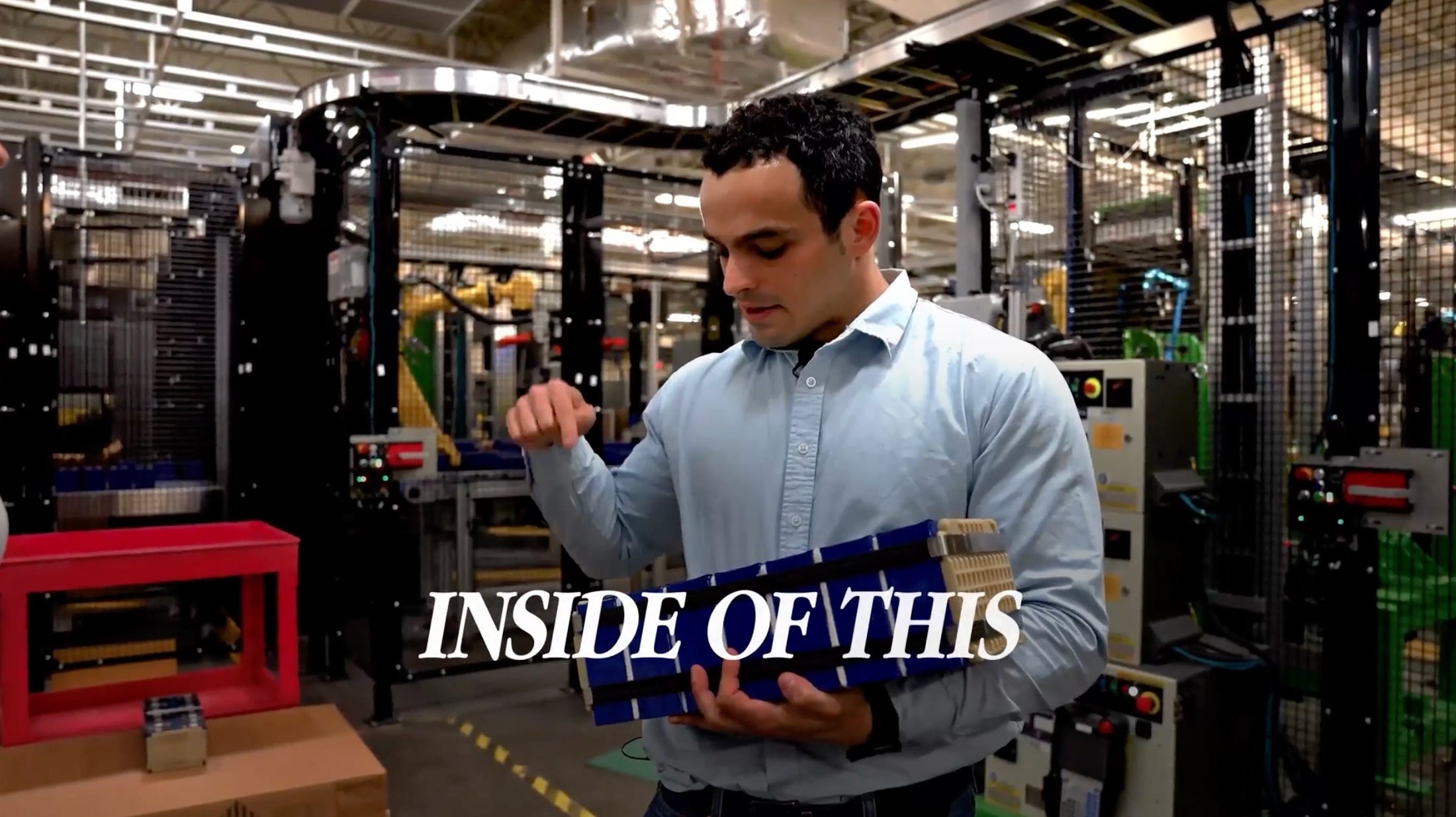

Factory 1 & Vertical Integration
Factory 1 sits in the former Austin American-Statesman printing plant. Base moved in around September of 2025, ran warehousing and distribution out of it for 6 months, and started building production lines in February and March of 2026. About 100 people work in the building today, most of them hired in the last 6 months, with a second shift starting soon.
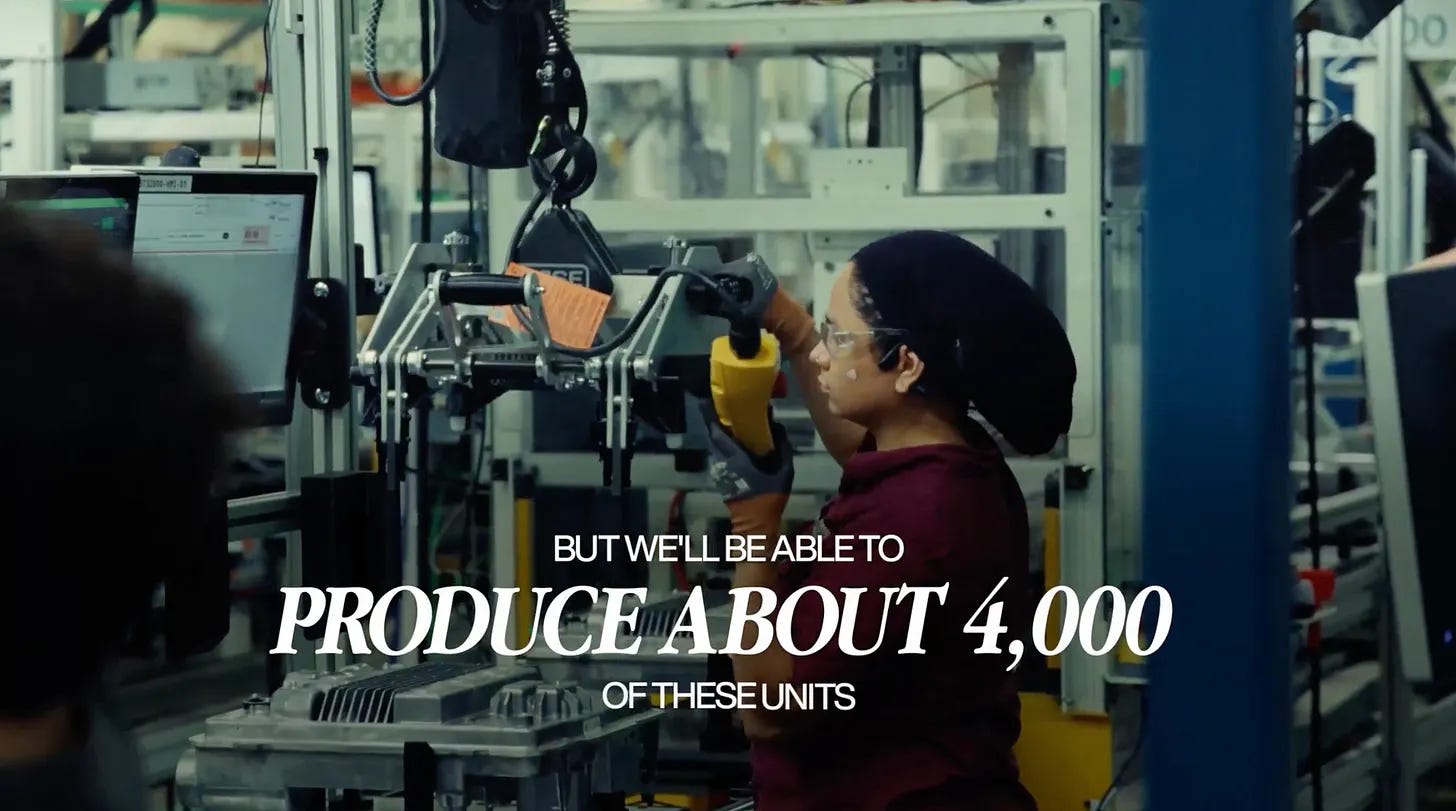
There are 3 lines. One builds inverters. Two build modules, running at double the pace because every system needs 4 modules and 1 inverter. A robotic cell applies glue and places battery cells into aluminum enclosures, automated carts follow tape on the floor between stations, and Base wrote the manufacturing execution software running on every monitor on the floor. Stations are a mix of manual and automated, since high-dexterity steps like placing a screw inside a populated circuit board are faster by hand.
“It’s a vertical integration thesis. We can cut down cost. We can reduce lead time. We can change the hardware much more quickly because we can have the engineer drive the golf cart or run over here & go change something on the line from HQ.”
The printed circuit board comes from a vendor in Austin, a large sheet metal component comes from a company in Fort Worth, and sourcing is essentially split between the US and a few suppliers in Mexico. “It is so critical to bring manufacturing back to the US, especially for critical infrastructure,” Lopas said in the announcement. A second facility is coming, a 486,000 square foot plant near Austin-Bergstrom International Airport representing a $265 million investment and 500 new jobs.
2 Electricity Markets & Business Models
The US splits into retail choice markets and non-retail choice markets. In retail choice markets including Houston, Dallas, parts north of Austin, and the Chicago area, Base sells electricity directly. A customer using 1,000 kWh in a month gets billed for 1,000 kWh, and the battery fleet on surrounding homes lowers Base’s cost of serving that load.
In markets without retail choice, Base partners with the utility. “We still put the battery on the home. We own the battery, but the utility controls it and then they pay us for access to the battery. So that’s how we recoup the cost of the battery, and that’s our business model in those markets.” El Paso is one of those markets. California is not yet served.
Utility partnerships now cover over 200 MW of capacity across El Paso Electric, Austin Energy, and CoServ. The CoServ agreement outside Dallas-Fort Worth targets 100 MW of distributed home battery capacity, roughly the output of a natural gas peaker, and pays only for capacity Base actually delivers. Austin Energy’s council approved its partnership in April 2026. The fleet has grown past 500 MWh, and the company expanded beyond Texas into Illinois in the past year.

100+ Installs/Day & the Road to National Scale
Base is installing more than 100 systems a day, with more than 100 people in the field running installs and deliveries. The company handles its own logistics. “A lot of what you see here is cool inside the four walls, but where the rubber really hits the road is literally on the road going to the homes.” The near-term goal is to double the daily install rate.
A single unit takes 10 to 15 minutes of line time from start to finish. “We’ll be able to produce about 4,000 of these units per week towards the end of the year.” That works out to roughly one unit every few minutes, against a stated long-term target of 4 GWh per year of production capacity.

Reliability testing runs in a bank of thermal chambers on the R&D side of the building, one of them holding 85% humidity at 85 degrees C. “We wanna be able to install the thing for, you know, it takes like an hour or two, and then not touch it for 15 years. And so that turns out it’s like a harder technical problem than you think.”
Base Core is available today to homeowners in select regions of Texas and Illinois. The company is hiring across every function.
→ BASE POWER IS HIRING

→ Listen on X, Spotify, YouTube, Apple
The material presented on Molly O’Shea’s website are my opinions only and are provided for informational purposes and should not be construed as investment advice. It is not a recommendation of, or an offer to sell or solicitation of an offer to buy, any particular security, strategy, or investment product. Any analysis or discussion of investments, sectors or the market generally are based on current information, including from public sources, that I consider reliable, but I do not represent that any research or the information provided is accurate or complete, and it should not be relied on as such. My views and opinions expressed in any website content are current at the time of publication and are subject to change. Past performance is not indicative of future results.
Paid Endorsement. Brokerage services by Open to the Public Investing Inc, member FINRA & SIPC. Advisory services by Public Advisors LLC, SEC-registered adviser. Crypto trading provided by Zero Hash LLC, licensed by the NYSDFS. Generated Assets is an interactive analysis tool by Public Advisors. Output is for informational purposes only and is not an investment recommendation or advice. See disclosures at public.com/disclosures/ga. Matched funds must remain in your account for at least 5 years. Match rate and other terms are subject to change at any time.
The valuation jump on this one is wild: $200M Series B to a ~$4B Series C post-money to $13B Series D in under a year. Whoever had a real stake going into that Series C and didn't keep buying their pro rata is sitting on a lot less than they think right now.
Awesome stuff 🙏 thx!