


AI’s $10T Systemic Rebuild of Tech: Chips, Memory, Robotics, Quantum
Tony Kim is Managing Director & Head of the Global Technology Team within Fundamental Equities at BlackRock. He joined us at the RAISE Summit in Paris, where he spoke on 4 panels: next-gen accelerators with d-Matrix, quantum computing with PsiQuantum, optics in data center design with Lumentum, and XPU + AI chip co-design with Broadcom.
→ Listen on X, Spotify, YouTube, Apple
The main narrative of our conversation revolves around the major shift well underway from a software-centric world → compute-centric one, and the irony sitting at the center of it, roughly $1 trillion of CapEx this year & $10 trillion over the next 5 years being spent to move data from miles & meters to centimeters & millimeters. Tony maps the market cap transformation that has followed, roughly $10 trillion in software, services, & internet, $20 trillion in Mag 7, & $30 trillion in non-Mag 7 chips & hardware.
From there we get into the RAMpocalypse, why memory intensity is skyrocketing as AI models start to mirror the human brain, the 3-4 year duration mismatch between fab buildouts vs. today’s demand, & moving from copper to light inside the data center.
Tony then lays out his capital allocation framework, 90% in the 3-year AI vortex and the rest on frontier bets like quantum, orbital data centers, SMRs, and 800-volt power architectures, all converging on 2030.
We close on the coming wave of 30 to 40 Chinese robotics IPOs, mixing Chinese robot bodies with Western brains, his contrarian case for social robots addressing loneliness and aging populations, token flow as the new enterprise framework, and the mentors who shaped his career.
It was such a pleasure to sit down with Tony, he articulates systems very well with a good sense of humor. Hope to make him a regular on Sourcery!
We cover:
› Why AI is forcing a complete rebuild of data centers
› The shift from software to compute
› Why memory becomes the next critical bottleneck
› The future of AI chip co-design
› How investors should think about AI infrastructure
› Quantum, orbital data centers and the road to 2030
› Why robotics could become AI’s next trillion-dollar market
› China’s robotics advantage
› The enterprise AI stack and “token flow”
› How BlackRock evaluates long-term technology investments
Special thank you to Brex, MongoDB, & AssemblyAI for helping make this RAISE AI Summit mini-series in Paris, France happen.

𝐓𝐈𝐌𝐄𝐒𝐓𝐀𝐌𝐏𝐒
(00:00) Tony Kim, Head of BlackRock Fundamental Equities Global Technology
(01:10) RAISE AI Summit
(03:52) Why Compute now rules everything
(05:17) Why old data centers can't survive AI
(07:43) Why data centers are ditching Copper for Light
(10:44) The shortage nobody saw coming: RAM
(15:20) Only three companies control memory
(16:03) Tony's Playbook for Investing in the AI Era
(18:16) The 20-year lie: "Compute is just a Commodity"
(22:38) How Hardware quietly became bigger than Software
(27:49) The Investing Rule: Will you still be cool in 5 years?
(32:41) 2030: the year every frontier technology bet converges
(38:16) Chips were never a Commodity
(41:30) Rack design, materials science, and the physical-world renaissance
(43:30) Inside the architecture of a Robot's mind
(45:03) Why China Is winning the Robotics race
(47:37) Why the biggest Robotics market might be companionship
(51:34) Speech models are growing faster than anyone expected
(53:07) "Token Flow": Tony's Framework for the Future Enterprise
(57:56) Are PE roll-ups the next big AI disruption play?
(1:00:48) What Could Go Right (and Wrong) in AI This Year
(1:03:51) The mentors who shaped Tony Kim's worldview
Brought to you by:
Brex—The intelligent finance platform: cards, expenses, travel, bill pay, banking—wrapped into a high-performance stack. Built for scale. Trusted by OpenAI, Anthropic, Vercel, Granola, Deepgram, & Sourcery.. teams that move fast AF. visit → brex.com/sourcery

MongoDB–Millions of developers and more than 65,200+ customers across industries – including ~75% of the Fortune 100 – rely on MongoDB for their most important applications. With integrated capabilities for operational data, search, real-time analytics, & AI-powered data retrieval, MongoDB helps organizations everywhere move faster, innovate more efficiently, & simplify complex architectures. visit → mongodb.com/ai
AssemblyAI–Millions of developers use AssemblyAI to power their voice ai apps & features. One API gives you access to best-in-class speech-to-text, voice agent, & speech understanding models for both pre-recorded and real-time audio. Granola, ClickUp & HeyGen are scaling with AssemblyAI - get $50 of free credits today → AssemblyAI.com/sourcery
BlackRock’s Tony Kim: The $10 Trillion AI Rebuild
Tony Kim is Managing Director and Head of the Global Technology Team within Fundamental Equities at BlackRock. Our conversation covers the largest capital reallocation in the history of technology, why memory is the next bottleneck, and where he is placing bets between now and 2030.
→ Listen on X, Spotify, YouTube, Apple

Inside BlackRock & the Global Technology Team
BlackRock is the largest asset manager in the world. The firm closed Q2 2026 with a record $15.3 trillion in assets under management, following $868 billion of net inflows over the trailing 12 months and record first-half inflows of $321 billion. Founded in 1988, it is best known for its iShares ETF platform, now over $6 trillion in assets, its Aladdin risk and portfolio management technology used across the industry, and a fast-growing private markets business built through roughly $28 billion of acquisitions like Global Infrastructure Partners, HPS Investment Partners, & Preqin.
Equities are the core of the book. Of the $15.3 trillion, $8.9 trillion sits in equity strategies, 58% of total AUM and 50% of base fee revenue. Fixed income accounts for $3.4 trillion, or 22%, with the remainder spread across multi-asset strategies, cash management, and alternatives. The alternatives book is small as a share of AUM but growing fastest, client assets reached $715 billion in Q2, up from $474 billion a year earlier, and private markets drew $15 billion of net inflows in the quarter.
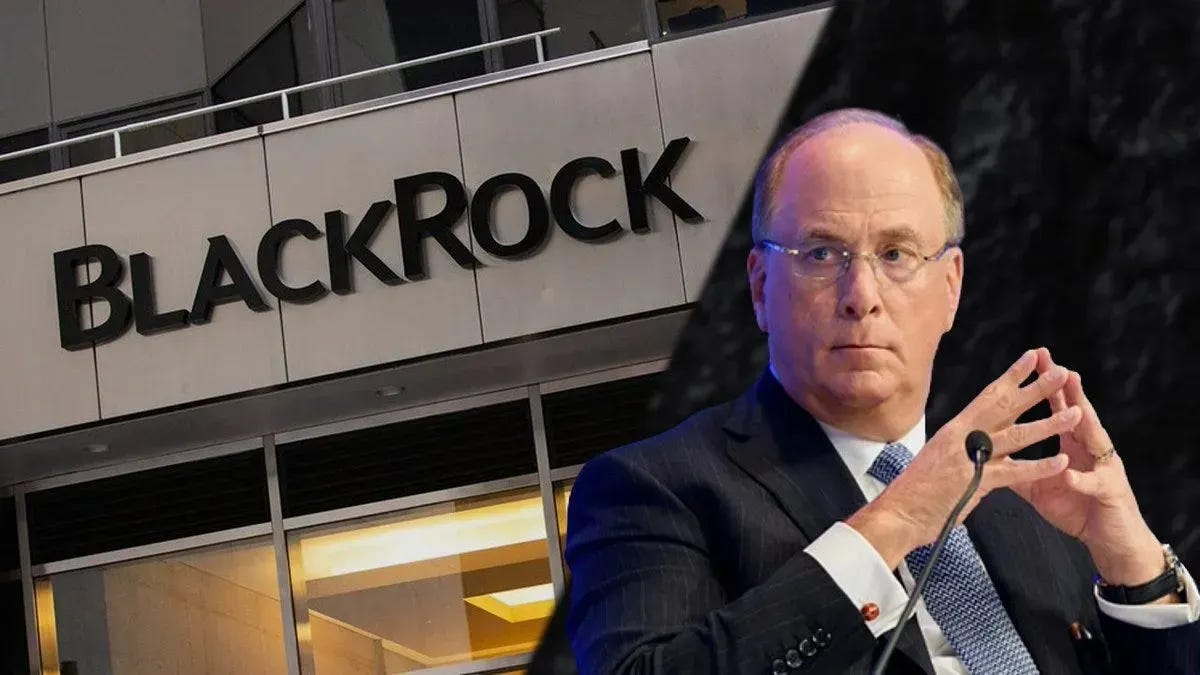
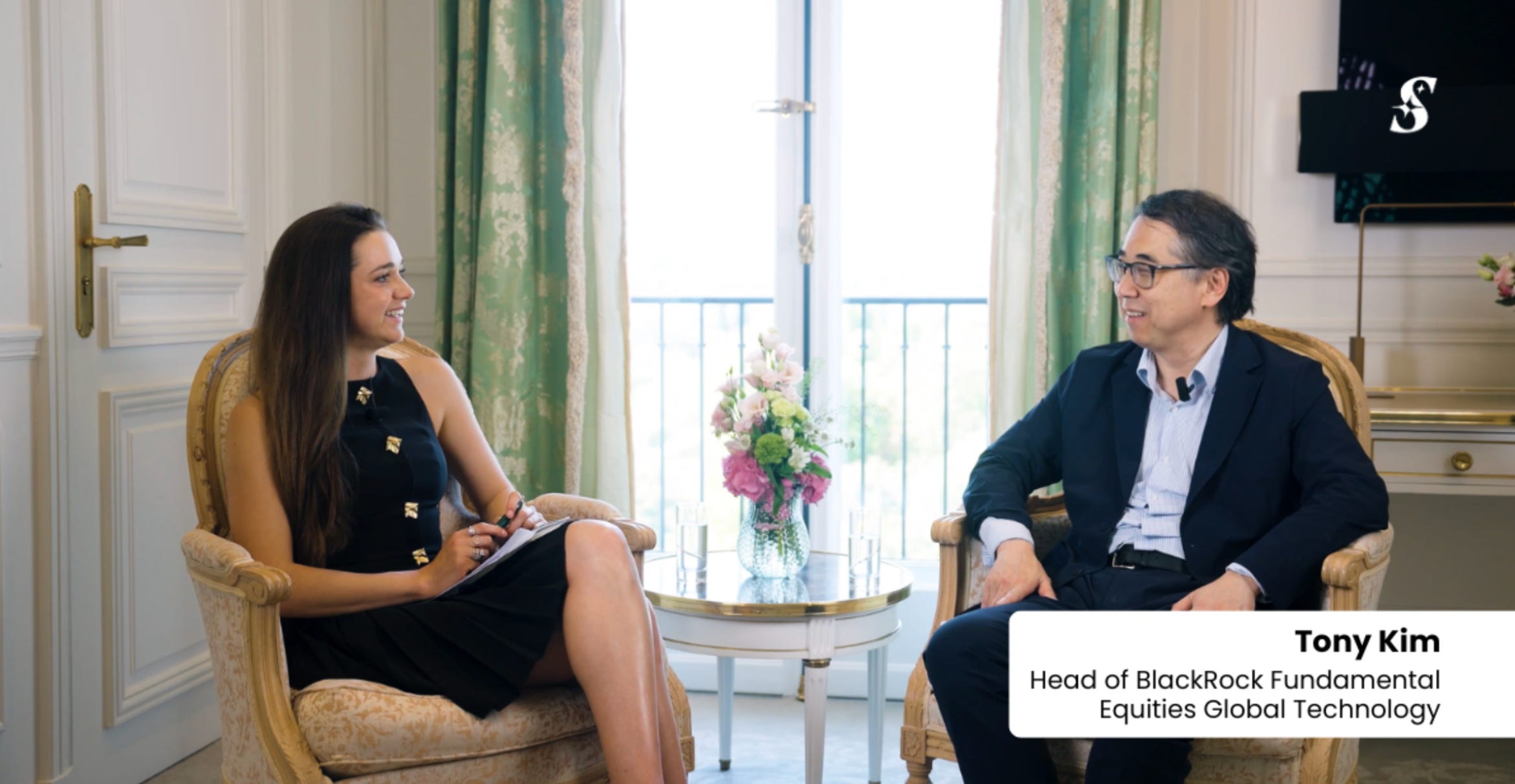
Kim joined BlackRock in 2013 and heads the Global Technology Team within Fundamental Equities, the firm’s active stock-picking division. His platform spans the BGF World Technology Fund, the US Technology Opportunities Fund, the BST and BSTZ science and technology trusts, and the BAI and TEK active ETFs.
Kim invests in both public and private companies. “I’m a public investor, I’m a private investor, I do both.” On the public side his coverage runs the full stack, semiconductors and AI accelerators, memory, data center infrastructure and optics, power and energy, software and internet, quantum computing, and robotics. On the private side he takes direct positions through vehicles like the BSTZ trust, and he was making AI compute investments in 2019 through 2021, before generative AI, on the intuition that machine learning would need new architectures.


The Market Repriced Around Compute
For 2 decades, the internet ran on a simple economic arrangement. Cloud providers resold cheap hardware, and nearly all the margin accrued to the software built on top of it. Data centers were measured in megawatts, servers cost thousands of dollars, and compute was treated as a commodity input.
“At the end of the day, cloud computing, everyone says it’s software, but it was really reselling CPUs with hard drives.”
That arrangement ended in 2023. Kim describes the break in calendar terms, a BC and AD divide, with generative AI as the dividing line. The base layer of compute went up 10,000x in value. “A $10,000 server is a $1,000,000 server.” Data centers went from megawatts to gigawatts, from small facilities in cities to server farms in Texas.
His accounting of the global tech stock market runs roughly $10 trillion in non-Mag 7 software, services, and internet, $20 trillion in Mag 7, and $30 trillion in non-Mag 7 compute, chips, and hardware. Before AI, those proportions were closer to reversed.
“The models themselves, like it or not, have consumed the market cap out of software and services.”
A Trillion Dollars to Move Data Millimeters
The scale of the buildout matches the repricing. The 5 largest US hyperscalers, Microsoft, Alphabet, Amazon, Meta, & Oracle, have committed roughly $660 billion to $725 billion in capital expenditure for 2026, close to double 2025 levels, per Futurum and Q1 earnings data. JPMorgan’s midyear outlook puts global AI-related capex through 2030 at $5.5 trillion, and McKinsey’s estimate for the full data center buildout reaches $6.7 trillion.

Kim frames the physics underneath the spending. Data used to travel kilometers, between buildings, then between racks. Now it travels within the rack, and next within the chip. Each order of magnitude reduction in distance drives bandwidth, power, and heat up logarithmically.
“The trillion dollars of CapEx this year and the $10T over the next 5 years that are coming, is to move data centimeters and millimeters. That’s AI.”
The redesign runs through every layer. Power architecture is moving toward 800 volts and, eventually, solid state transformers, since every voltage step-down loses efficiency. Interconnects are shifting from copper to light. Behind-the-meter generation, SMRs, and grid redesign sit underneath all of it.

RAMpocalypse & the Primacy of Memory
Kim’s read on the memory shortage starts with architecture, not supply chains. Chip and model development increasingly mirrors the human brain, and the human brain is memory intensive while today’s AI is compute intensive. Early models had massive parallel compute and little memory. Agents, persistent context, and enterprise harnesses are reversing that ratio.
“Today we’re all talking about compute, compute, compute. I think the primacy of memory will become even more important.”
The market data supports the shift. DRAM contract prices rose roughly 90% in Q1 2026 over the prior quarter per industry trackers, SK Hynix has described its DRAM, HBM, and NAND capacity as essentially sold out for the year, and Counterpoint Research projects enterprise DDR5 modules could cost 2x as much by the end of 2026 as they did entering it. TrendForce forecast server DRAM contract prices climbing more than 60% in Q1 alone. Samsung, SK Hynix, and Micron control over 95% of global DRAM production, and each has crossed $1 trillion in market value.
Kim adds a structural wrinkle he calls duration mismatch. “It takes 3-4 years to build a chip fab or a memory fab, but yet there’s a shortage today.” Capacity decisions made now serve demand years out, while today’s shortage compounds. Micron’s first Idaho fab begins DRAM production in 2027, and SK Hynix’s Yongin cluster targets mass production in the second half of 2028.
The Ring of Power Returns to Silicon
Kim rejects the premise that semiconductors were ever a commodity.
“People always said chips are a commodity, but yet they have the highest profitability of any sector. They’re higher margins than software, pharmaceuticals, industrials, telecom, anything.”
The industry structure explains the margins. Hundreds of chip companies consolidated over 20 years into a handful of players, & venture capital largely stopped funding the category.
“The number of companies have collapsed, & then those that have survived are behemoths with huge pricing power. The complete opposite of commodity.”
The consequence is a renaissance in the physical sciences. Servers, fiber, power, rack design, substrates, packaging, & material science are drawing capital and attention. The constraint now is people. Kim relayed a dinner conversation with one of the largest memory companies at RAISE, where custom memory co-design work is stalling for lack of qualified designers.
“We gotta repurpose some of these software programmers into memory co-design architects.”
Capital Allocation Between the Vortex & 2030
Kim splits his investment framework into 2 viewpoints. Roughly 90% of allocation sits inside a 3-year window he calls the vortex of AI, arbitrating who is ascending, who is declining, and who is stagnating, with the added test of whether a business remains relevant beyond year 3. Belief in a future past the forecastable window is what sustains a multiple.
“You always wanna be betting on not what’s cool today. Will you still be cool in five years?”
The remainder goes to the frontier. Kim started his AI compute positions in 2019 through 2021, before generative AI, on the intuition that machine learning would need new architectures. The same logic now applies to quantum, orbital data centers, SMRs and fusion, and 800-volt power. Every one of those roadmaps, by his count, lands in the same window. “All roads converge to 2030.”
The bar for those positions is high. “I want nonlinear asymmetric potential.” Anything that fits neither the 3-year vortex nor the frontier gets cut.

China’s Edge: 140 Companies & 30-40 IPOs
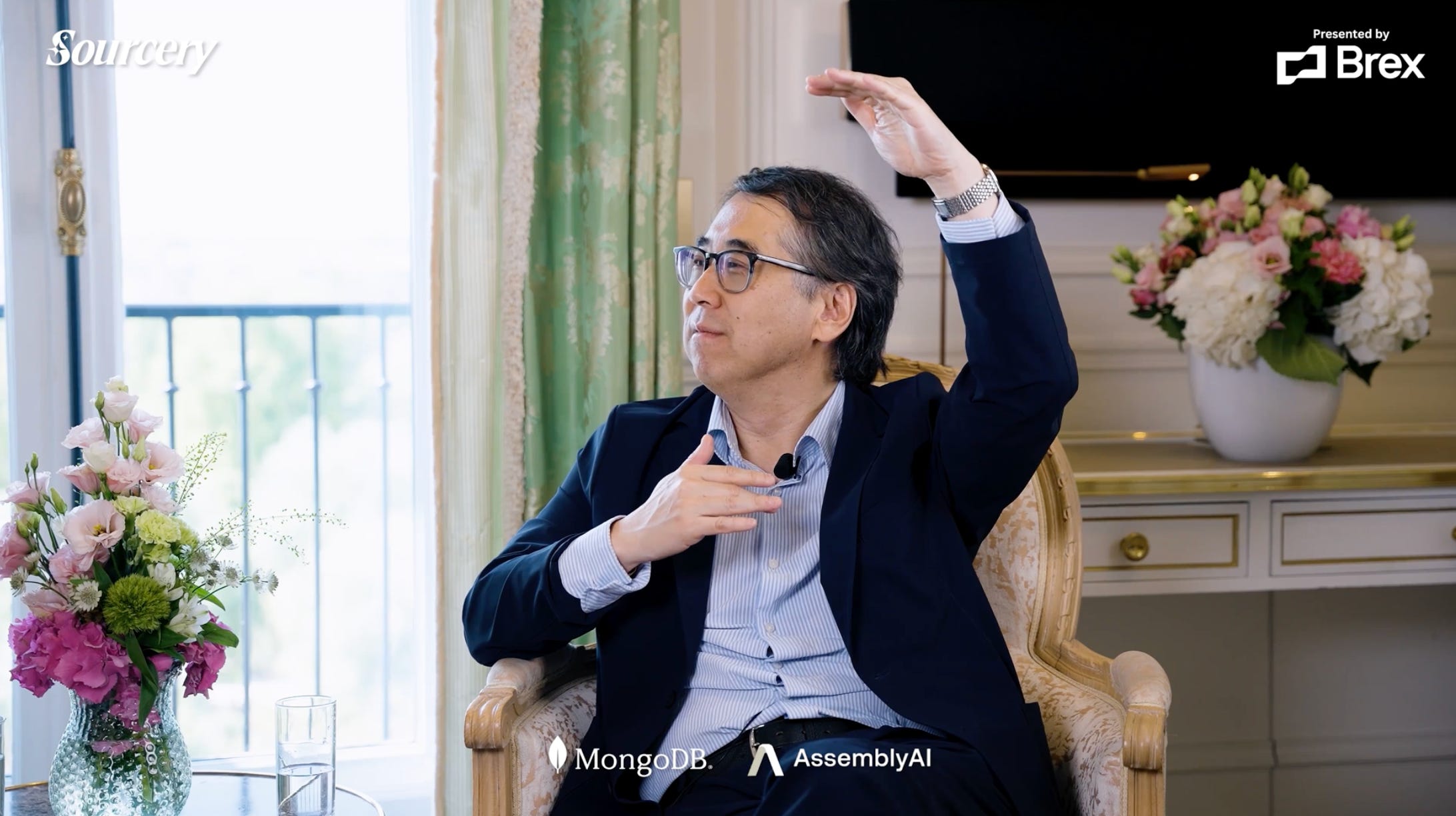
Kim splits robotics into brain and body. The brain is 2 systems, a language model for communication and a world model for motion and perception, and the leading foundation labs are building both. The body is a manufacturing business, and manufacturing favors Asia.
“There’s, I think, 130, 140 robotics companies in China. I’m looking at the current pipeline. I see 30, 40 potential IPOs this year in China.”
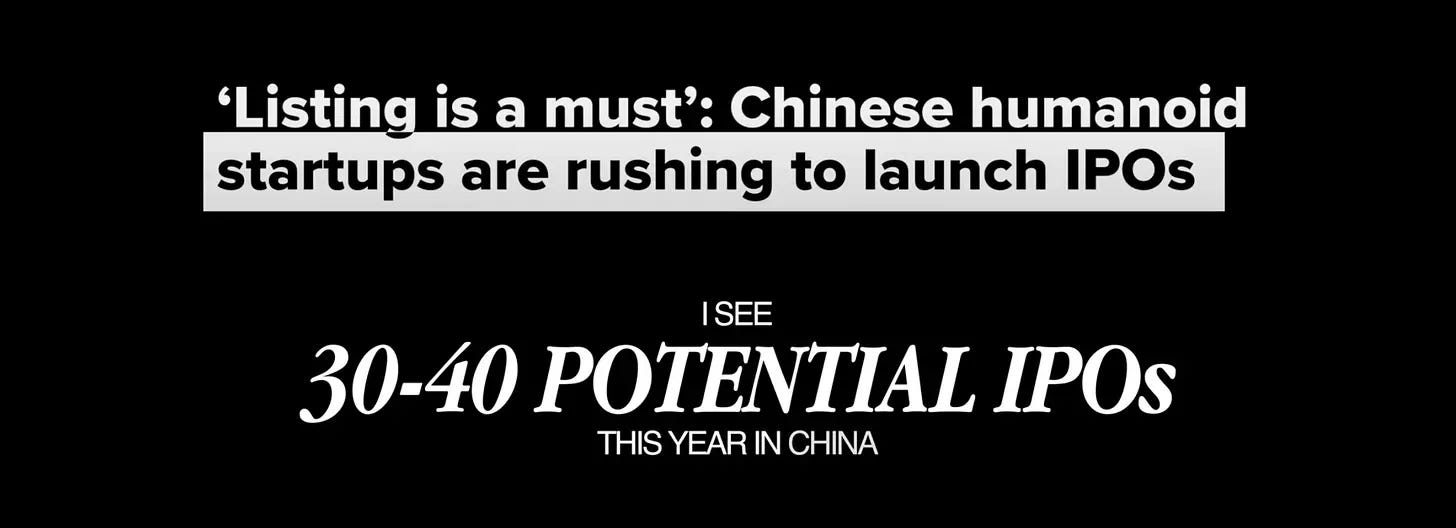
The pipeline has since filled in. Unitree won Shanghai STAR Market approval in June at a roughly 42 billion yuan valuation, 73 days from application to approval. Hong Kong’s exchange counts at least 46 robotics-related companies among its applicants, more than 10% of the queue, per exchange data reported by Bloomberg. AgiBot is targeting a HK$40 billion to HK$50 billion Hong Kong listing, and EngineAI, founded in 2023, filed confidentially after opening a Shenzhen factory that builds a humanoid every 15 minutes. Barclays estimates Chinese firms accounted for 85% of humanoids shipped in 2025.
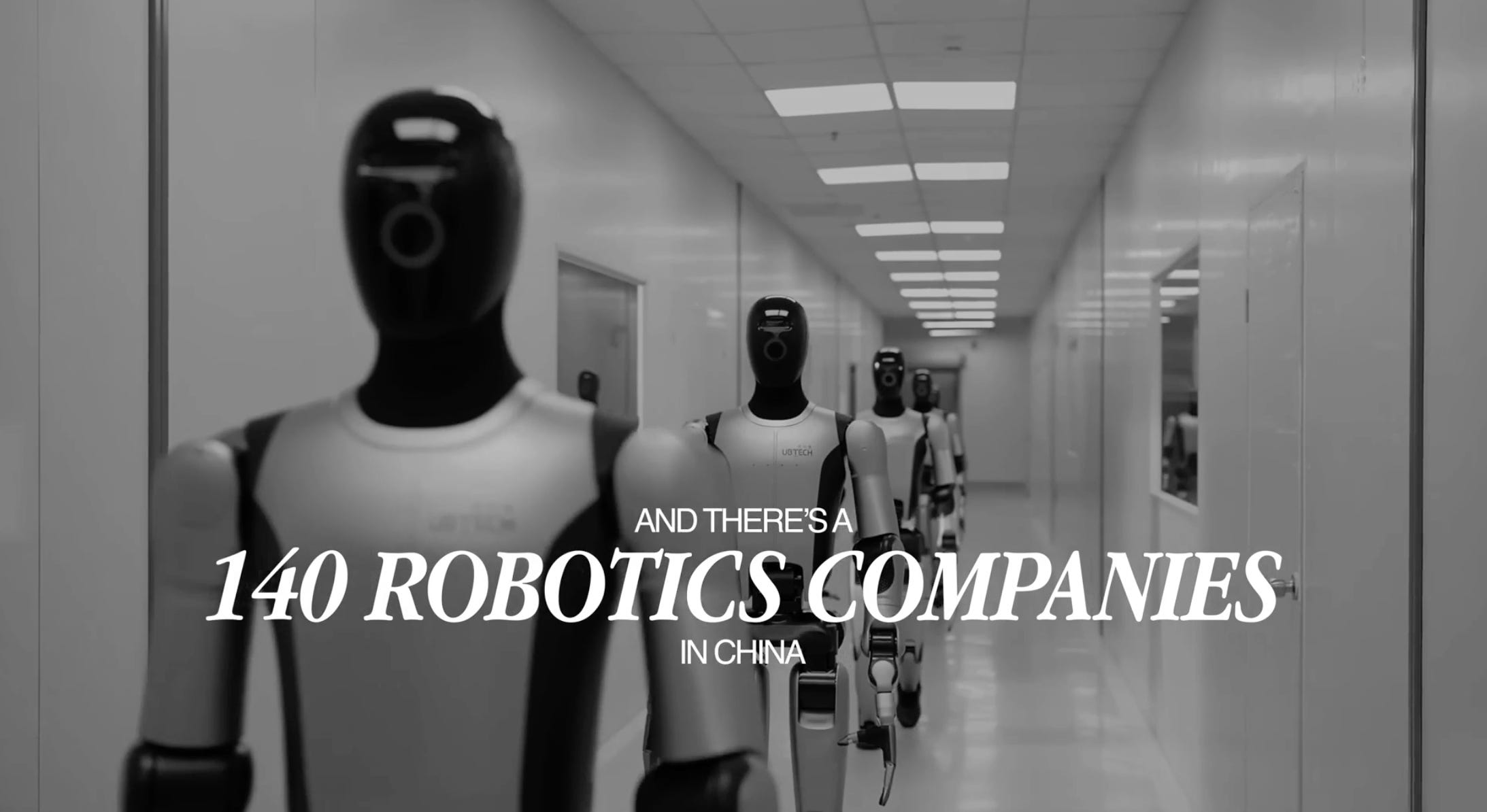
The West leads on models, Asia leads on manufacturing scale, and the 2 are already combining. “You can mix and match Chinese physical robot with a Western brain, and I know that’s happening.”
His most contrarian position in the category is the use case. Birth rates across Asia sit well below the 2.1 replacement level, nursing home operators rank among the best performing companies in the world, and loneliness spans generations. “Even though you might not have perfect motor function, if you could embody some intelligence, empathy, I think that could unlock a really, really interesting market.” The form factor he describes is closer to C-3PO than Optimus, half size, approachable, multilingual, and able to record the life histories of the people it keeps company.
Token Flow & the Rebuilt Enterprise
Kim’s model of the future enterprise has 3 components. Intelligence tokens come in. A data layer, the Databricks, Snowflake, MongoDB, & BigQuery tier, holds proprietary & third-party data. A context layer above it, what Palantir calls ontology, embodies the cumulative knowledge of the company. Agents interact through the context into the data with tokens.
The investment test that falls out of this is positional. Compute creates tokens, foundation labs serve them, and application & service companies package context around them.
“You must be in this token flow to either resell or repackage the tokens with your context & your very specific application.
If you’re not in that flow, it’s a problem.”
The margin question resolves differently than it did in the SaaS era. One path is the full-stack solution, absorbing an entire workflow rather than selling software into it. “You abstract away all of those layers of the stack & just say, I will take on all of your insurance. Pay me X. Today you used to pay 100, I’ll charge you 20.” Private equity roll-ups pursuing that model, buying customers and refactoring delivery underneath them, are the pattern he is watching most closely, alongside 500-person companies generating the revenue of 10,000.
The big question remains, is there any defensibility left in SaaS?
“Moats are always the breach, aren’t they? It’s more about offense in my opinion, can you move faster?”

The Next 12 Months & the Lab IPOs
Kim’s near-term outlook starts with the pattern of recurring panic.
“It seems like every six months there’s a scare. X-pocalypse, war, interest rates, too much CapEx, not enough financing, & on & on & on.”
His base case is that the buildout absorbs each one. “I am optimistic that this compute wall, the memory wall, the compute demand, this data center redesign, that it will just plow through & then our fears will be subsided.”
For what’s next “I’m hopeful, excited to see the big labs go public in the next 12 months. It’ll be exciting, & I think there is huge market appetite for it.”
ICYMI: Anthropic filed a confidential S-1 on June 1 and is reportedly targeting a late 2026 Nasdaq debut after a private round at a $965 billion valuation, with Goldman Sachs, JPMorgan, and Morgan Stanley as lead underwriters. OpenAI filed its own confidential registration days later, though Bloomberg reported in late June that it is weighing a delay into 2027 after SpaceX’s June 12 listing raised over $85 billion and then retraced roughly a third of its post-IPO gains. Goldman Sachs projects 2026 IPO proceeds could roughly quadruple 2025 levels.
The other proof point he is watching is orbital compute. “Moving the burden of terrestrial compute into space could have huge implications of how current data centers are even being built.” Progress there, in his framing, extends the same data center rethink that runs through the entire conversation.

“Dead People & Kind People”
Asked who mentored him, Kim reframes & questions the role a bit.. “I wouldn’t say I had mentors, but you know what I had? I had people that believed in me at certain points in my life.”
One brought him into BlackRock & “basically gave me the freedom, the latitude, the keys to the kingdom.” Well before that, at the start of his career, after every consulting firm passed on “some engineering kid out of the Midwest,” a few investment bankers took a shot on him, and someone told him to ‘go west young man’ right before the dotcom era.
His ‘actual mentors’ took all of us in the room for surprise.. “My mentors are all dead.” The list runs Caesar, Alexander, Napoleon, Beethoven, & Churchill, and the thread he draws through them is a single trait, “people that created their own destiny.” He describes a childhood on the outside of things. “I was somewhat ostracized, & so I grew up in libraries, & those historical figures & libraries became my mentors.”
Julius Caesar (100-44 BC) was the Roman general who conquered Gaul, then crossed the Rubicon with his army in 49 BC, breaking the laws of his own republic to become the most powerful man in Rome.
Alexander the Great (356-323 BC) became king of Macedon at 20, conquered the Persian Empire, from Greece to India, by the time he died at 32.
Napoleon Bonaparte (1769-1821) started as a Corsican artillery officer of minor nobility & crowned himself Emperor of France at 35, remaking the map & legal codes of Europe.
Ludwig van Beethoven (1770-1827) began going deaf in his late 20s, kept composing anyway, premiering the Ninth Symphony in 1824 when he could barely hear it.
Winston Churchill (1874-1965) spent the 1930s out of power & dismissed as a warmonger, then became Prime Minister at 65 & led Britain through World War II.
His lessons? “I try to always work with lots of young people, not mentor them, but just try to encourage them, give them a break or give them a shot.”
TLDR: His mentors are “Dead people & kind people. How’s that?” lol.
→ Listen on X, Spotify, YouTube, Apple

The material presented on Molly O’Shea’s website are my opinions only and are provided for informational purposes and should not be construed as investment advice. It is not a recommendation of, or an offer to sell or solicitation of an offer to buy, any particular security, strategy, or investment product. Any analysis or discussion of investments, sectors or the market generally are based on current information, including from public sources, that I consider reliable, but I do not represent that any research or the information provided is accurate or complete, and it should not be relied on as such. My views and opinions expressed in any website content are current at the time of publication and are subject to change. Past performance is not indicative of future results.
Paid Endorsement. Brokerage services by Open to the Public Investing Inc, member FINRA & SIPC. Advisory services by Public Advisors LLC, SEC-registered adviser. Crypto trading provided by Zero Hash LLC, licensed by the NYSDFS. Generated Assets is an interactive analysis tool by Public Advisors. Output is for informational purposes only and is not an investment recommendation or advice. See disclosures at public.com/disclosures/ga. Matched funds must remain in your account for at least 5 years. Match rate and other terms are subject to change at any time.