

HUMANOIDS ARE COMING
Brett Adcock, Founder & CEO of Figure, the $39 billion company tackling one of the most ambitious challenges in technology — building a general-purpose humanoid robot that can do real human work, both in the factory & the home.
→ Listen on X, Spotify, YouTube, Apple
About 50% of global GDP is human labor.. in this episode of Sourcery, we go inside Figure’s headquarters for a sit-down interview on the future of robotics, AI, & jobs.
Brett shares why humanoid robots are already working today, how Figure plans to scale from thousands of units this year to 1 million per year, & why he believes this could become the biggest business in the world.
Backed by nearly $2B across rounds — including high profile investment from Jeff Bezos, Microsoft, Nvidia, & Amazon — Figure recently 15x’d its valuation to $39B in just 18 months. We also cover Brett’s hot-topic decision to part ways with OpenAI, the challenges of building physical intelligence, & what it now takes to solve one of the hardest problems in engineering.
We cover:
• Why humanoid robots are finally real
• The roadmap to millions of robots
• Scaling Figure’s production & meeting demand
• Why robotics is an intelligence problem
• The OpenAI partnership — and breakup
• The risks of building physical AI (Capital, Economics, Valuation)
• Brett’s vision for general robotics
𝐓𝐈𝐌𝐄𝐒𝐓𝐀𝐌𝐏𝐒
(00:00) Brett Adcock, Founder & CEO at Figure
(01:13) Hot take on Humanoids
(04:09) Race to a Million Robots
(06:24) Building Figure From Scratch
(08:15) Leaving Archer aviation
(09:25) Post-IPO move
(12:54) Cover, Hark & NASA's IP
(16:06) How Figure Outgrew OpenAI
(19:18) Founder performance playbook
(24:24) Learning from Bezos and Jobs
(29:19) Biggest risks to the business
(31:26) Building the World's First Physical AGI
Brought to you by:
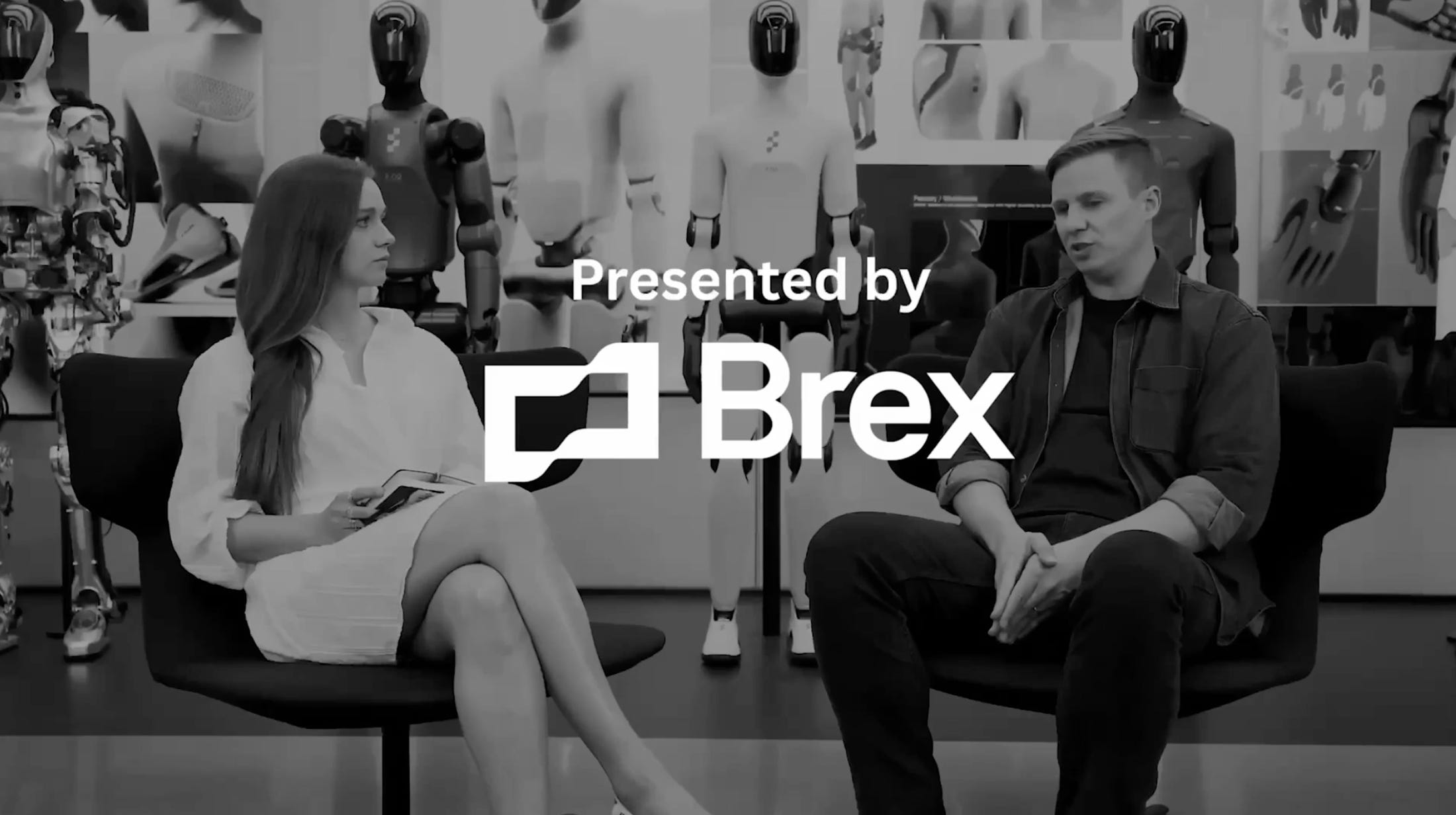
Brex—The intelligent finance platform: cards, expenses, travel, bill pay, banking—wrapped into a high-performance stack. Built for scale. Trusted by teams that move fast. visit → brex.com/sourcery

Turing—Turing accelerates superintelligence by helping frontier AI labs improve model capabilities and enabling enterprises to deploy end-to-end AI systems inside mission-critical workflows. Visit: turing.com/sourcery
VCX—VCX is the public ticker for private tech, allowing investors of all sizes to invest in venture capital. View The Portfolio at GetVCX.com
Deel—Deel is the global people platform that helps startups hire, manage, pay, and equip anyone, anywhere. Trusted by more than 35,000 fast-growing companies, Deel is the people platform that just works, so teams can scale without the chaos. Visit: deel.com/sourcery
Public-–Investing platform Public just launched Generated Assets, which lets you turn any idea into an investable index with AI. With Generated Assets, you can build, backtest, refine, and invest in any thesis with AI. Gone are the days of one-size-fits-all ETFs. Try it today: public.com/sourcery
Merge—The leading provider of customer-facing integrations and agentic tools for frontier LLMs, Fortune 500 organizations, and B2B SaaS companies. Visit: https://merge.dev
Brett Adcock: Building Physical Intelligence at Scale
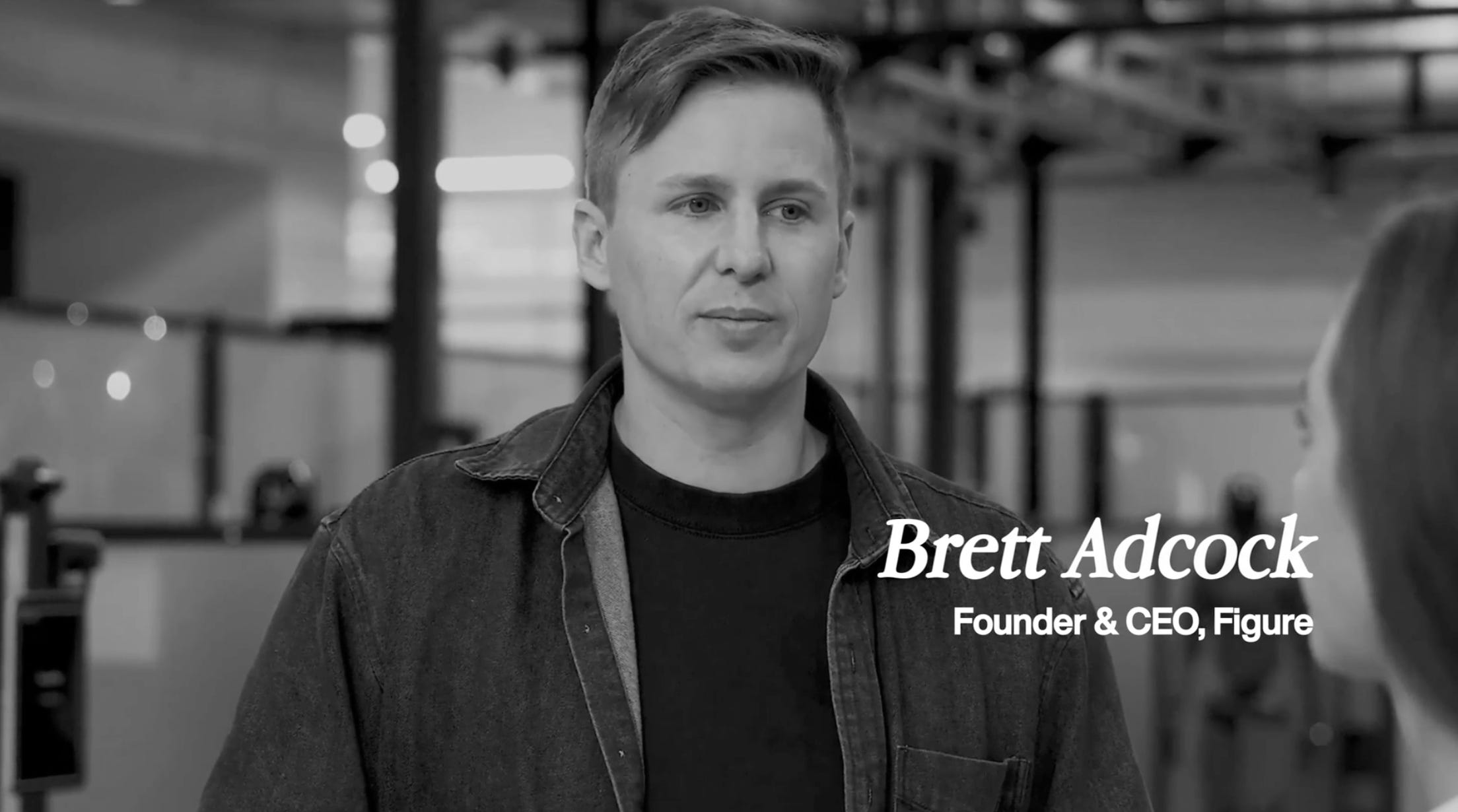
Brett Adcock, Founder and CEO of Figure, is pursuing a version of robotics that has historically remained out of reach: general purpose humanoids capable of performing economically useful work across environments. The objective is not narrow automation but systems that can perceive, reason, and act with enough reliability to integrate into real workflows.
“We just want humanoid robots to work, they’re working now & it’s pretty simple.. we’re seeing robots do everyday things like clean up a living room, do commercial work. It’s cool to see that this is gonna happen in the next few years.”
The emphasis is not on demonstration, but utility. A robot that cannot sustain useful output is economically irrelevant regardless of technical sophistication.
→ Listen on X, Spotify, YouTube, Apple
Progress to Date
Figure plans to build thousands of robots this year, with parts already in house and production ramping. The company hit record production in March and aimed to triple that by May. From there, the trajectory targets tens of thousands, hundreds of thousands, and an eventual goal of 1 million units per year.

A small batch of Figure robots deployed to BMW last year and ran every day for six months. “We refactored our whole approach to how to commercialize the software and AI systems after that.” That refactor produced Helix 2, Figure’s second generation AI model.
The hardware progression reflects a similar pattern of compounding reliability. Figure 1 ran for about an hour before faulting. Figure 2 reduced fault rates to roughly once a day. Figure 3, the platform now operating across the company’s facility, sees faults across the fleet on a weekly basis rather than daily. “As we’re growing the fleet, the absolute number of faults are rising & we gotta go figure out how to solve those.”

How Much Has Brett Invested..
Brett self funded Figure before any outside capital, putting in a reported $100 million of his own money to start the company. “We got to a million a month of burn in four months. It was no joke. We had a 40 person team in four or five months. They were very good.”
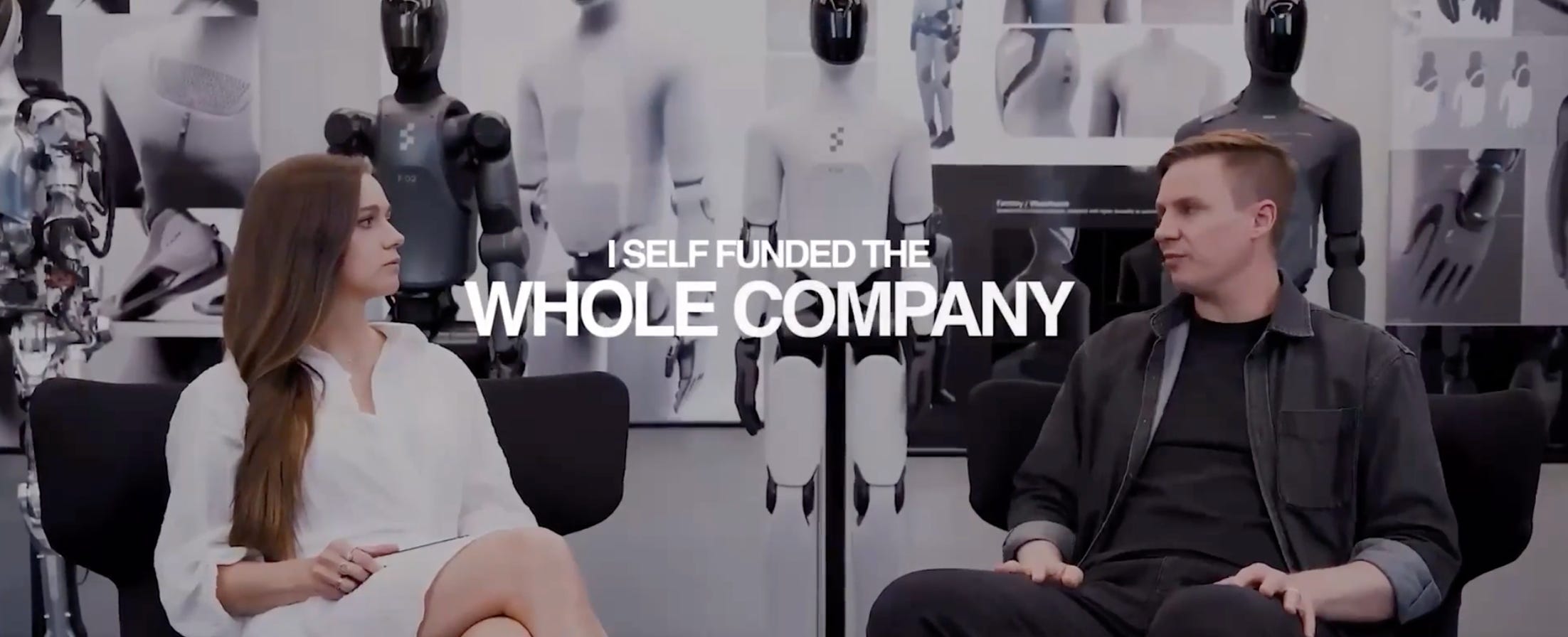
Figure has since raised nearly $2 billion across all rounds, with backing from Jeff Bezos, Microsoft, Nvidia, Amazon, Brookfield, and Salesforce. The September 2025 Series C, led by Parkway Venture Capital, brought the company to a $39 billion post money valuation.
For Brett, the binding constraint isn’t capital. The challenge is solving autonomous operation at human level reliability, not financing the company through it.

The OpenAI Debacle
OpenAI’s startup fund participated in Figure’s Series B in early 2024 alongside Microsoft, Nvidia, Amazon, and Jeff Bezos. The deal came with a collaboration agreement to develop next generation AI models for humanoids. For about a year, the teams worked together on language models for robotics.
Then Brett ended it. “It got to a point where we were just like, our team internally that was designing these models were running circles around OpenAI. We were just way better at this,” he said. “And I think there was also like some interest as OpenAI was watching us getting into robotics. And so I fired him.”
Brett’s team came from robot learning backgrounds with over a decade of domain experience, which he distinguishes from large language model development. “We were better about testing on the robots, training the models, like all of it.” Ending the partnership gave Figure full ownership of Helix and full control over its development timeline.

IP, Security, & Owning the Model
Figure operates with a heightened security posture. Phones are covered on entry and areas of the facility are restricted to protect what Brett considers some of the most valuable IP in robotics.
“What we’re doing is like a very high IP risk. We really think about carefully about our engineering, CAD & software, making sure it’s very secure from a cybersecurity perspective and internal security perspective.”
The posture tightened after a specific incident. “One day we’re looking up and we’re like, it was in this office and we looked out the corner of the window at the top. There’s like a drone sitting there looking in the office.” The team tinted all the glass and tightened both physical and digital security after that. “We’re designing some crazy stuff, so we wanna protect it as all costs.”
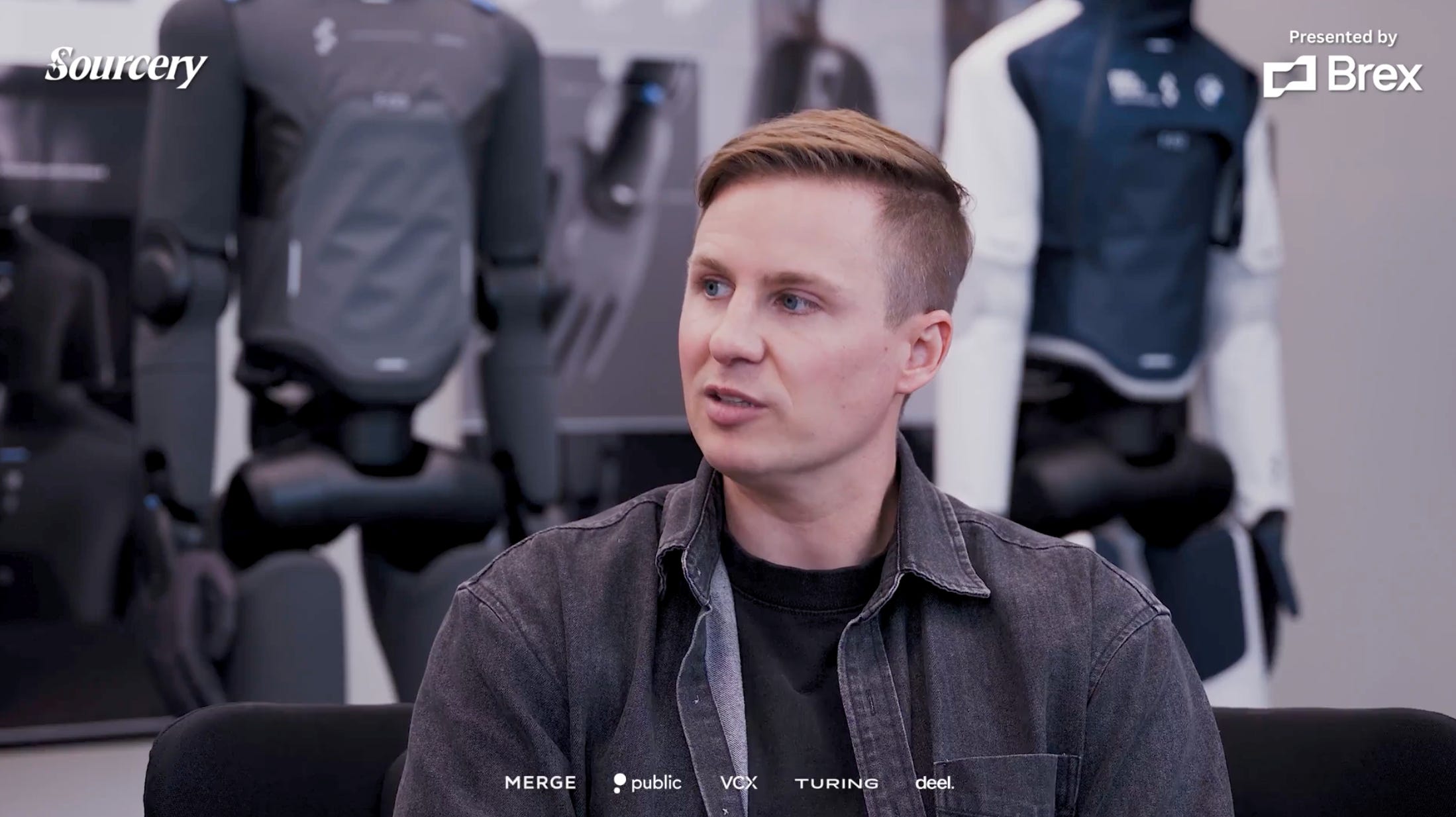
The decision to end the OpenAI partnership reflects the same logic at the model layer. Working with an external AI lab on Figure’s core intelligence system meant sharing visibility into how the company was solving robotics, while OpenAI was beginning to show interest in the space itself. Cutting the partnership empowered Figure to develop Helix entirely in house.
Owning the full stack, from CAD files to the AI models running on the robot, is what Brett sees as the durable position.
“Without that you’re left with the mercy of some vendor. And then if that has an issue, how are you gonna go solve it? If it’s got a code problem, do you understand it? Can you QA it? Can you fix it? Can you patch it?”
Misconceptions About the Company
Brett’s central pushback is that humanoid robots get dismissed as either teleoperated or years away from working. “It’s kind of really difficult to see what’s really happening in the space without coming on site and really seeing stuff,” he said. “We just want humanoid robots to work, and they’re working now.”
A second misconception is that humanoids are a manufacturing race. Brett rejects that framing directly. “In my mind, this is not a manufacturing problem. This is an intelligence problem.” Figure designs nearly every part of the robot in house, including motors, sensors, batteries, and kinematics, but the harder problem is the AI system above the hardware.
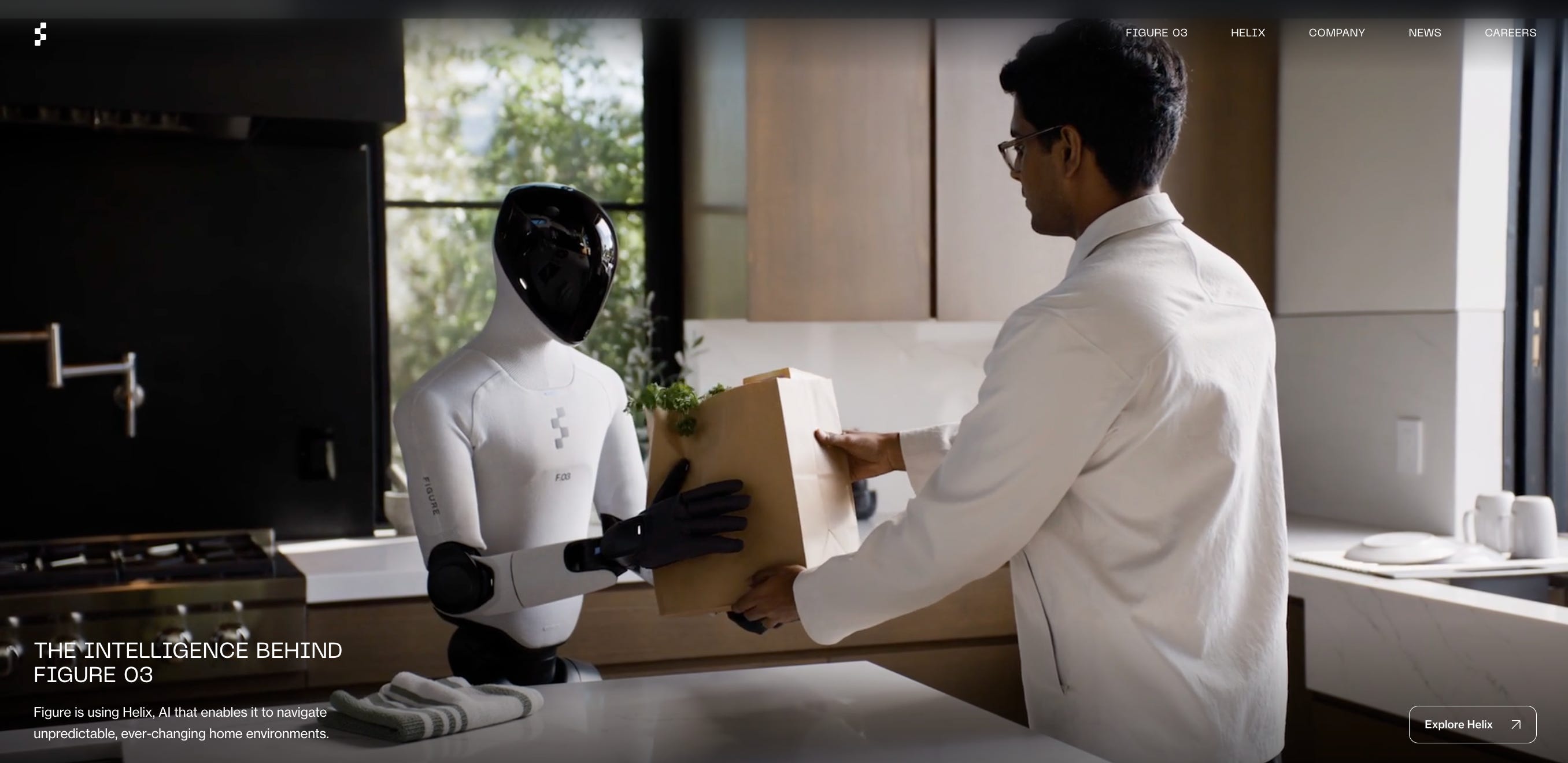
The third misconception is that Figure can outsource its way to scale. “Without that you’re left with the mercy of some vendor. And then if that has an issue, how are you gonna go solve it? If it’s got a code problem, do you understand it? Can you QA it? Can you fix it? Can you patch it?” Vertical integration, in Brett’s view, is what allows Figure to debug, iterate, and own its trajectory.
Use Cases
Figure is targeting both commercial and home environments. On the commercial side, demand outstrips what the company can ship. “I could put so many robots into commercial customers today if they were already ready.” A larger batch is heading to multiple commercial customers this year, with announcements expected in the coming 90 days.
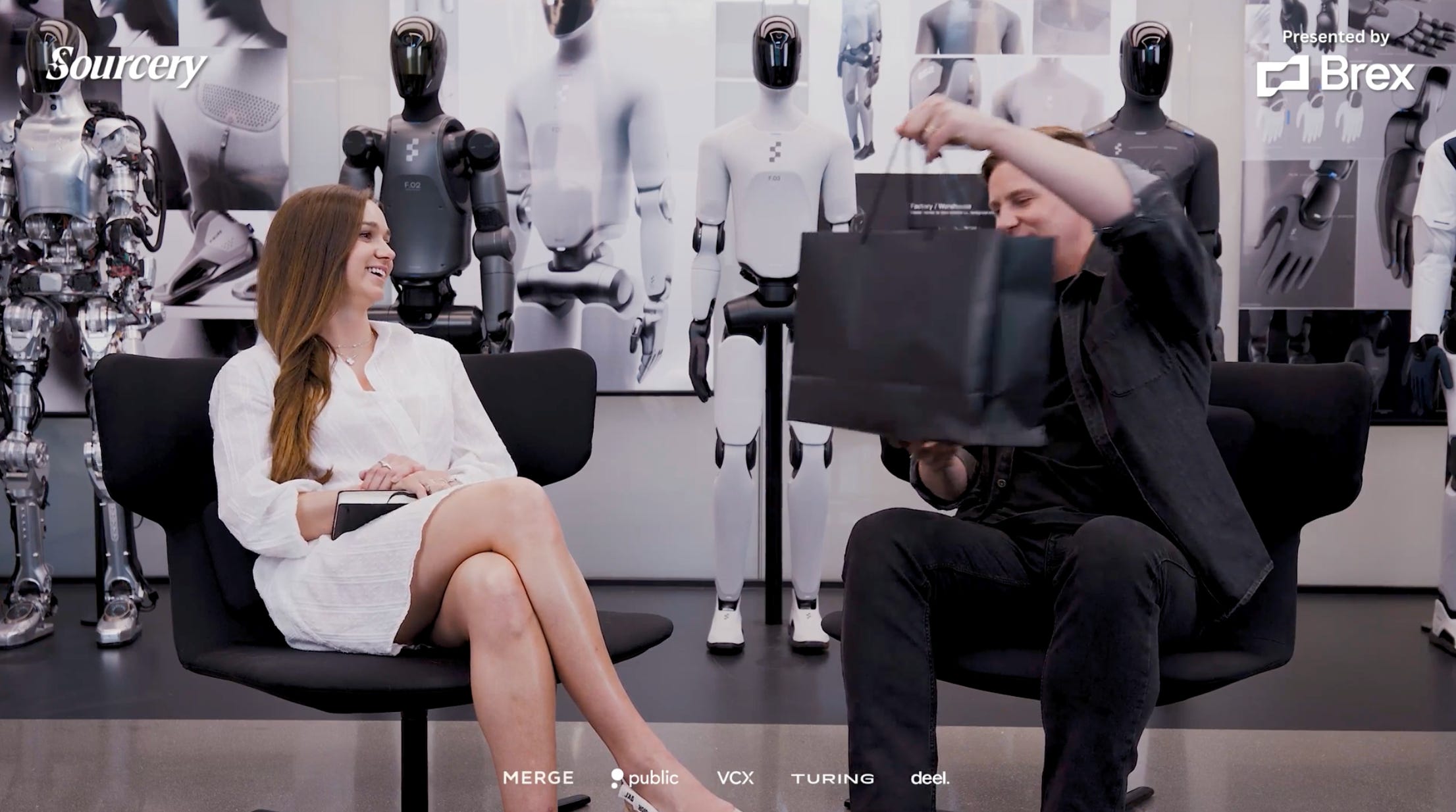
In the home, Brett’s bar is significantly higher. “I wanna be able to put a robot into a home and be able to do seven to 10 hours of work successfully without failures with no human intervention, and do that every day forever.” No company has demonstrated that level of autonomous reliability.
The end goal is general robotics, not task-specific automation. “A robot that can do everything a human can.. almost like a feeling of a human in a body suit that you can talk to, can look at you, reason, visual understanding. And you can drop into any place and just look around, reason and understand.”

Risks
Brett is candid about the difficulty of the problem. “The humanoid thing’s just so hard. I can’t even explain it very well. Getting the robots to do the things we showed you today.. it has almost killed me.”
The core challenges Brett lists are now more on the software side. Achieving autonomous operation without human intervention, getting AI policies to work reliably, and building physical movements that don’t fail. “We have like a fun house of problems and it’s never ending problem city for the company.”
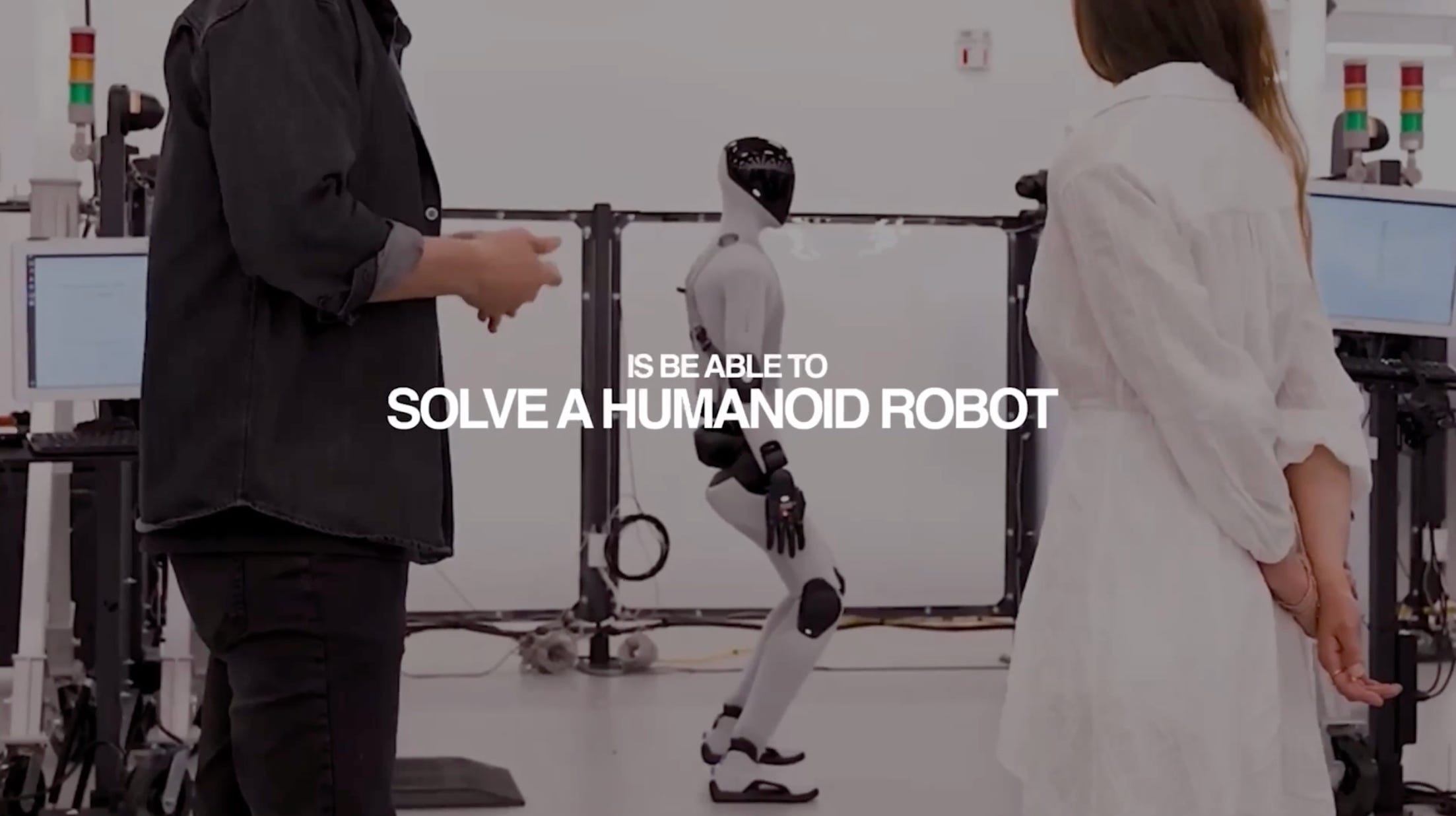
The underlying technical risk is the open ended state space a humanoid encounters in the real world. “The amount of states the robot can be in is so high. You can’t reasonably predict what the robot’s gonna look like at every single timestamp everywhere in the world.” Cars only drive on roads. Humanoids operate everywhere humans do.
As the fleet grows, faults grow with it. “As we’re growing the fleet, the absolute number of faults are rising and we gotta go figure out how to solve those.” The most important benchmark Brett names is putting a robot into a home and having it do seven to ten hours of work successfully every day with no human intervention.

The Future of Labor with Humanoids
Brett is direct about why Figure’s $39B valuation doesn’t concern him. In his framing, humanoid labor is not just a large market. It is the largest addressable market in the AI era, and the valuation reflects a fraction of what the category becomes if the technology works.
The math starts with global labor. Roughly half (50%) of global GDP is human labor in the commercial market, which Brett pegs at $30 to $40 trillion in annual wages paid to workers worldwide. “This will build the biggest business in the world.. We will have the ability to ship, if the robots work well, billions of robots in the commercial workforce.”
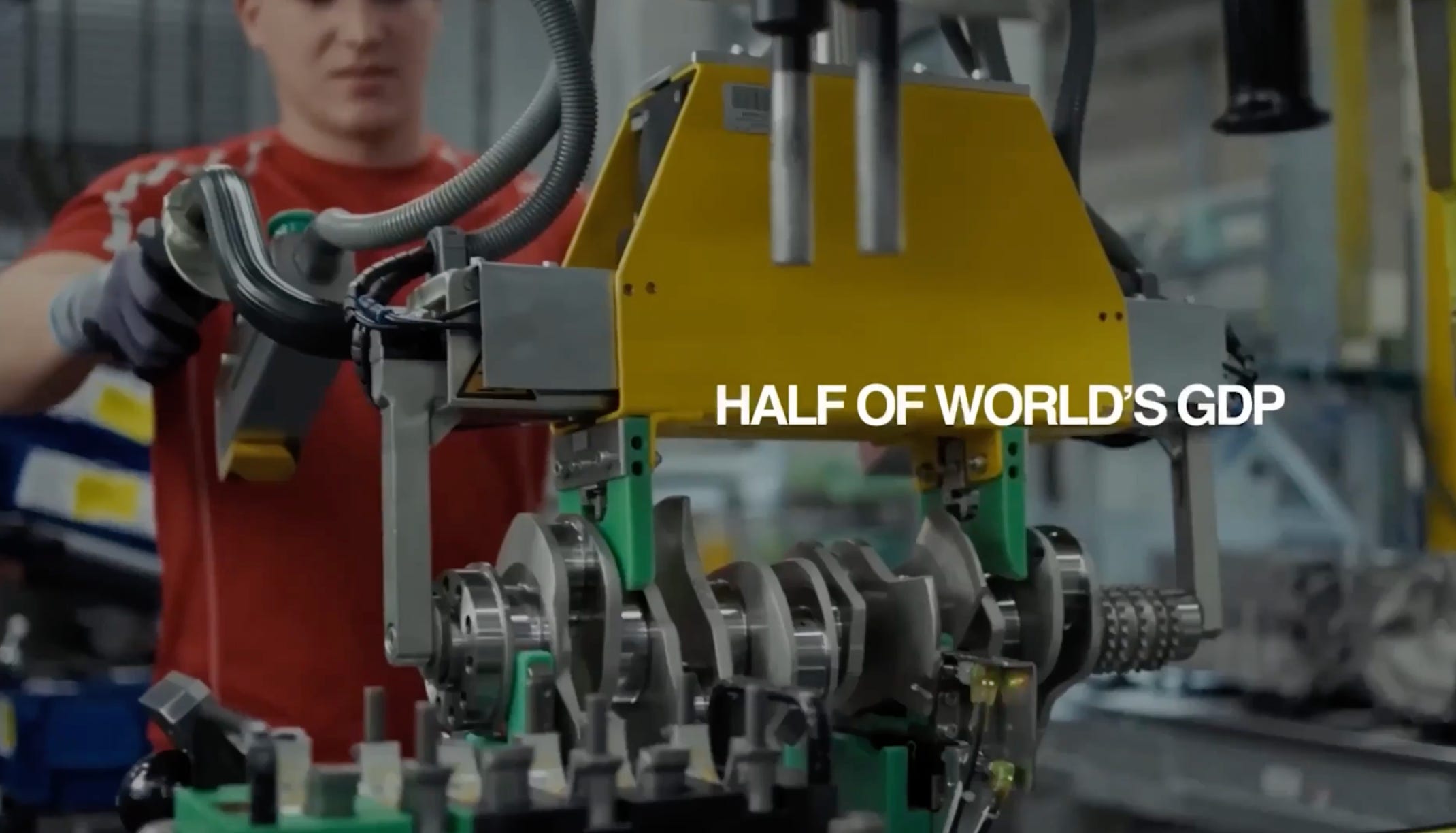
The revenue implication follows. If Figure captures even a small share of that wage base by replacing or augmenting human labor with humanoids, the resulting business is on a scale no current tech company has reached. “You’ll build like enormous, tens of trillions of revenue. You’ll build something massive,” Brett said. “Most tech companies trade at 10 or 20 times revenue. This is gonna be a huge business.”
Against that backdrop, the $39B valuation reads as a bet on category creation rather than a super duper stretched multiple. Software companies are priced against software TAMs. Figure is being priced against the global labor market, which is orders of magnitude larger than any vertical AI software opportunity. Brett’s view is that capital is not the constraint and the valuation is not the risk. The risk is execution on the underlying intelligence problem.
Brett wants Figure to be the first place artificial general intelligence is demonstrated in the physical world, not in a chat interface. “We think we have the recipe and we think we have the right training processes in place to do this. This year and next will be important to see if we can crack those.”
→ Listen on X, Spotify, YouTube, Apple
The material presented on Molly O’Shea’s website are my opinions only and are provided for informational purposes and should not be construed as investment advice. It is not a recommendation of, or an offer to sell or solicitation of an offer to buy, any particular security, strategy, or investment product. Any analysis or discussion of investments, sectors or the market generally are based on current information, including from public sources, that I consider reliable, but I do not represent that any research or the information provided is accurate or complete, and it should not be relied on as such. My views and opinions expressed in any website content are current at the time of publication and are subject to change. Past performance is not indicative of future results.
Paid Endorsement. Brokerage services by Open to the Public Investing Inc, member FINRA & SIPC. Advisory services by Public Advisors LLC, SEC-registered adviser. Crypto trading provided by Zero Hash LLC, licensed by the NYSDFS. Generated Assets is an interactive analysis tool by Public Advisors. Output is for informational purposes only and is not an investment recommendation or advice. See disclosures at public.com/disclosures/ga. Matched funds must remain in your account for at least 5 years. Match rate and other terms are subject to change at any time.
Brett is an incredible guy, true visionary. I am so excited to see what he does with Hark, The LLM company that he started to power the robots.