

Cyan F*cking Banister
Cyan Banister put her entire IronPort exit into SpaceX when the rockets were still blowing up on the launchpad. She never sold. It became the best investment of her life.
→ Listen on X, Spotify, YouTube, Apple
She is Co-Founder and General Partner at Long Journey Ventures, spent 4 years as a partner at Founders Fund, & with her husband Scott Banister has built one of the most successful angel portfolios in the world across 20+ years of investing together:
SpaceX. Anduril. Uber. PayPal. Affirm. Flexport. Postmates. Niantic. Opendoor. Carta. Together AI. Diamond Foundry. Crusoe. Flock Safety. Substrate. Brave. Depop. Calm. Fivetran. Zappos.. & many more..
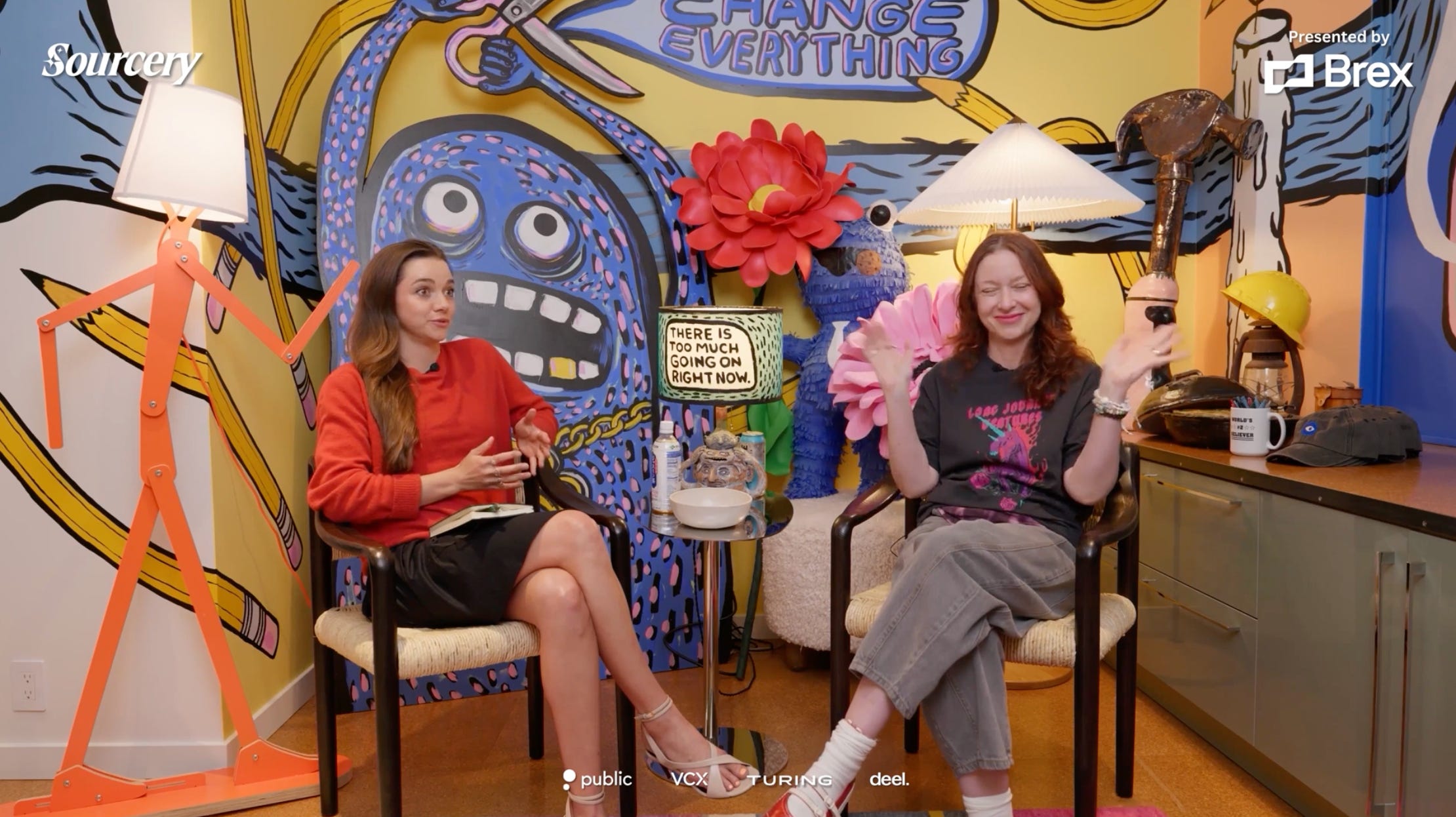
Cyan joins Sourcery at Long Journey's HQ to break down how she actually sources deals, why she refuses to chase hot rounds, and what she is buying next in nanotech and biotech. She found Niantic in a customer support inbox at Hint Water. She found Uber by asking taxi drivers what their day was actually like. Her point is that the alpha is in paying attention, and that the best investments arrive as a feeling before they arrive as a thesis.
This was such a pleasure to record. Cyan is the GOAT & one of the best storytellers of all time. May we all try to live life the way Cyan does..
𝐓𝐈𝐌𝐄𝐒𝐓𝐀𝐌𝐏𝐒
(00:00) Cyan Banister, Long Journey Ventures
(01:13) Inside Long Journey HQ
(02:17) The wild story behind the office mural
(05:32) What Cyan's actual house looks like
(07:18) The candle ritual
(08:08) What the Long Journey logo actually means
(10:41) How Cyan became one of Mafia's breakout stars
(13:37) The Mafia game they should've won
(14:45) Cyan's actual strategy for winning Mafia
(15:42) The first time she's ever had to lie to win
(16:30) What really happens off-camera at Mafia
(18:58) The blooper reel nobody's seen yet
(20:58) The massive production behind one card game
(22:33) The one thing Mafia is missing
(23:54) Brian Singerman's x $40-a-month board game club
(27:05) Board games & startups
(29:10) Confessions of an accidental poker legend
(31:36) Cyan's Serendipity
(33:37) What relentless optimism reveals about people
(35:42) Why so many people are scared to be weird
(37:32) The daily ritual she prescribes to everyone
(43:56) The "why" behind her biggest investments
(50:49) Why sci-fi movies keep predicting the future
(53:37) Should you even go to college right now?
(59:58) Unconventional investing philosophy
(1:01:57) Full list of Cyan's investments
(1:04:28) All-in on SpaceX
(1:08:57) Why she never sold a single SpaceX share
(1:12:53) Top Bets: Becoming Bio + Substrate
(1:15:52) Why America's reindustrialization moment is now
(1:19:16) The mentors who shaped who she is today
(1:22:54) Manifesting Rick Rubin
(1:24:00) Real take on the Peter Thiel events
Brought to you by:
Brex—The intelligent finance platform: cards, expenses, travel, bill pay, banking—wrapped into a high-performance stack. Built for scale. Trusted by OpenAI, Anthropic, Vercel, Granola, Deepgram, & Sourcery.. teams that move fast AF. visit → brex.com/sourcery

Turing—Turing partners with frontier AI labs to improve model capabilities in coding, reasoning, tool use, & multimodality, as well as with Fortune 500 enterprises to build & deploy end-to-end agentic AI systems in mission-critical workflows Visit: turing.com/sourcery
VCX—VCX is the public ticker for private tech, allowing investors of all sizes to invest in venture capital. View The Portfolio at GetVCX.com
Deel—Deel is the global people platform that helps startups hire, manage, pay, and equip anyone, anywhere. Trusted by more than 35,000 fast-growing companies, Deel is the people platform that just works, so teams can scale without the chaos. Visit: deel.com/sourcery
Public-–Investing platform Public just launched Generated Assets, which lets you turn any idea into an investable index with AI. With Generated Assets, you can build, backtest, refine, and invest in any thesis with AI. Gone are the days of one-size-fits-all ETFs. Try it today: public.com/sourcery
Cyan Banister’s Legendary Track Record
Cyan Banister’s first investment ever was SpaceX. She put her entire 2007 IronPort exit into it. She never sold. Savage.
In this episode of Sourcery, I sat down with the Co-Founder & GP of Long Journey Ventures at the firm’s magically weird HQ to get inside the brain of one of Silicon Valley’s greatest investors of all time.
→ Listen on X, Spotify, YouTube, Apple
The SpaceX Bet
IronPort, the email security company Scott Banister co-founded, sold to Cisco in 2007 for $830 million. Cyan had traded salary for equity on every promotion, so it was her first real liquidity event, and she was unsure what to do with it. Then Luke Nosek came over to the house, got down on the floor, and made his pitch. “Banister’s, I need you to dig through your couches. Whatever money that you have that’s spare, anything liquid you have, I need it. SpaceX needs it.”
Rockets were still failing on the launchpad. The consensus was that private citizens had no business in space and that the failures proved it. Luke and Scott made the opposite argument: if you’re able-bodied, employable, young, and have a safety net, this is what the safety net is for. She said yes, then immediately panicked. “So I did it, and then afterwards, I was like, ‘What have I done?’” Friends told her she’d lit her money on fire.
She never sold.
“I just literally put all my chips on a color, and just let it ride for 20-some odd years now. And it ended up being the best investment I’ll probably ever make in my life.”
SpaceX went public on the Nasdaq on June 12, 2026, in the largest IPO in history, pricing 555.56 million shares at $135 and raising $75 billion at an initial valuation of $1.77 trillion. By its third day of trading the stock closed at $201.68, roughly 50% above the IPO price, making SpaceX the sixth-largest publicly traded company in the US market.. not long after it hit $2.99 trillion market cap.
Since that initial post-IPO peak, the valuation has cooled and currently hovers between $1.9 trillion and $2.1 trillion.. for context, SpaceX was valued around $300B just a year ago.
Like many investors, Cyan is still in lockup post-IPO.

The #1 Angels in the World
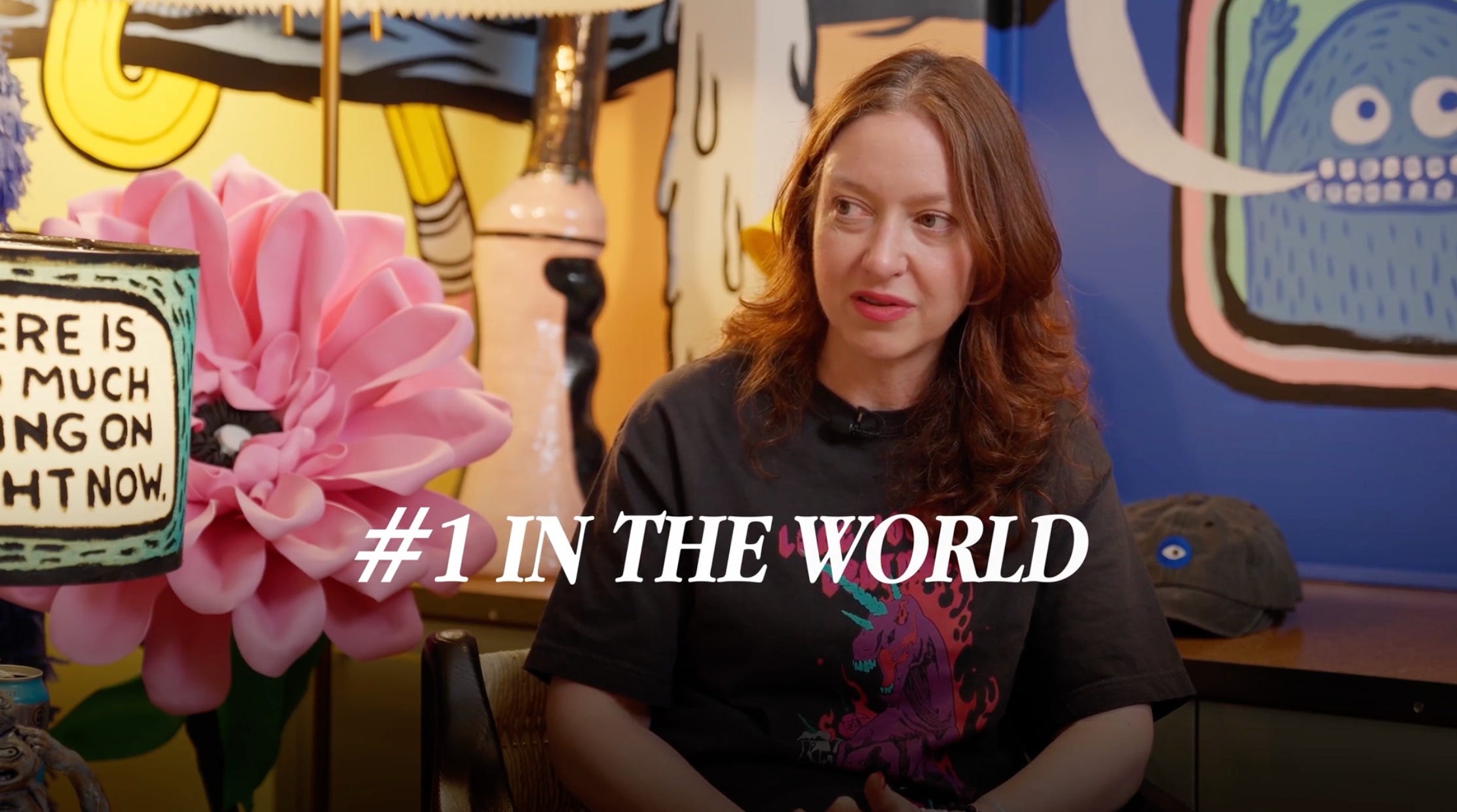
Cyan and her husband Scott Banister have invested together for over 20 years, and by her account, combined they’re the top-ranked angel investors in the world. “I think the two of us combined are definitely #1 in the world.” The nuance she insists on: they operate as one unit. “Everything that’s mine is his, and everything that’s his is mine, and we’ve been partners since we started investing together.”
Even separated out, they’d each land top 10 on the Stanford list; combined, #1. When TechCrunch gave them Angel of the Year, she refused to accept it solo. “I don’t wanna go on stage and accept an award that my husband also deserves.” The Banisters won that award for early bets on SpaceX, Uber, & DeepMind.
Others include: SpaceX. Anduril. Uber. Zappos. PayPal. Affirm. Flexport. Checkr. Density. Flock Safety. Brave. Zenefits. CTRL-labs. Depop. Substrate. Carta. Together AI. Turing. Postmates. Niantic. Cargomatic. Diamond Foundry. Upstart. Fivetran. Forge. Opendoor. Calm. TrueMed. Crusoe.
Several have compounded into landmarks. Anduril raised a $5 billion Series H at a $61 billion valuation in May 2026, more than double its valuation a year earlier.
Ask her to pick a favorite and she won’t. “It’s like children. You can’t pick your favorite.” What she’ll admit to is the joy of an investment escaping the garage and showing up in the physical world. “I always take pictures of billboards because I call it seeing my investments in the wild.” The through line, she says, is companies that create jobs and offer flexibility, from rocket ships to sandwich delivery.


How Cyan Actually Sources Deals
The SpaceX story gets told as a conviction story. It’s closer to a sourcing story, and the sourcing story is the one worth learning from. With Niantic, she didn’t notice the game. She noticed the behavior. Players of a fringe app called Ingress were renting helicopters, chartering boats, ditching friends at DEF CON to drive into the desert and claim objects that existed only inside an app. “That is remarkable. What could get people to do this?”
So she played it, then asked the question most people skip: why is Google doing this? The answer was that Ingress players were producing categorized, geotagged, photographed map data for free. She wanted in & couldn’t, because it was Google.
When Alphabet spun Niantic out, she had no way to reach anyone there, but she had an unrelated memory: while helping set up a support ticketing system at Hint Water, another of her investments, she’d kept seeing “Ingress code” in the subject lines. Hint was putting game codes in its bottle caps through a Niantic partnership. “If I wasn’t paying attention to what was coming to the inbox of that ticketing system, and how did I even end up there in the first place, that’s the another miracle.”
That thread led to Kara Goldin, then to John Hanke, whose first response was that Niantic had Nintendo and Google and didn’t need her. “Please, just hear me out. Just take an hour of my time, and I guarantee you, you will not regret it.” She showed up with a best friend who was an Ingress player; Hanke hired him nearly on the spot. Then Pokemon Go happened.
Niantic sold its games division to Scopely in March 2025 for $3.5 billion, with an additional $350 million in cash bringing total value to equity holders to $3.85 billion. The remaining geospatial business spun out as Niantic Spatial with $250 million in capital, still led by Hanke.
The Uber Method, Run in Reverse
She didn’t find Uber. She’d already done the thinking before Uber existed, because she’d spent years asking taxi drivers what their day was actually like. What they told her was a product spec. “Well, I wake up, I go to the taxi yard, I give them $200. I’m in the hole $200 from the moment I walk in. I drive my car out of the gate. I immediately have to make that $200 back.”
A driver who starts every shift $200 underwater will drive fast, arrive cranky, and lose your bag. The ride was bad because the job was bad. Uber’s flexible employment wasn’t a feature bolted on; it was the answer to a question she’d been asking for years, and when Uber arrived she recognized it instantly.
This is the engine underneath the whole portfolio. “When you ask why about everything in the world, it’s just gonna make you a better investor. It’s gonna make you a better entrepreneur, a better everything.” Her phrase for it: “Human beings are why machines.” She doesn’t start her day until she has a why to carry through it.

Personality Is Not Fixed
It really isn’t until the last 15% of the conversation do we actually start talking about investing, up until then we talk human behavior, curiosity, how the world works.. and as a life/performance/career coach, an incredibly high EQ, Cyan has a real talent with helping lead people to more personal clarity & agency.
“We have this misconception that our personality is fixed, and we say, ‘This is just how I am.’” Her claim is that this is false, that most people are running excuses rather than decisions, and that the excuses are load-bearing. I’m a Scorpio. I’m Irish, I have a temper. She thinks personality is editable, and that the edit is expensive because it requires looking directly at things you’ve arranged not to see.
“You can actually surgically go in and alter your personality, where you can actually change these things, but it takes effort and time and a lot of facing the ugly truth about yourself.”
She runs a thought experiment every week, and the current one is: “How wide is the space between your values and your actions?”
She sits down with paper. If she claims to be honest, where did she lie this week, including the small ones, the meeting she skipped, the email she promised.
Her explanation for why this happens is unusually precise and mostly generous. “That person in the moment intends to send that email, but the person two hours later is not the same person.” She notes, with obvious relish, that Marc Andreessen advises against introspection, and that she’d like a word with him about it.
What Worries Her
Peter Thiel used to ask her what worries you, and she thinks it’s the better question. What excites you is interesting; what worries you is diagnostic. What worries her is a surveillance state operated by AI & enforced by robotics, and she frames it not as an abstraction but as a logistics problem that’s already half-solved. Skynet.
“Right now, we’re moving towards a future where you won’t be able to get into a car & drive yourself somewhere, & if you think about it, that freedom of movement is a human right.”
She takes it a bit further.. “What if someone says, ‘You know what? You’re just not going anywhere. I’m just gonna shut your Waymo down, and not only that, but I’m gonna lock you inside.’” That’d be a huge bummer.. lol.
For context, Waymo now runs roughly 500,000 paid rides a week across 11 US metros with about 3,000 vehicles, at a $126 billion valuation, targeting 1 million weekly rides by the end of this year. Let’s hope that doesn’t happen! (it won’t)
Her framing is that the technology isn’t the variable. “A gun can be a paperweight or a weapon. You know, AI is the same.” Which is why she backs open source and decentralized control. She got into the industry in 1999, when the assumption was the whole ecosystem would stay open and distributed, and she watched it centralize instead. Her worry is one ideology at the controls, “you don’t want one company with one ideology ruling it all. That’s dangerous.”

AI as a New Paintbrush
The excitement runs on the same logic as the worry. “I’m really excited about AI being a new paintbrush and a new tool to unlock all the creativity in this world that has been dormant.” Her bet isn’t that AI produces great work; it’s that AI removes the capital requirement from ambition. The person with a million-dollar idea who can’t afford a manufacturing run, a film crew, an engineering team.
Vibe coding is here. Vibe manufacturing, she thinks, is next, producing a wave of newly minted millionaires running fully agenticized businesses, most not venture-scalable & not caring.
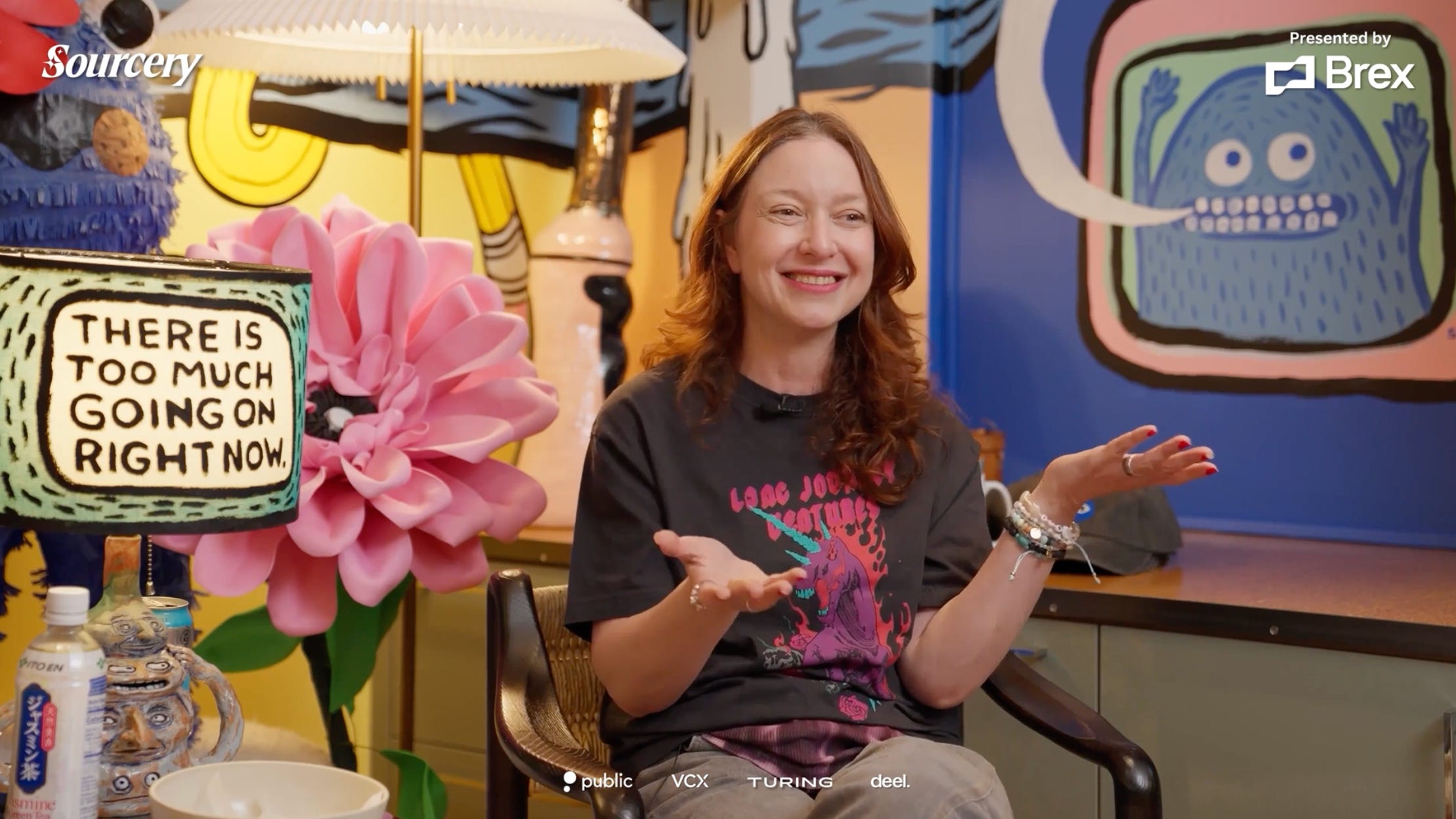
On the slop objection, she’s direct. “Right now, we’re in a period where it’s the worst it’ll ever be.” She’s also unromantic about where the models came from and where the fight goes, predicting China trains on Western IP regardless, remixes it, and sells it back to us, and that we buy it. She’s writing a book with AI assistance now and says the tells are obvious to anyone who’s read enough of it, which is exactly the job: the model does the heavy lifting, the human massages it back into a human shape.
The consumer wave, she thinks, lands in two to three years, and there’s one company she’s still hunting. “I am still looking for the Alibaba of the Americas.” She’s turning over stones. Nobody has pitched it yet.
Why Now vs. What’s Coming
Ask her about the deep tech boom and she’ll explain why now with real precision. Manufacturing and robotics costs have collapsed. SpaceX proved the category could exist at all, which is what let a Varda be imagined. There’s a technology war underway with countries that don’t share our interests. Wars will be fought with robotics. And then she tells you she doesn’t invest on any of that.
“I tend to not play in the why now space. I tend to play in the what’s coming space.” Six years ago that meant the infrastructure layer under crypto and AI, before either was consensus. Today it means nanotech, biotech, and the bottlenecks that fall away once AI can read data sets nobody’s been able to read. Her most exciting current positions are Substrate, Becoming Bio, & Diamond Foundry, which she frames as the substrate of technology, the substrate of biology, and the material the first two run on.
Diamond Foundry is the cleanest illustration. When she invested, the visible business was fancy diamonds and everyone stopped there. The company now produces single-crystal diamond wafers for high-power chips in AI, cloud, EVs, and 5G, and was valued at $1.8 billion after a $200 million Fidelity round. It opened a commercial plant in Trujillo, Spain, in 2025. The jewelry funded the wafers.
“If I’m chasing everything in the hyper-competitive deals of today, I’m gonna lose money.”
She says this should be every seed fund’s secret, and that it mostly isn’t. Long Journey, co-founded with Lee Jacobs & Arielle Zuckerberg, backs what the firm calls magically weird founders; Fund IV closed at approximately $181.8 million in March 2025. The logo is a sheep’s eye named Bellwether, looking sideways, because the sheep that leads the flock is the one watching for what’s coming from the side.

Free Speech Is the Number One Cause
The last thing she says is the thing she cares about most. “A lot of people wanna save the oceans, wanna bring water to Africa, wanna cure cancer. I wanna protect free speech.” It’s not abstract for her. It’s why she defends going to Peter Thiel’s events, and why she found the recent wave of distancing statements exhausting. Attendee records for Dialog, the invitation-only network Thiel co-founded with Auren Hoffman, were exposed in June 2026, and Ezra Klein acknowledged on X that he’d attended conferences in 2018 and 2022 while stating he wasn’t a member.
Her position is that the shame is the problem. “If you get invited to a Peter Thiel event, go. Like, do not shy away from it.” The argument underneath isn’t a defense of Thiel; it’s a defense of category integrity. “Racism is real. It’s a problem. And so if we call everyone a racist, then we can’t find the real ones. If we call everyone a pedophile, how are we gonna find the real pedophiles?”
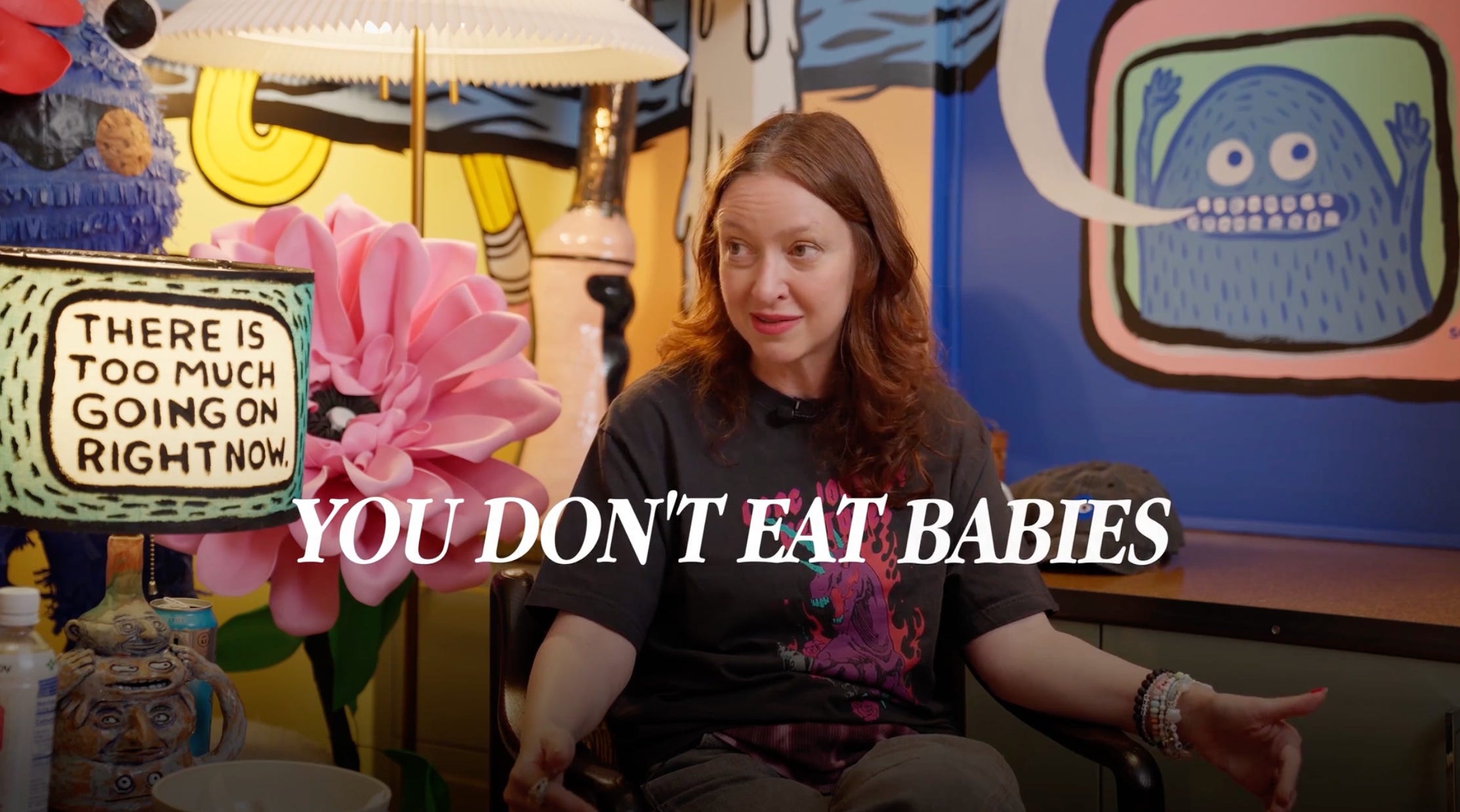
Then the line that made the rounds on X, delivered with a straight face and explained with a laugh: “I eat Mars babies. I was like, yeah, I eat babies, but only from Mars.” The joke is a proof. There are no babies on Mars. She extends it into a real thesis: “You can tell the health of a nation by its ability to tolerate comedy and rap music. Those two things have to exist for freedom, and if either of those start to disappear, you’re in trouble.”
On Peter, she offers the line she’s clearly used before and still means: “I always like to joke that I didn’t go to university, but I went to the Peter Thiel University.” And then the part that’s actually useful and applies to anyone: “He could be your mentor without ever meeting him if you’re open-minded and you ask yourself why. Why would he do this? And don’t make assumptions.”
The Two Who Shaped Her
Asked who inspires her, Cyan names Peter Thiel first. He was her partner for four years at Founders Fund, and her framing of the education is the line she keeps returning to: “I always like to joke that I didn’t go to university, but I went to the Peter Thiel University.”
Her defense of him is that he’s misread. “I’ve never met anyone more tolerant, more open-minded. He gets such a bad rep for a lot of things, but he’s just probably one of the most poorly understood people.” The reason, she says, is distance. “He’s operating 1,000 feet above everybody else. His mind is not like other minds. And so when you encounter something like that, you don’t know what to do with it, so it’s just easier to hate it.”
Marc Andreessen was the other, and the older one. He was her hero as a teenager, on magazine covers, the Netscape founder whose work she credits with changing her world. “I told myself when I was a teenager, ‘I’m gonna meet that guy someday. I’m gonna sit in a room with him, and he’s gonna ask me a question, and he’s gonna value me.’ And I didn’t meet him until that was true.”


However, she made a point that she didn’t actually have to know either to learn from them.. “You can learn a lot from people without ever knowing them, by just watching them and observing them.”
She rounds it out with a 4th name most people wouldn’t guess. Scott Cook, the Intuit co-founder behind QuickBooks, TurboTax, and Mint. Her reason is executive function, not fame. “I’ve never met anybody in my life with more executive function, who has a complete understanding of the lay of the land of his company, his employees, his culture, his board, and the emerging technologies of the world, who is so down to earth.” She calls him the gold standard for a fine human being in an executive position.
Manifesting Rick Rubin
Cyan closes by putting a wish on the record. “It is my dream, I’m gonna put it out in the universe, that I get to meet Rick Rubin someday.” She feels a rare kinship with him.. “I do think that he’s the first person, besides Bill Murray, that I’ve ever seen in my life who I think my mind is similar to.”
What she means is that they both work “based off of this openness to, for lack of a better term, the universe presenting to you solutions.”
The only problem is access. “I don’t know how to reach him. I don’t know how to reach his team. I just keep putting it out in the universe, and I figure it’ll eventually happen.”

The irony is that his podcast, Tetragrammaton, has already hosted Peter Thiel, her former partner of four years at Founders Fund.. and “He brought on Bill Gurley, and Bill, you know, I’m sure they talked about Uber, but we brought Uber to Bill Gurley. Maybe that’ll get me on.”
PSA: If you can help connect the two, that’s a collab the whole world needs to see
→ Listen on X, Spotify, YouTube, Apple
The material presented on Molly O’Shea’s website are my opinions only and are provided for informational purposes and should not be construed as investment advice. It is not a recommendation of, or an offer to sell or solicitation of an offer to buy, any particular security, strategy, or investment product. Any analysis or discussion of investments, sectors or the market generally are based on current information, including from public sources, that I consider reliable, but I do not represent that any research or the information provided is accurate or complete, and it should not be relied on as such. My views and opinions expressed in any website content are current at the time of publication and are subject to change. Past performance is not indicative of future results.
Paid Endorsement. Brokerage services by Open to the Public Investing Inc, member FINRA & SIPC. Advisory services by Public Advisors LLC, SEC-registered adviser. Crypto trading provided by Zero Hash LLC, licensed by the NYSDFS. Generated Assets is an interactive analysis tool by Public Advisors. Output is for informational purposes only and is not an investment recommendation or advice. See disclosures at public.com/disclosures/ga. Matched funds must remain in your account for at least 5 years. Match rate and other terms are subject to change at any time.
I really enjoyed seeing you two together. This was wonderful.
She's not an angel investor, she's an archangel investor :D