

Abundance Era is Real
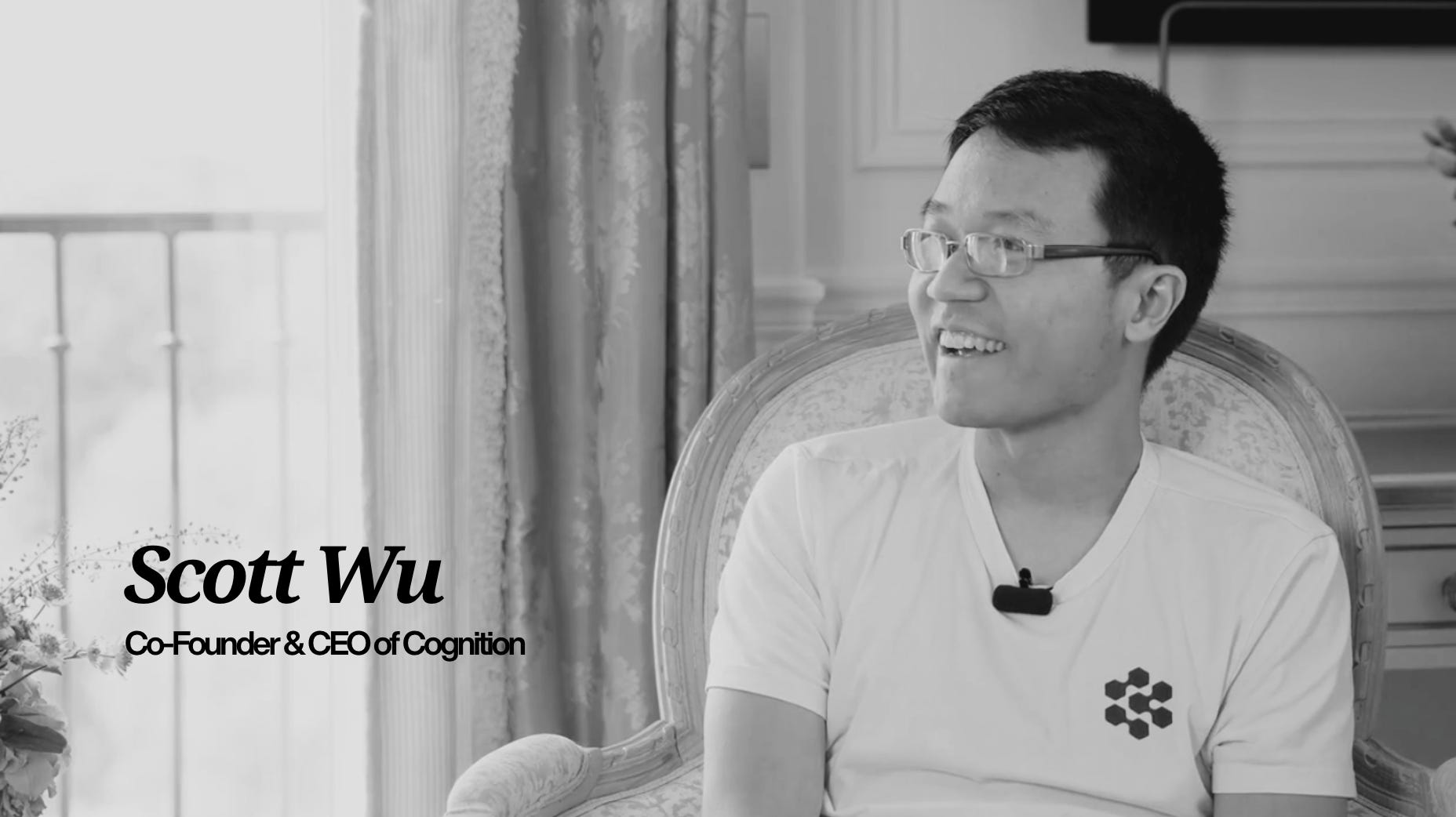
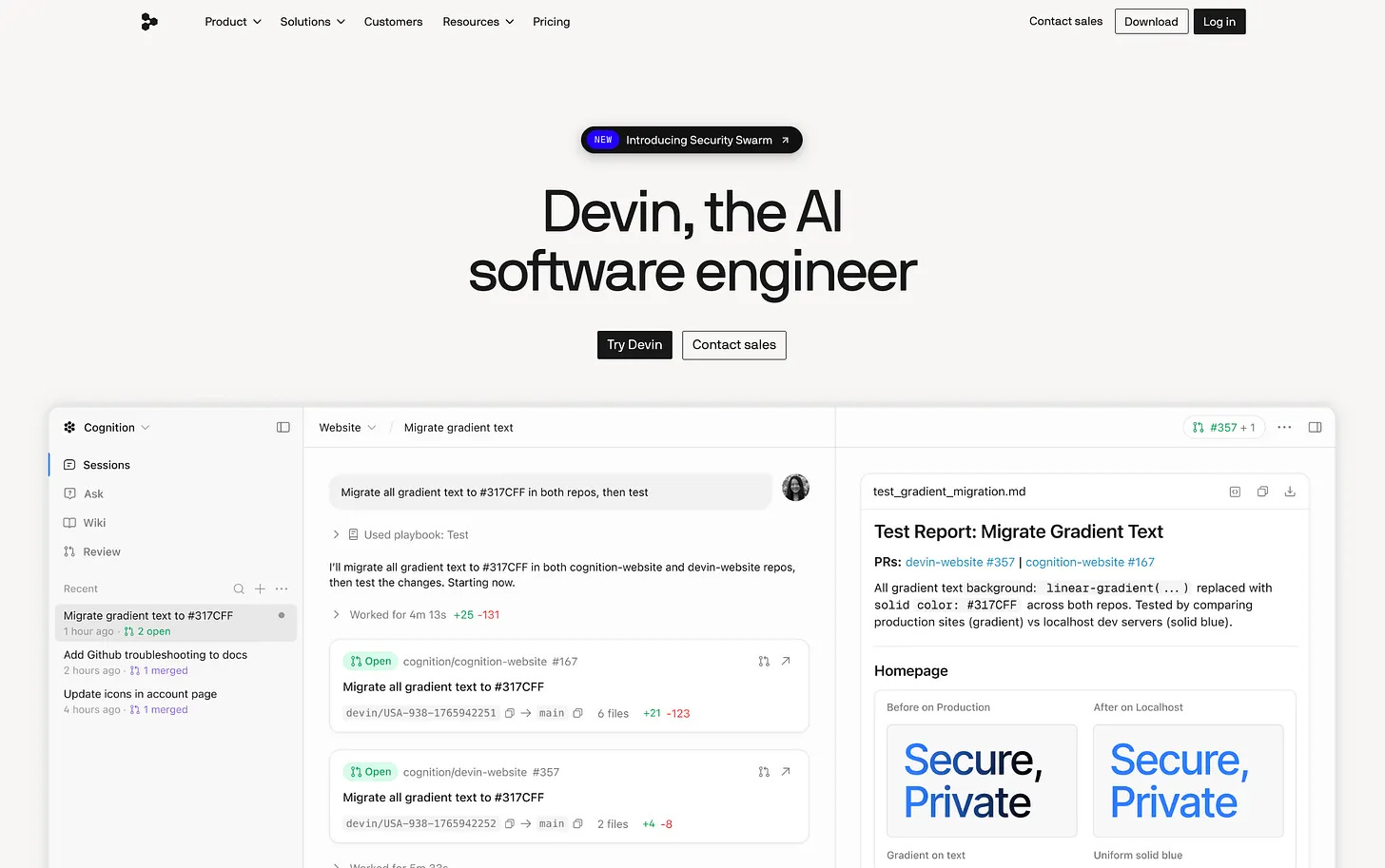
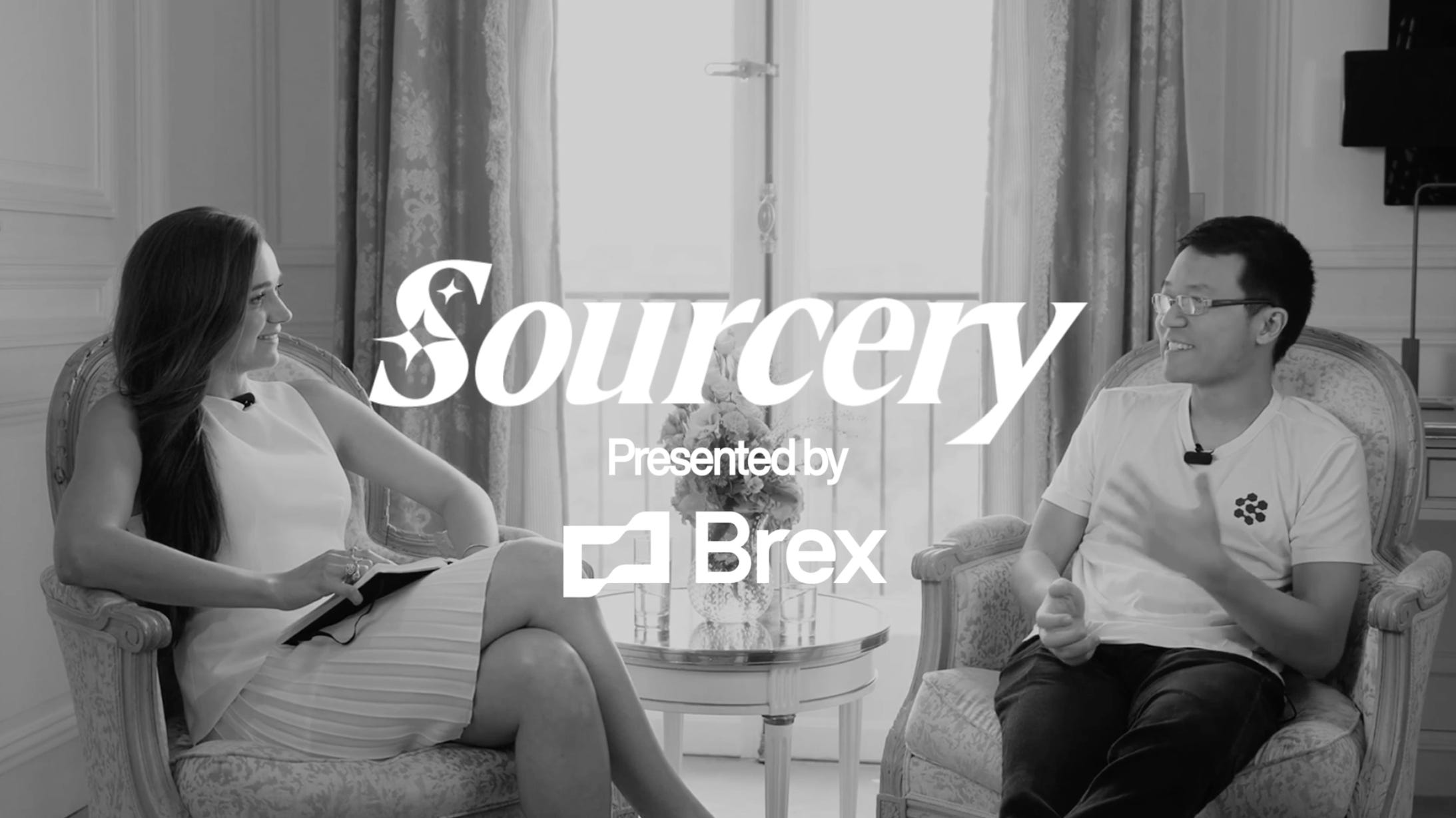
Scott Wu, CEO & Co-Founder of Cognition, joins Sourcery in Paris amid the RAISE AI Summit. Cognition is the applied AI lab behind Devin, the autonomous AI software engineer, & Devin Desktop, formerly Windsurf.
→ Listen on X, Spotify, YouTube, Apple
The company has raised more than $2.5 billion, including a $1 billion round in May 2026 at a $26 billion valuation, while growing annualized revenue from roughly $37 million to $492 million in a year. Devin now writes roughly 95% of Cognition's own code, total code shipped has grown 7x in six months, and customer usage has increased 11x to 12x.
We cover Cognition's acquisition of Windsurf, negotiated over a single weekend after Google's $2.4 billion talent deal, why Scott is keeping Cognition independent, why enterprises won't buy coding agents directly from the model labs, AI's impact on software engineering, the 6-month singularity debate, and the origin story of Devin, from fixing a MongoDB error in 2023 to deployments at Goldman Sachs, Mercedes-Benz, Citi, Dell, Santander, NASA, the U.S. Navy, and the U.S. Army.
Recorded July 7, 2026, ahead of Cognition shipping SWE-1.7 on July 8 and acquiring The Interaction Company (maker of Poke) on July 23.
Special thank you to Brex, MongoDB, & AssemblyAI for helping make this RAISE AI Summit mini-series in Paris, France happen.
𝐓𝐈𝐌𝐄𝐒𝐓𝐀𝐌𝐏𝐒
(00:00) Scott Wu, Co-Founder & CEO at Cognition
(01:00) The Identity crisis of building Devin
(01:42) How Cognition 7X-ed its output in 6 months
(02:55) The Metric every AI company gets wrong
(04:18) Cognition's 12x growth curve
(07:46) The Windsurf acquisition
(13:26) Scaling overnight: Cognition's hardest week
(15:11) The strategy behind the integration of Cognition products
(17:23) Cognition's merger playbook
(20:01) Why the DMV is Cognition's next big target
(22:59) Why Cognition bet against AI centralization
(25:09) Why enterprises refuse to bet on a single AI lab
(28:32) Scott's honest take on Superintelligence
(32:36) Is Silicon Valley losing its mind over the AI gold rush?
(33:26) Devin's origin story
(37:17) The question Scott thinks nobody's asking yet
(39:59) The poker match that almost closed a deal
(41:24) Scott's vision for the next year
Brought to you by:
Brex—The intelligent finance platform: cards, expenses, travel, bill pay, banking—wrapped into a high-performance stack. Built for scale. Trusted by OpenAI, Anthropic, Vercel, Granola, Deepgram, & Sourcery.. teams that move fast AF. visit → brex.com/sourcery

MongoDB–Millions of developers and more than 65,200+ customers across industries – including ~75% of the Fortune 100 – rely on MongoDB for their most important applications. With integrated capabilities for operational data, search, real-time analytics, & AI-powered data retrieval, MongoDB helps organizations everywhere move faster, innovate more efficiently, & simplify complex architectures. visit → mongodb.com/ai
AssemblyAI–Millions of developers use AssemblyAI to power their voice ai apps & features. One API gives you access to best-in-class speech-to-text, voice agent, & speech understanding models for both pre-recorded and real-time audio. Granola, ClickUp & HeyGen are scaling with AssemblyAI - get $50 of free credits today → AssemblyAI.com/sourcery
The $26B Company That Builds Itself
Cognition was founded in November 2023 by Scott Wu, Steven Hao & Walden Yan, all International Olympiad in Informatics gold medalists. The company came out of stealth in March 2024 with Devin, their first product marketed as an autonomous AI software engineer. And now, in just 3 years, Devin writes roughly 95% of Cognition’s own code.
→ Listen on X, Spotify, YouTube, Apple
The Birth of Devin
Devin started as separate experiments inside the company Slack. Each founder built an agent version of himself, a dev “Steven” & a dev “Walden,” and the ideas were eventually folded into one product. The moment it worked was a MongoDB install Yan could not get running in December 2023. He had already tried the usual approach of pasting the error into Google and running whatever the top result suggested. He handed it to his agent instead, which ran a few minutes of commands, fixed it, and messaged him to say so.
“You need encyclopedic knowledge of all of the different errors that you could run into and what would cause each of them. And then you need the ability to actually run and diagnose things. Those 2 things, the encyclopedic knowledge & the ability to actually go & run commands, that’s literally what a coding agent is.”
Yan did not believe it at first. Cognition still has the recording.
“I couldn’t sleep that night. We were just like, shit, maybe it does work. Maybe you can just have an AI engineer buddy that can just do work for you.
That was the very first moment that we believed it was possible.”
Founders Fund’s Early Bet
Founders Fund has backed Cognition from seed through Series D, leading most of its financings. The firm led Cognition’s $21 million seed round in March 2024, which closed shortly before Devin was announced, the $175 million Series A one month later at a $2 billion valuation, and the $400 million Series C in September 2025 at a $10.2 billion valuation.
Lux Capital & 8VC jointly led the Series B in March 2025 at roughly a $4B valuation before reuniting with General Catalyst to co-lead the company’s $1B+ Series D in May 2026.
During the seed round, the two sides were close on terms but had not reached an agreement. Wu proposed a rather creative way to negotiate with Founders Fund partner Napoleon Ta..
“Since you’re such a big fan of poker, we could just play a heads-up poker match for that, and we could have the winner decide whose terms we actually sign. In retrospect, it would’ve been for 1% of the company.”
Ta was willing. Peter Thiel, however, shut it down. Bummer..
(Napoleon leads the firm’s growth practice & sits on Cognition’s board)
However.. on playing chess with prolific Chess Master Thiel, Scott was pretty clear that’s a no go.
“I would not recommend playing against Peter Thiel in chess. You gotta pick games that you can win.”
$26B Series D
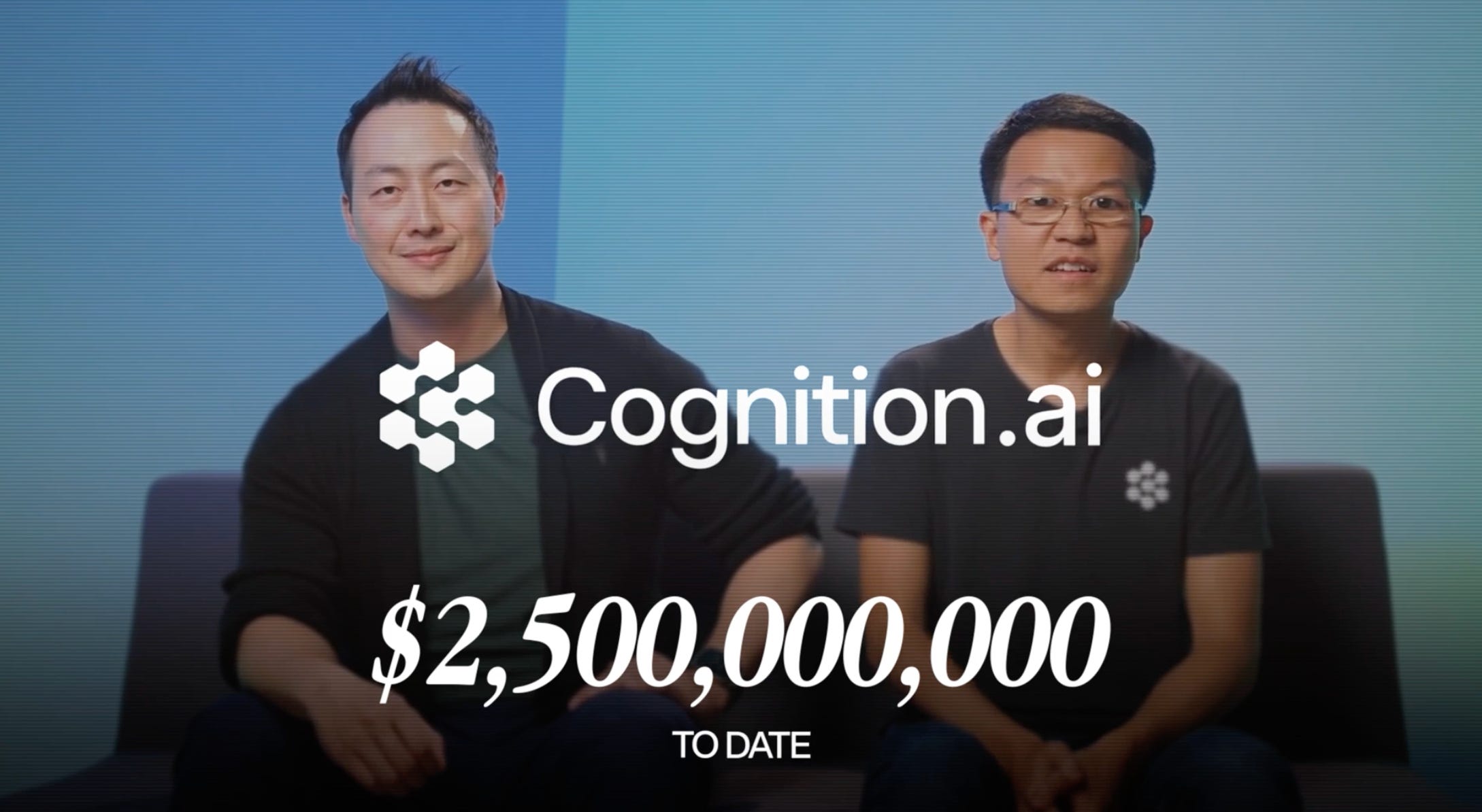
Cognition has raised $2.5 billion in total funding and is valued at $26 billion. Its latest financing, a $1 billion+ Series D announced on May 27, 2026, was co-led by Lux Capital, General Catalyst, and 8VC at a $25 billion pre-money valuation.
The round included participation from existing investors Founders Fund, Elad Gil, Alpha Wave, Definition Capital, Positive Sum, Avenir, Vitruvian, Bain Capital Ventures, Conversion Capital, 137 Ventures, Soma Capital, and Omri Casspi, alongside new investors Ribbit Capital, Atreides, and Layer Global.
At the time of announcement Cognition disclosed run-rate revenue of $492 million with the round, up from $37 million a year earlier.

The Growth Curve
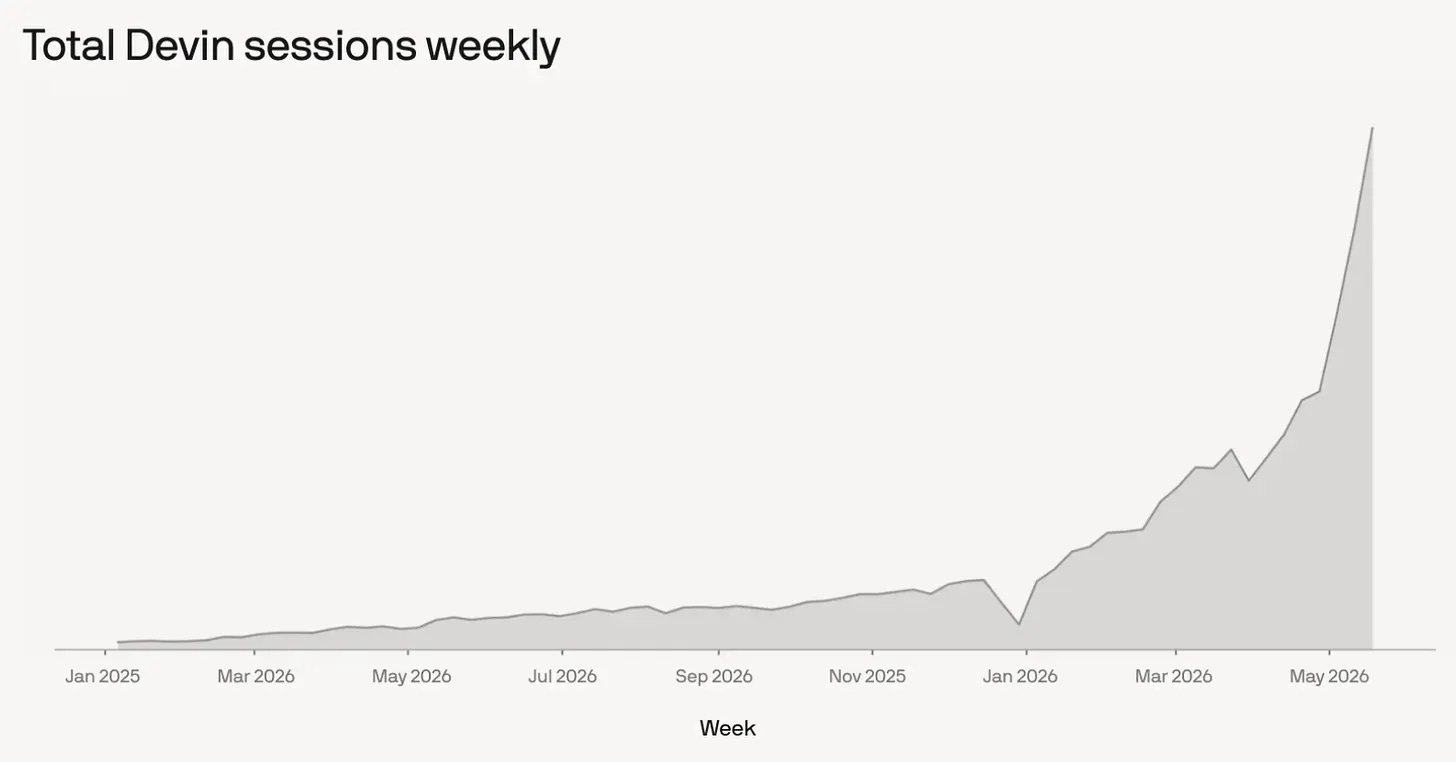
Internally, Devin has become central to how Cognition builds software. Wu says it now writes roughly 95% of the company's code, up from 89% at the Series D. Over the past 6 months, the amount of code shipped has increased roughly 7x, while customer usage has grown 11x to 12x. Cognition says enterprise usage has grown more than 10x since the start of 2026.
“If we only 3x’d year over year, we’d be lagging the market.”
Rather than measuring token consumption, Wu says the company focuses on business outcomes.
“Obviously literal tokens is just not the right answer. What you care about is outcomes and what you’re actually delivering. There’s no secret trick or easy way out in terms of measuring actual ROI, productivity, & so on.”
Who Is Running Devin in Production
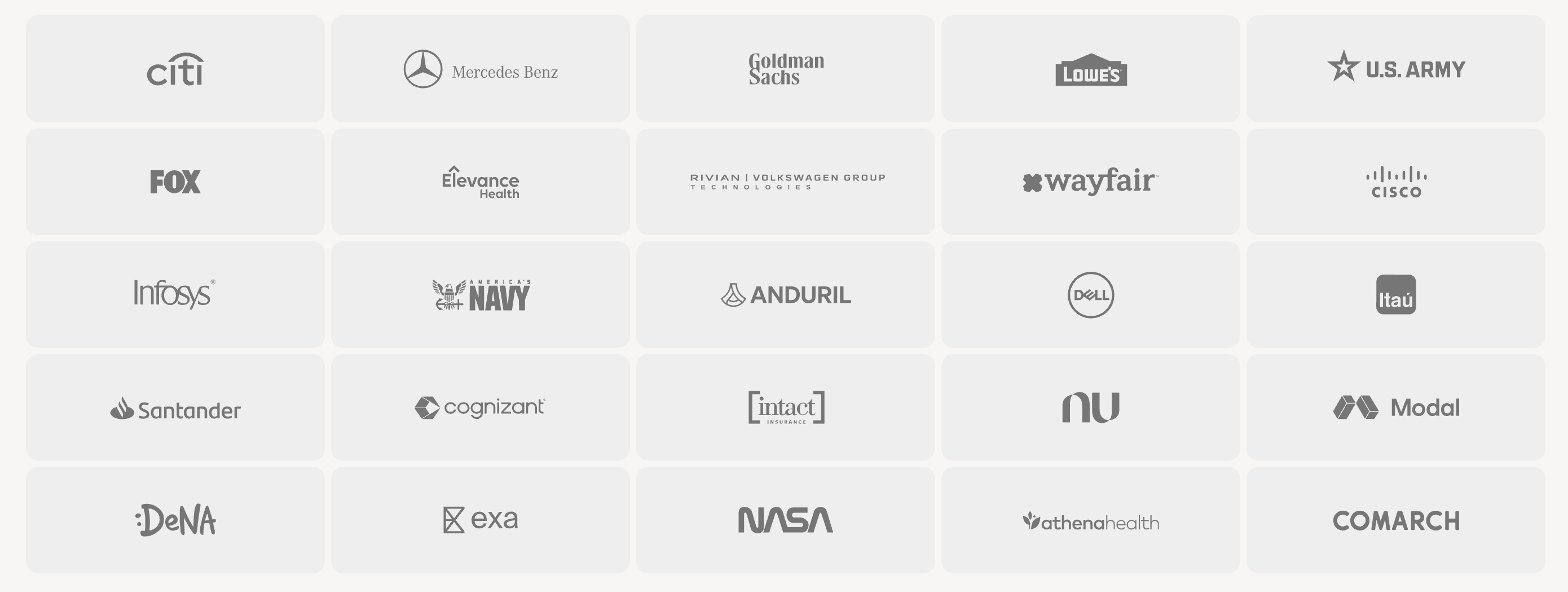
Cognition says Devin is now deployed across financial services, enterprise software, healthcare, manufacturing & government. Customers include Goldman Sachs, Citi, Santander, Nubank & Itaú in banking; Dell, Cisco, Palantir & Ramp in enterprise software; Mercado Libre in e-commerce; Elevance in healthcare; Mercedes-Benz in automotive; & government agencies including NASA, U.S. Army & U.S. Navy.
In the case of some large incumbents, Cognition focuses on legacy modernization and security remediation. According to the company, a 4-week Mercedes-Benz pilot had Devin analyze more than 200,000 lines of COBOL and reduce an estimated 8-month modernization project to 8 days. It also says Devin automatically remediates 70% of identified security vulnerabilities at Itaú. Neither result has been independently verified.
Two products released around this interview target the same buyer. Devin Security Swarm, announced 1 July 2026, finds vulnerabilities, validates them at runtime and fixes them. Devin Fusion, released 29 June, routes tasks across models.
“The hardest part about building any product, selling a product, is just explaining to people why they should care. The nice thing about AI that can write code by itself and build self-driving products for you is, it’s kind of obvious why you should care.”
Why Enterprises Will Not Buy Agents From the Labs
As coding models improve, the competitive advantage shifts from the underlying model to how companies deploy AI across an organization. Wu argues enterprises are making long-term decisions about how their engineering teams will work, rather than betting on whichever model leads the benchmarks at any given moment.
“You don’t wanna teach all of your engineers or your entire team how to use one particular suite & one particular product & then find out, oh, actually people aren’t using this one anymore because everyone says this other one is better.”
For Cognition, the larger challenge is organizational rather than technical. Rolling out AI coding agents changes how teams plan work, write specifications, conduct user research and manage engineering workflows. Success depends as much on implementation as on model capability.
“It’s not as simple as throw the tool over the wall, here’s your chatbot, try that out, hopefully it’s good for you. There’s a lot of fundamental questions that you have to think through and work through.”

Competition & Consolidation
Cognition competes against products from every major lab. Anthropic’s Claude Code, a terminal-based agent launched in February 2025. OpenAI’s Codex runs asynchronously inside ChatGPT. Google has three entries, Gemini CLI, Code Assist and the async agent Jules, and launched Antigravity 2.0 at I/O in May 2026. Microsoft’s GitHub Copilot has the deepest GitHub integration and the widest model catalog, and switched to usage-based AI Credits billing on June 1 2026. Amazon is winding down Q Developer in favor of Kiro. Cursor and Replit compete from the startup side, alongside open-source agents including OpenCode, Cline and Aider.
The category has consolidated through acquisition rather than attrition. OpenAI’s $3 billion offer for Windsurf expired in July 2025. Google then paid $2.4 billion to license Windsurf’s technology and hire its chief executive and research leadership, and Cognition bought what remained days later. On 16 June 2026 SpaceX agreed to buy Anysphere, the maker of Cursor, for $60 billion in all-stock consideration, with closing expected in the third quarter. Cognition bought Poke in July 2026.
Cursor had reached roughly $4 billion of annualized revenue before the SpaceX agreement. Its share of corporate AI coding spend, measured by Ramp card data, fell from around 41% in June 2025 to about 26% by May 2026.
Staying Independent
“There’s been a narrative out there that in order to win, you have to be a lab yourself, or you have to go sell to a lab.
We’ve always believed there’s a lot of value & a lot of power in being independent.”
Doubling down on it, the company actually spent Independence Day in Washington DC, & gives 2 reasons for being there:
Demand. He describes government as possibly the single largest case of an organization that needs software built and does not have the engineers to build it, and Cognition already sells to the Army, the Navy and NASA.
Policy. He expects AI to become a fundamental policy question within a few years, and draws the comparison to how the internet was governed.
“You think about the early days of the internet and there were all these discussions about, are there gonna be a handful of corporations that control the entire internet. Obviously we ended up with the open internet, & now all the businesses of the world are built on the internet.
But there will come a day where all the businesses of the world are built on AI, & I think it’s something that we should be thinking about sooner rather than later.”


The Windsurf Weekend
Cognition has bought 2 companies.
Just about a year ago, Windsurf came first, in July 2025, after OpenAI’s $3 billion offer expired & Google hastily scooped up chief executive Varun Mohan, co-founder Douglas Chen & the research leadership for $2.4 billion. Windsurf had built one of the most widely used AI IDEs and a real enterprise business, $82 million of ARR across more than 350 enterprise customers, in total Windsurf had raised $243 million in funding at a $1.25 billion valuation.
What remained after Google was roughly 200 employees, the IDE, the intellectual property & a full GTM organization, with no leadership & no core engineering team. Cognition at the time was 35 to 40 people at $70-$80 million of run rate.
Jeff Wang, Windsurf’s head of business, had become interim CEO. Graham Moreno, previously VP of global sales, became interim president. Wang held an all-hands that Friday where most of the team expected to hear that OpenAI had bought them, and instead heard about Google. He later described the mood in one word, “bleak”, with people in tears and a hostile Q&A.
Cognition heard the shocking news at the same time as everyone else. First, they internally treated an acquisition as a hypothetical scenario, before seeing it as a real strategic opportunity. Wu & Russell Kaplan reached Wang that evening, and the deal was worked out between the four principals across the weekend.
“We got in touch with the Windsurf team that evening, so it was Friday evening, & then over the course of that weekend, we worked out the entire acquisition together. So by Monday morning we had the announcement ready to go.”
A 40 person company absorbing a 200 person company over 48 hours is not a process anybody had run before. Wu attributes the speed to who was in the room.
“A lot of making it up. A lot of our team are former founders. Of our first 56 people, 30 of us had founded a company before this. A lot of us together were people who liked being ambitious, entrepreneurial, & thinking from first principles.”
“For all of us, the experience of building the company is a lot of the fun of it.”
The strategic case was that the IDE and the async agent belong together. The tool a developer sits in and the agent they delegate to need the same understanding of the codebase, and a session started in one should hand off to the other. The merge itself took most of a year.
Cognition ran offsites, worked through overlapping customer relationships where both sides had an existing contact, rebuilt billing, and found a San Francisco office big enough to hold everyone by the end of 2025. Wang and Moreno continue to lead the Windsurf product line as a division of Cognition, and Wang co-announced the rebrand to Devin Desktop with Wu on June 2 2026. Cascade was rewritten in Rust as Devin Local, the original retired on July 1.
“Rather than force it & say, over the next 30 days or 60 days we have to integrate these products, it was much more letting the actual usage & the new features that we were building pull the products together more gradually rather than forcing it.”
“You come to see our office, & you wouldn’t know at all, is this person from the old Cognition or the old Windsurf, or did they join after that time?”
Poke
On 23 July 2026 Cognition bought The Interaction Company of California, maker of Poke, for a reported low nine figures. Poke launched in March 2026 as an agent reachable over iMessage, SMS, Telegram and WhatsApp, passed 100 million messages in three months, and became the first AI agent approved on Apple’s Messages for Business platform. Wu and Yan had both invested personally. The stated logic is that Poke’s interface orchestrates multiple Devin sessions and carries memory across them.

Why Benchmarks Are Kindaaa BS?
Every model release now comes with benchmark scores. Wu’s position is that a benchmark is a task that has already been specified, which is the condition reinforcement learning needs.
“The thing that’s counterintuitive is we’re kind of getting to the point where you can solve basically any benchmark.
Because what does it mean to have a benchmark?
It means you’ve already defined the task, you’ve clarified what success or failure looks like, you’ve given a bunch of examples of what that task looks like & what the right behavior should be. And the truth kind of is, well, if you do that, then you can teach the model to go do that. RL works. It’s incredible how much it works.”
6 Months to Singularity?
Wu agrees that AI systems are becoming increasingly recursive. Devin already writes most of Cognition’s own code. But he doesn’t believe that means the world collapses into a single superintelligence within months.
“In terms of just pure knowledge work, there is nothing that humans do that AIs can’t do. Partly because our brains are just computers, like the AIs are too.”
“There’s some point at which the AI gets so smart that it’s hard for us to even reason about what that world will look like. Will we still have desire? I think we still will have desire. But who knows. You just gotta stay sane.”

Beyond technical progress, he points to practical constraints, from organizational change to deploying infrastructure at scale. More fundamentally, he rejects the idea that AI inevitably leads to a single company controlling intelligence.
“There’s a world that folks sometimes talk about where there’s the full recursive superintelligence, & then everything is all owned by a single entity.. Once you’ve solved AGI, you just take over the entire world.
I just don’t think that’s the right future for us.”
Entering the Abundance Era
The first thing most buyers ask is how much faster existing work gets done, and the answer is roughly a third of the time it used to take. Wu’s argument is that the efficiency gain is the smaller half of it.
“The real unlock is not in efficiency but in capacity. What can we do if we can build so much more?”
He reaches for the Industrial Revolution as the analogy, a period where the ability to mass produce arrived before anyone had worked out what to do with it, and reads software as sitting at the same point now. Software eating the world was already the correct call when every line had to be written by hand. What changes when code can be generated on demand is the floor on what is worth building at all, including single-use software written for one job and thrown away, and software that runs itself.
“Anything that involves using a computer in some form is ultimately some kind of software, & when all the software drives itself.. what do you want to do? What do you want to create?”
“I’m excited to have AI handle all these different little details in my life. I’m excited to have AI that allows me to spend all of my time and focus on the things that I care about and take care of the rest. I think the abundance era is real, and I think we’ll be there pretty soon.”
→ Listen on X, Spotify, YouTube, Apple
The material presented on Molly O’Shea’s website are my opinions only and are provided for informational purposes and should not be construed as investment advice. It is not a recommendation of, or an offer to sell or solicitation of an offer to buy, any particular security, strategy, or investment product. Any analysis or discussion of investments, sectors or the market generally are based on current information, including from public sources, that I consider reliable, but I do not represent that any research or the information provided is accurate or complete, and it should not be relied on as such. My views and opinions expressed in any website content are current at the time of publication and are subject to change. Past performance is not indicative of future results.
Paid Endorsement. Brokerage services by Open to the Public Investing Inc, member FINRA & SIPC. Advisory services by Public Advisors LLC, SEC-registered adviser. Crypto trading provided by Zero Hash LLC, licensed by the NYSDFS. Generated Assets is an interactive analysis tool by Public Advisors. Output is for informational purposes only and is not an investment recommendation or advice. See disclosures at public.com/disclosures/ga. Matched funds must remain in your account for at least 5 years. Match rate and other terms are subject to change at any time.