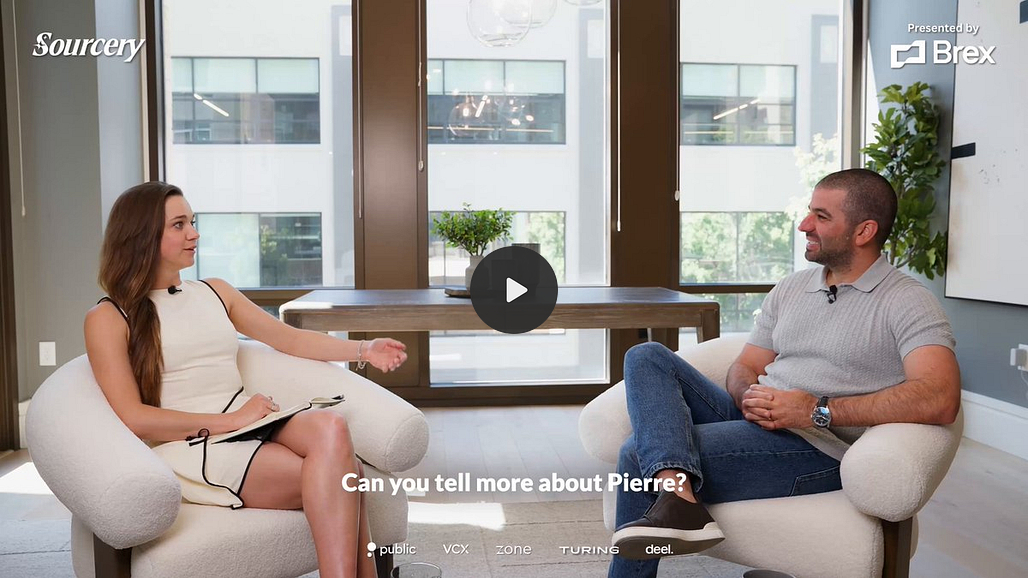
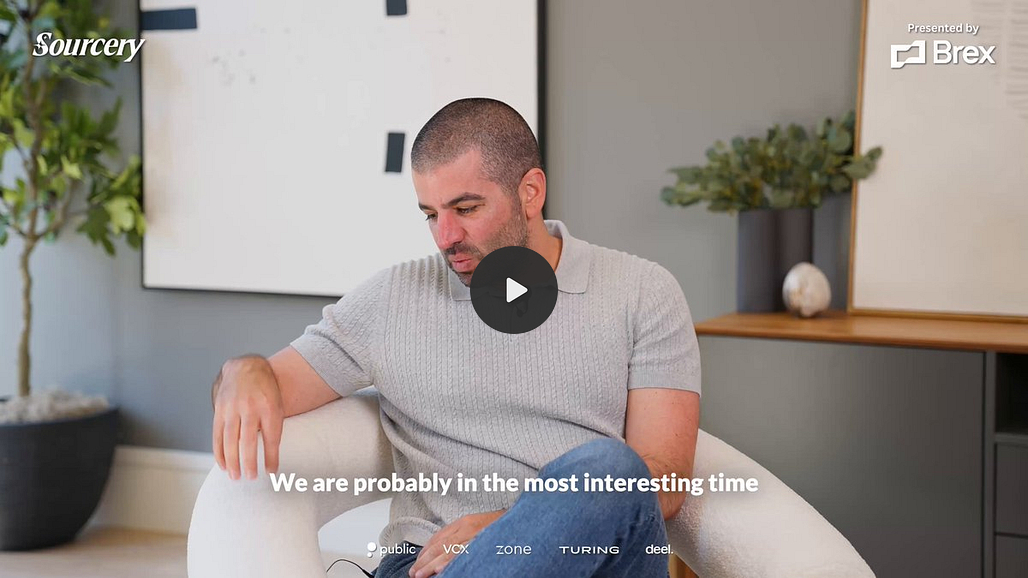
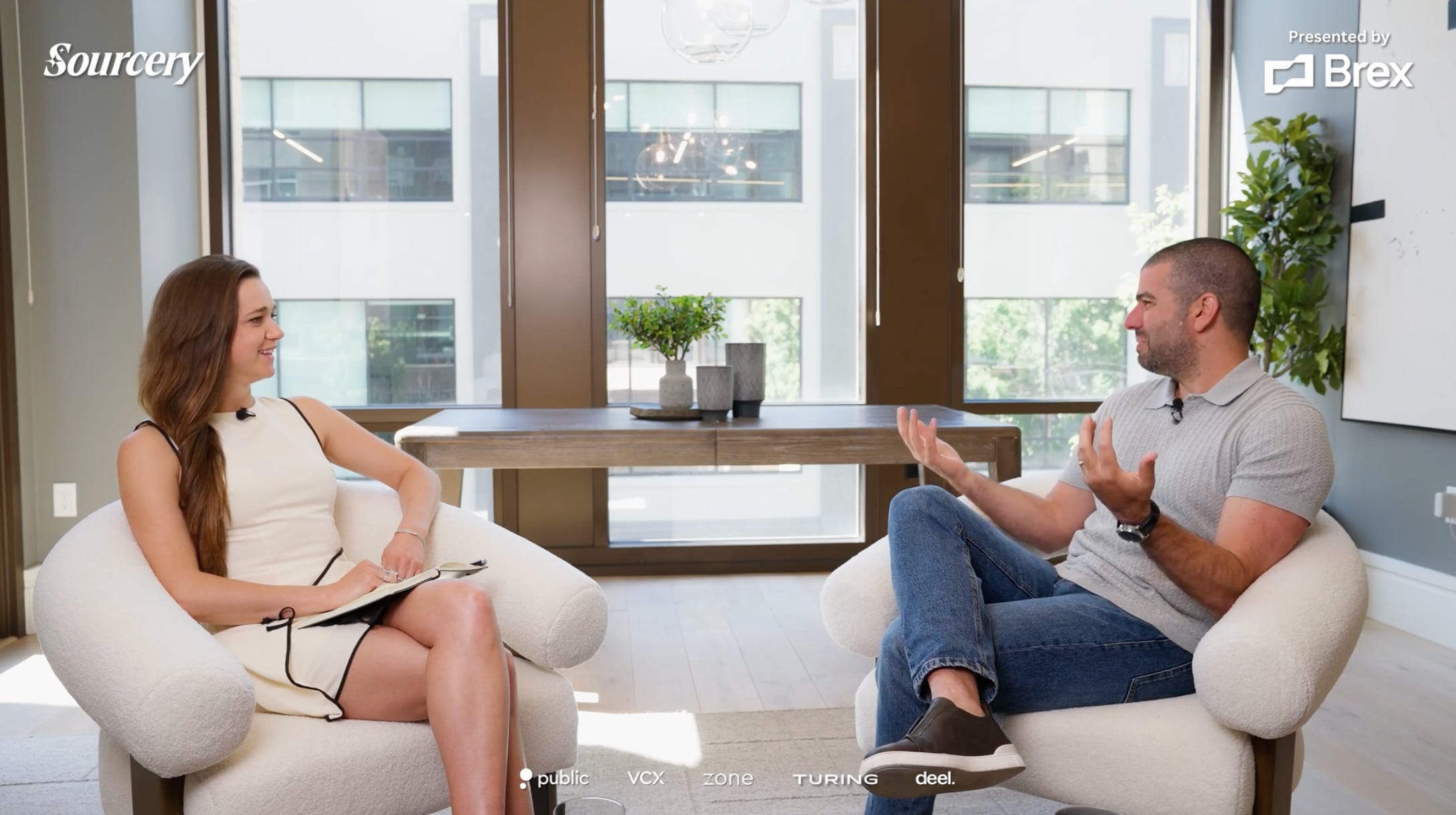
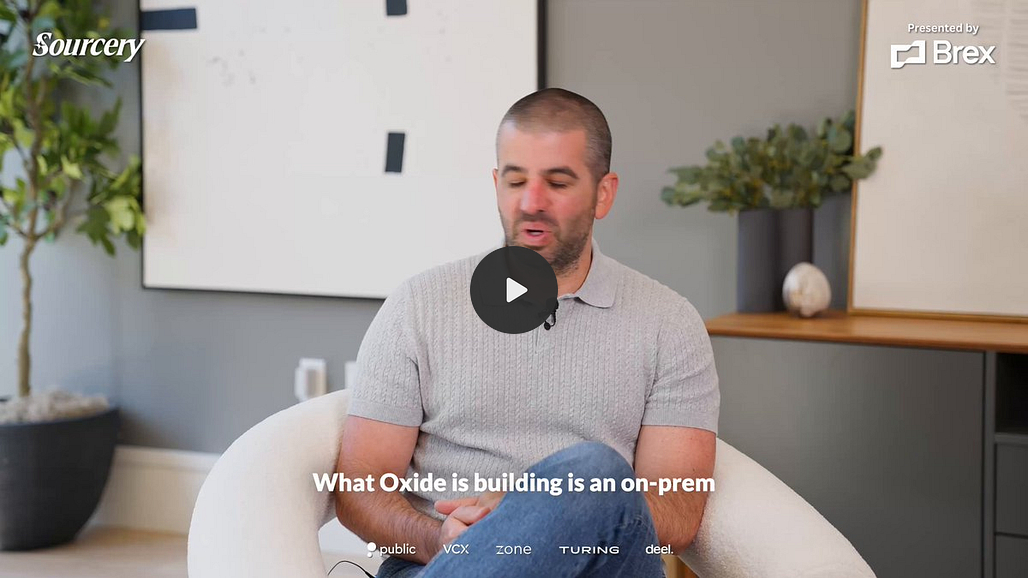
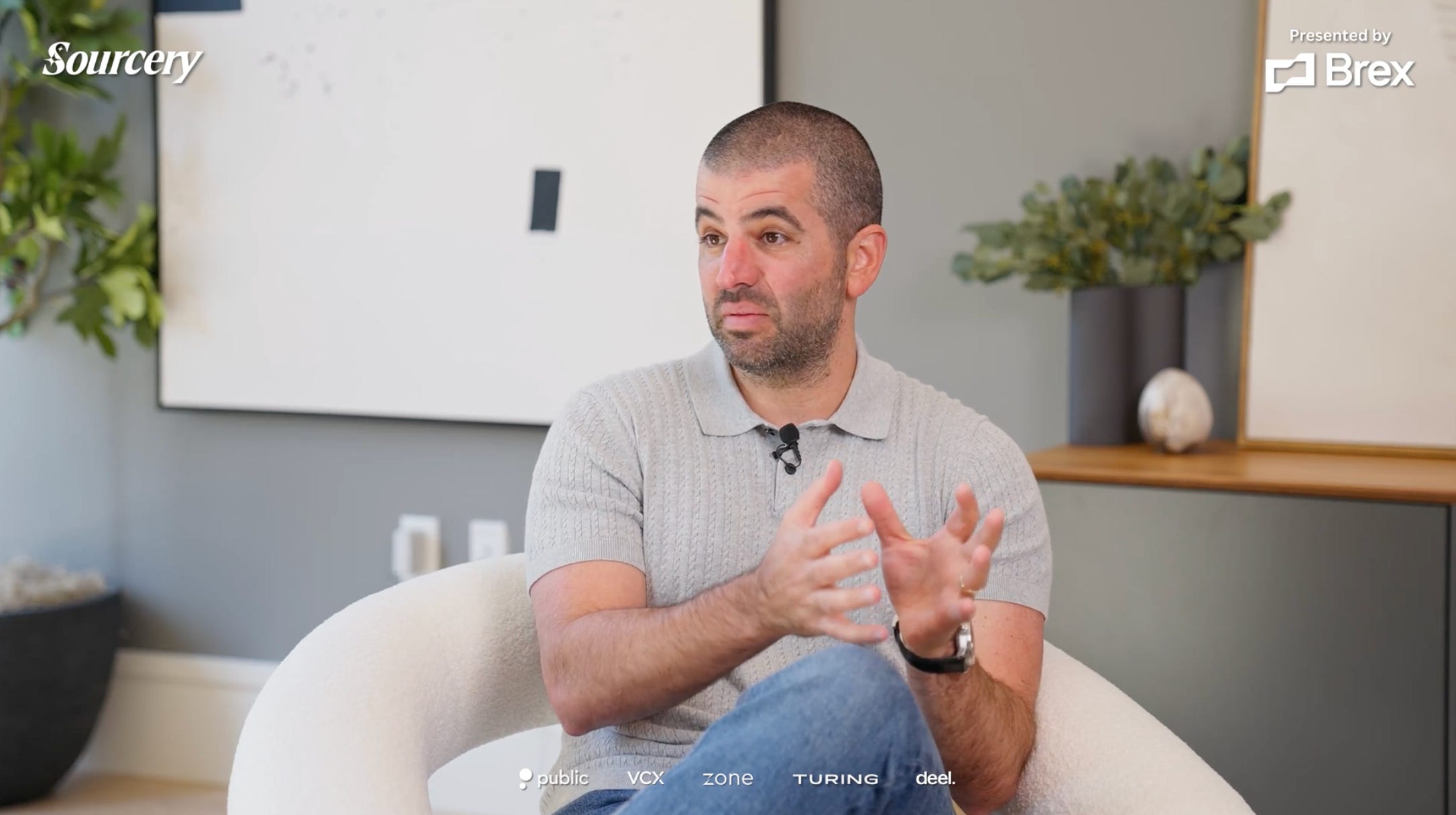
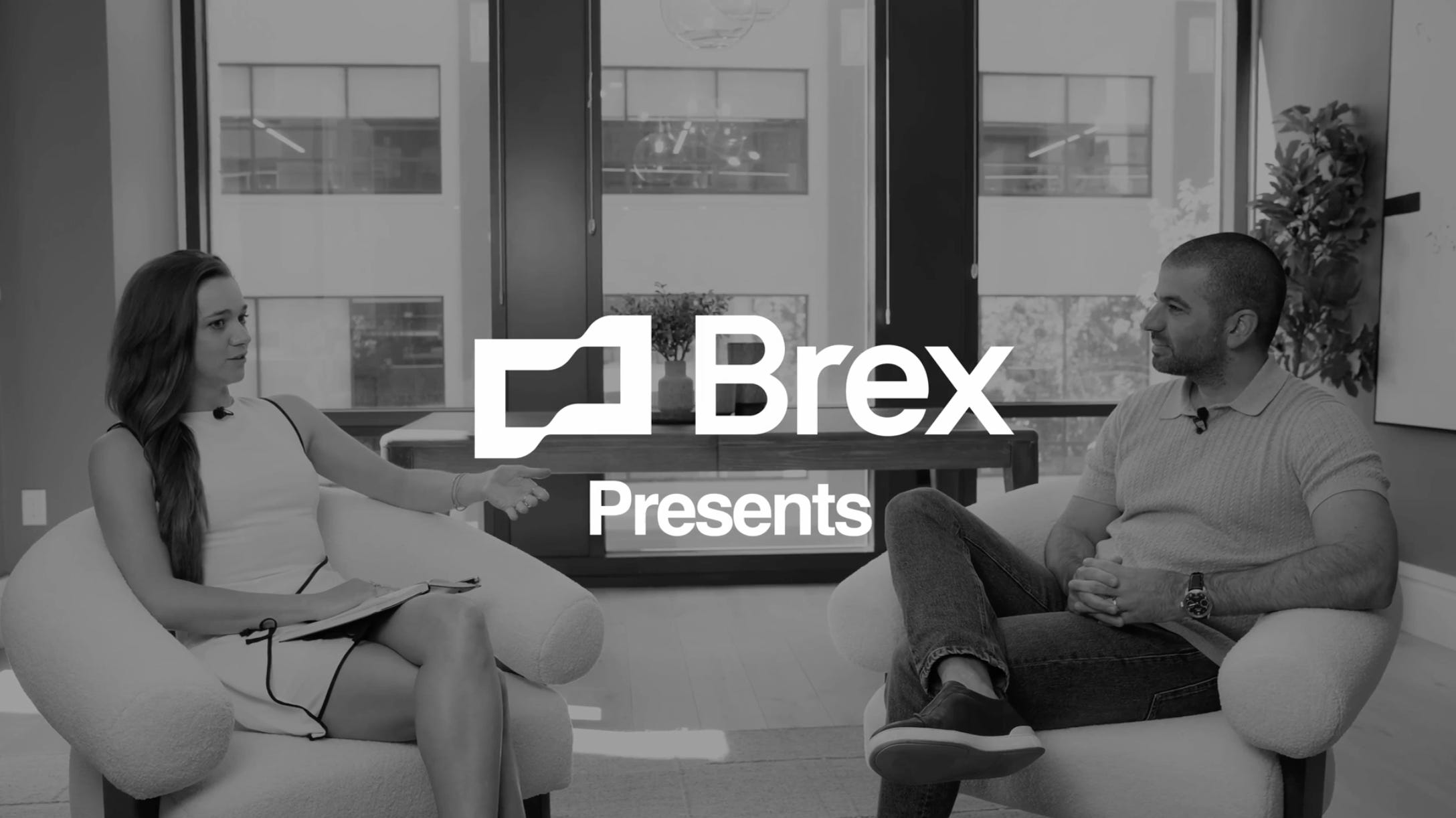
Eclipse spent 8 years investing in manufacturing, space, semiconductors, defense & mining while the rest of Silicon Valley funded SaaS. Lior Susan says the math was never close.
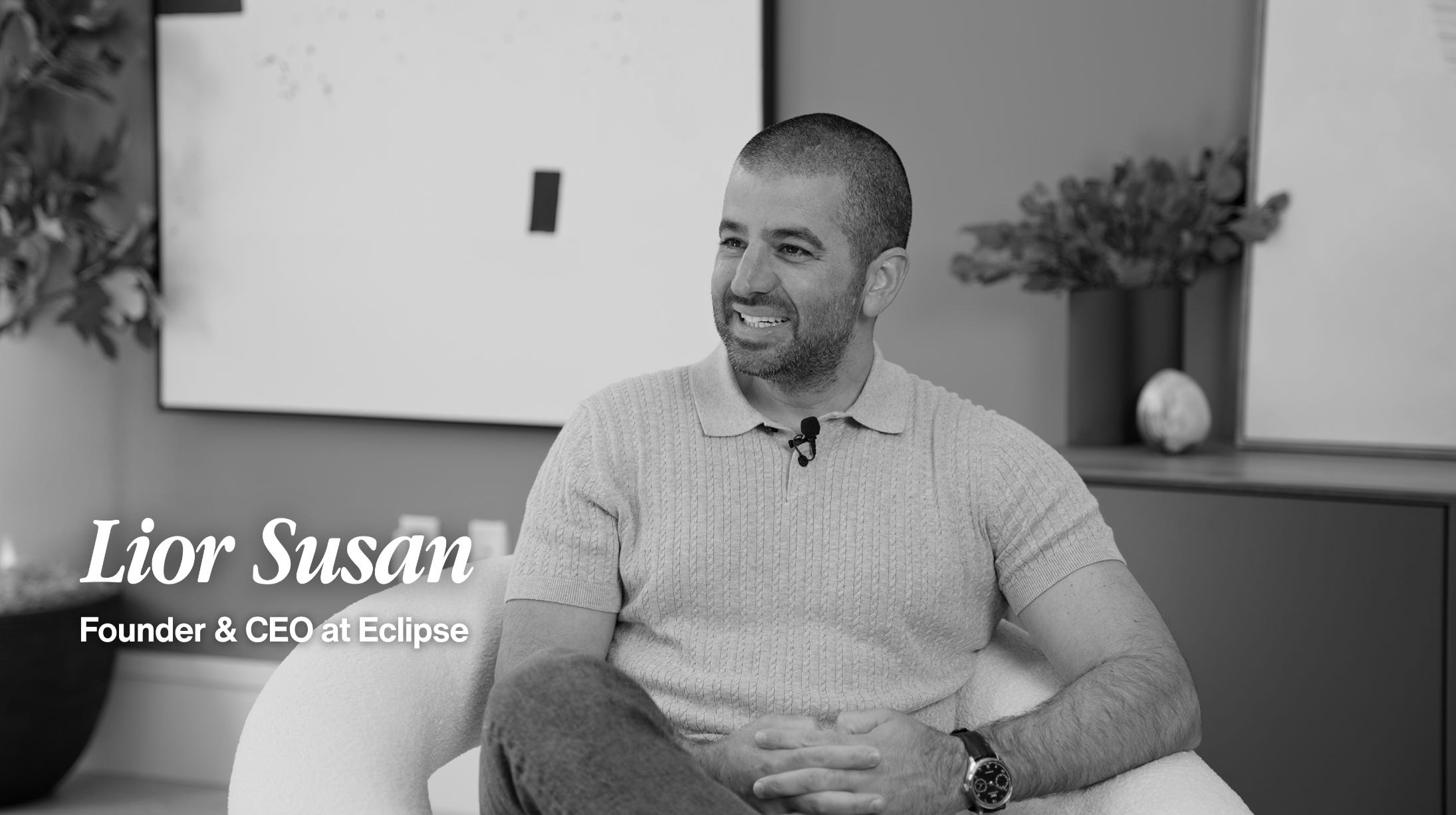
Lior Susan is the Founder & CEO of Eclipse, the Palo Alto firm he started in 2015 with a $125M debut fund alongside Pierre Lamond, who was 85 at the time & had already spent a career at Fairchild Semiconductor under Gordon Moore, co-founded National Semiconductor, & put in 27 years as a GP at Sequoia Capital. Lamond is 96 now and still mentors the team.
"We never thought ourselves as venture capital. We call it operators with capital because we are operators with capital."
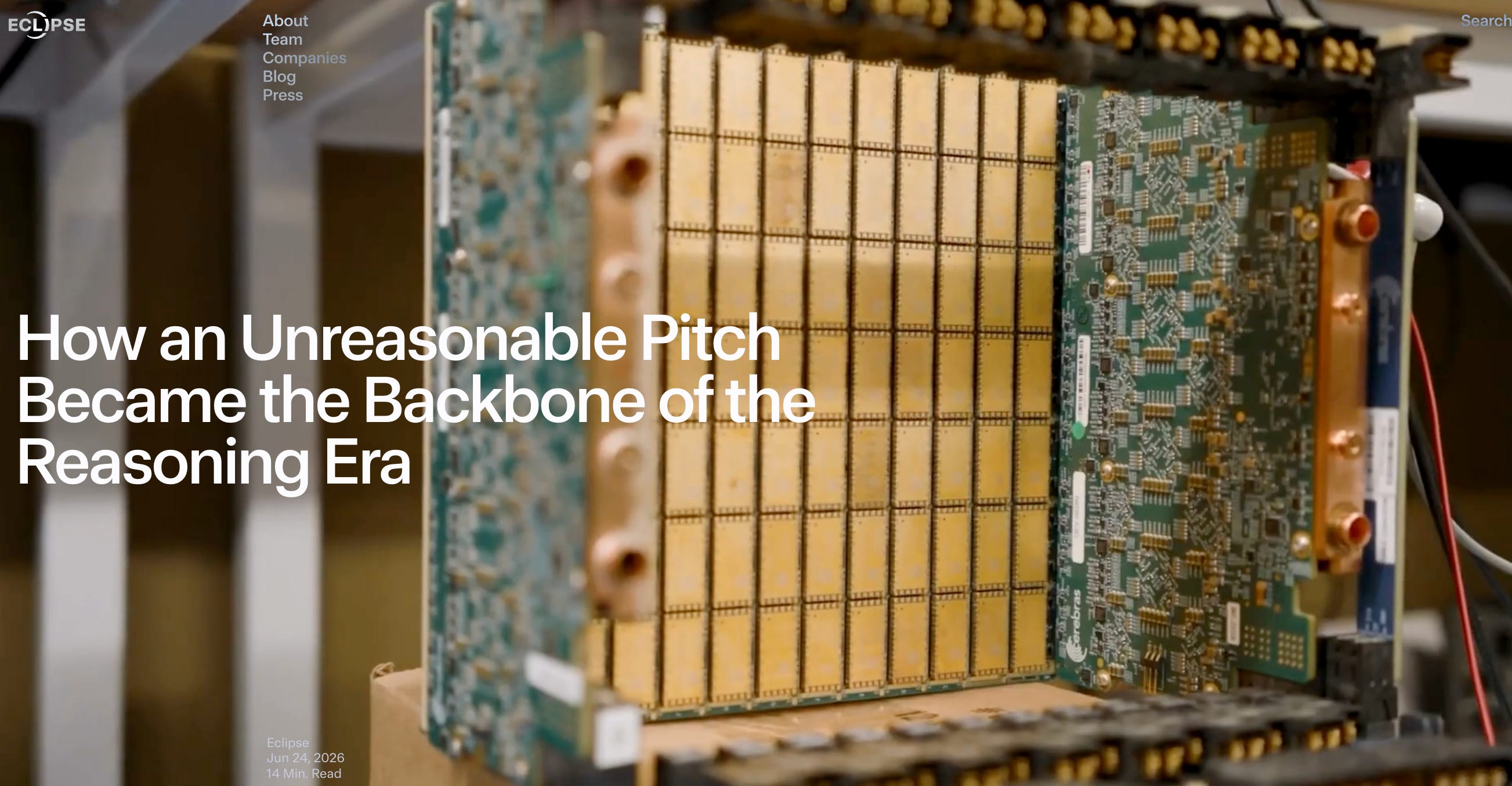
Eclipse manages approximately $12.5B and closed $1.3B in April 2026 across Eclipse Fund VI and Early Growth III, its largest raise to date. The firm's 2016 Series A into Cerebras returned roughly $2.5B at the $185 IPO price in May 2026 on a total of about $147M invested.
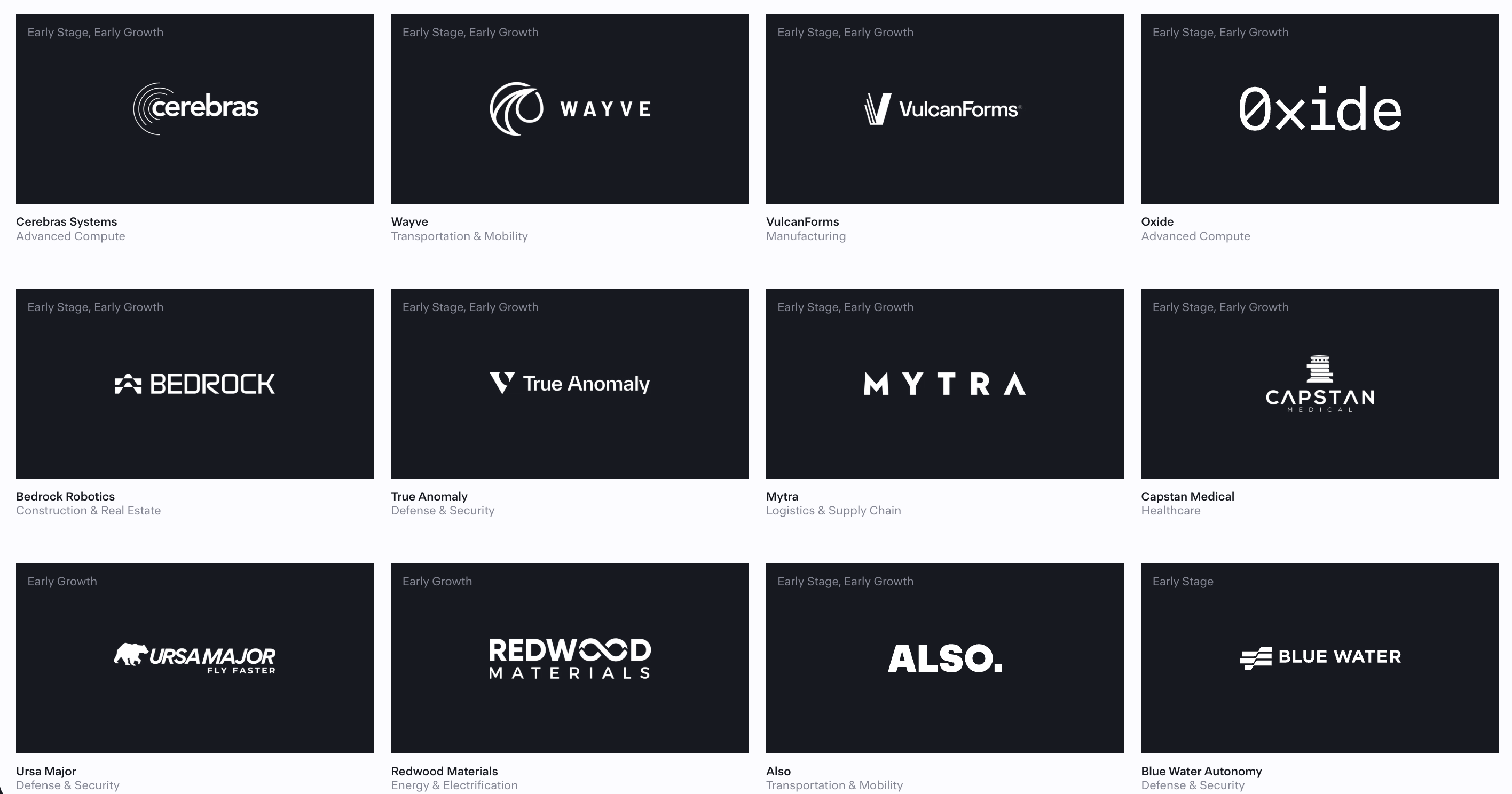
Eclipse portfolio companies have raised $15.9B in 2026 alone, including $1.2B for Wayve, $650M for True Anomaly, $270M for Bedrock Robotics, $220M for VulcanForms and $200M for Oxide. In September 2026, Eclipse incubation Noetive came out of stealth with a $41M seed led by the firm. Susan was named to the 2026 Forbes Midas List.
(00:00) Lior Susan, Founder & CEO at Eclipse (01:02) The story behind Eclipse (02:35) How Lior met Pierre (05:54) The culture Pierre brought to the team (07:33) Why physical companies need operators (11:21) How Eclipse decides what to build (12:35) How Mind Robotics was spun out of Rivian (15:41) Why Lior started Eclipse (18:21) Why building physical companies is so hard (20:53) Why there are only 3 major memory companies (21:51) Why hardware can beat SaaS economics (24:33) Inside Eclipse’s physical industry bet (29:15) This is the best time to build (31:01) The Redwood Materials story (32:35) The "Second Act" of physical companies (33:20) Building moats in the Physical World (34:05) Why on-prem infrastructure is coming back (36:01) Building the "Eclipse Economy" (40:08) Why physical infrastructure creates jobs (41:19) From banana farmer to VC (43:37) What it really means to support a portfolio company (46:00) Who inspires Lior?
Brought to you by:
Brex—The intelligent finance platform: cards, expenses, travel, bill pay, banking—wrapped into a high-performance stack. Built for scale. Trusted by OpenAI, Anthropic, Vercel, Granola, Deepgram, & Sourcery.. teams that move fast AF. visit → brex.com/sourcery
Zone—develops next-generation data center campuses, partnering with AI companies, site developers and technology leaders to bring compute online faster and at scale. Visit: zonefrontier.com
Turing—Turing partners with frontier AI labs to improve model capabilities in coding, reasoning, tool use, & multimodality, as well as with Fortune 500 enterprises to build & deploy end-to-end agentic AI systems in mission-critical workflows Visit: turing.com/sourcery
VCX—VCX is the public ticker for private tech, allowing investors of all sizes to invest in venture capital. View The Portfolio at GetVCX.com
Deel—Deel is the global people platform that helps startups hire, manage, pay, and equip anyone, anywhere. Trusted by more than 35,000 fast-growing companies, Deel is the people platform that just works, so teams can scale without the chaos. Visit: deel.com/sourcery
Public-–Investing platform Public just launched Generated Assets, which lets you turn any idea into an investable index with AI. With Generated Assets, you can build, backtest, refine, and invest in any thesis with AI. Gone are the days of one-size-fits-all ETFs. Try it today: public.com/sourcery
Eclipse’s Quiet Rise to $12.5B+ AUM
Eclipse closed $1.3B across Eclipse Fund VI and Early Growth III in April 2026, the firm’s largest raise since Lior Susan founded it in 2015 with a $125M debut fund. Eclipse’s own disclosure in September puts regulatory assets under management above $12.5B.
The firm invests across every stage in physical industries including manufacturing, semiconductors, energy, defense, robotics and space, and typically leads its rounds and takes a board seat.
The firm’s 2016 Series A into Cerebras was $6.5M at a $60M post, co-led with Benchmark and Foundation Capital. Eclipse invested roughly $147M into the company over subsequent rounds and held 6.2% at the May 2026 IPO, a position worth approximately $2.5B at the $185 offer price and a 17x return. Benchmark held 8.1% for a 12x on $268M invested. Foundation held 7% for a 76x on roughly $37M.
Portfolio companies have raised $15.9B from outside investors in 2026 through early July, a record 6 month period for the firm. That includes $1.2B for Wayve, $650M for True Anomaly, $270M for Bedrock Robotics, $220M for VulcanForms and $200M for Oxide. Eclipse led the Series A in each of those 4 companies. In the firm’s first 8 years, its portfolio companies raised under $4B in total.
Susan describes the firm’s self-definition in terms its limited partners do not use.
“I know that we are counting as a venture capital for our limited partners. We never thought maybe ourself as a venture capital. We call it operators with capital because we are operators with capital.”
Pierre Lamond Joined at 84 & Brought Institutional Process Into Year One
Susan was 31 and leaving Flex when he was introduced to Pierre Lamond in early 2015. Lamond was 84, born September 1930. He had spent his career at Fairchild Semiconductor under Gordon Moore, co-founded National Semiconductor in 1967, and joined Sequoia Capital as a general partner in 1981, where he stayed 27 years before moving to Khosla Ventures. Eclipse was formed ~4 months after the two met.
“Okay, young man, we’re going to start a firm together.”
Susan’s response was that he had not finished high school and had never invested a dollar. Lamond worked full time in the Eclipse office for 7 years and is Partner Emeritus today at 96. The carryover was operating process, specifically board management, quarterly reporting and investment discipline.
“He brought a lot of institutional knowledge of investing and managing a board and how you write your quarterly reports. And I think we, in some way, in our first year of Eclipse, we already operate in a way that maybe a firm that is 10 years around.”
Susan connects the same discipline to the sectors Eclipse invests in, where process failures surface as production defects.
“You cannot fake it till you make it when you’re manufacturing something because the yield will just be very bad.”
Eclipse has 90 portfolio companies and built 30 of them itself through a model it calls Venture Equity, partnering with entrepreneurs before a company formally exists to validate markets, recruit leadership and secure early customers. Companies built this way include Mind Robotics, Mytra, Bedrock Robotics, Peak Energy, ALSO and BlueWater. Bright Machines came out of the same approach.
Susan’s stated reason for keeping the incubation practice is operating currency. A firm 10 years into investing loses contact with where technology, talent and customers actually sit, and building companies is how Eclipse partners stay current. The second reason he gives is that passive capital has limited use in the sectors Eclipse covers.
“You need to know manufacturing and supply chain. You need to know how to deal with CapEx. You need to know how to deal with the government. You need to know how to think about subsidies. You need to know how to leveraging debt versus equity.”
The hands-on posture extends to portfolio operations. Susan describes flying to a data center in the Midwest after a water cooling failure flooded the facility, then spending 72 hours pulling in service providers, new installation and new HVAC systems, including learning how concrete has to dry so residual moisture does not damage electronics.
“I don’t need medals. I do it because that’s what I’m passionate about. And knowing how to build those companies, you just must be there with them in the field.”
Susan says attempts to systematize incubation have not worked.
“Every time I’m trying to build a system around that, I failed. Every time that I think like, ‘Ah, if I only put this thing here, I would be able to build two more,’ I failed.”
Mind Robotics Was Carved Out of Rivian Over Dinner
Mind Robotics is building a full stack platform of foundation models, purpose-built robotics and deployment infrastructure for industrial and manufacturing tasks. The company was carved out of Rivian with RJ Scaringe. Eclipse and Scaringe had been discussing general purpose robotics in manufacturing for roughly 3 years before the company was formed, with an Eclipse partner among Rivian’s founding team.
The specification they worked toward was mobile, non-humanoid, high dexterity, and dependent on large volumes of training data. Scaringe mentioned a small team inside Rivian already working on it. The carve-out was proposed at a robotics dinner at Susan’s house.
“You can win all wars. We can attract better talent that will not necessarily go work today for that problem inside Rivian. We can attract external capital so it’s not on your balance sheet, and it’s like Switzerland. You can work with everyone.”
Susan says the company will show its first product this year. Mind Robotics has since raised a $500M Series A. The same pattern shows up in different forms across the 30 built companies, including a founder arriving with an HBM memory concept and Eclipse writing a thesis on heterogeneous AI data center architecture and then recruiting a team into it.
A Year in China Produced the 5 Forces Thesis
Susan spent a full year in China observing how the country innovates in physical industries before starting Eclipse. The conclusion he took from it is that China built an approximately $20T economy on the physical world by aligning talent, policy, capital, technology and customer demand, and that a standalone company competing against that alignment is at a structural disadvantage.
“If we don’t do it in the Western world, we’re kind of screwed.”
The second input was de-globalization. Susan’s view when he raised the first fund was that countries would stop relying on other countries for energy, manufacturing and defense. He says the timing was wrong and took longer than expected, with COVID as the first event that exposed the vulnerability and triggered onshoring.
“85% of the world GDP, roughly 100 trillion, is in the physical world.”
Metal manufacturing is a $3T industry. Susan’s point of comparison when Eclipse launched was the volume of capital going into enterprise software against the volume going into metal manufacturing, which he estimates was close to zero. He applies the same reasoning to memory, where 3 players hold the HBM market against what he counts as 10,000 SaaS companies, and where Eclipse is now building new memory companies.
Gross Margin Is an Indicator & Free Cash Flow Is the Metric
Susan’s objection to the gross margin standard is an accounting one. Engineering spend in software moved from COGS into R&D, which lifted reported gross margin while leaving the underlying requirement to keep hiring engineers as the business grows. Physical companies carry hard COGS and cannot make the same move.
“We kind of bullshit the world that SaaS and gross margin is the most important metrics. Naturally, if you’re a public company, if you’re a real company, what matter is free cash flow. It’s actually not gross margin. Gross margin is an indicator to potentially what your free cash flow going to be.”
The comparison he uses is an 85% gross margin CRM against the market it sells into, which he sizes at roughly $30B with a thousand competitors. Against that, Tesla runs mid-teens gross margin and trades like the best software companies, and Cerebras runs 40% to 50% and trades above most SaaS comparables.
The 3 questions Susan says he applies are market size, differentiation and team.
“How big is the market? 20 billion is not big enough. How differentiated is what you do in that market, and do you have the right team to actually go and solve that really tough problem?”
Semiconductors, Energy & an Unannounced Data Center Company
Susan tells LPs during diligence that Eclipse does not run portfolio construction.
“My portfolio construction is not to have a portfolio construction.”
He says Eclipse might do 5 memory companies in a single period, and declines inbound requests from firms looking to add a physical AI name for category coverage. Semiconductors run deeper than chips in the firm’s definition, covering capital equipment, testing, lithography, supply chain, packaging and subcomponents.
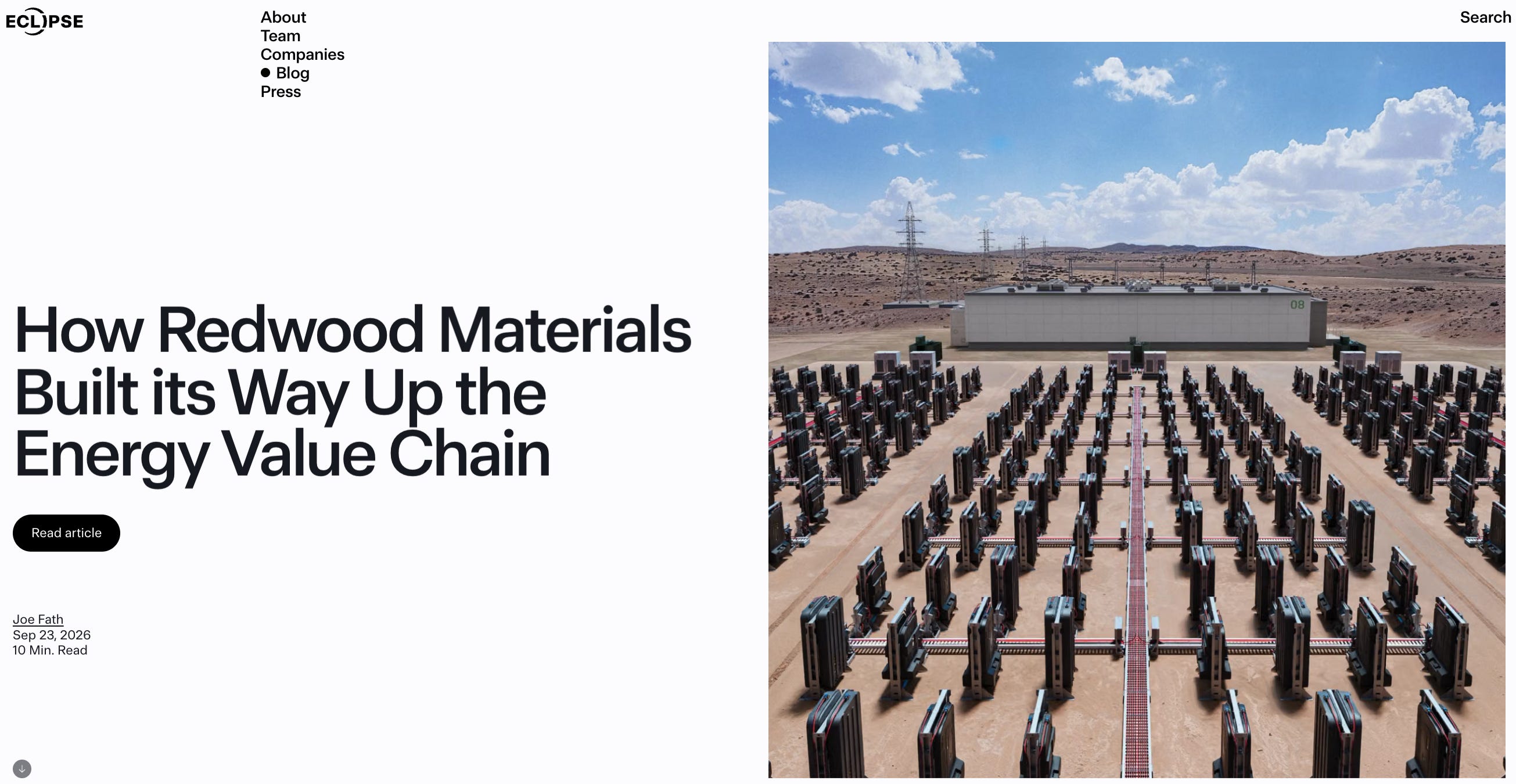
Energy is the second concentration. Eclipse holds positions in nuclear through The Nuclear Company, sodium ion through Peak Energy, LFP and recycling through Redwood Materials, and has started a gas turbine company competing directly with GE Vernova. Susan says the gas turbine thesis came out of deployment data across the portfolio showing a 5 year lead time with all suppliers fully backlogged. A further energy storage company and a data center company were unannounced at the time of recording.
On AI, Eclipse does not invest in foundation models or LLMs. The firm takes both ends, picks and shovels into AI infrastructure and AI applied into the physical world. In September 2026, Noetive came out of stealth with a $41M seed led by Eclipse, founded by Amir Frenkel, who joined the firm as its first Chief AI Officer in April, and Dan Barak.
Eclipse calls its portfolio network the Eclipse Economy, with companies sharing talent, infrastructure, customer relationships and manufacturing expertise. The AI infrastructure stack inside the portfolio runs from chips to the automation that builds AI servers, to racks and CPUs through Oxide, to data center construction and operation, to the energy sources powering them.
“We do one very large deals, and we sell the deals with three, four portfolio. So essentially you have a $1 that became four or five dollars because naturally you are leveraging multiple of your companies.”
Eclipse signed roughly 40B to 50B in commercial deals across the portfolio last year, some in double digit billions. Susan describes the typical shape as one whale account in the hundreds of millions or billions, with additional customers in the tens or hundreds of millions. Eclipse also contributed to drafting portions of the AI action plan and works with the administration on policy.
“We’re in some way competing with China in their own way. We’re not a country, we’re a firm.”
The compounding mechanism inside individual companies is what Susan calls second and third acts. Cerebras went chip, then system, then data centers running those systems. Redwood went recycling, then energy storage for data centers built from recycled batteries, with former Tesla CFO Deepak Ahuja joining as CFO. SpaceX went launch, then Starlink. True Anomaly went space domain awareness, then Golden Dome and vertically integrated programs.
“When you build something in the physical world, you actually, if you are successful, you will have the ability to introduce multiple of new businesses that will grow your wallet share in that sector.”
Latest Investments
Eclipse has continued deploying into the physical-world buildout, with two new companies emerging from stealth this week.
Prime Minute raised a $15 million pre-seed led by Eclipse, with participation from 8VC. Born out of the 2025 Los Angeles wildfires, the company is building an end-to-end disaster response system combining real-time intelligence, AI-assisted mission analysis and precision aerial suppression. Its first focus is wildfire response, including operating at night, in high winds and low visibility when traditional aircraft and ground crews can struggle. Eclipse says it helped build the company from day one.
Parallax emerged with $117 million to tackle one of AI’s biggest bottlenecks: power. The company is building a clean-sheet ~10 MW gas turbine for data centers, designed around faster manufacturing and fewer supply-chain constraints. Its approach uses 3D printing, common materials and a dramatically simplified core rather than the exotic materials and thousands of parts used in traditional turbines. Eclipse led its $42 million seed alongside Lux Capital, Founders Fund and Valor Equity Partners; Greylock and General Catalyst later led a $75 million Series A.
Both are classic Eclipse bets: large physical-world problems where software alone isn’t enough, spanning energy, manufacturing, infrastructure and national resilience.
The material presented on Molly O’Shea’s website are my opinions only and are provided for informational purposes and should not be construed as investment advice. It is not a recommendation of, or an offer to sell or solicitation of an offer to buy, any particular security, strategy, or investment product. Any analysis or discussion of investments, sectors or the market generally are based on current information, including from public sources, that I consider reliable, but I do not represent that any research or the information provided is accurate or complete, and it should not be relied on as such. My views and opinions expressed in any website content are current at the time of publication and are subject to change. Past performance is not indicative of future results.
Paid Endorsement. Brokerage services by Open to the Public Investing Inc, member FINRA & SIPC. Advisory services by Public Advisors LLC, SEC-registered adviser. Crypto trading provided by Zero Hash LLC, licensed by the NYSDFS. Generated Assets is an interactive analysis tool by Public Advisors. Output is for informational purposes only and is not an investment recommendation or advice. See disclosures at public.com/disclosures/ga. Matched funds must remain in your account for at least 5 years. Match rate and other terms are subject to change at any time.