


The $70 Trillion Brand Builder Behind Wall Street
Jen Prosek has spent more than two decades helping build and protect the reputations of some of the biggest names in finance & tech.
→ Listen on X, Spotify, YouTube, Apple
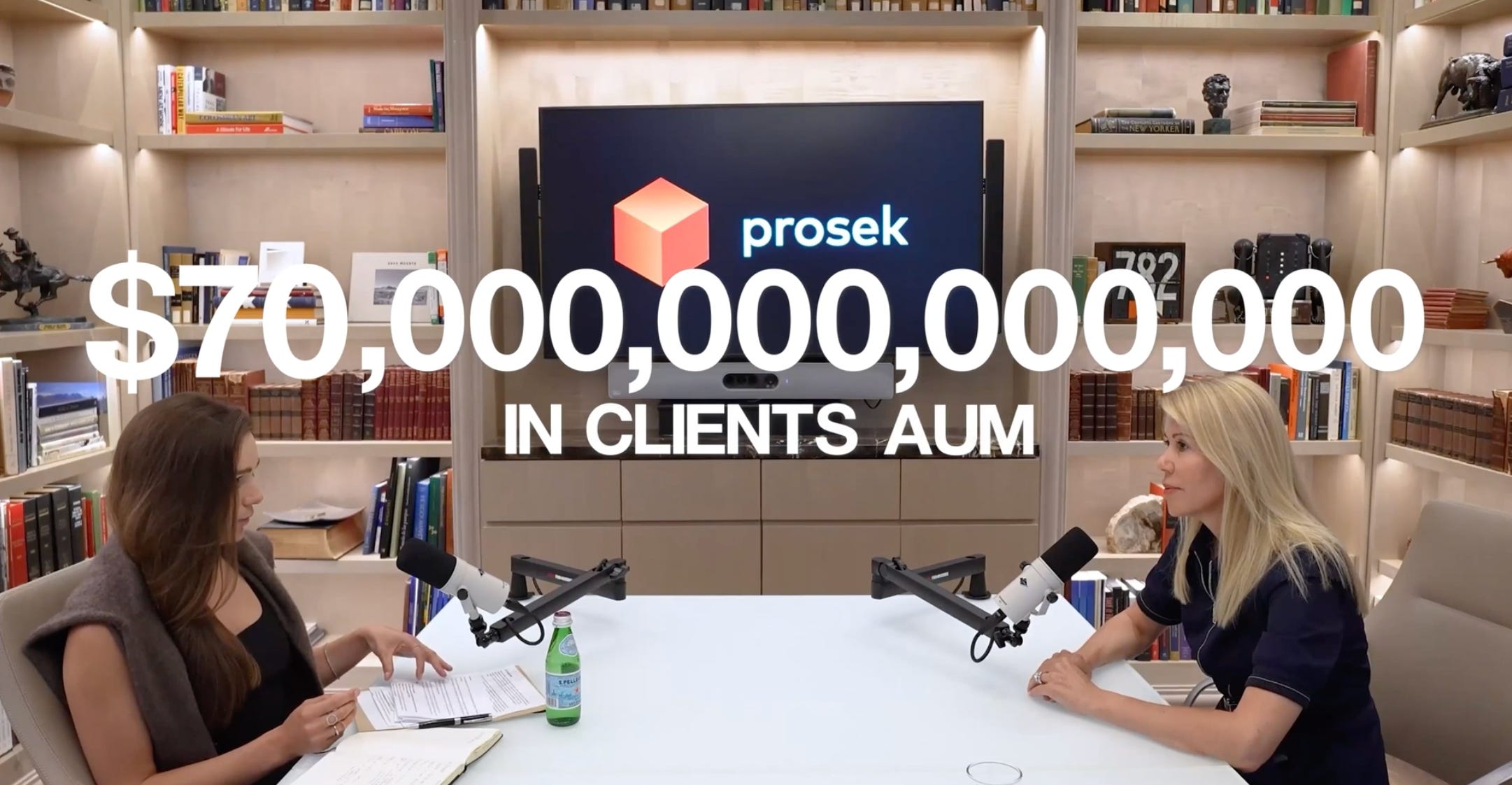
She is the Founder & Managing Partner of Prosek Partners, which works across private markets, asset management, venture capital, banking and technology — representing clients with roughly $70 trillion in combined AUM.
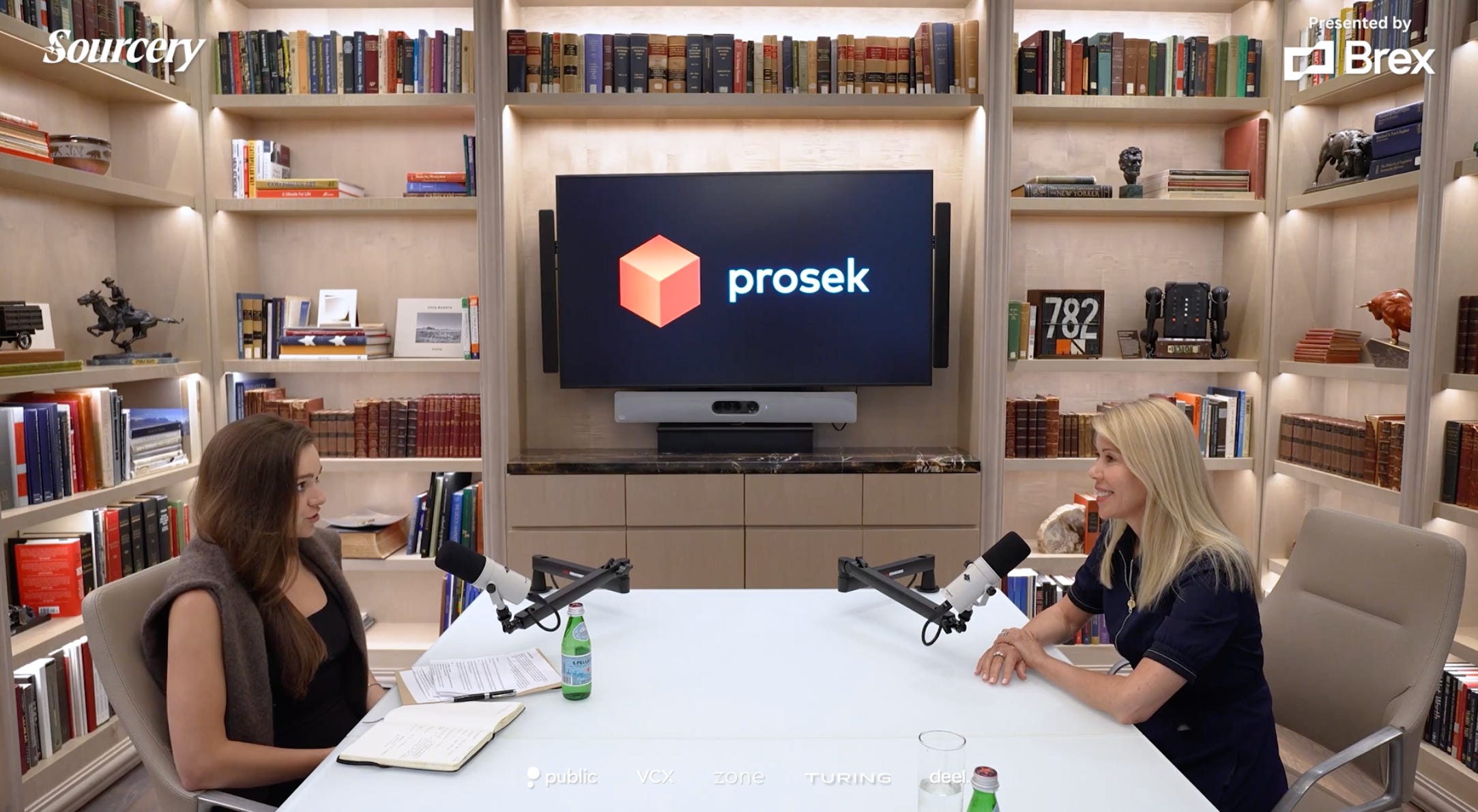
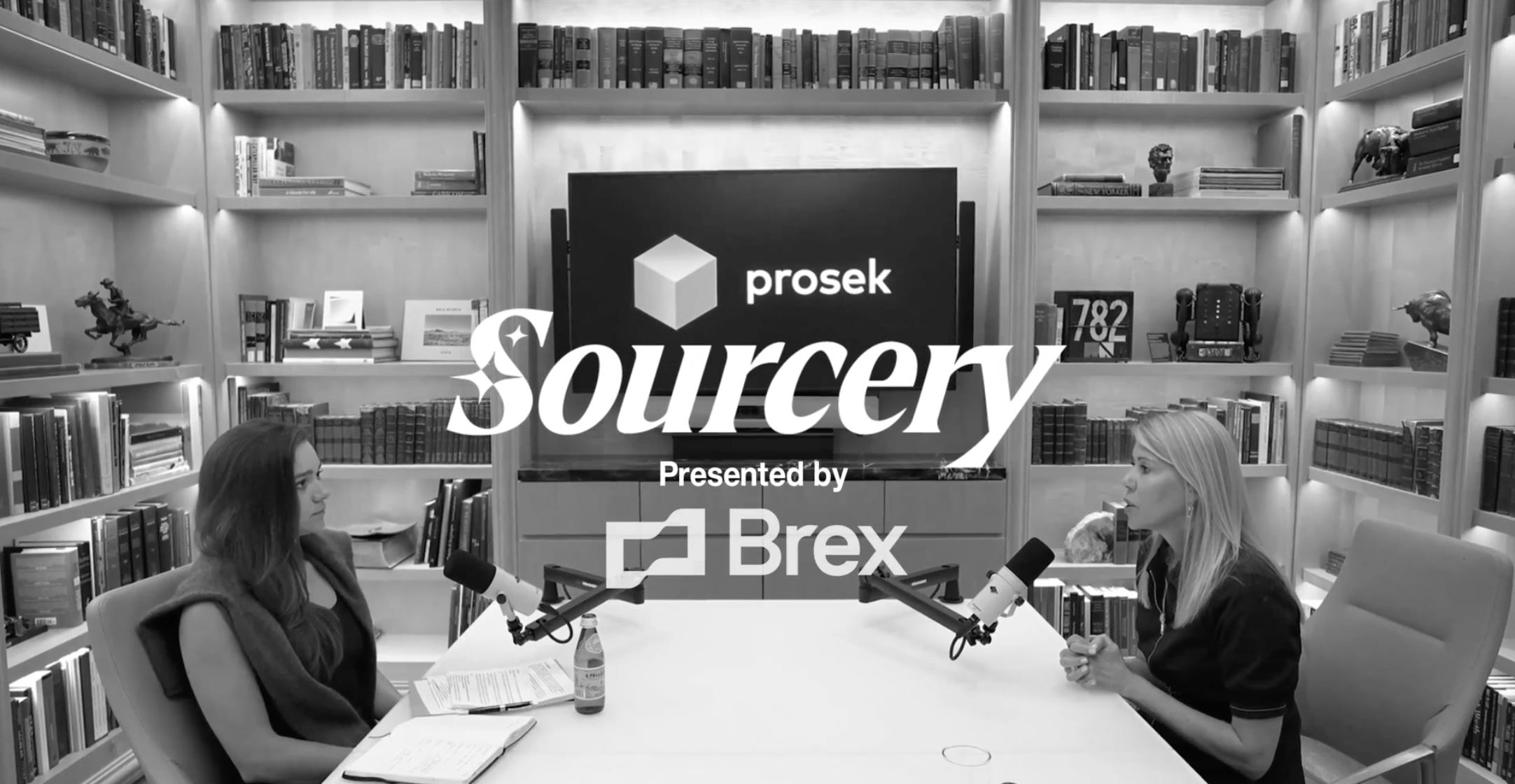
We sat down at the New York Stock Exchange to unpack how the most powerful firms & financiers build their brands, what destroys a reputation, how to recover when things go wrong, & why reputation has become even more important in the age of AI.
Jen breaks down the brand strategies behind Apollo, Citadel, Blackstone, Bridgewater and Meta; why Jensen Huang has become an ambassador for AI; how financial firms went from staying “under the radar” to spending millions on brand; and why VC firms are increasingly thinking like media companies.
We also get into crisis communications, when leaders should fight back versus stay quiet, why employees are one of the biggest reputation risks inside a company, the rise of podcasts and owned media, why LLMs are a comms strategy, and how founders should really think about journalists.
𝐓𝐈𝐌𝐄𝐒𝐓𝐀𝐌𝐏𝐒
(00:00) Jennifer Prosek, Founder & MP at Prosek Partners
(01:10) What makes a great financial brand?
(06:47) How much firms spend on marketing
(07:45) How brand drives talent, deals, and capital
(09:00) How to build a brand
(10:44) Why content still matters
(13:31) How podcasts drive contracts and deal flow
(15:34) When to play offense with your brand
(19:55) The Coldplay concert incident
(21:28) When a bad narrative becomes your reputation
(23:05) Why relationships with journalists matter
(26:22) The problem with AI’s public narrative
(30:58) The role of a "chief EQ officer"
(34:25) How Meta rebuilt its brand
(39:08) How to win without traditional media
(42:30) How Apollo rebuilt its reputation
(46:19) How Citadel changed its reputation
(53:04) How Blackstone built a retail brand
(55:51) Why VCs are investing more in brand
(59:40) Why overexposure hurts your brand
(1:01:57) The key to VC deal flow
(1:03:50) "Watch Your Digital Blink"
Brought to you by:
Brex—The intelligent finance platform: cards, expenses, travel, bill pay, banking—wrapped into a high-performance stack. Built for scale. Trusted by OpenAI, Anthropic, Vercel, Granola, Deepgram, & Sourcery.. teams that move fast AF. visit → brex.com/sourcery

Zone—develops next-generation data center campuses, partnering with AI companies, site developers and technology leaders to bring compute online faster and at scale. Visit: zonefrontier.com
Turing—Turing partners with frontier AI labs to improve model capabilities in coding, reasoning, tool use, & multimodality, as well as with Fortune 500 enterprises to build & deploy end-to-end agentic AI systems in mission-critical workflows Visit: turing.com/sourcery
VCX—VCX is the public ticker for private tech, allowing investors of all sizes to invest in venture capital. View The Portfolio at GetVCX.com
Deel—Deel is the global people platform that helps startups hire, manage, pay, and equip anyone, anywhere. Trusted by more than 35,000 fast-growing companies, Deel is the people platform that just works, so teams can scale without the chaos. Visit: deel.com/sourcery
Public-–Investing platform Public just launched Generated Assets, which lets you turn any idea into an investable index with AI. With Generated Assets, you can build, backtest, refine, and invest in any thesis with AI. Gone are the days of one-size-fits-all ETFs. Try it today: public.com/sourcery
Prosek Partners: From a 1992 Startup to $70T in Client AUM
Jen Prosek founded her firm in 1992, right out of college, with a thesis that financial institutions would eventually pay to build their brands, beyond hiring crisis help when something went wrong. The firm operated as CJP Communications until 2012, when it changed its name to Prosek Partners so it could use one name worldwide.
“I just want the audience to know we started at zero. We started small and ugly with a crazy idea, and we’re lucky it hit.”
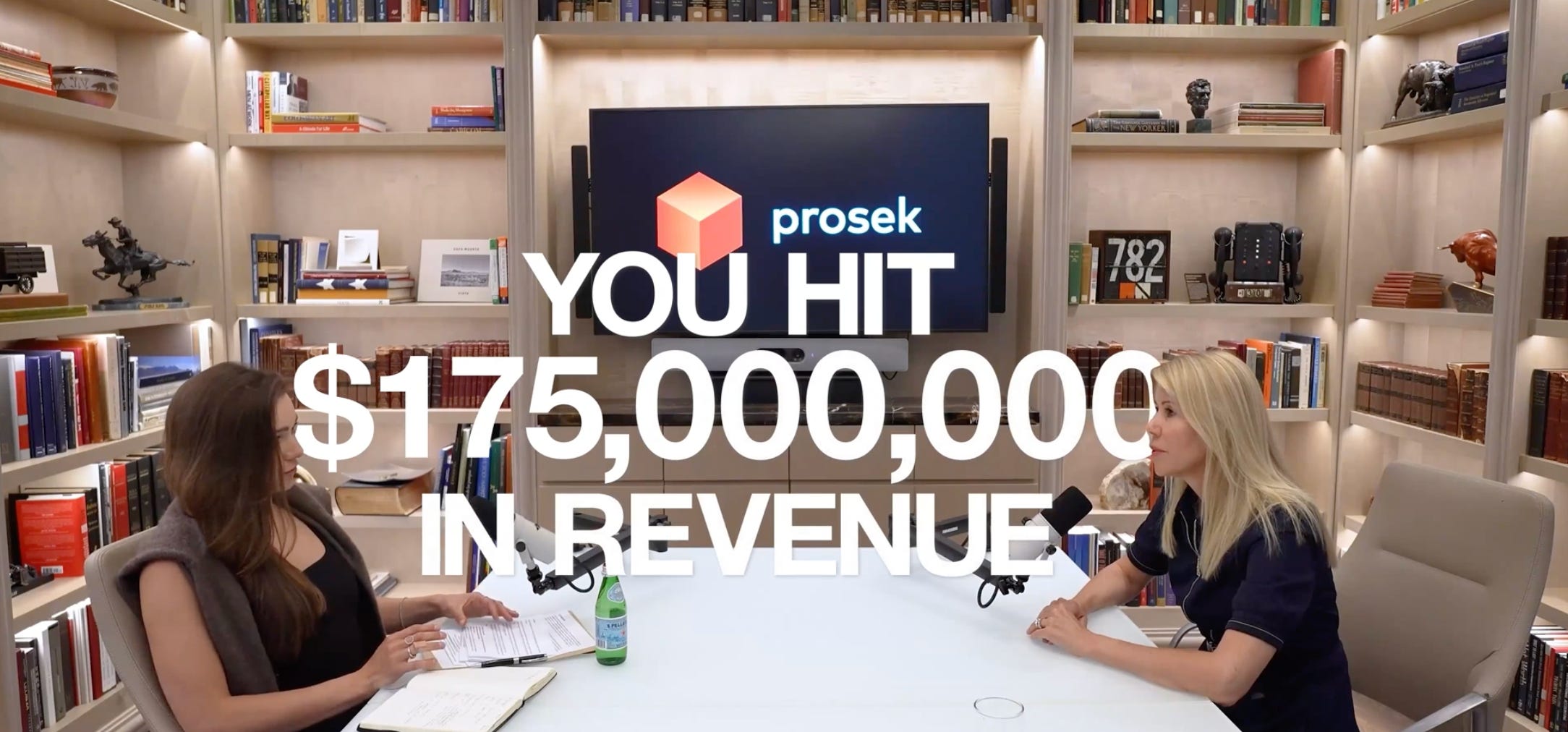
Prosek now advises clients representing $70T in AUM across private markets, asset management, venture capital, banking and tech. The firm generates $175M in revenue and has 500+ employees. Clients include Coatue, Carlyle, Insight Partners, Sixth Street, Francisco Partners, Bridgewater, General Atlantic, Prudential Asset Management, Wellington Management, Vista Equity Partners and Rockefeller Capital Management.
Prosek ranks in the top 3 in M&A communications and was ranked #1 globally by deal volume in 2026, alongside FGS Global. Among the 10 largest PR firms ranked by O’Dwyer’s for 2025, Prosek posted one of the 2 biggest gains in fee income, up 17.6%.
The conversation was recorded in the IPO Roadshow Library at the New York Stock Exchange.
→ Listen on X, Spotify, YouTube, Apple
2008 Crisis Opened Finance to Brand Spending
Before the financial crisis, brand spending in finance was almost entirely defensive. Firms hired a crisis firm when they got in trouble or a communications team around an M&A transaction.
“There was offense and defense. The only dollars spent in the entire industry is if you got in trouble, you would call a crisis firm.”
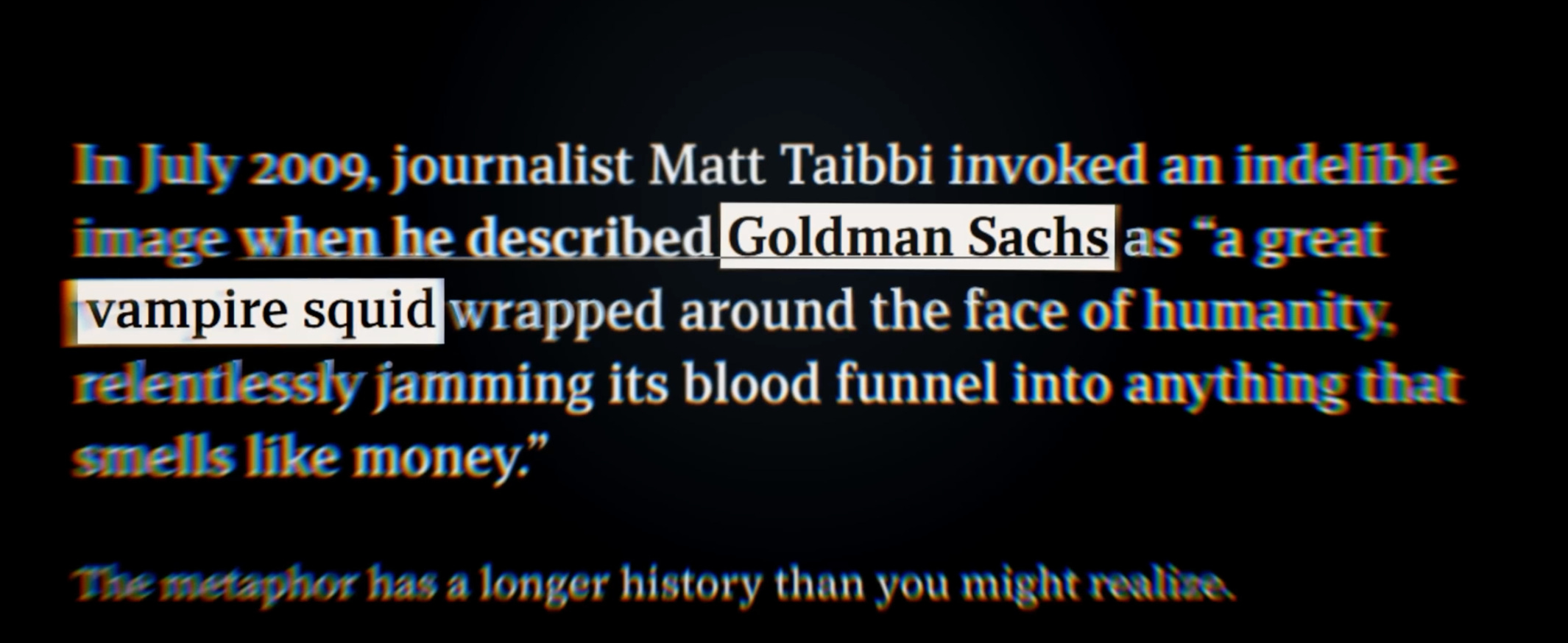
For years, Prosek pitched offensive brand building to investors who told her they were under the radar and only engaged with their own LPs. The 2008 crisis changed the market. Bear Stearns was sold to JPMorgan in March 2008, Lehman Brothers filed for bankruptcy on September 15, 2008, and Rolling Stone’s 2009 description of Goldman Sachs as a vampire squid became shorthand for public anger at Wall Street. Goldman and its peers went looking for a firm that did proactive reputation work, and Prosek had been selling it for years.
Prosek then made a second bet on private markets, VC, PE and credit at a time when competitors dismissed founder-led investment firms as clients that would never spend. That bet produced the client base the firm has today.

Brand Budgets Run From $250K to $10M
Firms with under $2B in AUM typically spend $250K or less on marketing and brand. Firms that are global, multi-product, public, or serve both retail and institutional investors typically spend $500K to $4M. Publicly traded private markets firms now sponsor F1 and the US Open to reach retail investors, which can push budgets to $10M.
Prosek wins over skeptical founders with a 3-part rubric. A stronger brand makes recruiting easier, improves deal sourcing and competitiveness in auctions, and makes fundraising more efficient. Fundraising is the reason behind most inbound calls to the firm.
“We sort of easily change a founder’s mind when we talk about talent, deals, and capital. That’s the rubric.”
Every engagement starts with the narrative, built through internal and external research into what makes the firm distinctive. Amplification follows through media, thought leadership, speaking, digital and social, with channel choices driven by business goals and firm culture.

1 Podcast Appearance Generated $17M in Fees
Prosek treats a long-form interview as a lasting asset. A strong episode can be sent to an investor, a new recruit or a customer ahead of a meeting, and audio suits investors who would rather listen on a treadmill than read a deck.
“I always say to clients, ‘This is not a one-and-done interview. This is an asset.’”
Her own appearance on Ted Seides’ Capital Allocators podcast, recorded about 7 years ago, has generated $17M in fees for Prosek and still produces inbound calls. Seides built an audience of LPs and founder GPs, the senior decision makers who allocate capital.
“I’m up to 17 million in fees on one podcast.”
Internal company podcasts face a distribution problem, and an audience of 5 people is not worth the effort. Prosek’s LinkedIn newsletter is one of her 3 most effective channels and doubles as market research. 100,000 views overnight signals a message worth continuing, and 10,000 signals one to drop. She advises clients to test channels, cut the ones that underperform & double down on the ones that drive commercial impact.
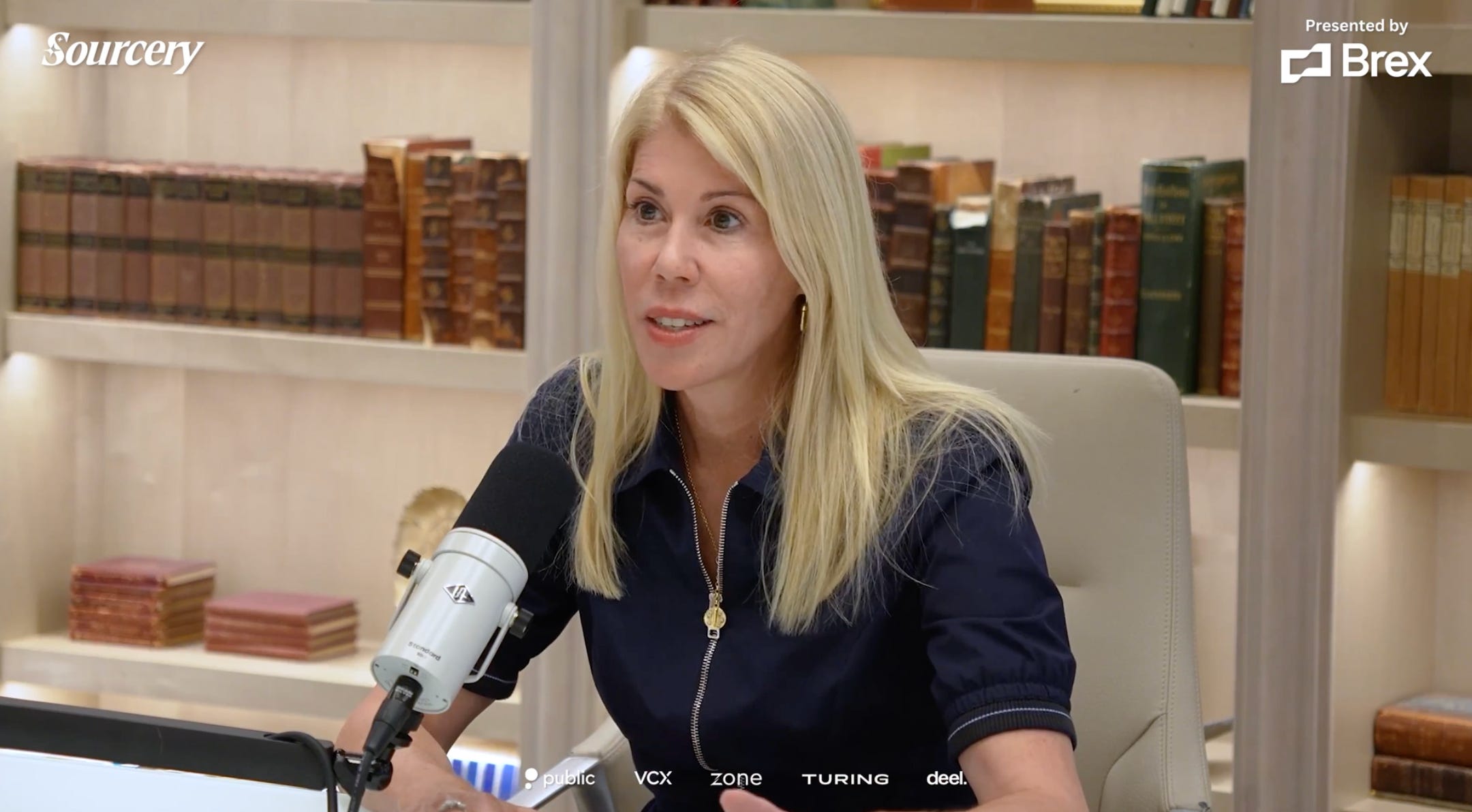
I can personally attest to this.. founders who have come on have raised tens of millions if not more in funding.. at billion-dollar-plus valuations, secured $50M in single contracts, hired great talent, and a TON more. Meanwhile VCs, also have raised from LPs, attracted founders & employees. Podcasts are the gifts that keep on giving.
(PS vibe check — some of my most valuable episodes have been those with a smaller, high quality reach.. a testament to the incredible audience of investors, founders, LPs, engineers & the tech curious behind Sourcery — you never know who is listening, and even if it’s not as big as the last it can still be incredibly valuable)
LLMs Now Form the First Impression
A manager with close to $10B in AUM recently came to Prosek with no brand work done and inaccurate information about the firm across the internet and in LLM answers. The fix in good times is a steady flow of positive content, which Prosek calls momentum content.
“If you don’t feed the machine positive content about you and your brand, what I call momentum content, the machine just grabs what’s available. It could be old. It could be wrong.”
Third-party coverage from outlets such as The New York Times, the FT, The Wall Street Journal and highly ranked podcasts carries the most weight in both Google and LLM results. The same approach applies to personal brands. Prosek built a word cloud of the terms she wants associated with her name, including entrepreneur and connector, & those terms now appear when LLMs describe her. Smaller clients are advised to publish 1 quality piece a quarter & track how LLMs describe them over time.

Untrue Narratives Need a Response Before They Calcify
The default in a negative news cycle is to wait and see whether speaking adds fuel. Many cycles pass without any response. When coverage is inaccurate or heading toward lasting reputational damage, Prosek advises clients to participate through a statement, an off-the-record conversation or a background briefing. Outlets will often correct stories when a client can prove an error, and corrections matter because online coverage persists.
“I would never, ever allow a negative reputation that is untrue to calcify around you.”
The Coldplay kiss cam is her example of silence going on too long. In July 2025, former Astronomer CEO Andy Byron and Kristin Cabot were filmed on the kiss cam at a Coldplay concert at Gillette Stadium in Massachusetts. On Oprah Winfrey’s podcast, Cabot said both she and Byron were separated from their spouses at the time, and that her estranged husband was also at the concert. She described the aftermath as mocking, vitriol and death threats. The full interview was released on March 17, 2026.
“She was obviously given the PR advice to sort of stay low, and that was probably right in the beginning, but I believe she should have come out swinging at a certain point because this narrative calcified around her.”
Ray Dalio, a Prosek client for 18 years, took the opposite approach at Bridgewater by running full-page ads disputing stories he considered false and speaking directly to his LinkedIn following. Prosek also advises clients to build relationships with a small group of reporters in good times, since journalists who know an executive are more willing to hear context off the record.

AI & Data Centers Have a Main Street Problem
Prosek works with data center builders and traces AI’s reputation problem to an industry speaking to itself. Messages that play well inside Silicon Valley, such as cutting teams to raise profits, reached Main Street and Washington when AI CEOs began predicting widespread job losses in public.
The backlash has reached graduation ceremonies. University of Arizona graduates repeatedly booed former Google CEO Eric Schmidt at their May 2026 commencement, and it was at least the third commencement speech that month to draw a hostile reaction over AI. Students at her daughter’s college convocation also booed when AI came up.
Prosek credits Jensen Huang with taking the case for AI beyond Silicon Valley to Wall Street, Washington, Europe, the UK and Asia, with a focus on American competitiveness and job creation.
“He has become somewhat of an ambassador for why AI actually could be good for you, and I think that’s the most important thing right now.”
She contrasts his measured messaging with Elon Musk’s posts on X, which she says stick in people’s heads despite her admiration for him as an engineer. She points to Scott Bessent’s appearance at Milken as a model for a single high-impact moment. Bessent spoke at the Milken Institute Global Conference on May 5, 2025, ahead of an interview with Michael Milken, at a time when executives there were warning that the tariffs had caused companies to pause investment and triggered a sharp selloff in US stocks.

Meta’s $18B Settlement
Prosek views Meta’s reputation on 3 levels, the products, the corporation and Mark Zuckerberg. At the product level, users who value Instagram largely separate the app from corporate controversy, the same pattern Uber saw during the Travis Kalanick era.
At the corporate level, she calls the recent settlement well executed. On August 26, 2026, Meta agreed to settle the social media addiction lawsuit brought by California and other states, with a payment of approximately $18 billion to fund youth online safety initiatives. The money is paid in annual installments over 10 years, and Meta committed to daily limits and nighttime blocks for teenage users along with stronger age assurance measures.
“They’re running full-page ads basically saying it’s an industry problem, not a Meta problem, so everyone should get on board.”
Zuckerberg’s personal brand has carried a string of hits from The Social Network through Cambridge Analytica and the recent trials.
“I think he has had a difficult personal brand since the beginning.”
Prosek believes Meta has become an institution that could survive without him (meanwhile I want more bro American Flag wakeboarding content). For founders who have been burned by the press, she recommends podcasts, owned social channels and major conference stages (selectively & maybe just once a year) where hosts are less focused on gotcha questions. (nudge, nudge.. Sourcery, nudge, nudge.)
Apollo, Citadel, Bridgewater & Blackstone Rebuilt Their Brands
Apollo carried a mysterious, black-box reputation that conflicted with its plans to become a public, diversified asset manager. A Dechert review found Leon Black paid Jeffrey Epstein $158 million from 2012 to 2017, and Apollo executives had warned that some investors paused fund commitments while the review was underway. Co-founder Marc Rowan was named CEO in January 2021 as part of a governance overhaul that removed weighted voting rights, and Black left 4 months early in March 2021, with former SEC chairman Jay Clayton named non-executive chairman. Prosek credits Rowan with making Apollo more accessible and educating the market on its broader business.
“I think it’s an A+ case study in surviving what could’ve been an existential moment.”
Citadel was once known as “the gulag.” Ken Griffin changed the firm’s image by speaking publicly on policy, politics and economics, and Citadel’s social channels now feature employees at work. Bridgewater turned its radical truth and transparency culture, including taped and monitored meetings, into a recruiting advantage, supported by Dalio’s Principles. More than half, and likely more than 75%, of negative stories begin with employee leaks, and Prosek describes part of her role as chief EQ officer, telling powerful clients what others will not.
“The higher you go up the food chain, the less people are telling you the truth.”
Blackstone had a marketing mentality early. Its 2007 IPO required communicating with more audiences, and it moved into retail ahead of peers. John Gray’s running videos on LinkedIn reach financial advisors across the country at minimal cost, supporting Blackstone’s high net worth and advisor distribution.
“Cheapest marketing ever on LinkedIn. Gets to every financial advisor in the country, and it worked.”

Prosek Opening a San Francisco Office as VC Demand Grows
Most of Prosek’s VC clients arrived in the last 4 years, and the firm is opening a San Francisco office. Private equity moved into brand work earlier because its portfolio companies in consumer, tech and healthcare already ran sophisticated brand programs, and because brand adds value to assets PE firms plan to sell.
VC brands now span a wide range. a16z operates as a media company, while Thrive has built a strong brand with very little content. Prosek cites Arctos as one of the best newer financial brands. KKR agreed to acquire Arctos in a $1.4 billion deal, and the transaction closed in May 2026, with Arctos managing approximately $16 billion in AUM.
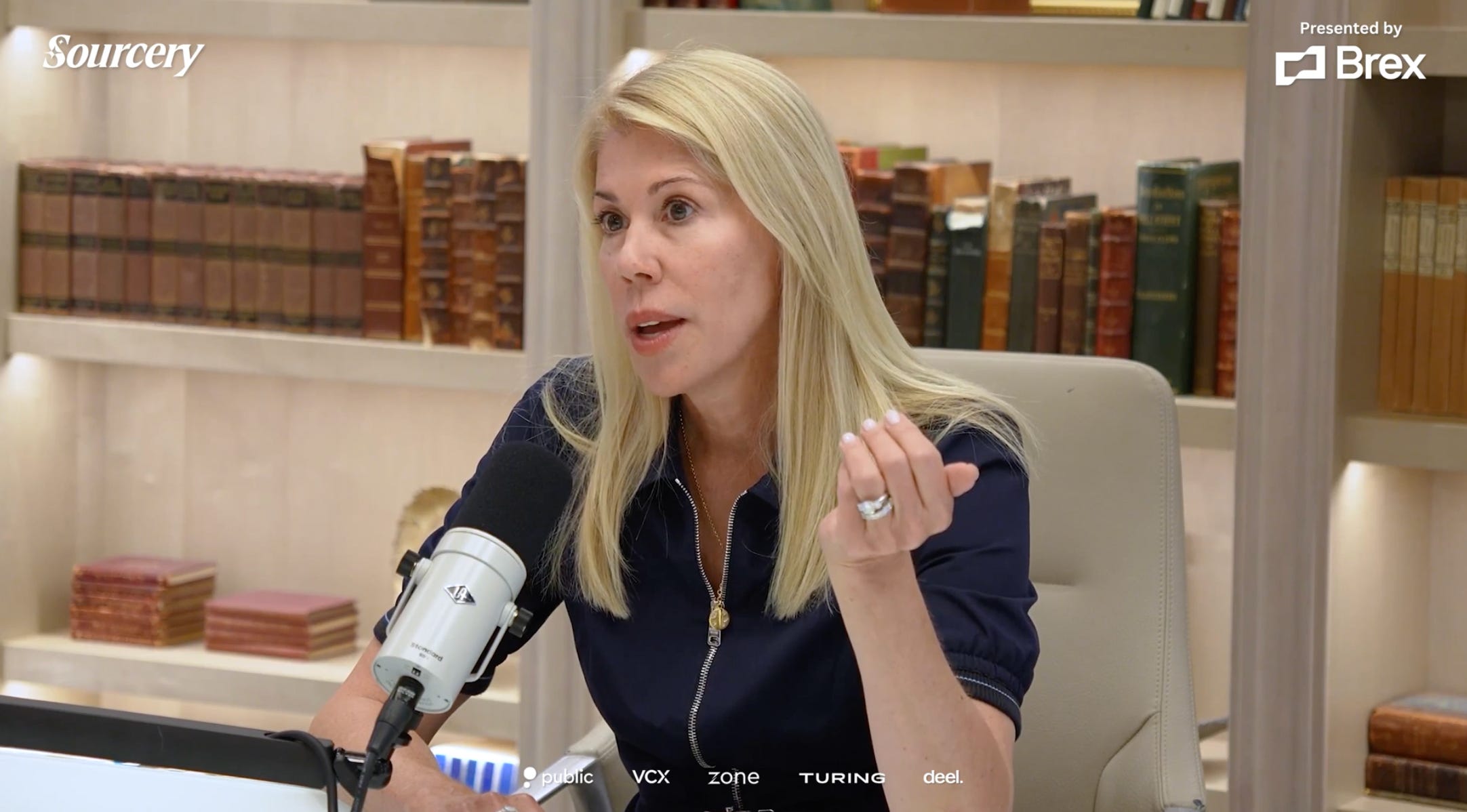
For VCs, the brand question comes back to deal sourcing and why founders choose one check over another.
“Deal sourcing is everything. Why does a founder wanna work with you? Why do I want your check versus somebody else’s?”
Overexposure is the most common mistake. Prosek advises firms to cut content that draws little engagement and to choose channels that fit their culture.
"The most embarrassing thing is these posts with 3 likes. Think about yourself like a teenager. Would you be happy with 3 likes? I don't understand why you keep putting out this content with 3 likes. So I'll be the person in the room to be like, 'Could we stop with this?'"
Allen & Company built its brand around a single annual conference, and Prosek built her own around convening founders and moderating. She recommends VCs appear on stage alongside portfolio company founders to demonstrate the partnership, and warns against taking too much credit for founder success. (*EHEM*)
“You’re better off being a little humble.”
Watch Your Digital Blink
Prosek’s closing advice draws on Malcolm Gladwell’s Blink, which argues people form judgments in 15 seconds or less. The LLM version is what she calls the digital blink, the first answer someone gets when they ask a model about a person or firm. Once that impression forms, it is hard to change, and an outdated or negative one needs to be fixed.
“If I don’t know Molly O’Shea, I’m gonna ask my LLM what’s she all about. That’s my digital blink.”
Watch the full conversation with Jen Prosek on Sourcery, available on YouTube, Spotify and Apple Podcasts, and subscribe to the Sourcery newsletter for more interviews with founders, investors and executives across public and private markets.
→ Listen on X, Spotify, YouTube, Apple
The material presented on Molly O’Shea’s website are my opinions only and are provided for informational purposes and should not be construed as investment advice. It is not a recommendation of, or an offer to sell or solicitation of an offer to buy, any particular security, strategy, or investment product. Any analysis or discussion of investments, sectors or the market generally are based on current information, including from public sources, that I consider reliable, but I do not represent that any research or the information provided is accurate or complete, and it should not be relied on as such. My views and opinions expressed in any website content are current at the time of publication and are subject to change. Past performance is not indicative of future results.
Paid Endorsement. Brokerage services by Open to the Public Investing Inc, member FINRA & SIPC. Advisory services by Public Advisors LLC, SEC-registered adviser. Crypto trading provided by Zero Hash LLC, licensed by the NYSDFS. Generated Assets is an interactive analysis tool by Public Advisors. Output is for informational purposes only and is not an investment recommendation or advice. See disclosures at public.com/disclosures/ga. Matched funds must remain in your account for at least 5 years. Match rate and other terms are subject to change at any time.
Hello Sourcery team,
You may not even care about this but wanted to put it into your brain sphere.
We have been fortunate enough to partner with most of the companies you interview as their General Contractor builder. Demand has been massive to ramp up manufacturing/production locations in space, autonomous, defense, robotics, 3D printing and much more. With the low labor pool in our industry, most of it building data centers, the squeeze is on.
The HOT TAKE- it is forcing an old slow to move industry into the modern era, as we are forced to integrate agents, robots and more to meet the demand. The market is dragging us, kicking and screaming into using these tools and it is moving our RPE from $2M to $4M per head, while we recruit at an accelerated rate for our industry. Recruiting is now seeking non engineers, non-construction and architectural people to convert them to the "build" delivery business.
David Hayes
Founder/CEO
Skyline Construction Inc.
San Francisco, CA