


Teresa Carlson, Founding CEO of the General Catalyst Institute, joins Sourcery to share the inside story of how she built AWS’s public sector business from zero revenue and two people into a $10B global powerhouse — including the legendary CIA contract that legitimized cloud computing for the entire world.
→ Listen on X, Spotify, YouTube, Apple
In this conversation, Teresa pulls back the curtain on what it was really like working alongside Jeff Bezos and Andy Jassy at Amazon, the brutal “no PowerPoint” writing culture, and the one-way vs. two-way door framework that shaped how she made decisions. She also draws sharp parallels between the early cloud era and today’s AI explosion — explaining why she thinks AI adoption is moving faster than any technology she’s ever seen, why the U.S. urgently needs an AI framework, and what startups must do to win in Washington DC.
We also get into the General Catalyst Institute’s mission to give 1,000+ portfolio companies an “unfair advantage” with policymakers, the rise of commercially-oriented government under the current administration, and why founders need to ditch the flip-flops if they want to be taken seriously on Capitol Hill.
A must-watch for founders, operators, investors, and anyone interested in the intersection of AI, policy, and the future of American competitiveness.
𝐓𝐈𝐌𝐄𝐒𝐓𝐀𝐌𝐏𝐒
(00:00) Teresa Carlson, Founding CEO at GC Institute
(01:08) The historic Kentucky Derby win
(02:38) $10B AWS blueprint
(04:56) Converting the skeptics
(12:03) Contract that changed the trajectory of AWS
(17:05) Building a world-class team
(24:01) The scaling mantra
(29:12) Lessons from Bezos & Andy Jassy
(35:33) Why is AI scaling scaring governments?
(40:23) Surviving the AI debt trap
(44:56) Why do government deals matter?
(48:55) Founding the GC Institute
(54:49) Founders storming Capitol Hill
(59:53) The unspoken rule of DC
(01:05:53) The next big AI shockwave
Brought to you by:
Brex—The intelligent finance platform: cards, expenses, travel, bill pay, banking—wrapped into a high-performance stack. Built for scale. Trusted by teams that move fast. visit → brex.com/sourcery

Turing—Turing accelerates superintelligence by helping frontier AI labs improve model capabilities and enabling enterprises to deploy end-to-end AI systems inside mission-critical workflows. Visit: turing.com/sourcery
VCX—VCX is the public ticker for private tech, allowing investors of all sizes to invest in venture capital. View The Portfolio at GetVCX.com
Deel—Deel is the global people platform that helps startups hire, manage, pay, and equip anyone, anywhere. Trusted by more than 35,000 fast-growing companies, Deel is the people platform that just works, so teams can scale without the chaos. Visit: deel.com/sourcery
Public-–Investing platform Public just launched Generated Assets, which lets you turn any idea into an investable index with AI. With Generated Assets, you can build, backtest, refine, and invest in any thesis with AI. Gone are the days of one-size-fits-all ETFs. Try it today: public.com/sourcery
Merge—The leading provider of customer-facing integrations and agentic tools for frontier LLMs, Fortune 500 organizations, and B2B SaaS companies. Visit: https://merge.dev
How AWS Sold Cloud to the CIA:
Teresa Carlson on the Deal That Defined an Industry
When Teresa Carlson joined Amazon Web Services in 2010, the company had no public sector revenue, no government contracting mechanism, and no agreed-upon definition of “cloud computing” inside the federal government. Ten years later, she had built the business into a roughly $10 billion global operation and helped land one of the most consequential enterprise technology contracts of the decade: the Central Intelligence Agency’s cloud deal.
Now Founding CEO of the General Catalyst Institute, Carlson walked Sourcery through how that business was built, what she learned from Jeff Bezos and Andy Jassy, and why she believes AI is now entering a similar inflection point with far less regulatory scaffolding in place.
Building a Market Before Selling a Product
When Carlson arrived at AWS from Microsoft, where she had run U.S. federal, the cloud category effectively did not exist in government. There was no procurement path, no compliance framework, and limited understanding among policymakers of what cloud computing was.
“We really did create the industry for cloud computing at AWS for governments around the world.”
Her early team consisted of two people and no revenue. The go-to-market strategy was deliberately grassroots. Carlson and her solution architects ran what she called “pizza or cookie evenings” in a small office in Herndon, Virginia, inviting CIOs, CTOs, and technical directors from across government to bring their laptops and try the product.
The educational gap extended to Capitol Hill. Carlson recalls early meetings with congressional leaders who assumed Amazon was there to discuss retail or taxes:
“Oh, Teresa, you’re at Amazon. You know, are you here to talk about books or taxes?”
Two structural problems had to be solved before AWS could sell at scale:
cloud needed a formal definition
it needed a compliance regime
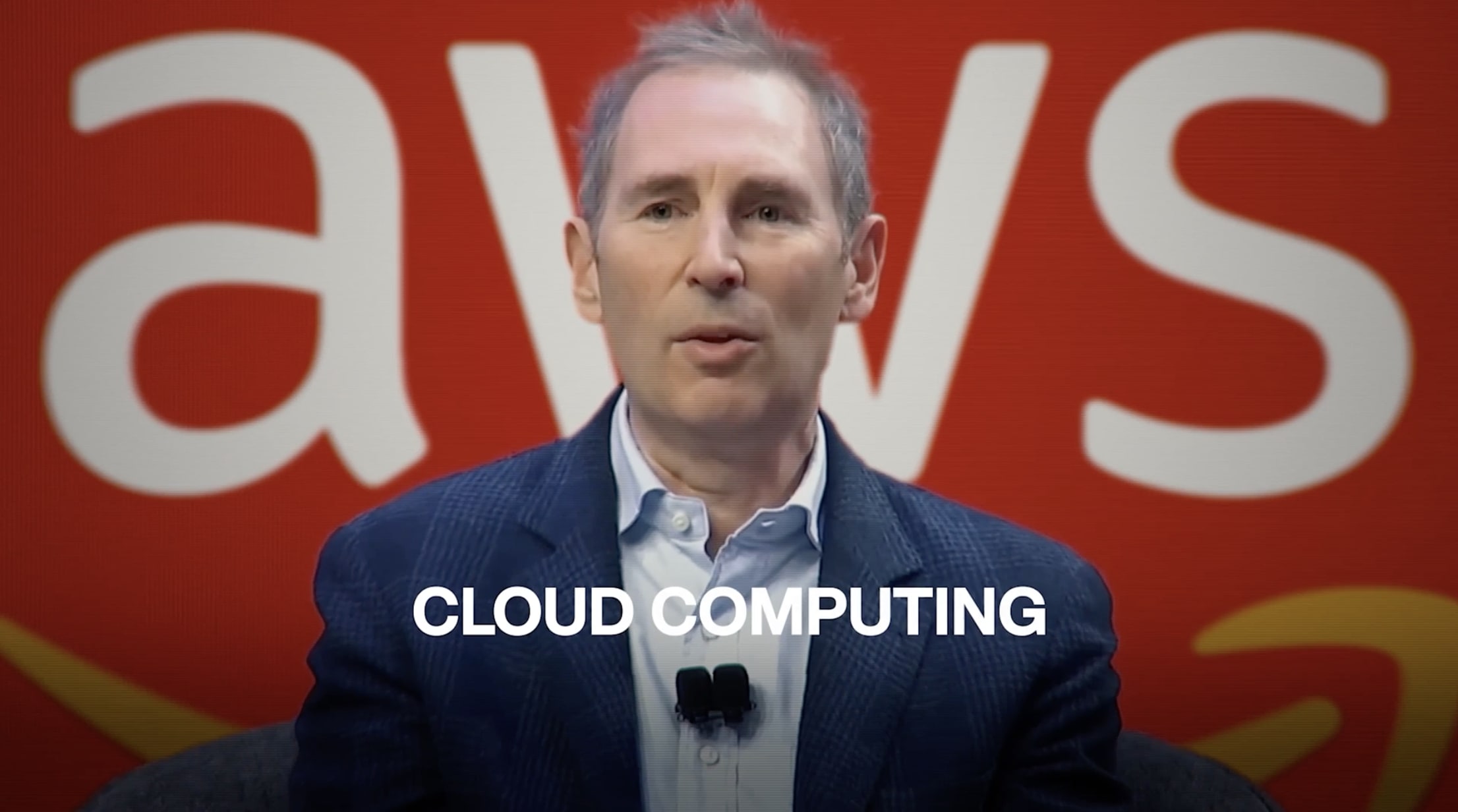
Carlson’s team worked with NIST to establish the U.S. government’s definition of cloud computing, a definition later adopted by other governments globally, and with GSA to create FedRAMP, the first security and compliance model for cloud. FedRAMP has since become a reference standard used by regulated industries including healthcare and financial services.

The CIA Contract
The 2013 CIA cloud contract is widely viewed as the moment cloud computing became credible for regulated enterprises. AWS competed against incumbents including IBM and Microsoft, both of which fielded substantially larger bid teams.
“I had a team of four people, that was it, and we did one outside contractor that helped us. And other teams, IBM, Microsoft, others that bid it, had these huge teams bidding this thing, and they kept saying, ‘You guys can’t win it.’”
Winning required Amazon to transform internally, clearing personnel, building Sensitive Compartmented Information Facilities (SCIFs), and adapting to classified contracting environments. Carlson credits Bezos, Jassy, and the board with backing the investment despite the operational complexity.

The downstream effect on the broader market was significant:
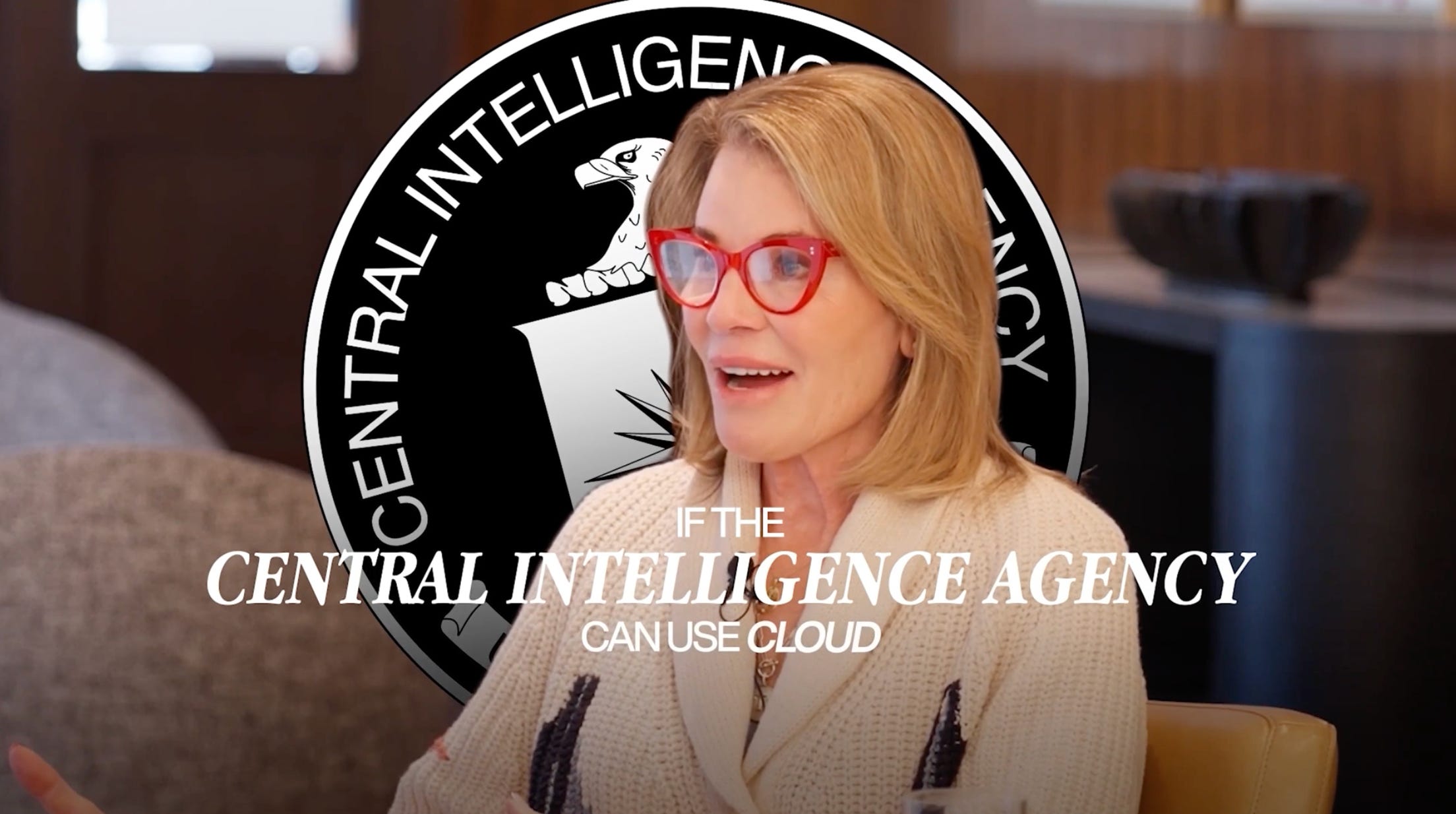
“It was kind of the shot heard round the world because commercial enterprises were like, ‘What? If the CIA can use cloud, we can use cloud.’”
Carlson points to this as a case study in why early lighthouse customers in regulated industries matter disproportionately for category-defining technology.

Inside Amazon: The Bezos & Jassy Playbook
Carlson describes the cultural shift from Microsoft to Amazon as significant. The most immediate adjustment was the absence of PowerPoint. Amazon meetings revolved around written six-page narratives, and her first attempt to present slides to Andy Jassy and his team did not go well.
“I had a beautiful PowerPoint. Nobody would even look at it.”
The writing culture forced a different kind of preparation. Documents were expected to be precise, outcome-oriented, and explicit about risk. Carlson notes that hiding or downplaying risk was treated as a credibility issue rather than a polished pitch.

Decisions were also categorized using Bezos’s well-known one-way vs. two-way door framework:
“A one-way door is if you made that decision, you couldn’t get back, and it was, it could be amazing or detrimental. A two-way door, you could take it and you could come back.”
Another communication norm: yes-or-no questions received yes-or-no answers. Explanations followed only if requested. Carlson eventually coached her own teams on this convention, framing it as a function of organizational velocity rather than abruptness.

Hiring for a Consumption-Based Business
The cloud business model also required a different hiring profile than traditional enterprise software. Because AWS customers paid only for what they used, account executives could not rely on transactional, license-based selling. Compensation was tied to actual usage, which meant sellers had to drive genuine adoption.
“They had to delight the customer. They had to love that customer’s mission and had to go in, because they wouldn’t get anything on top of their salary until the customer started using the tool.”
Carlson built a team oriented around consultative engagement, mission alignment, and technical fluency. Solution architects were hired not only for technical depth but for the ability to listen, whiteboard with customers, and translate agency missions into workloads.
She also invested heavily in business operations and capacity planning, because forecasting in a consumption-based model required tight coordination with Amazon’s infrastructure teams in Seattle.

Cloud to AI: A Faster, Less Structured Cycle
Carlson sees clear parallels between the early cloud era and the current AI cycle, but also notable differences. The most significant, in her view, is the absence of definitional and regulatory infrastructure.
“They still really have not defined AI.
If you go look at what I said they defined cloud, they’ve not really defined what AI is.”
Adoption in regulated industries and government is moving faster than it did with cloud, often without the compliance frameworks that eventually shaped cloud procurement. Carlson views this as both an opportunity and a risk. She has used her platform at the General Catalyst Institute to advocate for a federal AI framework, arguing that a patchwork of state-level regulations is particularly burdensome for startups.
On pace, she offers a direct comparison:
“I used to tell my team at AWS, ‘Strap in, because you won’t see anything like this.’ And with AI, I’m like, ‘This is a double or a triple strap in.’”
She also expects an “optimization point” in AI spending, similar to what occurred in cloud, where customers initially expand consumption broadly and then rationalize toward the workloads that matter most.
The General Catalyst Institute
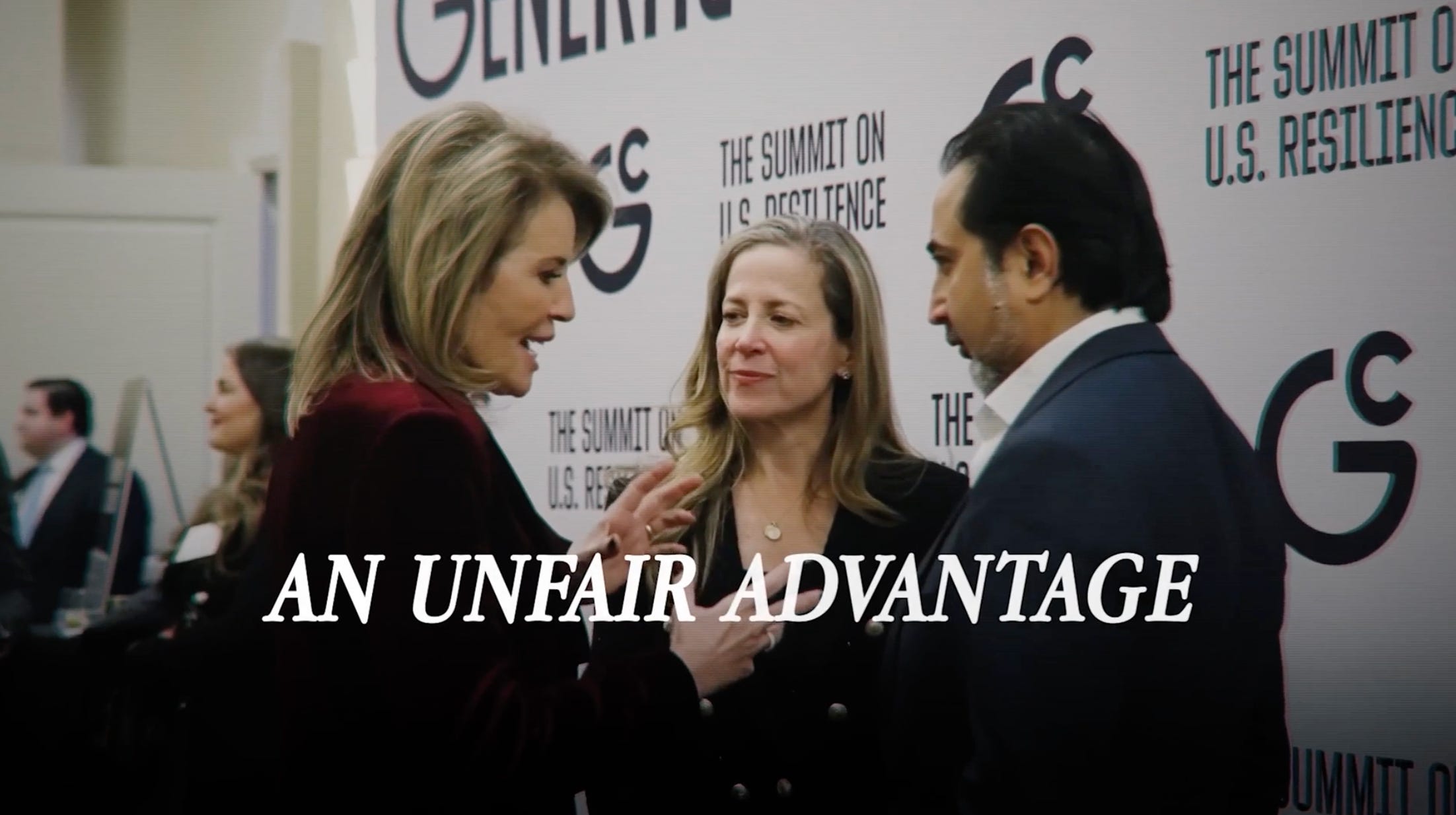
The General Catalyst Institute, which Carlson launched in September 2024 with Hemant Taneja, sits inside General Catalyst and works on behalf of the firm’s portfolio, roughly 1,000 companies, many in regulated sectors including healthcare, defense, financial services, energy, and manufacturing.
The Institute’s function is policy education and advocacy at the industry level rather than on behalf of any single company. Carlson and her team bring founders to Washington, Brussels, London, and other capitals to meet with lawmakers, agency leaders, and regulators.
The focus is on helping founders understand how to engage with government, how to position their technology in policy conversations, and how to build a go-to-market motion in regulated environments.
“Our philosophy is we want to be solution providers, not problem identifiers.”
She cites a range of portfolio companies engaging directly with policymakers, including Hippocratic AI (agentic patient follow-up), Cityblock Health (outcomes-based care for Medicare and Medicaid populations), Paragon Health (clinical trial access), and robotics companies Cobot and Standard Bots.

What Founders Need to Know About Washington DC Now
Carlson argues that the current environment in Washington is unusually open to startups, particularly compared to earlier administrations. She points to expanded contracting pathways, executive orders aimed at procurement modernization, and direct engagement from agencies including the Department of Defense.
“Under this administration, one of the things that they are doing that I’ve not seen in my entire career is how much more commercially oriented they are.”
Her practical guidance for founders engaging with government:
Treat customer references as a primary asset. Legitimacy for AWS Public Sector came from named customers willing to speak publicly about results.
Lead with the mission, not the technology. Government buyers respond to outcome-oriented conversations, not feature lists.
Show up prepared and appropriately dressed. Carlson notes that flip-flops and casual dress signal a lack of seriousness, particularly for founders unknown to the agency.
Engage early on policy. Larger companies have the resources to navigate regulation; startups generally do not, which is the gap the General Catalyst Institute aims to fill.
Looking ahead, Carlson’s priorities for the year include broader AI adoption, a federal AI framework, and permitting reform around critical minerals, energy, & data center infrastructure, areas she views as foundational to U.S. competitiveness with China.

The material presented on Molly O’Shea’s website are my opinions only and are provided for informational purposes and should not be construed as investment advice. It is not a recommendation of, or an offer to sell or solicitation of an offer to buy, any particular security, strategy, or investment product. Any analysis or discussion of investments, sectors or the market generally are based on current information, including from public sources, that I consider reliable, but I do not represent that any research or the information provided is accurate or complete, and it should not be relied on as such. My views and opinions expressed in any website content are current at the time of publication and are subject to change. Past performance is not indicative of future results.
Paid Endorsement. Brokerage services by Open to the Public Investing Inc, member FINRA & SIPC. Advisory services by Public Advisors LLC, SEC-registered adviser. Crypto trading provided by Zero Hash LLC, licensed by the NYSDFS. Generated Assets is an interactive analysis tool by Public Advisors. Output is for informational purposes only and is not an investment recommendation or advice. See disclosures at public.com/disclosures/ga. Matched funds must remain in your account for at least 5 years. Match rate and other terms are subject to change at any time.