


Woolly Mice, Dire Wolves, & AI-Driven Biotech
Inside $12 Billion Colossal Biosciences + Spinout ‘Astromech’ Announces $20M Raise at $3.8 Billion
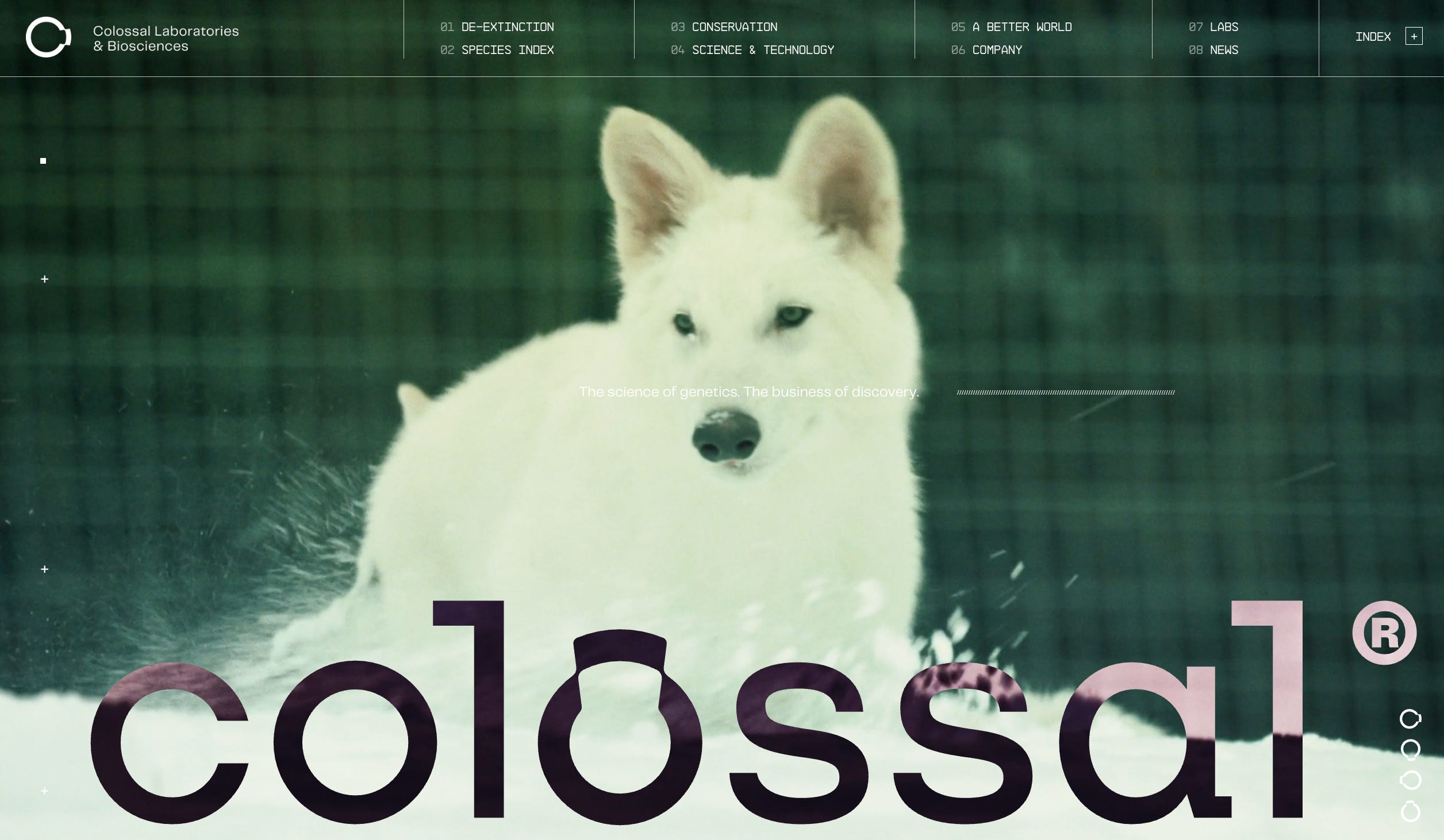
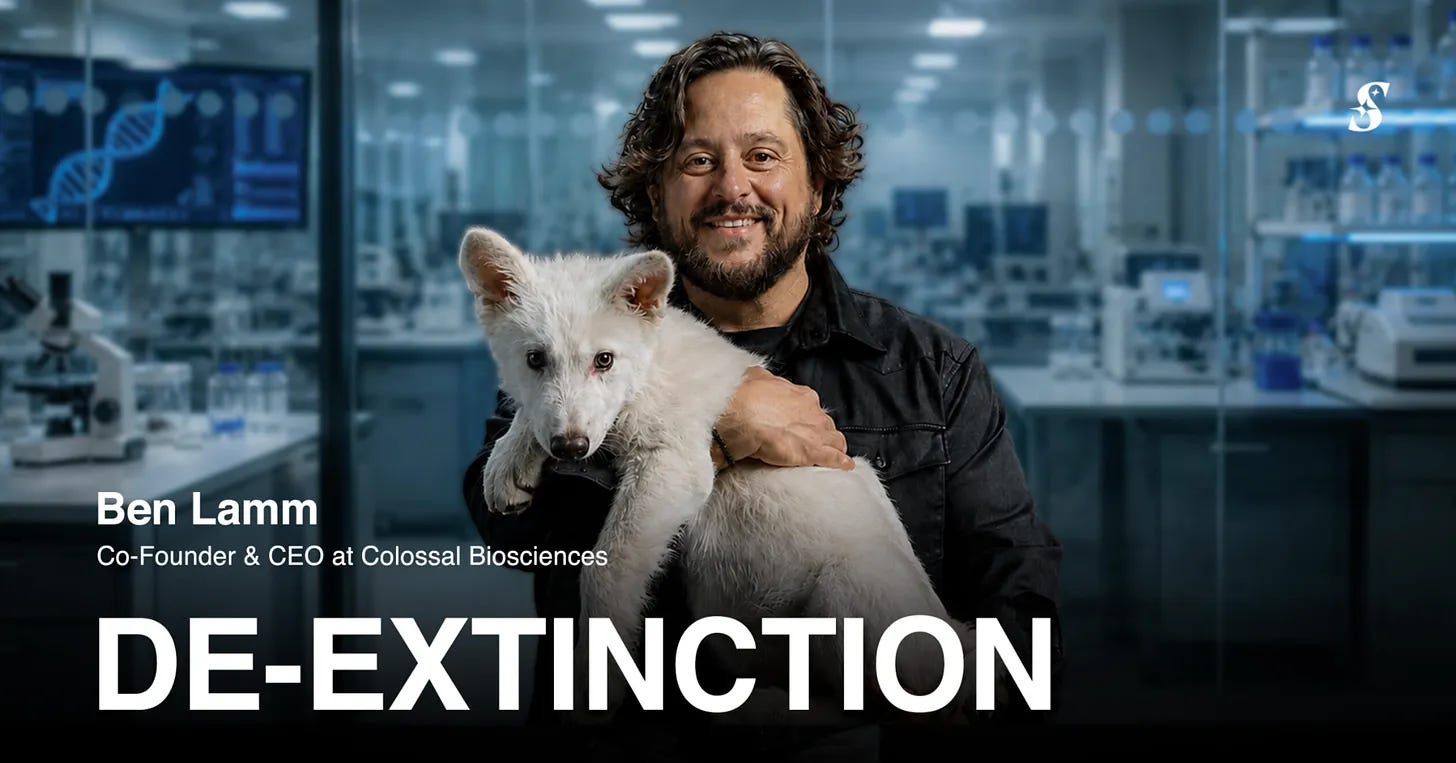
Ben Lamm is the Co-founder & CEO of Colossal Biosciences + their AI spinout, Astromech. Colossal is the $12 billion de-extinction company using genome engineering, AI and reproductive technologies to bring extinct species back to life, while Astromech is its AI biology spinout, now valued at $3.8 billion.
→ Listen on X, Spotify, YouTube, Apple
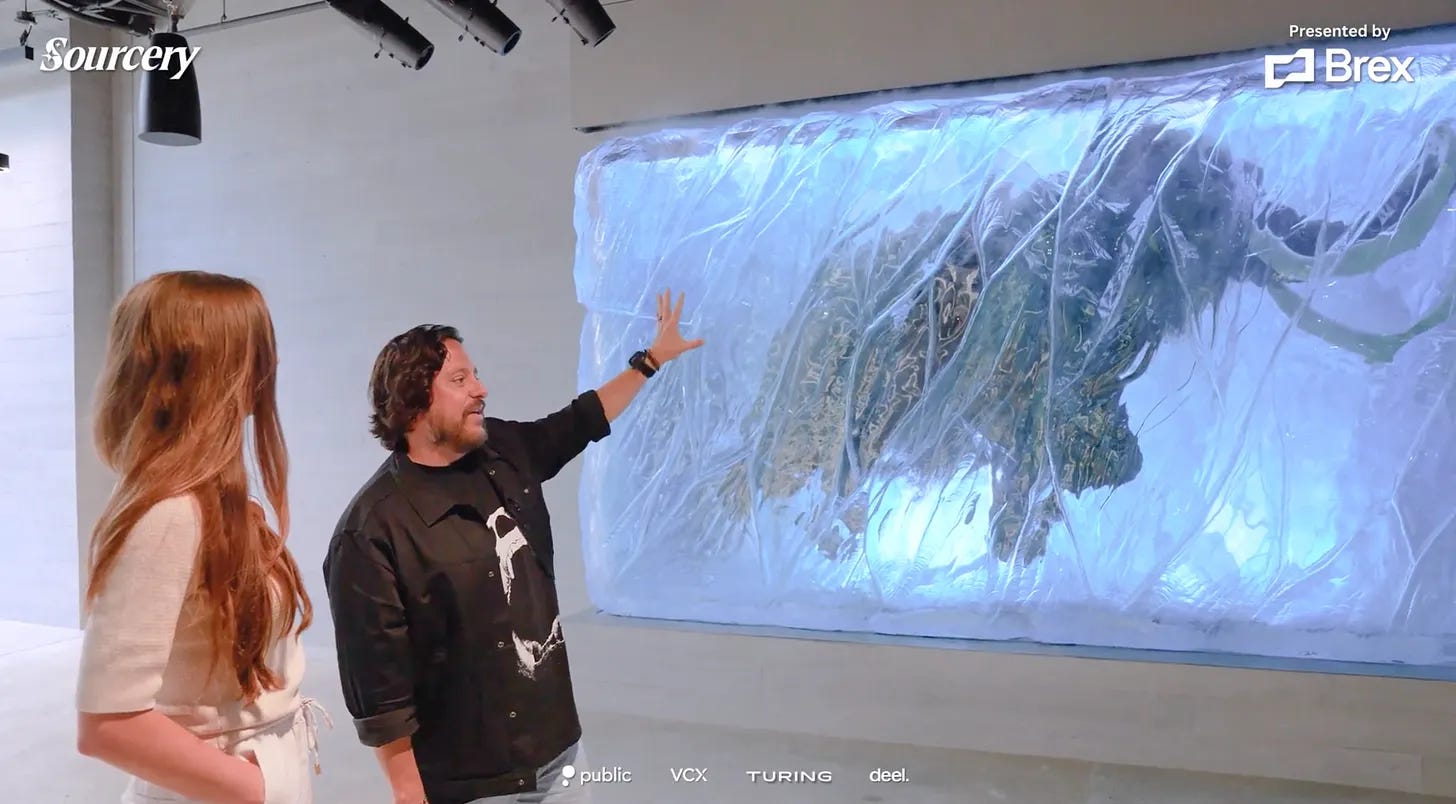
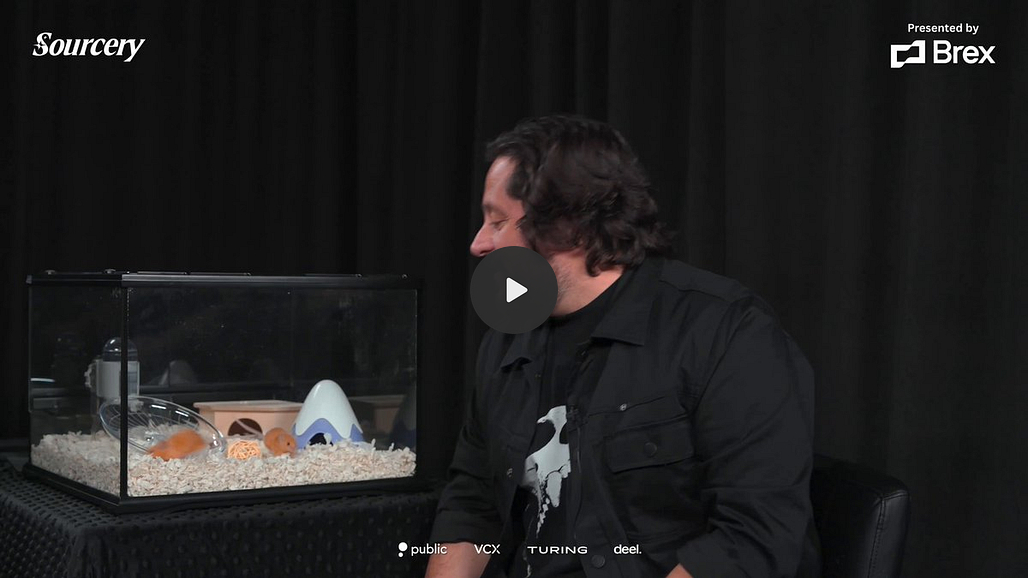
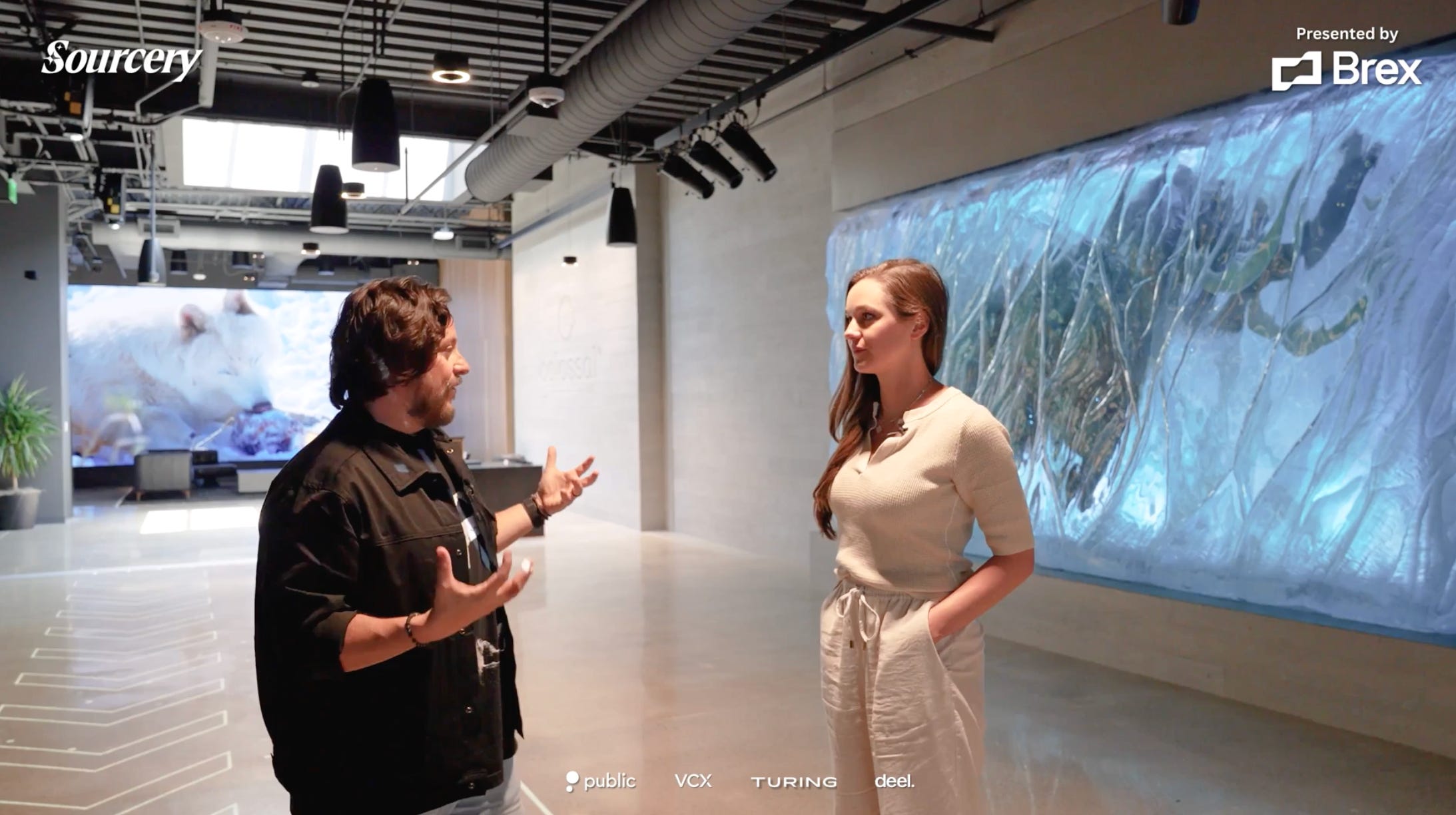
We went inside Colossal’s lab to see its Gen 2 woolly mice and sat down with Ben to discuss the technology behind the dire wolf, the race to bring back the woolly mammoth, and the much bigger business being built underneath de-extinction.
Colossal has raised $635 million, including a recent $400 million round that was originally targeted at $200 million. Ben explains why he still believes Colossal is “one of the most undervalued companies in the world,” and how technologies developed inside the company are creating entirely new businesses.
Astromech, the AI biology spinout Co-founded by Lamm and George Church, just raised $20 million at a $3.8 billion valuation, bringing total funding to $60 million. Astromech is using evolutionary and multispecies genomic data to build AI models designed to predict biological change, with potential applications across cancer, disease and drug discovery.
We cover Colossal’s rise, woolly mice, dire wolves, mammoths, artificial wombs, genome editing, AI and biology, Astromech, and what happens when humans learn to program life.

𝐓𝐈𝐌𝐄𝐒𝐓𝐀𝐌𝐏𝐒
(00:00) Ben Lamm, Co-Founder & CEO at Colossal Biosciences
(01:07) Inside Colossal's De-Extinction Lab
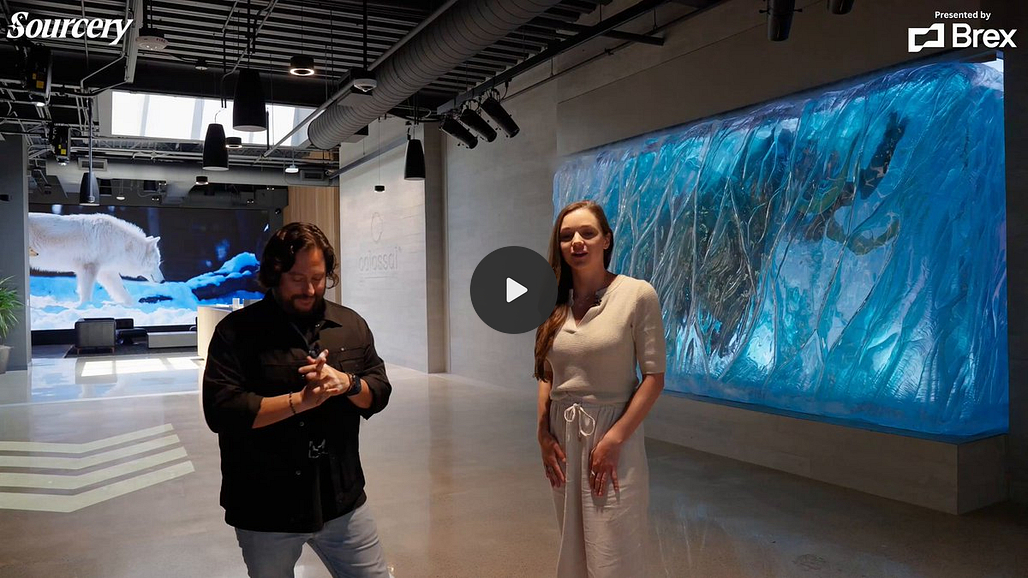
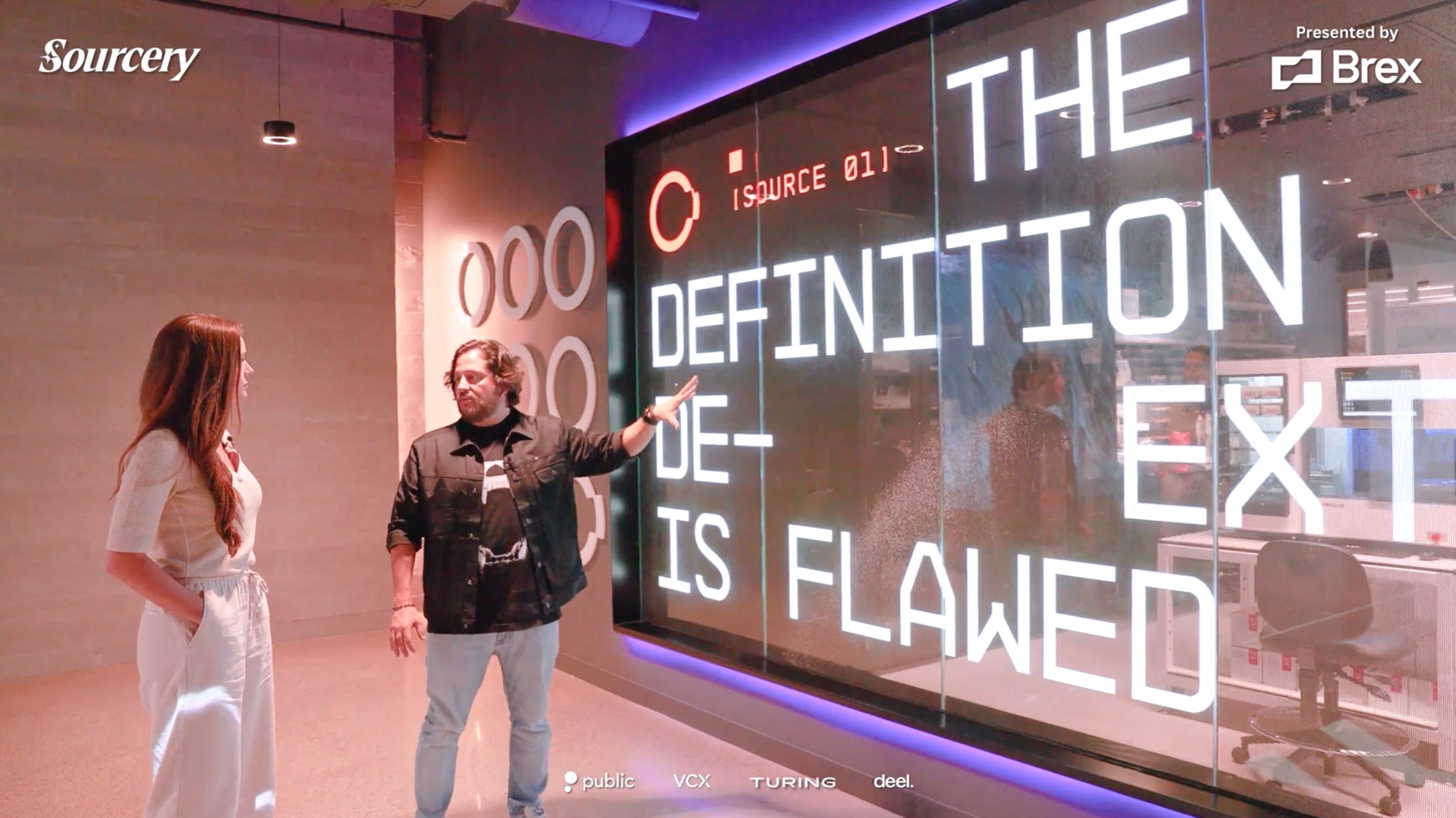
(05:07) Every wall in this lab has a purpose
(06:02) The AI idea that could save the planet
(08:09) What Colossal is building next
(08:28) Revealing Colossal's woolly mice
(10:49) Wild requests they get every day
(13:35) Colossal's business model
(15:07) How Colossal raised $635 million
(20:17) How AI is converging with Biotech
(22:44) How ancient DNA actually gets to the lab
(26:24) The real stats behind Mass Extinction
(32:07) Will their animals ever live in the wild?
(34:58) Building this company with no background in Biology
(41:44) Choosing their earliest backers
(52:51) Why they refuse to work on Humans
(58:07) Secretly working on Aliens?
Brought to you by:
Brex—The intelligent finance platform: cards, expenses, travel, bill pay, banking—wrapped into a high-performance stack. Built for scale. Trusted by OpenAI, Anthropic, Vercel, Granola, Deepgram, & Sourcery.. teams that move fast AF. visit → brex.com/sourcery

Turing—Turing partners with frontier AI labs to improve model capabilities in coding, reasoning, tool use, & multimodality, as well as with Fortune 500 enterprises to build & deploy end-to-end agentic AI systems in mission-critical workflows Visit: turing.com/sourcery
VCX—VCX is the public ticker for private tech, allowing investors of all sizes to invest in venture capital. View The Portfolio at GetVCX.com
Deel—Deel is the global people platform that helps startups hire, manage, pay, and equip anyone, anywhere. Trusted by more than 35,000 fast-growing companies, Deel is the people platform that just works, so teams can scale without the chaos. Visit: deel.com/sourcery
Public-–Investing platform Public just launched Generated Assets, which lets you turn any idea into an investable index with AI. With Generated Assets, you can build, backtest, refine, and invest in any thesis with AI. Gone are the days of one-size-fits-all ETFs. Try it today: public.com/sourcery
Inside Colossal With CEO Ben Lamm
Jurassic Park for REAL
Colossal CEO & Co-Founder, Ben Lamm has founded and exited four companies before this one. Chaotic Moon Studios, the Austin design and engineering shop he co-founded, sold to Accenture in 2015. Team Chaos, a mobile gaming studio, sold to Zynga in 2016. He then founded Conversable, a conversational AI company acquired by LivePerson in 2019, and Hypergiant Industries, which built AI and space systems for defense and enterprise customers including work with the Air Force. On tape he references earlier satellite and imaging work for Army space, and he sits on Avi Loeb’s UAP scientific advisory board.
→ Listen on X, Spotify, YouTube, Apple
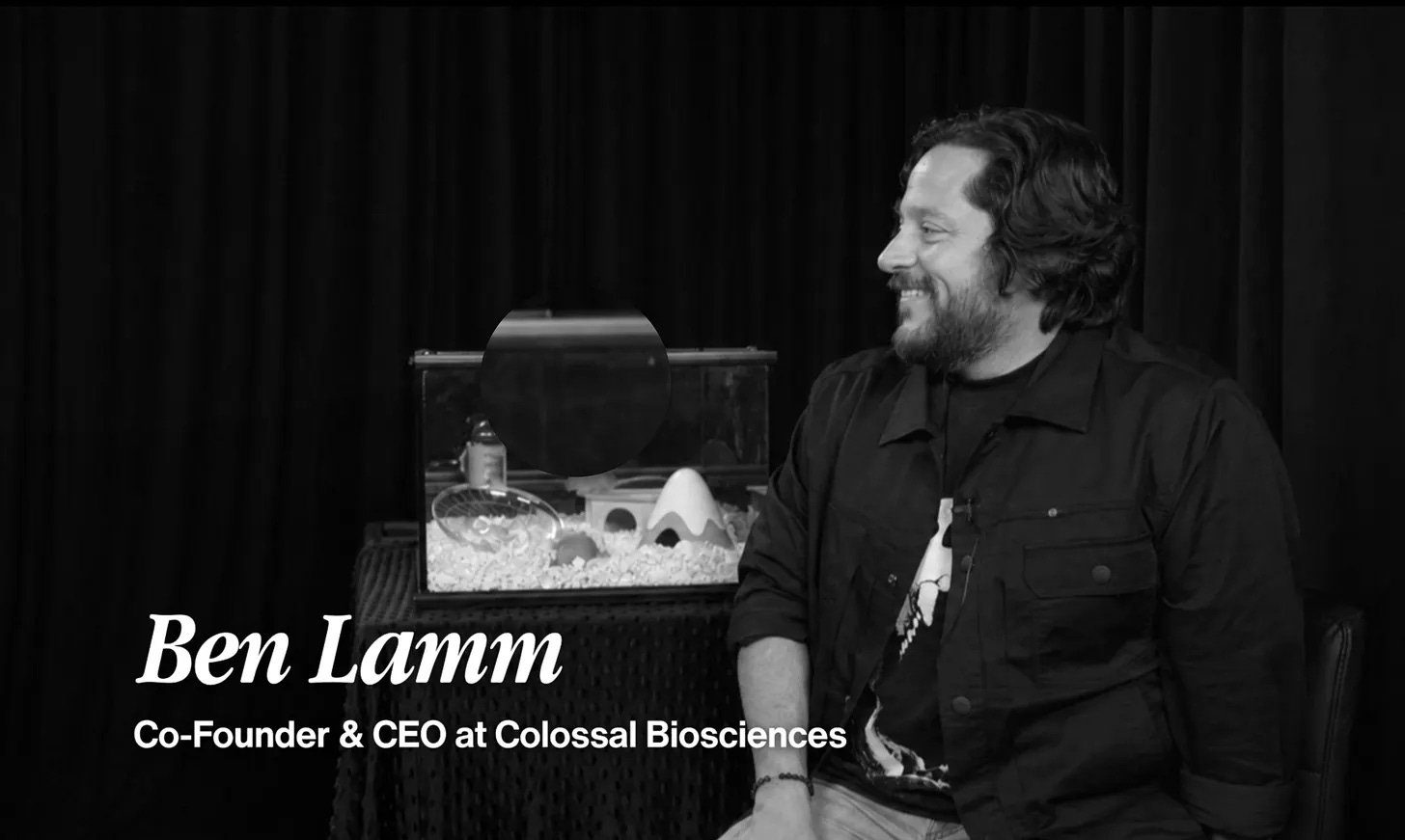
He started Colossal in 2021 with George Church, the Harvard geneticist who helped launch the Human Genome Project, on the premise that de-extinction was an engineering problem rather than a research one. Five years later Colossal has raised $635M, employs 260-plus people, and has produced three sets of live engineered animals. Its AI spinout, Astromech, has just raised $20M at a $3.8B valuation.
Lamm is not a biologist and does not pretend to be. What he brought was the software operator’s instinct to own the entire stack, which is why Colossal runs ancient DNA extraction, computational genomics, cloning, and animal operations under one roof rather than farming pieces out to academic partners.

Company Background
Colossal runs out of a 55,000 square foot Texas headquarters with 260-plus employees, 17 academic partners, 80 more people inside labs it funds, and roughly 95 advisors across scientific, indigenous, executive, and youth boards. Church serves as lead geneticist.
Six species sit in the de-extinction portfolio: the woolly mammoth, thylacine, dodo, dire wolf, giant moa, and bluebuck, the last added in April 2026. Mammoth calves are targeted for 2028.
“Extinction is a systems model. Genetic engineering from taking a 73,000-year-old skull and going to puppies is a systems model.”
“What’s great about this company, and is also hard about this company, is that there’s not another one. It’s not like here’s your SaaS company roadmap. The good news is if we make mistakes, there’s not really other people to be judged against. But the bad news is no one had ever done it before.”

The Extinction Numbers
The premise Lamm operates from is a forecast of up to 50% biodiversity loss over the next 25 years. He does not treat de-extinction as a fix for the rate of loss.
“No matter how good conservation works, it just doesn’t move at the speed of which we’re eradicating species and changing the planet.”

Individual species numbers carry the same shape. EEHV, an elephant herpesvirus, kills roughly 20% of baby elephants. Asian elephants get cancer at 2% to 3% against 24% to 25% in humans. Colossal holds the largest elephant dataset in the world and the largest multi-species herpesvirus dataset. Those two datasets are what Astromech now trains on.
The stated response has three parts: a de-extinction toolkit with applications past de-extinction, a government-funded BioVault network, and open sourcing.
“We open source all of our technologies for conservation. So anybody can use any of our technologies for free for conservation.”

Why Colossal Spins Companies Out
Colossal did not set out to run a portfolio. The spinouts exist because the technologies kept turning out to have applications nobody scoped at the start, and because keeping them in-house would tangle the brand and the mission.
“We don’t know what we don’t know, even about the business model.”
The clearest version of the problem is the one Lamm reaches for himself. Colossal has grown hair follicles from elephant stem cells and can produce mammoth hair without touching an animal, which has obvious consumer applications. It is not going to pursue them under the Colossal name.
“We don’t wanna have Colossal launches a hair solution, and then people are like, is that mammoth shit that people are putting on us? We never wanted that.”
The same logic applies to human health work. Colossal does no human work in house, but the technologies apply, so they go out the door instead.
“Our technologies can be applied to human, and we can spin them out and license them, but we won’t do the human work here.”
Three companies have come out this way. Form Bio in 2022, a computational life sciences platform, with a $30M Series A led by JAZZ Venture Partners. Breaking, working on plastic degradation. And now Astromech. Artificial womb technology is next, with Lamm telling Rolling Stone in May it should be ready in 2027, with human fertility applications.


Astromech Raises $20M at a $3.8B Valuation
Astromech is an evolutionary biology AI company building predictive models of biological change. The round is $20M led by Bob Nelsen, with Peak 6, NeoGenesis Capital, Builders VC, and CAZ Investments participating, bringing total raised to $60M at a $3.8B valuation, up from $2B in March on a $40.5M round. Texas-based, pre-revenue, with its platform and initial research pipelines operational. Church is co-founder.

The company gestated inside Colossal studying how genes diverged historically, then developed forward-looking capability as it ingested more data. Its stated inheritance from Colossal is the genome bank of extinct and living species, ancient DNA capability that reads old genomes against living ones, tooling built for massive biological datasets, and a team trained across evolutionary systems and computational biology. The proceeds go to expanding the research team, adding species to its functional genomic datasets, and scaling comparative genomic infrastructure.
The framing the company uses is weather forecasting. Biology can be described in extraordinary detail after the fact, but not anticipated.
“Biology runs the world and historically, we have only reacted to it. Every genome carries a record of what changed, when it changed, and the tradeoffs that followed, but almost none of that history is readable at scale today.”
What Astromech Actually Does
The architecture takes three kinds of input and produces three kinds of forecast. Inputs are genomic, meaning living and extinct genomes; evolutionary, meaning deep-time ancestry and divergence; and functional, meaning expression, traits, and response. Outputs are where a genome or population is headed, where that system is most likely to break, and which regulatory circuits are driving the change.
Two engines sit underneath. The first is a suite of deep learning models finding patterns across species and systems, covering how genes are expressed, how organisms respond to their environment, and how vulnerabilities develop. The second works backward through evolutionary history, reconstructing how a system reached its current state, then running the same math forward to project where it goes next. Together they train on 3.8 billion years of biological history.
Stated applications span human health, biosecurity, agriculture, and conservation: flagging cross-species pathogen susceptibility before it reaches humans, predicting drug resistance before treatment failure, mapping disease risk and healthspan drivers, modeling herd vulnerability under disease and climate stress, and anticipating food security threats. The company is positioning upstream of all of them rather than building a separate model per market.
The Technical Core
Astromech extends ancestral state reconstruction past sequence into ancestral regulatory state, covering chromatin accessibility, gene expression, and functional annotation, integrated into a Bayesian framework that returns calibrated confidence rather than point predictions. The same engine runs against different traits by changing the evidence overlay rather than the architecture.
The training breadth is the other half of the argument. Models predicting regulatory function from sequence are typically trained on one or two reference genomes. Astromech trains across species, generating functional data in-house where public coverage is thin, which lets it examine regulatory change between lineages rather than variation within one species.
Internal benchmarks put its learned tree-inference method at roughly 100X faster than conventional maximum-likelihood methods at comparable topology accuracy. Retrospective validation recovered trait-associated genes already established in published research and surfaced additional candidates.
None of this came off the shelf.
“It turns out that Opus doesn’t do an ancestral state reconstruction of a genome, and it doesn’t build comparative genomics models. So we had to go build all of that, which I think was good, ‘cause we had to go build out an AI team and think through some pretty hard problems.”
The cost structure is a differentiator against frontier AI.
“It’s a very focused model, so it doesn’t need the breadth that a lot of these other models need. So we don’t have to go build a $500 billion data center in computing power. We don’t have to fight for water and other things that people are all upset about.”

Longevity as the First Proving Ground
The first demonstration maps 46 longevity-associated genes across a time-calibrated tree of life, letting researchers see how genes tied to longevity, cancer resistance, and genomic maintenance were conserved or changed across evolutionary history.
The comparison set is built from outliers. Asian elephants evolved notable cancer suppression despite size and lifespan. Tasmanian devils are vulnerable to a transmissible cancer that has devastated wild populations. Bowhead whales live past two centuries at a body mass associated with elevated cancer risk. Brandt’s bats weigh a few grams and live past forty years. Birds routinely outlive mammals of comparable size despite higher metabolic rates.
“Comparing living species by their genomes can fail to assign DNA differences to functional impacts. Most of the variations that matter for complex traits, for example, morphology and longevity are regulatory rather than coding, so reconstructing the ancestral regulatory state, not just the ancestral protein, has the crucial explanatory power.”
Next phase is forecasting pilots with partners in health and biosecurity, moving from retrospective validation to prospective. The company is hiring across ancestral modeling, regulatory genomics, genomic inference, sequence reconstruction, metabolic modeling, and protein folding.
The Category Repricing
The round lands against a repricing of AI applied to biology. On August 19, Moderna and Merck reported the first positive Phase 3 for an AI-designed personalized cancer vaccine, and Moderna shares surged a record 177%. Lamm’s read, recorded before that result:
“It is truly exploding. It’s like you’re gonna see this like Precambrian explosion of new drugs & new therapies that all come from AI-assisted drug design & discovery.”
What Colossal Has Actually Produced
Three sets of live animals exist. Three dire wolf proxies born in 2025, produced by making 20 edits to a gray wolf genome using DNA from a 13,000 year old tooth. Four red wolves cloned the same year from ghost wolf lineage, which is endangered species work rather than de-extinction. And the woolly mice, which carry mammoth-associated edits.
Mouse gestation runs 21 to 22 days against 22 months for an elephant, which makes the mouse the testbed for mammoth phenotype work. Colossal took the edits it had identified for the mammoth, found the mouse equivalents, engineered them, and produced live animals inside a month.
“So we had 100% healthy mice born with exactly the predicted phenotypes, with the most multiplex edited delivered at one time ever. And we did it in 30 days.”
Edit counts have moved fast against original projections. Everything else in the portfolio is pre-animal, at the genome and cell engineering stage.
“We were told if in five years we were doing five to seven edits, we’d be great. We’re now doing hundreds. We haven’t done this yet, but we’re now pushing a new construct that we’ve designed and a new delivery mechanism that we think we can be doing thousands of edits at once.”
The No-Go List
Colossal does no human work in house. The line sits below primates. Lamm was wearing a Gigantopithecus shirt during the interview and pointed to it as the example of what the company will not build.
“We will not work on anything related to non-human primates and over. Gigantopithecus would be amazing to see. But we’re not gonna do that.”
Dinosaurs are the most common inbound request. Megalodon is second. There is no defense partnership on either.
“There is no megalodon DNA. And if there was it would be terrible to make. I mean, the ocean’s scary enough.”
Conspiracies and the UAP Question
Part of the reasoning behind the no-go list is reputational.
“We already have people, there’s a fringe group of people that already have some crazy conspiracy ideas about us. So I don’t want to encourage that.”
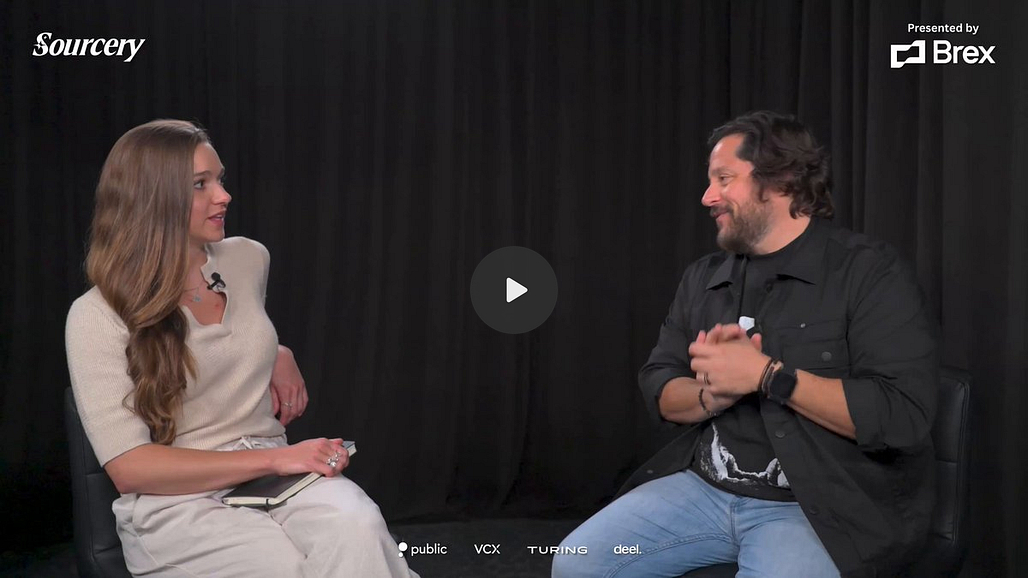
Aliens come up regularly, and here Lamm is correcting a rumor rather than declining work. He has a longstanding tangential connection to the UAP community through prior satellite and imaging work for Army space, and sits on Avi Loeb’s UAP scientific advisory board. He says he understands why people connect the dots, and that the conclusion is wrong.
“One of the other conspiracies is that the advancements in genome engineering has come from us studying, which is just not the case, which is just crazy talk.”
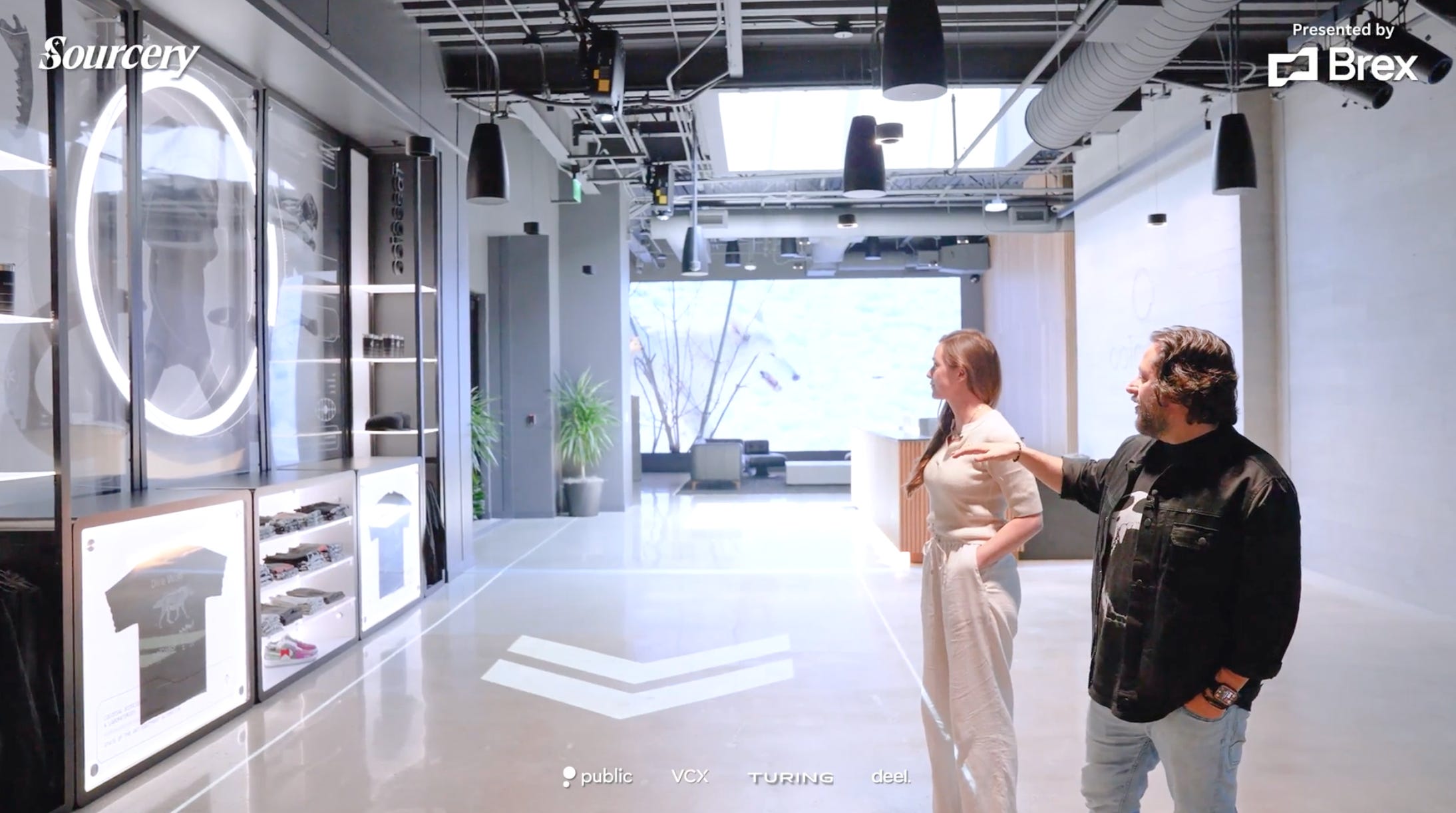

“Civilization Tech”
Colossal does not sell animals. Requests arrive daily, from schools, museums, & the Smithsonian, which asked about taxidermying the woolly mice for display when they die.
“We’re not in the selling animal business, so therefore it’s not currently a part of our roadmap.”
The asset is the toolkit. Lamm places three Colossal capabilities inside a category he did not coin.
“I think genome engineering at scale and full DNA synthesis at scale and artificial wombs at scale have an application that’s, like, insane.”
Much of the revenue surface is undefined by his own account.
Gene Drives & the Invasive Species Market
Lamm sizes invasive species as a half trillion dollar problem globally. A gene drive spreads a sterility trait through a population, removing future generations without chemical spraying.
“Invasive species is like a half trillion dollar problem globally. Think about like rats on islands, think about the screw worm here in Texas, which is gonna decimate the cattle industry.”
The New World screwworm is the live case. The federal approach runs $1.5B in taxpayer money over 8 years to slow or stop the spread. Colossal does not hold permits.
“Our solution, which is already made, could eradicate the entire problem in every model that we’ve done in six to seven months.”
On dual use, Lamm’s position is that the risk does not justify not building.
“There’s always gonna be bad actors. That doesn’t mean that we shouldn’t innovate the technologies for positive use cases.”
Government Contracts & the BioVault
Government work is the only near-term revenue Colossal has publicly described. Deployment of anything in the wild also sits with government, indigenous groups, and private landowners.
“Right now we are educating USDA, the intelligence community, the Department of War, and others on these technologies and how they can combat these issues domestically & abroad. But it is up to them. They have to give us the green light.”
Three contracts anchor the line. The UAE invested $60M and partnered on the World Preservation Lab and BioVault, announced at Dubai’s Museum of the Future in February 2026. Colossal signed an MOU with the Department of the Interior and US Fish and Wildlife Service in June on biobanking and conservation genomics. The Colossal Foundation partnered with the University of Tasmania on devil facial tumour disease. The biobank is being open sourced to labs and universities rather than held.
Artificial Wombs & Inbound Demand
Individual components of the artificial womb work apply to IVF and embryo health. The longer-range application is germline editing out genetic diseases and disorders.
Commercial inbound has arrived from outside biotech. An apparel buyer purchasing billions of units of an ethically harvested animal fiber approached Colossal about 5X-ing domestic supply through cloning or production. Colossal owns the rights to the animals and has grown hair follicles from elephant stem cells, producing mammoth hair without touching an animal. A second inbound came from the Middle East on a critically endangered bird tied to falconry culture, where Colossal’s artificial egg technology is the proposed path.
“The hardest thing that we will continue to have is making sure that we stay focused on our core mission, and don’t deviate too much for some of these large economic opportunities.”
Vertical Integration & the Viagen Acquisition
Animal cloning was the acquisition case. There were two meaningful operators globally, Viagen in the US and one company in South Korea.
“Viagen had cloning efficiencies at 80% where most people are at 2%. And so it made sense for us to say, okay, we need to buy them and bolt them on from a vertical integration perspective.”
The somatic cell nuclear transfer lab runs on custom hardware Colossal built in house, with computer vision tracking laser position, oocyte position, and DNA extraction volume. The company expects to automate the embryology process with robotics. Enterprise tooling was the harder migration.
“The hardest thing we’ve done is reprogram, not stem cells, but scientists to work in things like Jira and Smartsheets.”
$635M Raised & Rounds That Kept Doubling
Colossal has raised $635M. The most recent round was structured at $200M and closed at $400M.
“I think that we’ve completely mispriced every single round of capital because every single round of capital has been more than 2X oversubscribed. So what I hear from that is we’re cheap. Like, we’re a cheap date, and we should raise our rates on capital.”
Investor selection was deliberate. Colossal targeted long-duration technology capital and impact investors who track positive impact as an internal KPI, and passed on funds requiring a return inside a four to five year window. Named profiles include Thomas Tull, Mark Walter, & Jim Breyer.
“Our original deck was like, we have no scientist. We have no partnership with Harvard. We have no technologies. And we’re a handful of software and hardware people that have no background in biology, and George Church thinks he can make a wooly mammoth, and we’re pretty sure that that’s worth something. It was pretty bad. I’m being honest, I would’ve passed on it.”
What closed rounds afterward was delivery against a stated roadmap.
“It’s easy to raise capital when you have trust, and I think trust is built with setting and managing expectations.”
“I do think that we are one of the most undervalued companies in the world, ‘cause I truly do.
The ability to preserve, engineer and direct life on a planetary scale, in all species, I think is a pretty important skill set for humanity.”
The Criticism
Two objections run alongside the funding. The first is scientific and concerns labeling. Colossal’s dire wolves are gray wolves carrying 20 edits, a point Beth Shapiro, Colossal’s own Chief Science Officer, has conceded publicly. Vincent Lynch at the University at Buffalo has called the species labeling arrogant. Colossal’s own term is functional de-extinction.
The second is policy. Conservationists have argued that de-extinction rhetoric weakens the case for the Endangered Species Act, a link Interior Secretary Doug Burgum has drawn explicitly. That sits directly against Colossal’s Interior and USFWS biobanking work.
Lamm on the Conservation Pushback
A third objection came from inside conservation itself, and is the one Lamm addresses on tape. He attributes it to an early read that Colossal positioned itself as a replacement for modern conservation.
“The conservation community is actually some of the biggest, at times, has been historically some of the most vocal critics of the work.”
“We argue that 99% of people should keep doing what they are doing with conservation, and we’re that 1% difference.”
The measurable claim is downstream funding.
“If you go talk to any of our elephant conservation partners, they’ll tell you that their funding has gone up since Colossal was invented.”
Inspiration as a Stated KPI
Colossal runs three objectives at the top level: value creation for investors, impact, and inspiration. The third was a term of the deal.
“We told our investors this from day one, that inspiration needs to be as important as value creation, and you need to be on board with that.”
The youth advisory board sits alongside the scientific, indigenous, and executive boards, on the reasoning that the next generation inherits the solutions as well as the problems. Lamm cites direct air capture as the failure case, a trillion dollar infrastructure buildout handed forward as technical debt. The brand also functions as a hiring instrument.
“How do you take, like, Harvard meets MTV? That was our thesis from day one.”
→ Listen on X, Spotify, YouTube, Apple

The material presented on Molly O’Shea’s website are my opinions only and are provided for informational purposes and should not be construed as investment advice. It is not a recommendation of, or an offer to sell or solicitation of an offer to buy, any particular security, strategy, or investment product. Any analysis or discussion of investments, sectors or the market generally are based on current information, including from public sources, that I consider reliable, but I do not represent that any research or the information provided is accurate or complete, and it should not be relied on as such. My views and opinions expressed in any website content are current at the time of publication and are subject to change. Past performance is not indicative of future results.
Paid Endorsement. Brokerage services by Open to the Public Investing Inc, member FINRA & SIPC. Advisory services by Public Advisors LLC, SEC-registered adviser. Crypto trading provided by Zero Hash LLC, licensed by the NYSDFS. Generated Assets is an interactive analysis tool by Public Advisors. Output is for informational purposes only and is not an investment recommendation or advice. See disclosures at public.com/disclosures/ga. Matched funds must remain in your account for at least 5 years. Match rate and other terms are subject to change at any time.
I really enjoyed your coverage on this.