

FROM -92% → $100B+
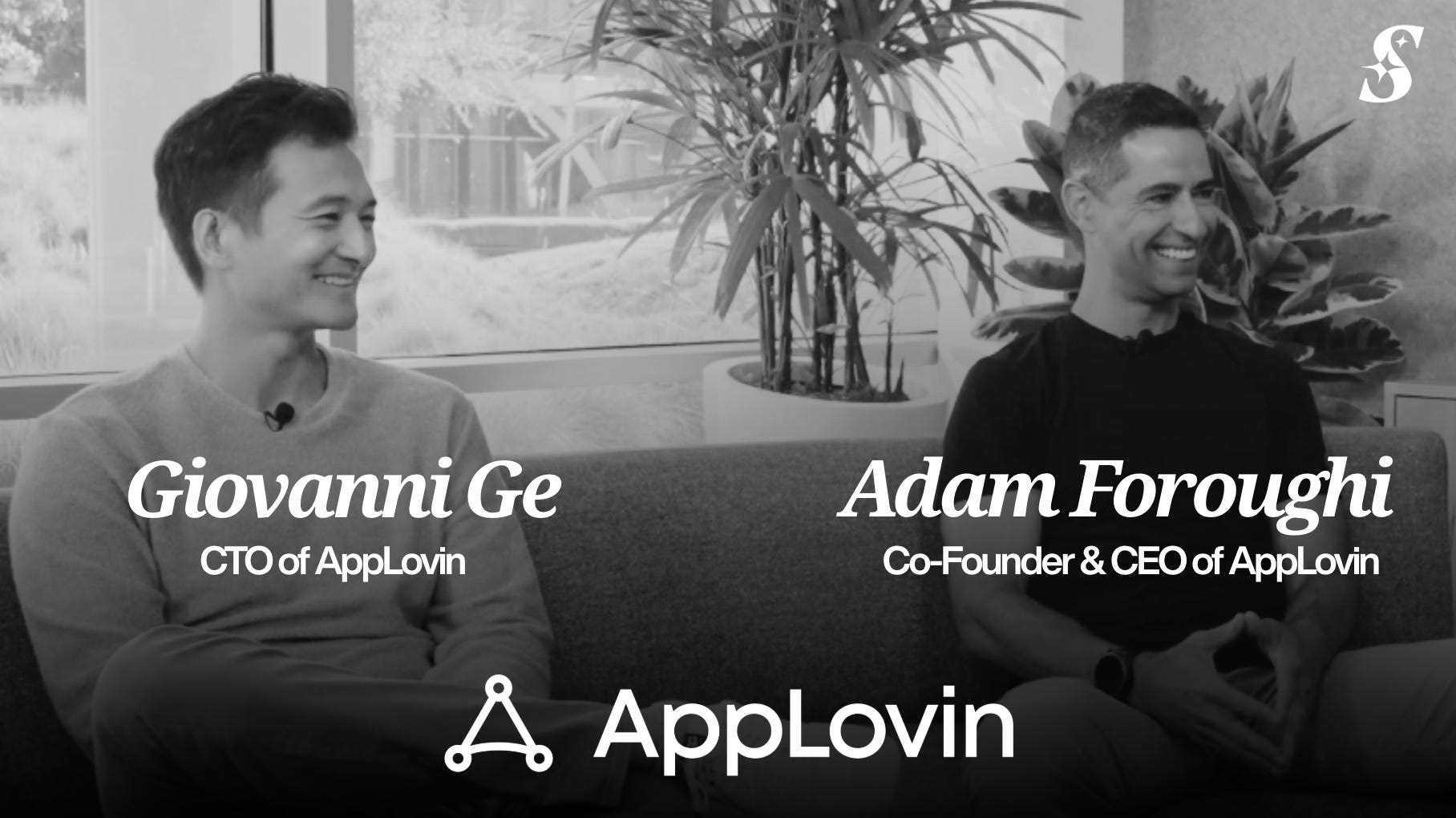
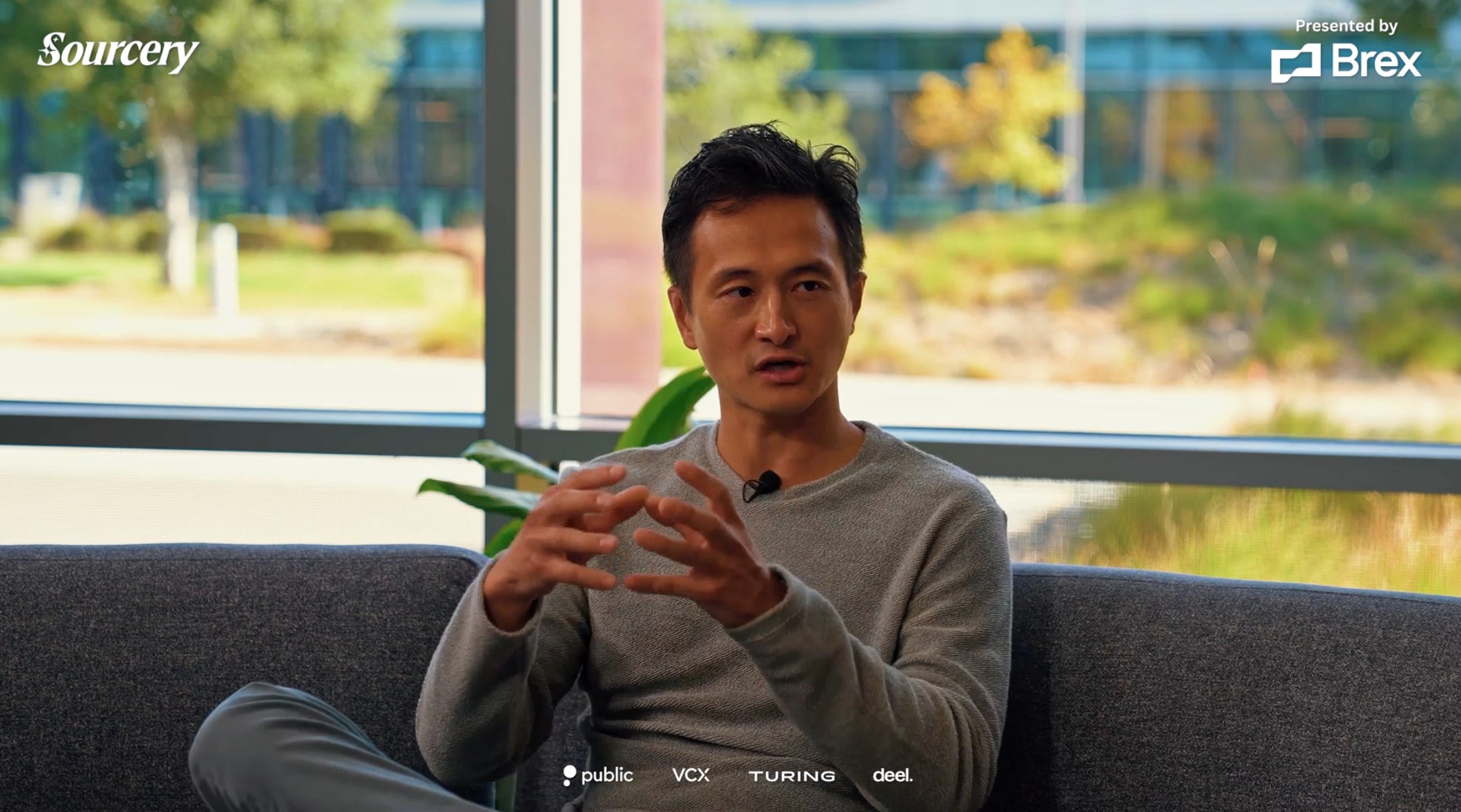
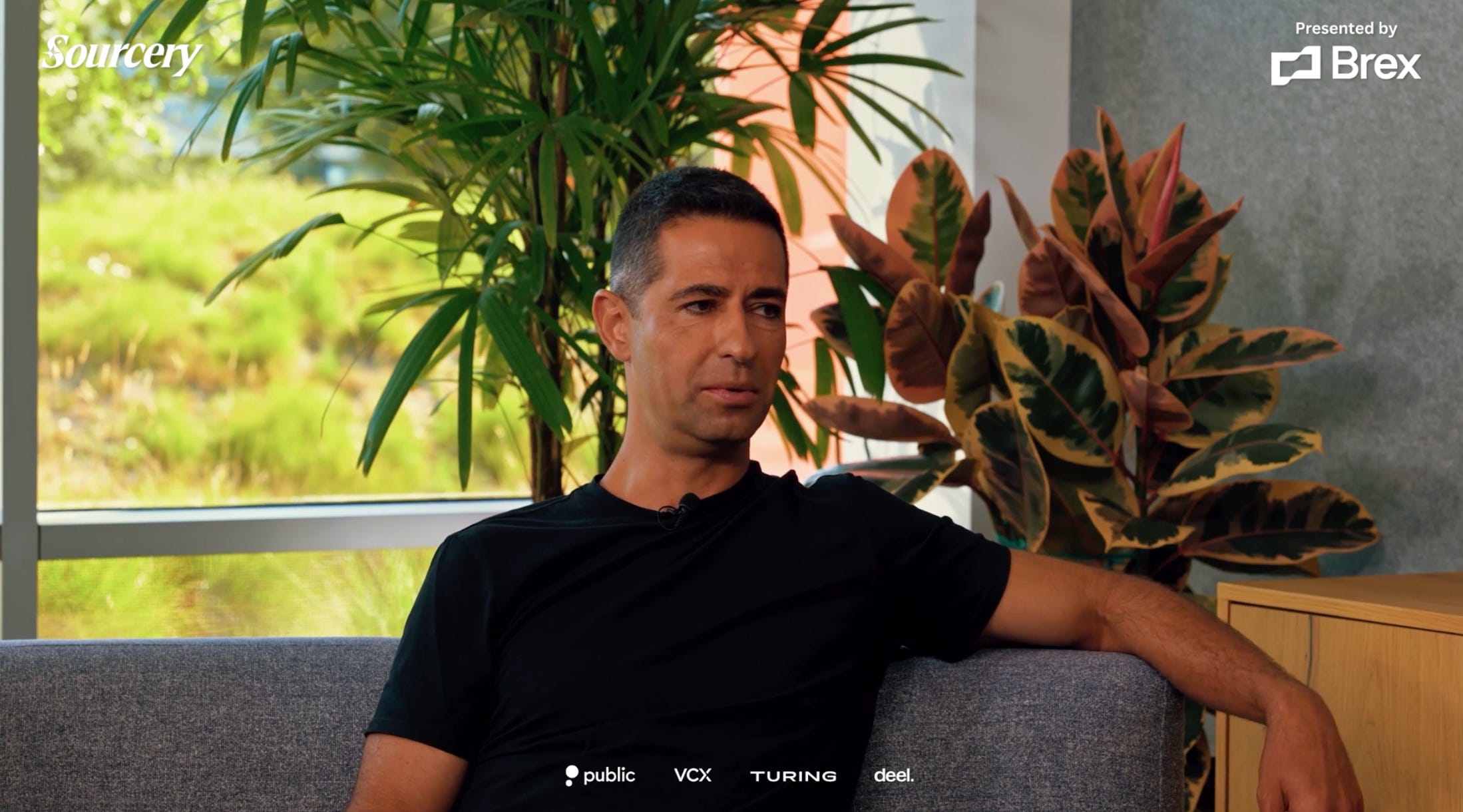
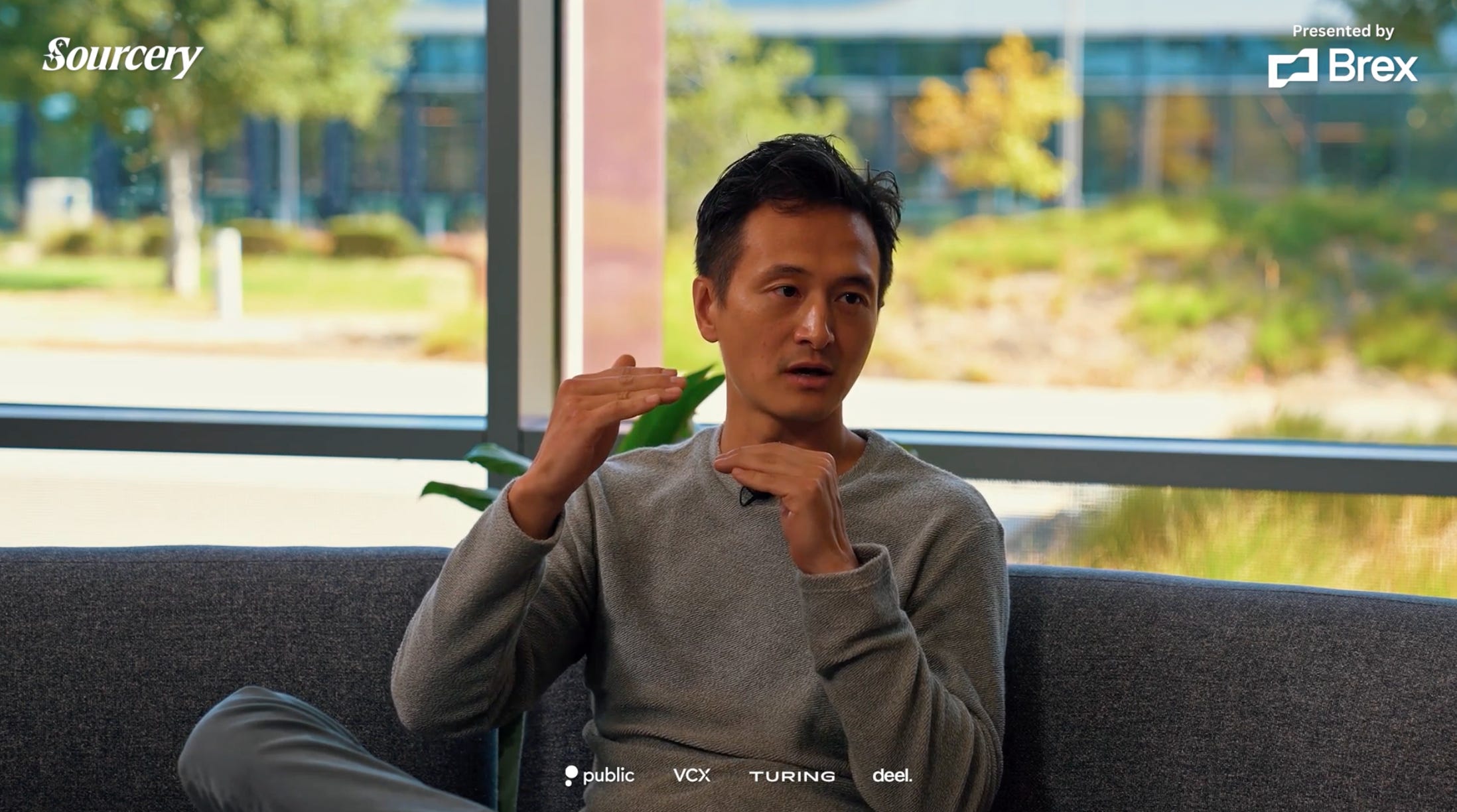
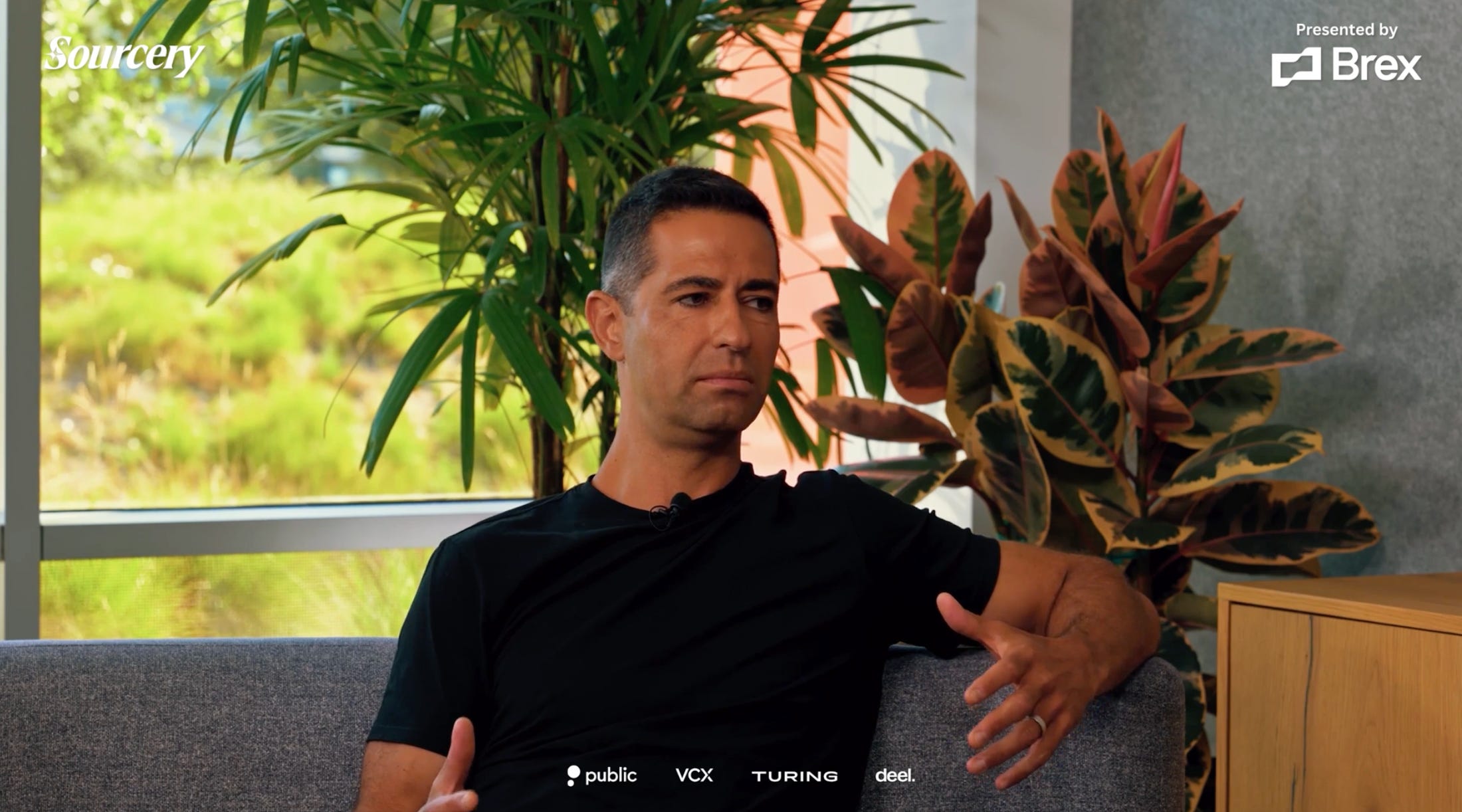
Adam Foroughi, Co-Founder & CEO & Giovanni “Gio” Ge, CTO of AppLovin, join Sourcery from AppLovin’s Palo Alto headquarters for a deep dive into the technology and strategy behind its advertising business.
→ Listen on X, Spotify, YouTube, Apple
AppLovin (NASDAQ: APP) is one of the most efficient company in public markets at ~400 people. Approaching $7B in EBITDA. That's ~$17M per employee, roughly 3x the revenue per head of Nvidia & 7x Apple, Meta, or Google. Engineering hasn't grown in 3 years (100 people) while cash flow scaled 20x.
This is the most extensive breakdown yet of how they built the ad model that grew @AppLovin from a -92% post-IPO decline to $100B+ company, with billions in profit.
Gio joined AppLovin in late 2022, when the company was worth roughly $5.5 billion, and helped architect Axon 2, the recommendation engine that became central to AppLovin’s transformation. The new architecture improved predictions and advertiser returns, helping drive the company’s expansion beyond mobile gaming into e-commerce ads and its recovery from a 92% post-IPO decline to a $100B+ company.
Adam and Gio break down how Axon works, how AppLovin scales with a remarkably lean engineering team, how AI is changing the way they build, why knowing what not to build matters, and what it would take for AppLovin to eventually become a trillion-dollar company.
We also cover AppLovin’s expansion into e-commerce, the future of advertising across LLMs and connected TV, engineering culture, and how they think about building for the next five to ten years.
𝐓𝐈𝐌𝐄𝐒𝐓𝐀𝐌𝐏𝐒
(00:00) Adam Foroughi, Co-Founder & CEO and Giovanni Ge, CTO at AppLovin
(00:52) Gio's first impression of AppLovin
(03:38) Joining AppLovin after a 30% stock drop
(09:59) How Axon 2 actually got built
(20:23) Why AppLovin never needed a sales team
(21:59) From gaming ads to e-commerce
(24:47) From a napkin drawing to a real product
(30:54) The onboarding mistake most companies make
(34:37) What "AI-Native" actually means
(36:37) Should new engineers still learn to code?
(41:41) UGC vs. traditional ads: what's winning?
(47:56) Adapting to AI without rebuilding from scratch
(54:50) Gio's daily tech stack
(1:02:17) AppLovin's path to a trillion-dollar valuation
(1:06:19) Recovering from a 90% stock drop
(1:09:47) What's next for AppLovin?
(1:13:44) What happens when AI takes over?
(1:15:48) Adam and Gio's hottest takes
(1:19:50) How to actually stay locked in
(1:24:47) Building something that lasts
Brought to you by:
Brex—The intelligent finance platform: cards, expenses, travel, bill pay, banking—wrapped into a high-performance stack. Built for scale. Trusted by OpenAI, Anthropic, Vercel, Granola, Deepgram, & Sourcery.. teams that move fast AF. visit → brex.com/sourcery

Turing—Turing partners with frontier AI labs to improve model capabilities in coding, reasoning, tool use, & multimodality, as well as with Fortune 500 enterprises to build & deploy end-to-end agentic AI systems in mission-critical workflows Visit: turing.com/sourcery
VCX—VCX is the public ticker for private tech, allowing investors of all sizes to invest in venture capital. View The Portfolio at GetVCX.com
Deel—Deel is the global people platform that helps startups hire, manage, pay, and equip anyone, anywhere. Trusted by more than 35,000 fast-growing companies, Deel is the people platform that just works, so teams can scale without the chaos. Visit: deel.com/sourcery
Public-–Investing platform Public just launched Generated Assets, which lets you turn any idea into an investable index with AI. With Generated Assets, you can build, backtest, refine, and invest in any thesis with AI. Gone are the days of one-size-fits-all ETFs. Try it today: public.com/sourcery
AppLovin’s Playbook
I sat down with AppLovin CEO Adam Foroughi and CTO Gio Ge at the company’s Palo Alto headquarters to go inside the engineering rebuild that took AppLovin from a 92% drawdown to one of the most efficient companies in public markets.
→ Listen on X, Spotify, YouTube, Apple
A 30% Drop and a New Architect
Ge joined AppLovin in November 2022 from big tech. Foroughi and then-CTO Vasily Shikin recruited him to architect Axon 2, a full replacement for the Axon 1 model that powered the advertising business on outdated machine learning techniques. AppLovin was worth roughly $5.5 billion when the interviews started.
Days before Ge’s start date, the stock fell 30% on the November 2022 earnings call. He joined anyway, reasoning the lower price meant more equity upside.
“If I just wanted to stay on the winning team, I would have not chosen to leave. I wanted to find a place where I see opportunities and I can actually make a difference.”
Axon 2 shipped roughly 5 to 6 months after he arrived. The rebuild reflected a principle Foroughi set with his first lead engineer at the company’s founding.
“Technology moves really fast, and you gotta be humble about what you have and know that if technology goes faster than what you’ve developed, you gotta throw away what you have and re-architect it, rebuild it, and it’s probably gonna happen every couple years or even faster in the future.”
Throwing Away the Old Engine
Axon 1 was a tree-based model, hundreds of thousands of if/else branches with clusters of user-item combinations sitting at the end of each branch. The structure could not keep up with relationships that shift with time, weather, promotions, & holidays.
Axon 2 replaced the trees with semantic embeddings, the same concept behind large language models. Learnable embedding tables encode user IDs & item IDs into semantically meaningful vectors, & deep neural networks study the interactions between them. The new model recognizes patterns and extrapolates them to unseen user-item pairs.
The architecture was also cheaper to run. Neural networks are built on general matrix multiplication, the operation GPUs are optimized for, while the old selection trees were hard to optimize on GPU machines.
“The new generation model is very powerful and efficient with the modern GPU architecture.”
Ge built the training infrastructure for Axon 2 through December 2022, including 12 hours of offline coding on a flight to Italy, reading library source code because he had no internet access. The first generation of the model went into training the day he returned.
60 Seconds With 1 Billion Users
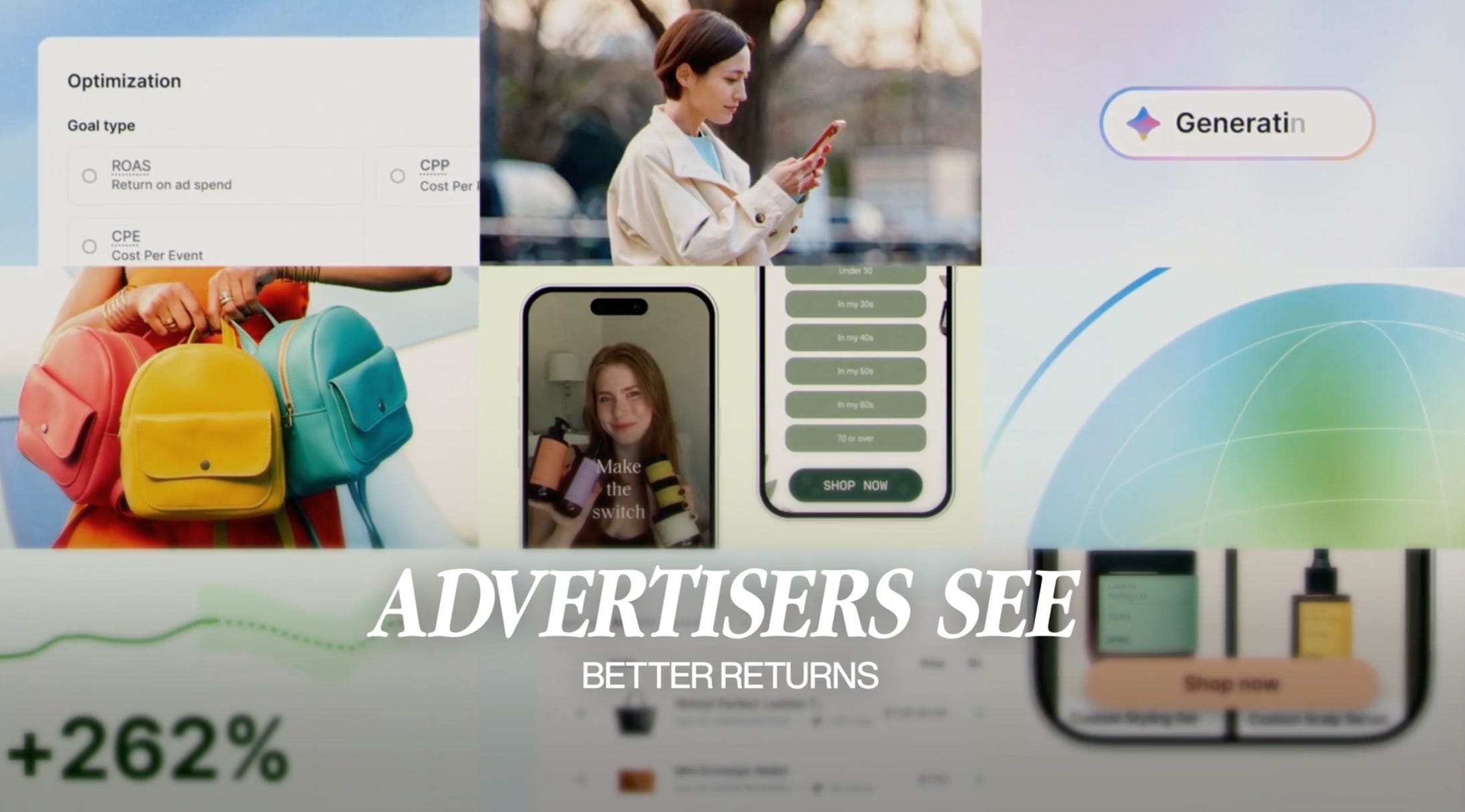
The most important data in the system is user interaction with ads. Every ad served to AppLovin’s billion-plus users is a feedback data point, and the format generates far more signal than a static banner. Ads inside games run around 60 seconds, and half are opted into by users who watch to earn an in-game reward. Many contain playable mini games that preview the advertised app.
“If a user sees 10 ads on our platform a day, that’s 10 minutes of engagement with the website effectively.”
The funnel closes with advertiser data. AppLovin serves the ad, tracks engagement through install, then receives revenue and retention data back from the advertiser, following the same playbook Facebook used when it pixeled websites to understand users beyond the social feed. AppLovin started pixeling websites and learned what its users do outside of games.
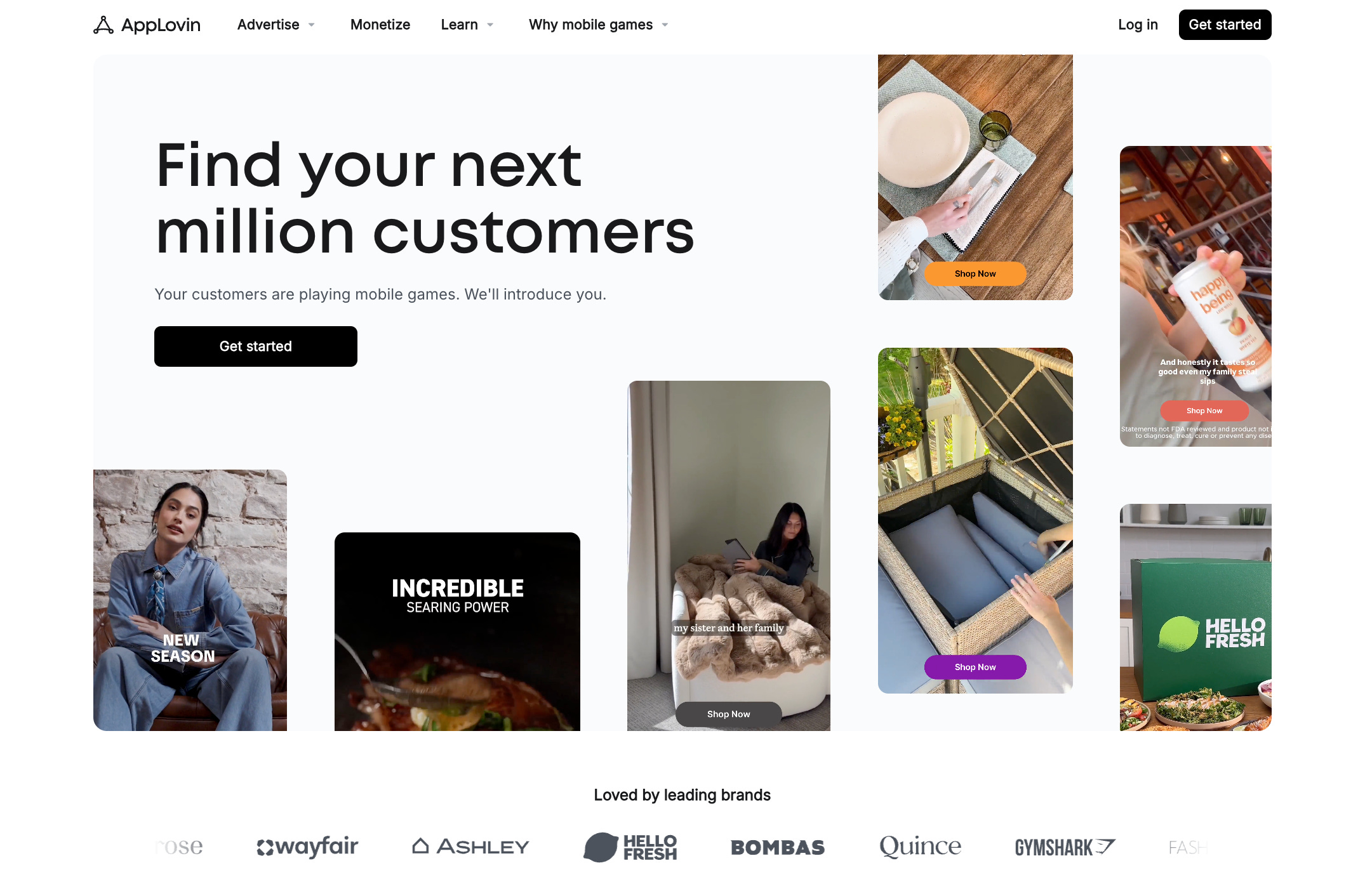
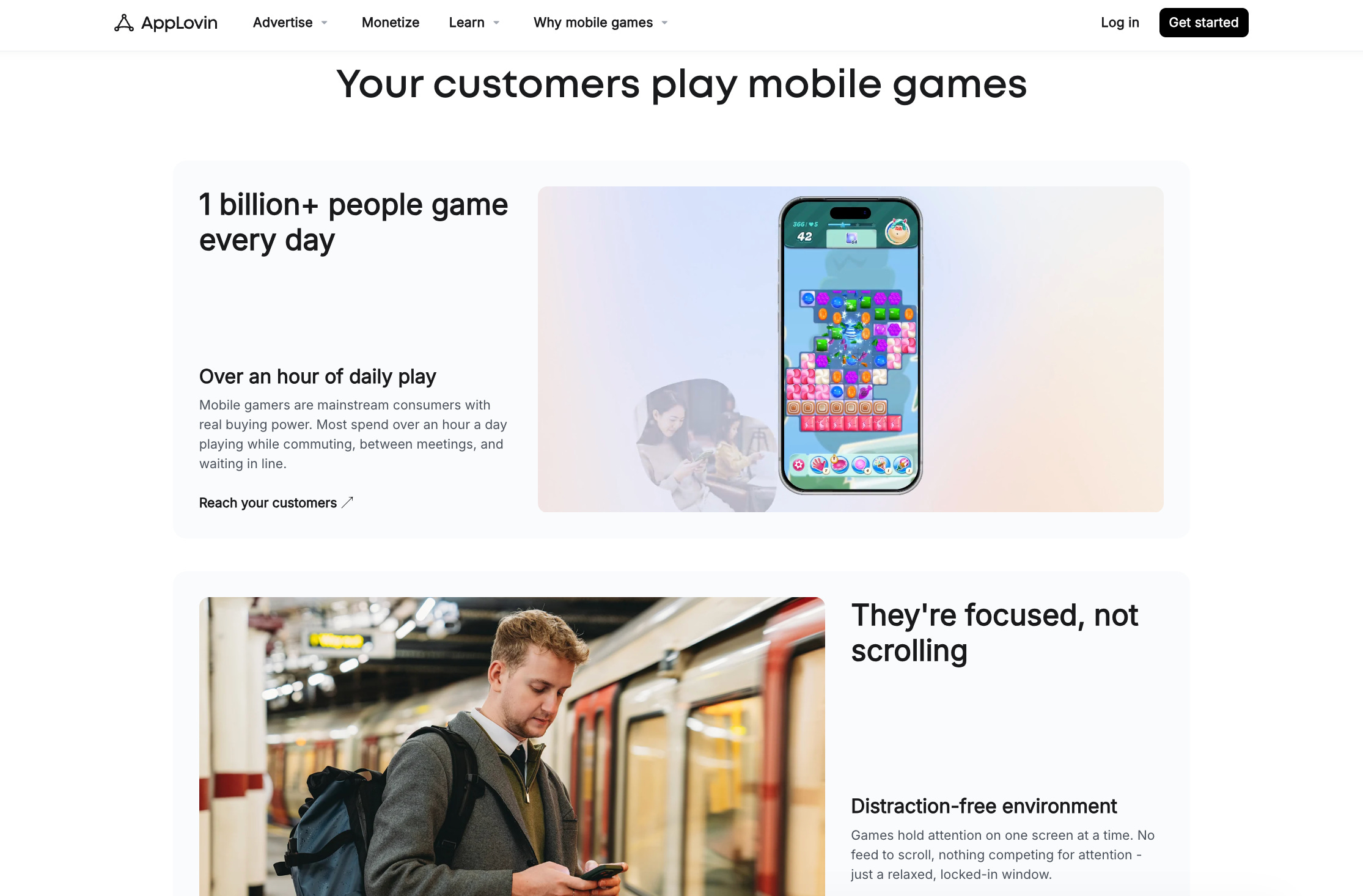
The audience skews 30 to 50 years old and slightly female, with a concentration of heads of households playing mobile casual games. Analysts and investors pushed back for years that gaming data could not extend to other categories.
“It’s a billion people on the other side, not a billion people who are only playing games and doing nothing else. If you understand the person, then you can actually deliver value to them outside of just a game-to-game scenario.”

E-commerce Started on a Napkin
The move beyond gaming began about a year after Axon 2 scaled, once the team confirmed the architecture was general enough to support any vertical. The first data flow engine for the e-commerce product was designed at a breakfast during a Google conference in Las Vegas.
“There was no paper, so we just found a napkin, and we started discussing and drawing and design on the napkin. By the time the food arrived, we already have a pretty good design.”
The engineers built the first prototype of the data engine before landing back in San Francisco. Within a couple of months the team had the data, model, and infrastructure live with a handful of test advertisers, and purchases came through with decent ROAS even on a premature model with limited data.
AppLovin runs almost no product management. Engineers are expected to understand business problems well enough to write their own architecture and their own product.
“You have engineers that didn’t even talk to a business person sitting down together at breakfast on a napkin writing out a solution to a problem that we never even discussed, and then something that could become a big business.”

400 People, No One-on-Ones
Excluding the gaming studios it has since sold and Adjust, AppLovin has run at around 400 people for years, cut down from 600 roughly 2 to 3 years ago. Engineering is about 100 people, the same size as when Ge joined, through a period when revenue multiplied. Shikin personally wrote around 60% of the company’s code before Ge arrived.
There are no one-on-ones. When Ge requested a weekly meeting with Shikin in his first month, Shikin did not understand what it was, and the two canceled it in favor of communicating through code. New hires, including interns and new graduates, push code to production within their first week.
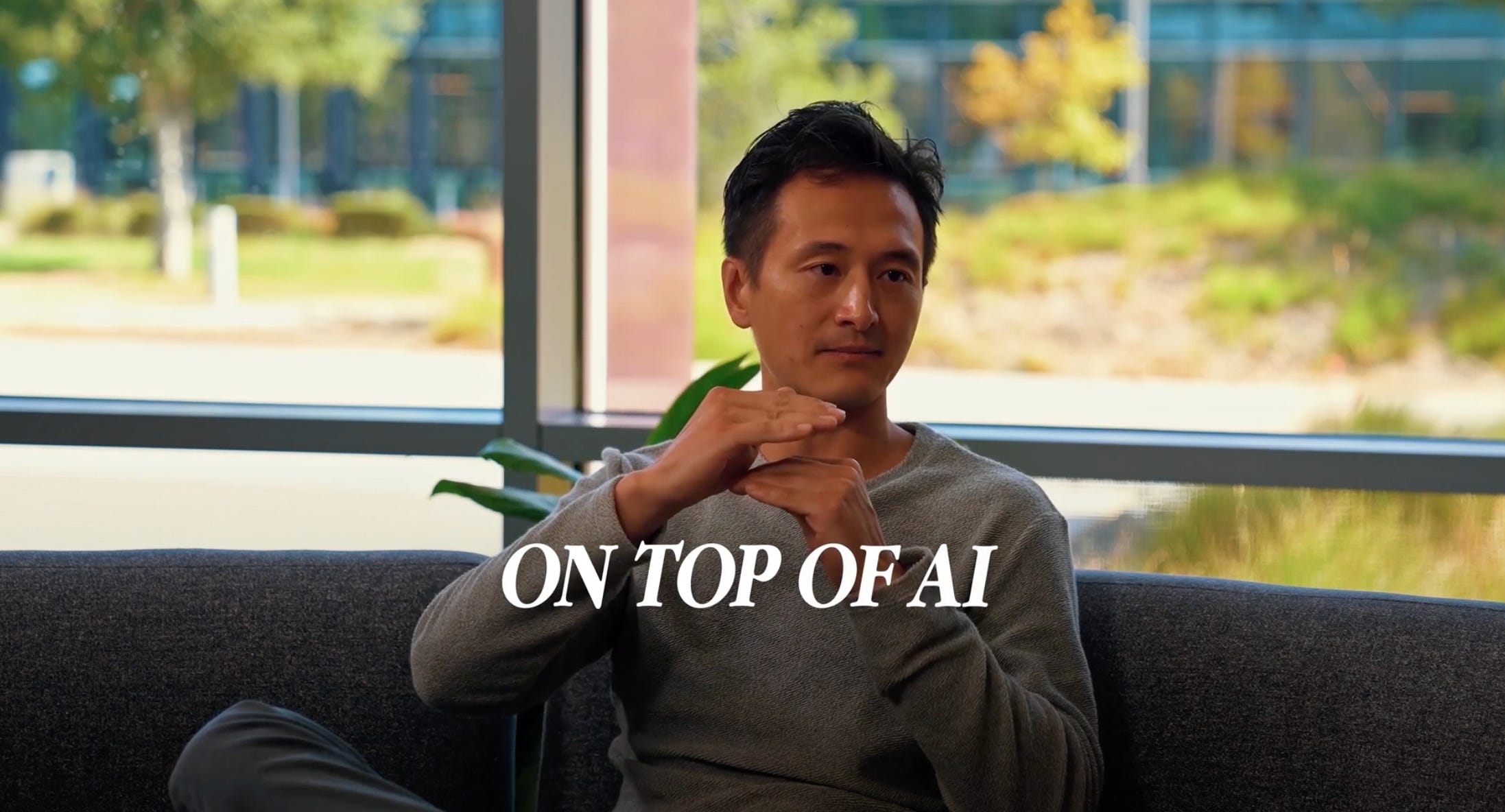
Ge holds a specific view of how the engineering team should relate to AI tools.
“I don’t want our engineer to sit next to AI. I want our engineers to sit on top of AI.”
The boundary comes with accountability. Prototypes and dashboards can be built however engineers want, but core systems carry a different standard.
“You can use AI however you want, but in the end of the day, you, as a human, is held accountable for every decision that your AI made for you.”
$17M in Revenue Per Employee
The math on that headcount separates AppLovin from every large company in public markets. The core business is approaching $7 billion in EBITDA on roughly 400 people, around $17M in EBITDA per employee, with trailing revenue of $6.8 billion putting revenue per head at a similar level.
Nvidia, the efficiency leader among big tech, generated $3.6 million in revenue per employee and $2 million in net income per employee in fiscal 2025, and topped $5 million in revenue per head in fiscal 2026. Apple runs at $2.4 million in revenue per head, Meta at $2.2 million, Alphabet at $1.9 million, and Microsoft at $1.1 million on their most recent full fiscal years. AppLovin's EBITDA per employee is roughly 3x Nvidia's current revenue per head and 7x or more every other company on that list, and its engineering headcount stayed flat through 3 years in which cash flow scaled roughly 20x by Foroughi's math.
“As the business is growing, the number of people stays the same, which actually means every team members is growing together with the company, which is not typical, no matter what company you’re looking at.”
The business side is being built toward the same ratio. Every manual process on the team is a candidate for automation across the full advertiser base, with central staff building the tools and dashboards to do it.
“We’ll get to a place a couple years from now where hopefully most every process is automated, and then the business interpersonal skills matter a lot.”

No Formula for a Great Ad
Foroughi has spent 21 years in advertising and rejects the idea of a repeatable creative formula. Advertisers on the platform test 20 to 100 videos to find one that works, and winning concepts do not translate across brands.
“If you create 30 ads a week, probably one of those might be interesting, and you don’t wanna just change very small things around. You wanna create concepts that are differentiated.”
The format punishes social-style creative. A social ad has 3 seconds to capture attention, while AppLovin’s users sit with an ad for a minute, and the solitaire and mahjong player is a different consumer from the power user scrolling Instagram and TikTok. Advertisers who invested early in learning the format are generating outsized campaign results while the rest of the market catches up, the same dynamic gaming advertisers went through when playable ads emerged 10 years ago.
AI creative is early. Language models can produce a good short clip, but a 30 to 60 second brand-safe video that stays engaging remains out of reach, so the near-term effect is humans producing more ad content faster and cheaper. Ge splits the tooling market into collaborative tools advertisers use with AI, which are widely adopted, and fully automated generation, which AppLovin is still working on because it has to serve every advertiser at once.
“If the AI starts writing all the ad creative, then all of it’s gonna eventually look the same, and the user won’t respond to the ad.”

Search Ads, Discovery Ads, & What Comes After Mobile
Foroughi puts chatbot advertising in the bottom-of-funnel category alongside search, where the consumer already knows what they want and the platform closes the transaction. AppLovin operates at the top of the funnel, showing consumers products and games they did not know they wanted.

“If 99% of the use case is search, then the ads in chatbots are probably gonna look and feel a lot like search.”
“We’re trying to go show consumers things that they don’t know they wanna go get. We wanna start the funnel and then close the loop.”
The expansion targets follow that logic. Connected TV and video placements on the open web are both discovery surfaces where the user does not arrive with intent, and both are fragmented markets without the Apple and Google duopoly structure of mobile. AppLovin is running R&D on extending the platform to both on a 3 to 10 year horizon.

The 92% Drawdown & the Math to $1 Trillion
AppLovin fell 92% in its first 18 months as a public company. The company stopped doing investor relations for over a year at the bottom, kept stock-based compensation in fixed dollar terms to avoid runaway dilution, and deployed its cash flow into a slew of buybacks. Those reached roughly $8.1 billion lifetime share repurchases through June 2026.
AppLovin stock buybacks by year
2022: ~$700M in share repurchases under the original February 2022 $750M authorization, deployed mostly in H2 as the stock bottomed (Q1 2022 was only $43.7M)
2023: ~$1.2B in buybacks, 54.3 million shares repurchased and withheld, cutting total shares outstanding by nearly 10% net of issuances
2024: $2.1B in buybacks, 25.7 million shares retired and withheld, including the ~$570M concurrent repurchase from KKR’s secondary offering
2025: $2.58B in buybacks, 6.4 million shares, with the board adding an incremental $3.2B authorization in October 2025
2026 YTD: $1.55B in buybacks, $1.0B in Q1 plus $551.3M in Q2, with ~$1.8B remaining under authorization
“We were able to flip it and say, we’re just gonna buy our own shares. We’re gonna become our best investor.”
Foroughi contrasts that position with enterprise SaaS companies in drawdowns today. Robust platforms without algorithmic leverage can only accelerate revenue by hiring go-to-market teams, which raises burn while the stock is low, and companies in that spiral tend to get taken private and restructured by private equity.
The company now approaching $7 billion in EBITDA, converting roughly 75% to cash after stock-based compensation, about 20x the level of 3 years ago. Foroughi’s goal ladder has moved from $1 billion to $10 billion to $100 billion in value, each communicated to the team with a plan behind it. The next zero requires $30 billion plus in annual cash flow, which is why gaming alone cannot support it and why the consumer vertical, and categories beyond it, exist.
“To take it from this scale up and be worth a trillion dollars, we’ve gotta believe that we can get to 30 billion plus of cash flow a year.”
Ge’s commitment runs on the same number.
→ Listen on X, Spotify, YouTube, Apple
The material presented on Molly O’Shea’s website are my opinions only and are provided for informational purposes and should not be construed as investment advice. It is not a recommendation of, or an offer to sell or solicitation of an offer to buy, any particular security, strategy, or investment product. Any analysis or discussion of investments, sectors or the market generally are based on current information, including from public sources, that I consider reliable, but I do not represent that any research or the information provided is accurate or complete, and it should not be relied on as such. My views and opinions expressed in any website content are current at the time of publication and are subject to change. Past performance is not indicative of future results.
Paid Endorsement. Brokerage services by Open to the Public Investing Inc, member FINRA & SIPC. Advisory services by Public Advisors LLC, SEC-registered adviser. Crypto trading provided by Zero Hash LLC, licensed by the NYSDFS. Generated Assets is an interactive analysis tool by Public Advisors. Output is for informational purposes only and is not an investment recommendation or advice. See disclosures at public.com/disclosures/ga. Matched funds must remain in your account for at least 5 years. Match rate and other terms are subject to change at any time.