

Jack Ma, Masa, Jack Dorsey, Jackie Reses - The Story Behind Lead Bank
Jackie Reses has quietly done what almost no one in finance has pulled off — she’s been a Goldman Sachs banker, a private equity partner at Apax, Yahoo’s Chief Development Officer, Executive Chairman of Square Financial Services, a board member at Alibaba, Affirm, and Nubank, and now the founder & CEO of Lead Bank, the $1.5B fintech infrastructure company quietly powering Stripe, Ramp, Walmart, Affirm, Revolut, and over 100 crypto companies.
→ Listen on X, Spotify, YouTube, Apple
In this episode, Jackie sits down with Molly to share the untold stories behind her improbable career — from sitting in Alibaba board meetings with Jack Ma, Joe Tsai, and Masa Son, to brokering one of the largest value-recovery deals in corporate history for Yahoo, to running Square Capital after a 72-hour hackweek project.
She also gets candid about the hype around “de-banking,” what it’s really like inside the White House (her brother is VP JD Vance’s Chief of Staff), how she built Lead Bank to $280M in revenue with zero sales team, and why the future of financial infrastructure is programmable, on-chain, and AI-native.
Whether you’re a founder, operator, investor, or just curious about how the most powerful in American fintech actually work behind the scenes — this conversation is a masterclass.

𝐓𝐈𝐌𝐄𝐒𝐓𝐀𝐌𝐏𝐒
(00:00) Jackie Reses, CEO of Lead Bank
(01:06) The swiss army knife of Silicon Valley
(02:46) Inside the Alibaba boardroom with Jack Ma and Masa
(05:23) Being one of the only Americans on Alibaba’s board
(10:29) What Jack Ma and Masayoshi Son are really like
(12:32) The biggest lessons Jackie learned from Alibaba
(15:12) From Goldman Sachs to Silicon Valley
(17:44) Why Yahoo hired a PE investor to run HR
(22:53) Yahoo was a hot mess
(25:33) The deal that recovered billions for Yahoo
(26:31) How Jack Dorsey recruited Jackie to Square
(29:53) Three engineers, three days, one crypto platform
(33:51) What Jack Dorsey is really like
(36:13) Being Jack Dorsey’s HR lead during Twitter chaos
(40:03) How to spot real innovation vs hype
(42:21) Why debanking is a myth
(48:10) Why buy a 100 year old bank
(51:23) Growing a bank with no sales team
(54:11) The APIs powering the future of finance
(56:03) How AI is transforming banking
(57:07) The JD Vance connection
(58:39) What it feels like inside the White House
(01:02:53) The biggest misconception about government
(01:04:21) Why Lead Bank’s culture feels different
(01:05:35) The next chapter for Lead Bank
Brought to you by:
Brex—The intelligent finance platform: cards, expenses, travel, bill pay, banking—wrapped into a high-performance stack. Built for scale. Trusted by teams that move fast. visit → brex.com/sourcery

Turing—Turing partners with frontier AI labs to improve model capabilities in coding, reasoning, tool use, & multimodality, as well as with Fortune 500 enterprises to build & deploy end-to-end agentic AI systems in mission-critical workflows Visit: turing.com/sourcery
VCX—VCX is the public ticker for private tech, allowing investors of all sizes to invest in venture capital. View The Portfolio at GetVCX.com
Deel—Deel is the global people platform that helps startups hire, manage, pay, and equip anyone, anywhere. Trusted by more than 35,000 fast-growing companies, Deel is the people platform that just works, so teams can scale without the chaos. Visit: deel.com/sourcery
Public-–Investing platform Public just launched Generated Assets, which lets you turn any idea into an investable index with AI. With Generated Assets, you can build, backtest, refine, and invest in any thesis with AI. Gone are the days of one-size-fits-all ETFs. Try it today: public.com/sourcery
Merge—The leading provider of customer-facing integrations and agentic tools for frontier LLMs, Fortune 500 organizations, and B2B SaaS companies. Visit: https://merge.dev
The Jackie Reses Playbook: Inside the Career of Fintech’s Most Iconic Builder
The Improbable Career Arc: From Atlantic City to the Top of Silicon Valley
Few executives can claim a résumé that spans Goldman Sachs M&A, private equity at Apax, the C-suite at Yahoo, executive leadership at Square, board seats at Alibaba, Affirm, and Nubank, and now the founder’s chair at a $1.5 billion banking infrastructure company, Lead Bank. Jackie Reses can.
→ Listen on X, Spotify, YouTube, Apple
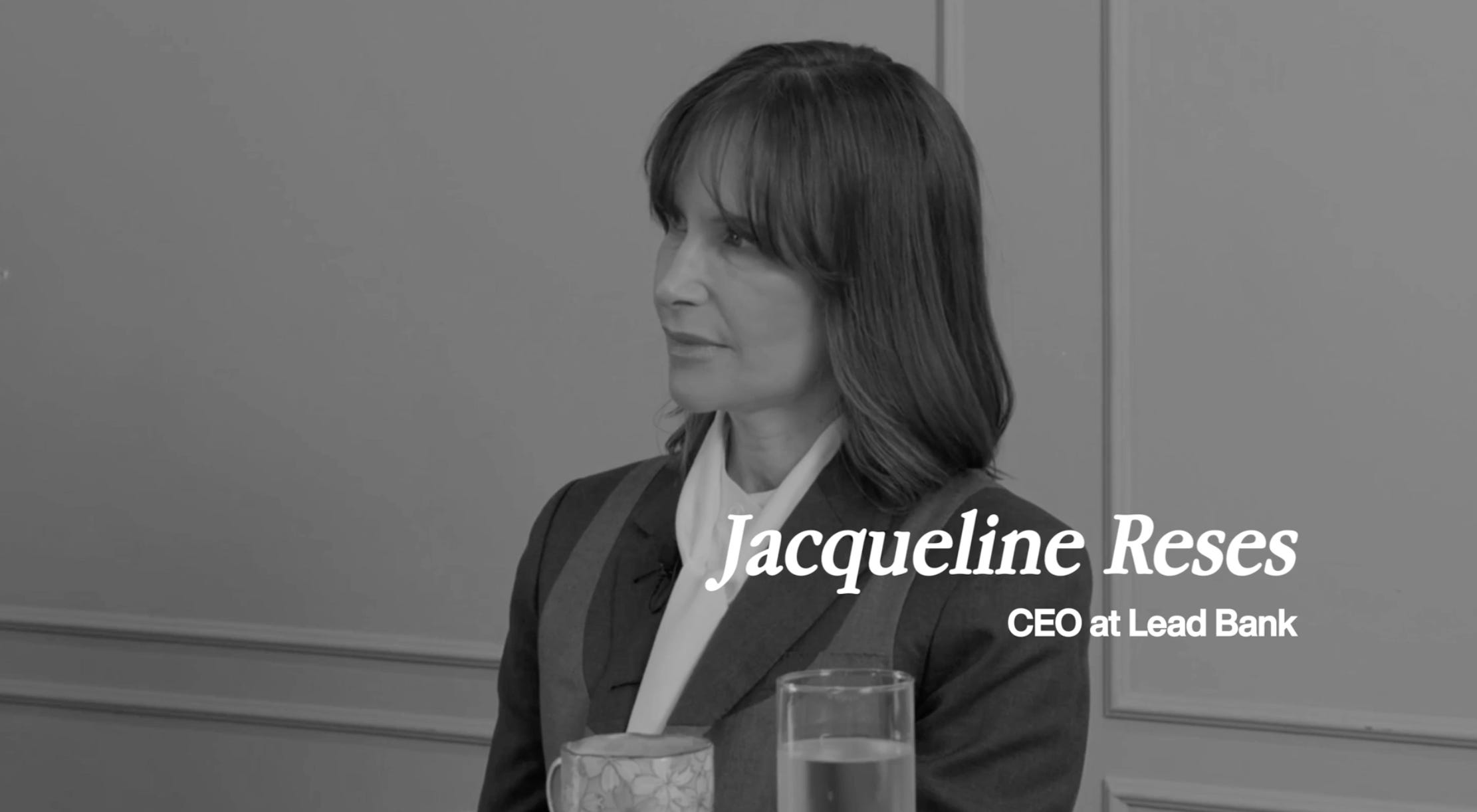
What makes her story remarkable isn’t just the breadth. It’s how unlikely each transition was. She came up in Atlantic City, broke into Goldman’s investment banking division where she won the 1998 Weinberg Award, the firm’s highest IBD honor given to a single person each year.
After Goldman, Jackie spent a decade at Apax Partners, where she founded and led the firm’s TMT group during an era when private equity itself was still emerging as an asset class. She joined early, ran roughly 20% of the firm, and learned to operate in environments that weren’t always welcoming. As she put it on the podcast, the prevailing code was “if you don’t play basketball or go to strip clubs, you’re not cool.” She made it work anyway. By the time she left, she had become one of only five women in the United States leading a private equity firm.
Her secret wasn’t luck. It was the willingness to take seats that looked sideways to outsiders but were strategically central to whoever was paying attention. “My fear with Goldman was that if I stayed there, I’d never leave,” she explained. “I had to go pursue this entrepreneurial dream.” That instinct, to leave comfort for optionality, is the through line of her entire career. She has consistently shown up early to categories that hadn’t yet been named: emerging market private equity, tech driven corporate development, fintech infrastructure, and now stablecoin banking.
The Atlantic City origin story matters here. Jackie didn’t inherit a network or a name. She built one, meeting by meeting, board seat by board seat, deal by deal. And as she now likes to point out, her brother Jacob is currently Chief of Staff to Vice President JD Vance. “I don’t think anyone expected these two kids from Atlantic City to end up where we are,” she said. The improbability is the point.

Inside the Alibaba Boardroom: Jack Ma, Joe Tsai, Masayoshi Son, + Jackie
Few Americans have ever sat on the board of a Chinese technology company. Jackie was one of them, sent in by Yahoo, which owned 40% of Alibaba but had stopped speaking to its leadership. “There was this dynamic where Carol Bartz had been in this contentious fight with Jack Ma that was widely chronicled, and the two companies stopped talking to each other even though Yahoo owned 40% of Alibaba,” she recalled. “I came in and was asked to help clean it up.”

Image: Private photo from Alibaba, with Maggie Wu their CFO (Source: Jackie Reses)
What followed was one of the most surreal assignments in modern corporate history. Jackie flew to Hangzhou multiple times a month, sometimes bringing her young kids, who would sit in conference rooms alongside Alibaba board meetings. She built a working relationship with Joe Tsai, learned to navigate Jack Ma’s vision first leadership style, and partnered with Masa Son on the deals that mattered most. “Joe and Jack and Masa, too, but I spent the most time with Joe, ended up to be wonderful people that I built a relationship with,” she said. The output: tens of billions of dollars in value recovered for Yahoo shareholders through the Alibaba IPO and the subsequent Alipay transaction.
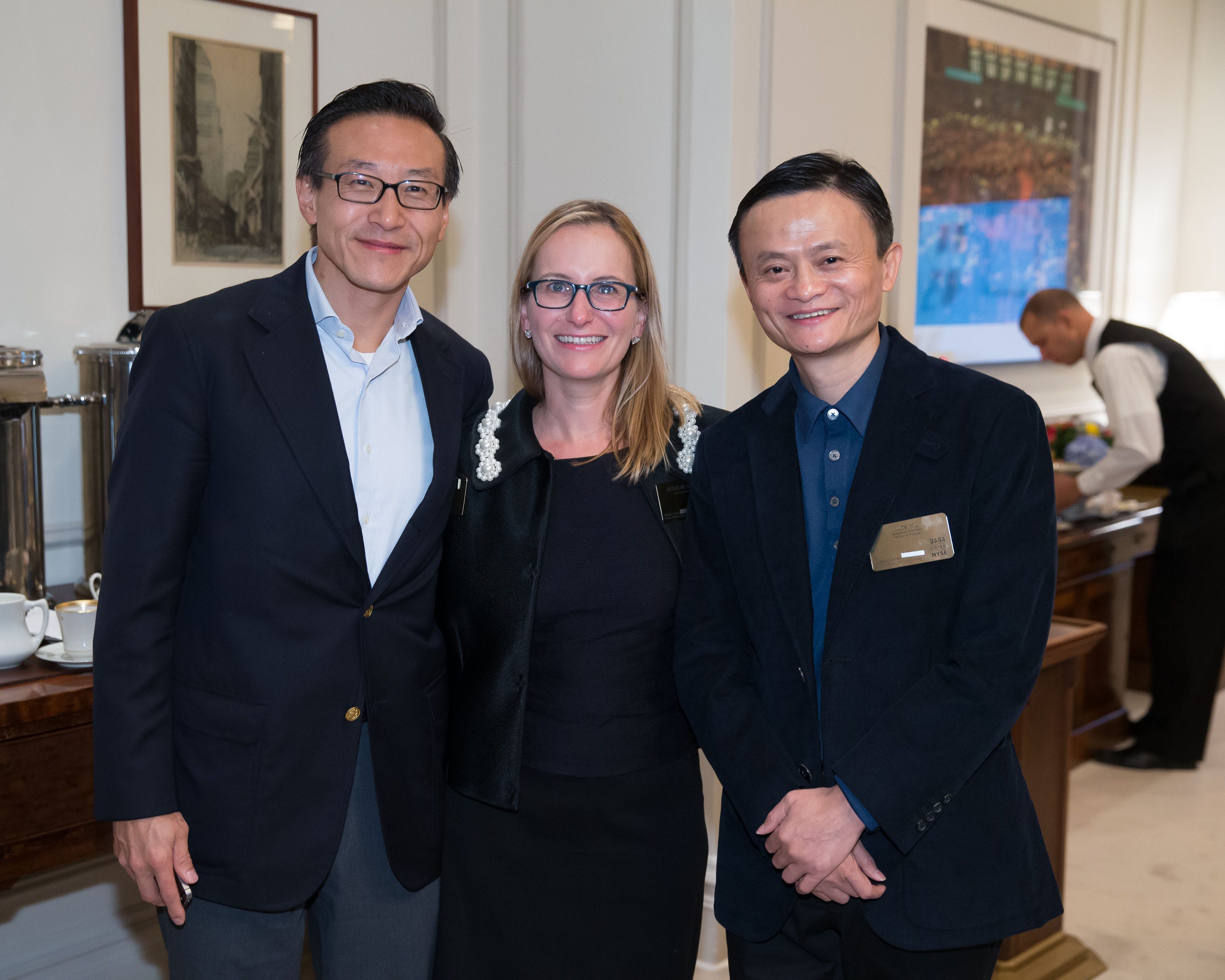
Image: Joe Tsai, Jackie Reses, Jack Ma (Source: Jackie Reses)
Her observations of the three principals are some of the sharpest in the interview. On Jack Ma: “Jack Ma is an incredible visionary. He is very big picture and thinks conceptually about concepts like, ‘I wanna change what middle class looks like in China.’ Well, that’s a pretty bold vision.” On Masa: “Masa would come in and like, ‘Yes, it shall be blessed.’ And I was like, ‘Okay, my deal has now been blessed by Masa.’” On Joe Tsai, she was unequivocal. “Joe Tsai is truly wonderful.”
The deeper takeaway wasn’t about personalities, though. It was about what she learned watching China execute at scale. “When you spend a lot of time in China, you just feel like they have a singular mission, and they will not stop at anything until they achieve that mission,” she reflected. “You really feel like you’re living in the future.” That sense of singular momentum, paired with Jack Ma’s willingness to dream big and just go, became a template Jackie would carry into every chapter that followed.
Yahoo & the HR Job That Wasn’t an HR Job
When Yahoo offered Jackie the Chief Human Resources Officer role, she was confused. “That to me was, like, a total head scratcher,” she said. “I remember thinking, ‘Why in the name of God would anybody hire me to be the head of HR at a tech company?’” On the flight out to California, she worked through the puzzle and arrived at the answer that would define the next chapter of her career: HR at Yahoo wasn’t actually HR. It was capital allocation

“When you’re evaluating how to go build a company, you’re looking at capital allocation. Capital allocation comes in the form of people, and it comes in the form of dollars,” she explained. “That is something that someone in HR could be really good at.” By the time she started, her scope had already expanded well beyond people operations. She picked up M&A, business development, and the search affiliate business, together responsible for roughly a third of Yahoo’s revenue. Within months she was Chief Development Officer, restructuring divisions, divesting assets, and putting the right leaders against the right growth vectors.

Yahoo at that moment was, in her words, “a hot mess.” Activist investors were pressuring the company to sell its Alibaba stake at a discount. Mobile products were neglected. Search had been given away in BD deals that captured no terminal value. “Everywhere you looked, there was, like, challenges across the business lines,” she said. While Marissa Mayer focused on the core business, Jackie focused on Alibaba, Yahoo Japan, and the tax mechanics, which she described as nearly “the largest tax bills ever paid in corporate history.”
The lesson buried in this chapter is one Jackie has applied ever since: the title rarely matches the actual leverage. “People don’t think of HR as an operational job. It really is,” she said. The best operators take seats others underestimate, and then they expand the scope until the seat fits their ambition rather than the other way around.
Square, Jack Dorsey, & the Hack Week That Built a Bank
Jackie’s recruitment to Square (now Block) came as a cold call. “Out of the blue one day, I get a phone call from Jack, who said, ‘I’ve heard about you, and I understand you run HR at Yahoo. Can you explain that to me?’” she recalled. “I was like, ‘I don’t understand this phone call.’” Dorsey was curious about how someone with an operating background ran a people function, and he ultimately convinced her to come to Square, where she would take over a Hack Week project called Square Capital and grow it into a multi-billion dollar lending and banking business.

Image: Block Team (Source: Jackie Reses)
That early team was tiny, “10 colleagues that were pulled together from, the risk team and the finance team, and an operating team,” but the ambition was massive. Jackie ultimately became Executive Chairman of Square Financial Services, helping the company secure an Industrial Loan Company charter in 2020, the first U.S. fintech to do so. Square Financial Services was, in her telling, a category she invented a decade before peers caught on.
The most vivid Square story in the interview is the crypto launch. Jack Dorsey wanted Bitcoin trading on the platform, so he simply made it happen. “He took three engineers, and he sat at the corner of the sixth floor at 1455 Market and didn’t leave the office for three days,” Jackie said. She sat alongside them as cheerleader, pizza orderer, and comic relief.The product shipped that Friday night. The accounting and SEC questions got sorted afterwards.
What Jackie took from Dorsey was the discipline of restraint. “He’ll sit in meetings and not say a word,” she said. “You can either think that is really freaky… or you kinda watch why he’s doing it, what he’s synthesizing, what he’s capturing, and then realize there’s real wisdom in his ability to just zip it.” That, she said, is probably her biggest takeaway from working side by side with him: “Listening really matters and making sure that you’re capturing the essence of what people are saying even when it is an opinion that is divergent from your own.”

Lead Bank: Buying a 100 Year Old Charter to Rebuild Fintech Infrastructure
When Jackie left Square, she knew exactly what she wanted to build. She had spent years watching the world’s biggest fintechs run on the rails of tiny community banks, most of them under $10 billion in assets, with no engineers, in red states. “Imagine being the world’s biggest fintechs and operating on the rails of these tiny banks,” she said. So she went looking for a charter she could turn into something modern. She found it in Kansas City, Missouri, and in August 2022 acquired Lead Bank, a 100 year old community bank, for roughly $56 million.
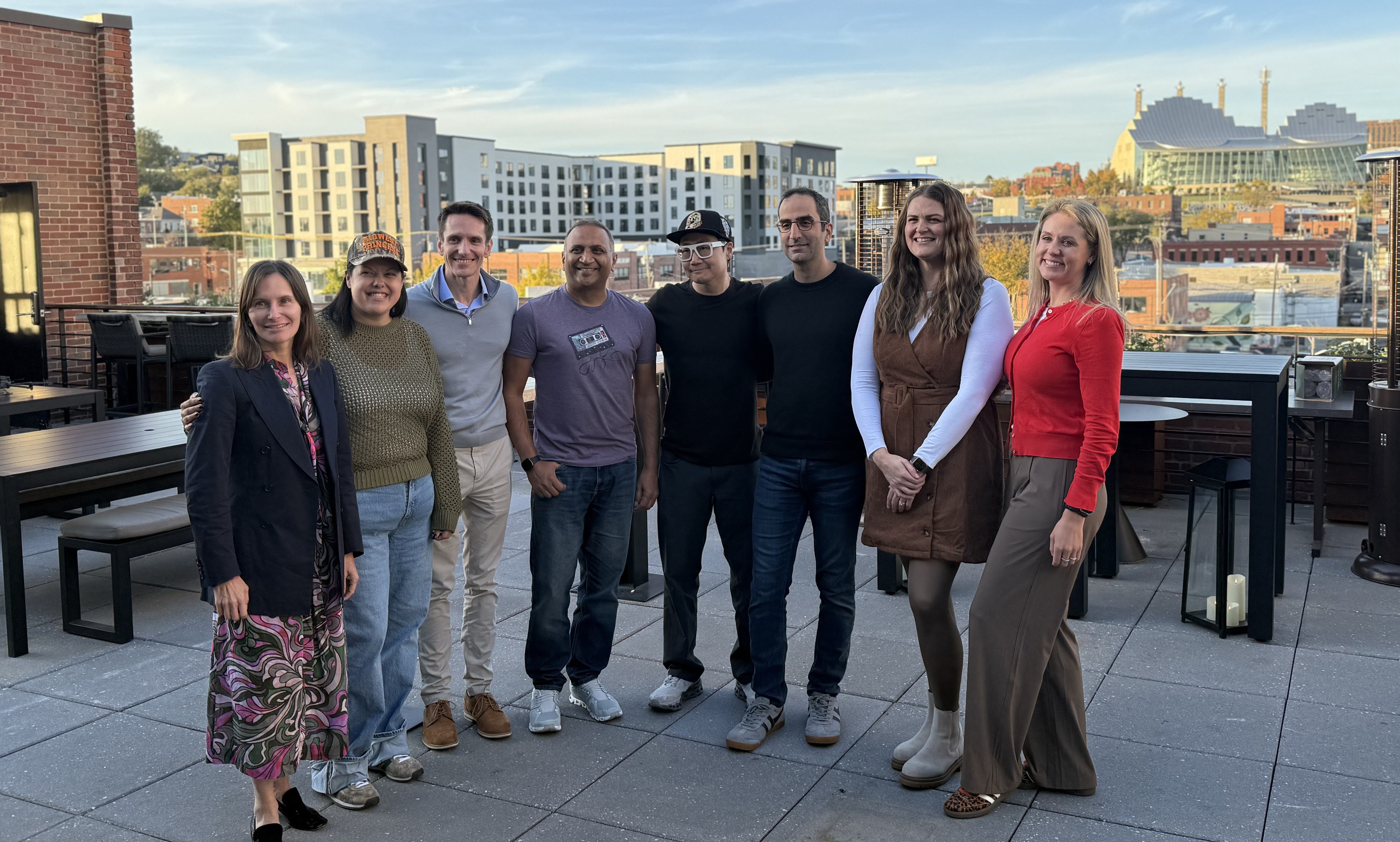
Image: Lead Bank Team (Source: Jackie Reses)
The premise was simple but ingenious: own the bank, own the holding company, and build the technology layer in house. “In order to do what I wanted to do, you needed to own a bank, and you needed to own a bank holding company,” she explained. “I went and looked across the country for the best banking law to support what I wanted to build, and I came across Lead Bank in Kansas City, Missouri.” From there, she brought in a technical team of product designers and engineers to build a programmable banking infrastructure layer that fintechs, crypto companies, and e-commerce platforms could integrate directly into their products.
In total, Lead has raised $180 million, last valued at $1.5 billion. Counting Andreessen Horowitz, Coatue, Greycroft, ICONIQ, Khosla Ventures, Ribbit Capital, and Zeev Partners among its investors, along with Larry Fink, Larry Summers, and Rob Goldstein personally.
The client list reads like a who’s who of modern fintech: Stripe, Walmart’s OnePay, Ramp, Affirm, Revolut, Flex, Self, and over 100 crypto companies. Last year Lead generated “about $280 million” in revenue and “$31 million of net income,” all without a sales team. “Our clients are really our sales team,” Jackie said. “And between our clients or me, that’s sales.”

The product itself is five core API sets: lending, money movement, card issuing, accounts, and stablecoins. “All of those things sound absolutely boring,” she admitted. “But all of those APIs are built around modern, programmable, interoperable APIs that can be adjusted to build any kind of product that a client needs.” Lead built the global stablecoin card infrastructure for Bridge, now part of Stripe, making it the first U.S. bank to do so.
It’s also one of the only banks in the country capable of running fiat and on chain stablecoin rails concurrently. In a world racing toward agentic commerce and programmable money, that infrastructure is exactly where the puck is going.

The Team Behind Lead Bank
A company built without a sales team has to win on talent density, and Lead Bank has structured itself around exactly that. The founding team came together largely out of Square, where Jackie had worked alongside her current co-founders. “My co-founder, Erica, my other two co-founders, Hamam and Ronak, we all worked together at Square,” she said. That continuity matters. The team had already shipped together, debugged regulatory issues together, and built financial products at scale together before Lead even existed. They knew how to move fast inside the constraints of a regulated environment, which is the rarest skill set in fintech.
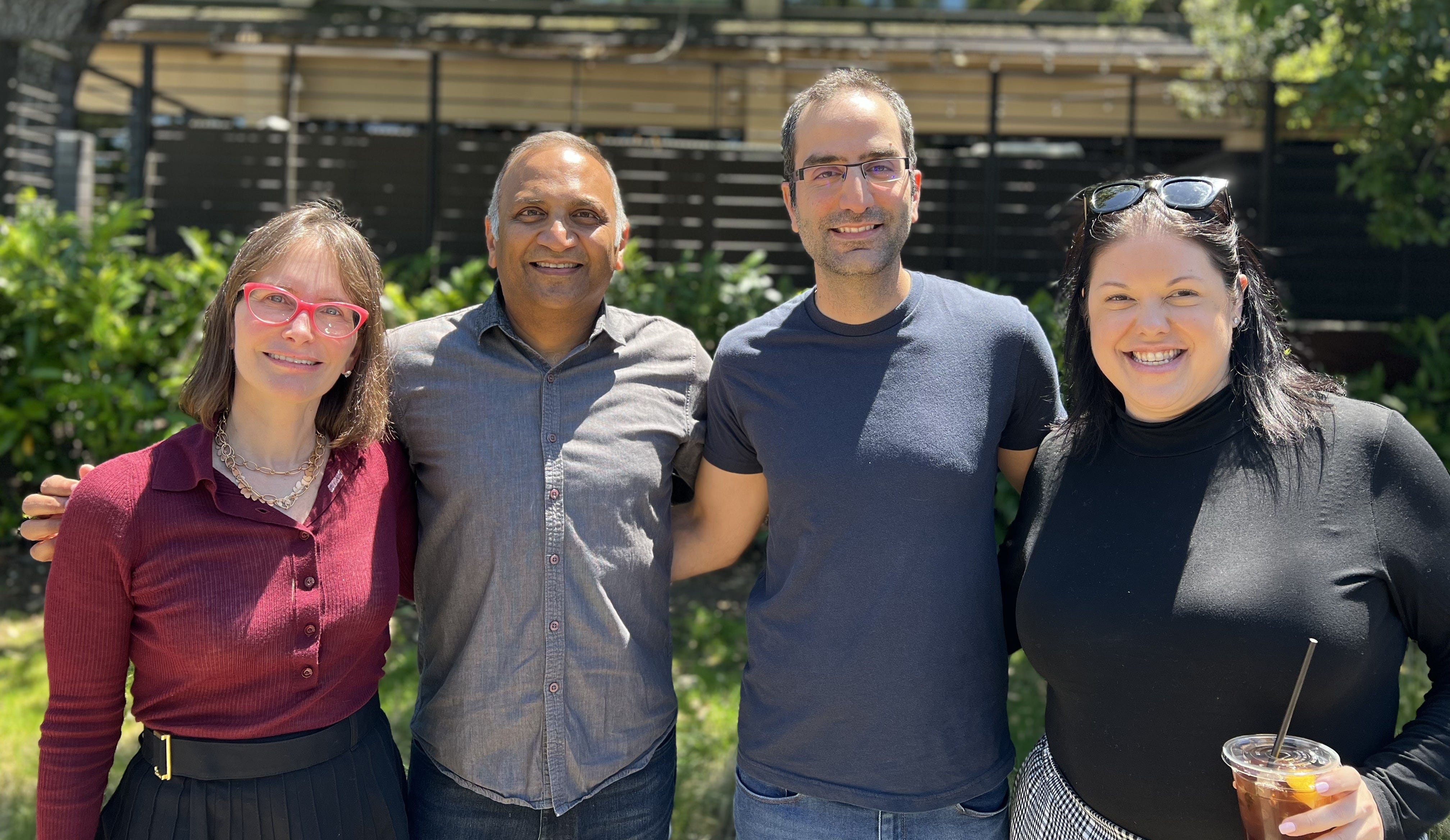
Image: Lead Bank Co-Founders Jackie Reses, Ronak Vyas, Homam Maalouf, Erica Khalili (Source: Jackie Reses)
The composition of the company looks almost nothing like a traditional bank. Lead is roughly 60% women, with an executive team split evenly between women and men. “It’s not by purpose,” Jackie clarified. “We just happen to be that way, and we hire the best people for the job.” Her framing on this is sharp and worth repeating. “I think we’re lucky because that means our network includes 100% of the people who are available for the job, and not 50%. And so we get the benefit of having a broad perspective on what amazing looks like.” The advantage isn’t ideological, it’s strategic. Cast a wider net, get better people.
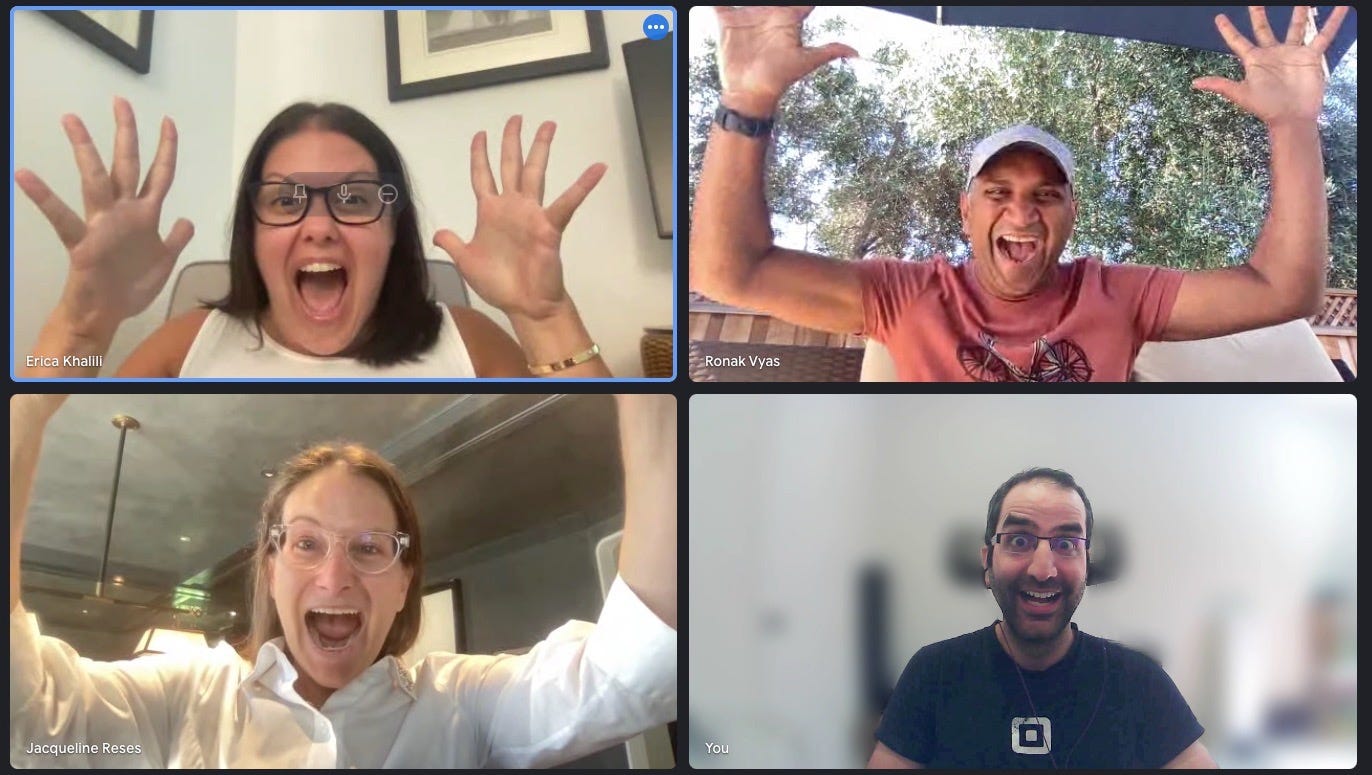
Image: The Moment Lead Bank Founders Heard They Were Approved (Source: Jackie Reses)
That talent strategy extends to the regulatory side of the house, which is where most fintech infrastructure companies break. Jackie has spent more than a decade building relationships across the FDIC, OCC, and Federal Reserve, and her co-founder Hamam helped the FDIC think through machine learning and algorithmic lending as far back as 2016. “From that era where it was the first glimpse into what the precursor to full AI underwriting models look like, I’ve been deeply embedded in a lot of these regulatory environments to build relationships from all levels of the organization,” she said. That institutional memory shows up in how Lead onboards clients, how it structures compliance reviews, and how it ships products that pass scrutiny the first time.
Jackie’s view of the team itself is unmistakably personal. “We have an amazing culture. We have an amazing group of executives, and we’re really lucky that we have a great place to work in,” she said. The reason clients refer Lead to other clients, the reason VCs call Lead the most sought after introduction in fintech, the reason a $280 million revenue business runs without a salesperson, all of it traces back to the quality of the people executing the work. Talent density is the moat.

Architecture & AI: The Five APIs Powering Modern Fintech
The product itself is deceptively simple to describe. Lead is built around five core API sets: lending, money movement, card issuing, accounts, and stablecoins. That framing is intentional. The categories sound old. The implementation is anything but.
The most concrete demonstration of how this architecture works is Lead’s relationship with Bridge, the stablecoin company now owned by Stripe. Lead built the global stablecoin card infrastructure for Bridge, making it the first U.S. bank to do so. It deploys account technology at a scale most legacy banks can’t fathom.
“You could be Bridge, which is now owned by Stripe, and we help build their stablecoin backed cards, and we deploy account technology. And by accounts, I mean literally bank accounts. The only difference is we could spin up a million of them in a very short amount of time versus sitting there with a pen and paper, and hoping for a free toaster at the end of your half an hour sign up for a bank account.”

Lead is also one of the only U.S. banks running fiat rails and on chain stablecoin rails concurrently, with on chain wallets live on Solana.
AI sits inside every layer of the company. Internally, every team uses it. “Our team uses AI in every team in our company. & it doesn’t matter whether you’re in the ops team, you’re in the local lending team, you’re on the HR team. & obviously, our technical teams deploy almost all of their code with AI.” That isn’t a slide in a board deck. It’s the operating reality of how a regulated bank ships product. From compliance reviews to underwriting workflows to engineering velocity, AI is the substrate Lead’s team runs on.

The more strategically interesting use case is what AI enables inside the product. Lead’s APIs are built to be deployed in real time payment flows and agentic commerce environments, where AI agents themselves are executing transactions. “There are core components of our products that deploy AI in the products so that our clients can use them for agentic commerce,” Jackie said. “You could deploy it in a real time payment network or in a checkout modal prompt, and you could use it for agentic commerce, or any type of financial product you’re trying to deploy in context of whatever your product is doing.” That is where the puck is headed. Money movement as code, executed by software agents, settled through programmable bank rails. Lead is one of the very few institutions in the country with the charter, the technology, and the regulatory relationships to make it work.

Crypto, De Banking, & Why Jackie Calls BS on the Narrative
Lead is one of the most active banks in the crypto industry, which gives Jackie a clear view into one of the most heated debates of the past few years: was “de-banking” real? Her answer is unsparing. “I don’t believe there was de-banking. I think it’s a crock of shit.” “There’s 5,000 banks in the United States. We have a lot of red states. Are you’re telling me that in lots of red states, including where my company is headquartered… those banks were not willing to bank, for example, conservative companies?”
Her argument is mechanical rather than ideological. Crypto VC firms funded portfolio companies during 2022 to 2024 by wiring dollars into bank accounts, not by delivering wheelbarrows of cash. “As we go and fund crypto companies of that era, they were being funneled into bank accounts,” she pointed out. What actually happened, she argues, is more nuanced. Some banks pulled out of crypto because they didn’t have enough client density to justify the specialist compliance and finance teams required. “The juice wasn’t worth the squeeze,” she said. “That’s legit. That happened to lots of companies, but that is not systematically de-banking.”

A second category involves clients who weren’t meeting KYC standards. “If you’re not going to comply with US banking regulations, guess what? You’re not going to be able to keep your account at every bank,” she said.
And a third category, banks declining to serve specific executives or industries, falling into reputational risk territory, which she sees as a legitimate business judgment. “Banks can make decisions based on their own reputational risk. Now, whether we all see reputational risk in the same lens, I think that’s up for judgmental debate.”
The framework she uses to evaluate hype across crypto applies more broadly. “Is there a real use case? Does this product actually add durable value?” she asked. “There’s so many things in my industry where you kind of have to scratch your head and say, ‘Yeah, but I don’t understand why that makes something better.’” AI, in her view, sits at one end of the spectrum where mass adoption makes the value obvious. Crypto sits in the middle, with real breakouts emerging from the noise. The discipline is the same: separate momentum from durability.
DC, AI, & What’s Next for Fintech
Jackie’s relationship with Washington runs deeper than most fintech founders. Her brother Jacob is Chief of Staff to Vice President JD Vance, which gives her an unusual window into the federal government and the occasional surreal experience, like flying on Air Force Two from Atlantic City to D.C. after her father’s funeral. “It kinda looks like a business class flight. And I’ve been on many planes that are much nicer,” she joked. But beyond the family tie, she has spent more than a decade building relationships with the FDIC, OCC, and Federal Reserve, including serving on the Economic Advisory Council of the San Francisco Fed.

Her view of regulators is more sympathetic than the industry norm. “I genuinely like our regulators. I think they’re good people,” she said. “The Fed has been largely non-partisan and the nerdiest group of economists you’ve ever seen, really just trying to divine economic wisdom across the United States.” The biggest misconception about working with the government, she argues, is that you can’t have a real conversation. “The more honest and open you are, and square about what your agenda is, the more you can have a conversation that actually provides advice or listens to a perspective about what they’re trying to achieve.”
Her call to action for the AI industry is direct: show up. “There’s so many things that need to be changed to update the world for the AI age, and I don’t think the experts are going to be in the government at all. Therefore, the people who are the experts need to show up in droves and actually provide their insights to the government so that they then can distill the best framework for judgment to build laws.” Lawmakers, in her view, are skilled at writing frameworks, but they can’t write frameworks for technologies they don’t understand. That requires the operators to do the work.
The Future
Inside Lead, AI is already woven through the company. “Every team across our company is using AI,” she said. “Our technical teams deploy almost all of their code with AI.” But the more interesting use case is in the product itself: programmable money movement designed for agentic commerce, where AI agents can execute transactions in real time payment networks or checkout flows. As she put it, “the way that [AI] is built, the way that it’s deployed… you could deploy it in a real time payment network or in a checkout modal prompt, and you could use it for agentic commerce.” The future Jackie is building toward is one where banks aren’t institutions you visit. They’re infrastructure that runs invisibly beneath every modern product.
And she still calls Lead her “baby.” As she said at the close of the interview: “I love Lead so much. It’s like my baby. I don’t think of it as work. I think of it as my favorite thing to do every day when I wake up.” From Atlantic City to Hangzhou to Kansas City, that’s the arc, and the energy, of one of the most consequential operators in modern fintech.
→ Listen on X, Spotify, YouTube, Apple

The material presented on Molly O’Shea’s website are my opinions only and are provided for informational purposes and should not be construed as investment advice. It is not a recommendation of, or an offer to sell or solicitation of an offer to buy, any particular security, strategy, or investment product. Any analysis or discussion of investments, sectors or the market generally are based on current information, including from public sources, that I consider reliable, but I do not represent that any research or the information provided is accurate or complete, and it should not be relied on as such. My views and opinions expressed in any website content are current at the time of publication and are subject to change. Past performance is not indicative of future results.
Paid Endorsement. Brokerage services by Open to the Public Investing Inc, member FINRA & SIPC. Advisory services by Public Advisors LLC, SEC-registered adviser. Crypto trading provided by Zero Hash LLC, licensed by the NYSDFS. Generated Assets is an interactive analysis tool by Public Advisors. Output is for informational purposes only and is not an investment recommendation or advice. See disclosures at public.com/disclosures/ga. Matched funds must remain in your account for at least 5 years. Match rate and other terms are subject to change at any time.
Great stuff Molly.