

Michel Del Buono, CIO of Andreessen Horowitz’s multi-family office Perennial, breaks down how Silicon Valley’s top founders and investors manage wealth after massive liquidity events.
→ Listen on X, Spotify, YouTube, Apple
Perennial was built after Marc Andreessen and Ben Horowitz identified a structural gap: traditional wealth managers optimize for service and asset gathering, not investment performance, while institutional asset managers are built for non-taxable capital and don’t optimize for after-tax outcomes.
That leaves a growing class of $50M–$1B+ personal portfolios in a “no man’s land” — too complex for retail wealth models, but not served by institutional frameworks.
In this episode, we go deep on how these portfolios are actually constructed: how to manage concentrated stock, structure around taxes, and build multi-asset portfolios that behave more like endowments than individuals.
We also cover how founders should prepare for large-scale liquidity events, including potential mega-IPOs like SpaceX, & why most people make the wrong wealth decisions at the exact moment their hard-earned capital becomes liquid (& how to avoid that).
We cover:
Why most wealth management portfolios are misaligned
The structural flaws of RIAs vs institutional asset managers
How to manage concentrated stock positions pre- and post-IPO
Why venture capital returns are driven by extreme dispersion
How taxes, fees, and structure can drive hundreds of basis points of alpha
Why volatility is one of the biggest opportunities for long-term investors
The rise of multi-family offices in Silicon Valley
If you’re building, investing, or approaching a major liquidity event, this is a masterclass in how wealth is actually managed at scale.
Special thank you to Dave Maloney for the intro!
𝐓𝐈𝐌𝐄𝐒𝐓𝐀𝐌𝐏𝐒
(00:00) Michel Del Buono, CIO a16z Perennial
(01:25) The idea behind a16z Perennial
(03:38) What’s broken in wealth management
(09:05) How wealth has changed over time
(11:57) How fee structures shape portfolios
(15:26) Why single family offices are hard to run
(19:47) Who wealth management is really for
(23:26) What makes Perennial different
(22:21) Preparing for massive liquidity events: SpaceX, OpenAI...
(24:01) How to choose the right wealth manager
(26:39) Why switching firms is so hard
(28:01) How portfolios are actually built
(31:29) Why volatility is an opportunity
(32:47) Why real estate is so powerful
(34:55) Taxes and the Billionaire Tax debate
(38:46) Should you move to save taxes?
(40:59) Chamath: SPAC losses and how they affect taxes
(42:21) Secondary deals, SPVs and the risks
(46:16) What drives returns in Venture Capital
(49:42) Biggest Lesson from Marc Andreessen & Ben Horowitz
(51:27) The biggest mistake founders make with money
(52:53) How to invest after a big exit
(54:16) Concerns around private credit
(56:38) What big IPOs mean for markets
(58:08) Keeping up with markets
(59:35) What’s the focus this year at a16z
Brought to you by:
Brex—The intelligent finance platform: cards, expenses, travel, bill pay, banking—wrapped into a high-performance stack. Built for scale. Trusted by teams that move fast. visit → brex.com/sourcery

Turing—Turing delivers top-tier talent, data, and tools to help AI labs improve model performance, and enable enterprises to turn those models into powerful, production-ready systems. Visit: turing.com/sourcery
VCX—VCX is the public ticker for private tech, allowing investors of all sizes to invest in venture capital. View The Portfolio at GetVCX.com
Deel—Deel is the global people platform that helps startups hire, manage, pay, and equip anyone, anywhere. Trusted by more than 35,000 fast-growing companies, Deel is the people platform that just works, so teams can scale without the chaos. Visit: deel.com/sourcery
Public-–Investing platform Public just launched Generated Assets, which lets you turn any idea into an investable index with AI. With Generated Assets, you can build, backtest, refine, and invest in any thesis with AI. Gone are the days of one-size-fits-all ETFs. Try it today: public.com/sourcery
a16z Perennial: Why Wealth Management Is Structurally Broken
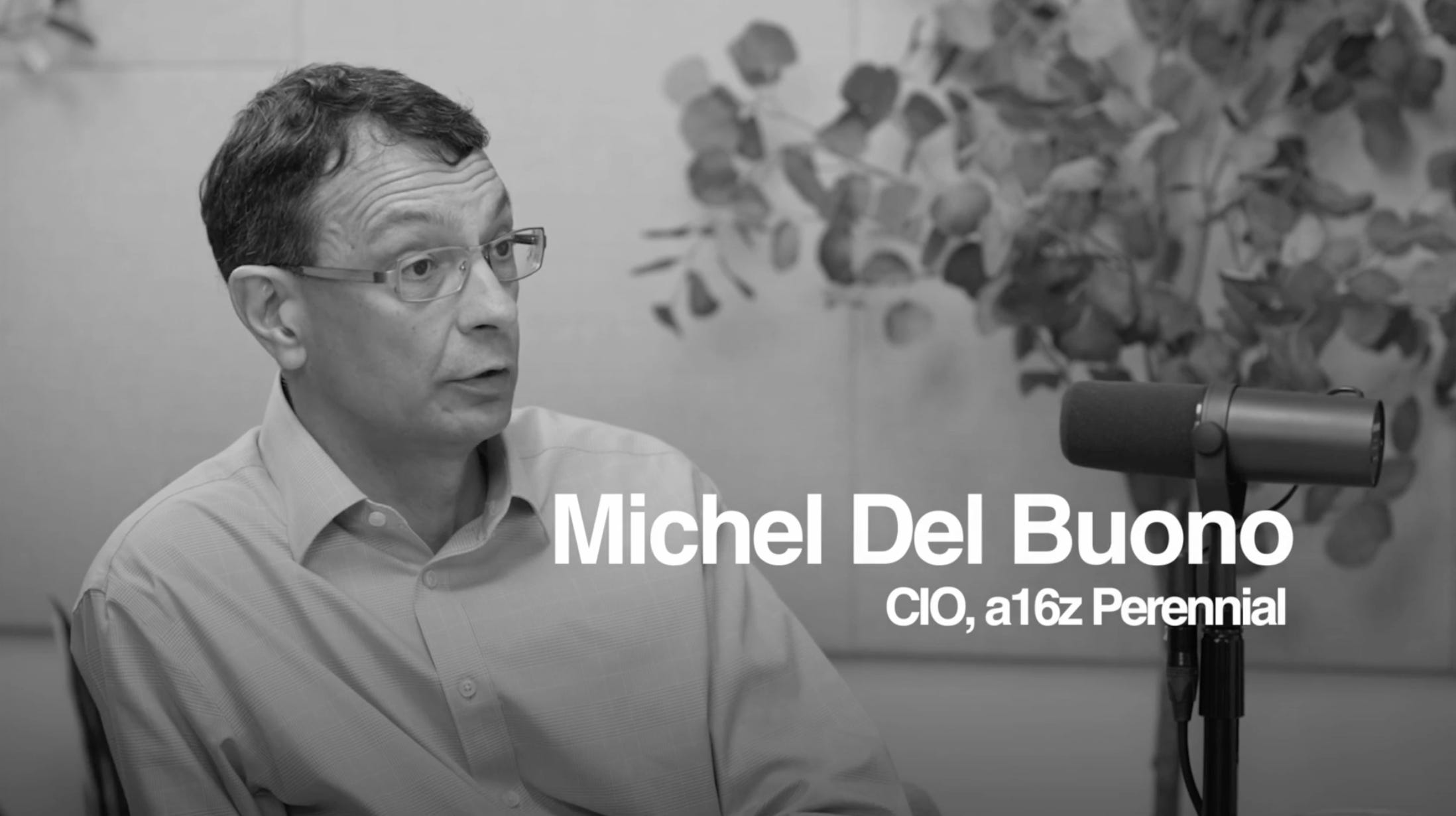
Michel Del Buono, CIO of Andreessen Horowitz’s multi-family office Perennial, frames the current wealth management landscape as fundamentally misaligned with the needs of modern wealth.. particularly in Silicon Valley.
“The two standard approaches… aren’t really great for someone with institutional levels of wealth.”
At a high level, the problem is not a lack of capital, access, or even sophistication in isolation, it’s that the system itself was never designed for individuals managing institutional-scale balance sheets. Today’s founders and operators routinely exit with $50M, $100M, or $1B+, yet the infrastructure serving them still reflects models built for retail investors or tax-exempt institutions.
This creates a structural mismatch at the exact moment capital matters most.
The Two Broken Models
The first model: traditional wealth management, prioritizes service over investment performance. These firms, often spun out of large banks, are designed to be highly responsive, relationship-oriented, and operationally helpful. They excel at logistics, coordination, and lifestyle services, but their investment arms are not structured like performance-driven organizations.
Critically, they are compensated through AUM-based fees that do not change based on portfolio complexity or outcome. This leads to a predictable behavioral pattern.
“If you’re paid the same to do something easy or something difficult… you’ll do the easy thing.”
In practice, this means portfolios skew toward simplicity like public equities, bonds, and basic diversification, because building sophisticated, multi-asset portfolios requires hiring expensive talent, underwriting complex investments, and operating with long feedback cycles. Most firms are neither incentivized nor structurally equipped to do this.
The second model: traditional asset management, has the opposite problem. Hedge funds, private equity firms, and endowment-style allocators are highly sophisticated, but they are optimized for non-taxable capital. Their largest clients are pensions, sovereign wealth funds, and foundations, all of which focus on pre-tax returns.
For individuals, especially those in high-tax jurisdictions, this creates a critical gap. The most accessible and reliable form of “alpha” is often tax optimization, yet these firms are not designed to deliver it.
The result is a bifurcated system where one side lacks investment rigor and the other lacks tax awareness.
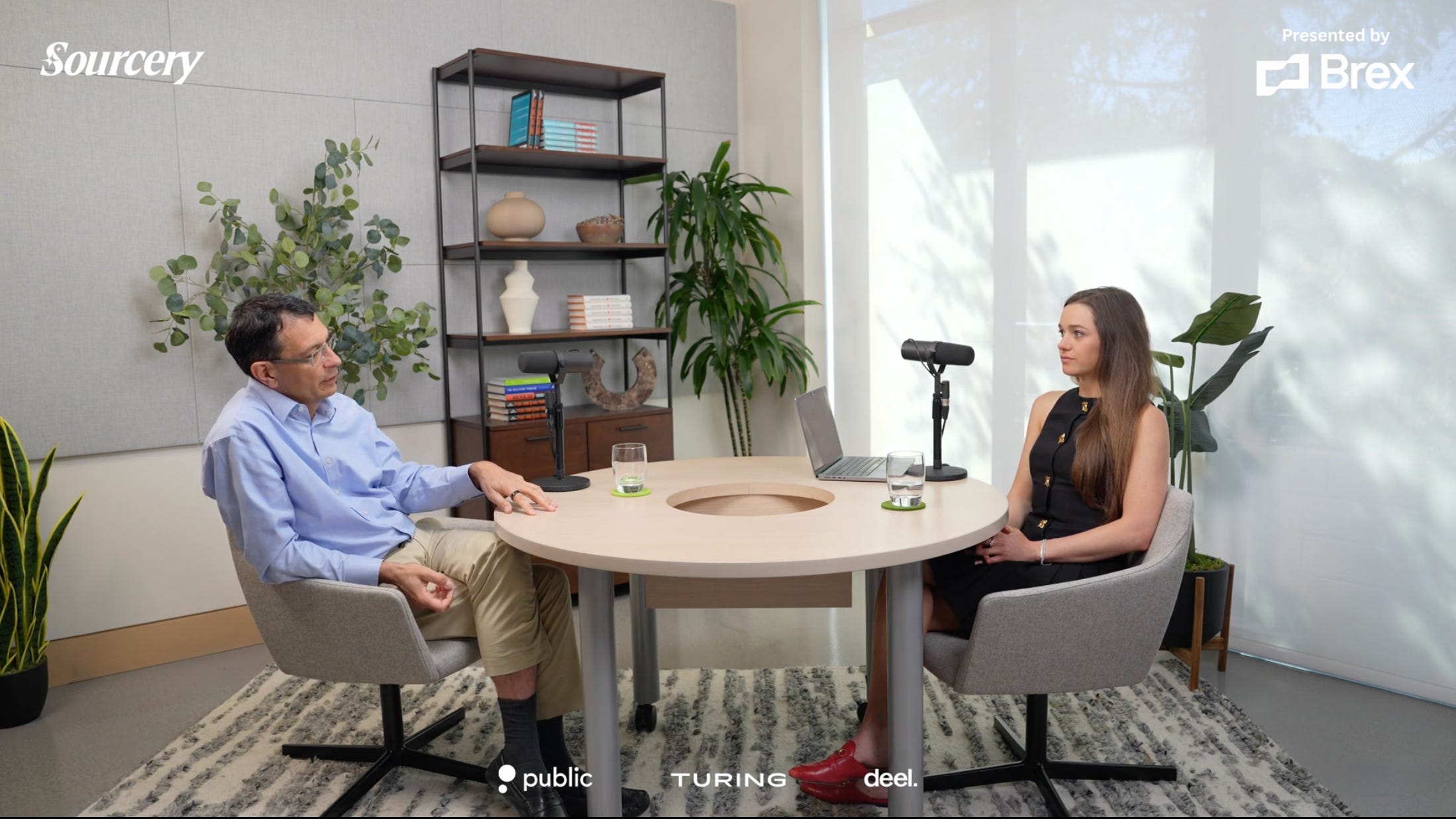

The “No Man’s Land” of Modern Wealth
Between these two systems sits a rapidly growing class of individuals with institutional-scale wealth & personal tax exposure. This segment is expanding quickly, driven by accelerated wealth creation in technology, AI, & venture-backed ecosystems.
Despite this, the quality of investment advice has not kept pace.
“Most folks would agree they felt sort of underwhelmed with the quality of the investment advice.”
This is not simply a service gap, it is a structural gap. These individuals require portfolios that behave like endowments, but operate within the constraints of taxable entities. They need access to private markets, real assets, and complex strategies, while simultaneously optimizing for after-tax compounding.
Perennial’s approach is to unify these requirements into a single system: institutional-quality investing, implemented through a tax-aware lens, and customized around the realities of concentrated wealth.
Liquidity Events: The Most Critical Transition
(Hint.. ~$2T SpaceX IPO)
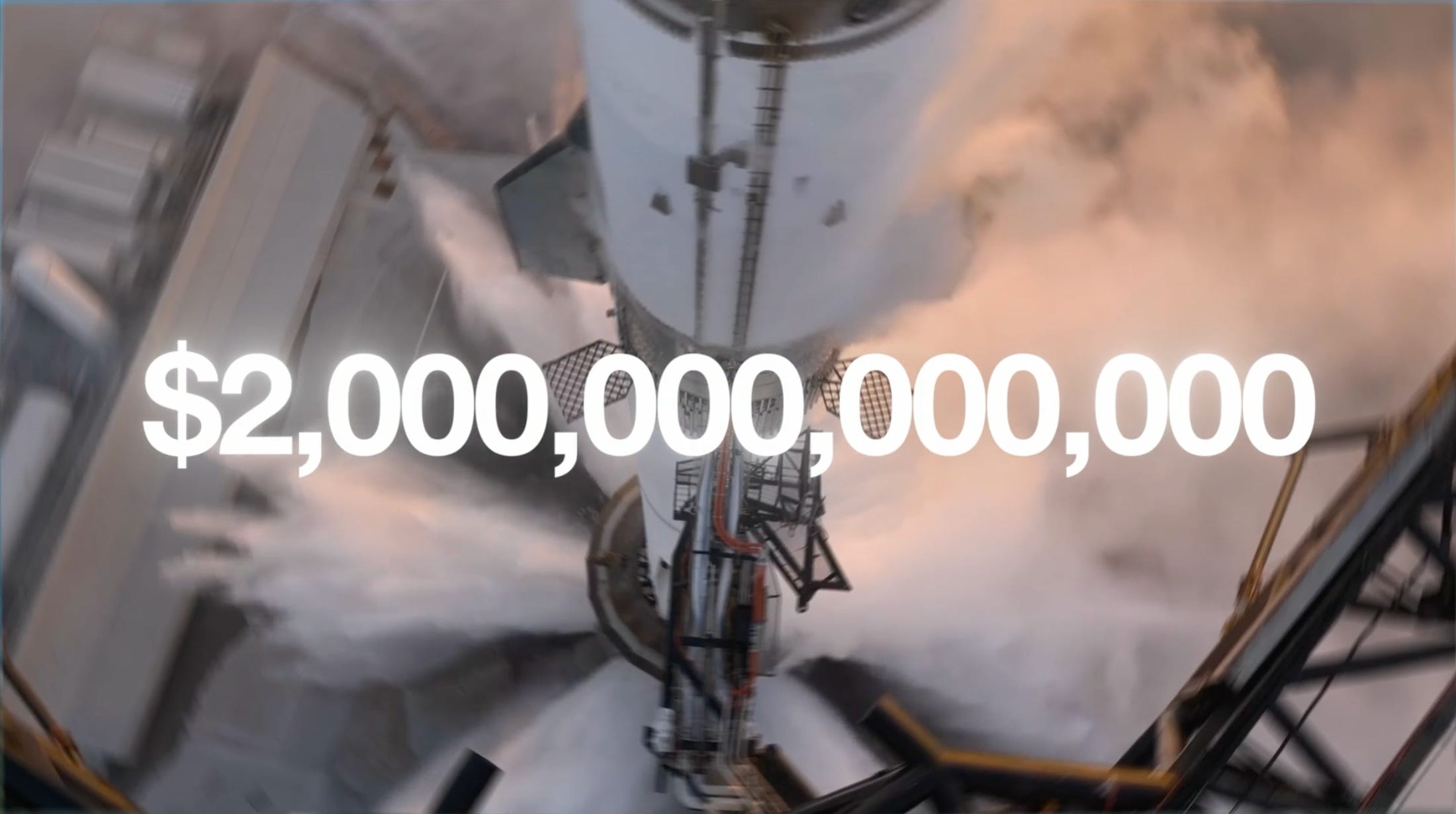
The most consequential moment in a founder’s financial life is the liquidity event. Whether through an IPO, acquisition, or secondary sale, this is the point where illiquid equity transforms into deployable capital.
“Your wealth is the product of your life's work… invest the time to understand what you're buying before buying.”
Increasingly, these events are occurring at unprecedented scale. A potential SpaceX IPO, for example, would represent one of the largest wealth creation moments in history. Yet the infrastructure to support thousands of newly liquid individuals remains underdeveloped.
The most common mistake is reflexive behavior, reinvesting proceeds back into early-stage ventures, often through informal networks and referrals. This reflects familiarity rather than strategy.

A more effective approach requires balancing multiple competing objectives: preserving exposure to high-conviction assets, gradually diversifying risk, structuring for tax efficiency, and maintaining liquidity for future opportunities.
Del Buono emphasizes that the goal is not immediate liquidation, but controlled evolution of the portfolio. This includes strategies such as monetizing volatility through options, staging exits over time, and aligning investment decisions with long-term objectives rather than short-term sentiment.
“Structuring your estate structuring your trust is very important pre IPO… post IPO it’s all about how do I diversify gradually.”
“Part of their strategy should be to diversify but part of it should be to hold on to that stock long term.”
“I would not go and suggest they dump SpaceX 100% immediately and go buy stocks and bonds.”
“These stocks are volatile by nature and so you can monetize that volatility without necessarily exiting the stock.”

Portfolio Construction for Taxable Capital
Portfolio construction at this level diverges meaningfully from institutional models. For taxable individuals, asset selection is not just about expected return, it is about after-tax return, liquidity, and correlation.
Real assets, particularly real estate, play a central role because of their tax advantages and structural position within the financial system. Much of the tax code and lending infrastructure was built around physical assets, creating embedded benefits that persist today. When managed correctly, these assets can generate attractive after-tax returns while diversifying exposure away from technology and public equities.
At the same time, liquidity becomes a strategic asset in itself. Holding treasuries or cash equivalents is often misunderstood as a drag on performance, but in reality, it provides optionality: the ability to deploy capital quickly during market dislocations.
As Del Buono puts it:
“Volatility is not the enemy… it’s a huge opportunity.”
Periods of drawdown, when assets trade at significant discounts, are not risks to be avoided, but opportunities to be captured. The ability to act during these moments depends entirely on prior portfolio construction.
Venture Capital: Extreme Outcomes, Not Average Returns
Venture capital occupies a unique position within this framework. It offers the potential for outsized returns, but those returns are highly concentrated among a small subset of managers.
The dispersion between top and bottom performers is wider than in any other asset class. This creates a dynamic where average exposure is insufficient, outcomes are determined by access and selection.
For many investors, this reality is misunderstood. Without exposure to top-tier managers, venture can underperform public markets on both a risk-adjusted and absolute basis, particularly after accounting for fees and illiquidity.
This reinforces a broader principle that asset class allocation is less important than implementation quality.

Chamath, SPACs, & the Role of Capital Losses
While the recent viral hit on X around Chamath Palihapitiya & SPAC-related losses (now resolved) didn’t go so great.. it also highlights a misunderstood part of portfolio construction: capital losses are not just downside, they’re tools.

In isolation, a loss is simply a negative outcome. But within a properly structured portfolio, losses can be used to offset gains and materially reduce tax liability. The key distinction is where those losses sit.
“You can’t use a loss that comes to you personally… the way to use a loss is inside a fund vehicle that generates its own gains that can be offset by its own losses.”
This is where structure matters. Individual investors often assume that losses from failed investments can be directly applied against their broader income or gains. In practice, tax rules limit that flexibility. Without the right structure, those losses can be underutilized or effectively stranded.
Inside fund structures, typically partnerships, losses and gains are netted internally before distributions. This allows portfolios to generate returns that are already tax-adjusted, rather than forcing investors to manage offsets manually at the individual level.
The implication is that capital losses become part of the strategy, not just the outcome.
This dynamic is particularly relevant in venture & speculative markets, where dispersion is high and failure rates are expected. Losses are inevitable, but when structured correctly, they can be used to improve net returns across the portfolio.
The takeaway is less about any single SPAC outcome and more about how portfolios are engineered. Without intentional structuring, losses remain losses. With the right framework, they become a mechanism for tax efficiency and long-term compounding.

The Compounding Effect of Structure
Across all of these dimensions, the most powerful driver of long-term outcomes is structure. Fees, tax efficiency, and investment execution may appear incremental in isolation, but their effects compound over decades.
“Just a couple hundred basis points… could mean hundreds of millions of dollars over time.”
This is especially true for large portfolios, where even small improvements translate into significant absolute gains. Reducing fee layers, building in-house capabilities where appropriate, and optimizing for tax efficiency are not tactical decisions, they are foundational to long-term wealth creation.
A Structural Shift in Wealth Management
What emerges from this analysis is not simply a critique of existing models, but the outline of a new one. Wealth management is transitioning from a service-oriented industry to an investment-driven one, from standardized portfolios to customized allocation frameworks, and from static strategies to dynamic, tax-aware systems.
At the same time, control of capital is shifting. Increasingly, founders and operators are choosing platforms that reflect their own expectations around performance, transparency, and long-term alignment.
This is why firms like Perennial exist, not as incremental improvements on existing models, but as a response to a structural gap in how modern wealth is created and managed.
The implication is clear: as wealth creation accelerates, the systems that manage it must evolve just as quickly.
→ Listen on X, Spotify, YouTube, Apple

The material presented on Molly O’Shea’s website are my opinions only and are provided for informational purposes and should not be construed as investment advice. It is not a recommendation of, or an offer to sell or solicitation of an offer to buy, any particular security, strategy, or investment product. Any analysis or discussion of investments, sectors or the market generally are based on current information, including from public sources, that I consider reliable, but I do not represent that any research or the information provided is accurate or complete, and it should not be relied on as such. My views and opinions expressed in any website content are current at the time of publication and are subject to change. Past performance is not indicative of future results.
Paid Endorsement. Brokerage services by Open to the Public Investing Inc, member FINRA & SIPC. Advisory services by Public Advisors LLC, SEC-registered adviser. Crypto trading provided by Zero Hash LLC, licensed by the NYSDFS. Generated Assets is an interactive analysis tool by Public Advisors. Output is for informational purposes only and is not an investment recommendation or advice. See disclosures at public.com/disclosures/ga. Matched funds must remain in your account for at least 5 years. Match rate and other terms are subject to change at any time.