


Welcome to Rocket Lab Week.
Sir Peter Beck (he goes by “Pete”) founded Rocket Lab 20 years ago. Today, the company is scaling far beyond launching rockets.
→ Listen on X, Spotify, YouTube, Apple
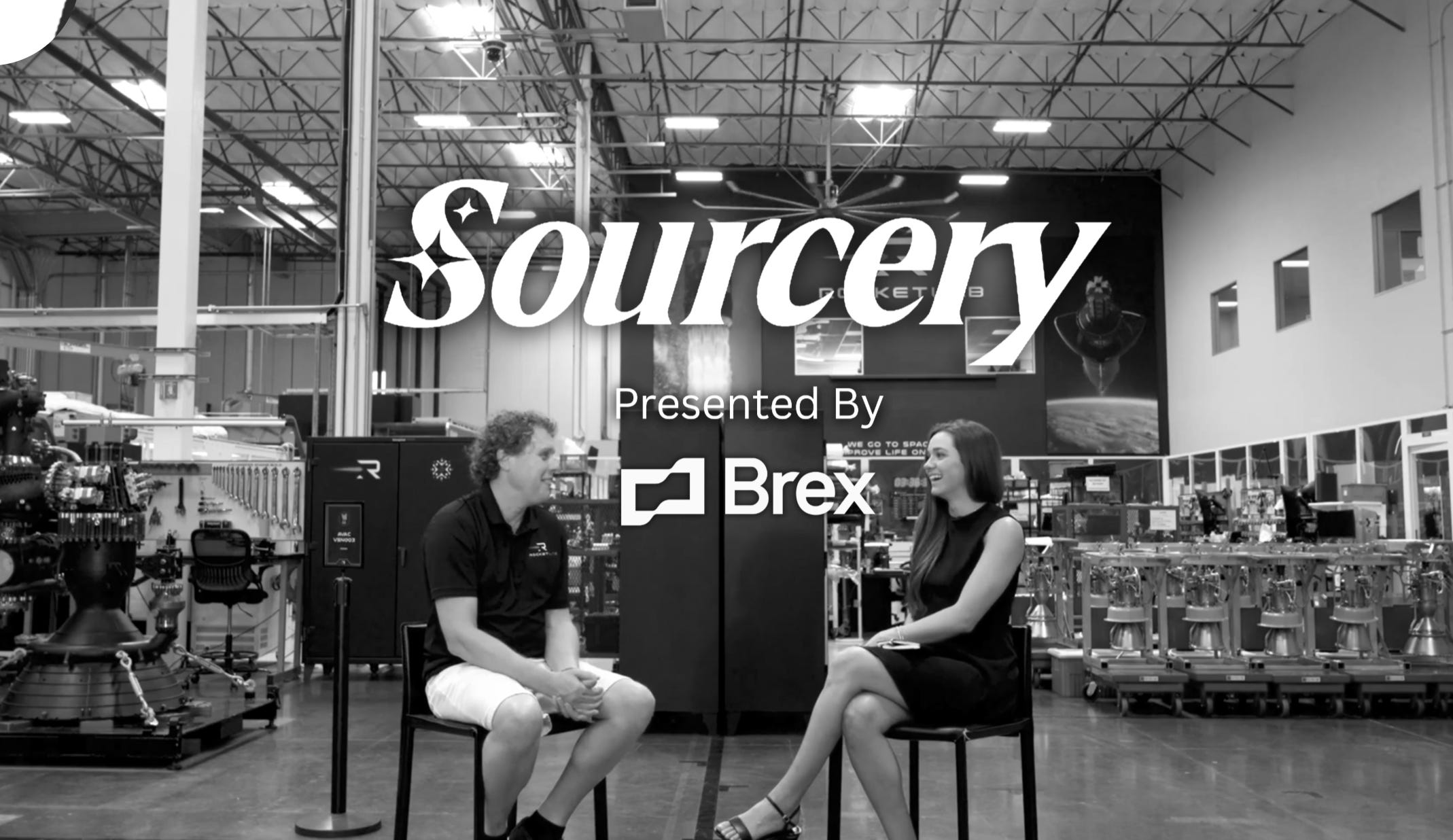
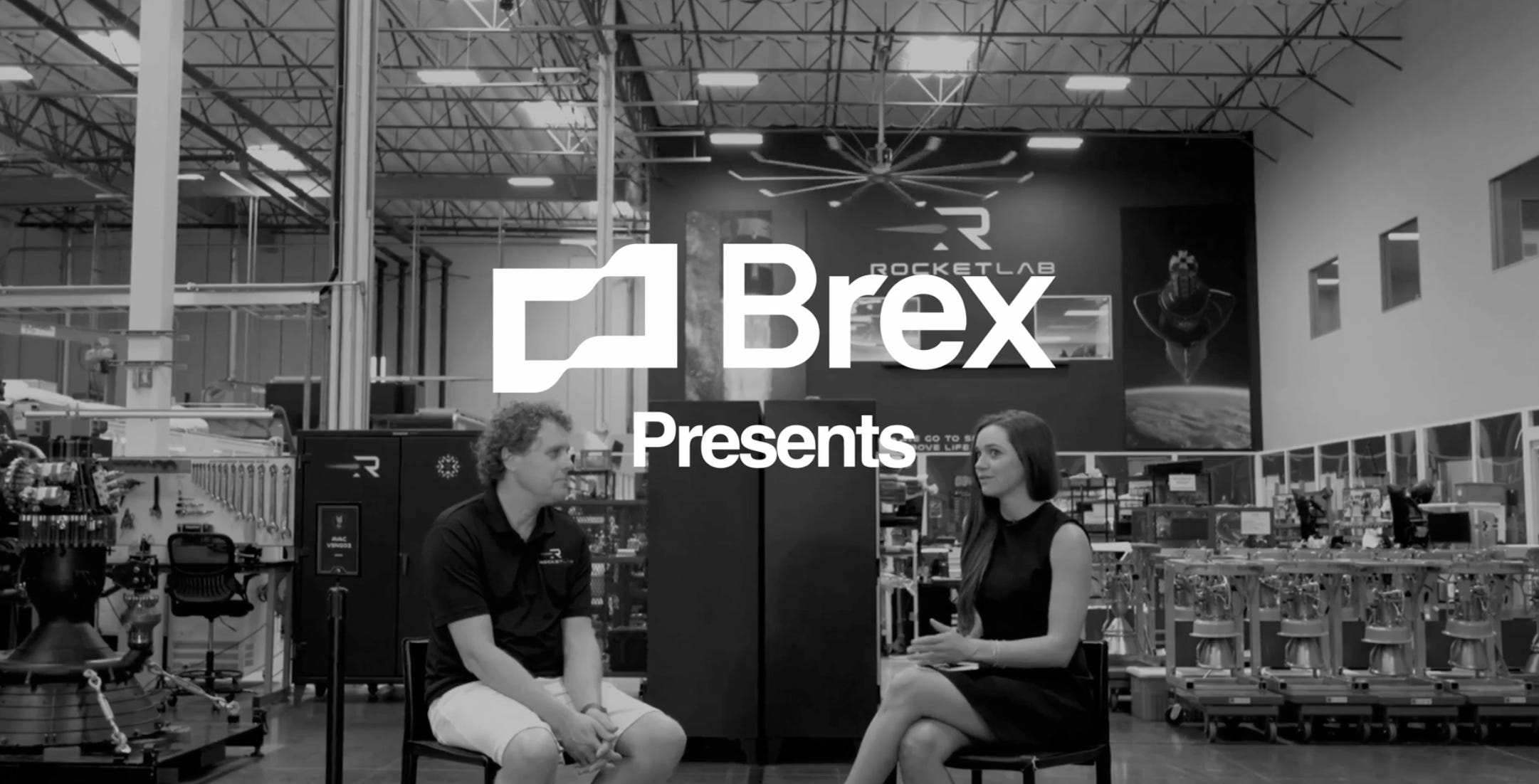
We sat down with Founder & CEO Sir Peter Beck after touring Rocket Lab’s Long Beach, CA facility to break down the current business & what comes next.. this is the first part of a 3-part journey looking into the company that we’ll share over the next few days. First, a sit down interview (this), then two tours of their facilities.
In this sit down, Peter explains Rocket Lab’s transformation from a launch company into an end-to-end space company spanning rockets, satellites, components, defense, and communications.
We get into Neutron and why Peter believes investors should be asking about the 10th launch, not just the first, the strategy behind the Iridium acquisition, Rocket Lab’s growing national security business, Flatellite, its acquisition playbook, and why going public gave the company the firepower to pursue opportunities it never could have as a private company.
We also discuss Neutron’s delays, Archimedes, reusability, Rocket Lab’s vertically integrated manufacturing strategy, building an entire space industry from scratch in New Zealand, and Peter’s long-term ambition to build a multi-generational company.
ICYMI: Rocket Lab (NASDAQ: RKLB) posted a record Q2 2026:
• $234M revenue, +62% YoY
• $2.36B record backlog, +137% YoY
• $437M+ in new launch contracts
• $581M+ in new Space Systems contracts
• 90+ launches in backlog
• Q3 revenue guidance of 250M–265M
Plus: aliens, getting knighted, why Archimedes engines are painted black, & Peter’s surprisingly simple philosophy on business.
𝐓𝐈𝐌𝐄𝐒𝐓𝐀𝐌𝐏𝐒
(00:00) Sir Peter Beck, Founder & CEO at Rocket Lab
(00:59) Rocket Lab's biggest quarter
(02:53) The competitive edge in Space
(04:10) Rocket Lab's Acquisition Strategy
(05:04) Reason behind the Iridium Deal
(06:13) Competing with Blue Origin & SpaceX
(09:56) Rocket Lab's Global Domination
(11:19) Building a Launch Monopoly in New Zealand
(12:33) Is this why Peter got Knighted?
(16:42) Beating SpaceX to the Public Markets
(20:05) Why Neutron is still facing delays
(24:24) The reality of running a Rocket Company
(27:38) Rocket Lab's latest contract wins
(29:04) How defense became a prime mover for Rocket Lab
(30:39) Ghost: Rocket Lab's portable launch pad
(31:30) Has he seen Aliens?
(33:18) What's next for Rocket Lab?
(34:30) Where does Peter draw his inspiration?
(36:12) Why he's never read a Business book
(37:31) Why their Engine is painted black
Brought to you by:
Brex—The intelligent finance platform: cards, expenses, travel, bill pay, banking—wrapped into a high-performance stack. Built for scale. Trusted by OpenAI, Anthropic, Vercel, Granola, Deepgram, & Sourcery.. teams that move fast AF. visit → brex.com/sourcery

Turing—Turing partners with frontier AI labs to improve model capabilities in coding, reasoning, tool use, & multimodality, as well as with Fortune 500 enterprises to build & deploy end-to-end agentic AI systems in mission-critical workflows Visit: turing.com/sourcery
VCX—VCX is the public ticker for private tech, allowing investors of all sizes to invest in venture capital. View The Portfolio at GetVCX.com
Deel—Deel is the global people platform that helps startups hire, manage, pay, and equip anyone, anywhere. Trusted by more than 35,000 fast-growing companies, Deel is the people platform that just works, so teams can scale without the chaos. Visit: deel.com/sourcery
Public-–Investing platform Public just launched Generated Assets, which lets you turn any idea into an investable index with AI. With Generated Assets, you can build, backtest, refine, and invest in any thesis with AI. Gone are the days of one-size-fits-all ETFs. Try it today: public.com/sourcery
Sir Peter Beck on Building Rocket Lab Into a Multi-Generational Space Company
Rocket Lab reported Q2 2026 results in August, its third record quarter in a row, with revenue of $234 million, up 62% year over year, and backlog of $2.36 billion, up 137%. The company signed more than $1 billion in new contracts across the quarter and the weeks after it closed. We toured the Long Beach facility and sat down with Sir Peter Beck for an in-depth discussion. Hopefully, the first of many.
Welcome to the first official Rocket Lab week.
→ Listen on X, Spotify, YouTube, Apple
The Man & the Company
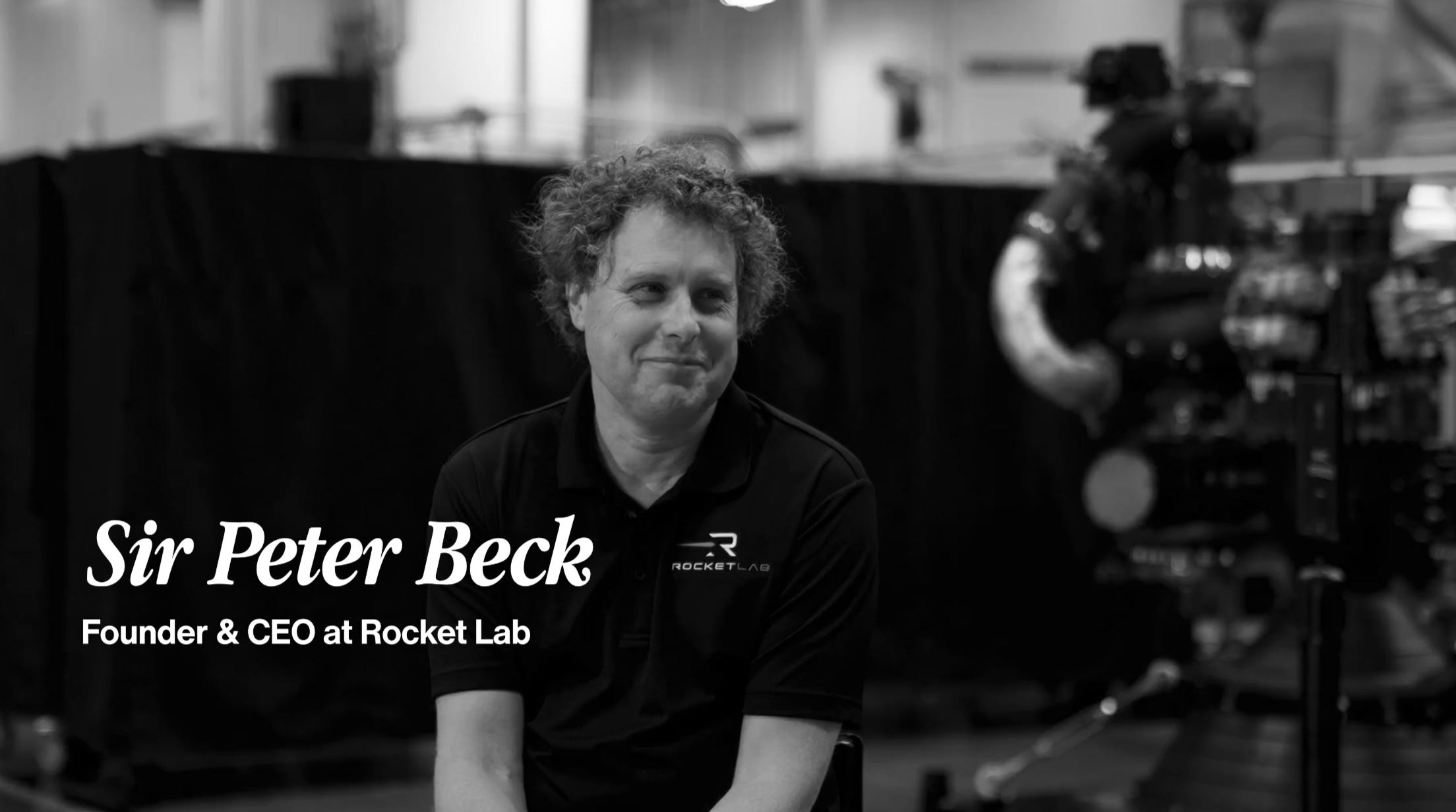
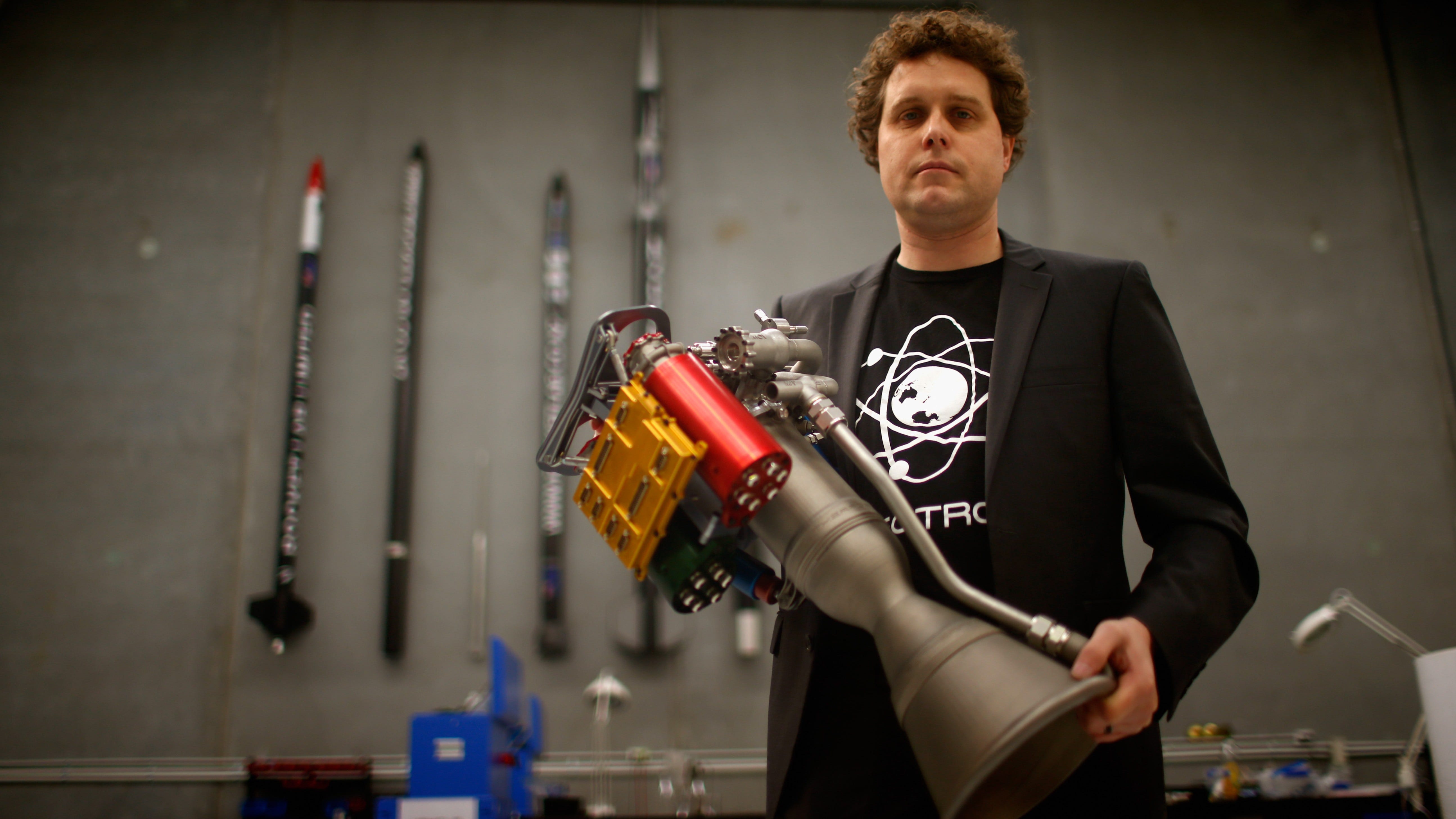
Beck founded Rocket Lab in New Zealand in 2006. He has no university degree. He started as a precision engineering apprentice at an appliance manufacturer in 1993, spent a decade in manufacturing and composites research, and has said he could not have been hired at NASA or Boeing. He was knighted in 2024.


Rocket Lab went public in 2021. It now operates from New Zealand, California, Arizona, New Mexico, Toronto, Maryland, Virginia, Mississippi and Germany. It has made nine acquisitions in six years. In June 2026 it agreed to buy Iridium for roughly $8 billion, its largest deal by an order of magnitude.
Electron, the small launch vehicle, has flown 93 times. It set a record of 21 launches in 2025 with 100% mission success and has flown 14 times so far in 2026.

What Rocket Lab Actually Sells
Rocket Lab is known as a launch company. But now Launch is just a smaller part of the business.. The company reports two main business segments:
Launch Services is the original business.
Electron: small launch vehicle, roughly 300kg to low Earth orbit, flown 93 times
HASTE: suborbital variant, used for hypersonic and missile defense flight testing, and accounts for 20% to 25% of the annual manifest
Neutron: reusable medium-lift vehicle, joins the segment when it flies
Space Systems is everything else, and it is 3 distinct businesses.
Whole satellites built for customers. That covers the Photon bus family, the Space Development Agency constellations, and Flatellite, the flat, stackable design built for volume production. Rocket Lab is the prime contractor on these.
Components and subsystems sold to other satellite builders. Star trackers, reaction wheels, solar cells and arrays, separation systems, propulsion, radios, flight software, laser communications terminals, robotics. Here Rocket Lab is a supplier, and many of its customers compete directly with the satellites in the first business.
Mission operations & space data services, the part that runs spacecraft after delivery. Iridium adds recurring subscriber revenue for the first time
Almost none of the components business was built in-house. It was acquired, one specialist at a time, over six years. That roll-up is why Space Systems now carries 81% of revenue, and started with a single phone call.
The Reaction Wheel Problem
“When we kind of started that space systems team, the first thing we did was try & buy a reaction wheel. We rang up Sinclair Interplanetary at that stage & said, ‘Doug, we need some reaction wheels.’
Doug said, ‘That’s great, Pete. It’ll be 9 months.’
I’m just like, ‘Doug, I haven’t got 9 months for anything. We need way, way faster than that.’
And so the way to solve that problem is we just went & bought Doug.”
Reaction wheels point satellites. Spinning flywheels inside the spacecraft transfer momentum to rotate it, no propellant required. That is how an imaging satellite swings from one target to the next. They are unglamorous, hard to substitute, and were historically built in small batches by specialist shops.
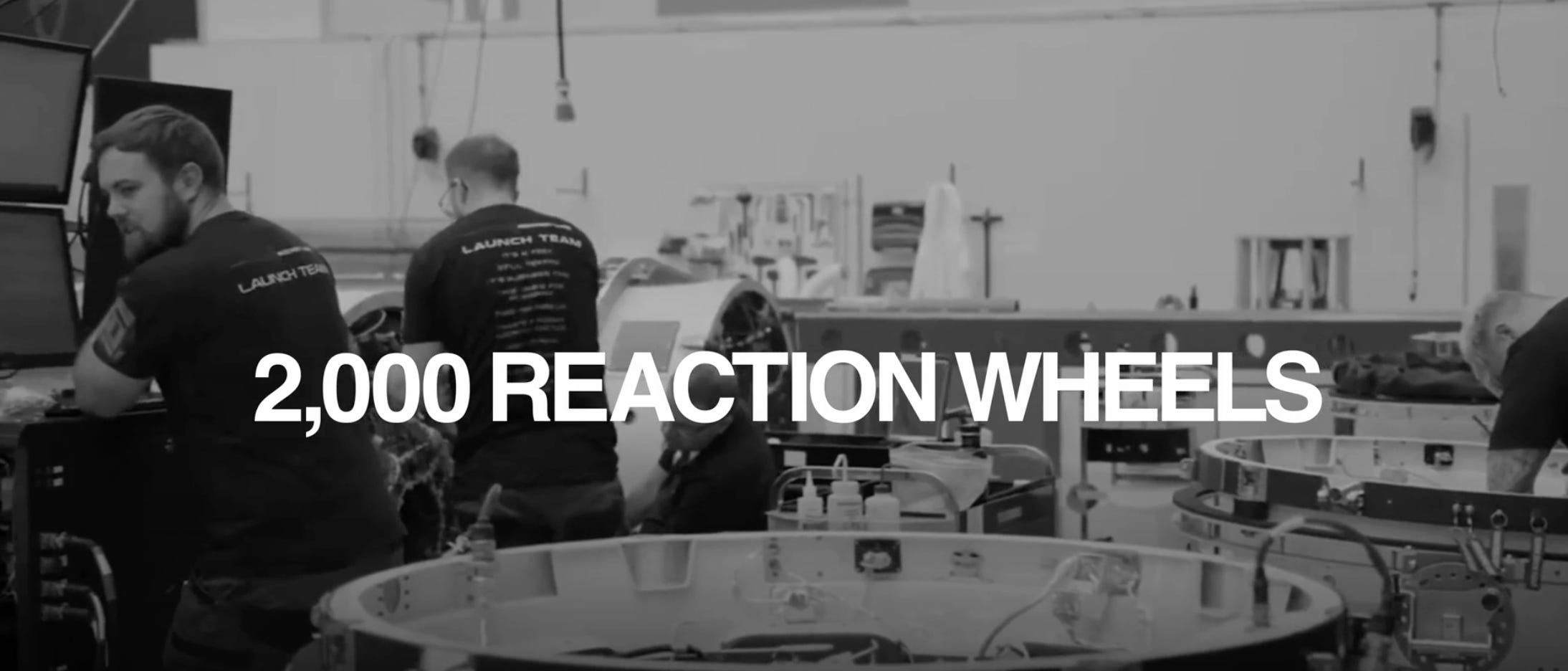
Rocket Lab bought Sinclair Interplanetary in April 2020 for $12.34 million in cash. It now builds over 2,000 reaction wheels a year.
Build, Acquire, Scale
With little time for waiting, Beck kept up the pace by making more strategic moves.. building into one of the most competitive space companies in the market through acquisitions and vertical integration.
“If you took a satellite & you laid it out on the boardroom table, we just pointed all the things that were really painful, & went out & acquired the very best companies, or in some cases created the technology ourselves, & then scaled it.”
Advanced Solutions came in October 2021 for $40 million, bringing flight software and guidance. Planetary Systems closed that December for $42 million, adding separation systems. SolAero closed in January 2022 for $80 million, adding the largest space solar cell production line in the world and 425 employees. Geost came in 2025 for $275 million, adding missile warning payloads. Mynaric added laser communications terminals. Motiv added space robotics in May 2026.
None of it looked obvious at the time.
“At the time I remember a lot of folks were saying, ‘Well, why are you buying this company in Albuquerque & this company in Toronto that makes these little widgets?’ And then I think it’s very obvious now that those widgets are the things that truly enable a sense of scale for some of the space infrastructure.”
Is Launch the Only Moat?
“Launch is always a huge moat. Launch is probably the biggest moat. But I would say the second-biggest moat is those components that go into those spacecraft. Because you can have infinite capital, it doesn’t make any difference. You still need some star trackers & some reaction wheels, & they’re just not available at scale.”
The claim is testable. Capital buys engineers, factories and time. It does not compress the qualification cycle on flight hardware. A star tracker photographs the sky, matches the pattern against an onboard catalog, and determines attitude to arcsecond precision. Certifying one for flight takes years of heritage. Rocket Lab redesigned its ST-16HV star tracker for mass manufacture rather than peak performance, a deliberate trade for constellation customers who need volume and short lead times.
The strategic argument is about dependency.
“I’ve always viewed that the large space companies are gonna have the ability to build their own satellites and launch them. And if you’re beholden to someone else providing you all the critical components, then your ability to scale is governed by their ability to scale, and that’s not a place where you wanna be.”
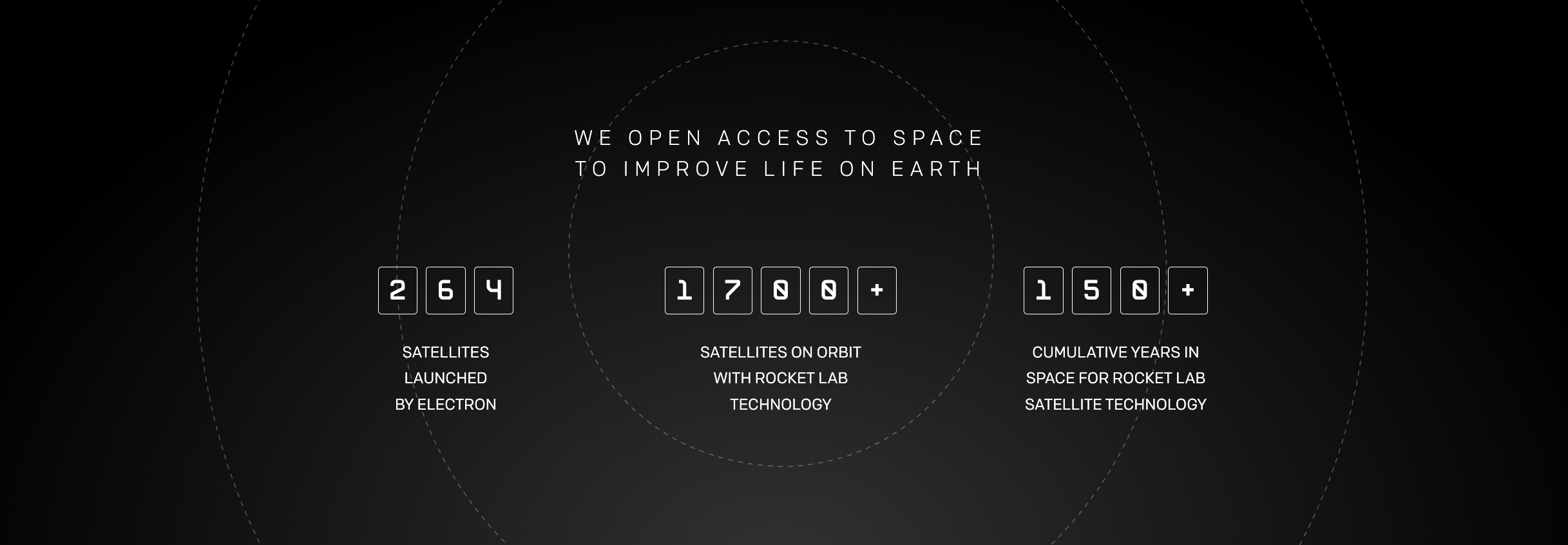
The installed base backs it up. Rocket Lab components have flown on more than 1,700 missions. Its solar cells power over 1,000 spacecraft. Its flight software has run on 50 spacecraft for a cumulative 150 years on orbit.

Winning Twice Against the Primes
Selling to competitors creates an unusual dynamic in defense contracting. However, Rocket Lab bids as a prime against companies that are also its customers.
“Even when we go after those big prime contracts, we’re prime on two national security programs right now. Even when we go after being a prime, even if we lose, we still win. And when we win, we win twice, because we’ll go head-to-head with a prime for a contract, and if we lose, then the next day there’s a whole bunch of purchase orders for reaction wheels, the solar, & a whole bunch of stuff.”
The Space Development Agency award is the example he gives.
“Our SDA contract was a great example where we won an $800 million contract. There was two other primes that also won contracts, but actually, that turned into over a billion-dollar contract for us because the primes needed our stuff.”
The Tranche 3 award was $816 million, the largest prime contract in company history. Component sales to the competing winners pushed the total past $1 billion.
The contracting model is the other differentiator.
“The typical national security contract would go to your typical primes, cost plus, blow out in times, & blow out in money, & all the rest of it. And we’re just not built like that. When we go out into the national security world, it’s firm fixed price and we deliver.”
Under cost-plus, the government reimburses costs and adds a fee. Overruns transfer to the customer. Under firm fixed price they do not, which is a different risk posture for a company still burning cash.
The customer mix has shifted fast. Government went from roughly 35% of backlog in Q4 2025 to 57% in Q2 2026. Alongside the SDA work sits a $397 million Space Force contract to build and launch Flatellites for the Space Based Airborne Moving Target Indicator program, $266 million for up to 18 suborbital HASTE missions, and $190 million from the Department of Defense for hypersonic testing.
The Iridium Logic
Rocket Lab agreed to buy Iridium in June 2026 at roughly $8 billion enterprise value. The price is $54/share, split as $27 cash & a collared stock component, closing in 2027.
Beck says the market’s surprise surprised him.
“It’s funny because I thought everybody would’ve picked that well early, right? And I was surprised that people were surprised that we would be doing that.
Because if you just think about it logically & you stand back & you go, ‘Okay, what is the biggest TAM in the space industry?’ It’s comms. If you ignore broadband because two really well-capitalized people are taking care of that, what’s the next logical thing to do in comms?
And it’s safety critical, defense critical services. That is Iridium.”
Iridium runs 66 satellites in L-band at roughly 1.6 GHz, plus 14 on-orbit spares, serving more than 2.5 million subscribers. It did $871 million in revenue in 2025 at a 57% operational EBITDA margin.
There is a physics argument under the market one. Lower frequencies carry less data but travel better.
“In that L-band spectrum, penetrating through rain and weather & buildings, you can just do stuff. It’s physics. You can just do stuff that the more broadband spectrum can’t do.”
Starlink and Kuiper run Ku and Ka band. Higher frequency, more throughput, worse performance in heavy rain. The two are not substitutes.
His framing of the deal is the sharpest line on capital discipline.
“It’s a super quintessential Rocket Lab deal. We don’t come with hopes and dreams and bore a big hole in the P&L.
Iridium adds profitability to the entity straight away. It also buys us time to put up a new constellation. We don’t buy companies that are startups that maybe they’ll do something one day.
You have to be proven & successful, & then you’re the right kind of target for us.”
Rocket Lab secured a $3.6 billion 364-day bridge facility from Deutsche Bank and Wells Fargo. Roughly $2.1 billion refinances Iridium’s existing debt. The rest combines with about $1.6 billion from Rocket Lab’s balance sheet to fund the cash portion.
Iridium is a starting position, not the destination.
“Rocket Lab is not the L-band safety critical comms company. That is number one. And there’ll be many, many more after that.”
The deal buys spectrum, a customer base, and time. Those are the three things a company cannot build quickly. It also makes Rocket Lab an operator for the first time rather than only a supplier.
Neutron: Why the 10th Flight Matters More Than the 1st
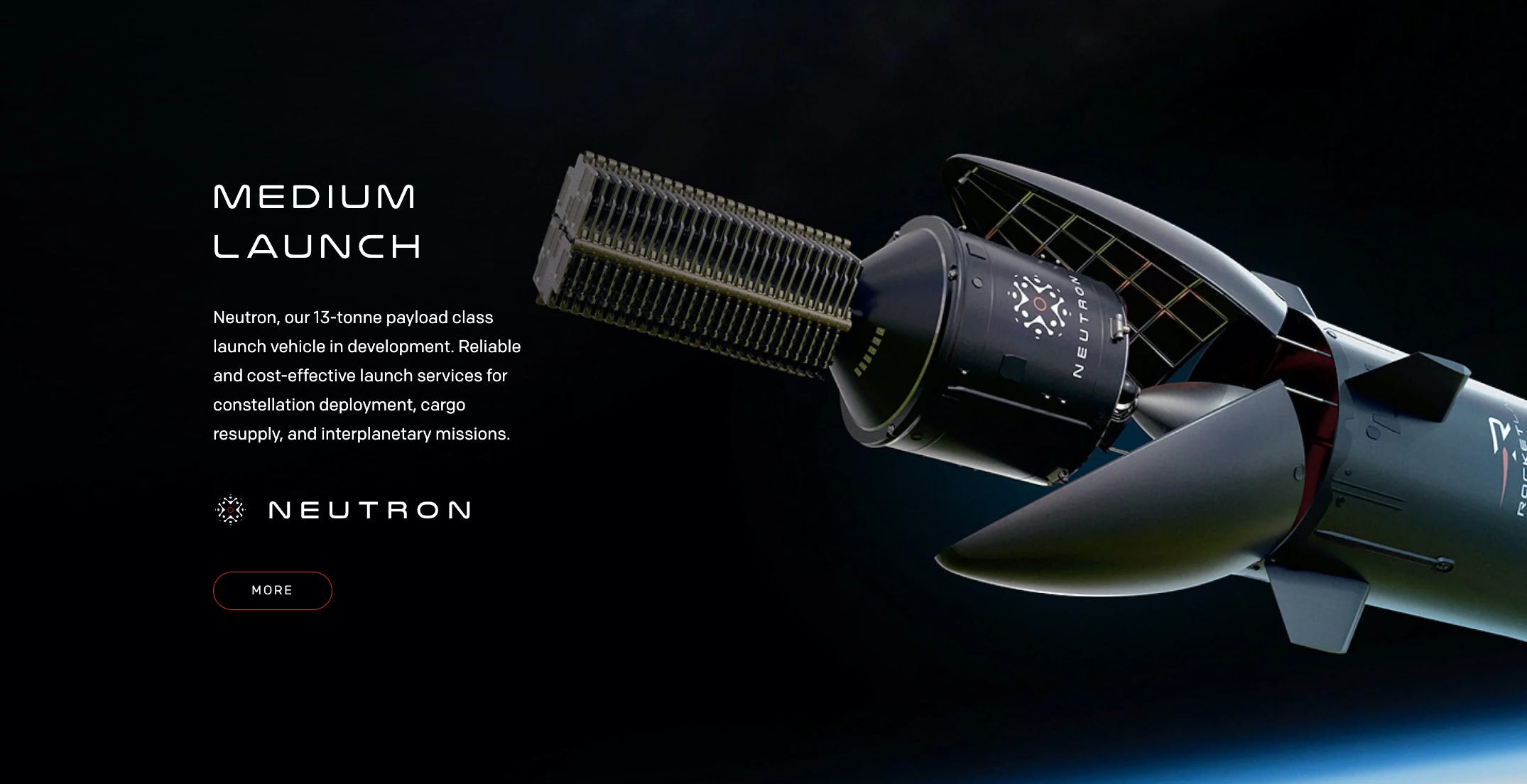
Neutron is Rocket Lab’s reusable medium-lift vehicle. It carries 13,000 kg to low Earth orbit on nine Archimedes engines burning liquid oxygen and methane. But, its launch debut has slipped repeatedly.
“It’s a rocket program, and I think every rocket CEO is probably inflicted with the same optimism over reality. But I would say that I’m being really strategic about how we bring Neutron to market.”
“It’s one thing to put a rocket on the pad and just fly it once. That’s super important, don’t get me wrong. But I guess the question that investors & analysts should be asking me is:
‘Pete, when’s the 10th rocket gonna be on the pad? How quick can we get the 10th rocket on the pad?’
Because by the time you get to rocket 10, your reusability’s sorted, all your production’s sorted, you’re banging out whole stages, and all of the launch infrastructure is just cranking.”
There is precedent behind the concern. Several vehicles have flown once and then gone quiet for years while production and pad operations caught up.
“It would really be bad if we put the first rocket on the pad, and then it was two years before we went and put the next one on the pad, which happens more often than not.”
Rocket Lab is targeting a 1-3-5 ramp across its first three years. The vehicle remains on track for pad delivery in Q4 2026, though Beck has said the window for an end-of-year launch is narrowing.
The demand pressure is now internal as well as external.
“Launch is constrained for everybody else. Launch is constrained for our government customers. I’m now my own user of launch for Iridium. I need launch too, so I’m like my harshest customer.”
Neutron is priced at $50 to $55 million with no significant discounting for early flights. Archimedes has completed more than 400 hot fires across first stage and vacuum engines at Rocket Lab’s test complex inside NASA’s Stennis Space Center.
The 24-Hour Constraint
The most instructive engineering answer concerns a requirement Beck admits was unreasonable, and imposed on purpose.
“I made a constraint at the very early part of the program where I think I lost a lot of credibility with the engineers, and I said, ‘Look, guys, we need to be able to turn this vehicle in 24 hours.’ Which is, I’ll admit, a stupid constraint, but what that constraint did is it drove a whole bunch of really, really important design decisions. Like propellants, engine lights, structures.”
The Hungry Hippo fairing came out of it. On most reusable vehicles the fairing separates in flight, gets fished out of the ocean, then cleaned and requalified.
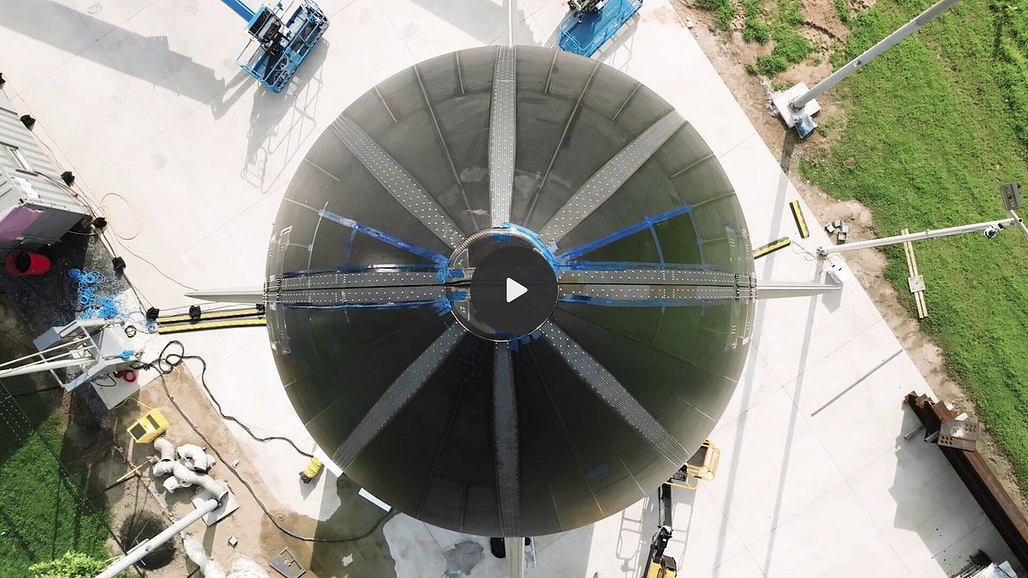
“You’ve got 24 hours to fish a fairing out of the ocean, recondition it, blow all the salt water out of it, and get it back on a rocket. That’s not gonna work.”
Neutron’s fairing stays attached to the first stage through launch and landing. It opens to release the second stage, then closes again. Nothing gets discarded and nothing touches salt water. Beck’s summary: “Sometimes you’ve got to be cruel to be nice.”
The composite structure follows the same logic.
“Everything is a giant engineering compromise in the rocket world. And if you fill a room up with engineers from every discipline, if one of those engineers from one of those disciplines is happy, you have failed.
Everybody needs to be equally as miserable. Then you know you’ve got the right design.”
The compromise is between structural mass and engine stress.
“We want the Archimedes engine to be incredibly reliable, and we don’t wanna have to service that engine for multiple flights. So we make super lightweight structures and super low-stress engines. Now, if you make heavy structures, then you have to make super high-performance engines. So you be lazy on your structures and really difficult on your engine, or you can be really lazy on your engine and really difficult on your structures.”
Rocket Lab has built carbon composite structures since Electron. It took the lighter-structure, lower-stress-engine side of the trade. Archimedes runs at reduced stress specifically so it can fly repeatedly without teardown.

GHOST, the Launch Site That Ships in a Container
Rocket Lab announced GHOST alongside earnings in August. It packs the launch pad, ground support equipment, range control systems and the rockets themselves into standard shipping containers. It supports Electron and HASTE on shared ground infrastructure, and it debuts with a suborbital launch from Kodiak, Alaska in 2027. That takes the company to six pads across two hemispheres.
The requirement came from customers, not from engineering.
“Essentially, obviously we’ve got three launch sites for the Electron vehicle. And our government customers, mainly around the HASTE missions, were really keen to see us go into very discreet locations to do some of that testing. So it was driven from a requirement from the customer that can you build this mobile launch site?”
The reason it is feasible now is scale. Neutron reset the company’s baseline for what counts as heavy infrastructure.
“Now that we’re doing Neutron, even the smallest thing needs a crane. You look at an Electron launch pad, and it’s tiny now. So moving stuff around is not a big deal for us anymore. So it’s pretty elementary for us to build these mobile launch sites and plonk them down.”
The strategic point is what it does to Mahia. Rocket Lab needed a bilateral treaty between two governments, a new national space agency and a new act of parliament to open Launch Complex 1 in 2017. GHOST reduces that same capability to freight. The company spent nine years building the hardest launch site in the world, then engineered a way to skip the process entirely.
Range control travelling inside the containers is the part with the longest regulatory tail. It means Rocket Lab brings its own range rather than using a national one, which is the piece that determines how quickly GHOST can actually deploy somewhere new.
Starting From Zero in New Zealand
Mahia exists because small launch economics cannot absorb someone else’s pad fees.
“If you have a small launch vehicle and you turn up to a large launch pad, the reality is that the fees don’t change. And when you’re trying to sell a rocket for $8M, you can’t have a $1.5M worth of launch fees.
On a $50M rocket, it doesn’t make any difference, right? So we were very early on, in order for this to be financially viable, we need our own launch site.”
Building one in the United States was hard. Building one in a country with no space industry turned out to be easier.
“New Zealand had no space industry, so sometimes it’s easier to start something from scratch and formulate it in a way that best makes sense than to try and integrate with a whole bunch of rules that don’t fit.”
New Zealand signed a Technology Safeguards Agreement with the United States in 2016, created a space agency the same year, and passed the Outer Space and High-altitude Activities Act in 2017. Beck was knighted in 2024, in part for creating that industry. His reaction: “It’s very weird. Super weird.”

Geography as a Real Structural Advantage.
“LC1 is a very unique position that we can launch sun synchronous, and also out to mid-inclination out of the one site. So here in the States, if you wanna go sun synchronous, you generally have to go out of the west coast. And if you wanna go mid-inclination, you have to go to the east coast. So we get a huge swath of azimuth. And there’s 1 plane every 3 days that we have to worry about.”
Sun-synchronous orbits require launching nearly polar, which from the US means Vandenberg. Mid-inclination means Florida. Mahia does both, because there is nothing downrange but open ocean.
That converts directly into responsiveness. On the VICTUS HAZE mission for the Space Force, Rocket Lab had 24 hours to integrate a satellite, roll it to the pad and launch. It finished in 16 hours and 42 minutes.
The cost was building everything from nothing.
“We had to build an entire industry from scratch in New Zealand. There was no suppliers, no infrastructure, nothing. We had to build absolutely everything.”

Public Markets as an Instrument
Rocket Lab went public on August 25 2021 through a merger with Vector Acquisition Corporation, raising $777 million. SpaceX listed nearly five years later, in June 2026.
Beck gives two reasons for going early. The first is structural.
“If you can reach a certain level of maturity and go public, the capital markets enable you to do things you couldn’t do in private markets. Buying Iridium, we could have never done that as a private company.”
The second reason is about time horizon.
“I didn’t want to build a space company that just lives for the lifetime that I’m running it. It needed to be multi-generational & go on & on & on.
Being a public company really enforces that discipline of profitability, and profitability is survival. The rockets and satellites, it’s all cool, but at the end of the day, it’s all for nothing if your economics aren’t there and you’re not profitable.”
His advice to founders is a warning about motive.
“The worst thing you can do is go public because you can’t raise capital privately. We never had an issue raising capital privately. But I think a lot of companies went public during that SPAC time because they were just crap companies, and they couldn’t raise capital privately, so their only option was to be a public company. That’s never a good reason to be a public company.”
He calls public status “a lot of work” with “a lot of constraints” and “probably way less fun.” It supplies resources worth having, if a company actually needs them.
The stock has fallen more than 50% from its May 2026 high despite 3 straight record earnings. Beck points at duration rather than sentiment.
“Neutron delays are always a question, and rightly so, people should be riding us hard for that. But at the end of the day, I’m not gonna say it doesn’t matter, but how late was Electron to the market? Nobody knows. Because it doesn’t matter.”
Asked for his operating principles, he answered: “Just do logical things.”
→ Listen on X, Spotify, YouTube, Apple
The material presented on Molly O’Shea’s website are my opinions only and are provided for informational purposes and should not be construed as investment advice. It is not a recommendation of, or an offer to sell or solicitation of an offer to buy, any particular security, strategy, or investment product. Any analysis or discussion of investments, sectors or the market generally are based on current information, including from public sources, that I consider reliable, but I do not represent that any research or the information provided is accurate or complete, and it should not be relied on as such. My views and opinions expressed in any website content are current at the time of publication and are subject to change. Past performance is not indicative of future results.
Paid Endorsement. Brokerage services by Open to the Public Investing Inc, member FINRA & SIPC. Advisory services by Public Advisors LLC, SEC-registered adviser. Crypto trading provided by Zero Hash LLC, licensed by the NYSDFS. Generated Assets is an interactive analysis tool by Public Advisors. Output is for informational purposes only and is not an investment recommendation or advice. See disclosures at public.com/disclosures/ga. Matched funds must remain in your account for at least 5 years. Match rate and other terms are subject to change at any time.
The filed floor under the story: Rocket Lab's Q2 revenue was $234M, up 62% Y/Y, with Space Systems at $189M - 81% of it. The quarter's net loss was $49M, $17M narrower than a year ago. From the 10-Q.
Hell ya🔥🐐