


Shredding the AI Slopes w/ $SNOW
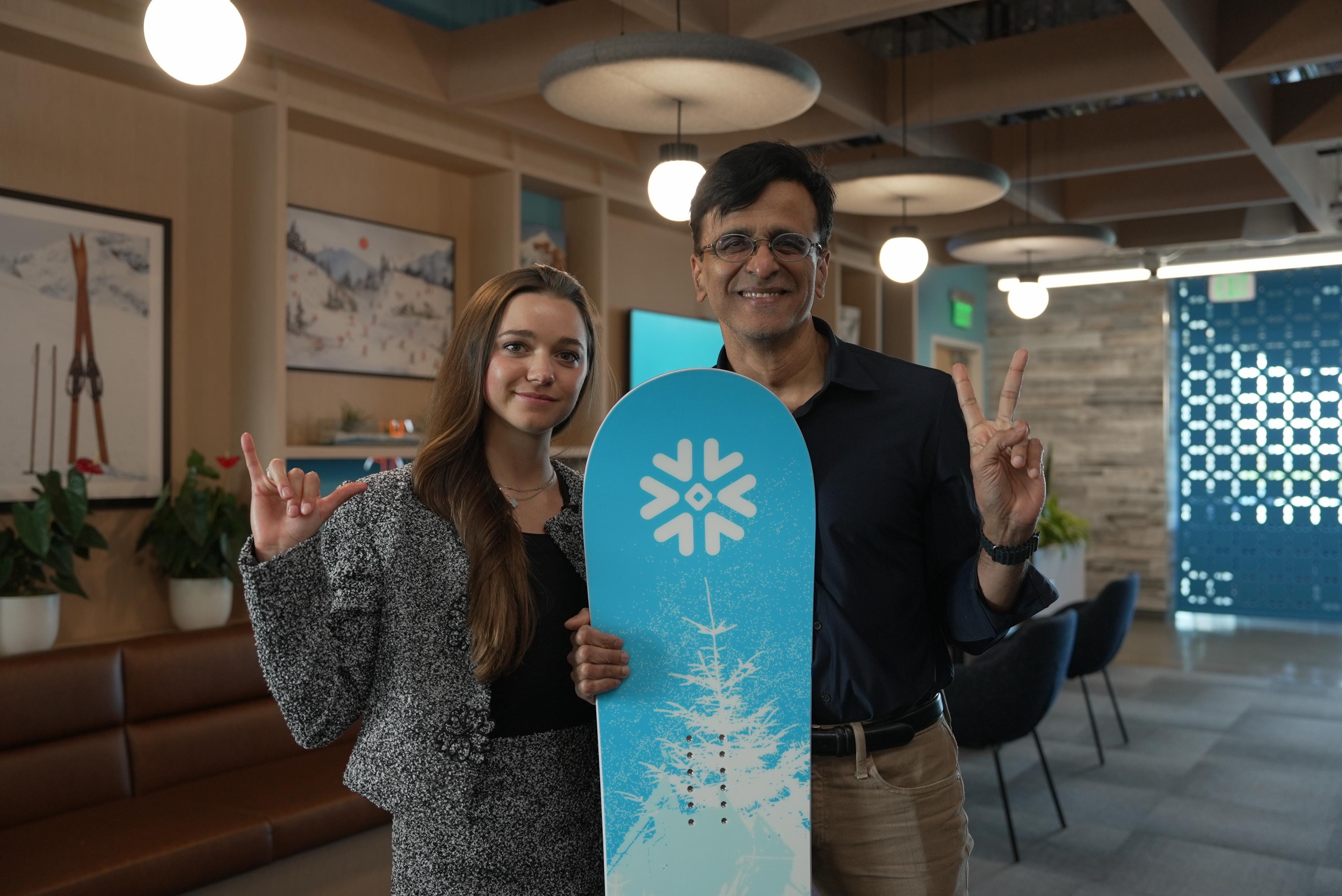
Snowflake CEO Sridhar Ramaswamy joins Sourcery to discuss Snowflake’s long-term path toward iconic scale and winning the AI data platform race, drawing on his firsthand experience scaling Google Ads from ~$1.6B to ~$100B+ in revenue. He shares the moment Eric Schmidt challenged his team to write a $100B revenue plan as a thought experiment in compounding growth.. and it worked.
→ Listen on X, Spotify, YouTube, Apple
Rather than declaring a Snowflake revenue target, Sridhar explains how sustained ~30–35% compound growth, discipline, and execution can transform a company over time, and how Snowflake (NYSE: SNOW) is competitively positioning itself to become a trillion-dollar company.
We cover:
Snowflake’s role in the AI supercycle
Competing with Databricks, hyperscalers, and frontier AI platforms
Where AI value accrues: Nvidia, frontier models, enterprise workflows
Scaling ambitions inspired by Eric Schmidt
Lessons from Frank Slootman’s leadership and Sutter Hill’s influence
The strategic logic behind the Observe acquisition
Trillion-Dollar IPOs: lessons from one of the largest software debuts in history
And Sridhar’s personal “monk mode” operating style — optimizing for focus, discipline, and long-term execution
This was really fun, I hope you enjoy!
𝐓𝐈𝐌𝐄𝐒𝐓𝐀𝐌𝐏𝐒
(00:00) Sridhar Ramaswamy, CEO Snowflake
(01:03) Data centers in space & the economics
(03:06) AI demand explosion: why old chips models still matter
(04:36) Where are we exactly in the AI supercycle?
(06:41) Where value is being created vs where value is accruing
(10:30) Hyperscalers, dominance, & shrinking AI moats
(12:21) AI adoption in financial services, healthcare, & real use cases
(16:01) Snowflake’s role in the AI supercycle
(18:26) Shifting from long-term plans to week-by-week execution
(20:39) Why this AI moment feels terrifying for technologists
(23:16) Sutter Hill, board dynamics, & trillion-dollar outcomes
(24:26) Snowflake’s trillion-dollar ambition & lessons from Eric Schmidt
(26:47) Leading teams through constant change
(28:43) What does Snowflake look for when hiring?
(30:51) Lessons from Frank Slootman & wartime leadership
(36:12) Which companies will fail
(38:30) Monk mode
(39:36) Acquiring Observe & integrating acquisitions without killing momentum
(43:11) $1T IPOs, valuation discipline, & investor psychology
(45:11) Managing investor trust & long-term stewardship
Brought to you by:
Brex—The intelligent finance platform: cards, expenses, travel, bill pay, banking—wrapped into a high-performance stack. Built for scale. Trusted by teams that move fast. visit → brex.com/sourcery
Turing—Turing delivers top-tier talent, data, and tools to help AI labs improve model performance, and enable enterprises to turn those models into powerful, production-ready systems. Visit: turing.com/sourcery
Deel—Deel is the global people platform that helps startups hire, manage, pay, and equip anyone, anywhere. Trusted by more than 35,000 fast-growing companies, Deel is the people platform that just works, so teams can scale without the chaos. Visit: deel.com/sourcery
Public-–Investing platform Public just launched Generated Assets, which lets you turn any idea into an investable index with AI. With Generated Assets, you can build, backtest, refine, and invest in any thesis with AI. Gone are the days of one-size-fits-all ETFs. Try it today: public.com/sourcery
Snowflake’s CEO on the AI Platform War, Competitive Shakeouts, & Compounding to Iconic Scale
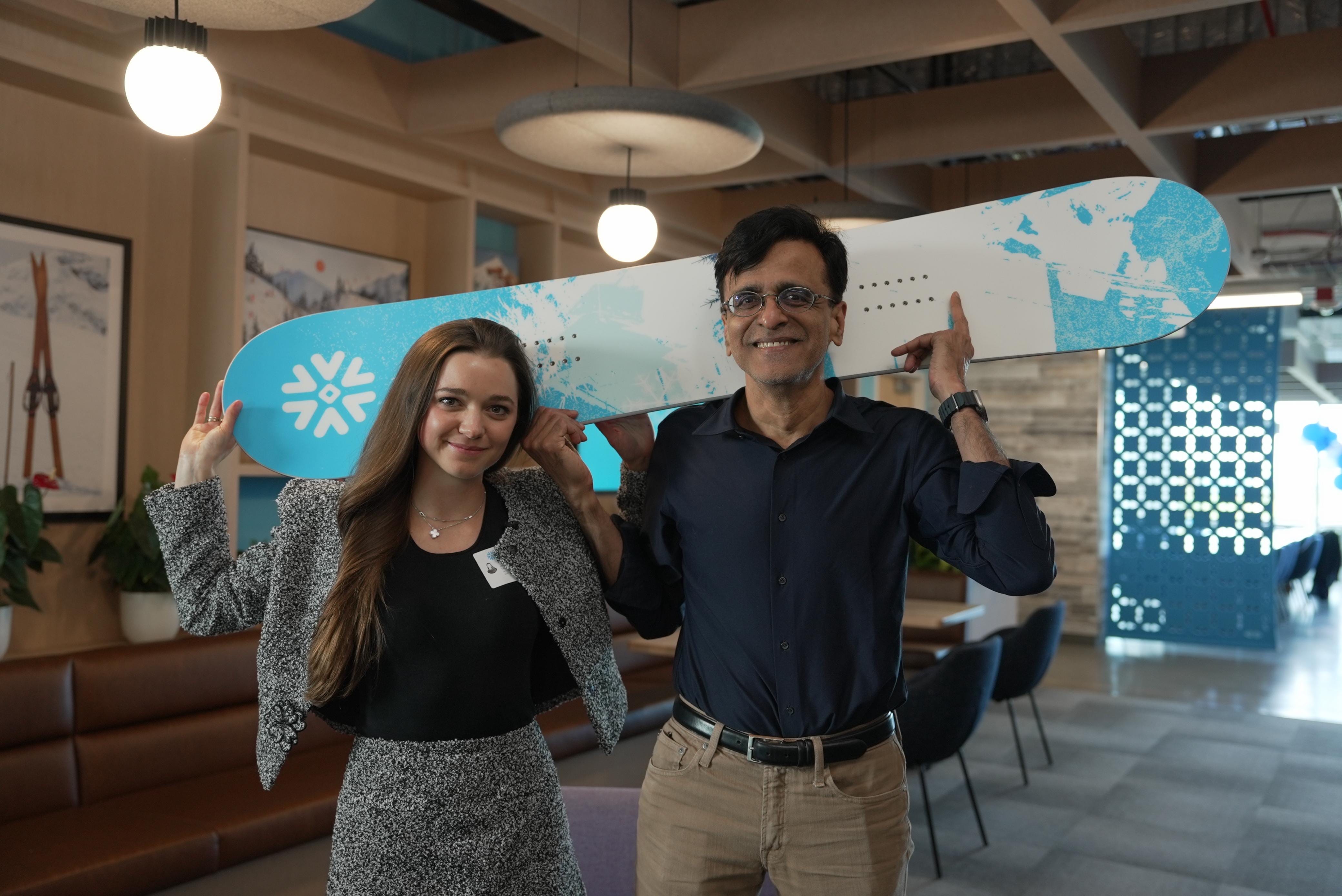
Snowflake CEO Sridhar Ramaswamy lays out a disciplined, operator-level framework for navigating the AI platform arms race — spanning competitive dynamics, structural disruption risk, IPO psychology, enterprise moats, and the compounding required to build an enduring technology company.
Rather than leaning on AI hype cycles, Ramaswamy focuses on market structure, execution velocity, pricing model fragility, capital markets behavior, and long-term platform power. His lens is pragmatic and investor-relevant: where value is created, where it accrues, who gets disrupted, and how platform winners sustain advantage over time.
Sridhar Ramaswamy: From Google’s Ads Engine to Snowflake’s AI Pivot
Sridhar Ramaswamy’s rise to CEO of Snowflake is best understood through the lens of scale, data, and monetization at Google, where he spent over 15 years building and running one of the most economically powerful software platforms in history.

Google: Architecting Internet-Scale Monetization
Ramaswamy joined Google in 2003 as an engineer and rose to become Senior Vice President of Ads & Commerce, overseeing the company’s core revenue engine. During his tenure, Google’s advertising business scaled from roughly $1–2 billion in annual revenue to over $100 billion, driven by improvements in search relevance, auction systems, advertiser tooling, measurement, and large-scale machine learning.
His work sat at the intersection of infrastructure, data systems, and applied AI. He led teams responsible for:
Search monetization & ad ranking, optimizing relevance and yield at global scale
Analytics & advertiser platforms, shaping how businesses measure ROI on digital spend
Commerce & payments, extending Google’s ability to convert intent into transactions
At Google, Ramaswamy built a reputation as a rare hybrid: a technically rigorous systems thinker who could also operate massive revenue organizations and ship product at internet scale.
Neeva: Founder Mindset and AI-Native Search
After leaving Google in 2018, Ramaswamy co-founded Neeva, an ad-free, privacy-first search engine designed to rethink how consumers interact with information. Neeva leaned heavily into AI-native search experiences, foreshadowing the shift toward LLM-driven discovery and agentic retrieval.
While Neeva ultimately struggled to compete with incumbents in consumer distribution, it served as a strategic bridge in Ramaswamy’s career—deepening his exposure to founder-led product iteration, frontier AI, and alternative business models for search and information retrieval.

Snowflake: From Data Cloud to AI Platform
Snowflake acquired Neeva in 2023, bringing Ramaswamy into the company as SVP of AI. Inside Snowflake, he led efforts to expand the platform beyond cloud data warehousing into AI-native workloads, including the launch of Snowflake Cortex, which integrates large language models directly into enterprise data environments.
In February 2024, Snowflake appointed Ramaswamy as CEO, signaling a strategic shift: from a company defined by best-in-class analytics infrastructure to one positioning itself as a system of record and system of intelligence for the AI era.

Where AI Value Is Created vs. Where It Accrues
Ramaswamy draws a sharp distinction between where AI creates real economic value and where financial markets currently assign valuation upside. While capital markets have disproportionately rewarded chipmakers, hyperscalers, and frontier model companies, he argues that the most durable value creation is happening at the end-user and enterprise workflow layer, where productivity gains translate into real operational leverage.
“Value is being created by all the users of ChatGPT… nearly a billion of them… in completely surprising ways.”
He highlights tangible gains across engineering productivity, automation, customer support, analytics, and applied decision-making. Coding agents, in particular, represent a step-change in software velocity — compressing timelines, reducing cost, and reshaping labor economics.
“There’s a huge amount of value being created with all of the people that are using coding agents to write software faster.”
The strategic implication is that platform power compounds closest to data gravity and applied workflows, not at the model layer alone. Companies embedded in enterprise data flows — where governance, inference, analytics, and operational decisions converge — sit in a structurally advantaged position.

The AI Platform War: Snowflake, Databricks, Hyperscalers, Speed
Ramaswamy is explicit that AI infrastructure has become a competitive battlefield, and that historical enterprise advantages are no longer sufficient on their own. In his framing, execution speed, iteration velocity, and cultural adaptability now matter as much as product depth or installed base.
“We should be asking ourselves why we are not growing a whole lot faster because the opportunity is there.”
He acknowledges hyperscaler scale and momentum, while reinforcing Snowflake’s differentiation in enterprise-grade reliability, governance, compliance, and mission-critical resilience — capabilities that become more valuable as AI moves deeper into regulated industries such as financial services and healthcare.
“Being enterprise grade in everything that we do… where we provide for disaster recovery, we provide for excellent governance… that’s our heritage.”
The competitive subtext is clear: AI platforms that cannot move quickly risk irrelevance, but platforms that move quickly without enterprise trust risk exclusion. The winners will be those who successfully combine speed with institutional credibility.
Who Fails in the AI Era
One of Ramaswamy’s most investor-relevant insights centers on which companies are structurally vulnerable as AI compresses cost and time. His view is that disruption risk is highest not at the technology layer, but at the business model layer — particularly for firms monetizing human labor density, seat-based licensing, hourly billing, or workflow inefficiency.
“If there are companies that rely heavily on people power… and now you’re confronted with coding agents that can literally get jobs done for a tenth of the time… that’s a very dangerous combination.”
He frames this as a revenue model trap: companies financially optimized around human effort face internal resistance to adopting automation that would shrink billable output. This creates an existential dilemma where efficiency threatens the revenue engine.
“There are companies that have these kinds of structural problems that are going to find it hard to navigate.”
From an investment perspective, this implies that pricing architecture matters as much as product innovation. AI will not just disrupt products — it will collapse revenue structures that depend on time, labor, or friction.

Eric Schmidt’s $100B Revenue Influence
Reflecting on his tenure at Google, Ramaswamy describes a formative moment when Eric Schmidt challenged leaders to write a hypothetical $100B revenue plan — a thought experiment that initially felt absurd, but ultimately became reality through compounding execution over time.
“Eric Schmidt… made me and a few other folks write a hundred billion dollars revenue plan… we all thought that this was the funniest thing ever.”
His takeaway is not about forecasting — it is about process, discipline, and compounding. Iconic companies, in his view, are not built through single breakthroughs, but through sustained growth rates applied consistently over long horizons.
“That’s what it takes… compounded growth… 35% odd growth compounded over and over again.”
He frames this as a north-star mental model, not a short-term promise — a way to anchor teams to long-term ambition while maintaining near-term execution focus.
Frank Slootman, Leadership Transitions, & Wartime Execution Speed
Sridhar Ramaswamy describes stepping into the CEO role at a moment when Snowflake was entering a new phase shifting from its original data warehouse roots toward an AI-driven platform, with faster product cycles, higher competitive pressure, and more urgency around execution.
Within that context, he frames Frank Slootman’s leadership as highly decisive, particularly in how the CEO transition was handled. Rather than running a prolonged or symbolic succession process, Slootman pushed for a clean and committed change in leadership direction.
“Frank has decisiveness and clarity of thinking that just strikes you.”
“If we are going to bet on this guy, we just bet on this guy. No halfway.”
Ramaswamy describes Slootman as someone who prioritizes cutting through noise, identifying the core issue, and acting without incremental compromise — especially in moments where organizational clarity matters more than consensus-building.
“To truly cut down all the noise and say, this is the core problem that we need to solve… there are very few people like Frank.”
He also notes that Slootman made a deliberate decision to step aside when he believed Snowflake needed a different leadership profile for its next stage, framing that choice as intentional rather than reactive.
“It takes a special leader to say, you know, I think someone else should be in charge.”

Trillion-Dollar IPO Dynamics and Valuation as an Execution Risk
Ramaswamy brings a sober, experience-driven perspective on mega-IPO behavior and trillion-dollar valuation psychology, warning that market volatility can become a cultural and operational distraction inside companies.
“If somebody thinks they’re worth $1,000 and suddenly they’re worth $700 the next day… that can be hugely distracting.”
Rather than treating IPOs as marketing milestones, he argues they should be engineered to create stable, long-term shareholder bases that reinforce execution rather than destabilize it.
“The IPO process… can produce a set of long-term investors who stay with you forever.”
The broader insight is that capital structure is a strategic variable — not just a financial outcome. Poor valuation stewardship can degrade morale, distort incentives, and pull leadership focus away from product and customers.
Observe, AI Observability, and Expanding the Enterprise Control Plane
Snowflake’s acquisition of Observe reflects a broader strategic expansion into observability, telemetry, and AI-driven system intelligence — especially as autonomous agents generate growing volumes of machine-native data.
“We are headed into the world of agents that are going to be spewing out even more telemetry information.”
Ramaswamy emphasizes the rarity and fragility of strong product teams, echoing a broader belief in preserving execution DNA.
“A working product is pure magic… we are going to try everything we can do to keep that team together.”
Strategically, this positions Snowflake to move beyond analytics into operational intelligence and AI system accountability, extending its footprint from data storage into system performance, reliability, and automated debugging.

Monk Mode: Discipline as an Execution Advantage
On a personal level, Ramaswamy describes operating in “monk mode” — stripping away distractions to maximize focus on work, fitness, and family.
“I spend a lot of time working. I spend time in the gym and I spend time with my family. That’s it.”
“It’s making choices — and being happy with them.”
Rather than lifestyle color, this reflects a broader leadership philosophy: constraint, prioritization, and sustained intensity are foundational to building at scale in high-pressure environments.
Brought to you by Brex:

The material presented on Molly O’Shea’s website are my opinions only and are provided for informational purposes and should not be construed as investment advice. It is not a recommendation of, or an offer to sell or solicitation of an offer to buy, any particular security, strategy, or investment product. Any analysis or discussion of investments, sectors or the market generally are based on current information, including from public sources, that I consider reliable, but I do not represent that any research or the information provided is accurate or complete, and it should not be relied on as such. My views and opinions expressed in any website content are current at the time of publication and are subject to change. Past performance is not indicative of future results.
Paid Endorsement. Brokerage services by Open to the Public Investing Inc, member FINRA & SIPC. Advisory services by Public Advisors LLC, SEC-registered adviser. Crypto trading provided by Zero Hash LLC, licensed by the NYSDFS. Generated Assets is an interactive analysis tool by Public Advisors. Output is for informational purposes only and is not an investment recommendation or advice. See disclosures at public.com/disclosures/ga. Matched funds must remain in your account for at least 5 years. Match rate and other terms are subject to change at any time.
Excited to dive in!
Writing an investment memo on SNOW next week.