


Trillion Dollar Outcomes
Dr. Nworah Ayogu, MD, MBA, Partner at Thrive Capital, joins Sourcery to discuss how AI is transforming drug discovery, medicine, and the economics of healthcare.
→ Listen on X, Spotify, YouTube, Apple
A Harvard-trained physician, founding team member of Cityblock Health, former General Manager of Amazon Clinic and first Chief Medical Officer of Amazon Pharmacy, Nworah is now a partner at Thrive Capital. The investment firm has grown to over $65 Billion in AUM and its healthcare portfolio includes Neuralink, Nudge, Isomorphic Labs, OpenEvidence, OpenAI, Oscar Health, & Cadence.
We cover AI’s potential to accelerate drug development, Isomorphic Labs & Demis Hassabis, Neuralink’s brain-computer interfaces (“BCI”), OpenEvidence’s rapid adoption among physicians, personalized medicine, & the emergence of 10X doctors & nurses.
We also explore some of Thrive’s breakout healthcare incubations, the next generation of trillion-dollar healthcare companies, and why AI’s most important breakthroughs may happen in medicine rather than software.
Disclaimer: This podcast is for informational purposes only. The views expressed are the speaker’s own as of the recording date & are subject to change. Thrive funds & their affiliates have investments in certain companies discussed in this episode. References to those companies are illustrative, do not represent all investments made by Thrive, & should not be viewed as recommendations or indications of future investment performance. Past performance is not indicative of future results.
𝐓𝐈𝐌𝐄𝐒𝐓𝐀𝐌𝐏𝐒
(00:00) Dr. Nworah Ayogu, Partner at Thrive Capital
(01:52) The next AI trade is hiding in biotech
(03:48) How AI designs a new drug
(08:37) 9 out of 10 drugs fail, can AI flip that?
(11:33) How Thrive got into Isomorphic Labs
(14:14) Giving paralyzed veterans their hands back
(20:39) Neuralink is more interesting than SpaceX
(23:21) The hearing aid that broke the rating scale
(30:18) The doctor who built Amazon Health
(33:21) Why AGI makes healthcare the biggest bet
(35:25) One cancer drug outearns every AI lab combined
(37:55) How Lilly became healthcare's first $1T company
(40:04) How Thrive helped OpenAI break into healthcare
(44:13) OpenEvidence: two-thirds of US doctors in three years
(46:16) Healthcare is 6x bigger than defense
(48:15) $40T spent, zero gain in life expectancy
(51:43) A custom gene therapy built for one baby
(55:47) Saving Medicare $2.5M a week
(1:04:13) Oscar's comeback from down 95% to up 100%
(1:06:19) Why OpenAI is now a giant healthcare provider
Brought to you by:
Brex—The intelligent finance platform: cards, expenses, travel, bill pay, banking—wrapped into a high-performance stack. Built for scale. Trusted by OpenAI, Anthropic, Vercel, Granola, Deepgram, & Sourcery.. teams that move fast AF. visit → brex.com/sourcery

Harvey—The AI platform built for legal work, is helping the best firms and companies close deals faster. More than 200,000 lawyers, 80% of the Am Law 100, and over 20% of the Fortune 500 build with Harvey. Visit: Harvey.ai
Zone—develops next-generation data center campuses, partnering with AI companies, site developers and technology leaders to bring compute online faster and at scale. Visit: zonefrontier.com
Turing—Turing partners with frontier AI labs to improve model capabilities in coding, reasoning, tool use, & multimodality, as well as with Fortune 500 enterprises to build & deploy end-to-end agentic AI systems in mission-critical workflows Visit: turing.com/sourcery
VCX—VCX is the public ticker for private tech, allowing investors of all sizes to invest in venture capital. View The Portfolio at GetVCX.com
Deel—Deel is the global people platform that helps startups hire, manage, pay, and equip anyone, anywhere. Trusted by more than 35,000 fast-growing companies, Deel is the people platform that just works, so teams can scale without the chaos. Visit: deel.com/sourcery
Public—Investing platform Public is the world's first agentic brokerage. You can invest across stocks, options, bonds, crypto, event contracts, & more, then automate anything with AI Agents. Seriously, just tell an Agent what you want—from "Set up a buy-the-close, sell-the-open strategy for me" to "Automatically sweep any cash over $10k from my bank to my brokerage account." Agents can monitor markets, run strategies, & manage your cash 24/7. Get started: public.com/sourcery
Inside Thrive Capital’s Healthcare Portfolio With Dr. Nworah Ayogu
→ Listen on X, Spotify, YouTube, Apple
A $5T Market With a Decade of Flat Life Expectancy
US healthcare spending passed $5T in 2024, about 18% of GDP. CMS projects spending will reach $9T by 2034. Medicare spending is growing about 7.7% a year through 2034, faster than any other major payer category.
Healthcare is the largest employer in the US at roughly 1 in 5 workers and the largest line item in the federal budget at 6x defense. For most companies it is the second largest expense after compensation. The average employer family premium reached $26,993 in 2025, with workers paying $6,850 of it. Medical costs are the #1 cause of bankruptcy in America.
Supply is shrinking as demand rises. The US faces a projected shortage of 86,000 doctors by 2036. By 2034, Americans over 65 will outnumber those under 18, and the CDC estimates 3 in 4 Americans already have a chronic condition.
US life expectancy sits at about 80 years. The gains from 1900 to 1950 came from sanitation, antibiotics, vaccines and lower infant and child mortality. The next leg came from statins, blood pressure control and less smoking.
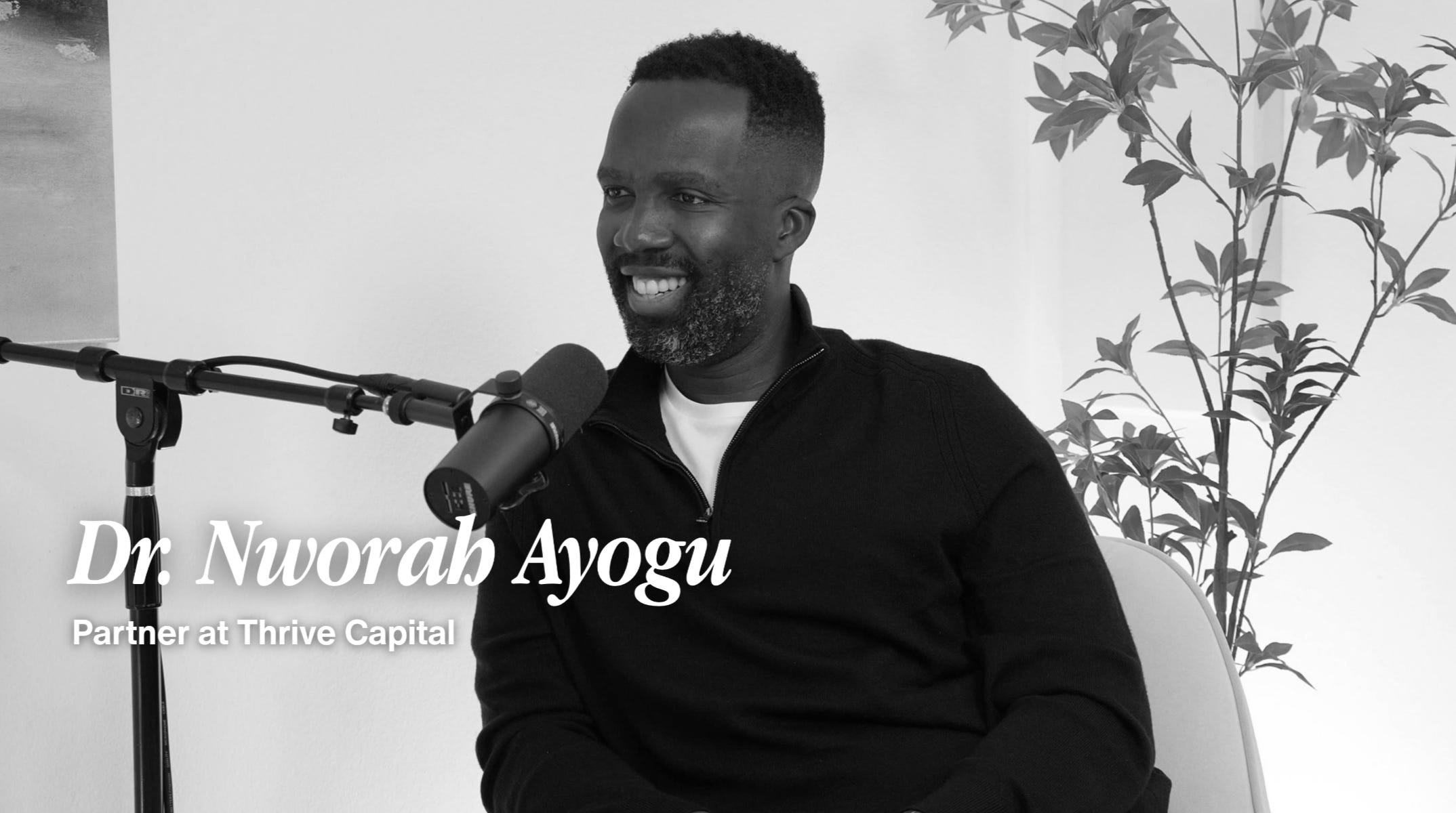
“For the last 10 years, we’ve spent about 40 trillion on healthcare. We have not moved our life expectancy an inch. And if that is not an indictment of the failure of the healthcare system, I don’t know what is.”
Over the same decade, cancer mortality fell sharply. Breast cancer and other diagnoses that were once often fatal now have high survival rates. With AI drug discovery, gene editing and personalized cancer vaccines reaching patients, Ayogu sees the next 10 years as the period when US life expectancy can move from 80 to 100.
“If someone told me, ‘Hey, we’re gonna spend a trillion more on healthcare this year, but everyone gets to live to 100,’ I’ll take that trade any day of the week.”
72% of Physicians Now Use AI
McKinsey reports 50% of healthcare organizations have deployed generative AI, and 80%+ have shipped first use cases to end users. The AMA reports 72% of physicians now use at least one AI use case, up from 48% in 2024. More than half of health systems that can quantify AI report 2x+ ROI, with the strongest returns in clinical documentation, denial prediction, coding and ambient listening.
Ayogu splits adoption into back office, front office and in office. Revenue cycle management in the back office moved first. Voice agents for scheduling and patient follow-up came next in the front office. In office, ambient scribes and OpenEvidence lead adoption.


In a study with Penda Health, an OpenAI clinical copilot cut diagnostic errors 16% and treatment errors 13%. OpenAI partnered with Boston Children’s and the Harvard hospitals on about 300 unsolved pediatric cases and reached new diagnoses for about 20 of them. Hundreds of millions of people ask ChatGPT health questions every week.
About 2 years ago, before o1 launched, Ayogu organized meetings between OpenAI leadership and top biotech, payer and health system CEOs. He had been testing the reasoning models on New England Journal of Medicine case studies each week. One biotech CEO in those meetings said the tools would never be useful in drug discovery. That same CEO has since announced billions of dollars of AI spend.
“These are cases that neither me nor my colleagues, some of the best doctors out there, maybe we would get it right 2 times out of 10. And OpenAI and the o1 was batting a 10 out of 10.”
“Coding is the use case that Silicon Valley cares the most about. Healthcare is the use case that Main Street cares most about.”

Thrive’s First Investment Was Oscar Health
Josh Kushner co-founded Oscar Health when he founded Thrive Capital, and Oscar was the firm’s first investment. Thrive has invested in healthcare since its founding and has put $1B+ into the sector.
Thrive manages over $65B in AUM and raised Thrive X at over $10B in 2026. The firm has incubated around 10 healthcare companies, and most of them, including Oscar, Cedar, Rightway and Cadence, are valued at over $1B. Oscar is a public Fortune 500 company.
The health portfolio includes Isomorphic Labs, Neuralink, Nudge, Fortell, Oscar Health, OpenEvidence, Formation Bio, Chai Discovery, OpenAI, Rightway, Cadence, Nourish and Abby Care.
Ayogu expects more trillion-dollar companies in healthcare. Lilly became the first by pairing better science with manufacturing scale during GLP-1 shortages and moving into care delivery with LillyDirect. He sees more biotech companies combining scientific invention with manufacturing, commercialization and care delivery to build larger TAMs.
“If you’re truly AGI-pilled, as they say, you should be actually long healthcare.”
“Our problems haven’t gotten smaller. The tools we have have gotten bigger.”

From Harvard Medical School to Amazon Pharmacy’s First CMO
Ayogu is a board-certified internist trained in neuroscience. He studied neurobiology and health policy as an undergraduate, then earned an MD from Harvard Medical School and an MBA, and completed residency at Columbia/NewYork-Presbyterian. He has held faculty appointments at Harvard and NYU.
He joined the founding team of Cityblock Health, a Thrive portfolio company that provides integrated medical, behavioral and social care for high-cost, high-need populations. Cityblock grew from an early-stage startup into national care infrastructure.
At Amazon, Ayogu helped turn PillPack into Amazon Pharmacy and served as its first Chief Medical Officer. He then launched Amazon Clinic, a virtual care business for low-acuity visits. Amazon then acquired One Medical, and the 3 businesses together became Amazon Health.
He joined Thrive in 2024 to lead healthcare investing. He has known Kushner and Kareem Zaki since college. Doctors he trained with in residency were the ones who first recommended OpenEvidence to him.
“People trust you with their medications. Will they trust you with their care delivery?”
“My clinician hat is what let me actually see, oh wow, this is a differentiated product.”
Thrive Backs Bilingual Companies
Thrive looks for healthcare companies that are world-class in both medicine and the underlying technology. Ayogu calls them bilingual.
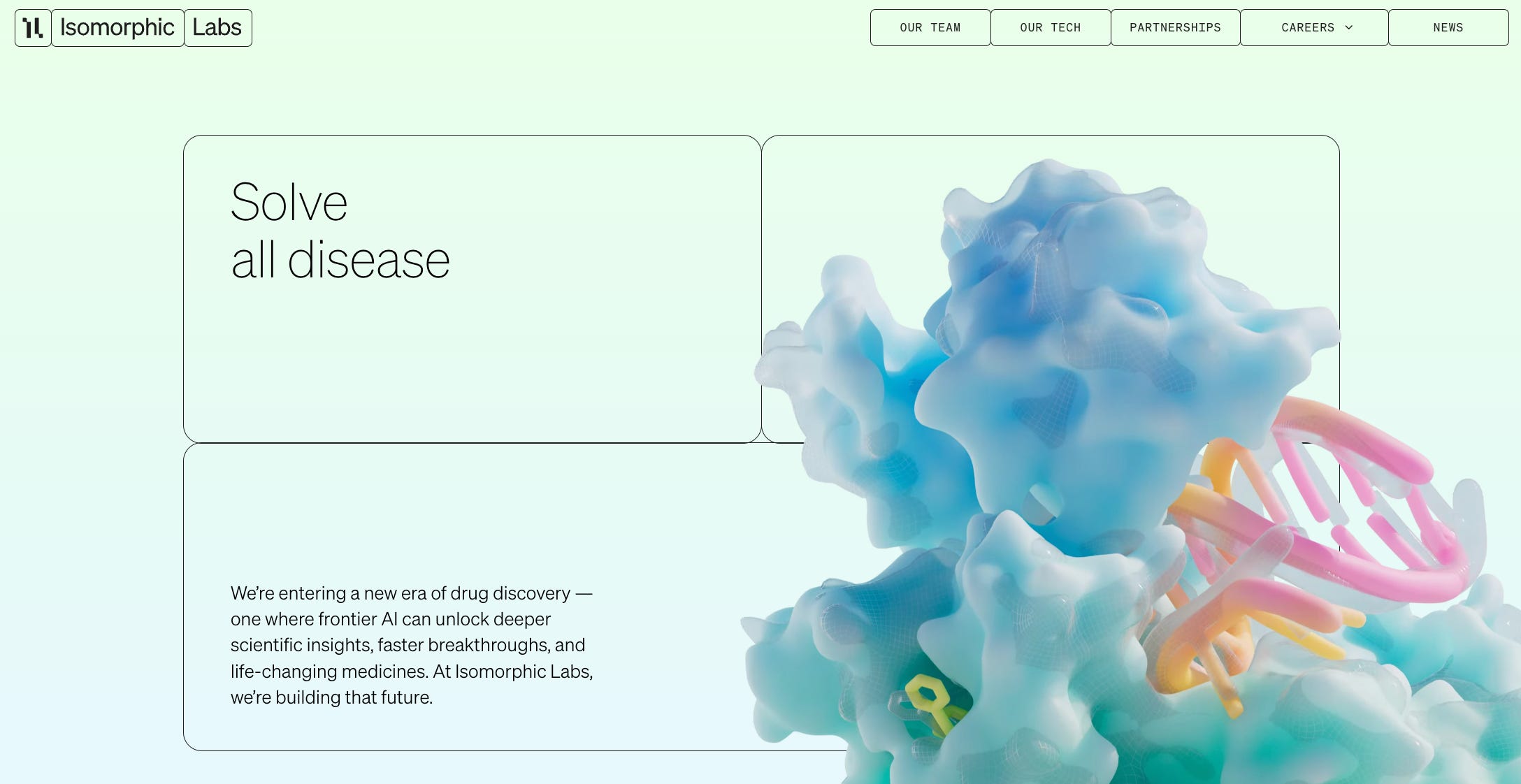
At Isomorphic Labs, the AI researchers come from the DeepMind lineage and are held to the same bar as Anthropic and OpenAI. The chemists and biologists match the talent at Lilly, Pfizer, the Broad Institute and the Wyss Institute. Isomorphic calls its model of integrating the 2 groups “the Iso way.”
Neuralink’s hardware engineers work at the level of SpaceX and Tesla Optimus. The company also employs practicing neurosurgeons, including some of Ayogu’s Harvard Medical School classmates, alongside radiologists, battery engineers and pathologists. Safety data on the brain is core to the product.
President DJ Seo leads much of the company. Neuralink created the brain-computer interface category, and its lead in recruiting top talent has compounded since.
“We want companies that are bilingual. So we want companies that are truly the best at both of what they do. They speak 2 languages fluently.”
“I’ve never met a company before that insourced their own pathology lab.”
“People who are truly N of 1 want to work with other N of 1 people.”
Isomorphic Labs Raises a $2.1B Series B
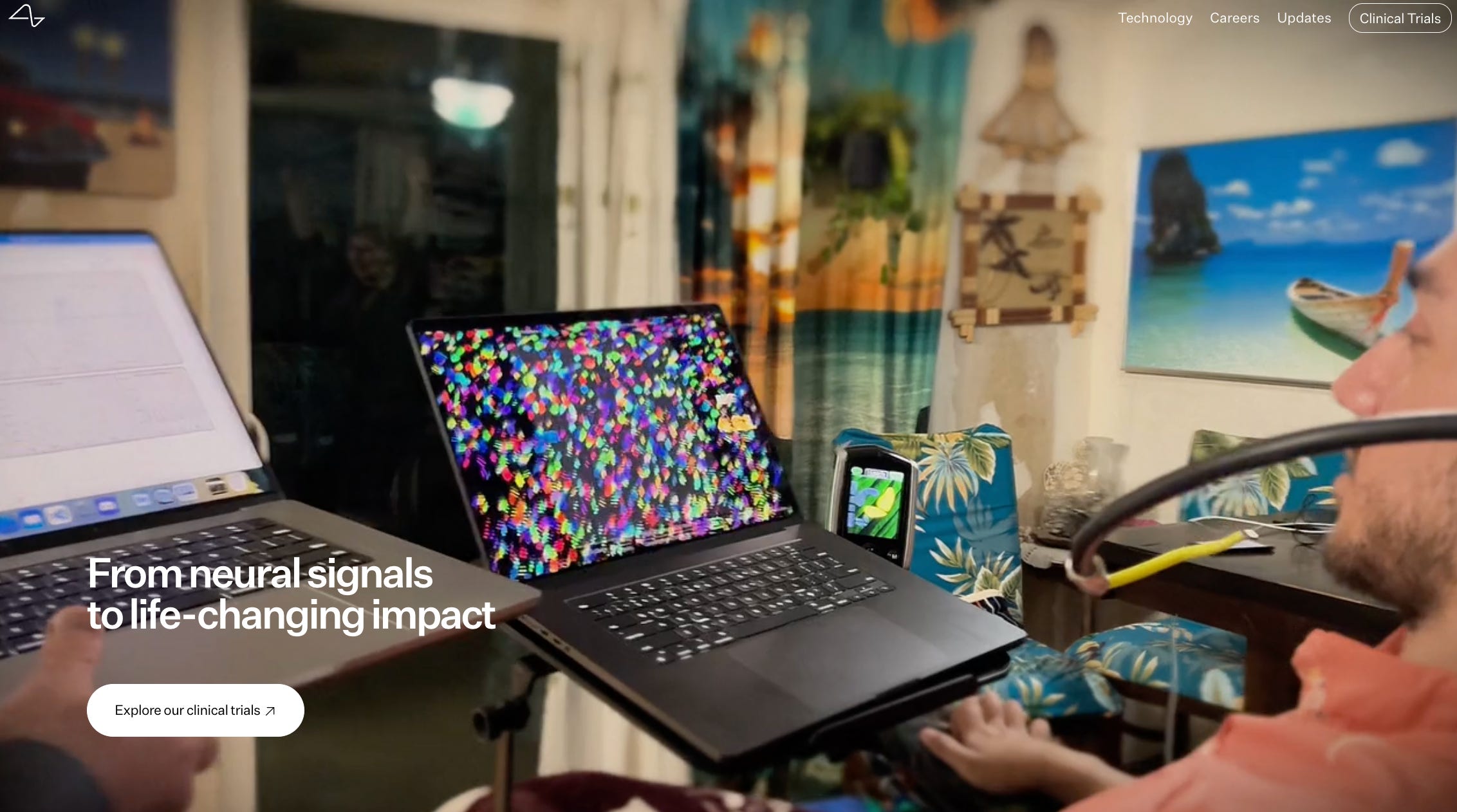
Bringing a drug to market typically takes 10 to 15 years and billions of dollars, with a failure rate above 90%. Isomorphic Labs, founded by Nobel laureate Demis Hassabis, is building AI models to compress that process.
In March 2025, Thrive anchored Isomorphic’s $600M round, the company’s first outside capital. In May 2026, Thrive led a $2.1B Series B to scale IsoDDE, Isomorphic’s drug design engine, toward the clinic. Pharma partners include Novartis, Lilly and J&J, with work spanning small molecules, antibodies, peptides, molecular glues and biologics.
AlphaFold solved protein structure prediction and folded 200M proteins in a single year. IsoDDE more than doubles AlphaFold 3’s accuracy on a hard protein-ligand benchmark, with a 50% success rate in the hardest bin and 17 wins where AlphaFold 3 failed. It performs 2.3x better on antibody-antigen prediction. In April, the company said it was “gearing up to go into the clinic.”
AI models have improved most at predicting which molecules bind to a target. The next problem is predicting a drug’s effects and side effects in cells, animals and people, which requires generating new training data. Ayogu expects bottlenecks to move into clinical trials and manufacturing as discovery speeds up.
“If we’re going to make this go from a 10-year process to a 4-year process, it both means that we need to get better at our molecular design. We have to get better at our in vitro testing. We have to get better at our in vivo testing.”
“Rather than having a 5% success rate, I can have a 60% success rate. That radically changes the things I’m willing to do all the way throughout the process.”


Neuralink & Fortell Restore Independence
Neuralink’s implant lets patients with ALS or paralysis control a computer with their minds. Many are 30 to 40 years old, including veterans injured in combat. Patients now use the implant to drive wheelchairs and operate robotic arms. A separate trial placed the device in the brain’s speech region to restore speech. The implant reads neurons through more than 1,000 electrodes on microscopic threads, and Neuralink built its own surgical robot to implant them.
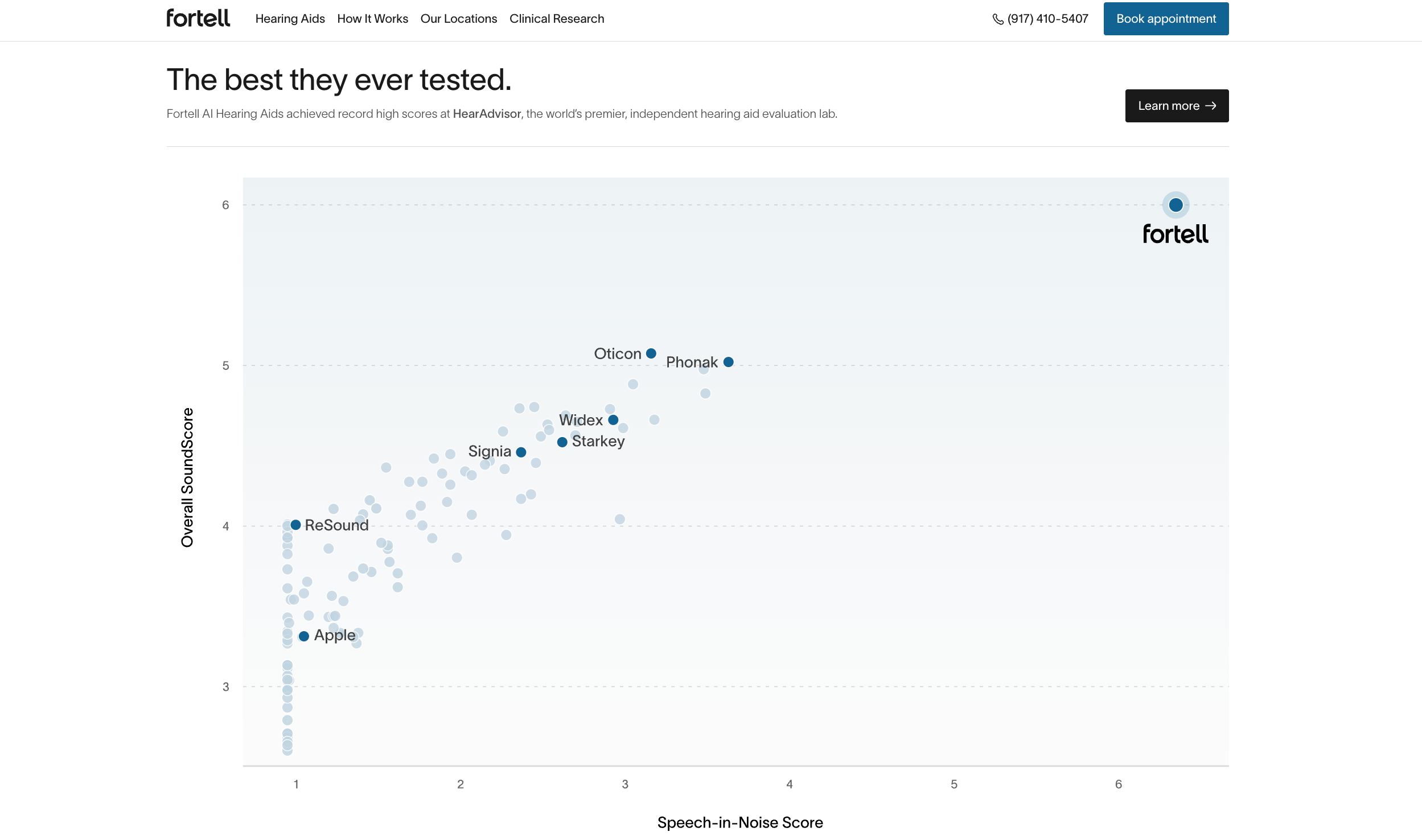
Hearing loss affects 1.5B people worldwide and is the largest modifiable risk factor for dementia. People with hearing loss have about a one-third higher likelihood of dementia. Most hearing aids amplify all sound, which makes noisy places hard to navigate.
Fortell, founded by former Butterfly Network hardware engineer Matt de Jonge, built a custom chip taped out at TSMC and uses AI to separate speech from background noise. Steve Martin and Henry Kravis are users. Fortell runs a waitlist and fits patients in person at its New York office while it scales production.
“I actually think Neuralink is a more interesting company than SpaceX. Hot take. In a lot of ways, if anything, the brain is vaster than space.”
“4.5 was their highest rating that a hearing aid had ever gotten on their 5-point scale. Fortell recently did it and got a 6.”

OpenEvidence and Cadence Expand Care Capacity
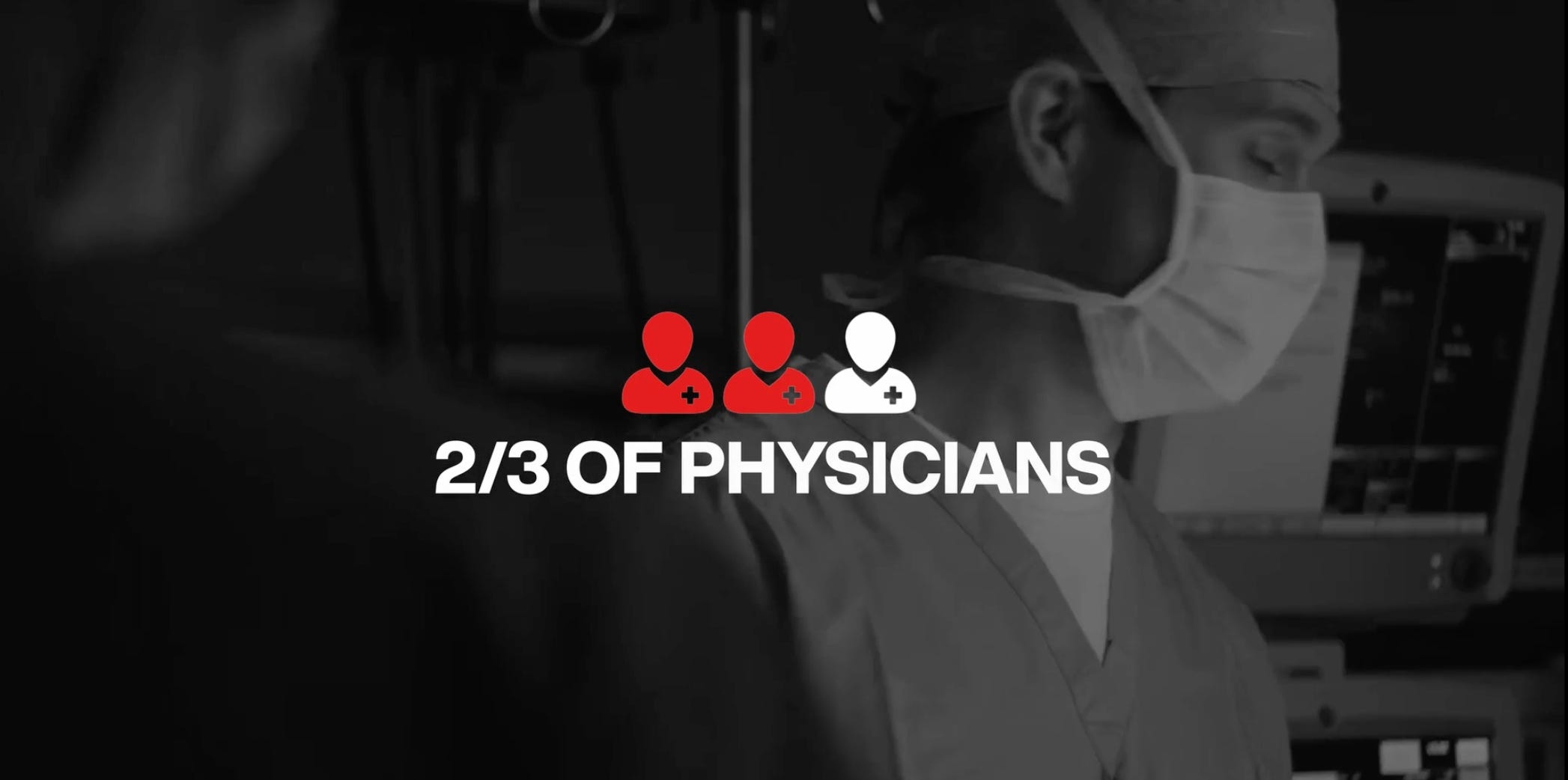
OpenEvidence is used by 65% of US doctors, with about 650,000 physicians active across roughly 27M clinical encounters as of April 2026. Epic, which has been in the market for nearly 50 years, sits at 44%, or about 450,000 to 500,000 physicians. OpenEvidence queries grew 10x in 17 months to 1M per day.
After testing the product himself, Ayogu drove to founder Daniel Nadler’s home in Malibu, and Thrive invested that day. In May, Cedars-Sinai gave clinicians enterprise access linked to EHR data. OpenEvidence has also added 357 peer-reviewed surgical videos through JOMI, specialty partnerships in ophthalmology and neuro-oncology, and ASCO oncology guidelines.
A patient who sees a doctor 4 times a year spends at most a few hours in the office and more than 8,000 hours outside it. Cadence covers those hours with remote patient monitoring for chronic disease. It ships blood pressure cuffs and scales to patients’ homes, monitors readings with AI and clinical staff, and integrates with health system EHRs across about 7,000 sites of care and over 100,000 patients.
Published results show a 25% reduction in hospitalizations, an 80%+ increase in blood pressure control and nearly a full point reduction in A1C. Cadence saves Medicare $2.5M every week. Its AI agents for medication titration match prescriber decisions 98% of the time, and calling patients the moment a reading comes in has raised reach rates 70%.
“I’ve never heard doctors rave about a clinical tool.”
“If you asked a 10-year-old, ‘What should healthcare be like?’ I feel like Cadence is what they would draw out.”

Oscar Health Grows Members 56% to 3.17M
Ayogu was a medical student when Kushner and co-founder Mario Schlosser walked him through Oscar. He told them it could not be done. Oscar used the ACA marketplaces to build a consumer-centric insurer on its own tech stack and claims infrastructure.
Oscar reached 3.17M members by the end of Q1 2026, up 56% year over year and one of the largest ACA plans. Q1 revenue rose 53% to $4.65B, and net income more than doubled to $679M. Operating margin rose 540bps to 15.2%, compared with 3.73% at Centene.
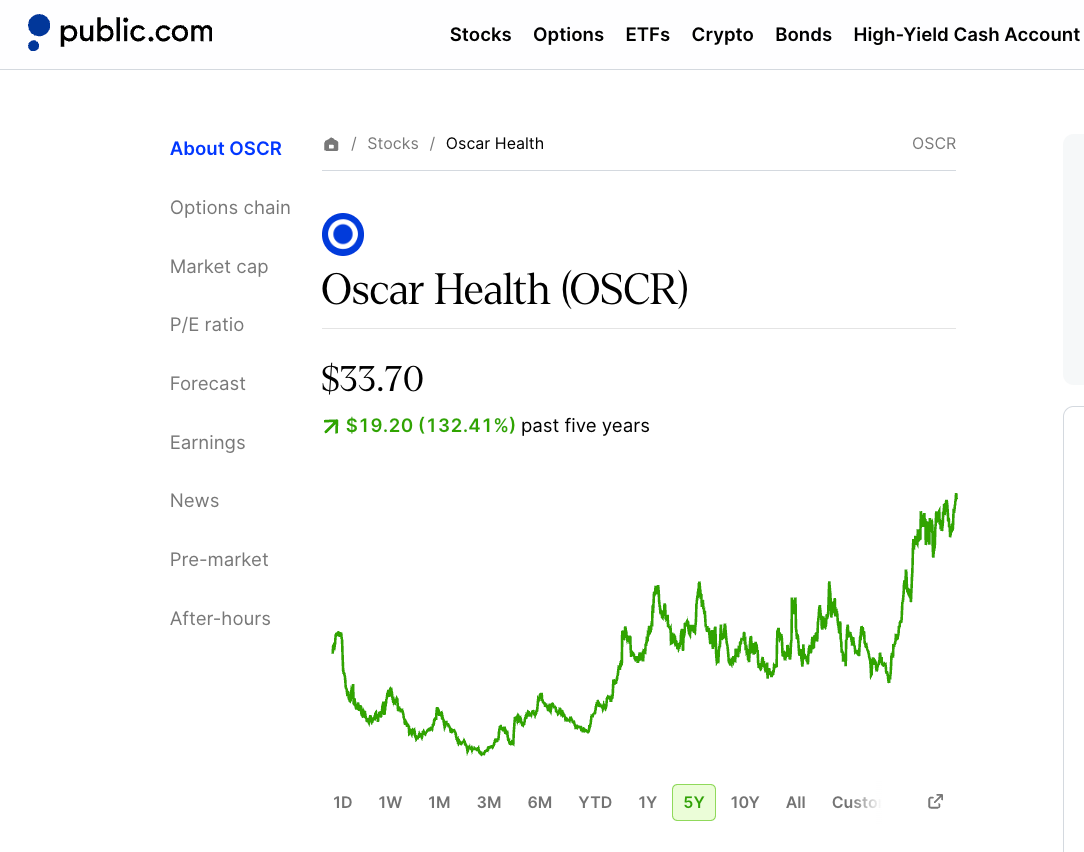
The stock traded near $2 in December 2022, down about 95%, and Thrive kept its holding across its funds. The stock is up 107% year to date and 167% over the last 3 months. Over 2 years it is up 56%, while a basket of public insurers is down 14%.
Oscar launched Oswell, an AI health agent that handles medications, test results, drug interactions, refills and appointment prep, and is expanding into menopause care. CEO Mark Bertolini, former CEO of Aetna, joined while Schlosser moved to CTO to focus on technology.
“The last health insurer that was created was in 1977. That was UnitedHealthcare. You can’t just make a new health insurer. It’s too hard. It takes too much scale. It takes too much capital.”
“You guys should call it Elphaba, ’cause you guys are kind of defying the gravity of health insurance writ large.”

N of 1 Medicine Built for a Single Patient
Baby KJ was born with a rare genetic disorder that left his body unable to process ammonia. More than half of infants with the condition die, and the standard treatment is a liver transplant. Doctors at CHOP and Penn sequenced his genome and designed a custom gene-editing therapy for his liver. He received it at about 6 months old, and he is now a toddler who walks and talks. The treatment cost about $1.5M to make and deliver.
Moderna and Merck are pairing a personalized mRNA cancer vaccine with Keytruda for melanoma. Each vaccine is built from the sequenced genome of the patient’s own tumor and trains the immune system to recognize that specific cancer if it returns. In trials, patients who received it were about 50% less likely to see their cancer return.
Thrive’s portfolio also targets access to existing breakthroughs. Nourish provides nutrition counseling for chronic disease, reports higher weight loss and GLP-1 persistence for patients on its platform, and raised a $100M Series C. Rightway works on pharmacy benefits and access to novel drugs.
“The fact that we now have these N of 1 diseases that can cure these rare genetic problems is amazing. The science has gotten there in so many of these things, but the bottleneck, again, it shifts.”
“How do we make it so it’s not a million and a half to develop this? What infrastructure needs to exist to make that more scalable and more repeatable and cheaper?”
Measuring Success in Hard Outcomes and the 10X Nurse
Ayogu measures healthcare companies on hard clinical outcomes and, at the national level, on life expectancy.
Surgeons spend about half their time on non-operative cases, and LA patients wait 3 to 4 months to see an orthopedic surgeon. If AI triages demand, wait times shorten and surgeons spend more of their time operating.
“Patient experience matters, but these are hard outcomes in terms of you being in the hospital. Is your blood pressure controlled? What’s your A1C? Are you having less strokes?”
“We talk a lot about the 10X engineer in tech. How do these tools not just enable the consumer, but how do they enable the rest of the system? Because as a nation, I think we need a 10X nurse a lot more than we need a 10X engineer.”
→ Listen on X, Spotify, YouTube, Apple
The material presented on Molly O’Shea’s website are my opinions only and are provided for informational purposes and should not be construed as investment advice. It is not a recommendation of, or an offer to sell or solicitation of an offer to buy, any particular security, strategy, or investment product. Any analysis or discussion of investments, sectors or the market generally are based on current information, including from public sources, that I consider reliable, but I do not represent that any research or the information provided is accurate or complete, and it should not be relied on as such. My views and opinions expressed in any website content are current at the time of publication and are subject to change. Past performance is not indicative of future results.
Paid Ad. Agents are an experimental AI tool. Its output may be inaccurate and is not investment advice. Public Holding’s, Inc. makes no guarantees about its accuracy or reliability—verify independently before use. Brokerage accounts & services provided by Open to the Public Investing, Inc. See additional disclosures at: https://public.com/disclosures/agenticdisclosures.
Healthcare investing seems like a different game when you have people on the team who actually understand the science behind what they're investing in.