

“Your # 1 job as a founder is to be right”
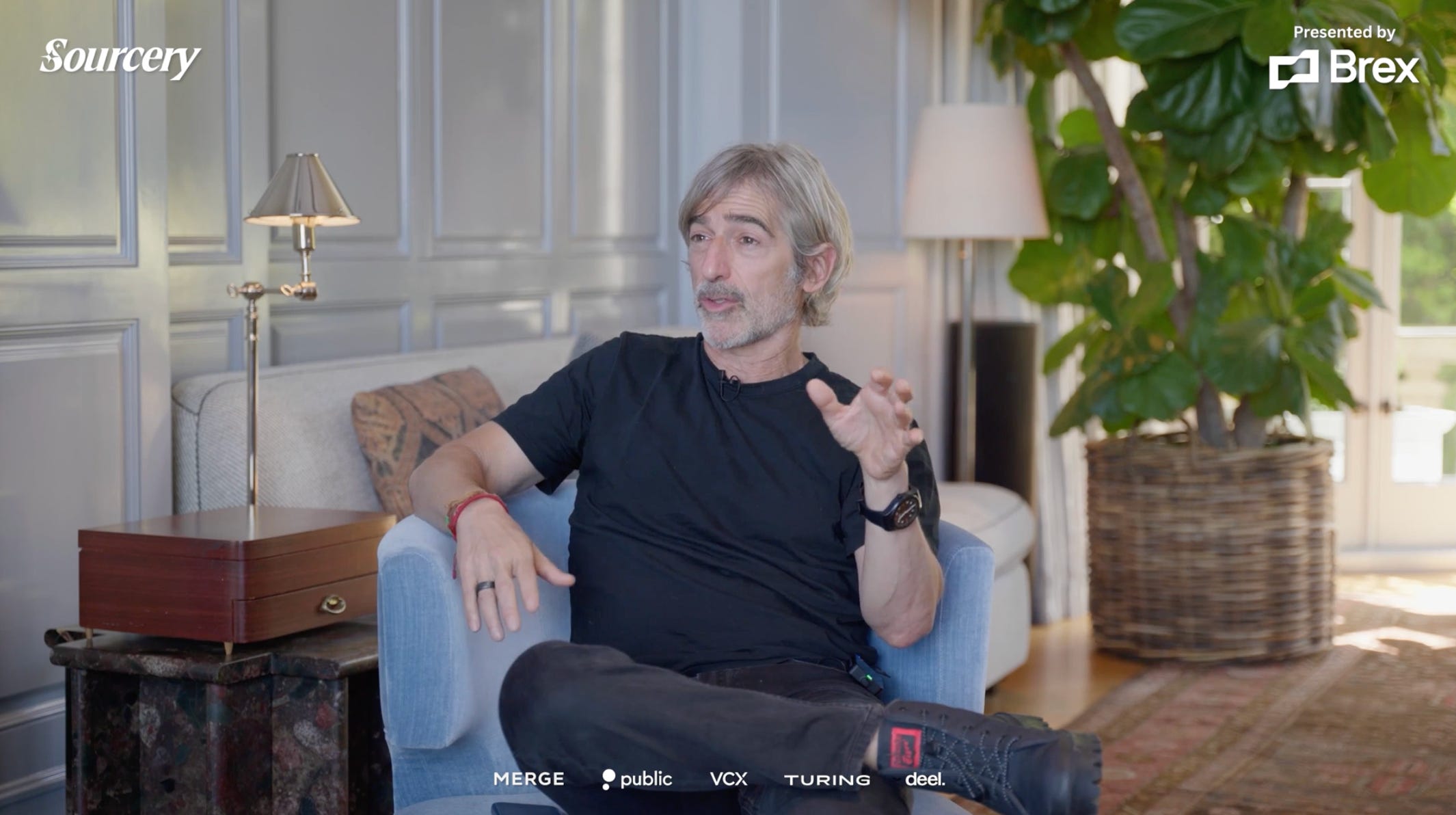
Mark Pincus, founder of Zynga and author of the newly released Life at the Speed of Play aka "Product Maker Bible" (HarperCollins, foreword by Reid Hoffman, joins Sourcery to break down the framework he’s used over the past three decades to build hit products. Pincus took games like FarmVille & Words With Friends to more than 1 billion users in 4 years and a $12.7B exit, and was an early investor in Facebook, Twitter, & Polymarket. This conversation is a tactical playbook for builders and the investors backing them.
→ Listen on X, Spotify, YouTube, Apple
Pincus covers separating winning instincts from losing ideas, his Proven Better New framework to increase odds of success, why consumer products win on “day 365 retention” instead of virality, how he represents the ‘dumb fucks’ and uses his iPhone home screen as market research, the tech assistant model & other unscalable hiring tactics he learned from Jeff Bezos, his new enterprise AI company Hivemind, how to spot a fake CEO, the 2006 think weekend he hosted with Peter Thiel, Mark Zuckerberg, + Sean Parker, & why he is an AI maximalist who still thinks consumer AI is un-investable.
Get the book now on Amazon or at lifeatthespeedofplay.com, + follow Mark on X @markpinc
Read more, watch more, listen to more, and subscribe to our newsletter for more conversations with the operators & investors building the next cycle.
𝐓𝐈𝐌𝐄𝐒𝐓𝐀𝐌𝐏𝐒
(00:00) Mark Pincus, Chairman & Founder at Zynga
(01:07) Why it took so long to write the book
(01:52) Why the book starts with Elon
(07:29) How frustration becomes market research
(08:16) The gap between Airbnb and hotels
(09:14) Why people don't want flight attendants on private jets
(13:13) The goal behind Life at the Speed of Play
(15:07) The instincts vs. ideas framework
(21:01) Do instincts improve with experience?
(22:49) A framework for building winning products
(29:38) Becoming a student of yourself
(31:16) Finding great ideas in overlooked products
(34:39) Why AI makes building easier and winning harder
(39:17) Cracking Zynga's record-setting retention
(44:59) What Mark looks for in startups
(50:42) Jeff Bezos' boldest decision
(53:03) What happens when founders realize they're wrong
(59:37) How Mark found talent others overlooked
(1:06:58) Don't be a fake CEO
(1:12:15) Inside Silicon Valley's early days
(1:14:58) Why he funded Friendster and Napster as "experiments"
(1:17:00) The think weekend with Thiel, Zuckerberg, Reid Hoffman & Sean Parker
(1:18:58) Launching Zynga when nobody believed him
(1:21:42) Why Mark is an AI maximalist
Brought to you by:
Brex—The intelligent finance platform: cards, expenses, travel, bill pay, banking—wrapped into a high-performance stack. Built for scale. Trusted by teams that move fast. visit → brex.com/sourcery

Turing—Turing partners with frontier AI labs to improve model capabilities in coding, reasoning, tool use, & multimodality, as well as with Fortune 500 enterprises to build & deploy end-to-end agentic AI systems in mission-critical workflows Visit: turing.com/sourcery
VCX—VCX is the public ticker for private tech, allowing investors of all sizes to invest in venture capital. View The Portfolio at GetVCX.com
Deel—Deel is the global people platform that helps startups hire, manage, pay, and equip anyone, anywhere. Trusted by more than 35,000 fast-growing companies, Deel is the people platform that just works, so teams can scale without the chaos. Visit: deel.com/sourcery
Public-–Investing platform Public just launched Generated Assets, which lets you turn any idea into an investable index with AI. With Generated Assets, you can build, backtest, refine, and invest in any thesis with AI. Gone are the days of one-size-fits-all ETFs. Try it today: public.com/sourcery
Merge—The leading provider of customer-facing integrations and agentic tools for frontier LLMs, Fortune 500 organizations, and B2B SaaS companies. Visit: https://merge.dev
Mark Pincus
The Winter That Built Silicon Valley Giants, & How to Create Billion-Dollar Products
Mark Pincus founded Zynga, took FarmVille and Words With Friends past 1 billion users in 4 years, and exited for $12.7B. His new book, Life at the Speed of Play, is out today, June 23, 2026 from HarperCollins with a foreword by Reid Hoffman. To go back to the beginning, his story starts in the years everyone else wrote off, the years that turned out to seed the next decade of giants.
Take-Two Interactive acquired Zynga on May 23, 2022, in a cash-and-stock transaction valued at $12.7 billion, ranking among the largest mergers in video game history. This acquisition combines Take-Two’s console and PC franchises with Zynga’s mobile portfolio to significantly expand its mobile gaming business and pursue annual cost synergies.
→ Listen on X, Spotify, YouTube, Apple
The quiet years that seeded the giants
Mark dates the stretch from 2002 to 2007 as the nuclear winter for the internet, and he says it with a smile, because the people who stayed are the ones who built the next cycle. San Francisco had emptied out. “It was like they’d burned the boats, and there was like... It was a ghost town,” he told me. The MBAs and the VCs had cleared out, and many of his friends left the industry entirely for real estate and other businesses.
A small group stayed and kept the flame. Mark’s read at the time was that the behavior had not changed, only the sentiment, and that the noise leaving was a gift. “It’s not over, folks. The dogs are still eating the dog food. They’re just not eating pet.com dog food.”
The proof came from the numbers. In Q4 2002, Mark and Reid Hoffman looked at the figures Amazon had just printed. “Holy fuck, they just grew everything 25% year over year,” he remembered thinking. “This shit is not over, it’s just starting to happen.” That instinct, watch what consumers actually do and not what Wall Street prices in, is the same one he says he still runs today. He pointed to the early mobile phone industry, where valuations spiked and fell while usage kept climbing the entire time.
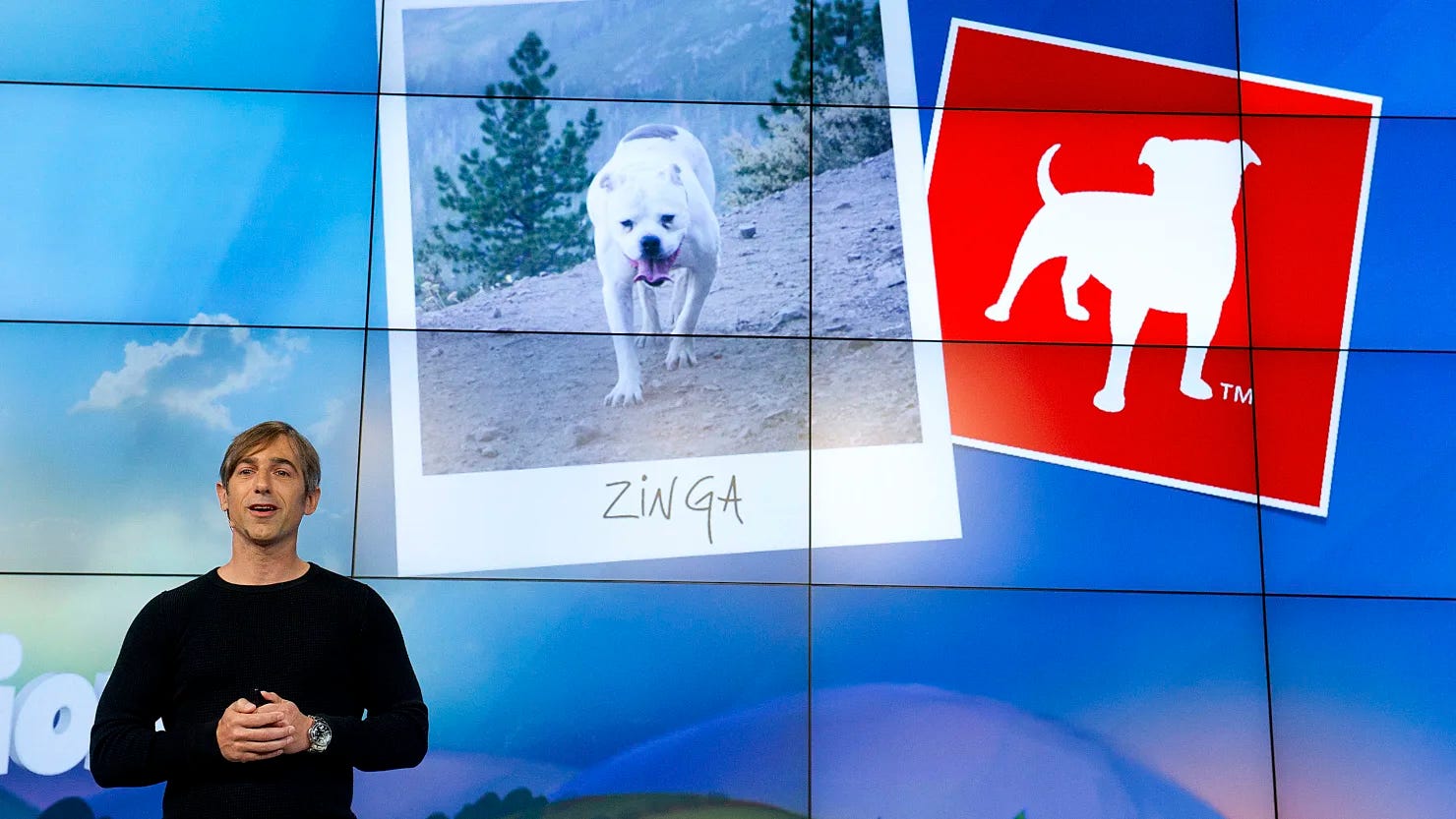
He turned out to be right. The companies started in that supposedly ‘dead’ window, LinkedIn in 2003, Facebook in 2004, Twitter and Zynga in 2006 and 2007, became the $10 billion to $1 trillion businesses today that now define the industry. Facebook, worth $100 million when it was breaking out in 2006, became Meta. The winter was not the end of the boom. It was the ground the next one grew from.


The 2006 outsiders who turned out to be right
In March 2006, Mark hosted a *think weekend* at his Colorado ranch, which he is careful to describe as a ranchita, 3 acres, beautiful and broken down. The guest list was Peter Thiel, Reid Hoffman, Mark Zuckerberg, and Sean Parker, with about 35 people total. Thiel presented on the housing bubble he had bet his hedge fund Clarium on too early. That same fund held Palantir, which he handed out as a stub to everyone at the end.
What stands out is how far outside the establishment the group felt at the time. “In a way we were all outsiders. I know now it seems like the insiders, but none of us were part of a branded venture fund.” None of them sat inside a Sequoia or Kleiner or showed up at the Allen conference. They shared one conviction nobody else wanted, that consumer internet still mattered, and they were early on every part of it.
That conviction produced a working theory of where the value would go. Reid coined the term Web 2.0 out of these brainstorms, and the underlying rule was simple. “If it can be free, it will be free,” especially data. “The data wants to be free.” Mark and Reid put up the original money for Friendster “as a science experiment. We didn’t think it would work.” Mark put up all the original money for Napster, since Sean Parker had worked for him as an intern at 16. The bets were small, the conviction was large, and the thesis held.
Everyone said no, & he was right anyway
Mark launched Zynga in the spring of 2007 as a project, while living in New York. He was 41, had a few exits behind him, and had a clear hunger to get back to building consumer products. The people who had backed him for years would not fund it.
He went to Fred Wilson, who has backed everything he has done, and asked for a million dollars at 25% of the company. Fred’s answer: “Mark, you know I love you and I’d back anything, but I have a tough time believing that you’re really gonna go back to work.” First Round had a standing offer of a $250K bridge note at a $10 million cap for any second-time founder, sight unseen. Mark met Josh Kopelman at Penn Station and said, “I’m here for my money. Can I have my 250K?” Kopelman told him, “Mark, I just have trouble believing that this will be your company.”

The doubt was about the whole category, not just him. The advice he kept hearing was to go be a VC, because “you’re making dumb little apps on Facebook.” As he put it, “It was me and Max Levchin, and a bunch of college kids and people in China.” He sees the same energy in the best opportunities today. “Consumer, I think, always seems un-investable. It was like that then. It feels like that again now.” Even the games bet drew skepticism. Dave Morin at Facebook sat him down before the platform launched and said, “Mark, anything but games. They’re just not viral.” Games were not viral. They had something more durable, retention, and that is what Mark built the entire company around.

Retention won, and the household names followed
Zynga built every game against day 365 retention, the metric Mark cared about most, using social loops that reminded players and their friends to come back. The engine worked. By 2009, as he writes in the book’s OKR review, the company had “9 of the top 10 social games” and was “as big as our next 11 competitors combined. Our games had become household names.” FarmVille and Words With Friends carried that engine past 1 billion users in 4 years, and Zynga Poker and Words With Friends still rank among the company’s biggest games nearly 20 years later.

The doubt that met him at Penn Station in 2007 ended in one of the largest deals in gaming history. Take-Two announced its acquisition of Zynga on January 10, 2022, in a deal valued at $12.7 billion in cash and stock, and closed it in May 2022. Zynga shareholders received $3.50 in cash and 0.0406 of a Take-Two share for each Zynga share, bringing a library of games downloaded more than 4 billion times under Take-Two. The ‘little apps on Facebook that nobody wanted to fund’ became a $12.7 billion company.
Why the book starts with Elon
Life at the Speed of Play opens on Elon, because Mark wanted readers to feel the ceiling of what is possible. “I’d like people to picture the kinds of crazy things that Elon can go do that none of us can do.” Fart mode in a car. Deciding to start a tunnel boring company while stuck in LA traffic, then raising $1 billion within a month of the tweet. “He’s just having fun. You can tell by watching him.”
Keeping Elon in the opening took some ownership. His co-author, publisher, and chief of staff pushed back. “Mark, don’t go there. Elon’s controversial, and you shouldn’t just call him Elon, you should say Elon Musk.” Mark kept him, and used it to make a point about voice. “Why can’t we just be fucking normal? Why do we have to be something else the minute that we have a camera on or we’re publishing?”
The everyday version of that freedom, he argues, is posting. His most viral tweet ever came from a late check-in at the Peninsula in Chicago, when he asked, “Why is it that the nicer the hotel is, the longer it takes them to check us in?” It cleared roughly 13,000 likes. He treats that charge as market research, a live signal of something people instinctively know could be better. And he frames the upside of getting product direction right in hard numbers. A correct roadmap can put 80% of your engineering days into shots on goal, against maybe 20% for your best competitors, which is 400% of their efficiency.

Trust the instinct, free yourself to find the A
The most freeing idea in the book, and the core of the Stanford course Mark has taught for 10 years, is one distinction. “The most foundational thing we need to get good at as founders, product founders, is separating our winning instincts from our losing ideas.” The instinct is almost always right. The first idea you attach to it usually is not, and realizing that is what opens the path forward.
His own examples are the proof. He registered smstaxi.com and wrote a full business plan years before ridesharing like Uber & Lyft took off, then set it aside. “My instinct was right, obviously, that eventually we would order cars through our phones, but that one idea I put on it was wrong.” Tribe.net went further. He started one of the first social networks, a month or two after Reid began LinkedIn and before Facebook and MySpace, and everything worked, virality included, and it still missed because the idea was wrong. “Tribe became three different industries, but one failed company.” The media tear sheet puts it in numbers: the product instinct is right about 95% of the time, and the specific idea is wrong at least 75% of the time.
Letting go of the merely good idea is what unlocks the great one. “A B+ is the enemy of an A. A B+ often, if we stick with the B+, is taking up space. It’s distracting us from unlocking the A.” On knowing when you have the real thing, he compares it to finding a partner. “If you’re asking, ‘Is this it? Could it be it?’ It’s definitely not it.” When it is right, the work stops feeling like a fight. “Life is too short to struggle.”

Proven, Better, New
The framework for stacking the odds in your favor is Proven Better New, which the book was nearly titled after. Mark’s instruction is to get out of your own way. “We should be like scientists with white lab coats.”
“You need to feel no attachment or connection to your ideas, have a white lab coat, and just do science experiments.”
Proven means deconstructing what already works for your exact audience and use case. Better means the small things that 10 out of 10 of that audience agree are improvements, often something as plain as price or removing a download step. New is the novel bet, “and we have to accept that the new will probably fail.” Doing proven and better well is what keeps a failed new idea from reading as a false negative.
His example is Nikita Beer and tbh, who found a working honesty-box concept buried inside a narrow Arabic-language product, copied it, and put it front and center. Mark runs the same test on himself. Any app that earns a spot on his iPhone home screen gets studied, because he has calibrated that he represents the early majority about 18 months out. He used to put the stick value of that signal at a billion dollars and now says maybe 5 billion. He cold emailed Raya, then invested and put up most of the money.

The hard part is distribution, and Zynga is the playbook. “We download an average of zero new apps a month.” Last year about 40,000 games launched in the App Store and 0% sustained a top 25 position. So Zynga built every game against day 365 retention, using social loops to pull players and their friends back. Zynga Poker and Words With Friends are still among the company’s biggest games nearly 20 years later.
The deepest lever was reward. “The highest reward for most people is social status.” Zynga even counted the marriages that came out of strangers meeting in its games and treated them as the ultimate proof of engagement.

Be right, then have the nerve to act on it
“Your number one job as a founder is to be right.” The harder, more inspiring part is what you do once you see the truth, especially when your own team disagrees. Mark points to Jeff Bezos launching Amazon Prime against his CFO and most of the company, on an instinct built from watching how people behaved at Costco. The discipline is refusing to confuse conviction with evidence. “Hope is not a strategy.” The job is to stay honest and keep moving toward it. “We have to be a heat-seeking missile, and we have to be guided by this pursuit of the truth and this intellectual honesty.”
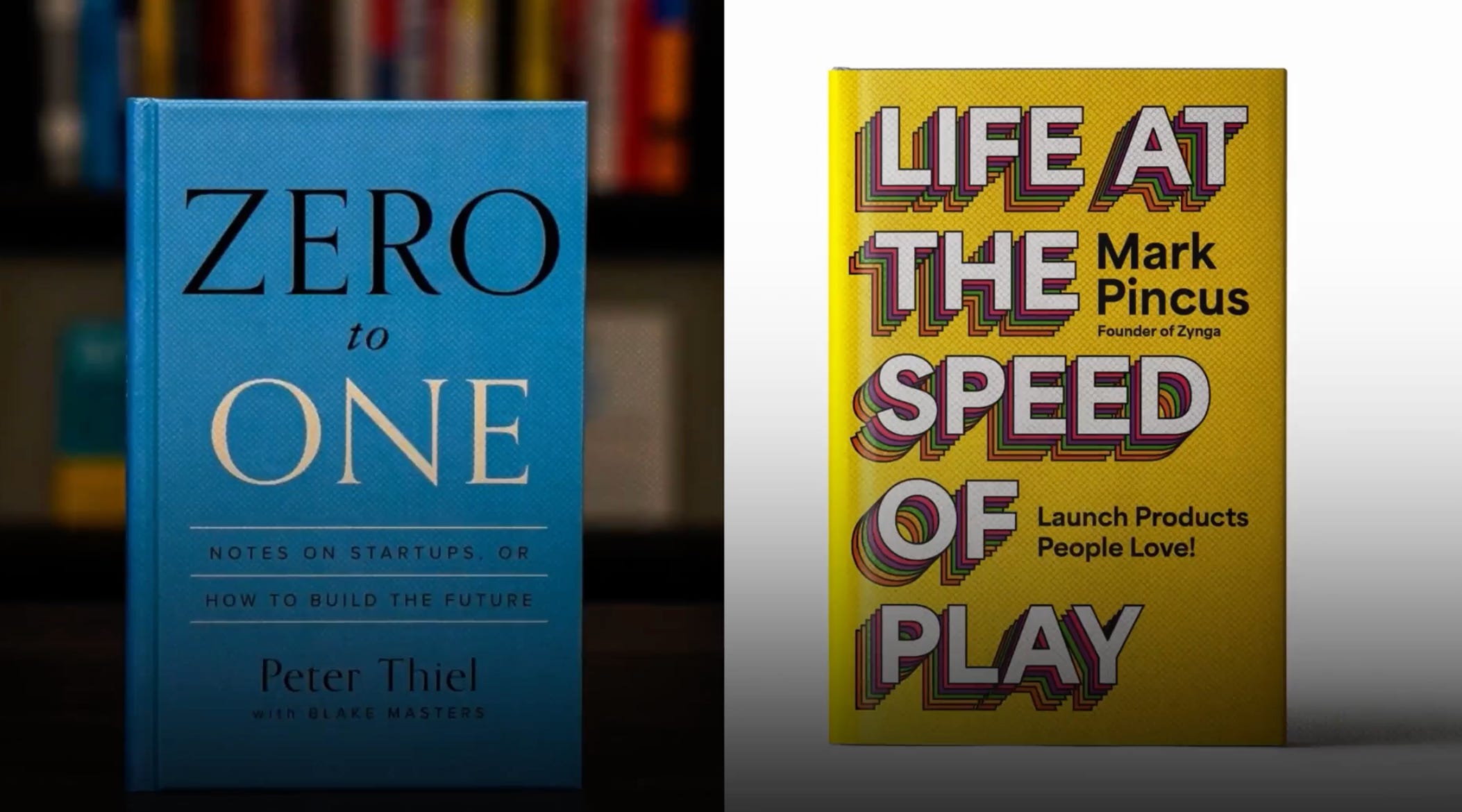
Get the book now on Amazon or at lifeatthespeedofplay.com, + follow Mark on X @markpinc
That same clarity shapes how a founder should spend a day. “Don’t be a fake CEO.” His definition of the real job is narrow and freeing. “My job is to work with great product teams on great products that our users love. That’s my job. Nothing else is my job.” He had his assistant track what share of his calendar went to the real work versus conferences and press, and aimed to keep it above 50%. His method for scaling judgment is the tech assistant, a lineage he traces from Andy Grove to Bill Gates to Jeff Bezos, whose entire C-staff started in the role. “What you’re really doing is transferring your vampire blood.” Ian Cinnamon, an early MIT grad whom Zynga’s poker team had written off as too entrepreneurial, became Mark’s tech assistant and now runs Apex.
On AI, Mark is an optimist with his eyes open. “I’m an AI maximalist.” He separates this cycle from 2000 on the fundamentals. “It’s not dark fiber. These GPUs are burning hot, and people are getting real value out of it.” He is invested in NVIDIA and the memory names and likes the setup. “I love the trade because they’re at a PEG ratio below one.”
He thinks today’s $2 to $5 trillion companies become $10 to $20 trillion companies. He still calls consumer AI un-investable for now, naming only Suno and Midjourney as cases that make sense to him, and he does not buy that LLMs eat every business, pointing to Cursor and Harvey as proof the best wrappers found real footing and keep going deeper. The throughline from the winter of 2002 to the AI cycle of 2026 is the same one that has carried his whole career: watch what people actually do, trust the instinct, and have the nerve to build it.
→ Listen on X, Spotify, YouTube, Apple
Get the book now on Amazon or at lifeatthespeedofplay.com, + follow Mark on X @markpinc

The material presented on Molly O’Shea’s website are my opinions only and are provided for informational purposes and should not be construed as investment advice. It is not a recommendation of, or an offer to sell or solicitation of an offer to buy, any particular security, strategy, or investment product. Any analysis or discussion of investments, sectors or the market generally are based on current information, including from public sources, that I consider reliable, but I do not represent that any research or the information provided is accurate or complete, and it should not be relied on as such. My views and opinions expressed in any website content are current at the time of publication and are subject to change. Past performance is not indicative of future results.
Paid Endorsement. Brokerage services by Open to the Public Investing Inc, member FINRA & SIPC. Advisory services by Public Advisors LLC, SEC-registered adviser. Crypto trading provided by Zero Hash LLC, licensed by the NYSDFS. Generated Assets is an interactive analysis tool by Public Advisors. Output is for informational purposes only and is not an investment recommendation or advice. See disclosures at public.com/disclosures/ga. Matched funds must remain in your account for at least 5 years. Match rate and other terms are subject to change at any time.
This is an absolute masterclass, Molly. First time reading and engaging here, and I have to say the depth of your questioning in this piece is spectacular. Mark Pincus hitting on the paradox that "AI makes building easier and winning harder" is the most precise real-time diagnostic of the current cycle I’ve read all year.
What Mark is describing is the exact tipping point of the Zero-Marginal-Cost Trap. When token input costs collapse to $1 per million, the ability to rapidly spin up functional apps or generate infinite synthetic features drops to a zero-value commodity. If anyone can build a "B+" product overnight using rented compute, open execution ceases to be a proprietary corporate moat.
This is why his historical focus on Day 365 Retention over ephemeral virality is so critical right now. In a hyper-commoditized ecosystem, you cannot purchase long-term enterprise value with rented LLMs or frictionless distribution. True, enduring retention is anchored in structural scarcity—what we define as Trust Capital.
At UC Berkeley Haas, I am formalizing this exact framework. This Wednesday in The Unclonable Boardroom, I am releasing the mathematical foundations of the Trust Capital Audit Index (TCAI) to give boards and growth allocators a concrete diagnostic tool. We look at the friction differential between synthetic loops and Rh (Human-Verified Relationship Loops) to measure an enterprise’s true, uncopyable moat.
Pincus's "Proven Better New" framework is the perfect operational front-end for this deconstructing what already has deep human traction before layering on the novel tech experiment. Really looking forward to following your coverage as the next cycle unfolds.