


Mercor’s Meteoric Growth
Mercor has raised $750 million in a Series D at a $20 billion valuation, with participation from Nvidia, Benchmark, General Catalyst, Funds managed by affiliates of Apollo, XTX Ventures, Salesforce, and others.
→ Listen on X, Spotify, YouTube, Apple, Linkedin
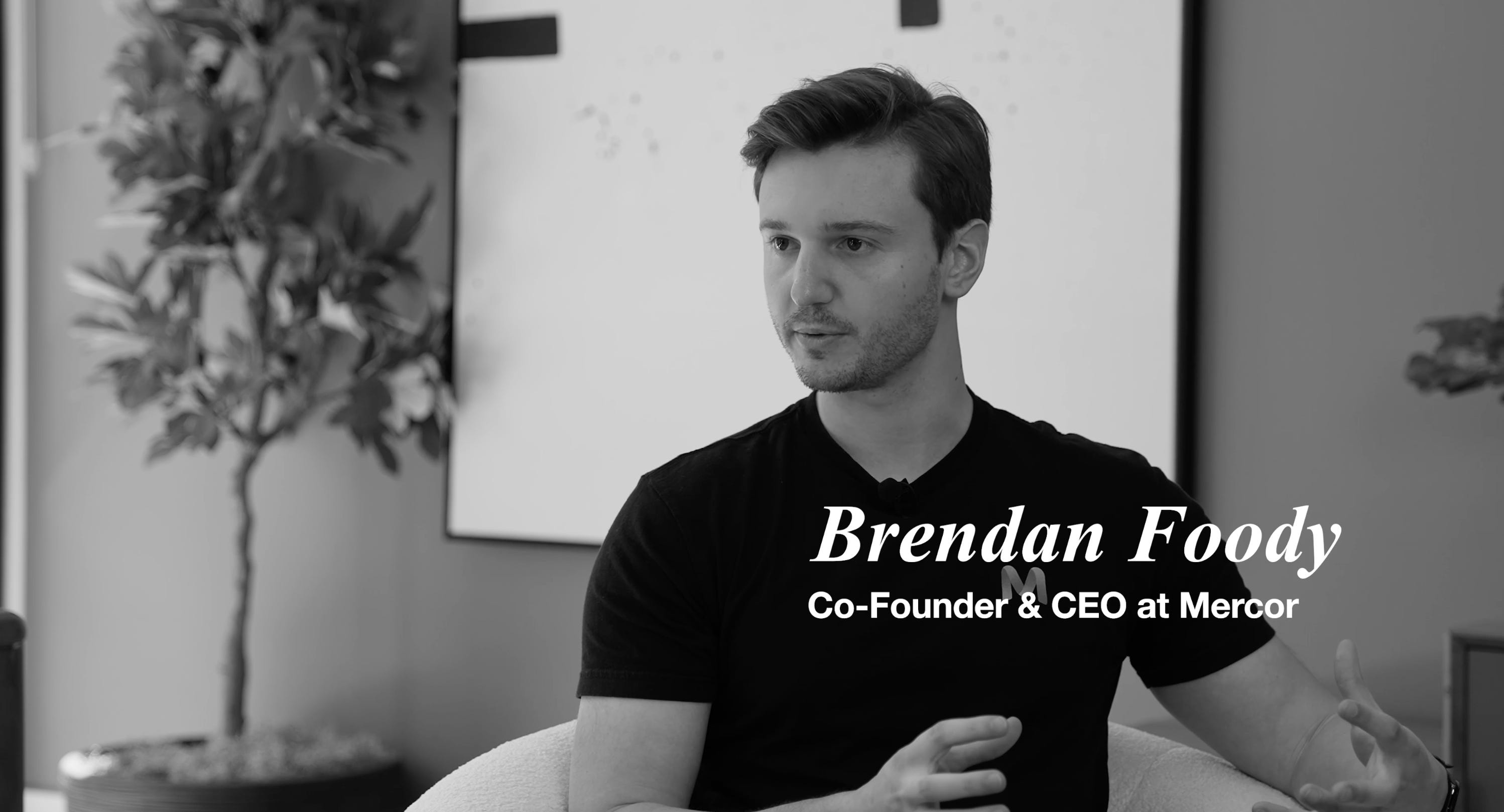
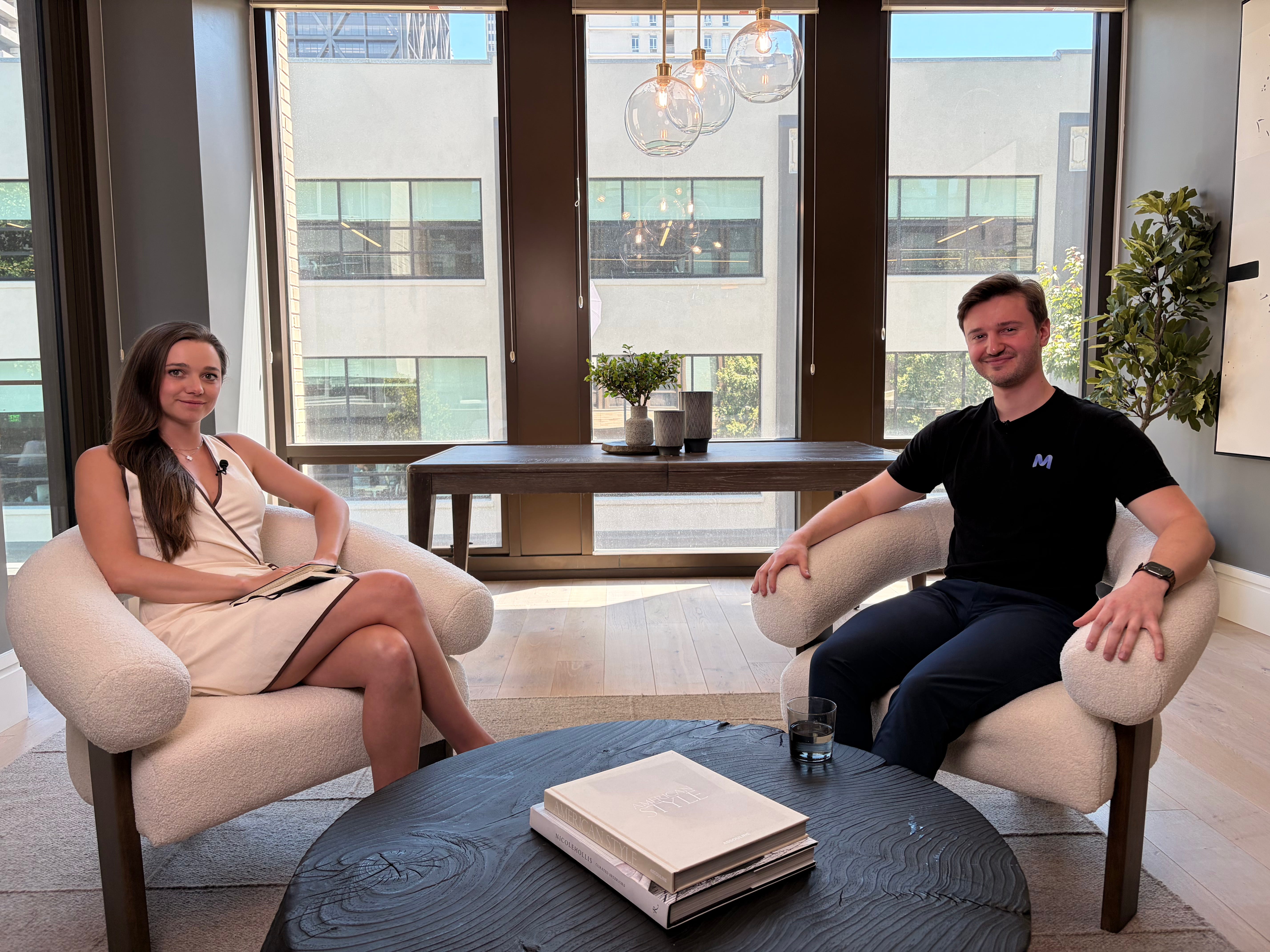
I sat down with Co-Founder & CEO Brendan Foody to discuss how Mercor has grown more than 5X on a mid-nine-figure base, built a network of over 5 million experts, and scaled to more than $5 million in daily payouts to people helping train frontier AI models.
Founded in 2023 by college dropouts, Mercor has evolved beyond AI-powered recruiting into building the data, evaluations, and reinforcement learning environments used to train AI systems on real professional work.
Brendan explains why he believes every Fortune 500 company will eventually build its own AI intelligence, why human expertise becomes more valuable as AI improves, and how Mercor plans to expand from frontier labs into the broader enterprise economy.
We also discuss Mercor’s acquisition of Deeptune, its work with companies like Harvey, the economics of AI inference and post-training, competition with Scale AI, the future of application-layer companies, and Mercor’s long-term ambition to become a category-defining business.
𝐓𝐈𝐌𝐄𝐒𝐓𝐀𝐌𝐏𝐒
(00:00) Brendan Foody, Co-Founder & CEO Mercor
(01:00) Mercor’s Path to a $1T Company
(02:22) Mercor’s 3 Products
(04:05) $5M a Day in Expert Payouts on Stripe Connect
(05:40) Why Mercor Is Not a Marketplace
(08:51) Is Human Data a Durable Category
(12:20) How Mercor Finds and Evaluates Experts
(15:45) Holding Category Leadership With a Founding Team in Their Early 20s
(18:00) Chips on the Shoulder and Avoiding Mimetic Competition
(28:25) Why Mercor Acquired Deeptune
(31:22) Turning Down Acquisition Offers
(34:40) Harvey, LAB and Why the Model Is the Product
(41:30) Why Data Is Mispriced in the AI Stack
(43:40) Every Fortune 500 Becomes a Neolab
(49:55) IPO Timeline and the Next 12 Months

Brought to you by:
Brex—The intelligent finance platform: cards, expenses, travel, bill pay, banking—wrapped into a high-performance stack. Built for scale. Trusted by OpenAI, Anthropic, Vercel, Granola, Deepgram, & Sourcery.. teams that move fast AF. visit → brex.com/sourcery

Harvey—The AI platform built for legal work, is helping the best firms and companies close deals faster. More than 200,000 lawyers, 80% of the Am Law 100, and over 20% of the Fortune 500 build with Harvey. Visit: Harvey.ai
Zone—develops next-generation data center campuses, partnering with AI companies, site developers and technology leaders to bring compute online faster and at scale. Visit: zonefrontier.com
Mercor—The human intelligence behind frontier AI. Frontier labs and leading enterprises use Mercor to turn the knowledge of 5M+ experts into the data, evals and benchmarks that make AI better at real work. Visit: http://mercor.com/sourcery
VCX—VCX is the public ticker for private tech, allowing investors of all sizes to invest in venture capital. View The Portfolio at GetVCX.com
Deel—Deel is the global people platform that helps startups hire, manage, pay, and equip anyone, anywhere. Trusted by more than 35,000 fast-growing companies, Deel is the people platform that just works, so teams can scale without the chaos. Visit: deel.com/sourcery
Public—Investing platform Public is the world's first agentic brokerage. You can invest across stocks, options, bonds, crypto, event contracts, & more, then automate anything with AI Agents. Seriously, just tell an Agent what you want—from "Set up a buy-the-close, sell-the-open strategy for me" to "Automatically sweep any cash over $10k from my bank to my brokerage account." Agents can monitor markets, run strategies, & manage your cash 24/7. Get started: public.com/sourcery
Mercor Hits $20B Valuation on $750M Series D
$750M Series D at a $20B Valuation
Mercor has raised a $750M Series D at a $20B valuation. The round included an employee tender and participation from funds managed by affiliates of Apollo, Benchmark, Felicis, FundOMO, G Squared, General Catalyst, Glade Brook Capital, Nvidia, Salesforce, Sapphire Ventures, StepStone Group, XTX Markets and Zoom. In August, existing investor General Catalyst was reported to be in talks to lead the round.
The new mark doubles Mercor’s last priced round. Mercor raised a $350M Series C at a $10B valuation on October 27, 2025, led by Felicis, with Benchmark, General Catalyst and Robinhood Ventures participating. Before that, General Catalyst led a $3.6M seed in January 2024, Benchmark led a $30M Series A at $250M in September 2024, and Felicis led a $100M Series B at $2B in February 2025. General Catalyst has invested in every round since the seed.
Revenue has grown more than 5X since September 2025. The customer base now extends beyond frontier labs to big tech, open model developers, application layer companies and the Fortune 500. The new capital goes toward evals and post-training infrastructure, more environments for agents to learn complex workflows, and new offices in New York and London.
“It’s this very special opportunity where we found this giant market before anyone else, and we’ve become the category leaders in how we create this really important new category.”
→ Listen on X, Spotify, YouTube, Apple, Linkedin
Training Agents Once Across 800+ Occupations
Foody’s case for Mercor as a $1T company starts with how people will contribute to the economy. Most work today is repetitive, such as answering support tickets, redlining contracts or editing a podcast into different formats. He expects that work to shift to people training an agent once to handle those tasks.
“What we see emerging within enterprises is the shift away from all these repetitive tasks and how work has been done in the past, and moving towards people contributing to the economy through creating evals, updating skills files, training agents how to automate all this repetitive work.”
The US has more than 800 distinct occupations, each with workflows that models have yet to be evaluated against. Agents in production need 2 kinds of knowledge, how a task gets done and how a specific company does it within its own systems, policies and quality bar.
Mercor spends 3X as much on inference as on employee salaries. The company projects that if that ratio holds as AI spreads through the economy, it points to double-digit GDP growth over the next 5 years, nearly 3X the historical rate.

3 Thiel Fellows & an AI Interviewer Built in April 2023
Mercor was founded in 2023 by Brendan Foody, Adarsh Hiremath and Surya Midha, Bay Area high school friends who competed together on the Bellarmine Speech and Debate Team. Foody studied economics and Midha foreign service at Georgetown, Hiremath studied computer science at Harvard, and all 3 left school to build Mercor and later became Thiel Fellows. The original business matched engineers in India with US companies that needed freelance coders. Hiremath, formerly CTO, is now co-CEO, and Midha, formerly COO, is board chairman.
The first product was an AI interviewer, built in April 2023 while the founders were still in college. It ran with a 7 to 8 second latency, preprocessed each candidate’s resume, called GPT-4 to ask questions, and scored interviews against a rubric. Mercor has now run more than 7M interviews, pulling in signals such as who referred a candidate and their personal projects on GitHub and Figma.
“The realization we had as we scaled that up is that so much of the challenges in labor matching just come down to scalable data collection.”
For roughly the first 18 months, Mercor’s customers were seed-stage companies, about 80% of which go out of business within 12 months. Some, including Cognition, became large companies. After the Series C, Forbes estimated each founder held roughly 22% of the company, making them the newest billionaires of the AI boom.

From $1M a Year to $5M a Day in Expert Payouts
Mercor’s talent platform has more than 5M people actively looking for work. 70% come through referrals, which gives the company network effects in mobilizing software engineers, doctors, lawyers and other specialists for any data type a customer needs.
“Now if we’re paying out, call it $5 million a day, 24 months ago, we were paying out a million dollars a year.”
Payouts run on Stripe Connect. Stripe announced the partnership on April 1, 2026, and Mercor uses Stripe Connect to onboard and verify professionals, process global payouts and stay compliant across regions. Through Stripe Instant Payouts, earnings can reach a professional’s bank account within seconds, including on weekends and holidays. In countries Stripe Connect does not support, Mercor pays through Wise.
The investment in payments dates to an early engagement where Mercor supplied more than 1,000 people, often in developing countries, to another company in the space that had public payout problems. Mercor was flooded with support tickets from workers who had not been paid. The company has since paid out close to $1B historically without a major payments issue.
“That was one of the large catalysts for we need to have a direct relationship with the labs. We need to be able to be accountable for the experience of the experts on our platform, and making sure that they get paid on time. And we need to over-invest in how do we have a world-class payments team that never makes mistakes, and always makes sure that people are paid out.”
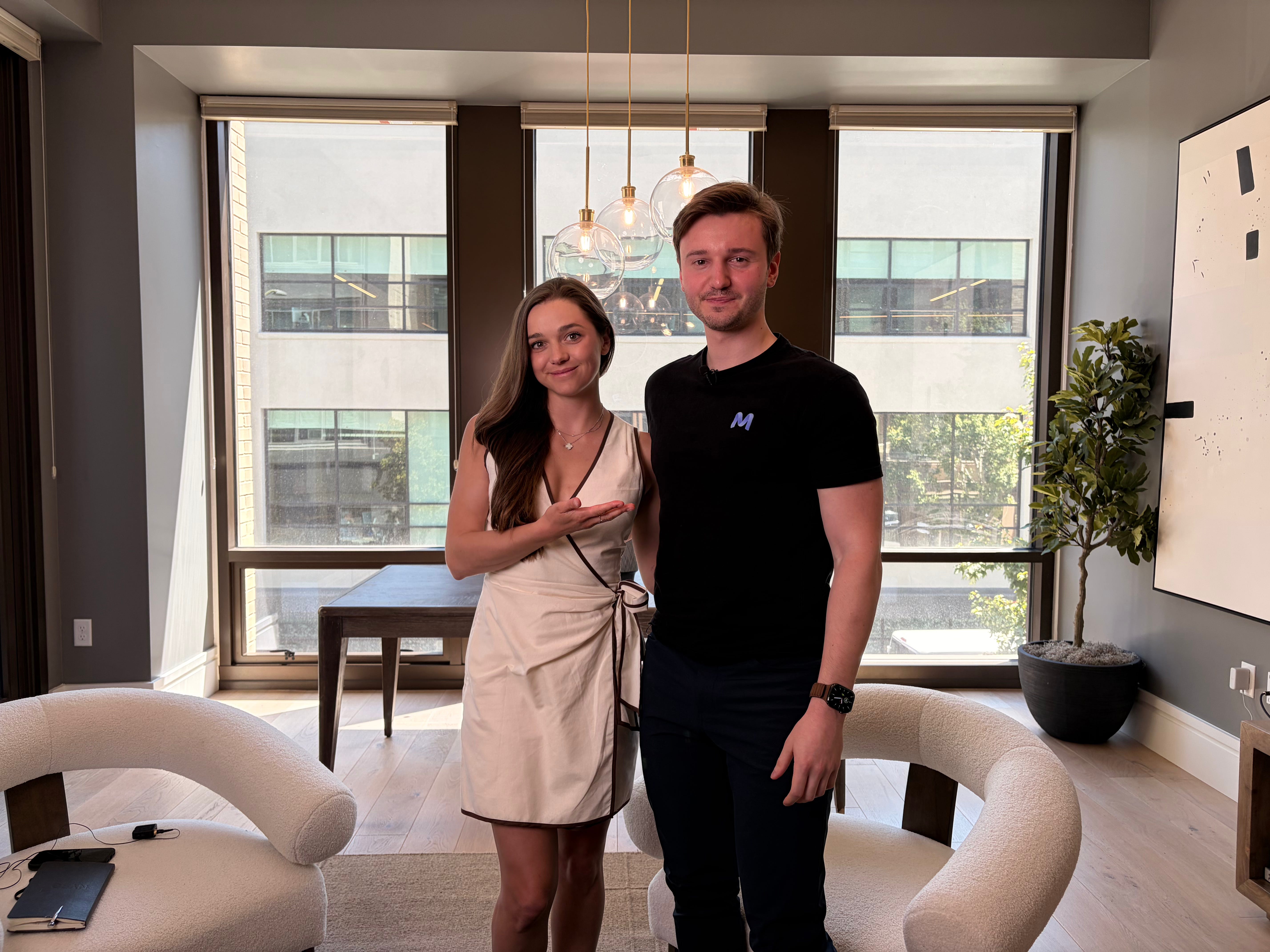

Apps, Worlds, Tasks & the Deeptune Deal
“I think the largest misconception about the business is that people think about us as a marketplace like Uber, where we would just match experts with a job and then take a fee on that, when actually the experts are one component of the datasets, the RL environments that we deliver to the labs.”
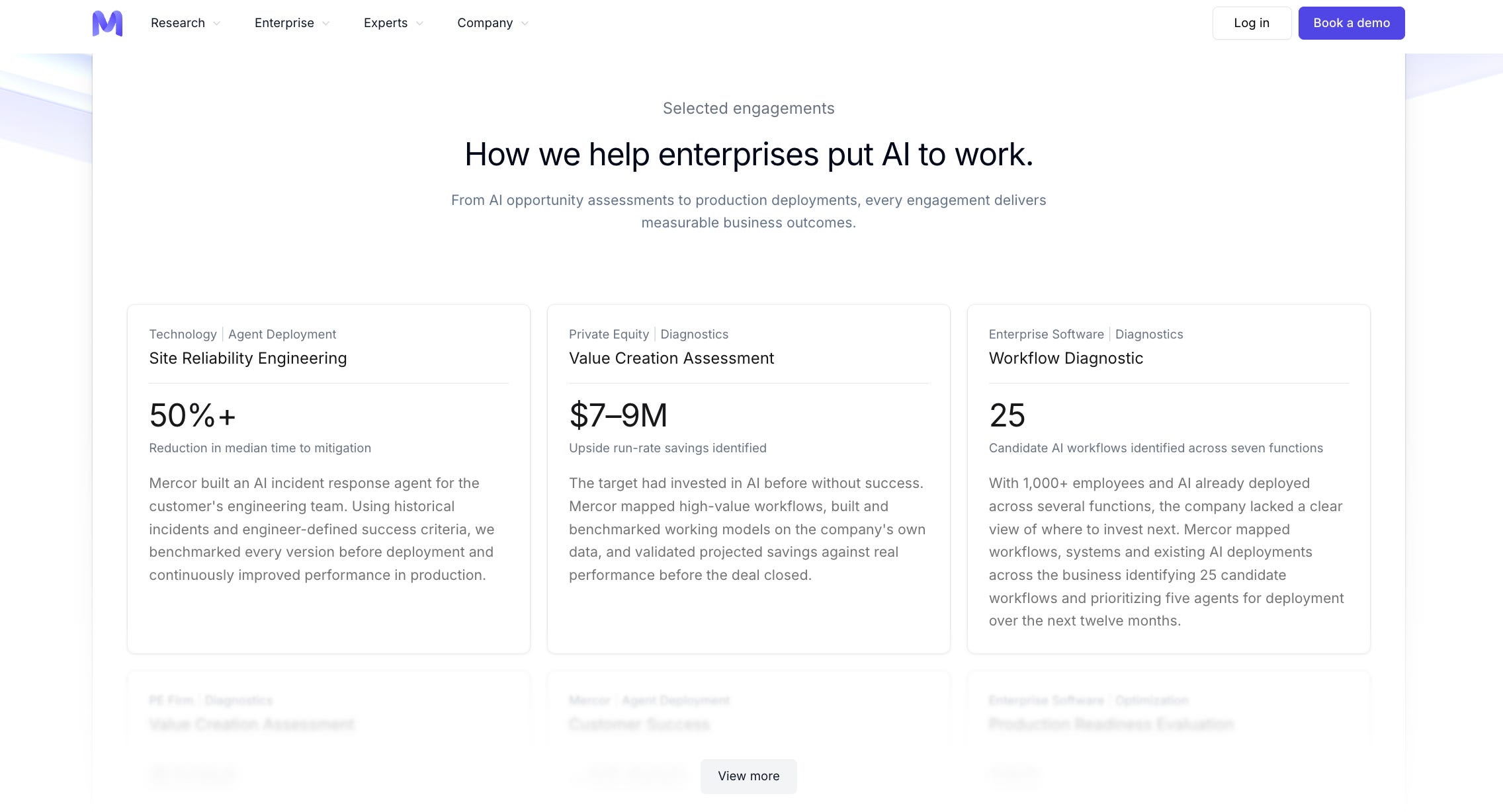
An RL environment has 3 parts. Apps are clones of tools such as Google Workspace. Worlds are the content inside those apps, including messages, slides, docs and sheets. Tasks are prompts and rubrics that let a model attempt a problem and receive a grade it can learn from.
Mercor produces these through 3 products. The talent platform sources experts. Studio, the data platform, gives experts an AI copilot and agentic QC for building environments, tasks and verifiers. An AI project manager runs projects autonomously, hiring experts, scoring data quality and owning customer outcomes. Agents now make an hour of expert time produce 3 to 5X more model improvement.
Apps were Mercor’s largest bottleneck. Mercor announced the Deeptune acquisition on July 9, 2026. Deeptune builds reinforcement learning environments that recreate enterprise applications from spreadsheets to Salesforce, and Mercor was already a Deeptune customer. Deeptune had recreated hundreds of enterprise applications. Andreessen Horowitz led Deeptune’s $43M round in March, and Foody was one of the angel investors in that round. Founder Tim Lupo and the Deeptune team joined Mercor in New York. One of Mercor’s customers proposed the relationship, naming Deeptune as its top apps partner.
“It’s sort of ironic when a customer initiates a partnership. It’s a good signal that there’s something there.”
Deeptune is Mercor’s second and largest acquisition. The first was Sepal AI. Mercor is exploring several further categories for M&A.

Harvey, LAB & the Model as the Product
Mercor’s AI Productivity Index, APEX, tracks model performance on professional work with each frontier release, built with partners including Harvey and Cognition. Mercor has also published legal benchmarks including APEX and APEX Agents.
Harvey announced its Legal Agent Benchmark, LAB, on May 6, with more than 1,200 tasks across 24 legal practice areas graded against more than 75,000 rubric criteria, and Mercor is among the companies Harvey acknowledged as contributors. Harvey’s BigLaw Bench Global was designed with Mercor, and Harvey worked closely with Mercor to build and scale human expert datasets for its post-training effort.

“The app layer companies that are going to survive need to be building the frontier model in their specific domain, like Harvey building the frontier model in law. Because ultimately, the model is the product, and you need to be able to have frontier capabilities to stay competitive and build a moat relative to the labs.”

Foody sees brand and data as the 2 durable moats for app layer companies. Frontier labs benefit from economies of scale in compute and data, brand, and some recursive self-improvement, which he expects to speed progress gradually with no vertical takeoff. Inference providers build switching costs by helping customers customize models that cannot be ported to other infrastructure. Mercor switches between model APIs on a daily cadence based on its own evals.
“It feels like the switching costs for APIs are so low that I think investors overrate some of the revenue quality of API businesses.”


Every Fortune 500 as a Neolab
“Every Fortune 500 is going to look like a Neolab, where they have their core data sets, their core distribution that they care about to serve their customers, and they need to mobilize some combination of their full-time employees and contractors to curate really high-quality tasks for evaluation and training of the models that they’re building.”
Foody expects Anthropic and OpenAI could each become $10T+ companies, and sees enterprises training their own models to keep proprietary knowledge in house. Allowing a frontier lab to train on a firm’s internal data, using Goldman Sachs as the example, would be equivalent to sharing it with a competitor. Some Fortune 50 non-technology companies now face an existential threat as frontier labs move into their sectors, which he expects to accelerate adoption.
Enterprise adoption tracks inference spend. Below $10M a year, companies pay little attention to evals. Between $10M and $100M, roughly 10% of the inference budget should go to evals that determine which models to route work to. Past $100M, as at Harvey and Cursor, post-training economics work because fixed training costs amortize across inference. Mercor spends close to $1M a day on inference.
Most frontier training compute now goes to RL, where models attempt problems repeatedly and are scored against rubrics written by subject matter experts. Foody’s advice to enterprises is to build tasks that produce clear eval scores, start with the eval, and then scale the data needed to climb it.

Competition & Contrarian Data
Roughly 50 companies sell training data and RL environments, and more than 75% of revenue is concentrated in 4 of them, Scale AI, Surge AI, Mercor and Handshake. Meta paid $14.3B for 49% of Scale AI. Alexandr Wang and the core team moved to Meta, and Scale shifted most of its business to Meta. Foody said Mercor would not pursue a similar structure. Handshake bought Cleanlab in January 2026 to expand from expert supply into evaluations and RL environments, the same path as Mercor and Surge. OpenAI, while still contracting with Surge, Mercor and Handshake, is building a significant in-house human data team.
Foody considers data the contrarian part of the AI stack. Investors have expected superintelligence within 3 years for the last 3 years, and most top Silicon Valley firms expected Mercor’s market to dissipate when it raised its seed. He credits that view with keeping competition lower than in foundation models, and expects it to become consensus as enterprises evaluate agents and post-train models. Models need outside feedback to measure their mistakes, much like a student who cannot grade their own essays, with math as an exception because answers can be checked.
“As long as we don’t have super intelligence, as long as there are things that humans can do that AI can’t do in the economy, we need humans to measure that frontier.”
Long-Term Focused
Mercor has also received acquisition interest. Foody pointed to Cognition’s Scott Wu choosing independence, and said founders who accomplish extraordinary things are driven by an emotional pull to do something important, and that he looks for the same trait in companies, founders and executives Mercor acquires or hires.
“Adarsh and I have had opportunities where we could walk away with a lot of cash and never work again and get whatever we want in life, but that’s not what motivates us. We’d rather work 100 hours a week to solve a really important problem in the world, and we have the privilege of doing that in an incredible market with a spectacular team, and it’s hard to know if we’ll have that privilege again.”
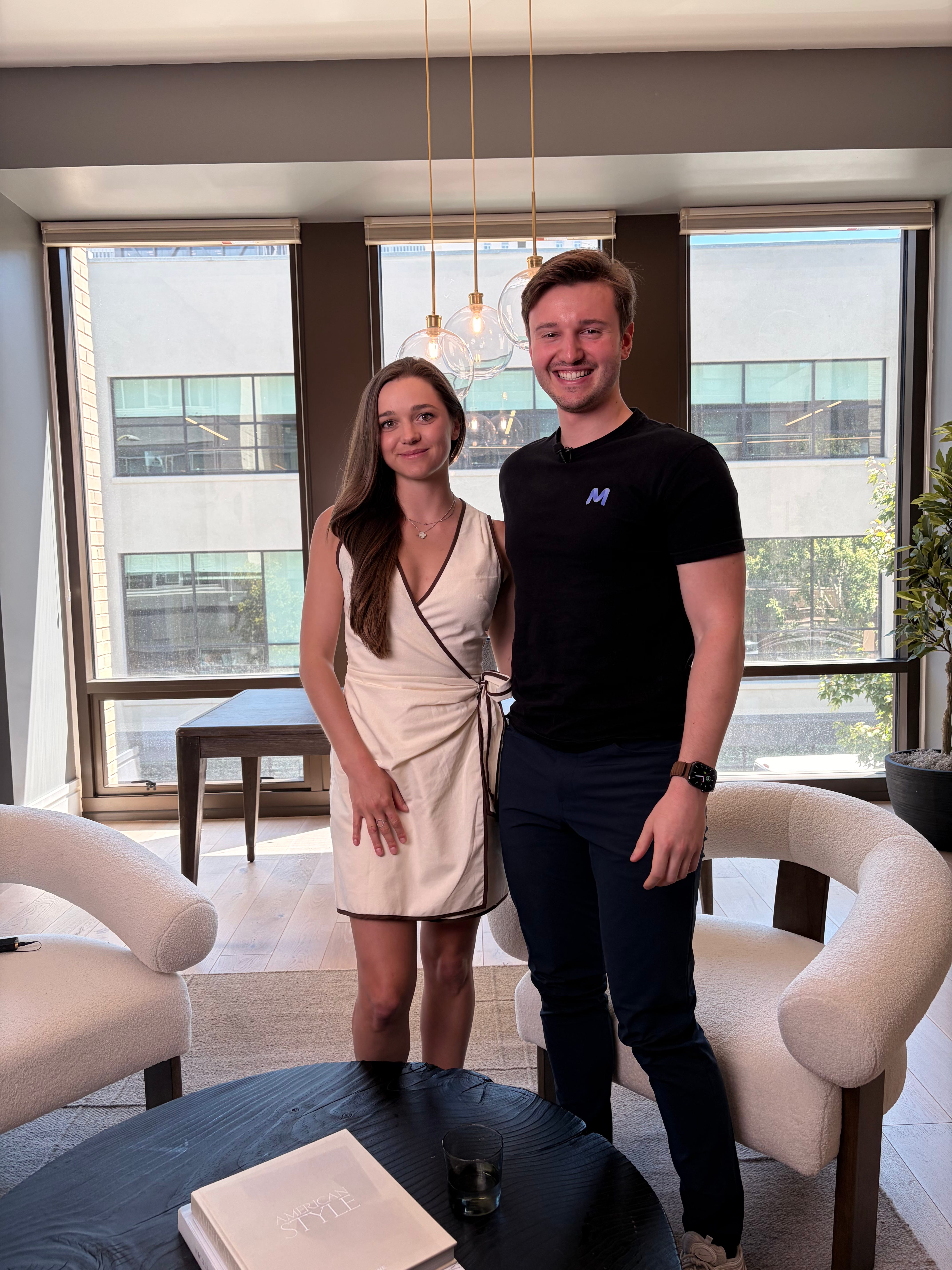

Leadership, Influences & the IPO Timeline
Mercor operates on 3 values: high standards in hiring, “time travelers” who work backward from what the world looks like in 5 years, and customer obsession. Foody pulled a weekly revenue graph from executive focus in favor of customer satisfaction, expert satisfaction and expert utilization.
“Many companies fall too much into the trap of looking at what their competitors do, which becomes mimetic. It’s a really good way to be second place in a market, right? And we have no interest in being second place in a market.”
Foody agrees with Sequoia’s Alfred Lin that leaders should act as shock absorbers, pressing on problems when the company is on top and rallying the team during rough patches.
“When everyone feels like they’re on top of the world, that’s when you need to be cracking down on what are all the things going wrong.”
Foody named Elon Musk as the greatest entrepreneur by results and Jeff Bezos as the clearest example of long-term thinking. He also named Sam Altman and Dario Amodei. As a college freshman, he wrote a research paper arguing the government should eliminate taxes for Americans earning under $70K, who he said account for 3% of federal tax revenue, to encourage job creation. Bezos later reposted Foody on X after Foody shared a Bezos post on the same idea. The 2 have not met in person.
Foody is in the office from 9am to 10pm 6 days a week and works from home on Sundays. His time splits roughly into thirds across hiring, customers, and research and product, with 4 to 10 hours of meetings a day, and he clears his inbox daily.
Mercor does not plan to go public in the next 12 months, though an IPO is on its radar. Over the next year, Foody is focused on Fortune 50 non-technology companies adopting evals and post-training. Mercor is hiring experts as well as full-time engineering, research and operations staff.
→ Listen on X, Spotify, YouTube, Apple, Linkedin
The material presented on Molly O’Shea’s website are my opinions only and are provided for informational purposes and should not be construed as investment advice. It is not a recommendation of, or an offer to sell or solicitation of an offer to buy, any particular security, strategy, or investment product. Any analysis or discussion of investments, sectors or the market generally are based on current information, including from public sources, that I consider reliable, but I do not represent that any research or the information provided is accurate or complete, and it should not be relied on as such. My views and opinions expressed in any website content are current at the time of publication and are subject to change. Past performance is not indicative of future results.
Paid Ad. Agents are an experimental AI tool. Its output may be inaccurate and is not investment advice. Public Holding’s, Inc. makes no guarantees about its accuracy or reliability—verify independently before use. Brokerage accounts & services provided by Open to the Public Investing, Inc. See additional disclosures at: https://public.com/disclosures/agenticdisclosures.