


Nominal hits $1B valuation after closing preempted $80M B-2 Acceleration Round led by Founders Fund, with participation from Sequoia, Lux Capital, & General Catalyst — just 10 months after Nominal’s $75M Series B led by Sequoia.
→ Listen on X, Spotify, YouTube, Apple
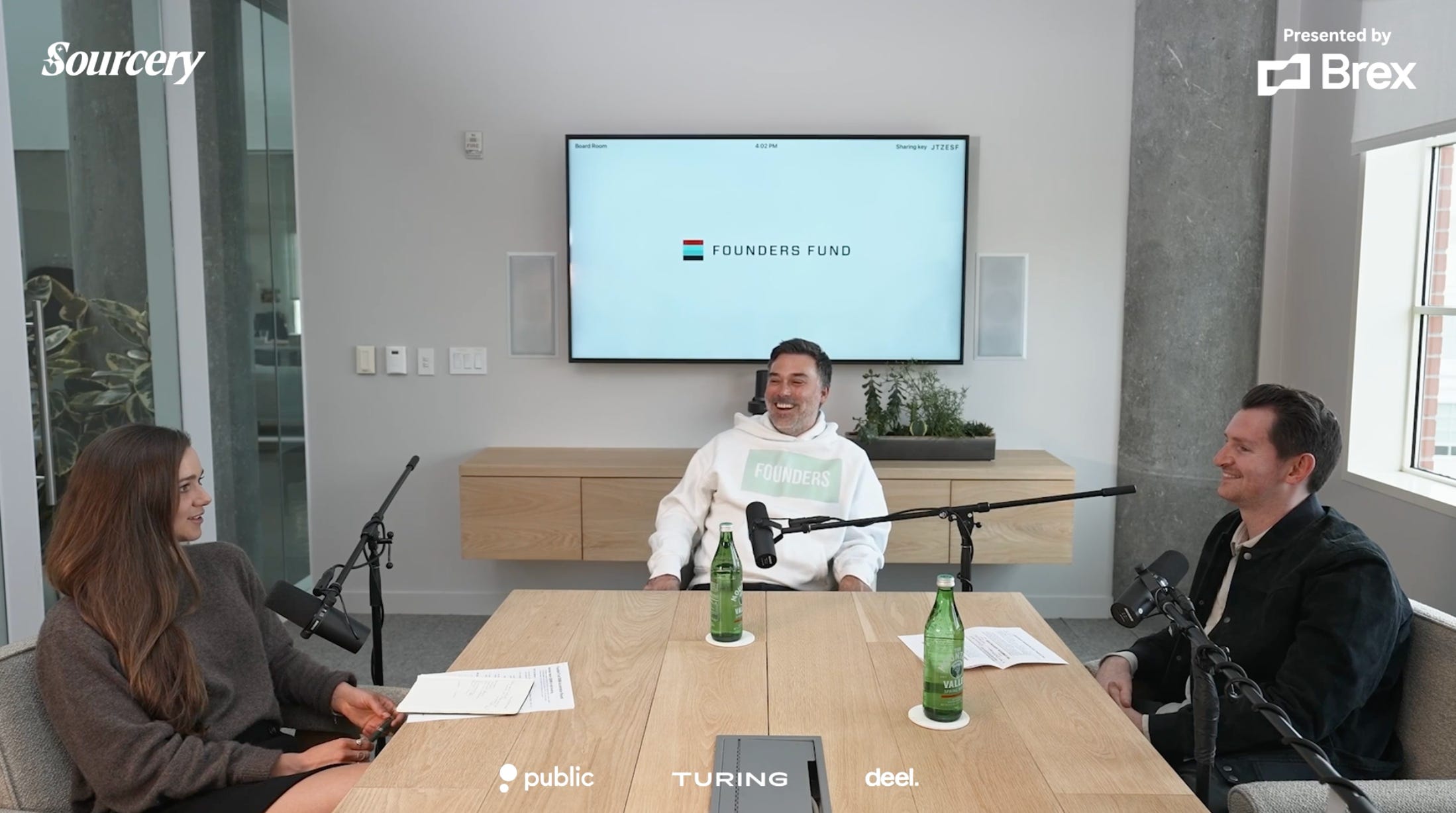
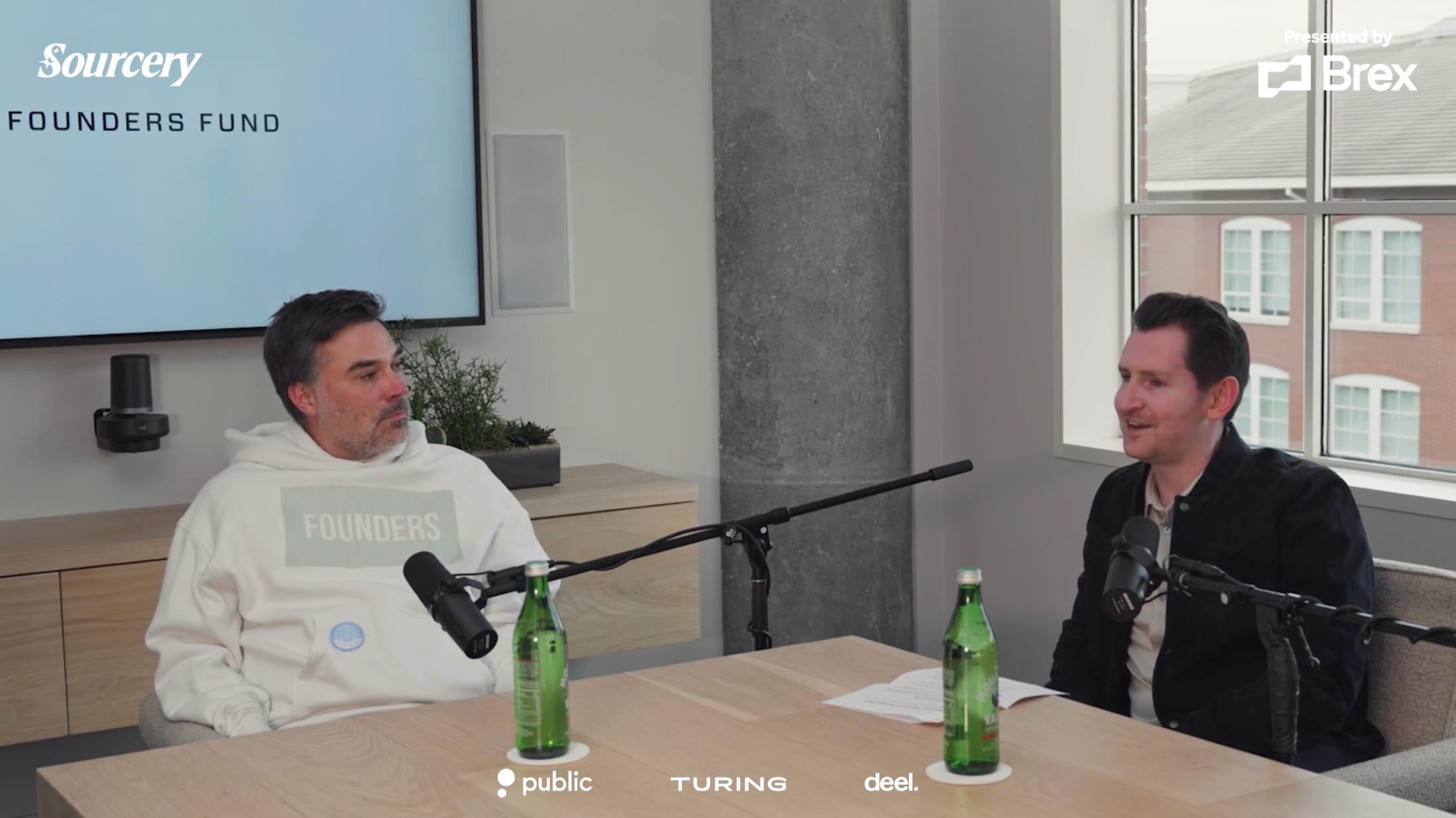
Cameron McCord (Co-Founder & CEO, Nominal) & Trae Stephens (Partner, Founders Fund; Co-Founder & Chairman, Anduril) join Sourcery to break down why the round was preemptive, what Founders Fund was tracking from inside its portfolio (including Anduril), & how Nominal is becoming core infrastructure for teams building mission-critical hardware — from aerospace & defense to autonomy, energy, & advanced manufacturing.
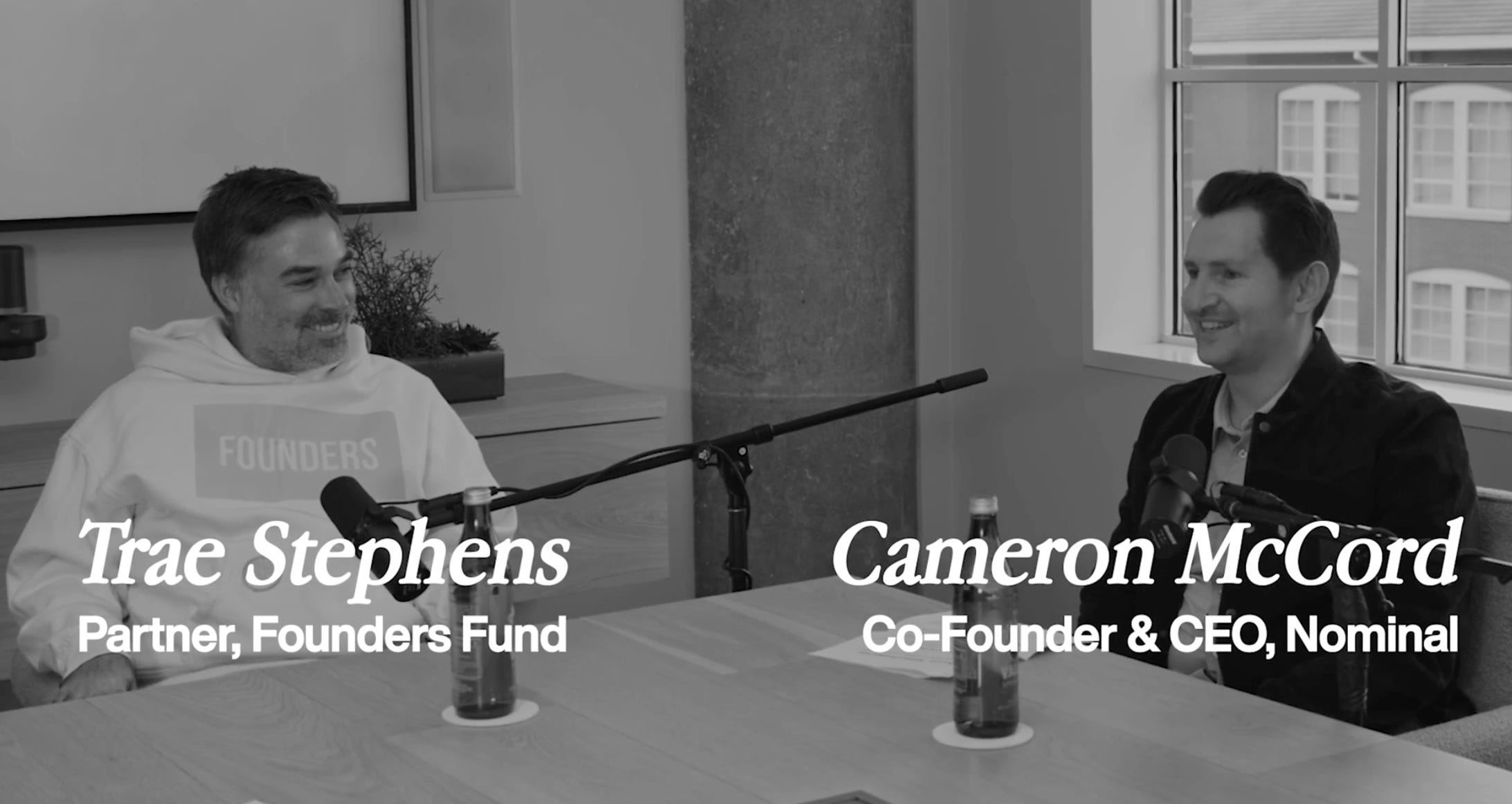
We get into the “GitHub for software-defined hardware” analogy, what’s broken in the current federal testing stack (yes: Excel + MATLAB + PDFs), how Nominal can cut major test campaigns by 50–60%, and why the real competition is bureaucracy + legacy incumbents.
Cameron also shares how Nominal thinks about TAM expansion, dual-use strategy (and why Trae hates the term), strategic M&A, hiring 120–140+ people in 2026, and how AI changes the hardware engineering workflow (from post-test analysis to agentic parallelization).
All Systems Nominal.
𝐓𝐈𝐌𝐄𝐒𝐓𝐀𝐌𝐏𝐒
(00:00) Trae Stephens & Cameron McCord
(01:11) Nominal raises $80M from Founders Fund
(03:32) Why Founders Fund made the investment
(05:22) From Palantir to Anduril: Trae’s investor-operator journey
(07:14) Nominal: the GitHub for hardware testing
(12:33) Why Sequoia believed Nominal’s TAM was much bigger
(15:36) Inside Nominal’s growing defense customer base
(17:32) Why government hardware testing still relies on Excel and MATLAB
(22:22) Cutting hardware testing time by up to 60%
(26:55) How AI changes hardware development
(37:22) Why the government is backing new defense tech companies
(33:35) Nominal's sales strategy
(45:44) Competing with legacy software giants
(46:24) Recruiting top engineers
(50:56) Early Anduril stories from the desert
Brought to you by:
Brex—The intelligent finance platform: cards, expenses, travel, bill pay, banking—wrapped into a high-performance stack. Built for scale. Trusted by teams that move fast. visit → brex.com/sourcery

Turing—Turing delivers top-tier talent, data, and tools to help AI labs improve model performance, and enable enterprises to turn those models into powerful, production-ready systems. Visit: turing.com/sourcery
Deel—Deel is the global people platform that helps startups hire, manage, pay, and equip anyone, anywhere. Trusted by more than 35,000 fast-growing companies, Deel is the people platform that just works, so teams can scale without the chaos. Visit: deel.com/sourcery
Public—Investing platform Public just launched Generated Assets, which lets you turn any idea into an investable index with AI. With Generated Assets, you can build, backtest, refine, and invest in any thesis with AI. Gone are the days of one-size-fits-all ETFs. Try it today: public.com/sourcery
All Systems Nominal
Nominal now serves more than 60 customers, including 4 of the world’s 5 largest defense contractors, while reporting 7× year-over-year revenue growth.
As McCord described the ambition:
“We’re building the platform modern hardware companies will run on for the next fifty years.”
Product: The Software Stack for Hardware Engineering
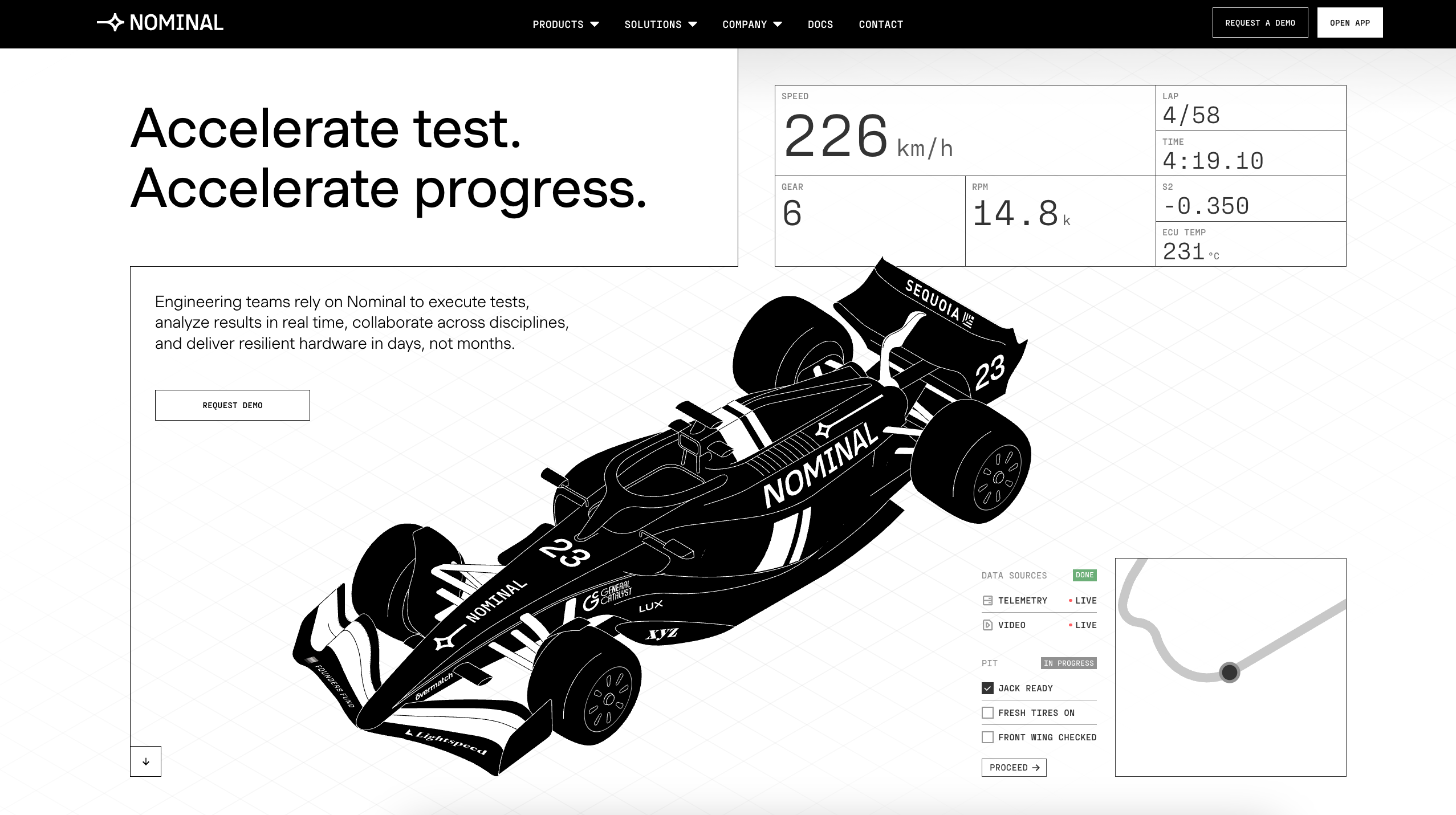
Nominal’s core thesis is that hardware engineering workflows still rely on outdated software infrastructure.
Modern software development evolved around collaborative platforms like GitHub and cloud-native tooling. By contrast, many hardware programs still manage testing and validation through a fragmented set of tools including Excel, MATLAB, PDFs, and PowerPoint.
Nominal replaces these manual workflows with a unified platform for ingesting, analyzing, and operating on hardware test data.
When complex systems are tested—whether drones, aircraft, or energy infrastructure—they generate large volumes of telemetry, logs, sensor signals, and video. Engineers must analyze this data to determine whether systems performed correctly and met required conditions.

McCord described the experience that inspired the product:
“We’d fly systems all day and then spend hours late at night trying to figure out what happened. There was an explosion of telemetry, sensor data, logs, video, audio—and the process just sucked.”
Nominal centralizes these workflows into a single platform where engineers can query and visualize test data in real time. The company is now integrating AI interfaces that allow engineers to interact with hardware data using natural language queries.
“You can say ‘plot the kinematics of the drone,’ and the system will generate the analysis automatically.”
Over time, Nominal aims to enable one engineer to manage and validate many hardware systems simultaneously, increasing productivity in complex engineering environments.

Market: An Industrial Renaissance
Nominal’s growth coincides with a broader resurgence in industrial technology.
Autonomous systems, robotics, aerospace, energy infrastructure, and defense technologies are advancing rapidly. These systems increasingly combine sophisticated hardware with large software stacks, making testing and validation more complex.
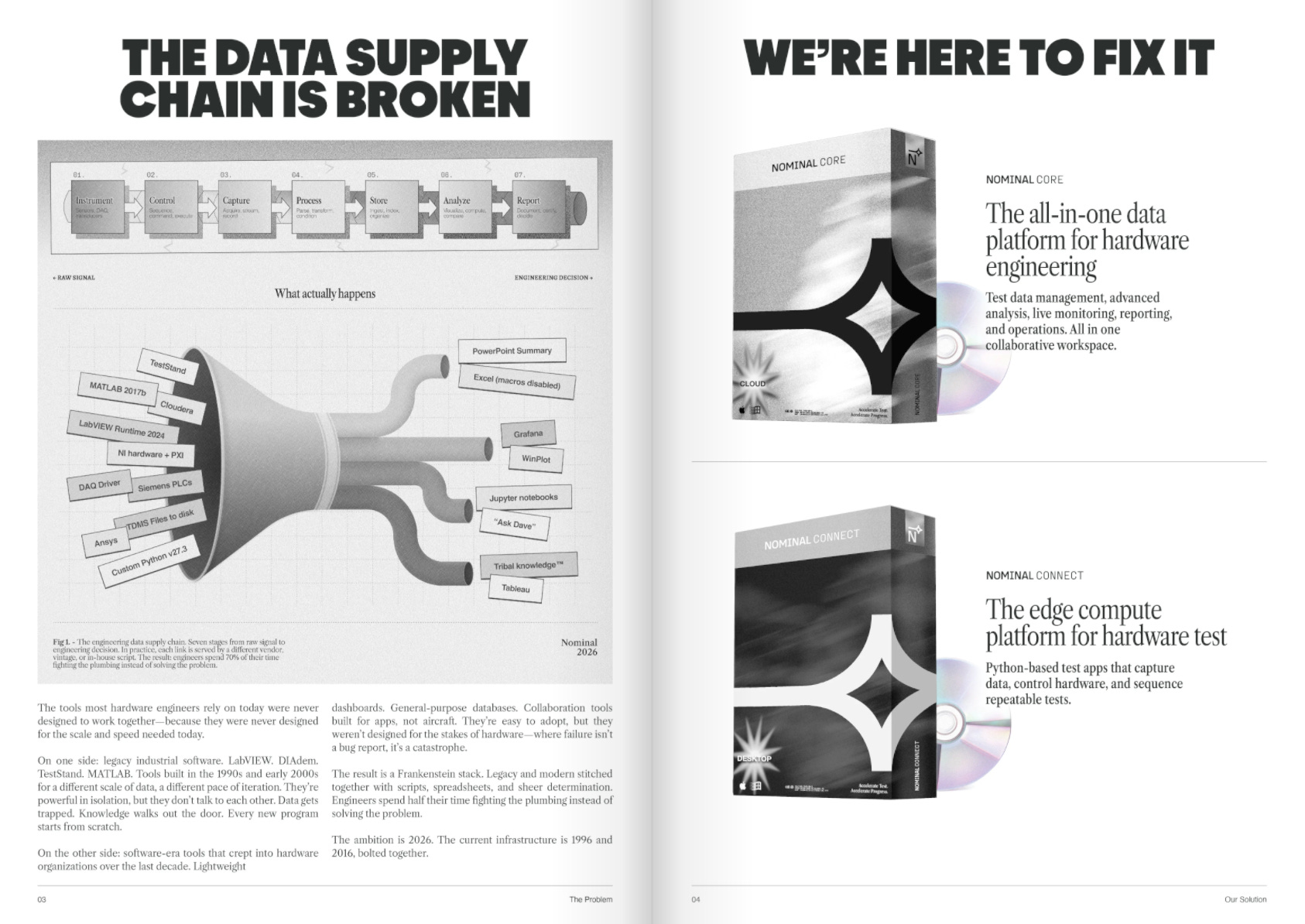
Nominal entered the market through hardware testing and post-test analysis, a step in the development process where engineers face immediate operational pain.
“We started with a simple problem where the pain was extremely acute and we could make it 10× better.”
From that initial wedge, the platform expands into adjacent areas including manufacturing testing and operational monitoring as customers scale their hardware programs.
Given the scale of global manufacturing and defense technology spending, Nominal sees a large and growing opportunity.
“The global manufacturing TAM is massive. I’m not worried about the addressable market.”

Funding & Use of Capital
Nominal: Nearly $200M in Total Funding
$7.5 million Seed led by Lux Capital with participation from Founders Fund
$20 million Series A led by Paul Kwan, Managing Director at General Catalyst.
$75 million Series B in just 10 days, led by Sequoia’s Alfred Lin (joined the board)
$80 million Series B-2 preempted & led by Founders Fund 10 months from Series B
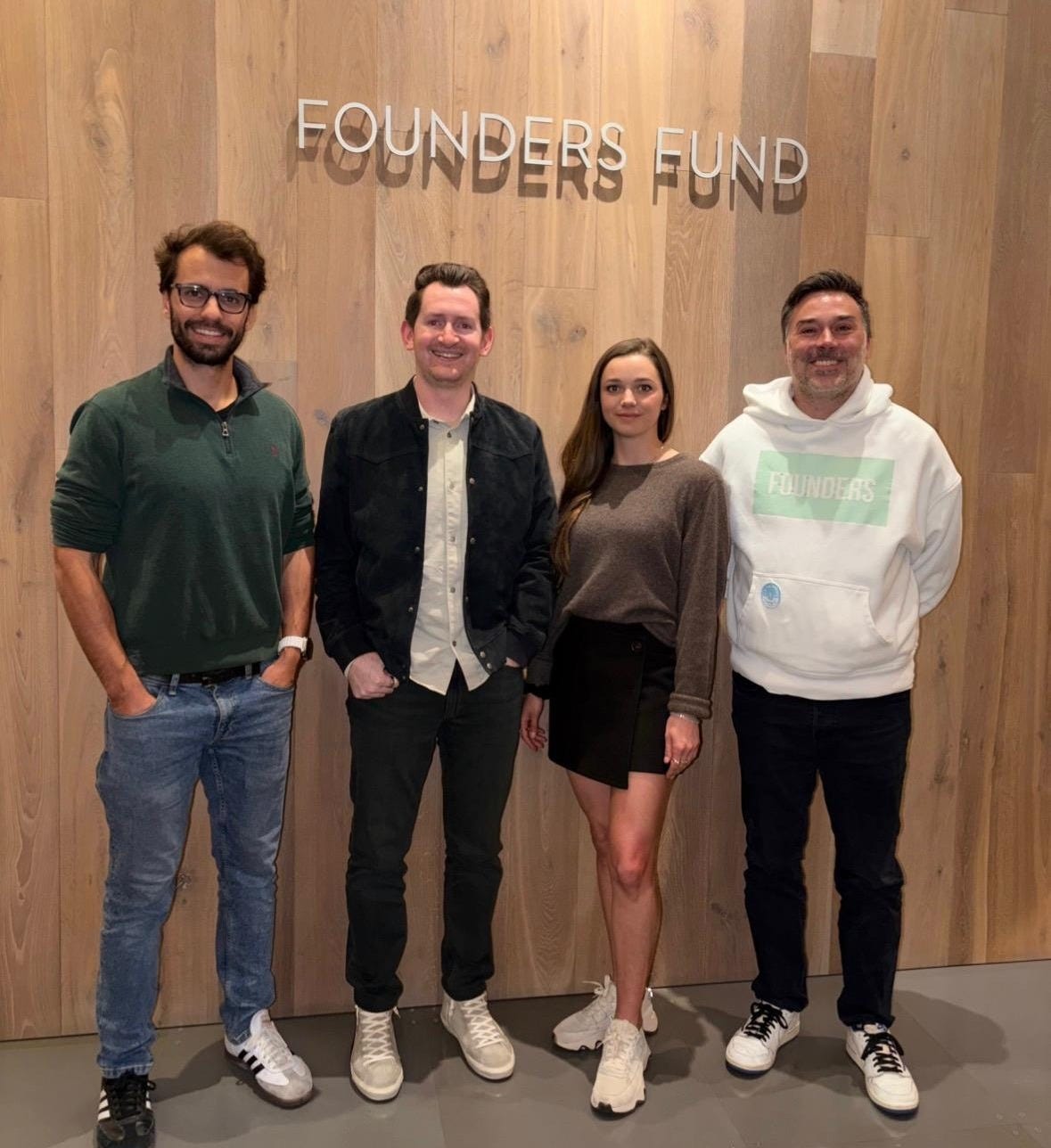
Pictured: Delian Asparouhov, Cameron McCord, Molly, Trae Stephens
Nominal was not actively fundraising when Founders Fund approached to lead the new round. McCord explained the timing:
“You always want the external reality to match the internal momentum you’re feeling inside the company.”
The additional capital allows Nominal to accelerate expansion across several areas.
First, the company plans to continue investing heavily in product development as the platform evolves into a broader industrial software ecosystem.
Second, Nominal intends to pursue selective acquisitions, particularly small teams or technologies that complement its platform.
“The winner in this market will ultimately build a platform.”
The company is also expanding geographically, recently opening a London office to support growing European demand.
Finally, the funding provides the resources needed to scale the organization as demand increases.
Anduril, Founders Fund, & Early Validation
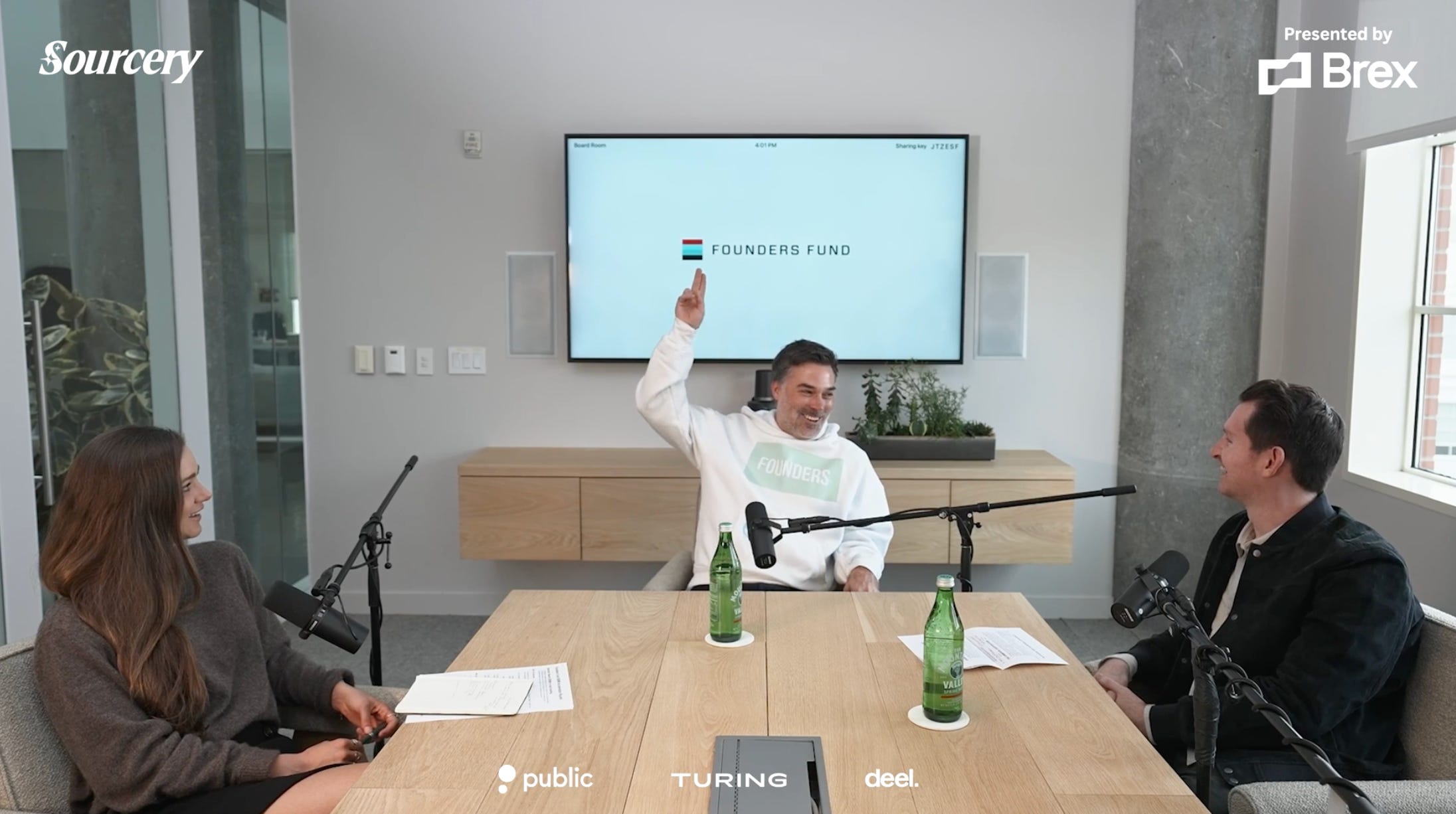
Nominal’s connection to Anduril played a key role in its early development and adoption.
McCord previously worked at Anduril, where he experienced firsthand the operational challenges of testing hardware systems. Those experiences directly shaped Nominal’s initial product direction.
Trae Stephens, partner at Founders Fund and co-founder of Anduril, explained that Nominal’s traction within the firm’s portfolio helped drive the decision to lead the new round.
“Founders rarely agree on tooling. When multiple companies and our entire engineering team at Anduril independently told us Nominal had become essential infrastructure, the decision was obvious.”
Stephens emphasized that Nominal stands out from typical enterprise software tools because of its operational impact.
“This isn’t a nice-to-have tool. It’s actually saving us money.”
The platform is now deeply integrated into engineering workflows at companies building mission-critical hardware.
Customers: The Companies Building the Physical World
Nominal’s platform is increasingly used by companies operating at the frontier of hardware development—organizations building systems where performance, reliability, and safety are mission-critical.
Today the company supports more than 60 customers worldwide, including startups, defense contractors, government programs, and advanced industrial companies developing aerospace systems, autonomous vehicles, robotics, and energy infrastructure.
One of Nominal’s most prominent customers is Anduril, the defense technology company co-founded by Founders Fund partner Trae Stephens. Engineers at Anduril use Nominal to unify test data across autonomous systems programs and accelerate review cycles across large engineering teams.
According to Stephens, Nominal has become deeply embedded in engineering workflows:
“Nominal is one of those examples where you look at the ROI and realize this isn’t a nice-to-have. It’s actually saving us money.”
Nominal is also used by Shield AI, whose autonomous aircraft programs generate enormous volumes of flight telemetry during testing. Engineers use Nominal to review test data immediately after flights—compressing analysis cycles that previously took hours or days.
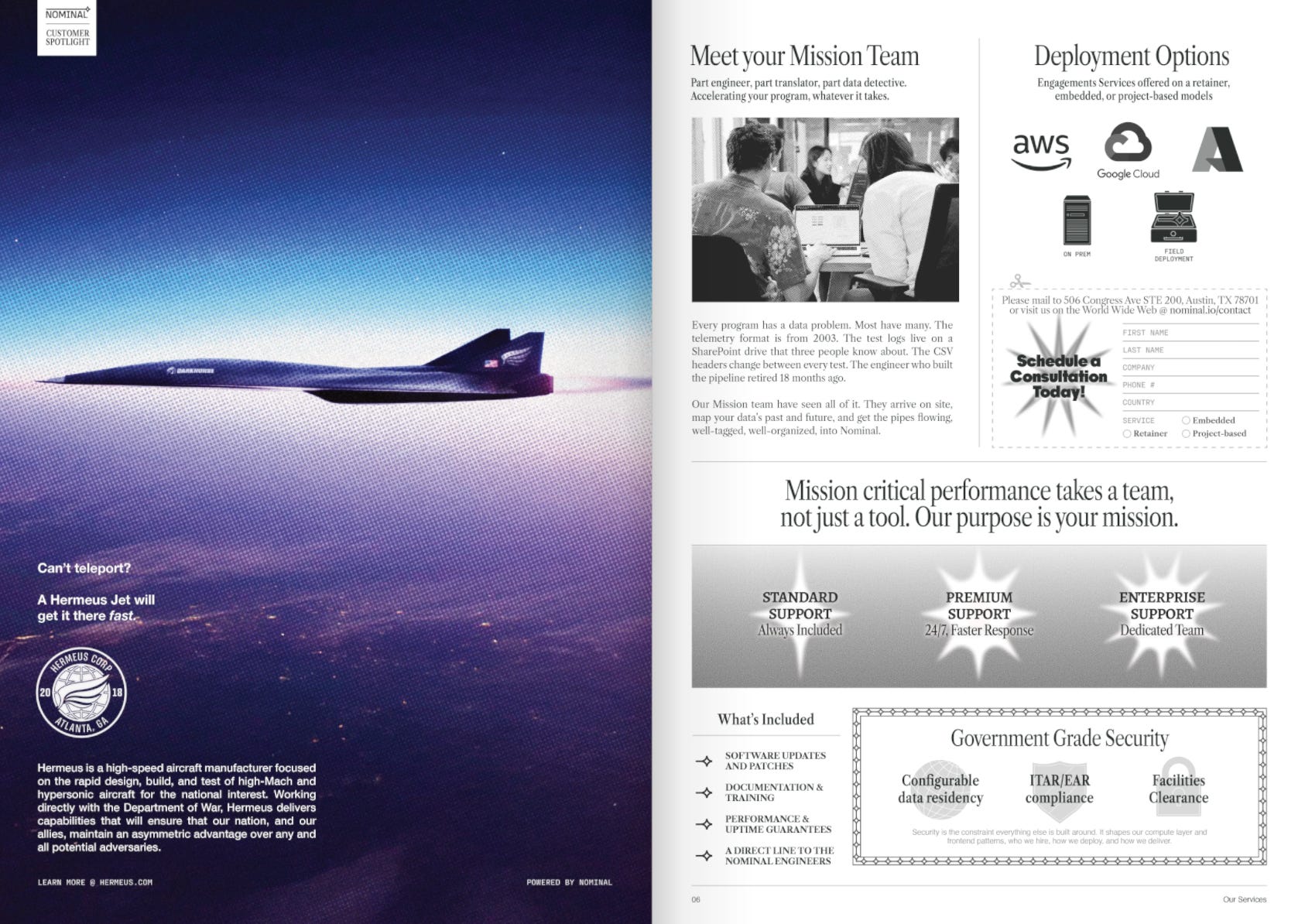
Beyond defense startups, the platform has expanded across the aerospace sector. Hypersonic aircraft developer Hermeus uses Nominal to analyze flight & taxi tests of its Quarterhorse prototypes as the company pushes toward operational hypersonic flight.
Government testing facilities are also adopting the platform. Nominal has partnered with the Arnold Engineering Development Complex (AEDC) at the U.S. Air Force’s Arnold Air Force Base to improve data analysis for aerospace system testing.
The platform is also being used by emerging autonomy companies such as Scout AI, which relies on Nominal as the central system for reviewing robot test data and managing annotated training datasets used to improve autonomous systems.
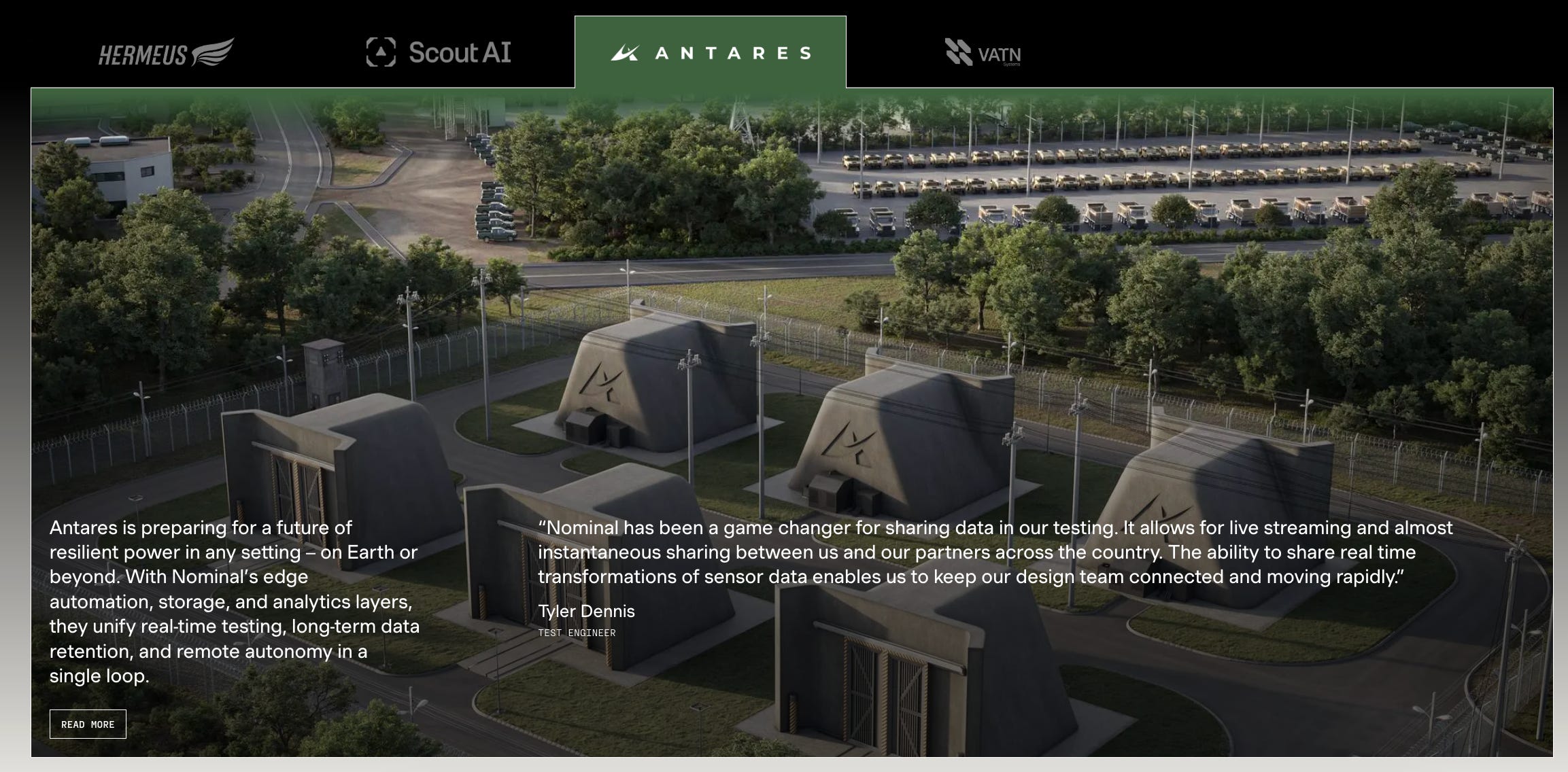
Across these organizations, Nominal is used to capture telemetry, synchronize multimodal data streams, and analyze system performance during testing and operations. The company’s products—Nominal Core and Nominal Connect—enable engineering teams to bring together telemetry, logs, video, simulation outputs, and instrumentation data into a single collaborative workspace.
The result is a growing customer base across sectors including aerospace, defense, robotics, manufacturing, and energy, industries where testing cycles are expensive and where better data infrastructure can significantly accelerate development timelines.
As McCord summarized, the goal is simple: build the data infrastructure that allows engineers building complex hardware systems to iterate faster and ship reliable products sooner.

Government Relationships, Policy Tailwinds, & Hiring
Nominal operates in industries closely tied to government customers, particularly defense and aerospace.
Adoption in these sectors requires credibility, reliability, and compliance with complex regulatory environments. McCord said that once trust is established, word-of-mouth adoption can accelerate across programs and organizations.
“Eventually people start asking, ‘Are you using Nominal?’”
Stephens also pointed to broader shifts within the Department of Defense that could accelerate adoption of modern technologies.
“Individual people can make a difference. The people in place now understand technology and the importance of acquisition reform.”
At the same time, Nominal is preparing for significant internal expansion. The company currently employs roughly 125 people and plans to grow to more than 220 employees over the coming year.
McCord believes the mission itself is a powerful recruiting advantage.
“Engineers realize they can build software that helps autonomous aircraft, fusion reactors, or robotics systems. That’s a powerful draw.”
As Nominal scales its platform and team, the company aims to become foundational infrastructure for the next generation of industrial technology.
“We’re building the software layer that helps engineers build the future.”
→ Listen on X, Spotify, YouTube, Apple

The material presented on Molly O’Shea’s website are my opinions only and are provided for informational purposes and should not be construed as investment advice. It is not a recommendation of, or an offer to sell or solicitation of an offer to buy, any particular security, strategy, or investment product. Any analysis or discussion of investments, sectors or the market generally are based on current information, including from public sources, that I consider reliable, but I do not represent that any research or the information provided is accurate or complete, and it should not be relied on as such. My views and opinions expressed in any website content are current at the time of publication and are subject to change. Past performance is not indicative of future results.
Paid Endorsement. Brokerage services by Open to the Public Investing Inc, member FINRA & SIPC. Advisory services by Public Advisors LLC, SEC-registered adviser. Crypto trading provided by Zero Hash LLC, licensed by the NYSDFS. Generated Assets is an interactive analysis tool by Public Advisors. Output is for informational purposes only and is not an investment recommendation or advice. See disclosures at public.com/disclosures/ga. Matched funds must remain in your account for at least 5 years. Match rate and other terms are subject to change at any time.