


Mass-Producing Satellite Ground Infrastructure in CA
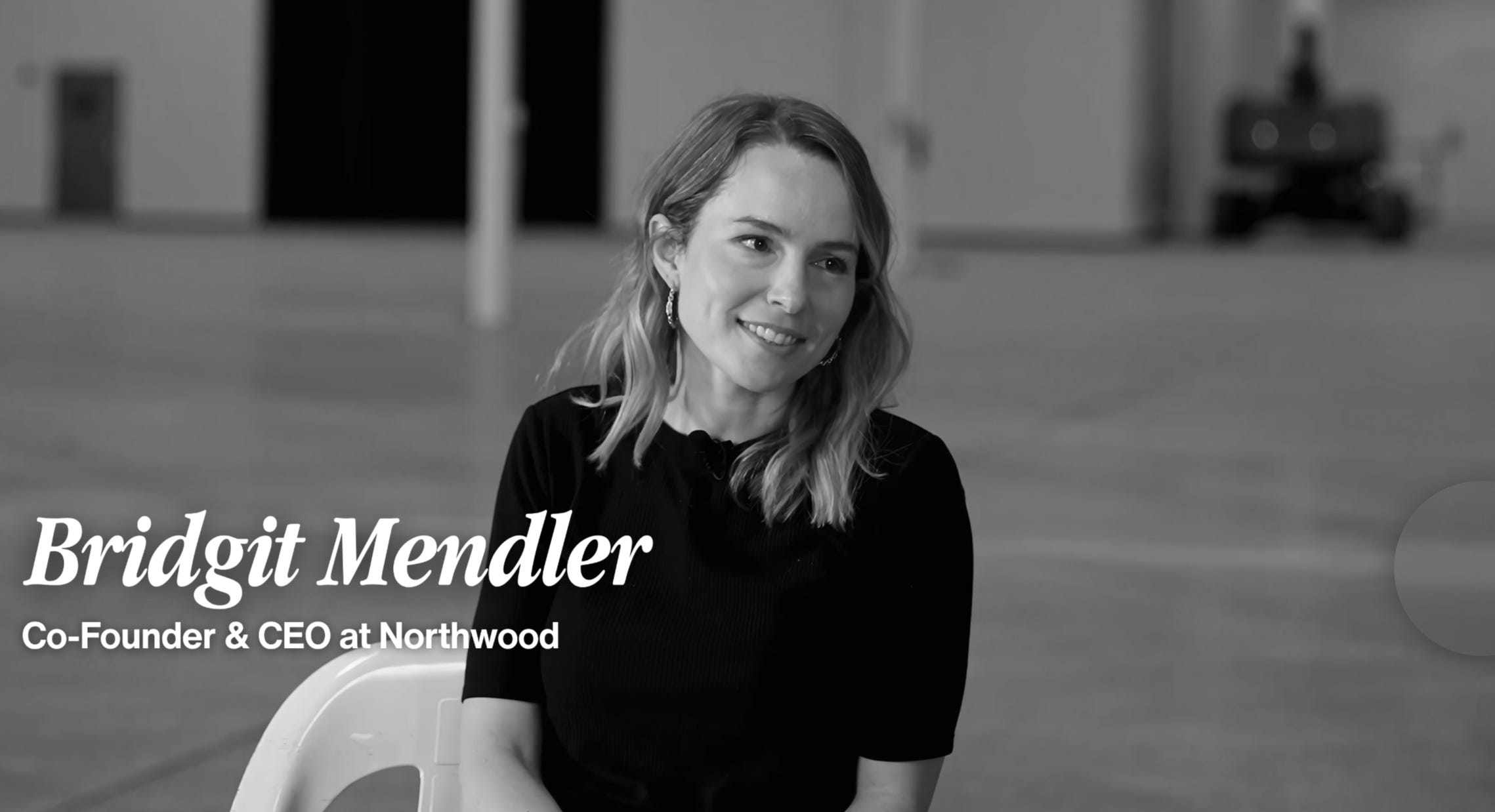
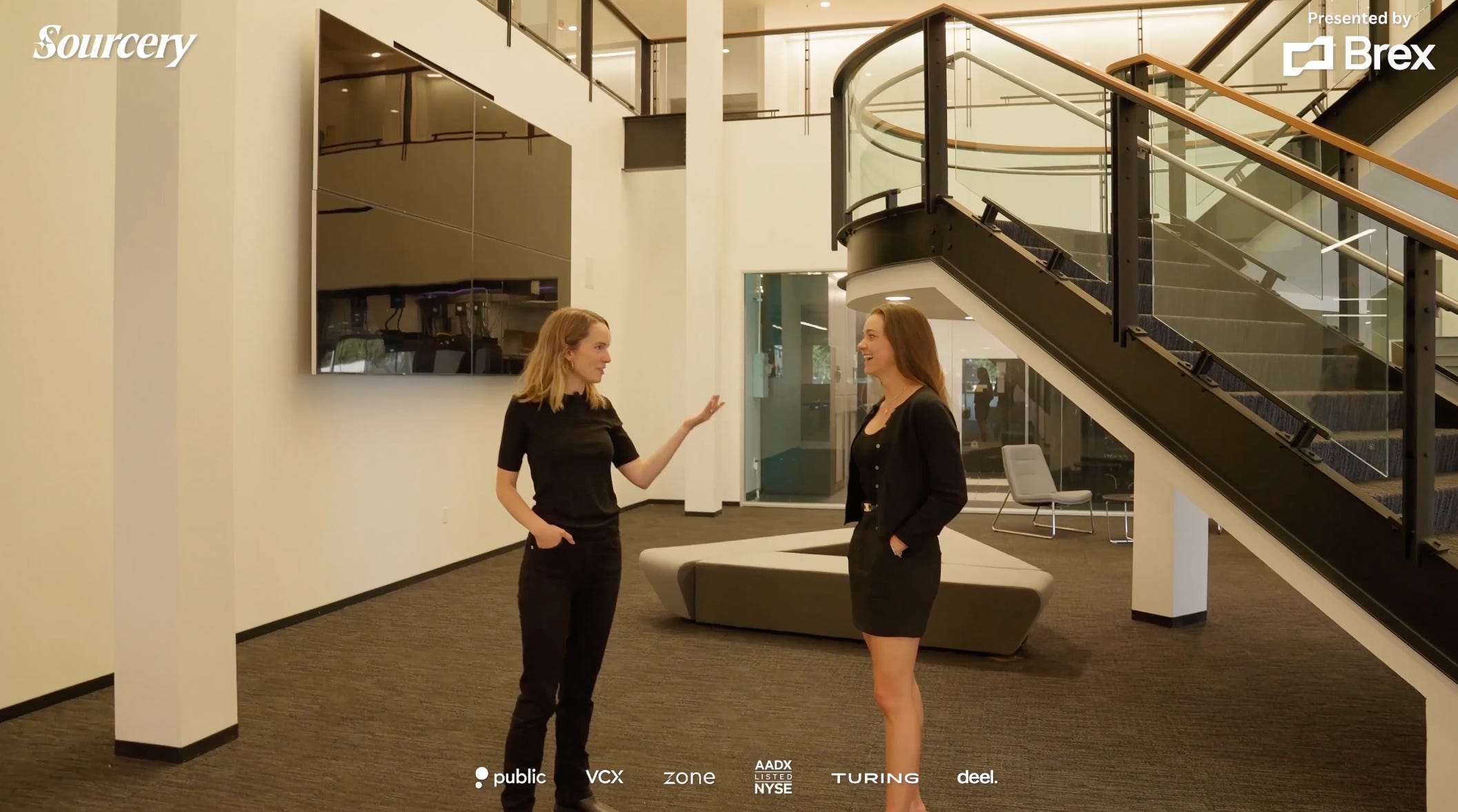
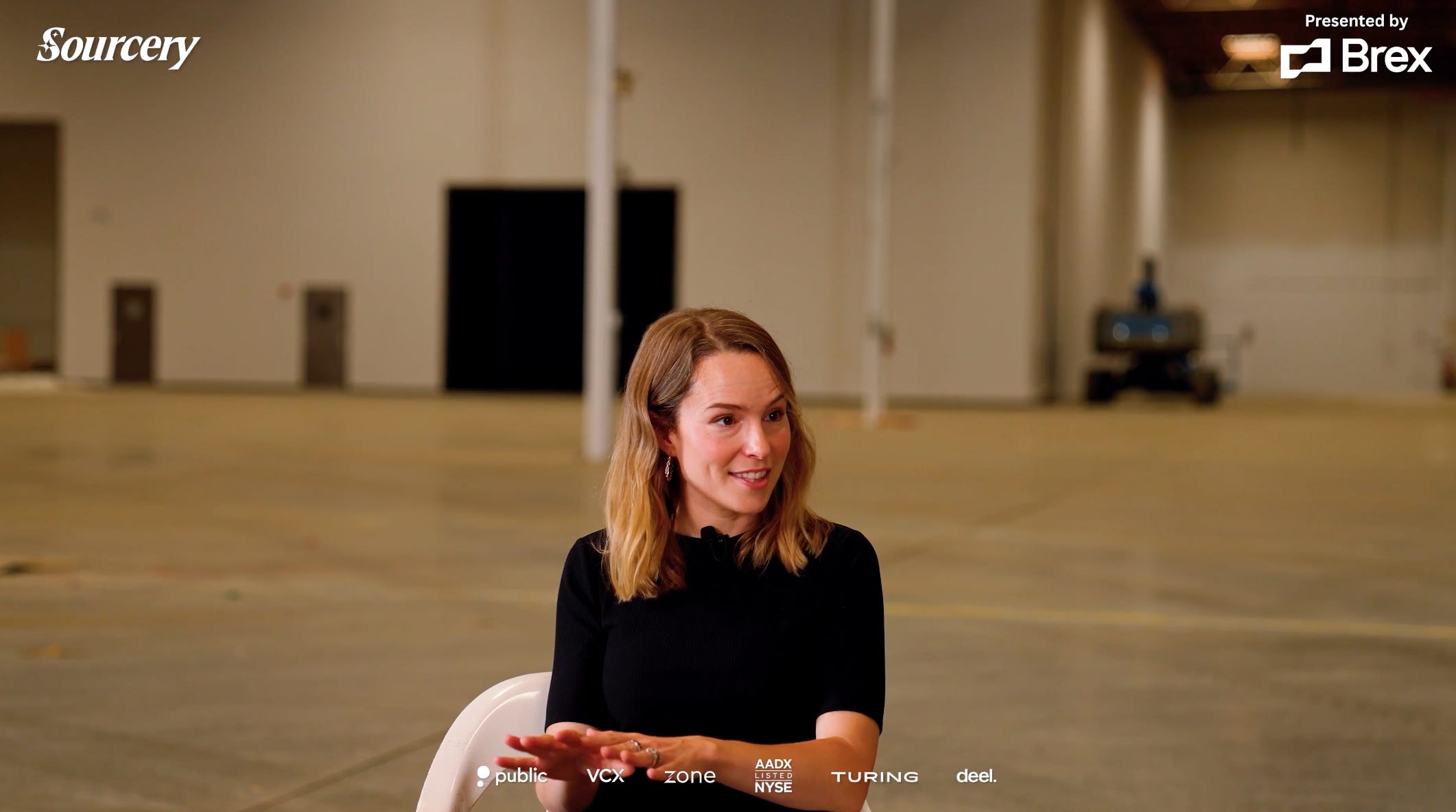
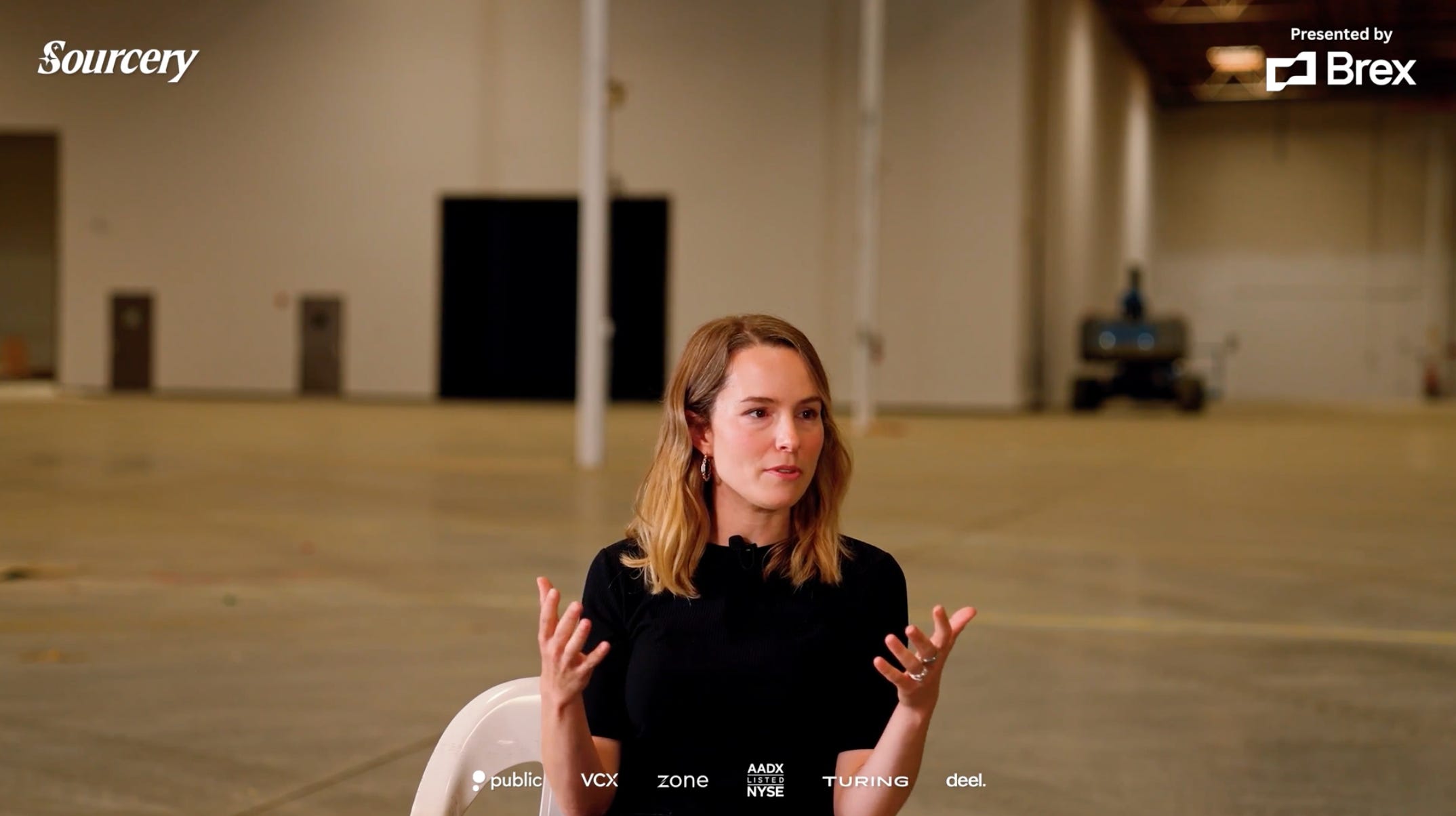
Bridgit Mendler, Co-founder & CEO of Northwood Space, gives Sourcery a first look inside the company’s new 185,000 sqft headquarters & factory in Torrance, CA.
→ Listen on X, Spotify, YouTube, Apple
Northwood has raised over $136M since 2022, including a $100M Series B in January 2026 led by Washington Harbour Partners and co-led by Andreessen Horowitz, with Founders Fund, 137 Ventures, Alpine Space Ventures, Balerion and Fulcrum participating. The company also signed a $49.8M contract with the US Space Force to support the Satellite Control Network.
The new facility will more than 5x Northwood’s manufacturing footprint, support production of hundreds of antennas per year, and add 400 jobs over the next three years as the company works to solve one of the biggest bottlenecks in the space economy: getting data between satellites and Earth.
We tour the future manufacturing floor, antenna production lines, machining and PCB assembly areas, anechoic testing chambers, and a former movie theater that Northwood plans to turn into mission operations. The new facility will include dedicated production for Northwood’s Portal phased-array and Prism parabolic systems, while bringing more critical manufacturing and testing in-house.
Bridgit also breaks down why ground infrastructure has fallen behind the explosion in satellites, Northwood’s Space Force contract, the economics of satellite connectivity, building a global ground network, supply-chain strategy, national security, and her approach to leadership and scaling Northwood.
“If you can improve the networking for the space economy, that is how you translate bits into dollars.”
𝐓𝐈𝐌𝐄𝐒𝐓𝐀𝐌𝐏𝐒
(00:00) Bridgit Mendler, Co-Founder & CEO at Northwood
(00:50) Inside Northwood’s 180,000 sq. ft. facility
(01:50) Why space missions need Ground Stations
(04:45) What “Full-Stack” means for Northwood
(08:40) How the SpaceX IPO changed space hiring
(10:43) What makes Hardware roles so exciting
(13:32) Winning a $50M Government contract
(17:17) Defending against Hacking attempts
(22:45) Turning $136M funding Into a 10-year plan
(26:24) The customers behind Northwood’s growth
(29:07) The hardest part of building Infrastructure
(30:44) The Mentors behind Bridgit’s journey
(32:24) Learning to trust her gut as CEO
(34:54) Underwater UFOs: Real or not?
(37:22) This is where Antennas will get built
(38:04) Touring the Build and Test stations
(39:26) The Blue foam testing chamber
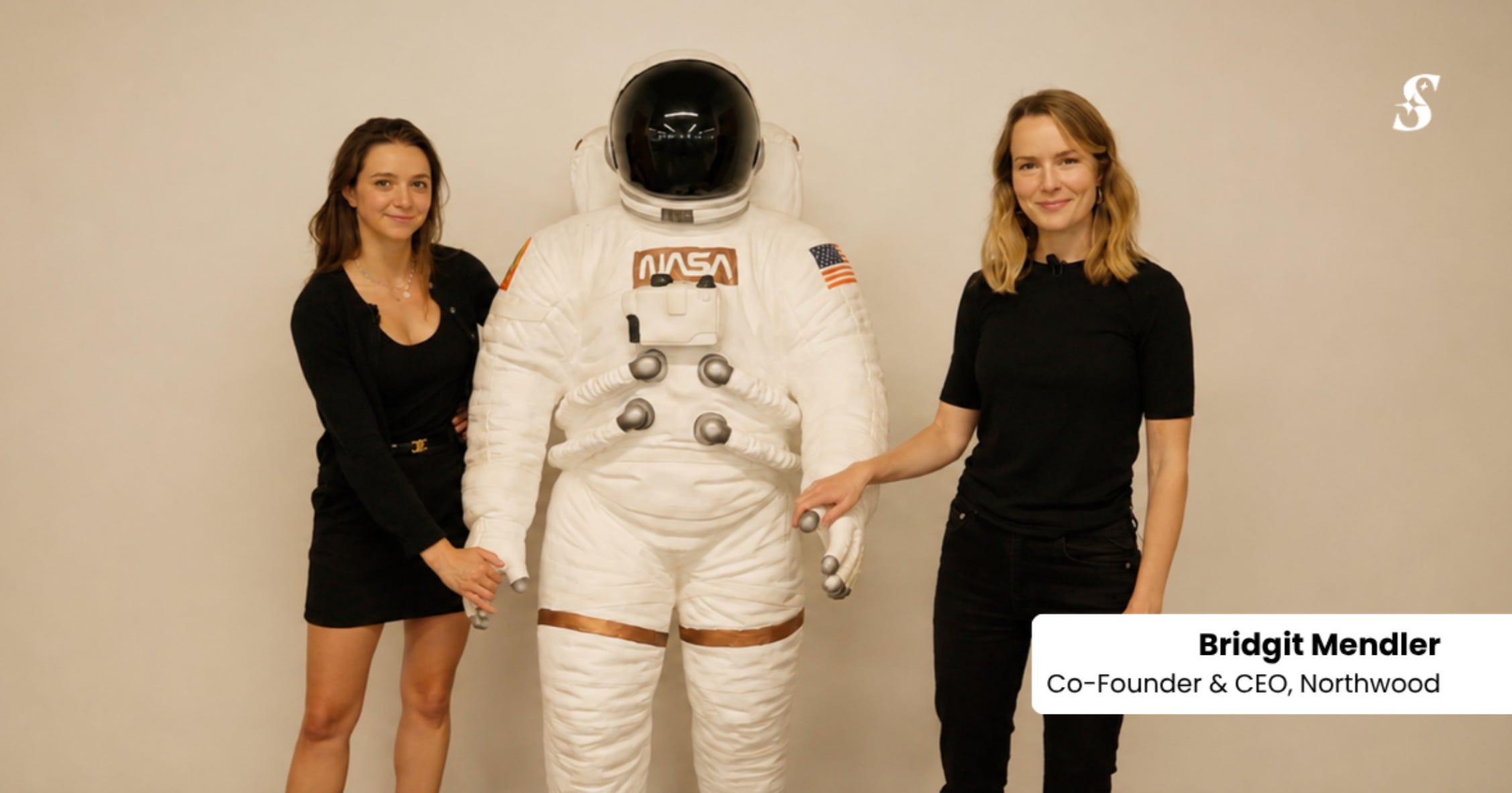
(42:51) The NASA Astronaut
Brought to you by:
Brex—The intelligent finance platform: cards, expenses, travel, bill pay, banking—wrapped into a high-performance stack. Built for scale. Trusted by OpenAI, Anthropic, Vercel, Granola, Deepgram, & Sourcery.. teams that move fast AF. visit → brex.com/sourcery

Applied Aerospace—As global competition intensifies, strategic leadership demands space and defense technologies that deliver enduring national capabilities. At Applied Aerospace & Defense, we unleash the power of advanced manufacturing with unmatched scale and agility. Visit: applied-ad.com/
Turing—Turing partners with frontier AI labs to improve model capabilities in coding, reasoning, tool use, & multimodality, as well as with Fortune 500 enterprises to build & deploy end-to-end agentic AI systems in mission-critical workflows Visit: turing.com/sourcery
VCX—VCX is the public ticker for private tech, allowing investors of all sizes to invest in venture capital. View The Portfolio at GetVCX.com
Deel—Deel is the global people platform that helps startups hire, manage, pay, and equip anyone, anywhere. Trusted by more than 35,000 fast-growing companies, Deel is the people platform that just works, so teams can scale without the chaos. Visit: deel.com/sourcery
Public-–Investing platform Public just launched Generated Assets, which lets you turn any idea into an investable index with AI. With Generated Assets, you can build, backtest, refine, and invest in any thesis with AI. Gone are the days of one-size-fits-all ETFs. Try it today: public.com/sourcery
Northwood Space Opens 185K Sqft HQ & Factory in Torrance
Bridgit Mendler on the ground segment bottleneck, building antennas out of cellular components, and what $136M buys in a manufacturing business
→ Listen on X, Spotify, YouTube, Apple
The Facility
Northwood Space opened a 185,000 sqft headquarters and factory in Torrance, California on August 31, 2026. The building takes the company’s manufacturing footprint from 25,000 to 135,000 sqft, an increase of more than 5X, and is designed to produce hundreds of antennas per year. Production moves in during October 2026, and the site will add 400 jobs over the next 3 years.
The layout is built around 3 dedicated production lines. A Portal phased-array line will produce more than a full ground site’s worth of panels each month at full ramp. A Prism parabolic line will produce 4 antennas per week. A printed circuit board assembly line brings board production in-house, which cuts roughly 3 months off lead times for new phased-array designs. Expanded machining lines will produce antenna feeds, amplifiers and other RF hardware, and several anechoic chambers will handle antenna and RF component testing on site.
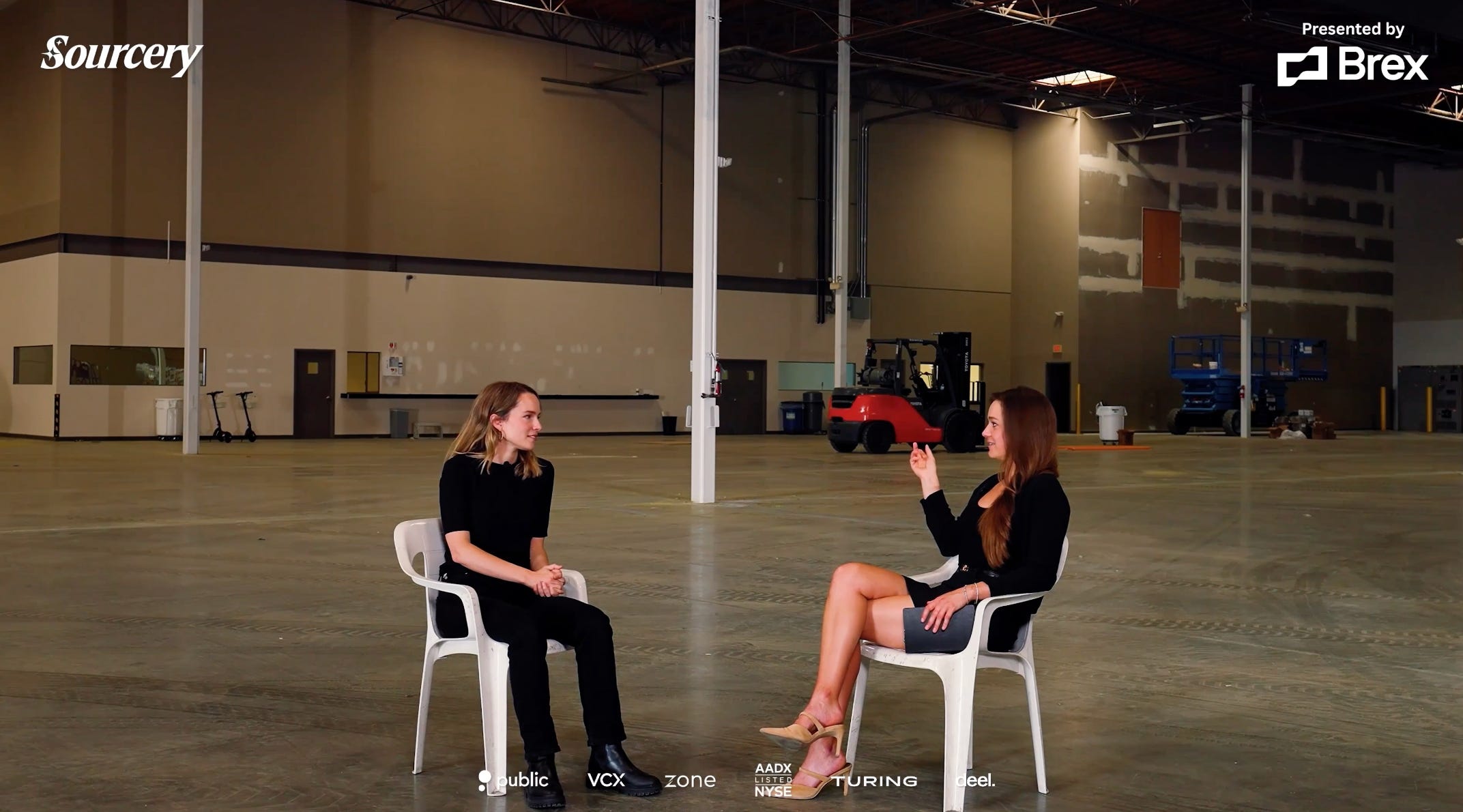
We toured the building before the build-out, when the manufacturing floor was still empty. Mendler walked through where each function will sit.
“What we will have is multiple manufacturing lines for our Prism and Portal products. So for both of those, that’s going to be hundreds of antennas in production.”
The building also carries over some features from its previous tenant, including a movie theater that Northwood plans to convert into mission operations.
“I don’t know that we would’ve built out a movie theater ourselves, to be honest. But the cool thing as a ground company is you do need to have a form of mission ops.”

Why the Ground Segment Fell Behind
Thousands of satellites now orbit Earth, but the ground infrastructure that receives their data has not scaled at the same rate. Mendler attributes the gap to procurement structure rather than technical difficulty.
On the government side, spacecraft and ground systems were bought separately, which left the ground segment scoped last.
“Space systems were the major focus for a long time, & ground segment was kind of just the afterthought. People think about what’s the thing that you’re putting up in space.. & for a number of programs, the ground was just not really contemplated.”
On the commercial side, the problem is a fragmented value chain. Component suppliers, site operators and software vendors each occupy a different segment, and no single participant can respond quickly when spacecraft demand surges. Legacy operators planning next-generation constellations and sovereign operators ramping their own manufacturing both hit the same wall.
Northwood’s response is vertical integration.
“We’re looking across that whole value chain and trying to accomplish it all within one company so that we can actually be responsive to that demand, do it at better cost, make it more flexible, and just generally modernize.”

The Hardware Architecture
Northwood builds many small antennas that combine to deliver the performance of one large dish, rather than building large custom parabolics. The choice is driven by unit volume and mission flexibility.
“We want to basically be an index for space, where whatever use case winds up panning out for space, we’re able to support it.”
“If we were trying to build the Stanford Dish and the Stanford Dish alone, we’d build a giant parabolic that only sits in one place and does one thing. But if we want to accomplish serving the Stanford Dish while serving a lot of other things, we probably would build something that’s more modular.”

The product line splits into 2 categories. Portal is a USB- and SGLS-capable phased array used for telemetry, tracking and control across proliferated and multi-orbit constellations. Prism is a high-throughput parabolic moving SATCOM and mission data across S-, X- and Ka-bands, and is live on the network today.
Because the units are small, field crews can stand up a site in hours rather than the months a custom dish requires.

Supply Chain Strategy
Northwood does not buy aerospace-grade components off the shelf. The company sources from high-volume commercial supply chains and re-engineers the parts to meet space requirements.
“We took the philosophy of let’s not buy the aerospace grade components that are ready off the shelf. Let’s just hire incredible engineers that can figure out how to reconfigure a cellular diplexer.”
“We’ve been able to actually make space grade performance out of standard high-volume cellular components.”
Vertical integration decisions follow a specific test. Northwood brings a function in-house when it becomes a timeline constraint, not as a default posture.
“We only bring in-house what actually turns into a pain point on timeline.”
The Torrance PCB assembly line is a direct application of that rule. Waiting on outside board suppliers was adding roughly 3 months to each phased-array revision cycle.
Site Deployment & Regulation
Northwood operates 5 sites as of 2026. Site selection reduces to 3 infrastructure requirements, then layers coverage and regulatory considerations on top.
› Fiber, to network data back through Earth
› Power, to run the equipment on site
› Land, to physically place the hardware
The company prioritizes colocation with facilities that already have all 3, data centers in particular, which also supply on-site technical staff. Beyond infrastructure, coverage geometry determines placement. Satellites below geostationary orbit move continuously, so operators need contact points distributed to maintain constant communication, and separate sites positioned near where their end customers are.
Licensing has been less of an obstacle than expected.
“Fortunately for us, the licensing has been relatively easy to work with in the different regions that we focused on, because most countries are open for business. They want to have more space business.”
Sites now span markets including Japan, Argentina and Iceland, each with different legal and technical operating contexts.

Security & Site Diversity
Northwood’s security approach favors proliferation over physical hardening. Rather than fortifying individual sites with guards and gates, the company runs a distributed network where any single site can go offline without interrupting coverage.
“We’re taking a bit more of the SpaceX approach where they tend towards proliferation. We have a bunch of sites, and we have that diversity of sites so that we can make sure, if any one of those sites goes down, we can continue to have continuity of coverage.”
The software layer is designed to prevent write access to local systems and hardware tampering at the site level. The redundancy also covers non-adversarial failures, including weather events that take out an entire region.



Funding & the Space Force Contract
Northwood has raised over $136M since its founding in 2022. The most recent round was a $100M Series B announced January 27, 2026, led by Washington Harbour Partners and co-led by Andreessen Horowitz, with participation from Founders Fund, 137 Ventures, Alpine Space Ventures, Balerion Space Ventures and Fulcrum. The Series B followed a $30M Series A less than a year earlier.
The company also holds a $49.8M contract with the US Space Force supporting the Satellite Control Network, the system handling telemetry, tracking and control for government spacecraft. Mendler frames it as an initial engagement.
“It’s kind of like our trial period. It’s us demonstrating our system works, and then that’s the catalyst for a larger engagement for those services.”
The urgency on the government side comes from launch volume. More spacecraft require more contact capacity, and newer mission profiles involving dynamic orbital maneuvering have no existing control solution.
Mendler describes the capital strategy as demonstrating revenue rather than funding a long-dated vision.
“With investors in space today, it’s not just about bankrolling a vision that takes 10 years to materialize. It’s how can you demonstrate a business year after year that grows & that actually hits rather compelling revenue figures along the way.”
“We don’t want to be externally funded forever. We want to make sure that we can be generating our own revenue.”

The Economics of Shared Ground
Operators currently solve for reliability and surge capacity through redundancy, sometimes maintaining 3X the ground capacity they need on an average day. That capacity is expensive to build and carries lead times of roughly 18 months.
Northwood’s model replaces per-operator buildouts with a shared, software-defined network that missions plug into. Per gigabit of connectivity, a customer pays approximately half what building an equivalent site would cost. Because the network is shared and continuing to expand, that unit cost declines as capacity is added. Northwood projects it reaching roughly a tenth of self-build cost by 2030.
The customer base skews toward operators who need guaranteed reliability and the ability to reallocate capacity geographically, largely in communications and Earth observation, with end customers that include US and allied governments. Mendler cites enterprise private networks and high-demand consumer events as representative use cases where throughput must be both constant and reconfigurable.
She positions the ground segment as the entry point rather than the endpoint.
“You need to send data. That is how you monetize space.”
“For us as a starting point it’s ground, but beyond that, we want to continue to support more & more of the networking piece.”
→ Listen on X, Spotify, YouTube, Apple
The material presented on Molly O’Shea’s website are my opinions only and are provided for informational purposes and should not be construed as investment advice. It is not a recommendation of, or an offer to sell or solicitation of an offer to buy, any particular security, strategy, or investment product. Any analysis or discussion of investments, sectors or the market generally are based on current information, including from public sources, that I consider reliable, but I do not represent that any research or the information provided is accurate or complete, and it should not be relied on as such. My views and opinions expressed in any website content are current at the time of publication and are subject to change. Past performance is not indicative of future results.
Paid Endorsement. Brokerage services by Open to the Public Investing Inc, member FINRA & SIPC. Advisory services by Public Advisors LLC, SEC-registered adviser. Crypto trading provided by Zero Hash LLC, licensed by the NYSDFS. Generated Assets is an interactive analysis tool by Public Advisors. Output is for informational purposes only and is not an investment recommendation or advice. See disclosures at public.com/disclosures/ga. Matched funds must remain in your account for at least 5 years. Match rate and other terms are subject to change at any time.