

Inside SF’s Satellite Factory
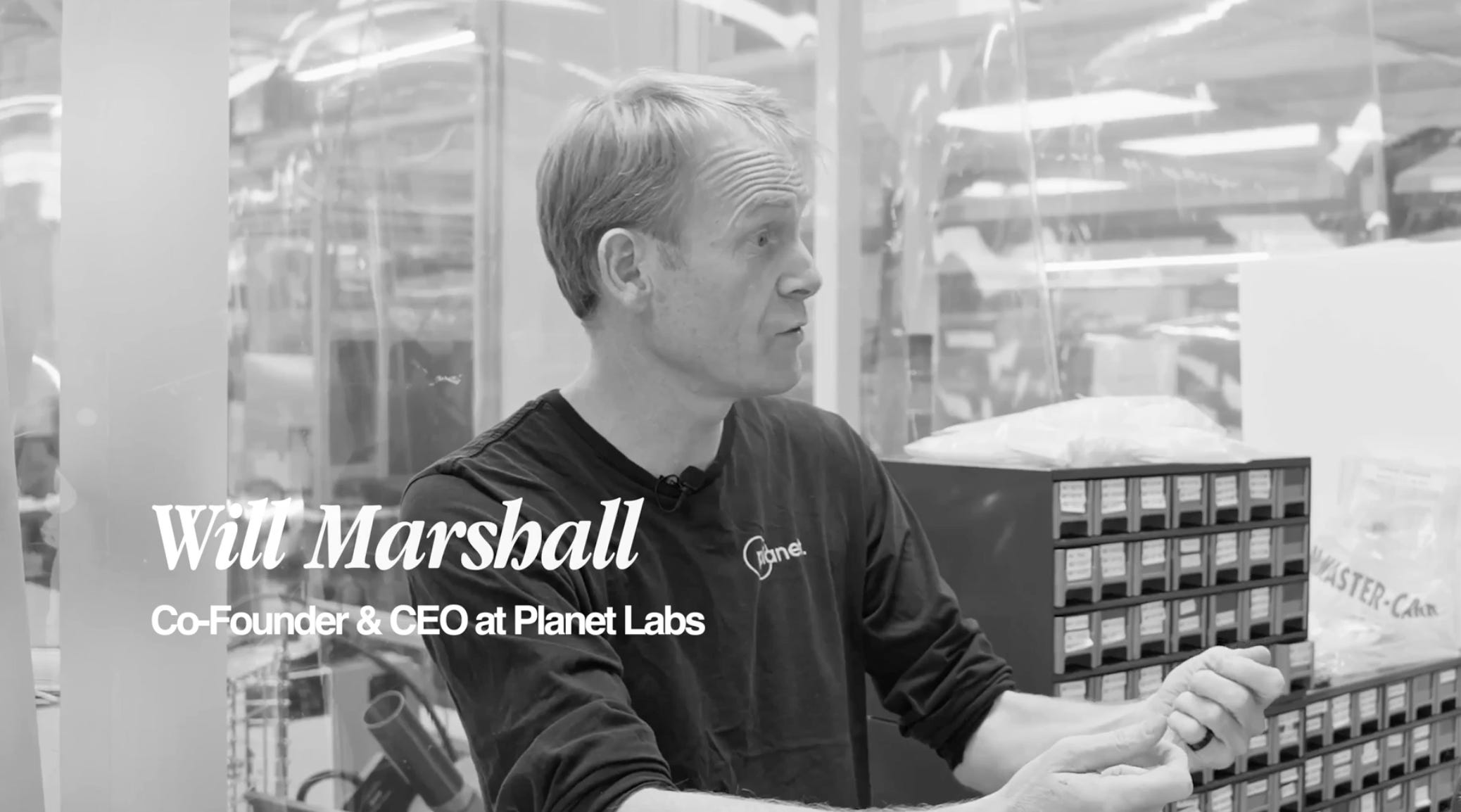
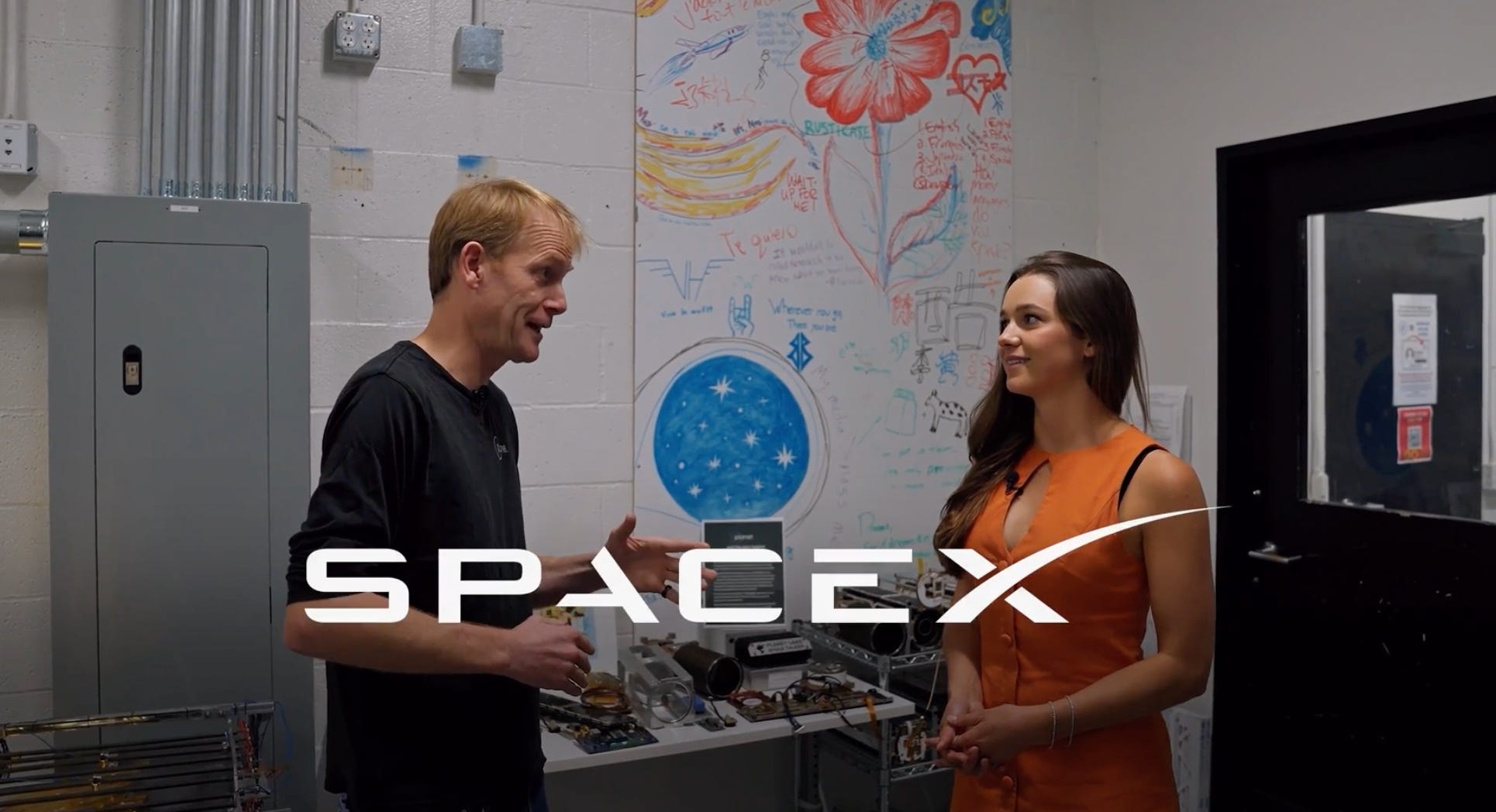
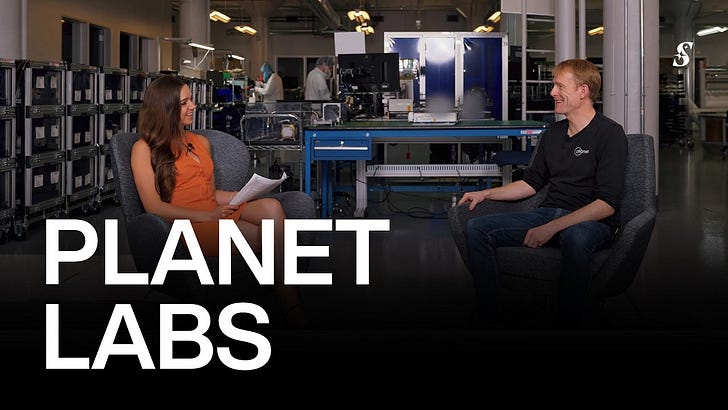
I went inside Planet Labs (NYSE: $PL) in the heart of San Francisco (!!) with Co-Founder & CEO Will Marshall for an exclusive & very extensive tour of its satellite manufacturing facility.
(This is Part II of our Planet series, check out Part I here)
→ Listen on X, Spotify, YouTube, Linkedin
Planet has built over 700 satellites, second only to SpaceX, and operates the only commercial constellation capable of imaging Earth's entire landmass every day, generating approximately 4 million images daily.
Will walks us through how Planet pioneered satellite miniaturization, reducing costs by roughly 1,000X compared with traditional spacecraft. We go inside the clean room to see its next-generation Pelican satellites, learn how the company can manufacture a Dove satellite in approximately eight hours, and examine the shock, vibration, and thermal testing required to survive launch and operate in orbit.
We also explore Planet's newest satellite technologies, including its upcoming Owl constellation, which targets 1-meter daily imagery and faster data delivery, and its AI-powered interface Planet AI that lets users ask natural-language questions about satellite data. Will demonstrates the platform using Area 51, showing how AI could make more than a decade of Earth imagery accessible to a much broader audience.
From its early experiments sending consumer electronics into space to manufacturing satellites for global intelligence, defense, and environmental monitoring, this is a behind-the-scenes look at how Planet Labs builds the infrastructure to observe and understand our changing world.
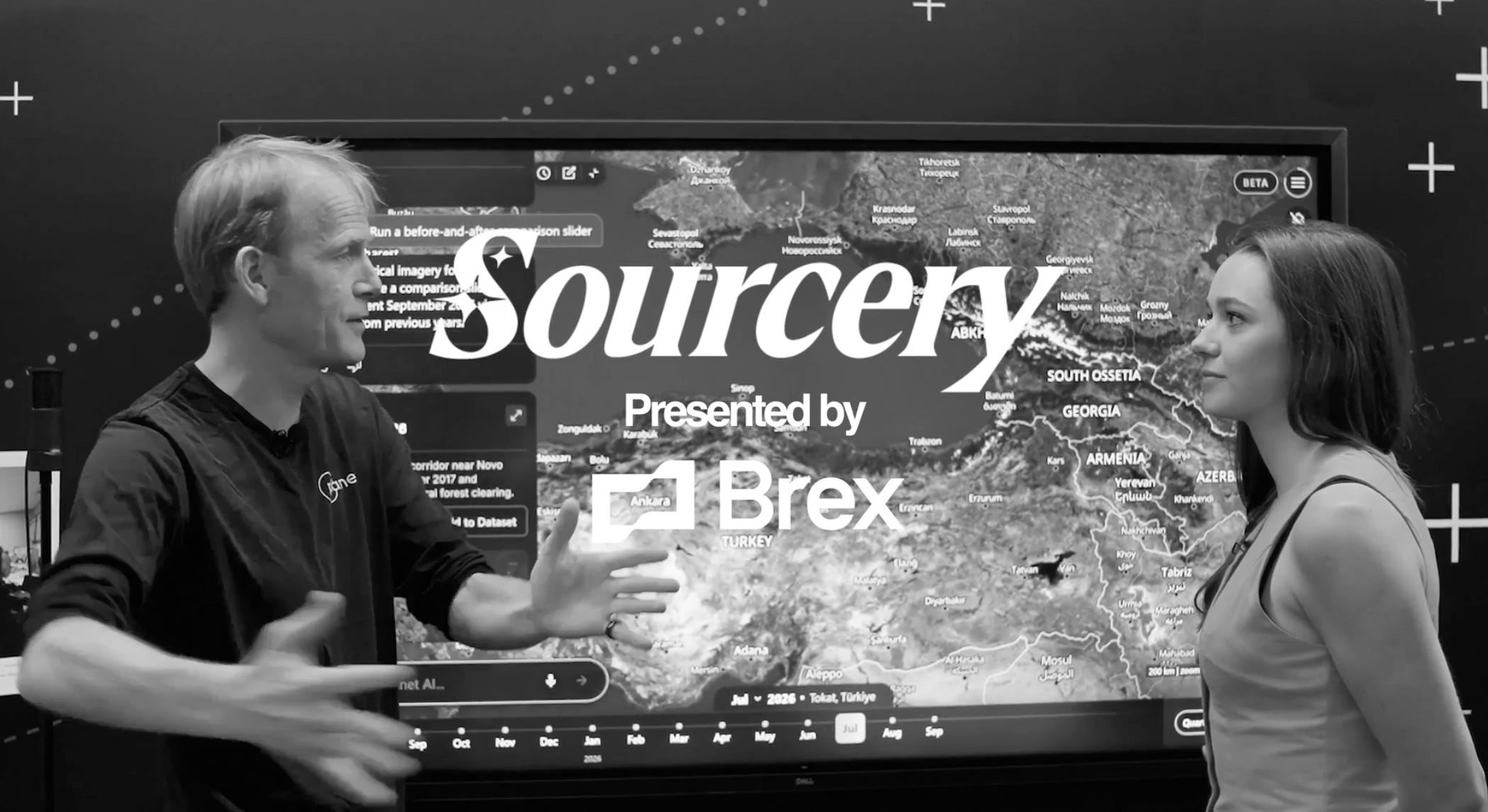
𝐓𝐈𝐌𝐄𝐒𝐓𝐀𝐌𝐏𝐒
(00:00) Will Marshall, Co-Founder & CEO at Planet Labs
(00:48) 700 satellites for less than one NASA mission
(02:44) Why Planet Labs is really a data business
(03:45) How a satellite sees trees from 500 km away
(06:22) 4 million images of Earth, every day
(07:44) What a satellite goes through to reach orbit
(09:03) The $500 phone vs. the $1B satellite
(12:05) 1,000x more data than the first satellites
(14:47) Planet Labs' 48 ground stations that bring Earth’s data home
(16:44) Why every Planet Labs satellite is named after a bird
(18:19) A look inside Planet Labs’ sharpest satellite
(20:17) Why Planet Labs doesn’t make its own chips
(21:14) Building a satellite in 8 hours, not 8 years
(22:47) Why fleet size isn't what matters
(24:30) The engine that’s 10x more efficient in space
(25:29) Why the 100 million pieces of space junk is the real collision risk
(26:56) Spotting gas leaks from space
(27:40) Testing satellites to the breaking point
(32:19) What changed at Area 51 in five years?
(37:31) The room where satellite radios are tested

Brought to you by:
Brex—The intelligent finance platform: cards, expenses, travel, bill pay, banking—wrapped into a high-performance stack. Built for scale. Trusted by OpenAI, Anthropic, Vercel, Granola, Deepgram, & Sourcery.. teams that move fast AF. visit → brex.com/sourcery

Harvey—The AI platform built for legal work, is helping the best firms and companies close deals faster. More than 200,000 lawyers, 80% of the Am Law 100, and over 20% of the Fortune 500 build with Harvey. Visit: Harvey.ai
Zone—develops next-generation data center campuses, partnering with AI companies, site developers and technology leaders to bring compute online faster and at scale. Visit: zonefrontier.com
Mercor—The human intelligence behind frontier AI. Frontier labs and leading enterprises use Mercor to turn the knowledge of 5M+ experts into the data, evals and benchmarks that make AI better at real work. Visit: http://mercor.com/sourcery
VCX—VCX is the public ticker for private tech, allowing investors of all sizes to invest in venture capital. View The Portfolio at GetVCX.com
Deel—Deel is the global people platform that helps startups hire, manage, pay, and equip anyone, anywhere. Trusted by more than 35,000 fast-growing companies, Deel is the people platform that just works, so teams can scale without the chaos. Visit: deel.com/sourcery
Public—Investing platform Public is the world's first agentic brokerage. You can invest across stocks, options, bonds, crypto, event contracts, & more, then automate anything with AI Agents. Seriously, just tell an Agent what you want—from "Set up a buy-the-close, sell-the-open strategy for me" to "Automatically sweep any cash over $10k from my bank to my brokerage account." Agents can monitor markets, run strategies, & manage your cash 24/7. Get started: public.com/sourcery
Inside Planet Labs’ San Francisco Satellite Factory With CEO Will Marshall
Planet Has Built About 700 Satellites in San Francisco Over 15 Years
Planet Labs (NYSE PL) designs, builds, and tests its satellites at its headquarters in San Francisco. The company’s mission is to image the whole world every day and make change on Earth visible, accessible, and actionable. Planet has built about 700 satellites in 15 years, more than any company except SpaceX, and launches 4 or 5 times a year on a record of more than 40 rockets.
Planet’s most recent launch, on October 1, 2026, put 20 satellites into orbit, bringing its total to 718. The mission included the first demonstration satellite for Google’s Project Suncatcher, built by Planet to test Google TPUs in orbit as a step toward data centers in space. Marshall covers Suncatcher and the economics of space compute in a separate sit-down interview.
The factory sits inside a business that sells information. Planet’s satellites collect imagery, and the company sells pictures and analytics derived from them. Building and launching satellites requires capital, but few companies can do it, which limits competition.
“We have a high barrier to entry, but our margins look like a software business.”
The tour runs from the founders’ garage artifacts on the first floor through the clean room and test lab, up to the AI interface on the fourth floor, and ends on a new Dove production floor that had not been shown publicly before.
A Phone on a Suborbital Rocket Set Planet’s 1,000X Cost Model
Satellites built the traditional way were the size of a double-decker bus and cost at least $1B each. Some NASA missions cost up to $10B, and the cheapest ran a couple hundred million dollars. Planet pioneered miniaturizing satellites so they could be launched in large numbers.
“We’re talking about launching all 700 of our satellites costs less than a typical satellite at NASA.”
The approach started at NASA, where a colleague kept asking why the agency spent $1B on a satellite when a $500 phone already carried GPS and most of the electronics a satellite needs. The founding team put a phone on a suborbital rocket. The launch failed, but the phone’s electronics survived and the team recovered the data.
“It doesn’t need to cost a billion dollars. Phones work just fine in space.”
NASA built its own computers, solar panels, and batteries in the 1960s through the 1980s because none existed commercially. Today Apple, Google, and other consumer electronics companies fund most of that R&D. Planet buys off-the-shelf electronics, launches more satellites than it needs, and accepts that 1 or 2 may fail. Marshall says the shift cut costs by about 3 orders of magnitude and compares it to the move from mainframes to desktop computers.


Each Dove Images Earth From 500 km & Downlinks at 2 Gbps
The first floor holds the whiteboard from the garage where the founding team built Planet’s first satellite on nights and weekends while still working at NASA. Next to it is a Dove optical telescope assembly, which images Earth from about 500 km, roughly the distance from San Francisco to Los Angeles, at enough detail to see individual trees and houses.
Each Dove uses a star camera to recognize constellations and determine where it is pointing, reaction wheels to turn itself toward a target, and GPS and sun sensors to fix its position. The satellite embeds that metadata in each image so Planet can stitch it to the Earth’s surface.
“We can get 2 gigabits a second from our satellite down to the ground station over a thousand kilometers away.”
Planet’s first satellites downlinked at about 1 megabit per second. The jump to about 2 gigabits per second is what made it possible to image the whole Earth every day. About 200 Doves are in orbit today, capturing about 4M 47-megapixel images per day, on the order of 100 terapixels, in 8 spectral bands spanning visible and near-infrared light.
Planet built about 48 of its own ground stations, parabolic dishes running dual S and X band, because none were available to buy. Most sit at high latitudes in Alaska, northern Canada, northern Norway, southern New Zealand, and southern Australia, since Planet’s satellites run mainly in polar orbits and pass over the poles most often. Many sites host 4 to 8 dishes to track several satellites at once.
Imagery is the data people can interpret visually, and vision language models can now pick out buildings, ships, planes, and trains the way earlier models learned to recognize cats and dogs. With 4M images a day, machines do most of the analysis.


Planet Can Build Up to 40 Doves a Week
Planet has built more than 650 Doves in its San Francisco lab and can produce up to 40 a week. Each one takes about 8 hours to build.
“Each satellite takes about 8 hours to build. And to give you a sense, when I was at NASA, it was like 8 years.”
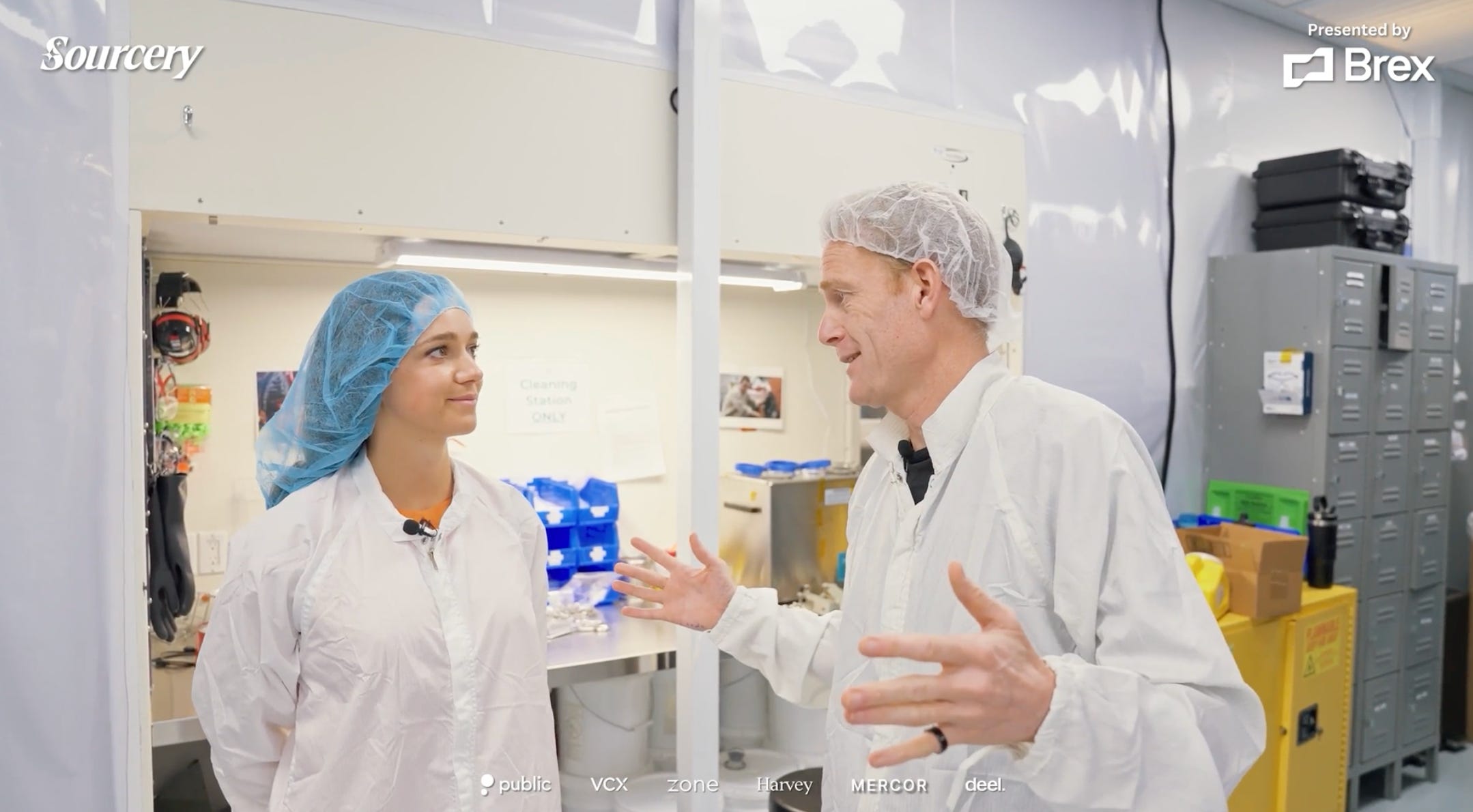
Planet buys components at the chip level and builds systems in-house. The company sources telescope blanks externally and integrates the telescopes itself. Its radios use commercial chips, including WiMAX components, wired into Planet’s own circuits and antennas. Subsystems are assembled on automated test stands and brought together in the main clean room.
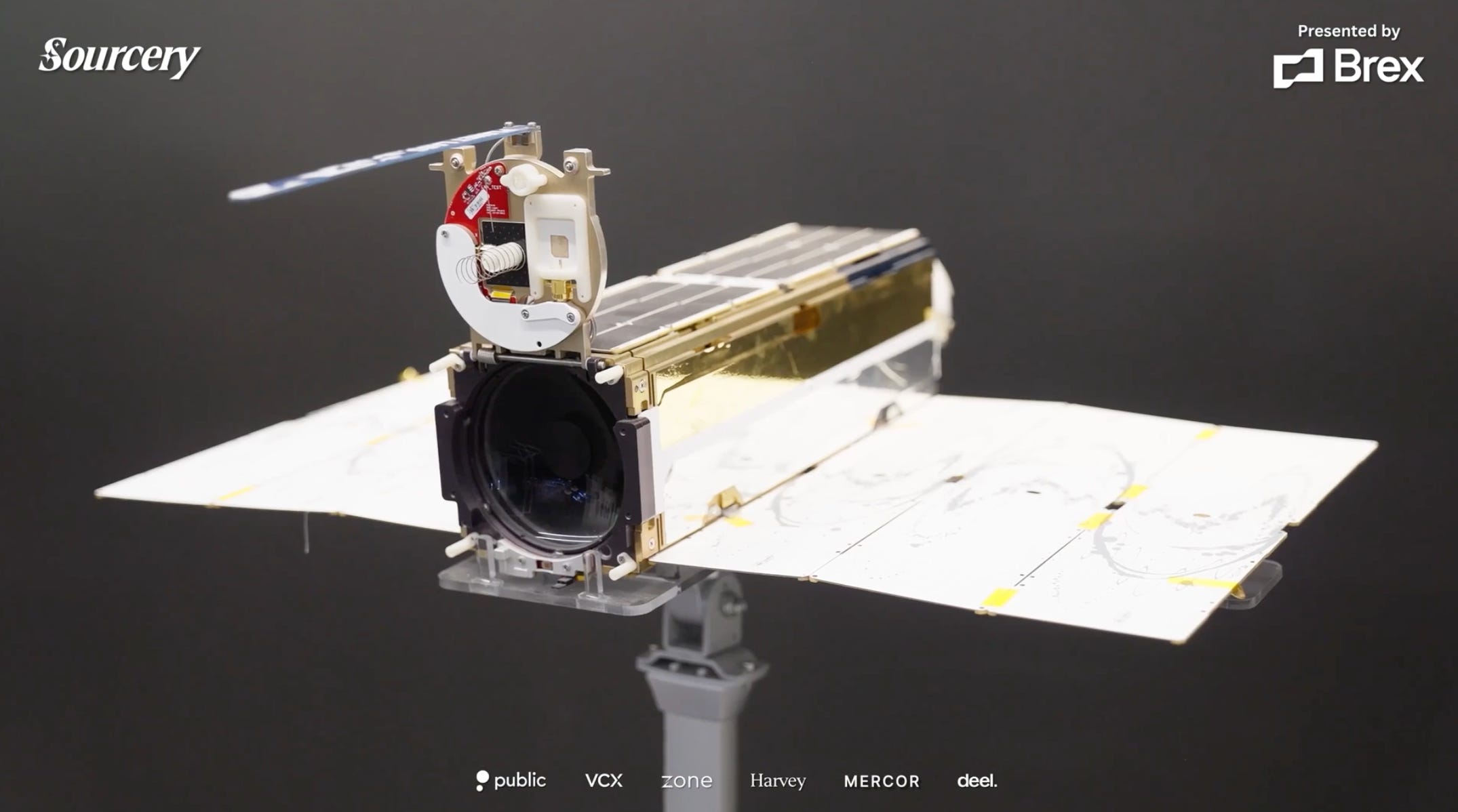
The larger Pelican satellites take longer to build, and Planet is ramping production to many dozens. A new facility in Berlin, opened September 22, 2026, doubles Pelican manufacturing space and can scale to up to 60 satellites a year. The hyperspectral Tanagers are lower volume, built at a rate of a couple per year. A third Tanager sits in an export-controlled area of the lab that is closed to visitors.
The tour ends on Planet’s new third-floor production line, including the Dove nest, where finished satellites sit 2 by 2 waiting for launch. Satellite manufacturing capacity is expanding across the industry, with Blue Origin committing $550M to a satellite complex in Texas in October 2026 as companies race to build constellations for communications, Earth observation, and compute in orbit.


Pelican, Tanager, and Owl Extend the Fleet
Planet names its satellites after birds, following a space tradition that includes NASA’s Eagle lunar module. Doves represent the company’s goal of supporting peace and security. Tanagers are colorful tropical birds, some endangered, which fits a hyperspectral fleet built to monitor biodiverse ecosystems.
Pelicans fly low over water to gain lift, and Planet’s Pelican satellites fly low in the atmosphere to improve ground resolution. First generation Pelicans capture 50cm class imagery, and the second generation is designed for up to 30cm class. Planet launched Pelican-11, the Gen 2 technology demonstrator, in July 2026.
“We fly these satellites really low so that we get better resolution on the ground.”
The clean room holds Pelican-10, with its bus handling attitude control, propulsion, and radio communications around a telescope of about 50cm that takes up most of the spacecraft’s volume. Pelican propulsion uses xenon ion engines, which expel gas about 10X faster than chemical rockets and run about 10X more efficiently in orbit, though with too little thrust to launch from the ground.
Tanager-2 launched on October 1, 2026, and Planet works with NASA JPL on the Tanager instrument. The fleet tracks methane, and a poster in the lab shows a gas plume from a pipeline leak that Tanager detected. Planet alerts the operator, who shuts the leak off.
“Turning this one off is the equivalent of taking a couple of hundred thousand cars off the road from a pollution standpoint.”
Owl is next. The fleet is named for the bird’s large eyes and wisdom, and each satellite carries more onboard compute. Owl moves Planet’s daily scan from 3m to 1m resolution, about 10X more data per unit area, and adds optical links to return data about 10X faster. A technology demonstration is slated for late 2026, and Planet expects the number of satellites in the fleet to stay about the same or decline slightly.

Every Satellite Survives 200G Shocks and 45 Minute Thermal Cycles
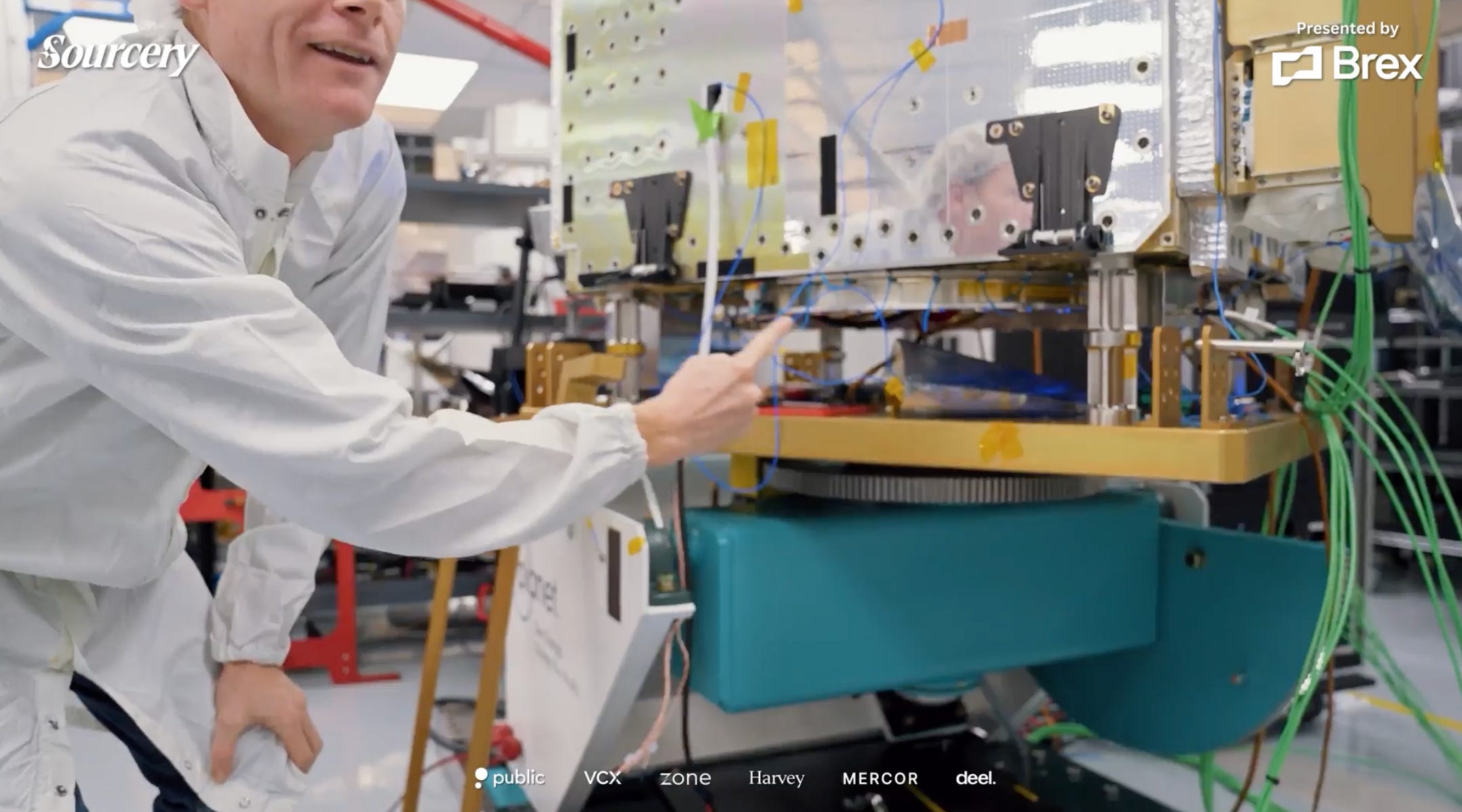
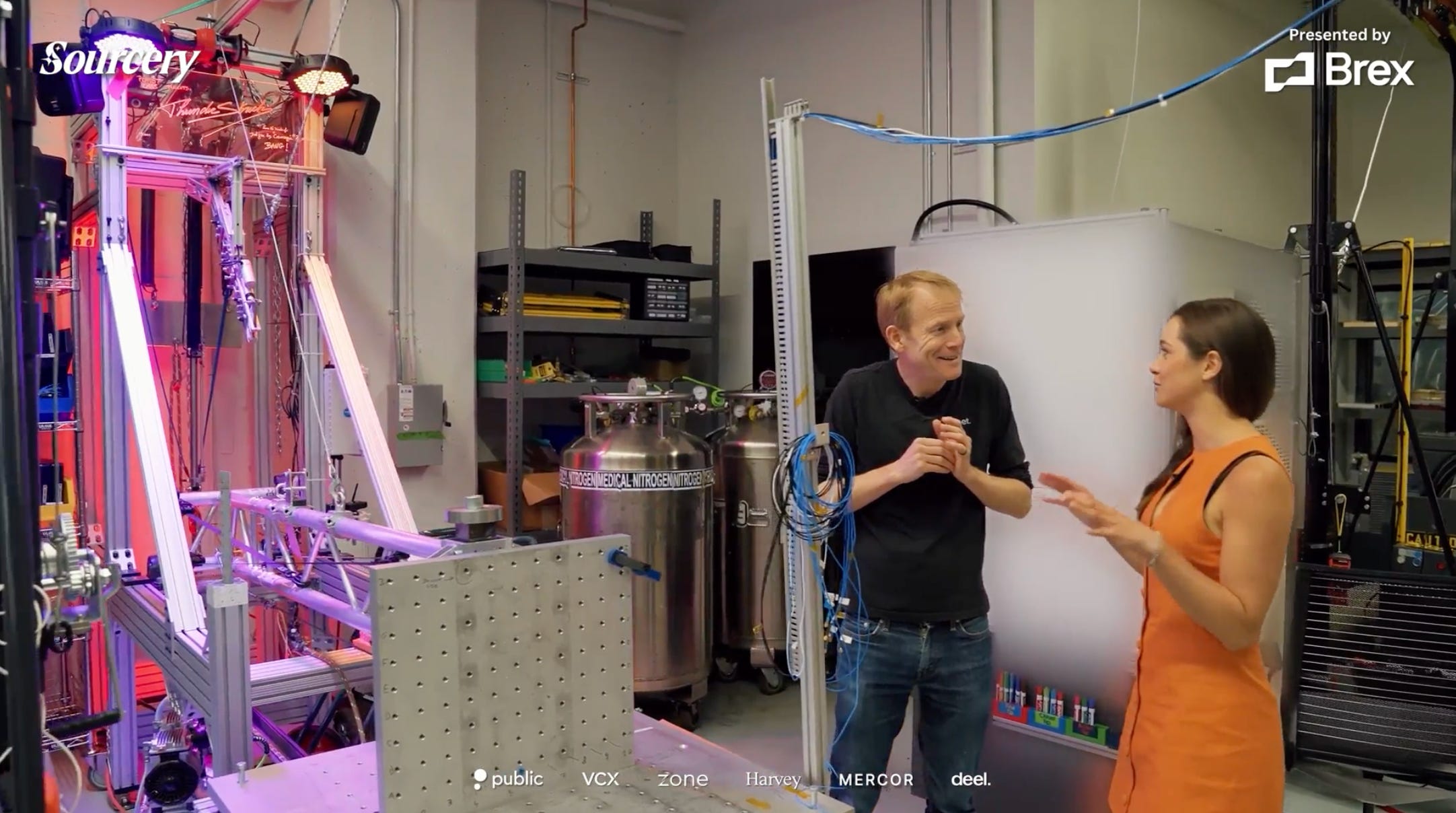
The test lab simulates launch and orbit. A shock table drops a hammer to deliver about 200 Gs, matching the load when 2 rocket stages separate. Dropping a Dove from about shoulder height onto a marble floor produces roughly the same shock. A vibration table reproduces the roughly 15 Gs of shaking during launch. A thermal vacuum chamber cycles hardware between -40C and +20C, the swing a satellite goes through every 45 minutes in orbit. During the tour, engineers were testing Pelican reaction wheels in a small vacuum chamber.
The telescope is the most delicate part. Its optics cannot shift by more than a fraction of a wavelength, under a thousandth of a millimeter, or the image falls out of focus. An aluminum telescope would expand and contract too much across that temperature range, so Planet uses specialized materials that compensate. Telescope breaks during testing have forced redesigns.
An RF chamber lined with absorbing material lets engineers confirm each satellite’s radios emit at the right power, with no reflections distorting the measurement.
Of all the Planet satellites that reached orbit on a successful launch, every one has turned on and worked. Some have had out-of-focus optics, a solar panel that failed to deploy, or a reaction wheel that stopped early, but Planet has gotten use out of all of them. Marshall treats that record as a sign the company is not taking enough risk with new sensors and designs.
“If we have 100% success, it means we haven’t pushed it hard enough.”

10,000 Satellites & 100 Million Debris Objects Share Low Earth Orbit
Planet’s fleet is about 10X larger than any other Earth imaging fleet and collects about 100X more area than any other Western commercial operator. Competitors task satellites to specific locations and cover under 1% of Earth’s landmass per day, or a couple percent at most. Planet’s launches now largely replenish the fleet, with the focus on adding capability per satellite.
More satellites raise the risk of collisions. SpaceX’s Starlink has moved to share space domain awareness data to help operators avoid each other, and Planet works collaboratively with other operators on avoidance.
“The biggest challenge though is less the satellites, it’s all the space debris.”
About 10,000 satellites operate in orbit, alongside on the order of 100M debris objects. That debris includes former satellites that broke apart, satellites that collided, and satellites destroyed by ground-launched anti-satellite weapons, each of which can break into tens of thousands of pieces.

Planet’s AI Interface Searches 10 Years of Daily Imagery in Under a Second
The fourth floor houses Planet’s AI interface, built on imagery of the entire world. Users can zoom anywhere and move through time, with about 3,000 image layers covering nearly every day for 10 years. Moving the timeline to December shows seasonal snow cover across the northern hemisphere.
Planet connected an LLM to that archive. General chatbots are trained on internet text and can explain the theory of agriculture. Planet’s version answers questions about a specific farmer’s field, or a specific flood or fire for a journalist.
“LLMs really only trained on the text of the internet, so they don’t know much of the real world.”
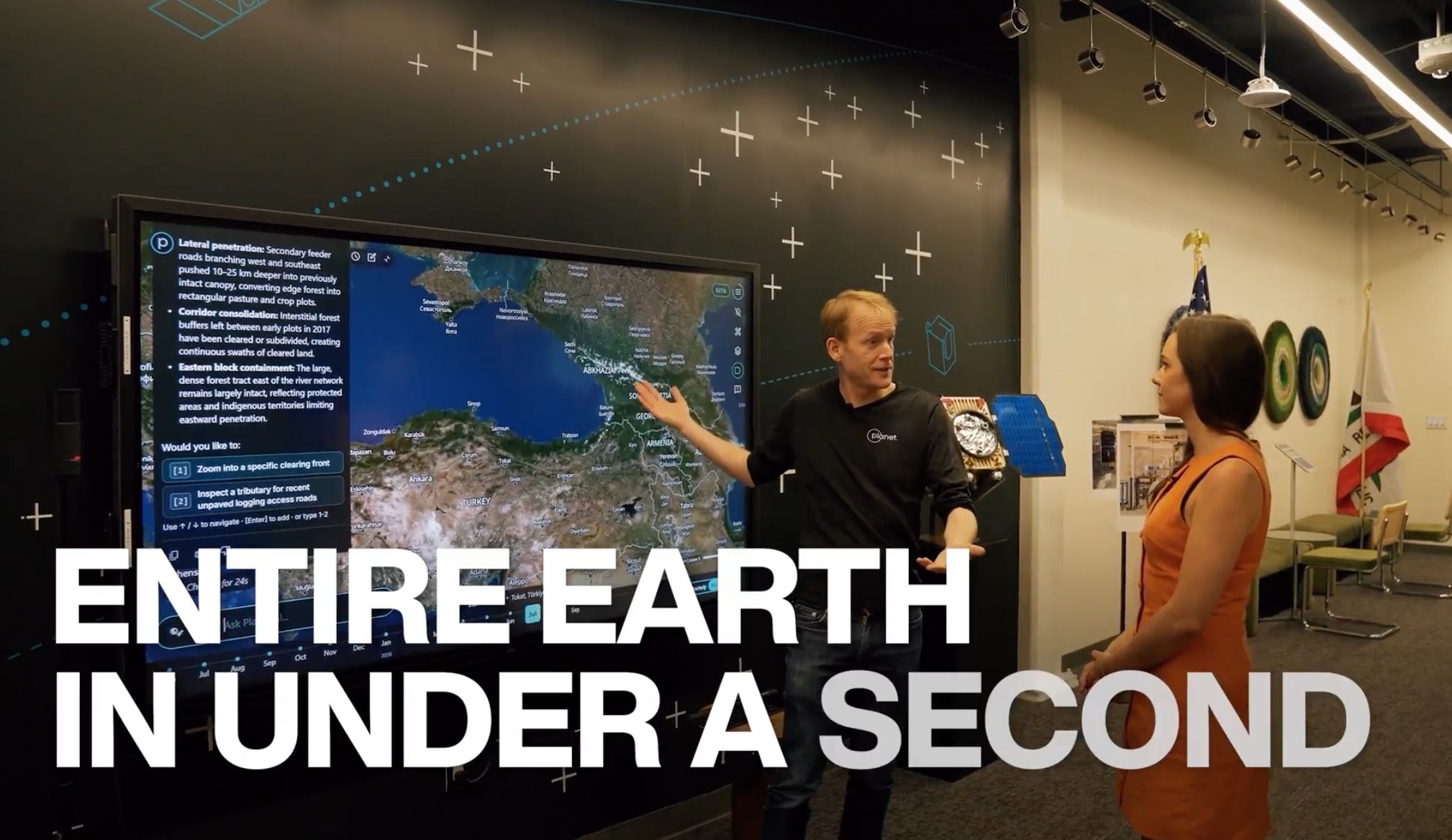
The system searches the entire Earth in under a second, detects changes over time, and plots graphs. A query for changes in the last 24 hours returned a fire in Yosemite and a flood that washed debris into a river, among other events, effectively a daily report on the planet. A live query comparing Area 51 in 2021 and 2026 surfaced structural changes and 2 aircraft that had since moved.
The demo also showed the product’s current limits. The search tool did not run during the live query, and Marshall describes the system as imperfect and improving. A small in-house AI team built the interface. It accepts questions in any language and is in open beta, available to anyone as a testing version ahead of a full launch.
“Our point is to open up geospatial data to not just the satellite imagery experts.”
Check out Part I: The Sit-Down
→ Listen on X, Spotify, YouTube, Apple
The material presented on Molly O’Shea’s website are my opinions only and are provided for informational purposes and should not be construed as investment advice. It is not a recommendation of, or an offer to sell or solicitation of an offer to buy, any particular security, strategy, or investment product. Any analysis or discussion of investments, sectors or the market generally are based on current information, including from public sources, that I consider reliable, but I do not represent that any research or the information provided is accurate or complete, and it should not be relied on as such. My views and opinions expressed in any website content are current at the time of publication and are subject to change. Past performance is not indicative of future results.
Paid Ad. Agents are an experimental AI tool. Its output may be inaccurate and is not investment advice. Public Holding’s, Inc. makes no guarantees about its accuracy or reliability—verify independently before use. Brokerage accounts & services provided by Open to the Public Investing, Inc. See additional disclosures at: https://public.com/disclosures/agenticdisclosures.