


Ladies & Gentlemen.. Ray Dalio
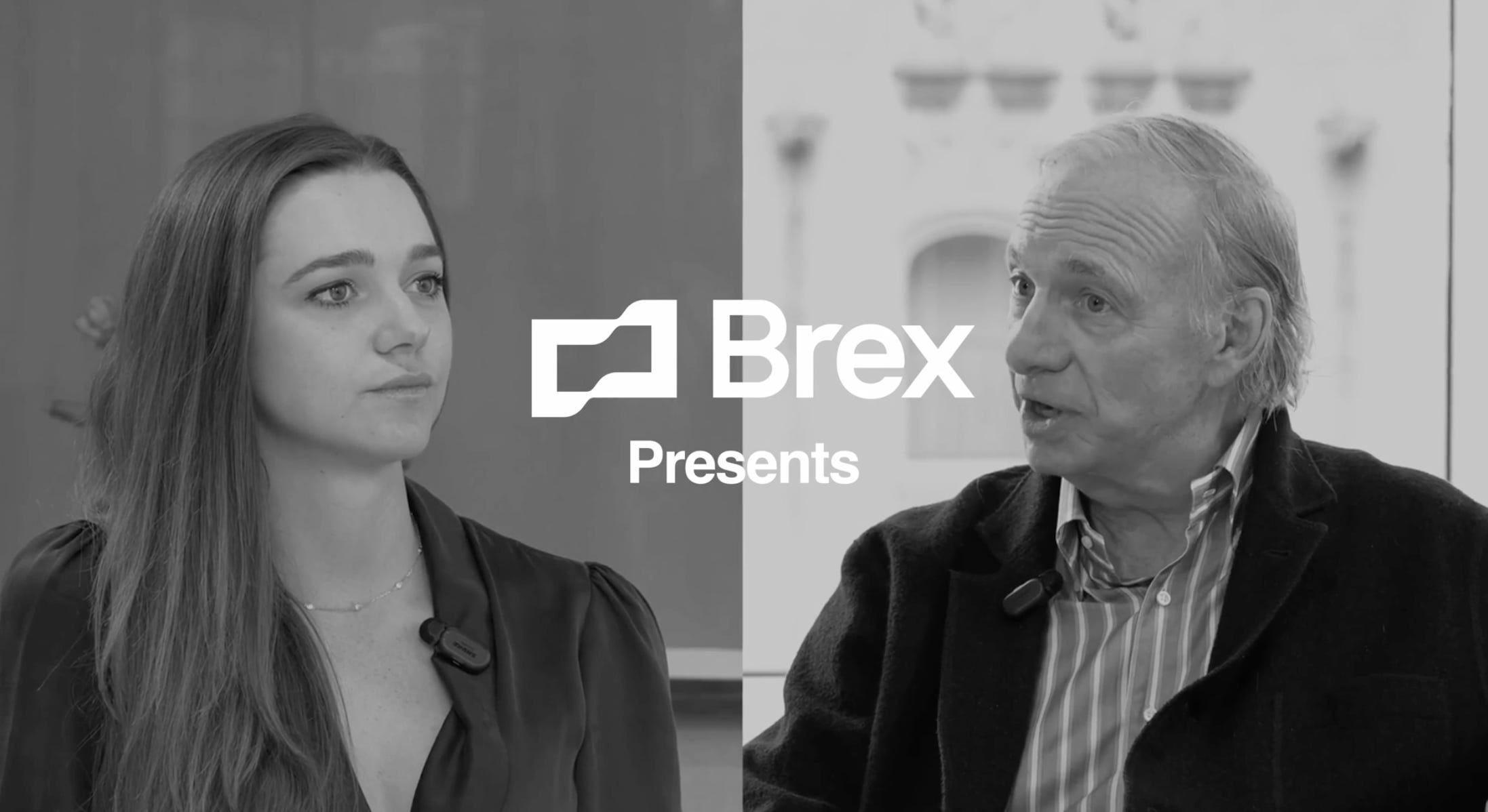
Ray Dalio has been on my Top 100 dream guest list since I started Sourcery. He has been a major influence on my career since high school (same hometown & bday - growing up I always saw the big mysterious Bridgewater bus driving on post road), so I am so happy I was finally able to meet him & sit down with him for a conversation that went well beyond markets! Hopefully this is the first of many.
→ Listen on X, Spotify, YouTube, Apple
Ray has spent more than 50 years studying historical economic cycles, including the patterns that helped him anticipate the 2008 financial crisis.
We discuss why America’s underlying economic challenges remain unresolved despite changes in political leadership, the growing divide between wealth & income, & what could trigger the next major market correction.


We cover:
1. The 5 forces driving global economic cycles
2. America’s debt problem & the difficulty of raising taxes or cutting spending
3. Wealth inequality, political polarization & the K-shaped economy
4. Why paper wealth isn’t the same as money
5. What causes financial bubbles to burst
6. Anthropic, SpaceX & the economics of trillion-dollar valuations
7. Bridgewater’s investment philosophy, dot system, & decision-making framework
𝐓𝐈𝐌𝐄𝐒𝐓𝐀𝐌𝐏𝐒
(00:00) Ray Dalio, Founder of Bridgewater Associates
(00:50) Why there's a shark behind them
(02:00) The five forces that drive history
(05:56) "We're changing the people, not the problems"
(09:55) Did America just vote for the middle?
(13:31) The real cause of the wealth gap
(20:19) How to become a billionaire on paper
(23:00) The bubble definition everyone gets wrong
(25:57) How Ray Dalio uses AI
(28:37) Why "why" is the most important question
(30:18) Inside Bridgewater's DOT system
(31:53) The hardest feedback Ray ever got
(33:35) Molly failed the Bridgewater interview
(34:33) Why the smartest people get stuck
(40:00) Why your 40s change everything
(42:15) The cost of never trying
(43:20) Will AI replace the people around you?
(46:06) The question that surprised Ray Dalio
(48:44) How to spend a birthday, according to Ray Dalio
Brought to you by:
Brex—The intelligent finance platform: cards, expenses, travel, bill pay, banking—wrapped into a high-performance stack. Built for scale. Trusted by OpenAI, Anthropic, Vercel, Granola, Deepgram, & Sourcery.. teams that move fast AF. visit → brex.com/sourcery

Harvey—The AI platform built for legal work, is helping the best firms and companies close deals faster. More than 200,000 lawyers, 80% of the Am Law 100, and over 20% of the Fortune 500 build with Harvey. Visit: Harvey.ai
Zone—develops next-generation data center campuses, partnering with AI companies, site developers and technology leaders to bring compute online faster and at scale. Visit: zonefrontier.com
Mercor—The human intelligence behind frontier AI. Frontier labs and leading enterprises use Mercor to turn the knowledge of 5M+ experts into the data, evals and benchmarks that make AI better at real work. Visit: http://mercor.com/sourcery
VCX—VCX is the public ticker for private tech, allowing investors of all sizes to invest in venture capital. View The Portfolio at GetVCX.com
Deel—Deel is the global people platform that helps startups hire, manage, pay, and equip anyone, anywhere. Trusted by more than 35,000 fast-growing companies, Deel is the people platform that just works, so teams can scale without the chaos. Visit: deel.com/sourcery
Public—Investing platform Public is the world's first agentic brokerage. You can invest across stocks, options, bonds, crypto, event contracts, & more, then automate anything with AI Agents. Seriously, just tell an Agent what you want—from "Set up a buy-the-close, sell-the-open strategy for me" to "Automatically sweep any cash over $10k from my bank to my brokerage account." Agents can monitor markets, run strategies, & manage your cash 24/7. Get started: public.com/sourcery
Ray Dalio on the AI Bubble, Wealth Gap & the Post-Midterm Debt Fight
Ray Dalio’s 500-Year Study
Ray Dalio founded Bridgewater Associates in 1975 and built it into the world’s largest hedge fund. His approach to macro investing traces back to 1971, when he was clerking on the floor of the New York Stock Exchange. That year, President Nixon ended the dollar’s convertibility to gold. Dalio expected a crash, and instead the stock market rallied.
“I went back in history and found March 1933, Roosevelt did the exact same thing, and I understood what the devaluation of money was. That made me then study history. So I studied the Great Depression & the 1930 to ‘45 period, and that helped me anticipate the 2008 financial crisis.
Then I did a study of the last 500 years, & I saw that the same things happened over & over again, driven by mostly 5 major forces.”
The 5 forces are debt, money and markets, the domestic political order, the geopolitical order, acts of nature such as droughts, floods and pandemics, and technology. In Dalio’s account, the multilateral system built after World War II, including the United Nations, the World Trade Organization and the world court, broke down as power shifted, which left a classic great power conflict.
“Those 5 forces all interact, & typically in big cycles that last about a lifetime. 1945 was the beginning of this new world order. And then there’s changes, a rising power challenging an existing power, or getting more in debt, & all of that creates this turbulence.
And so you go from a period of disorder through a period of prosperity & rebuilding the orders, to a period then of great conflict & a period of disorder.”
→ Listen on X, Spotify, YouTube, Apple
5 Forces Defined
Economic. It covers money, debt and the monetary order that goes with them. It follows the long-term cycle of debt rising relative to income, which leads to big changes in the monetary order. The 1971 gold decision is an example of one of those changes.
Internal order, meaning how well people within a country work together. Internal conflict is quite often related to greater wealth differences and values differences.
International geopolitical order, which governs how countries deal with each other. It plays out through 5 types of conflict between nations, trade & economic wars, technology wars, capital wars, geopolitical wars & military wars.
“Internationally, there’s a geopolitical order, meaning a system, & that system used to be a system where there was a means of resolving disputes, what we call the multilateral system, which was a bit naive.
It was the idea that there’s a United Nations or a World Trade Organization, & even a world court that was going to resolve disputes. And then with the change in power, that all went away.. so now we have a classic power conflict.”
Acts of nature. Droughts, floods and pandemics have killed more people and been responsible for more domestic orders and international orders changing.
Human inventiveness and technology. Examples include the First and Second Industrial Revolution, computing, the internet and AI.
The debt and money force, the internal conflict force and the external conflict force move in big cycles that reinforce each other to make up the Big Cycle. Acts of nature and powerful new technologies have big impacts on the monetary, political and geopolitical orders, and the orders affect them in turn. TimeFortune
“Number 5 is technology, in terms of man’s learning to be able to do things better & improve productivity. But how that technology is used, whether it’s used for a war or whether it’s used for improving man’s conditions, those 5 forces all interact.”

Divided Government After the 2026 Midterms
Democrats won control of the Senate in the 2026 midterms with a net gain of 4 seats, for at least a 51 to 49 majority, and are set to take the House. Dalio’s position is that the election changes who manages the country’s problems and leaves the problems themselves in place.
“I think it’s important to realize that we’re changing those who are dealing with the problem. We’re not changing the problems.
The problems will still exist. We’ll still have a debt problem. We’ll still have a left-right wealth gap, values gaps problem. We’re still going to have the problems that we’re talking about, the changing climate or the geopolitical conflict.”
The first test comes in the lame-duck session. The continuing resolution that has funded the government since October 1 expires on December 11. The debt ceiling is a separate deadline, which Goldman Sachs estimates must be raised by October 2027. Committee leadership is also changing. Elizabeth Warren is expected to chair the Senate Banking Committee, which oversees banking, credit and data center financing.
“The big problem with the debt problem is nobody wants to raise taxes or cut spending. All they know is they want more. And so in that situation, how do you get control of that group of people to be able to do the thoughtful things that are required in order to have circumstances work well & build strength again, like building financial strength or building togetherness strength to be able to be productive?”
Why Dalio Sees 4 Political Parties
Dalio places American politics on a continuum of 4 groups, the extreme left, the moderate left, the moderate right and the extreme right. The left and the right fight first. After one side wins, its moderates and its extremists fight for control of the party.
“There’s only one successful way to resolve these things, & that is if the moderate Democrats and the moderate Republicans get together & win over the extremists. Because if an extremist fights against another extremist, there will not be a resolution to these problems. What one hopes for is that moderates get together, and most of the population is going to be in that group. And so extremists could never win this war, because there’s too many on the other side.”
Dalio reads the candidates who flipped seats in 2026, many of them in states that were not expected to change hands, as a move toward the middle. He says that when self-interest outranks respect for the system, conflict continues until one side wins and imposes its terms.
“When I look at the candidates who flipped these states that one wouldn’t have thought would have flipped, we call them Democrats, but they don’t look like socialist Democrats. They’re almost indistinguishable from Republicans, let’s say. They look more like in the middle. And so one could say there was a vote for reasonable people in the middle.”

Education, Productivity & the Wealth Gap
Dalio links the current wealth gap to a lack of broad-based productivity. His historical work points to 3 conditions for a successful society. These are an educated & civil population, people working together under rules & laws, and staying out of both civil & external wars.
“The first thing is you have to educate your population well so that the broad population is capable of being productive and is civil with each other. Do you come out to a society in which people work well together by rules and laws so that they can be productive?
Because living standards depend on being productive. And then do you stay out of wars, whether that’s an internal civil war or an external military war with other countries. And if you can do those 3 things well throughout history, you have a successful society.”
He sees the same sequence repeat across history. The Industrial Revolution produced the Gilded Age and the robber barons, followed by a financial bubble, the Panic of 1907 and World War I. In his account, the right emphasizes productivity and self-reliance, and the left points to large gaps in school budgets and to deteriorating communities that keep growing.
That divide was on the 2026 ballot. California voters rejected Proposition 40, which would have imposed a one-time 5% tax on residents with a net worth above $1 billion. Opponents raised more than $333 million to defeat it, and its backers have said they may bring it back in 2028.

Wealth Is Not Money in the Year of $1T IPOs
2026 has produced the 2 largest IPOs on record. SpaceX raised $75 billion in June. Anthropic priced at $83 per share on November 18, valuing the company at $1.5 trillion. Its stock opened at $111.50 on Nasdaq under the ticker ANT and closed its first day at $97.17.
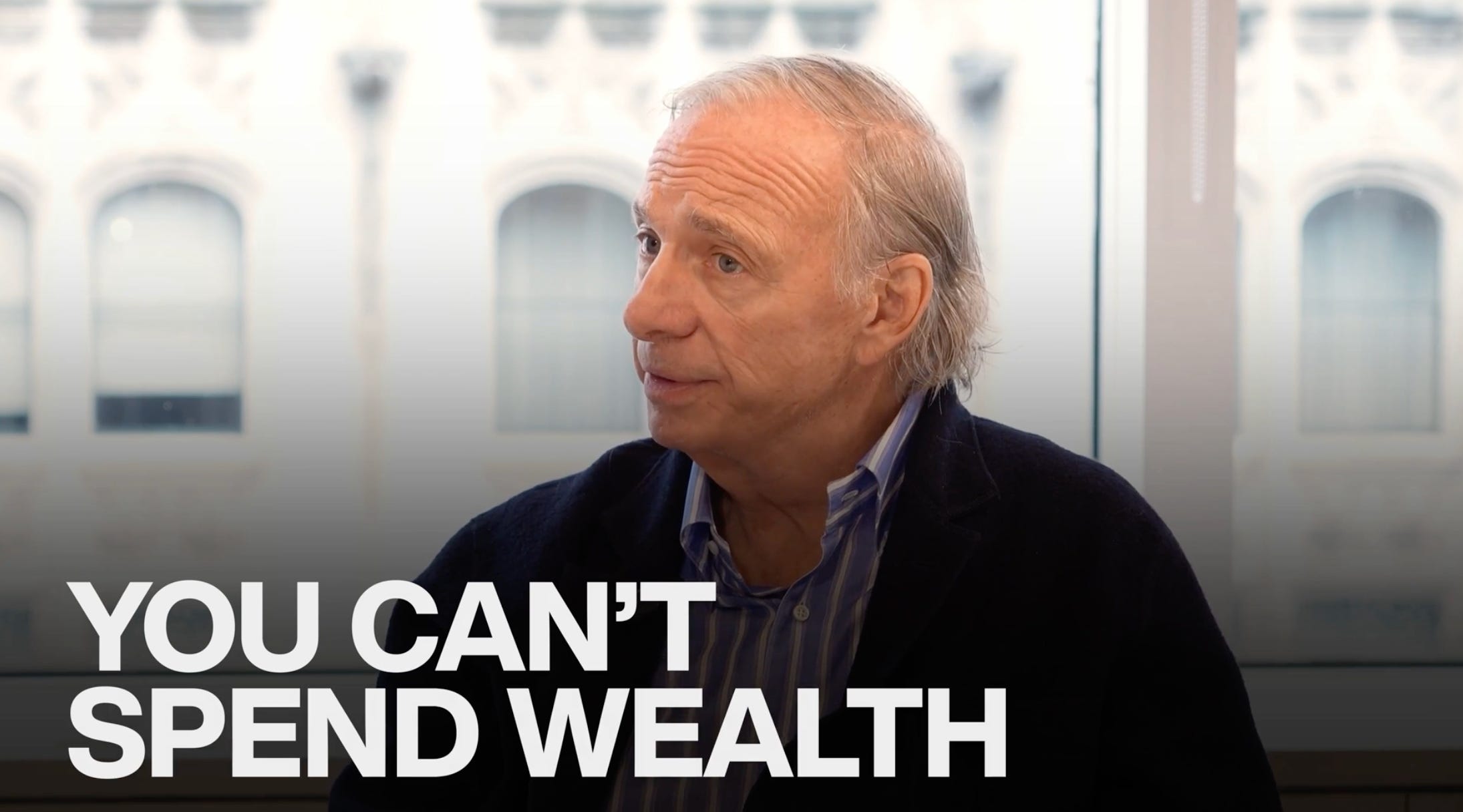
“It’s important to distinguish wealth from money. You can’t spend wealth. You have to sell wealth and convert it into money in order to spend it.
So there’s a dynamic, for example, that it’s relatively easy to create wealth. What you do is you have a $50 million raise at a $1 billion valuation, & all of a sudden you’ve created $1 billion dollars of wealth, and you become a billionaire because you’ve done that.
But you can’t do anything with that until you sell the wealth in order to get it to have the money.”
Dalio supports efforts to spread ownership more widely. In December 2025, he and his wife Barbara pledged about $75 million to Trump Accounts, $250 each for roughly 300,000 Connecticut children. Like any wealth, the money in those accounts has to be sold before it can be spent.
“When those who want to sell wealth or need to sell wealth, typically bubbles burst when those who have wealth need to sell it to get money. Quite often that happens because they borrowed to make the wealth.”

How Dalio Defines a Bubble
Dalio rejects the standard test, which defines a bubble as a price above the present value of future cash flows. Those cash flows can’t be known for decades, and companies with strong cash flows have still gone through bubbles. He compares the AI build-out to the 1920s, when households got electric lighting, refrigeration, radio, movies, cars and airplanes in a short span.
“The mechanics of it is that people mistake a great new technology for a great investment. So everybody believes in that technology, and then what they do is they borrow money quite often to have it, and you have a lot of selling of that new technology and that demand. And great wealth is created, but you still need money. And what happens when you need the money, let’s say money to pay off the debt because you bought the stock, interest rates rise, and all of a sudden you need more money, or you could have wealth taxes.”
In his model, ownership then moves into weak hands and concentration builds. He sees that concentration in AI today.
“Everything depends on AI. The markets, the economy, everything depends on AI. And so that technology is volatile and very risky, and then when you get that dynamic, you pop that, & then the thing starts to work in reverse. People rather than become confident, they become scared, or they need the cash flow, so things get worse. And then people back off.”
Building an AI System From His Own Decision Criteria
AI was first discussed in 1956. Dalio, now 77 and fully handed off from Bridgewater, is building a system that encodes his decision-making so others can use it.
“The way I built Bridgewater was to think about what are my criteria for investing, and then write them down and put them into computer code. The capacity to take one’s thinking and have the machine do it, and do it in a better way, has been something that I’ve been doing for a long time. I’m now late in my life, I’m 77, and I’d like to pass along what I have to help others.”
He describes the model as a partnership between top human expertise and the best artificial intelligence, with neither able to do the job alone. He expects AI to split the population. One group will use it to learn why and how things work, and the other will stop thinking and ask to be told what to do.
“I think that individuals weighing things in their heads to make decisions in that way that we’re used to is obsolete. But I think there needs to be a partnership, because the world is too complicated, and then you have to think through what are your criteria for investing, or your criteria for any decision-making. And then you take those criteria and you back test them, and you see, how would that have worked?”

The Dot System & Idea Meritocracy at Bridgewater
Bridgewater’s culture is built on meaningful work and meaningful relationships, pursued through radical truthfulness and radical transparency. The Dot system records each meeting participant’s views in real time, and Bridgewater uses that data to assess strengths and weaknesses and to build teams.
“I created the Dot system because in a meeting, let’s say, people are all thinking things, but you don’t even know what they’re thinking because only one person could talk at a time. And to also think about taking that as data and evidence of how people are thinking to learn their strengths and weaknesses, and then put them together well in teams based on their strengths and weaknesses is an effective approach.”
In hiring, Dalio looks for character and capability, open-mindedness and the ability to know what you don’t know. He argues that elite schools reward getting the approved answer and produce graduates who are opinionated at the limit of their knowledge. He applies the same principle to working across countries, where his approach is to see a situation through the other side’s eyes without prejudice.
“I think the greatest tragedy of mankind, because a tragedy is something that can be so easily fixed, is having an arrogant opinion that’s wrong. And all you need to do is to be also open-minded and put yourself up in terms of being challenged to try to get right, and you don’t have the limitation of what’s in your own head.”
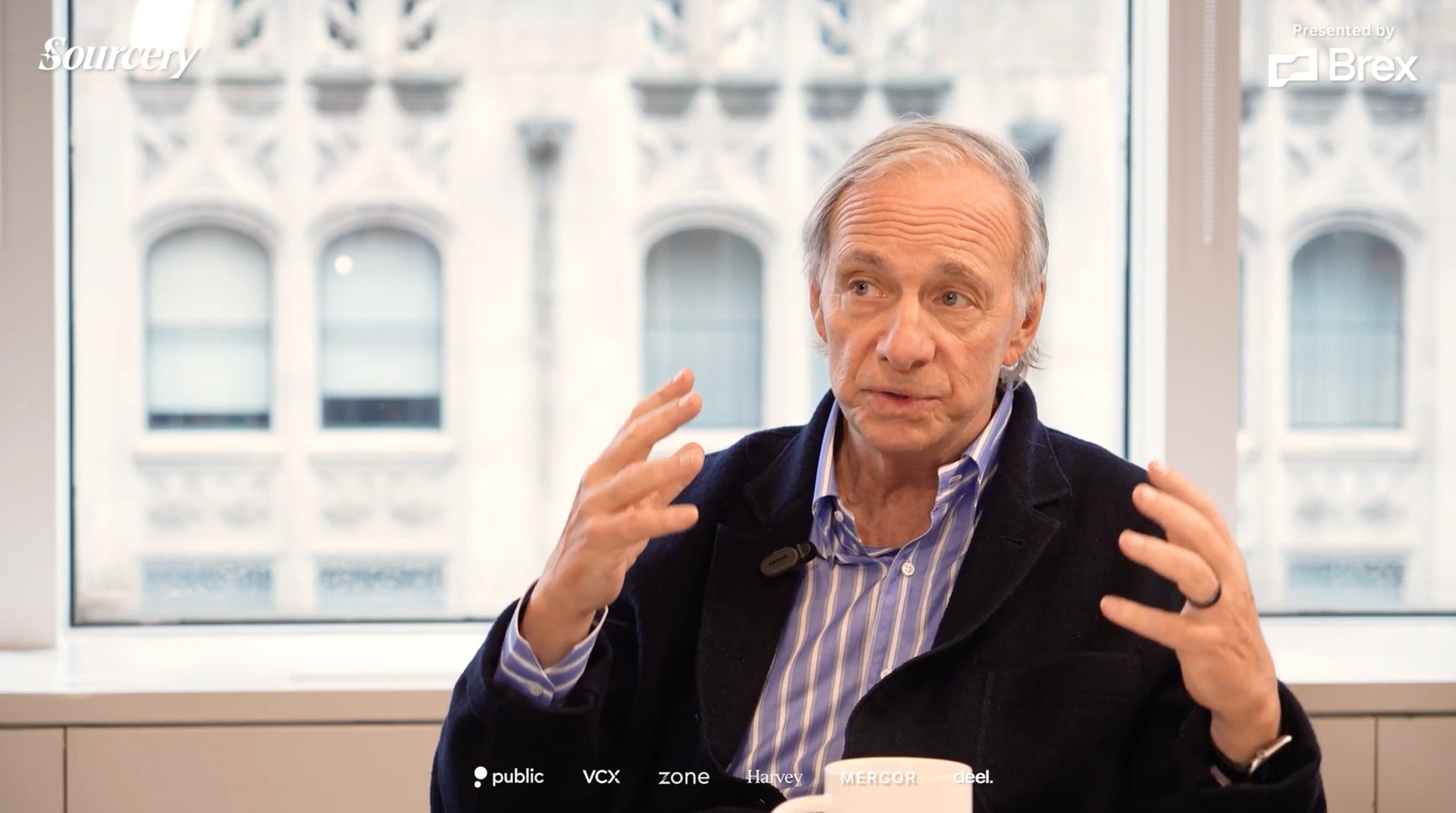

Dalio’s Phases of Life, From Dependence to Passing It Along
Dalio describes a life cycle that applies to everyone. The first third is dependence and education. The second phase starts around ages 23 to 25, when a person becomes an independent decision-maker and others start depending on them. That phase also brings the challenges of balancing work and life.
“I think for everybody there’s a life cycle, and that life cycle is pretty much, first third of your life or so, you’re dependent on others, you’re getting educated, and you’re almost following instructions.
Then you graduate from school, and then you’re in the second phase of your life, which is that others become dependent on you. You are an independent decision-maker. You can take any job you want, you can live anywhere you want.”
Around age 40, people begin to understand how things work and move into leadership roles. Dalio says the key task at that stage is to transition well and help others succeed. The last phase starts with accumulated knowledge and good health, and later turns to how to approach the end without it.
Dalio argues that most of the lack of agency people feel exists largely in their own minds. Travel, jobs and access to different people are more available than at any point in his lifetime.
“You have to experiment and see what’s possible. The worst thing that happens is they get stuck in a job and they say, ‘Oh, I don’t think I can get another job.’ And so they have a life that they don’t want to have with people that they might not want to have it with without really trying.
And think about, first of all, what do you really need? I need a bed to sleep in, an apartment. I need food to eat. Those are the only things I really need. & then you have the freedom. So now go for it.”
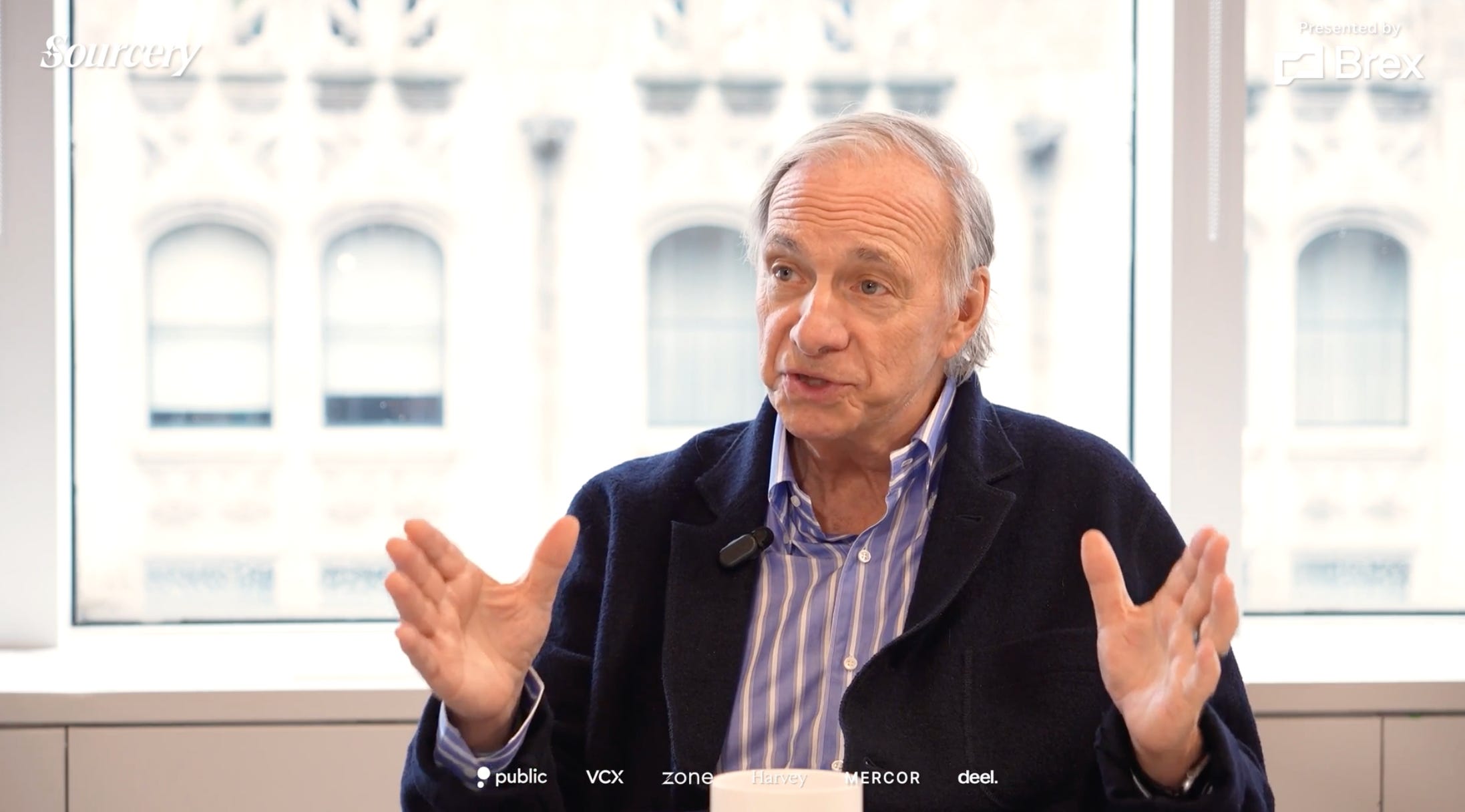
Mentors & the Value of Thoughtful Disagreement
Dalio names 2 types of people who have shaped his career. The first is mentors, including his parents and teachers. The second, which he ranks higher, is people who disagree with him intelligently.
“It’s always been 2 types, the mentor, it could be a teacher or it could be somebody I have conversations with, and more important than even the mentor has been the people that I can have thoughtful disagreement & explorations with.
People who have a different point of view about something, who are smart, & can have that exchange so that I can work myself to what’s true, that’s most important.”
“There are many people in my life who are in the greatest positions of power or even beyond power, philosophy of life like Deepak Chopra. I don’t want to drop names of people who run governments, but it’s Bill Gates or people like this.”
→ Listen on X, Spotify, YouTube, Apple
The material presented on Molly O’Shea’s website are my opinions only and are provided for informational purposes and should not be construed as investment advice. It is not a recommendation of, or an offer to sell or solicitation of an offer to buy, any particular security, strategy, or investment product. Any analysis or discussion of investments, sectors or the market generally are based on current information, including from public sources, that I consider reliable, but I do not represent that any research or the information provided is accurate or complete, and it should not be relied on as such. My views and opinions expressed in any website content are current at the time of publication and are subject to change. Past performance is not indicative of future results.
Paid Ad. Agents are an experimental AI tool. Its output may be inaccurate and is not investment advice. Public Holding’s, Inc. makes no guarantees about its accuracy or reliability—verify independently before use. Brokerage accounts & services provided by Open to the Public Investing, Inc. See additional disclosures at: https://public.com/disclosures/agenticdisclosures.