


Rocket Lab Factory Tour 1 of 2:
We went inside Rocket Lab with Founder & CEO Sir Peter Beck for a behind-the-scenes look at how one of the world’s leading space companies actually builds.
→ Listen on X, Spotify, YouTube, Apple
In the first part of our Rocket Lab factory tour, Peter takes us through the company’s Long Beach headquarters, mission control, satellite manufacturing, spacecraft testing, electric propulsion, and NASA’s LOxSAT program.
Along the way, we trace Rocket Lab’s evolution from a tiny New Zealand startup with less than $100,000 NZD in capitalization to a global, publicly traded space company spanning launch, satellites, spacecraft components, propulsion, defense, and interplanetary missions.
Peter breaks down Rocket Lab’s capital-efficient culture, why he took the company public, its acquisition strategy, the hidden moat in spacecraft components, and his goal of building a multi-generational space company that continues long after he’s gone.
We also get into Rocket Lab’s earliest rockets, Khosla & Bessemer’s first investments, NASA’s CAPSTONE mission to the Moon, the search for life on Venus, and what Peter believes most new space companies underestimate.
→ Tour 2, we head inside Rocket Lab’s propulsion & engine facilities
𝐓𝐈𝐌𝐄𝐒𝐓𝐀𝐌𝐏𝐒
(00:00) Touring inside Rocket Lab's HQ
(01:44) The origin story
(05:45) What "Number Eight Wire" actually means
(07:14) Too much Capital can kill a startup
(09:03) Why Rocket Lab decided to go public
(10:45) From Rockets to an entire Space Ecosystem
(15:11) Where Escapade and CAPSTONE were flown
(16:44) Inside the satellite build floor
(17:15) In search for life on Venus
(18:08) Inside the Electric Propulsion Lab
(19:58) Inside the Thermal and Shock Testing Facility
(20:47) How big is this facility?
(21:45) Inside the NASA LOxSAT project
(23:06) Why so many Space startups fail
(24:00) Up Next: Inside the Engine Lab
Brought to you by:
Brex—The intelligent finance platform: cards, expenses, travel, bill pay, banking—wrapped into a high-performance stack. Built for scale. Trusted by OpenAI, Anthropic, Vercel, Granola, Deepgram, & Sourcery.. teams that move fast AF. visit → brex.com/sourcery

Applied Aerospace—As global competition intensifies, strategic leadership demands space and defense technologies that deliver enduring national capabilities. At Applied Aerospace & Defense, we unleash the power of advanced manufacturing with unmatched scale and agility. Visit: applied-ad.com/
Turing—Turing partners with frontier AI labs to improve model capabilities in coding, reasoning, tool use, & multimodality, as well as with Fortune 500 enterprises to build & deploy end-to-end agentic AI systems in mission-critical workflows Visit: turing.com/sourcery
VCX—VCX is the public ticker for private tech, allowing investors of all sizes to invest in venture capital. View The Portfolio at GetVCX.com
Deel—Deel is the global people platform that helps startups hire, manage, pay, and equip anyone, anywhere. Trusted by more than 35,000 fast-growing companies, Deel is the people platform that just works, so teams can scale without the chaos. Visit: deel.com/sourcery
Public-–Investing platform Public just launched Generated Assets, which lets you turn any idea into an investable index with AI. With Generated Assets, you can build, backtest, refine, and invest in any thesis with AI. Gone are the days of one-size-fits-all ETFs. Try it today: public.com/sourcery
Inside Rocket Lab HQ: What 20 Years of Constraint Built
"From that adversity, comes good ideas"
Rocket Lab’s Long Beach headquarters spans three buildings. The company operates roughly 13 acres of factory floor worldwide, across New Zealand, California, Arizona, New Mexico, Toronto, Maryland, Virginia, Mississippi and Germany. About 800 people work in Long Beach across two campuses.
Sourcery toured the headquarters with Sir Peter Beck, walking the lobby, mission control and the satellite production floor. The tour covered the company’s first two decades, why the components business exists, & what Beck thinks kills new space companies.
→ Listen on X, Spotify, YouTube, Apple
The 20-Year Overnight Success
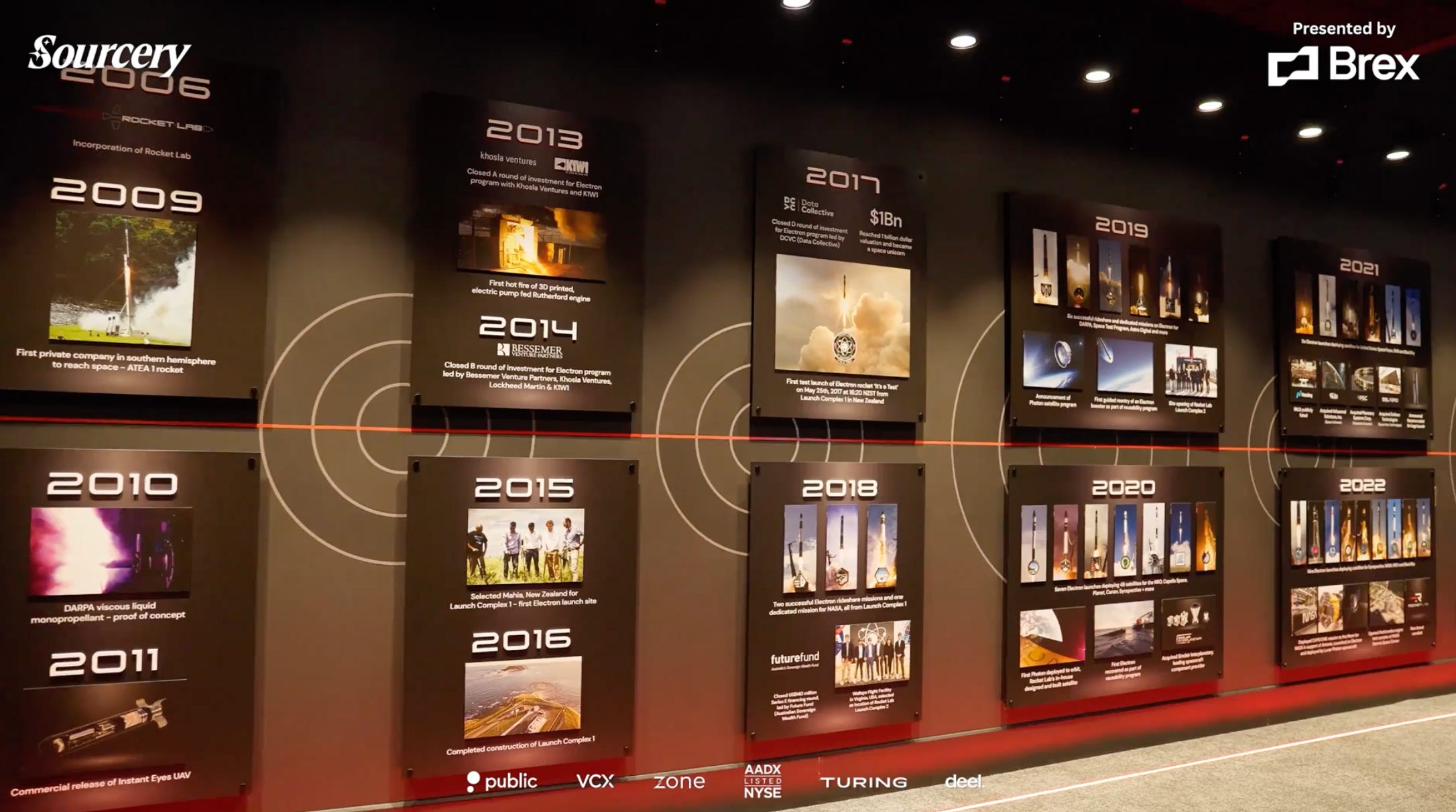
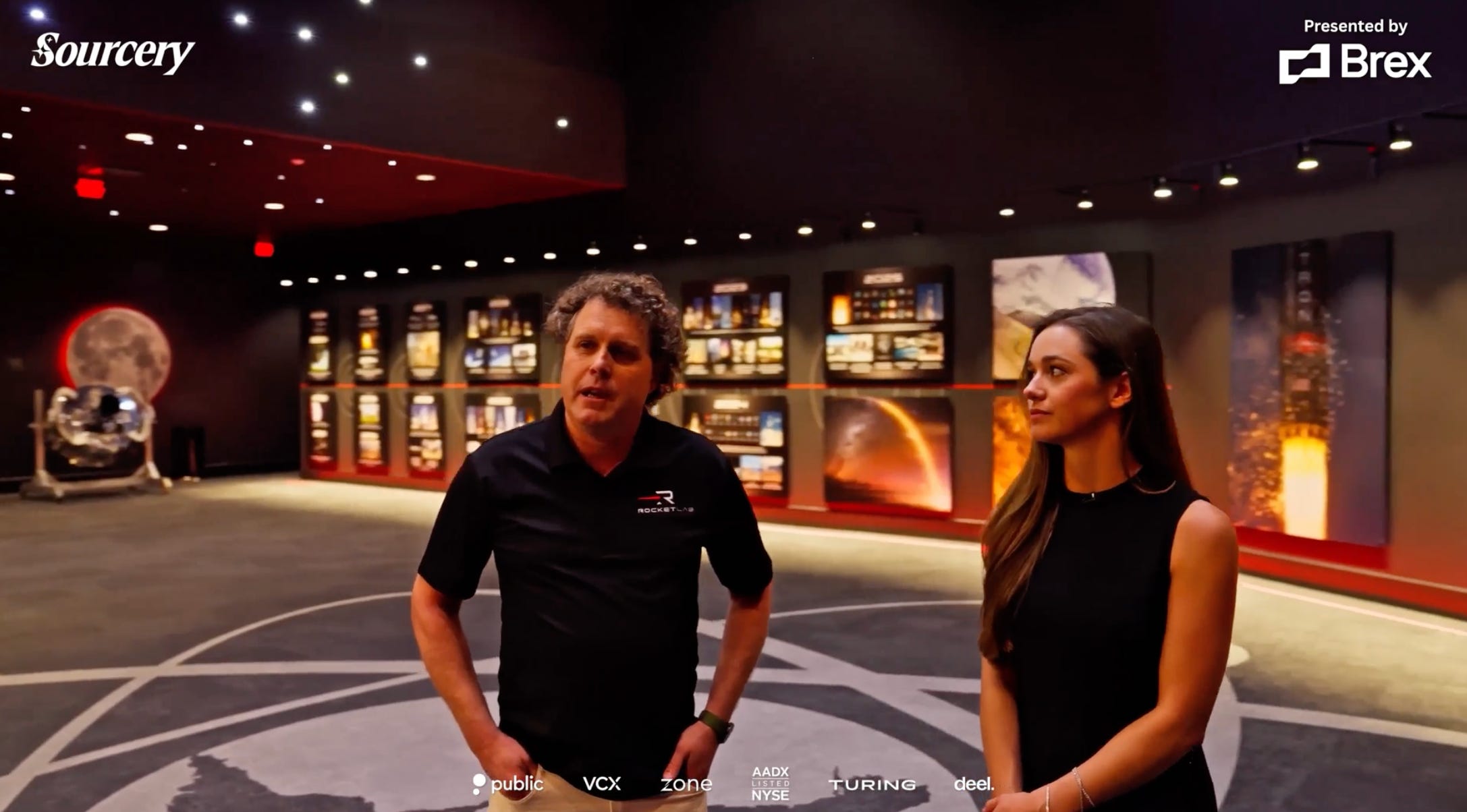
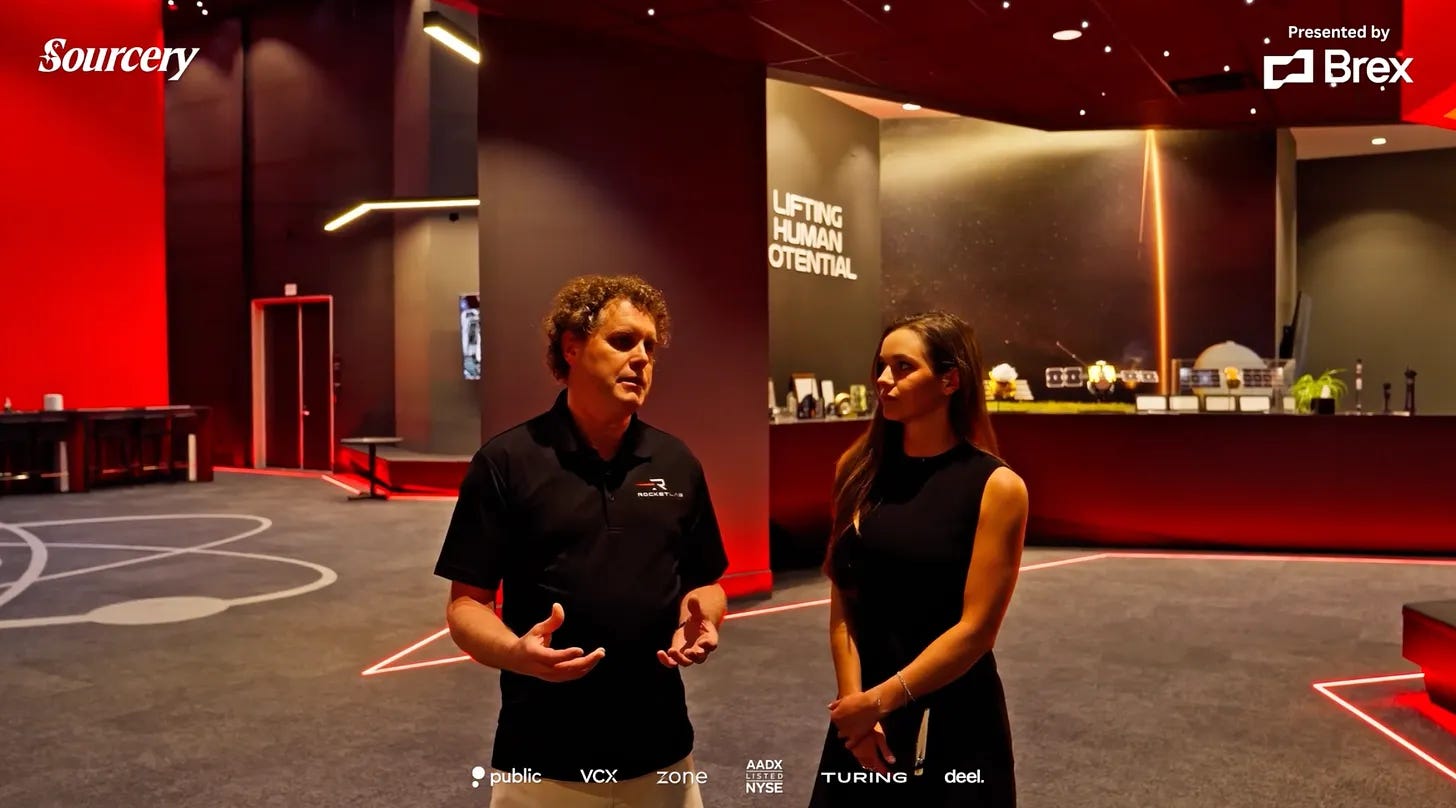
The lobby is built around a timeline. Beck calls the company an overnight success two decades in the making.
2006: Founded in New Zealand
2006 to 2009: Operating as a technology development house, not a launch company
2009: Ātea-1 reaches space, the first private company in the Southern Hemisphere to do so
2010: DARPA contracts for a new propellant and propulsion system, plus a rocket-launched UAV
2013: Beck moves to the US, raises a $5M Series A led by Khosla Ventures, reincorporates as a US company
2014: Series B led by Bessemer
2015: Ground broken on Launch Complex 1, the first private orbital launch site in the world
2016: Launch Complex 1 completed
2017: Electron’s first flight, & a Series D that makes Rocket Lab a unicorn
2018: Three Electron launches
2021: Goes public, & acquires 3 companies in the same year
Total capitalization at the 2009 flight was under 100,000 New Zealand dollars, roughly $60,000 US.
“On that rocket actually is Swagelok fittings that I’d salvaged from a junkyard. Because I could only afford the ferrules, not the cost of the fittings. So I would get the fitting from the junkyard and buy the $3.20 ferrules to put in it and recondition it into a fitting. So it was seriously constrained stuff. But from that adversity comes good ideas.”
Government work bridged the gap to venture capital. The 2010 DARPA contracts kept the company solvent and technically active for three years before it raised anything institutional. Government customers now make up 57% of backlog.
The 2013 Series A funded the first hot fire of the 3D printed Rutherford engine and proved out the composite structures.

“No Money, So We Have to Think”
The engine name is the philosophy. Rutherford is named for Ernest Rutherford, the New Zealand physicist, & specifically for a line Beck adopted as the company ethos.
“We have this saying, well, it’s actually.. we stole it from Ernest Rutherford, & that’s why the engine is called a Rutherford.
He said, ‘We have no money, so we have to think.’ And that’s kind of the ethos of the company.”
The New Zealand shorthand for this is “number eight wire,” a reference to fencing wire and the habit of improvising with whatever is available. Beck, however, is not so much a fan of the term..
“I actually personally hate it. Because it means, well, it’s got 2 connotations:
In New Zealand it means to bodge stuff together. And I’m the opposite of a bodge stuff together kind of guy.
But its more admissible meaning is making do with not much, which I think is technically accurate.”
The distinction matters commercially. Rocket Lab’s differentiator is capital efficiency, not improvisation, and the two look similar from outside.
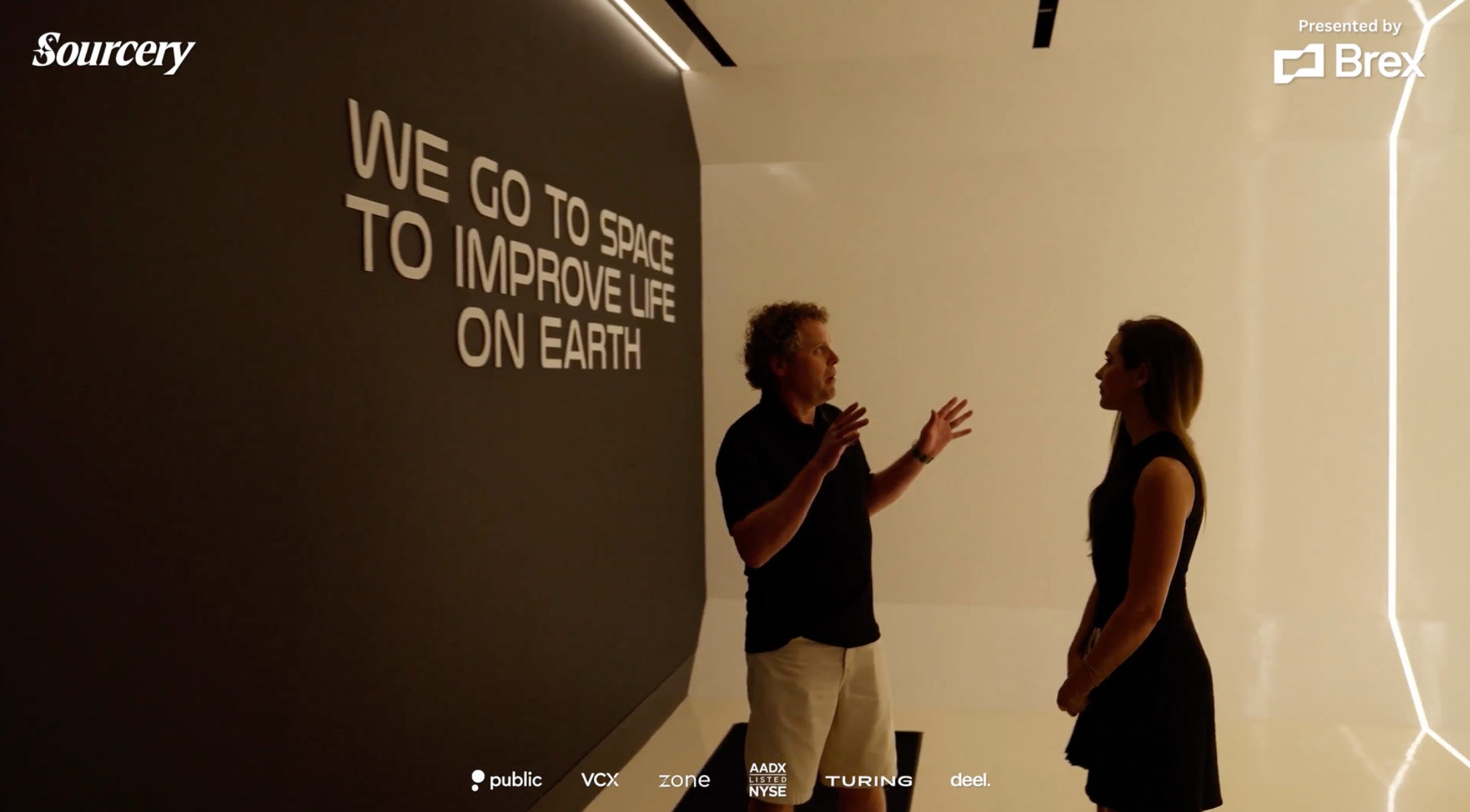
The comparison Beck reaches for is direct.
“The Electron rocket, I think it was under $100 million & 80 people put the first rocket into orbit. And at the time, our nearest competitor was Virgin Orbit, that was funded by Sir Richard Branson. And in the end I think Richard put $1.2B into that company before it ultimately went bankrupt with a handful of launches under their belt.”
Virgin Orbit filed for Chapter 11 in April 2023 after four successful launches and two failures. Rocket Lab bought its production assets out of the bankruptcy auction for $16.1 million and now builds Rutherford and Archimedes engines in the former Virgin Orbit facility a short distance from where this conversation took place.
“If I look back and think of lots of startups that I’ve seen or been involved with, the ones that have failed most spectacularly have been the ones that have been funded the most well.”

Why He Took the Company Public
Rocket Lab listed in 2021 & made 3 acquisitions the same year. Beck gives two reasons for going public, and the second is quite thoughtful.
The first is discipline.
“Being a public company teaches you extreme discipline. You can’t be messing around as a public company and wasting capital and not delivering. So the company has always had a really strong culture of delivery, but as a public company, it’s just even much, much more intense.”
The second is succession.
“I’m trying to build a multi-generational space company. And so many companies in this industry are defined by their founders or a small group of people. And you have to ask yourself, when they ultimately kick the bucket, what happens to those companies?”
He traces it to something his parents told him.
“The only thing that my parents ever said to me as I was growing up was,
‘Have the most amount of impact in your lifetime.’
So you can have an amount of impact when you’re alive, but if you can keep that impact going after you’re dead, then by proxy you have much, much larger impact.”
This is a specific view of what public markets are for. Most founders treat a listing as a financing event or a liquidity event. Beck treats it as an institutional constraint that outlives him, and the mechanism he trusts to keep the company running when he is not there to run it.
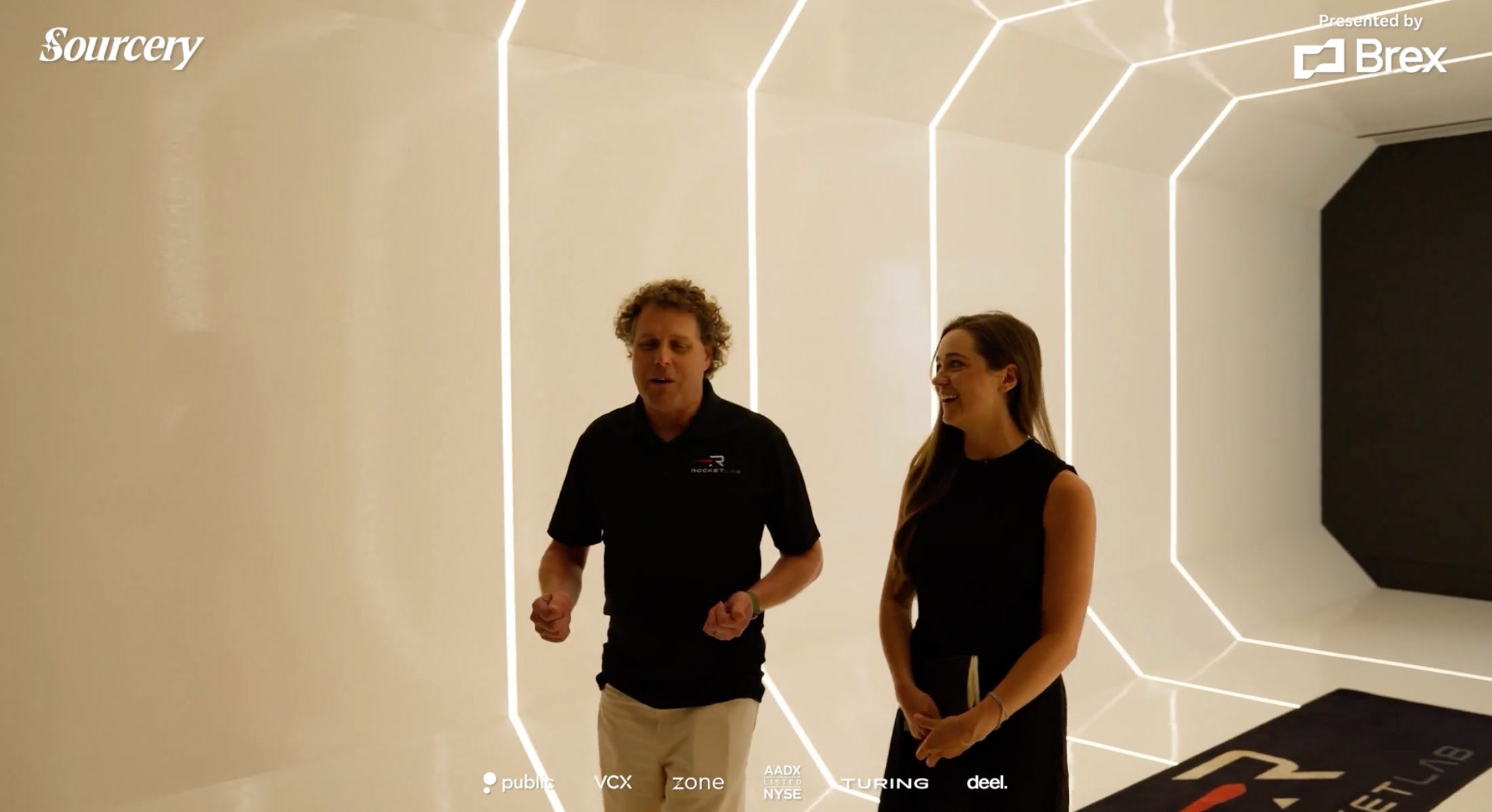

3 Acquisitions in 1 Year
2021 was also when the components roll-up began in earnest. Beck’s assessment of doing 3 at once is short.
“We went public & acquired 3 companies. Don’t recommend that. It is really painful.”
The reason is not regulatory. It is what he calls ‘the drive home.’
“You go out to a used car lot, & you look around the nice big polished car & it all looks great, & it’s all shiny.. And then it’s not until the drive home that you realize that the visor’s squeaking, the wheel’s rumbling, & all of the things just aren’t quite right.”
The counterintuitive part is that deal size does not predict difficulty.
“There’s no such thing as a small acquisition.
Ironically, some of the smaller companies have consumed vastly more time than some of the bigger companies. So it’s just a lot of work to integrate a company in & aggregate all the financial systems & get the culture where you want it.”
Rocket Lab has completed 7 acquisitions in 6 years. Sinclair Interplanetary brought reaction wheels in 2020. Advanced Solutions brought flight software, Planetary Systems brought separation systems, and SolAero brought solar cells and arrays, all within roughly 14 months of the listing. Geost added missile warning payloads in 2025. Mynaric added laser communications and Motiv added space robotics.
However, the count reaches 9 if you include two purchases that were not companies: the Virgin Orbit machinery and lease, bought out of bankruptcy in 2023, and a plant in Warkworth, New Zealand, taken over from SailGP in 2024 along with about 50 staff. Iridium would make 8, or 10, once it closes in 2027.
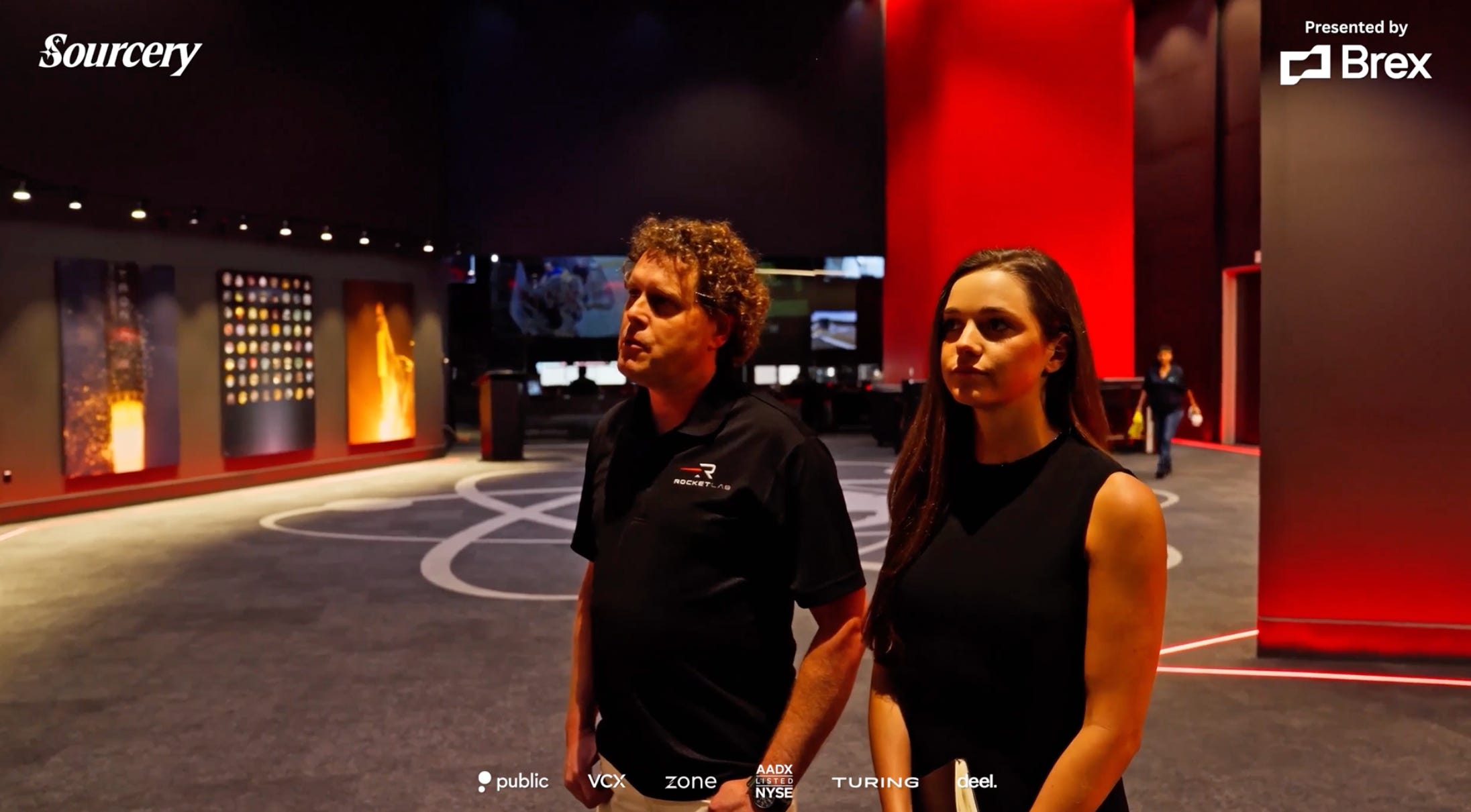

The Component Moat
The reason for buying all of it is the part of the business that gets no attention.
“People focus on the rocket because it’s the big firework in the sky, everyone gets emotional, & it’s all very cool.
It’s hard to get emotional about a reaction wheel, or a star tracker, or a little component that goes into a spacecraft.”
The argument is about supply, not sentiment.
“Launch is a huge moat, but all of these spacecraft components are huge moats as well. Because it doesn’t matter how much capital you’ve got, if you turn up tomorrow and say, ‘I wanna build 1,000 satellites,’ good luck.
It’s just not happening, because the supply chain is so small & fractured.”
A reaction wheel is a spinning flywheel that rotates a satellite by transferring momentum, no propellant required. A star tracker photographs the sky and matches the pattern against an onboard catalog to determine attitude to arcsecond precision. Both are small, both are unglamorous, and both take years of flight heritage to qualify. Neither can be conjured with a funding round.
The conclusion Beck draws is about optionality.
“We saw that to get to this end-to-end space company in our vision, we needed to own all the components that go into the spacecraft so that we could literally build any spacecraft we want.”
That strategy is now the majority of the business. Space Systems delivered 81% of revenue in Q2 2026 against 19% for Launch Services.

Mission Control, & What Gets Built Here
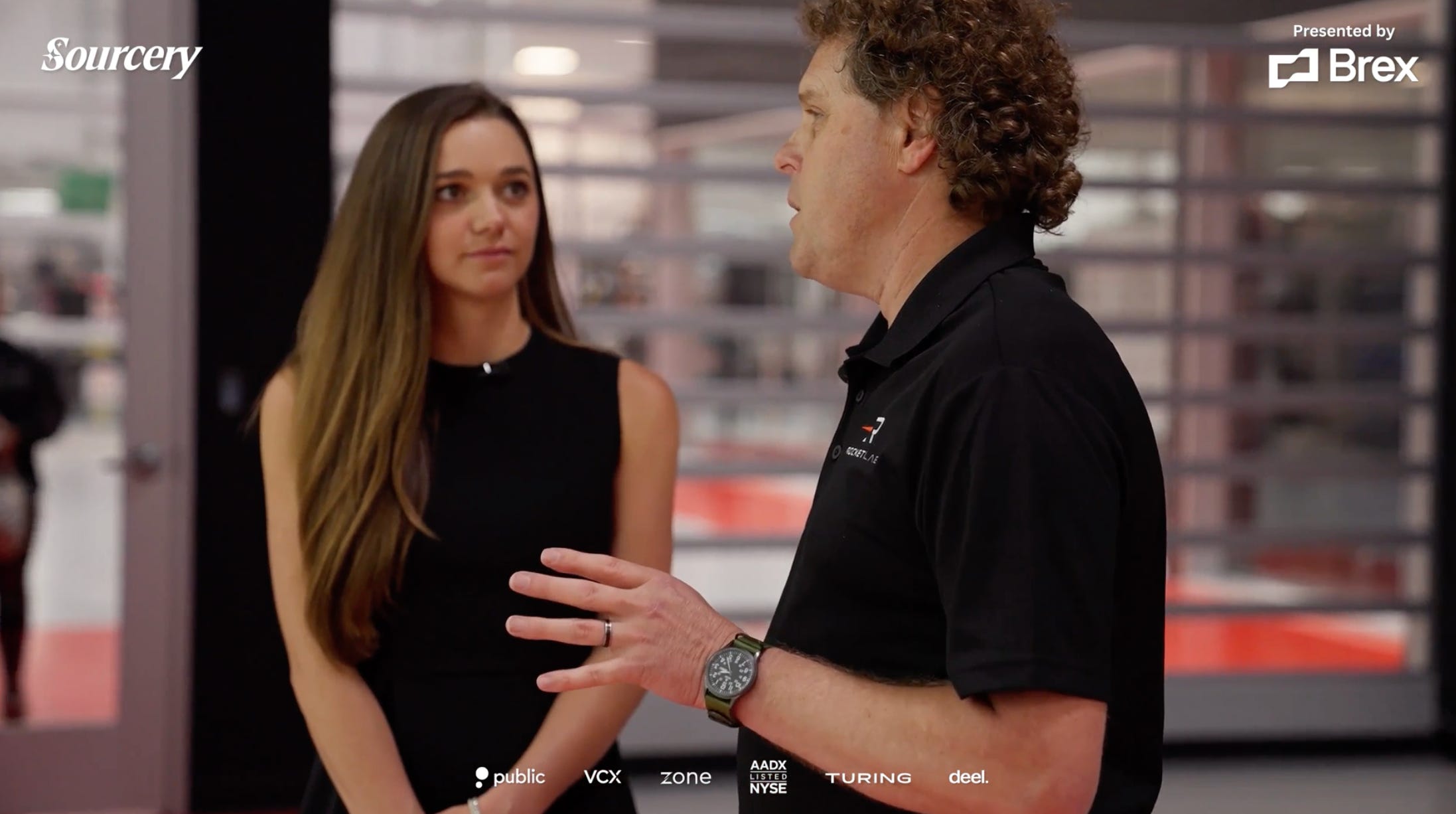
Rocket Lab runs five mission control rooms. The Long Beach room handles satellite operations primarily, and has flown two of the company’s more notable missions.
CAPSTONE, the lunar pathfinder Rocket Lab built and flew for NASA, was operated from Long Beach and from New Zealand on a 24-hour handoff between hemispheres. The ESCAPADE spacecraft, en route to Mars, were also controlled from this room.
CAPSTONE’s purpose was to validate an orbit before Artemis committed to it.
“That mission was actually the very first part of the Artemis program. So we went into a really weird orbit that the gateway mission was gonna go into to prove that that orbit was stable.”
An engineering unit of CAPSTONE sits in the building. The flown article is roughly five million miles away in a near-heliocentric orbit. Beck’s explanation for why the spare exists is a one-liner on how spacecraft programs work: you always build two.
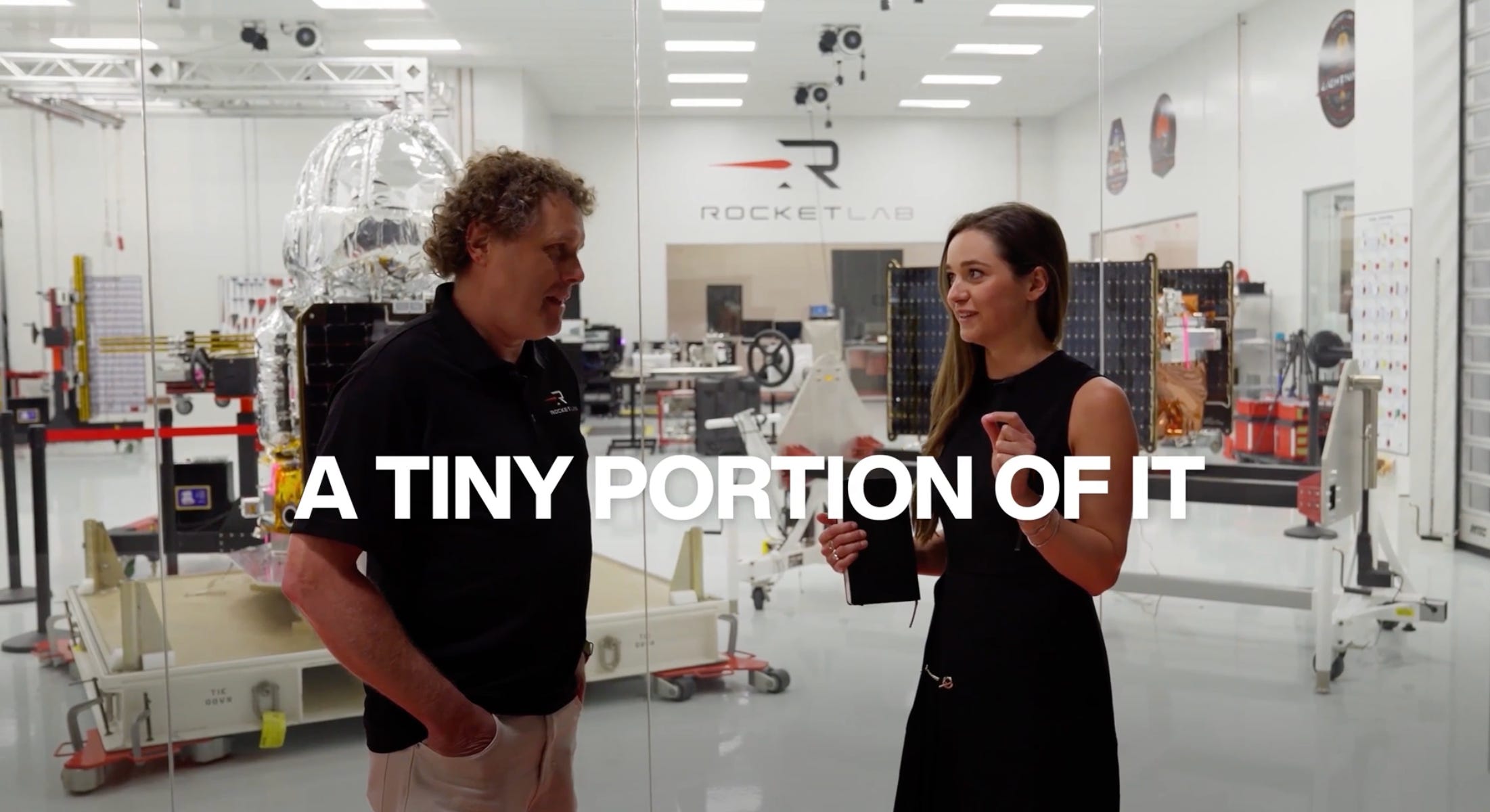
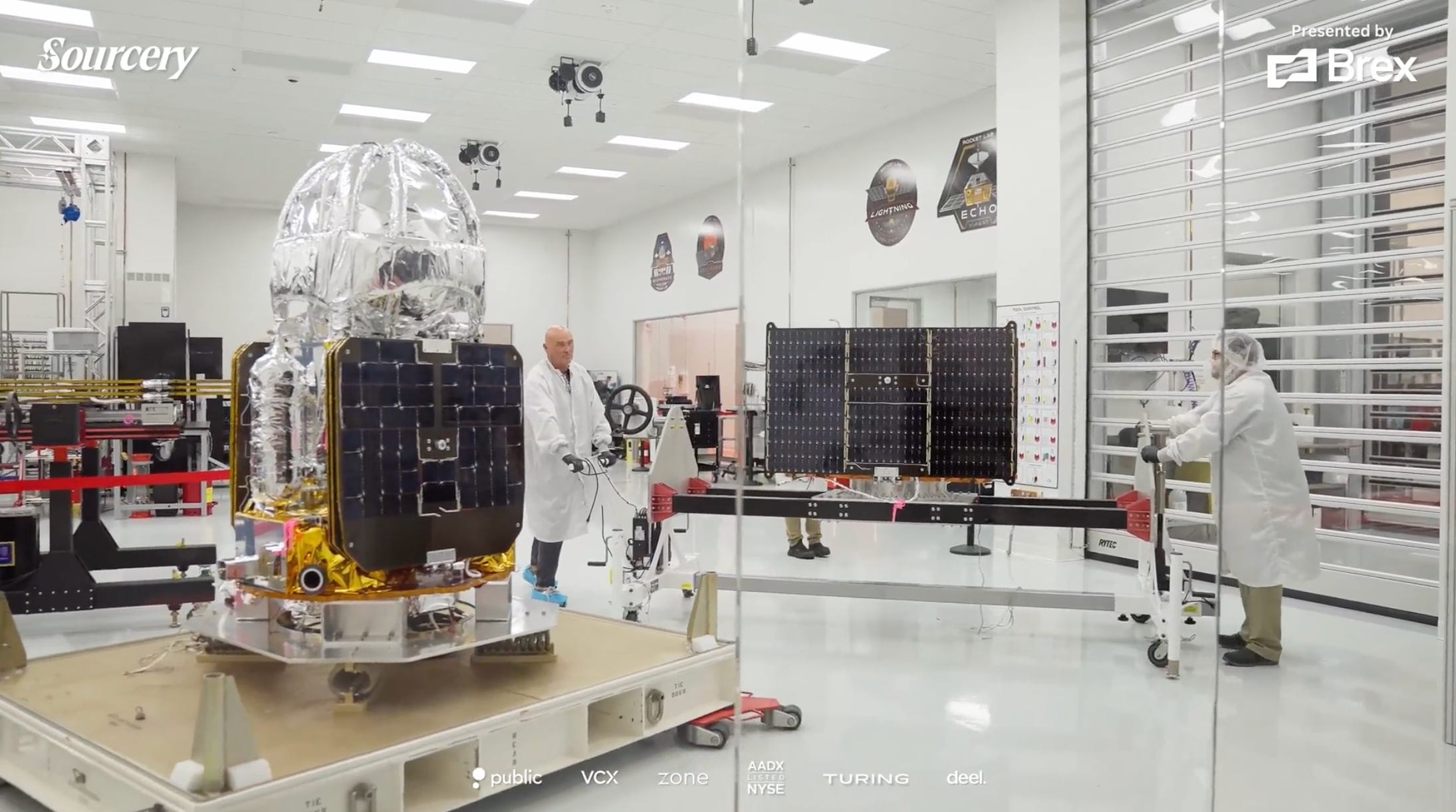
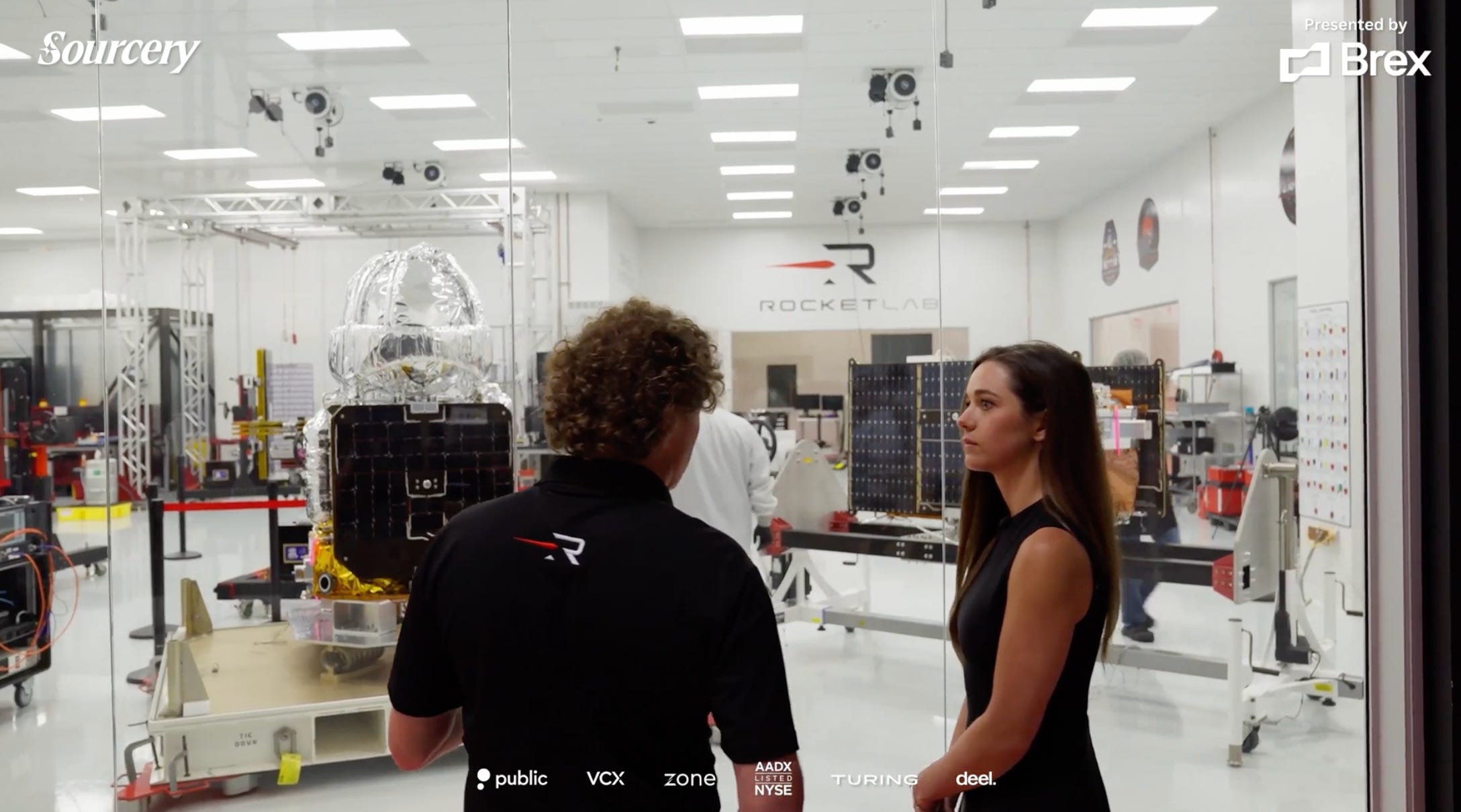
The satellite floor is arranged as a production line, entering at one end and exiting as a completed spacecraft. One current program involves electric propulsion, integrated in a dedicated tent on the floor. Electric thrusters handle station keeping and modest orbit raising without carrying large volumes of chemical propellant.
Small details on the floor reveal the manufacturing philosophy. Rocket Lab installs vending machines stocked with electrical components, tape and consumables, so technicians pull what they need instead of queuing at a storeroom.
“It just makes it easier for the staff if they need various bits and pieces, consumables for the spacecraft build. Rather than going to a storeroom and having to stand in line and asking for somebody, you can just go to the vending machine and get it. It’s just way faster.”
That is automotive thinking applied to spacecraft. Rocket Lab hired COO Frank Klein out of Mercedes, and the production line layout, the ERP and MRP systems, and the vending machines are all the same instinct: remove the small frictions that compound across thousands of build hours.
The qualification process is the other half. Rocket Lab builds a full thermal model of a spacecraft first, using aluminum blocks to represent thermal masses, and runs it through thermal, vibration and shock testing before assembling the flight article. All of that testing happens on site in Long Beach.
The mission profile explains the standard.
“These particular missions are very difficult missions.
They’re like 12-year lifespan, operating in nasty, nasty radiation, & they’re missions that just cannot fail. There’s always a big difference between low Earth orbit (“LEO”) missions that have a short duration & are allowed to fail. Most of the stuff we do is super hard, defense-related, or interplanetary and stuff like that where you just can’t have stuff fail.”
Another program on the floor is LOxSAT, built for NASA, which stores liquid oxygen in orbit for extended periods. Cryogenic fluid management is one of the unsolved problems standing between current capability and long-duration interplanetary missions, because liquid oxygen boils off.
Beck’s team also keeps a habit worth noting. There is always an interplanetary mission in the clean room. The Venus mission, searching the planet’s cloud layer for phosphine as a possible biosignature, is the one he talks about personally.
Where New Entrants Fail
Asked what new space companies get wrong, Beck names reliability rather than technology or capital.
“The most amount of failure I’d say is because people don’t build reliable stuff. It’s easy to rush it and throw something on orbit. But the distance between putting something on orbit and putting something on an orbit that can last 12 years or go to a planet, that gap is just massive.
If you want a valley of death, that’s kind of it.”
The same logic drives where Rocket Lab chooses to participate in lunar programs. It supplies components and systems rather than becoming a Moon company.
“There’s a bit of whiplash there.
Like, America’s going to the moon. No, no, no. Now we’re going to Mars. Now we’re going to the Moon again. Now we’re going to Mars. And no, no, this time we’re really going to the Moon.
And that’s fine, but when you’re a moon company, that just plays havoc with your balance sheet. So we get to play in these programs, but we like to play at a system level rather than a mission level.”
That is the components thesis applied to political risk. Selling into every lunar program insulates the company from which one survives the next budget cycle, which is the same reason selling components to competitors insulates it from which satellite prime wins the next contract.
Much of what Rocket Lab builds in Long Beach could not be filmed. Beck’s note on that was brief: the company runs a lot of national security programs, and these were the missions that could be shown.
→ Listen on X, Spotify, YouTube, Apple
Check out the rest of the series:
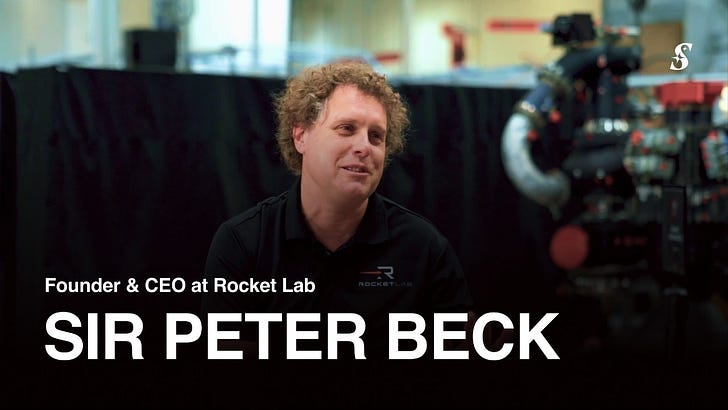
Part I: Full sit-down interview w/ Peter Beck
Part III: Tour 02 - Engine Development Center (coming soon)
Part I: Sir Peter Beck, Founder & CEO
→ Listen on X, Spotify, YouTube, Apple
The material presented on Molly O’Shea’s website are my opinions only and are provided for informational purposes and should not be construed as investment advice. It is not a recommendation of, or an offer to sell or solicitation of an offer to buy, any particular security, strategy, or investment product. Any analysis or discussion of investments, sectors or the market generally are based on current information, including from public sources, that I consider reliable, but I do not represent that any research or the information provided is accurate or complete, and it should not be relied on as such. My views and opinions expressed in any website content are current at the time of publication and are subject to change. Past performance is not indicative of future results.
Paid Endorsement. Brokerage services by Open to the Public Investing Inc, member FINRA & SIPC. Advisory services by Public Advisors LLC, SEC-registered adviser. Crypto trading provided by Zero Hash LLC, licensed by the NYSDFS. Generated Assets is an interactive analysis tool by Public Advisors. Output is for informational purposes only and is not an investment recommendation or advice. See disclosures at public.com/disclosures/ga. Matched funds must remain in your account for at least 5 years. Match rate and other terms are subject to change at any time.
Rocket Lab’s vertical integration model and filling in the gaps they have through acquisitions reminds me of Amazon back in the day. It took a while but look at Amazon’s moat now.
Listening to this episode only confirmed that thesis for me. And it helps when the founder is so likeable.