


WIRE HARNESSES
Senra Systems closes $65 million Series B, bringing total funding to over $112 million. The round was co-led by Lowercarbon Capital and Interlagos, with participation from General Catalyst, Sequoia Capital, Andreessen Horowitz, Founders Fund, Dylan Field, CIV, 8VC, The Friedkin Group, Jaws Estates Capital, Sozo Ventures, and Alumni Ventures.
→ Listen on X, Spotify, YouTube, Apple
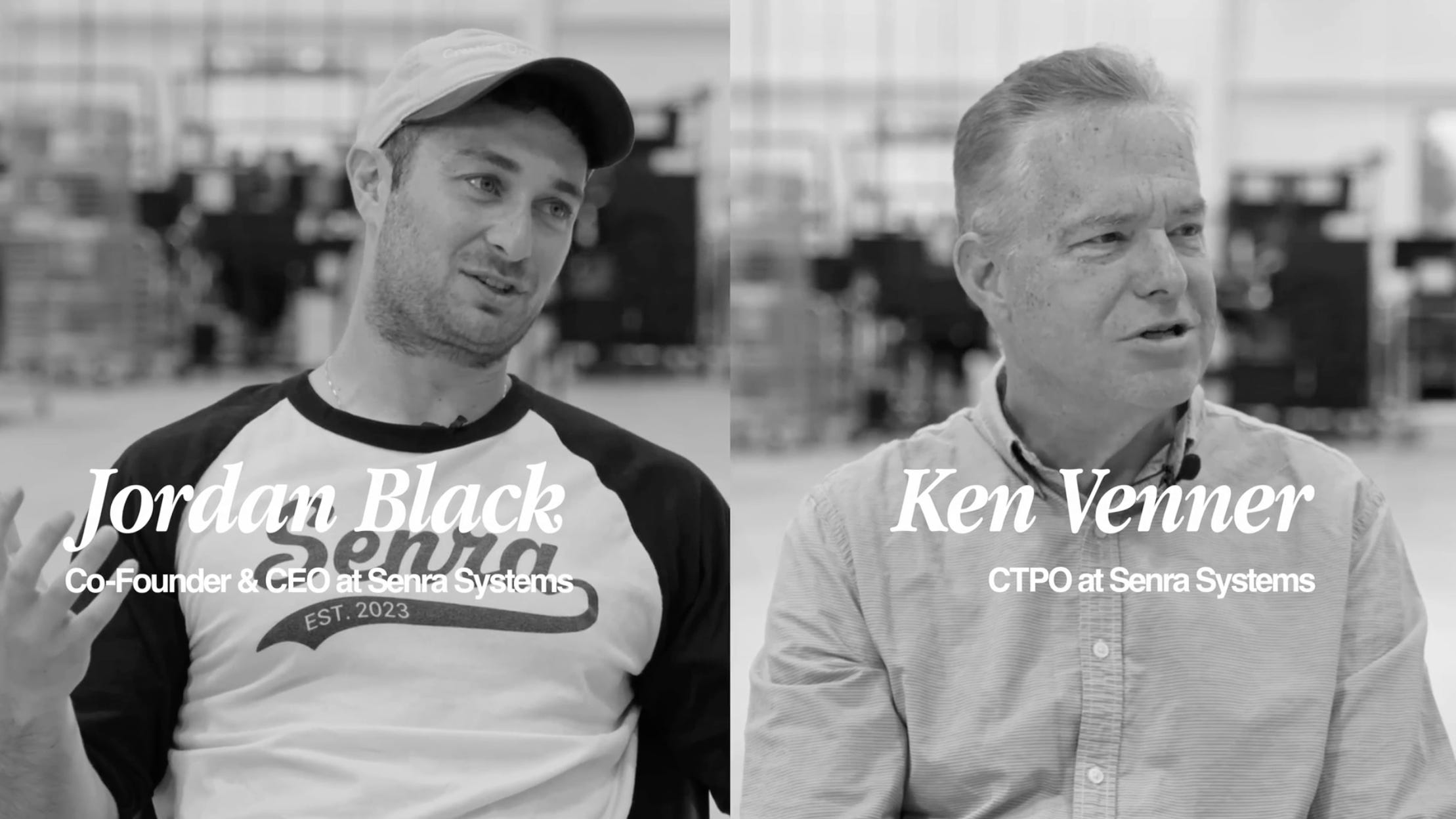
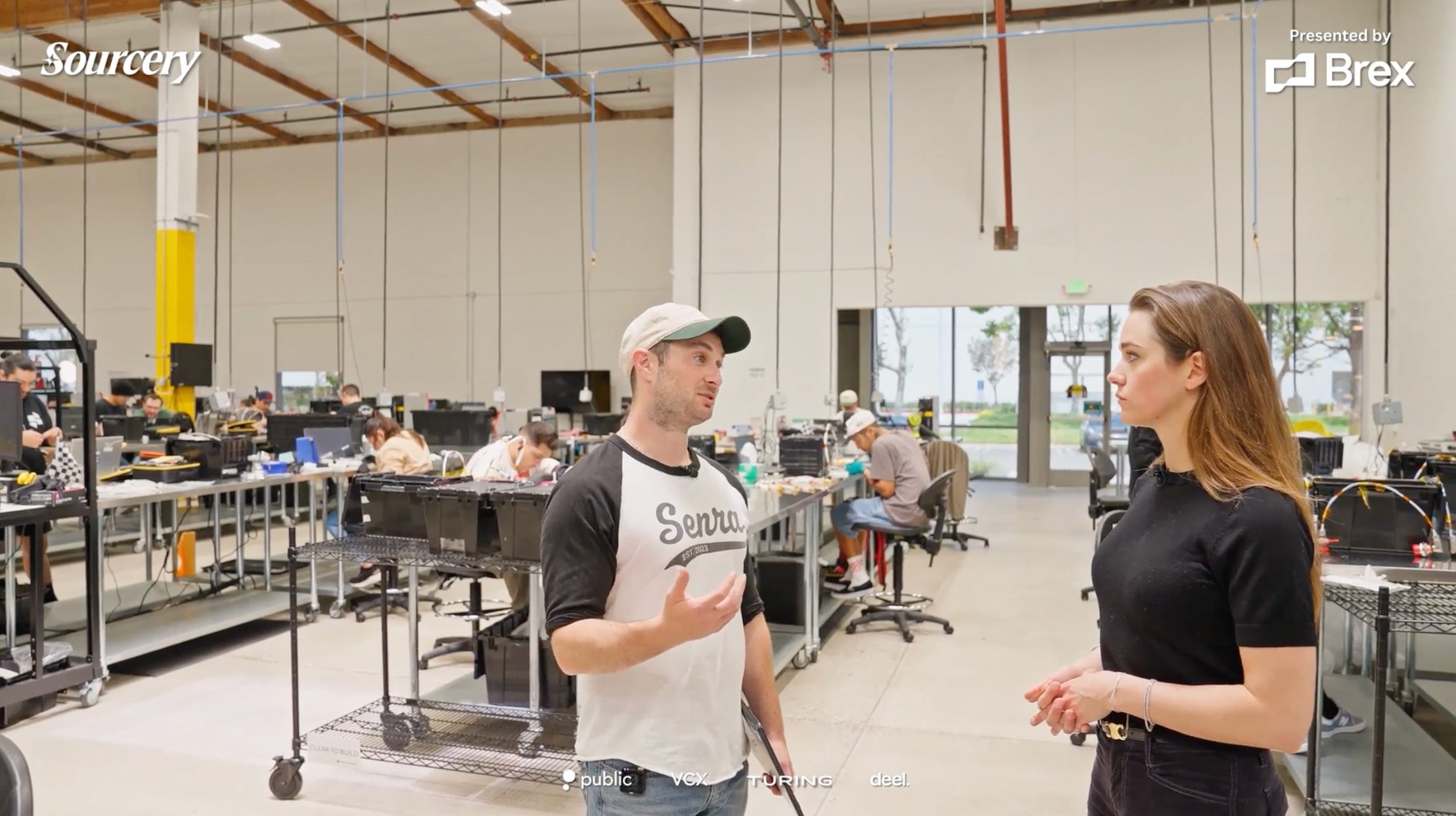
Jordan Black, co-founder and CEO of Senra Systems, and Ken Venner, Senra's new Chief Technology & Product Officer, join Sourcery for a full breakdown plus a walkthrough of the new 80,000 sq ft Cypress factory.
Jordan Black co-founded Senra after managing the R&D team for electronics at SpaceX, where wire harnessing was the bane of everyone's existence and 95% of it was outsourced for Falcon and Dragon. He started the company on his apartment carpet with co-founder Ben Shanahan, who helped write the application software that scaled Starlink production from day one.
Ken Venner joins as CTPO after a legendary career in manufacturing. He scaled Broadcom from 1,000 people and $400M in revenue to 10,000 employees and $8.6B across 52 acquisitions, then served as CIO of SpaceX, where he built Warp Drive, the custom operating system that helped scale production from 1 booster a year to 40.
Wire harnesses are the nervous system behind every advanced platform, from rockets and satellites to cars, missiles, and generators. They can account for 25% of a vehicle's cost, and they are still built almost entirely by hand. Senra is digitizing the process with Amp, its proprietary manufacturing operating system, and training a new workforce in weeks instead of years.
We cover the funding environment, the Redondo vs Cypress factory split, the reindustrialization macro, vertical integration, the Ken Venner hire, and the plan for Factory 3.
𝐓𝐈𝐌𝐄𝐒𝐓𝐀𝐌𝐏𝐒
(00:00) Jordan Black, Co-Founder & CEO & Ken Venner, CTPO at Senra Systems
(00:57) Senra raises a $65M Series B
(01:36) What Senra Systems actually builds
(05:18) Why they built two very different factories
(07:00) The reindustrialization of America
(09:09) Commercial vs. Government: who's really buying?
(09:52) The origin story
(17:35) Turning a 2-year training pipeline into 4 weeks
(25:06) Bringing on SpaceX legend Ken Venner
(29:23) Why Jordan became obsessed with wire harnessing
(31:46) The investors betting big on wire harnesses
(34:16) The real story behind the name "Senra"
(36:49) Will the SpaceX IPO fuel Senra's growth?
(39:32) Ken Venner on why he joined Senra
(41:40) Scaling lessons from Broadcom and SpaceX
(43:21) Why Ken left Broadcom for SpaceX
(44:40) Life as SpaceX's CIO
(46:11) The secret to Elon Musk's management style
(47:15) What it's really like working with Gwynne Shotwell
(51:28) Scaling with AI vs. pure headcount
(55:04) Factory tour with Jordan
Brought to you by:
Brex—The intelligent finance platform: cards, expenses, travel, bill pay, banking—wrapped into a high-performance stack. Built for scale. Trusted by OpenAI, Anthropic, Vercel, Granola, Deepgram, & Sourcery.. teams that move fast AF. visit → brex.com/sourcery

Turing—Turing partners with frontier AI labs to improve model capabilities in coding, reasoning, tool use, & multimodality, as well as with Fortune 500 enterprises to build & deploy end-to-end agentic AI systems in mission-critical workflows Visit: turing.com/sourcery
VCX—VCX is the public ticker for private tech, allowing investors of all sizes to invest in venture capital. View The Portfolio at GetVCX.com
Deel—Deel is the global people platform that helps startups hire, manage, pay, and equip anyone, anywhere. Trusted by more than 35,000 fast-growing companies, Deel is the people platform that just works, so teams can scale without the chaos. Visit: deel.com/sourcery
Public-–Investing platform Public just launched Generated Assets, which lets you turn any idea into an investable index with AI. With Generated Assets, you can build, backtest, refine, and invest in any thesis with AI. Gone are the days of one-size-fits-all ETFs. Try it today: public.com/sourcery
SpaceX Alumni Raise $65M for Senra Systems
The $65M Round
Senra Systems has closed a $65 million Series B co-led by Lowercarbon Capital and Interlagos. It brings Senra’s total funding to over $112 million. The existing cap table came along for the ride, including Sequoia, Founders Fund, General Catalyst, Andreessen Horowitz, 8VC, Dylan Field, CIV, The Friedkin Group, Jaws Estates Capital, Sozo Ventures, and Alumni Ventures.
→ Listen on X, Spotify, YouTube, Apple
I sat down with co-founder and CEO Jordan Black at the company’s new Cypress facility to talk through the raise, and the framing Jordan keeps coming back to is that this is one of the least glamorous and most consequential problems in hardware. As Jordan put it in the announcement, “Wire harnesses are the nervous system behind every advanced platform, yet they’re still built on PDFs, spreadsheets and tribal knowledge. It’s a 100% manual assembly process.”
Lowercarbon is Chris Sacca’s firm, best known for climate and now pushing hard into industrials and advanced manufacturing, with well over $2 billion in assets under management. The firm was founded in 2018 by Chris Sacca, formerly of Lowercase Capital, and manages over $2 billion across clean energy, materials, and advanced manufacturing.
Lowercarbon GP Caie Kelley “Wire harnesses sit behind everything that turns on, & they’re still built by hand. Senra automates production & trains the workforce to run it, which turns a chokepoint into capacity the country can build on.”
Interlagos is a Los Angeles deep tech fund founded in 2024 by SpaceX alumni, and it has quietly become one of the most active checkbooks in the El Segundo hard tech scene. Interlagos has backed companies including Apex, Castelion, Neros, Impulse Space, and Cowboy Space across aerospace and defense.
What a Wire Harness Actually Is
If you have never thought about a wire harness, don’t fret. “It’s like the nervous system of anything that requires electricity.. it’s what sends power and data in your rockets, in your cars, in your generators, in your electric planes and everything.” It is the bundle that moves power and signal through a machine, and almost none of it is standardized. Every harness is custom, flexible, and built to fit one specific platform.

The scale is the surprising part. Jordan notes there are hundreds of miles of harnessing in a single plane, miles in a single car, and that harnessing can run up to 25% of a vehicle’s cost at any given moment. And it is still, in Jordan’s words, essentially “arts and crafts.” The wire is flexible, the routing is bespoke, and the entire thing is assembled by hand.
The global wire harness market is large and growing steadily. The global wire harness market was valued at roughly $95.9 billion in 2025 and is estimated at about $100.5 billion in 2026, growing at more than 5.3% annually. The aerospace and defense slice is a specialized, higher-spec segment within that, and estimates for it vary widely by definition, but the direction is consistent. Aerospace wiring harness demand is being driven by the shift to more electric aircraft, next-generation avionics, and military modernization programs, with North America the dominant region.
The catch is who makes them. The incumbent landscape is a mix of large primes and a long tail of small suppliers, and the work is copper-heavy, labor-intensive, and hard to automate. Copper dominates wire harness assemblies at roughly 70% of material share, and aerospace and defense applications, while a smaller slice of volume, demand the highest reliability, temperature resistance, and EMI shielding. That combination, high criticality and low automation, is the gap Senra is walking into.

The Bottleneck
Demand is going up and to the right across rockets, missiles, cars, and generators, meanwhile supply is shrinking. “Demand’s going up, but the supply chain is drastically decreasing because it’s a skilled assembly workforce that’s doing this for 20 to 50 years, all by hand, they have all the tribal knowledge, they are the machine at the end of the day.”
The workforce math is genuinely alarming. Jordan pegs the average wire harness technician at 48 to 55 years old, and the knowledge lives in their hands, not in any documentation. “If it’s Bob and Judy building in the corner and they leave, we don’t build more wire harnesses for this product line or this company,” Jordan said. Meanwhile the roughly 800 mom-and-pop shops scattered across the country are not growing. They are being absorbed by private equity or shutting down, and every closure is a single point of failure for some fighter jet or missile program.
As geopolitical competition intensifies and defense production requirements climb, the defense industrial base’s limited capacity threatens program schedules and readiness, which is the exact language the primes and the government now use. Most of Senra’s business today is defense, because that is what Jordan calls the hyper-growing part of the market, with commercial as the expansion path.
The demand pull is coming from the fast-scaling players. “We’re seeing a lot of the demand coming from these scaling companies like the Andurils of the world and the SpaceXs of the world that are moving very rapidly into their production phase.” These are companies that need supplier agility, not the multi-year lead times of a legacy shop, and that is the wedge.

From a SpaceX Carpet to Cypress
The origin story is quintessential El Segundo. Jordan managed the R&D team for electronics at SpaceX “Wire harnessing was the bane of our existence, and we outsourced 95% of it for Falcon and Dragon back in the day.” The process, in Jordan’s telling, had not fundamentally changed in decades. “Everyone hasn’t changed the process since the Cold War era.”
What tipped Jordan over was a trip to sort out what’s actually going on. He toured wire harness factories across Mexico, Puerto Rico, and Costa Rica, and found the same thing everywhere: wooden tables, Cold War era methods, and a fragmented market. Then Jordan tried to build a harness himself on a high-rate automotive line and couldn’t. “If someone like myself, who has studied this process and has really gotten into depth with it, can’t even go build a harness, then something’s fundamentally broken.” The problem wasn’t the people. It was the total absence of tools & scalable systems.
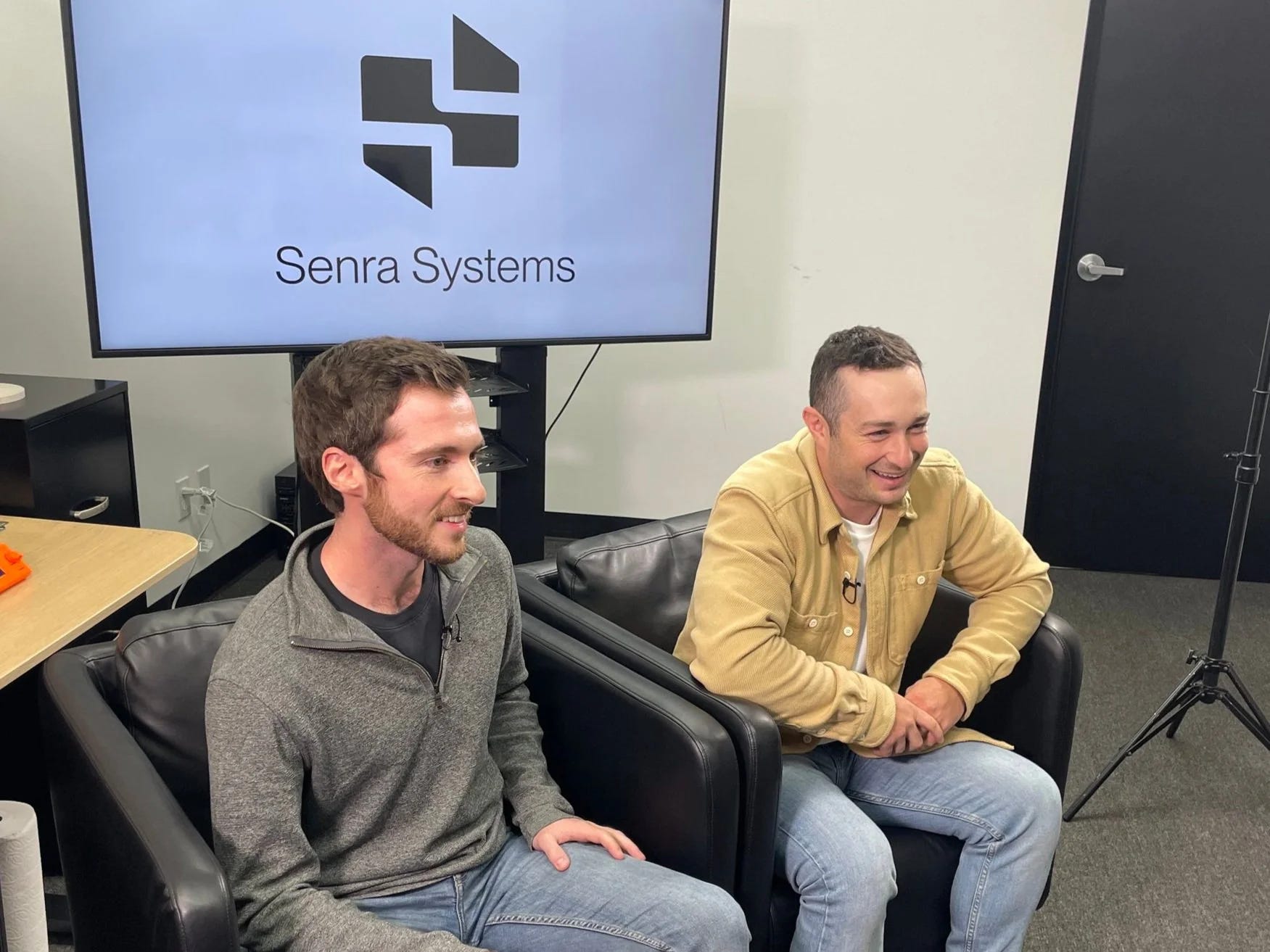
So Jordan quit, co-founded Senra with fellow SpaceX engineer Ben Shanahan, who had helped write the application software that scaled Starlink production, and started building harnesses on his apartment carpet. Two weeks later they had their first customer, the pizza automation company Stellar Pizza. Jordan’s early pitch to El Segundo startups was refreshingly unglamorous: whatever price, whatever lead time, just let me get my foot in the door.
The fundraising environment then was a different planet. Jordan flew around the country with a wire stripping machine the size of a printer and a 600-page book on how to build a harness, doing a live before-and-after.
Old process: manual tools and mountains of documentation.
New process: a configured machine and one button.
The Software Layer: Amp and Vertical Integration
The reason this is a software story and not a labor-arbitrage story is a platform called Amp. It is Senra’s proprietary operating system, and it runs the whole flow from quoting a harness to shipping it. Jordan draws the direct line to SpaceX: “Similar to the software system that SpaceX had, Warp Drive, that power the entire ecosystem of manufacturing, we essentially are doing the same thing.” Amp is what lets a bay reconfigure from one customer’s harness to a completely different one in hours instead of weeks.
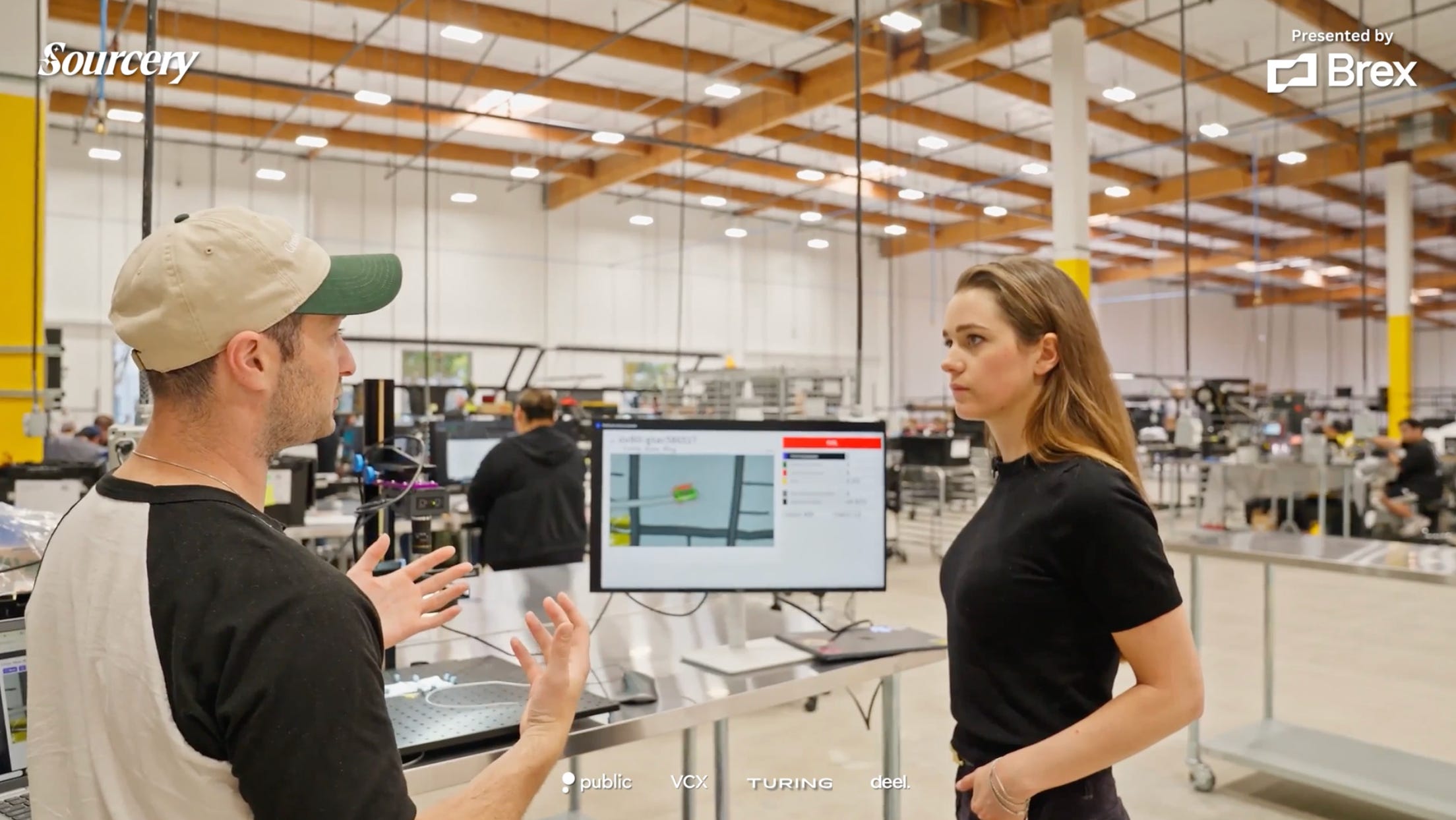
The data play underneath it is the more ambitious bet. Senra is putting camera and vision systems across the factory to capture what a harness build actually looks like in the digital world, something Jordan says does not really exist today. The first live application is quality inspection. On the tour Jordan showed me a crimp inspection station where a 2D vision system flags a bad crimp instead of relying on a 20-year veteran’s eye. “Instead of visually inspecting every single time, I hit capture, and then it actually will tell me if it failed or not.” Every good and bad harness feeds a growing library that trains the model.

The Workforce Play
The industry’s standard path to a skilled technician is roughly 2 years of shadowing a veteran and hoping it sticks. Jordan’s analogy is sharp: “Imagine there’s no culinary school, and there’s no recipes, and you just have to look at the menu and go figure out how to make any of the things on there.” Senra compresses that to 4 weeks.
They can do it because of a credential worth flagging. According to Jordan, Senra runs the only US Department of Labor certified training program for wire harnessing. That is a specific and checkable claim, and if it holds, it is a real regulatory moat, not just a marketing line. Worth verifying against the DOL registered apprenticeship database before we put it in the newsletter as fact.
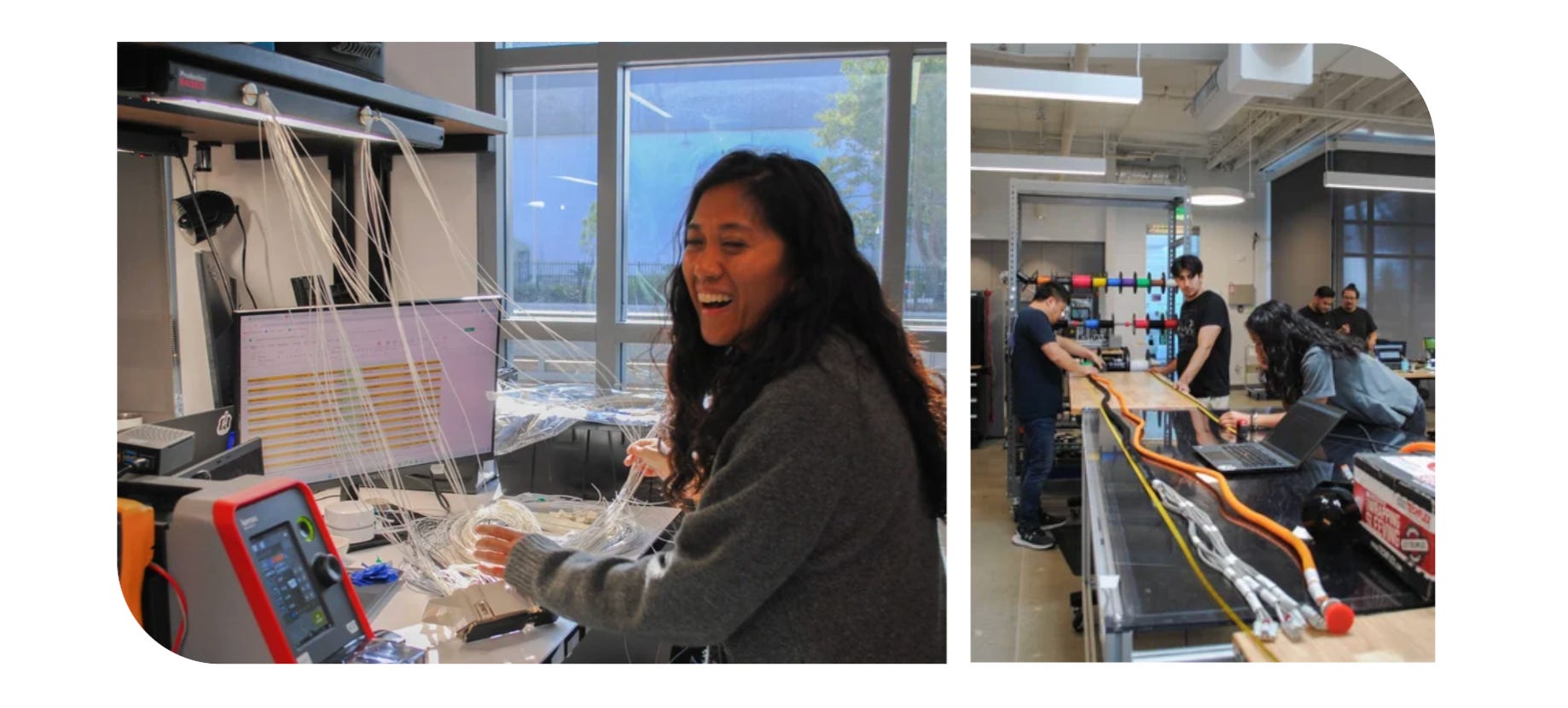
The hiring philosophy follows from the software. Because Amp delivers the recipe, Senra can hire on attitude and aptitude rather than decades of experience. “We hire based on attitude and aptitude of, can you use your hands? Can you read instructions?” The floor skews young on purpose. Most of the technicians had never seen a harness a few months before, which inverts the aging-workforce problem the rest of the industry is stuck with.
The training and the operating system are two halves of one system. Jordan is blunt that neither works alone. Hand someone a box of wires with no recipe and they flounder for weeks, months or years. Give them Amp with no training and the system has no operator. The combination is what lets Senra treat a scarce, tribal skill as something it can manufacture on demand, which is the whole ballgame for scaling a manual industry.

The Ken Venner Hire
The clearest signal of Senra’s ambition is who just joined. Ken Venner, the former SpaceX CIO, came on as Chief Technology and Product Officer, and his resume is a scaling resume. “In the 11 years I was there, grew to 10,000 employees and 8.6 billion in revenue, did 52 mergers and acquisitions,” Ken said of Broadcom, which he joined at 1,000 people and $400 million in revenue. Then at SpaceX Ken built Warp Drive, the custom platform that helped take the company from about one booster a year to, in his words, “40 boosters a year & 9,000 employees across multiple locations.”
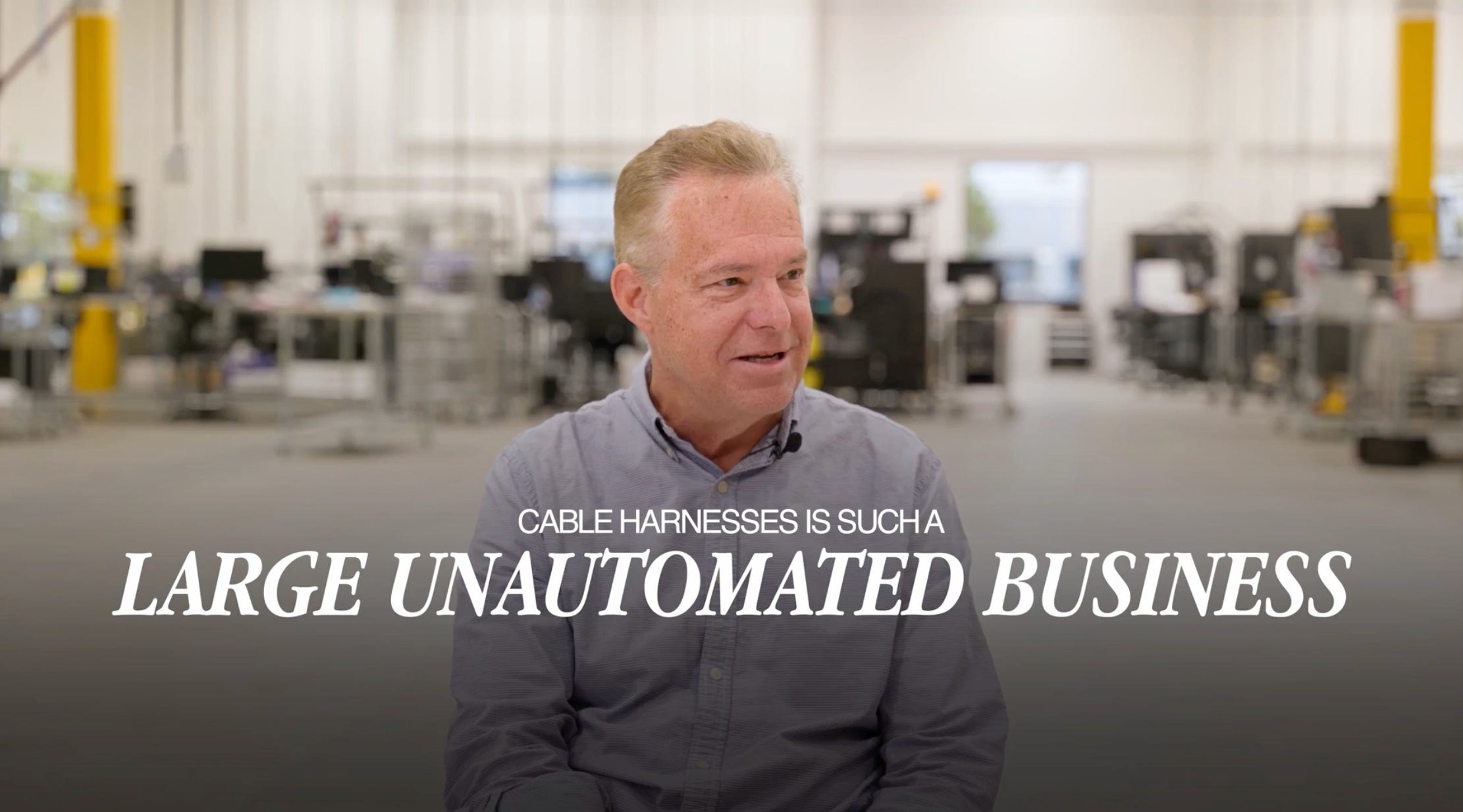
Ken’s read on why he joined maps exactly onto the thesis. “Cable harnesses is such a large, fragmented, unautomated business, and yet it’s the backbone to everything that’s being built today.”
His playbook for scale? It’s deceptively simple “Get it defined, get it working consistently and reliably in such a way that you can now replicate it,” then replicate and improve across the organization. On Elon’s method, Ken distilled it to first principles and a sequencing rule, “remove before automate,” plus the responsible-engineer accountability model he says he learned there.
The most forward-looking thing Ken said is about leverage. He ran a team of about 175 building core platforms at SpaceX. At Senra he has 6. “I think I’ll be able to do exactly what I did at SpaceX with only 6 because AI drives most of what we’re doing.”
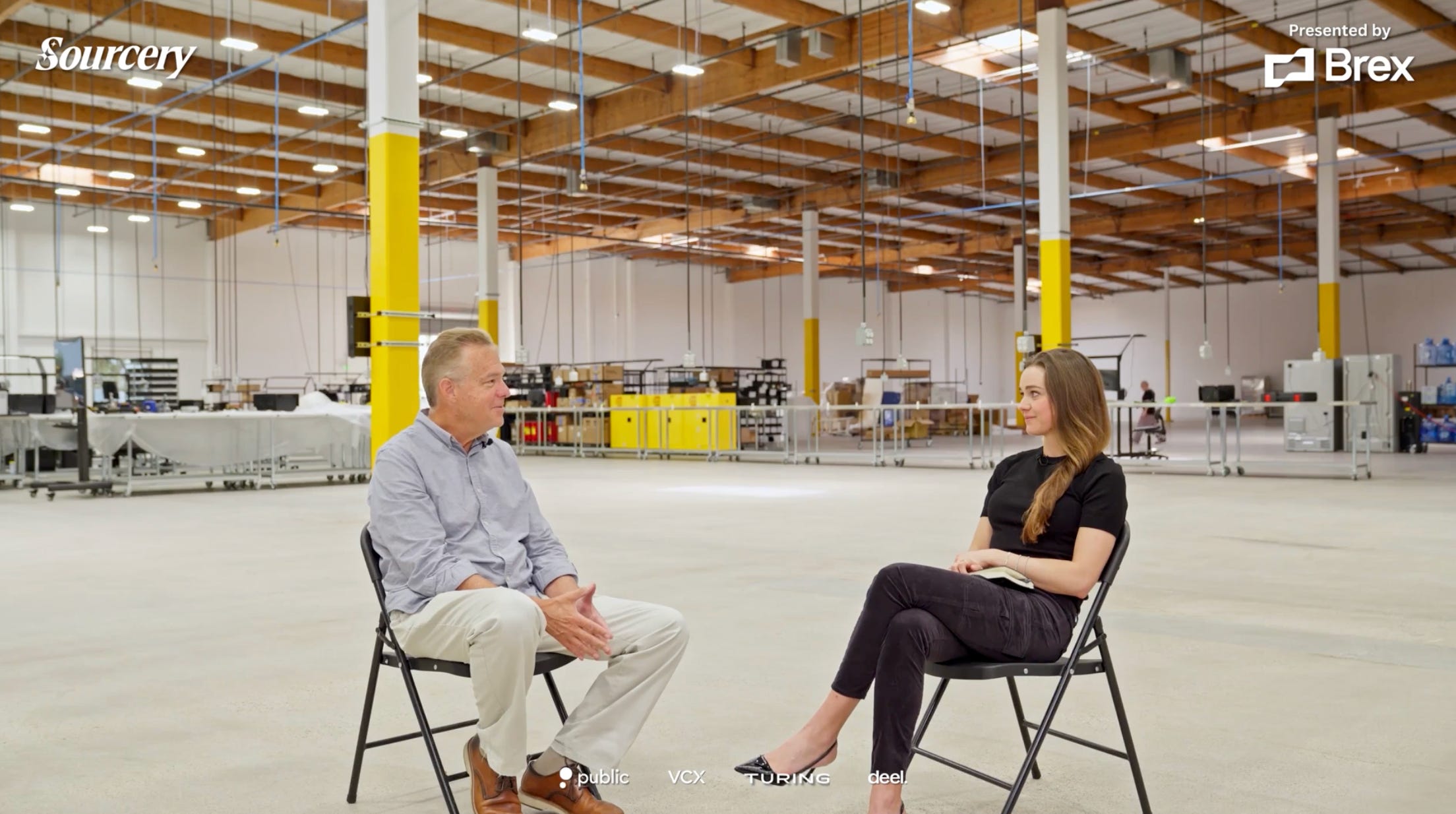
There is a nice throughline on scaling discipline that connects Ken to the factory strategy. Ken is candid that a model is not proven until it repeats. “Until you’ve built it three times, you don’t know if what you’ve built will replicate itself.” When I mentioned Tom Mueller telling us it takes three versions of an engine to get it right, Ken didn’t blink. Redondo was version two, Cypress is the test of true scale, and Factory 3 is where the copy-and-paste model either proves out or doesn’t.

Inside Factory 2, & What Comes Next
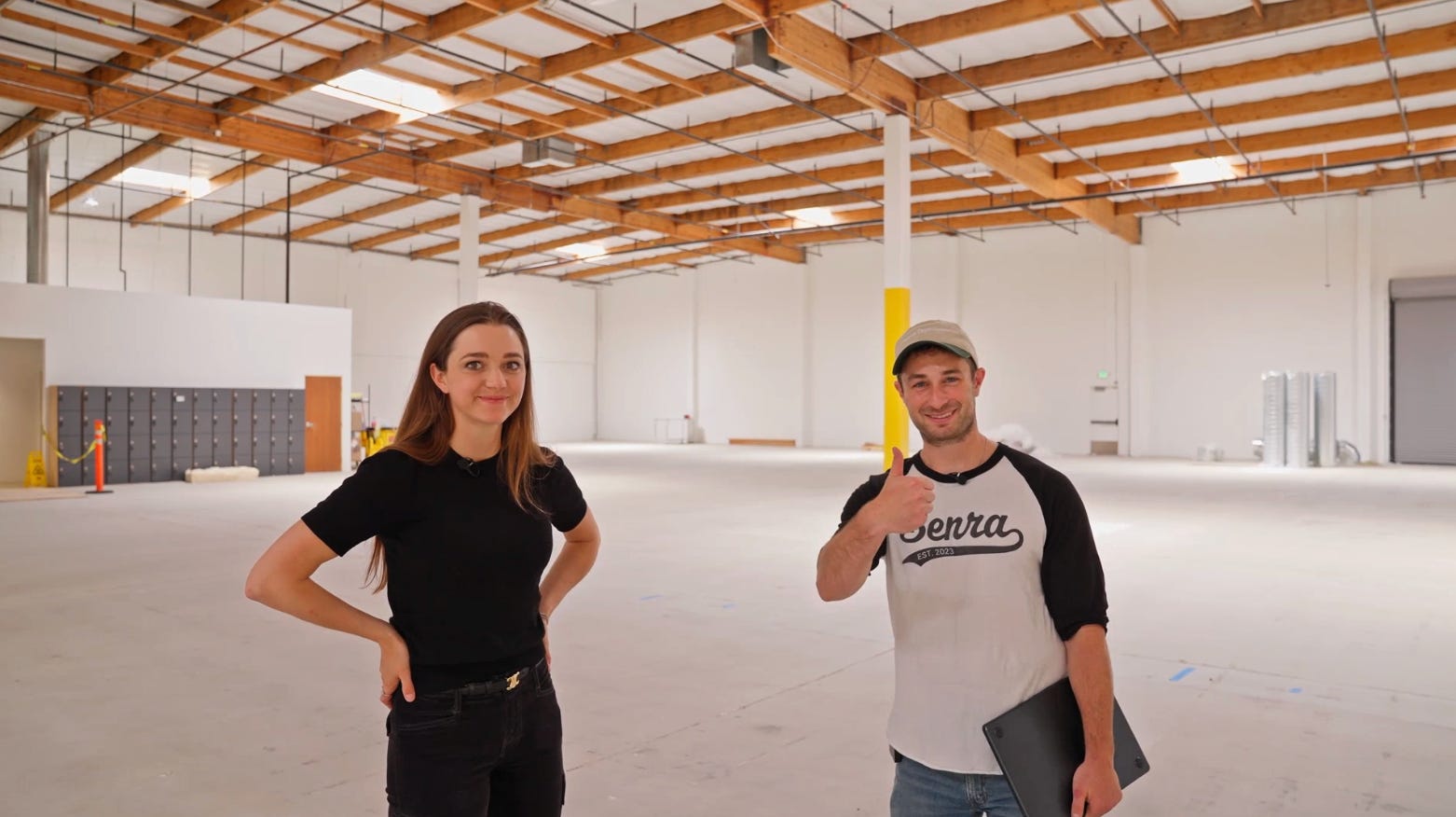
The Cypress facility is where the raise becomes concrete. It adds roughly 80,000 square feet, expands Senra’s production footprint by 5X, and is built to take the company from about 1,000 harnesses a month to 10,000 by next year. On the day I visited it was only about 25% built out, with active construction behind us, and Jordan’s plan is to hit close to full capacity by year end, staffing toward 150 technicians. Redondo is the prototype and new-product-introduction site. Cypress is prototype-to-production and scale.
Each bay is a different customer and a different harness, and Jordan’s point is that the people building look like any manual line until you notice what is missing. “Most people are building everything with their hands, but the biggest secret sauce is that they’re not looking at a drawing or trying to find a tooling. They’re incredibly efficient because the operating system is giving them that perfect recipe and that silver platter instructions every single time.” One bay was running 4,000-plus units a week for a single defense customer. Another table held a 120-foot harness for a defense system Senra was called in to build in two months because it was blocking a multi-billion dollar program.
As for what is next, the answer is more factories closer to customers.
Ken Venner: “We are building the infrastructure, systems and workforce needed to support the future of American manufacturing and the industrial base.”
Jordan, characteristically, put it plainest. “The world needs more wire harnesses, and I wanna build every one of them.”
→ Listen on X, Spotify, YouTube, Apple
The material presented on Molly O’Shea’s website are my opinions only and are provided for informational purposes and should not be construed as investment advice. It is not a recommendation of, or an offer to sell or solicitation of an offer to buy, any particular security, strategy, or investment product. Any analysis or discussion of investments, sectors or the market generally are based on current information, including from public sources, that I consider reliable, but I do not represent that any research or the information provided is accurate or complete, and it should not be relied on as such. My views and opinions expressed in any website content are current at the time of publication and are subject to change. Past performance is not indicative of future results.
Paid Endorsement. Brokerage services by Open to the Public Investing Inc, member FINRA & SIPC. Advisory services by Public Advisors LLC, SEC-registered adviser. Crypto trading provided by Zero Hash LLC, licensed by the NYSDFS. Generated Assets is an interactive analysis tool by Public Advisors. Output is for informational purposes only and is not an investment recommendation or advice. See disclosures at public.com/disclosures/ga. Matched funds must remain in your account for at least 5 years. Match rate and other terms are subject to change at any time.