


Welcome to Dronesville, USA
On top of Skydio’s $110M Series F at a $4.4B valuation announced yesterday, Adam Bry, CEO of Skydio, announces a $3.5 billion commitment to expand American manufacturing over the next 5 years.
To celebrate, we spent the day at Skydio’s San Mateo headquarters for a full tour of their facilities to see what they’re about to 5x.
→ Listen on X, Spotify, YouTube, Apple
The $3.5B announcement involves a new US facility five times the size of the current one (Skydio’s fifth expansion in eight years), over 2,000 new Skydio jobs, 3,000+ additional roles across the US supply chain, and more than $1 billion directed to domestic suppliers under a new program called SkyForge. Skydio already manufactures more dual-use drones than any company outside of China. This is the bet to keep it that way.
The backdrop: 60,000 drones shipped, 3,800+ customers, 1,200+ public safety agencies, every branch of the US military, & 29 allied nations. Skydio DFR now arrives on scene first 71% of the time & resolves nearly 1/4 of calls without dispatching a patrol unit.
“U.S. innovation invented the airplane, ramped up manufacturing to win WWII, put a man on the moon, broke the sound barrier, & commercialized space travel. Skydio has proven that American companies can compete & win in the civilian drone market against products from our adversaries.” — Adam Bry
On the tour, we visit:
Rooftop dock array (drones as cloud infrastructure)
DFR Command, flown live
The “wind wall” stress-testing hardware 24/7
R10, the new indoor tactical drone
F10, a fixed-wing thrown and caught by a robotic arm
X10 water rescue demo with the auto-inflating rest tube
𝐓𝐈𝐌𝐄𝐒𝐓𝐀𝐌𝐏𝐒
(00:00) A flight every 30 seconds
(00:57) Rooftop docks
(03:26) Tour roadmap
(04:42) Adam's RC airplane origin story
(06:10) Flying a dock drone, live
(10:04) The "force multiplier" moment
(12:16) Multi-drone operations
(14:17) Unarmed sensor platforms and the China context
(15:29) Why community acceptance surprised Adam
(19:31) The wind wall
(20:40) R10, built for indoor tactical
(23:30) Flying R10 through a barricaded-suspect scenario
(27:30) Reading oil and gas gauges with a drone
(29:26) F10, the fixed-wing caught by a robotic arm
(30:40) X10 water rescue demo
Brought to you by:
Brex—The intelligent finance platform: cards, expenses, travel, bill pay, banking—wrapped into a high-performance stack. Built for scale. Trusted by teams that move fast. visit → brex.com/sourcery

Turing—Turing accelerates superintelligence by helping frontier AI labs improve model capabilities and enabling enterprises to deploy end-to-end AI systems inside mission-critical workflows. Visit: turing.com/sourcery
VCX—VCX is the public ticker for private tech, allowing investors of all sizes to invest in venture capital. View The Portfolio at GetVCX.com
Deel—Deel is the global people platform that helps startups hire, manage, pay, and equip anyone, anywhere. Trusted by more than 35,000 fast-growing companies, Deel is the people platform that just works, so teams can scale without the chaos. Visit: deel.com/sourcery
Public-–Investing platform Public just launched Generated Assets, which lets you turn any idea into an investable index with AI. With Generated Assets, you can build, backtest, refine, and invest in any thesis with AI. Gone are the days of one-size-fits-all ETFs. Try it today: public.com/sourcery
Merge—The leading provider of customer-facing integrations and agentic tools for frontier LLMs, Fortune 500 organizations, and B2B SaaS companies. Visit: https://merge.dev
America’s Largest Drone Manufacturer
The $3.5 Billion Commitment
On April 24, 2026, Skydio announced a $3.5 billion domestic investment over the next five years, spanning manufacturing expansion, R&D, and US supply chain development. The commitment funds over 2,000 new Skydio jobs, supports 3,000+ additional roles in the supply chain, and directs more than $1 billion to domestic suppliers through a new program called SkyForge. The accompanying facility expansion will be 5x the size of Skydio’s current footprint, representing the company’s fifth manufacturing expansion in eight years.
The strategic message is explicit. Skydio already manufactures more dual-use drones than any company outside of China, and this commitment is designed to widen that gap. The SkyForge model is structurally interesting: select suppliers will be invited to co-locate production capacity with Skydio, gaining access to Skydio’s engineering talent. That is not a standard supplier relationship. It is vertical integration expressed through partnership, and it solves the component-level supply chain fragility that has plagued US hardware manufacturers competing against Chinese vertical stacks.
“U.S. innovation invented the airplane, ramped up manufacturing to win WWII, put a man on the moon, broke the sound barrier, and commercialized space travel,” Adam Bry said in the announcement. “Skydio has proven that American companies can compete and win in the civilian drone market against products from our adversaries.”

The Current Scale
The company operates at a scale that most market observers still underestimate. Skydio has shipped more than 60,000 drones, logged over 3.4 million customer flights, and currently runs 1.5 flights per minute in non-defense markets alone, representing 2,000+ flights per day, up 278% year-over-year. Approximately 900 employees support an 80,000 square foot manufacturing facility in Hayward, California, with headquarters in San Mateo. Annual revenue is in the nine figures, with rapid growth.
The customer base is the more defensible asset. Every branch of the US military. Twenty-nine allied militaries. 1,200+ public safety agencies across 42 states, a figure that doubled year-over-year. 1,200+ critical infrastructure companies including 250 utilities (Dominion, PG&E, Duke, Tennessee Valley Authority, National Grid, Berkshire Hathaway, among others). 450+ energy companies. 45 of 51 US state transportation agencies. 600+ state transportation, civil engineering, and construction organizations. 11 million Americans now live within two miles of a Skydio DFR dock.
Adam’s framing captures the category dynamic concisely: “People don’t really understand how deployed and impactful these things already are.” The industries Skydio serves do not produce viral consumer moments. They produce compounding enterprise revenue in the background of critical infrastructure, which is the profile of a business that gets underestimated until market share is locked in.

The Tour: Hardware as Operating Discipline
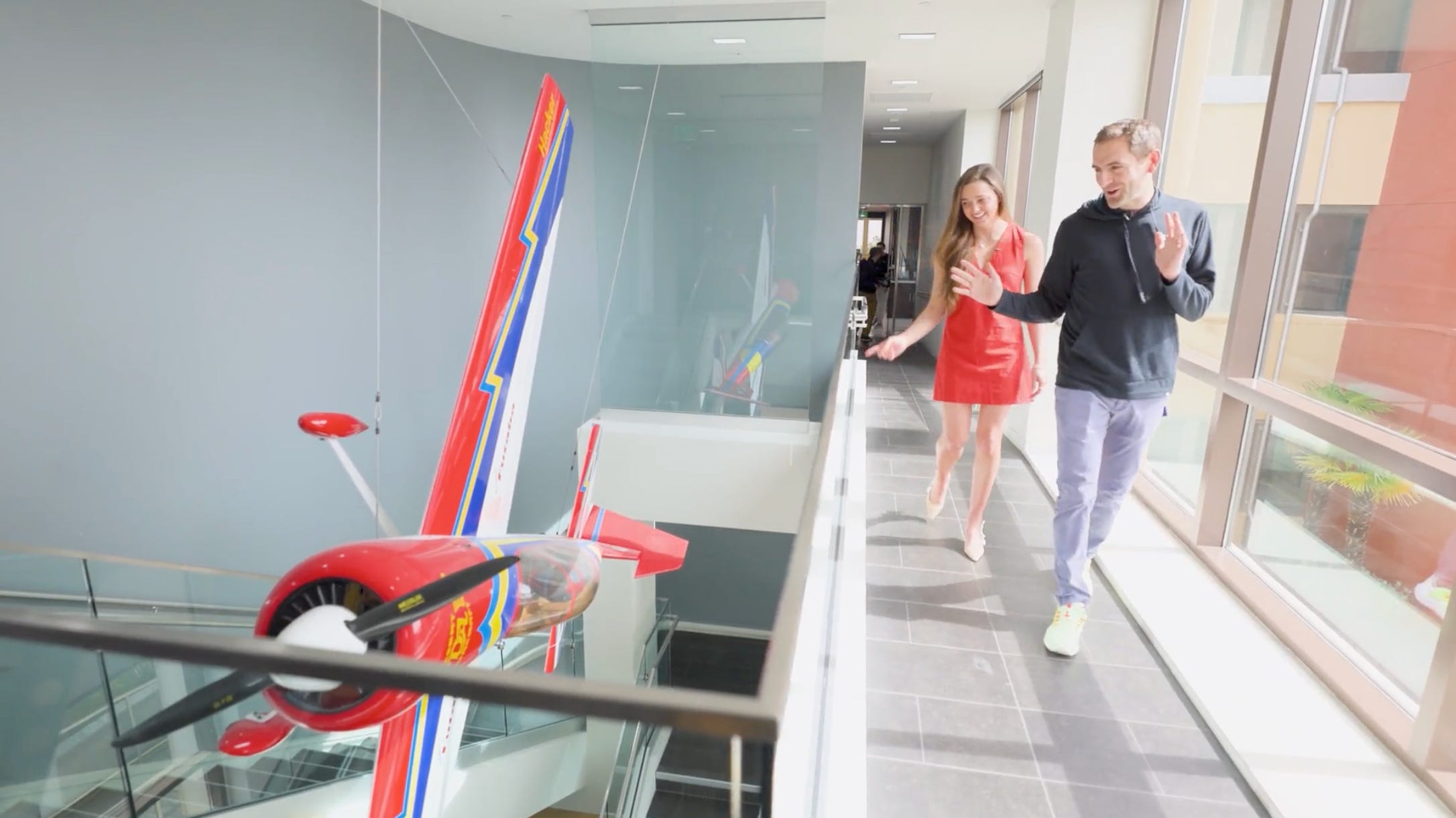
The San Mateo campus is organized around a set of physical demonstrations that double as operational capabilities. The rooftop hosts an active dock array in two configurations: an endurance rig that flies unattended 24/7 as a reliability test, and a customer demo rig that global sales teams log into remotely to run representative missions. Adjacent to the rooftops sits the wind wall, an array of propellers generating 30 to 35 mph sustained winds against docks in multiple orientations, with variants built to add rain.
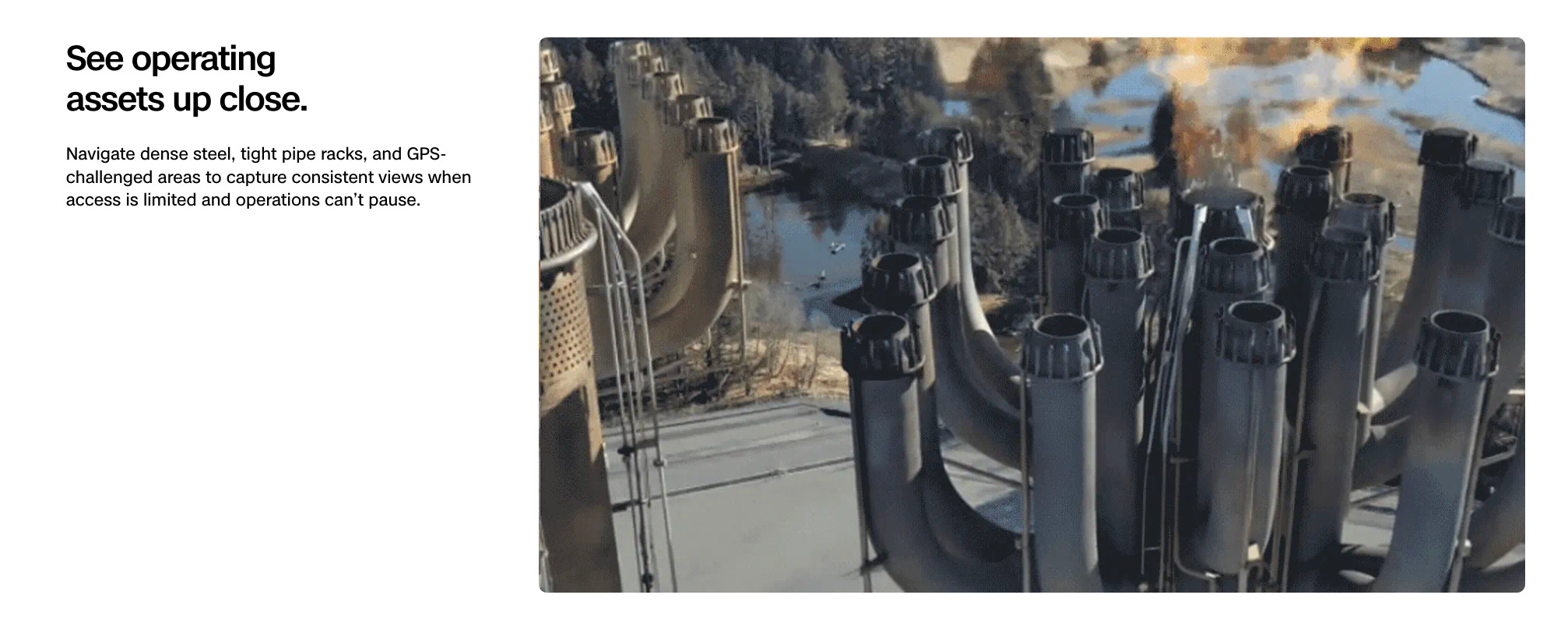
The R10 development building hosts a simulated barricaded-suspect house used for live indoor tactical flights. Outdoors, a purpose-built oil & gas inspection rig, including substation equipment, lets autonomous drones practice reading steam gauges and detecting leaks. The F10 fixed-wing prototype is tested with a robotic arm launch-&-catch system in a dedicated bay. The X10 water rescue demo uses an auto-inflating rest tube dropper, built in response to NYPD requests for coastal rescue capability.
“The number one feature for us is reliability, making this stuff work end to end, bulletproof day, night, wind, rain, that’s the hard part… You can sort of think of this as like continuous integration for our development process with real autonomous hardware in the loop.”

The Product Line
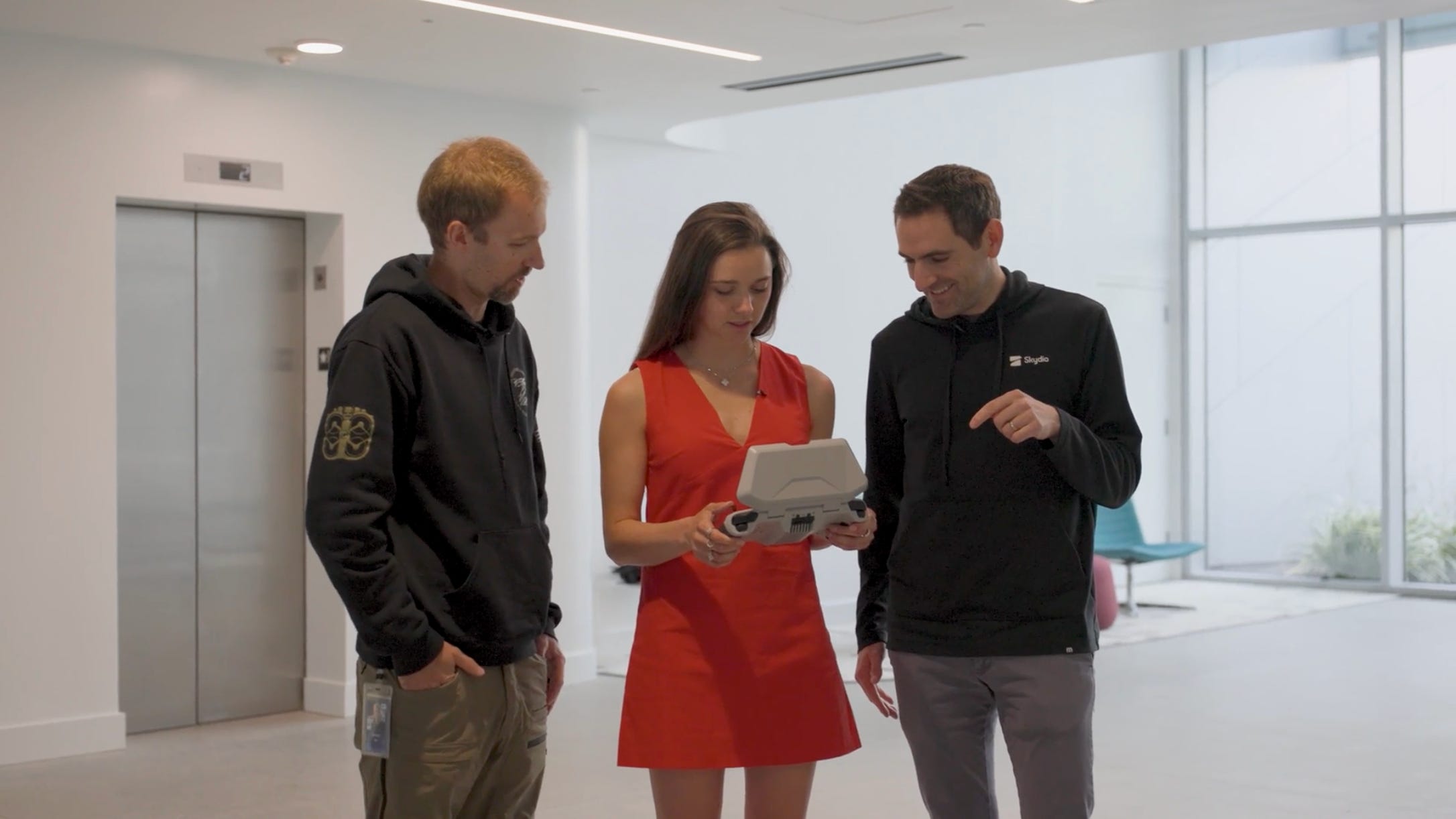
Skydio now sells specialized airframes for specialized missions, unified by a common autonomy and software layer. The X10 is the general-purpose workhorse compatible with the autonomous dock system, carrying a three-axis gimbaled sensor package capable of reading a license plate at 800 feet and detecting a person at a couple of miles. Attachments include spotlights, speakers, and the rest-tube dropper. The X10D is the militarized variant, fielded under the US Army’s Short Range Reconnaissance Tranche 2 program, GPS-denied capable, integrated into ATAK mission command.
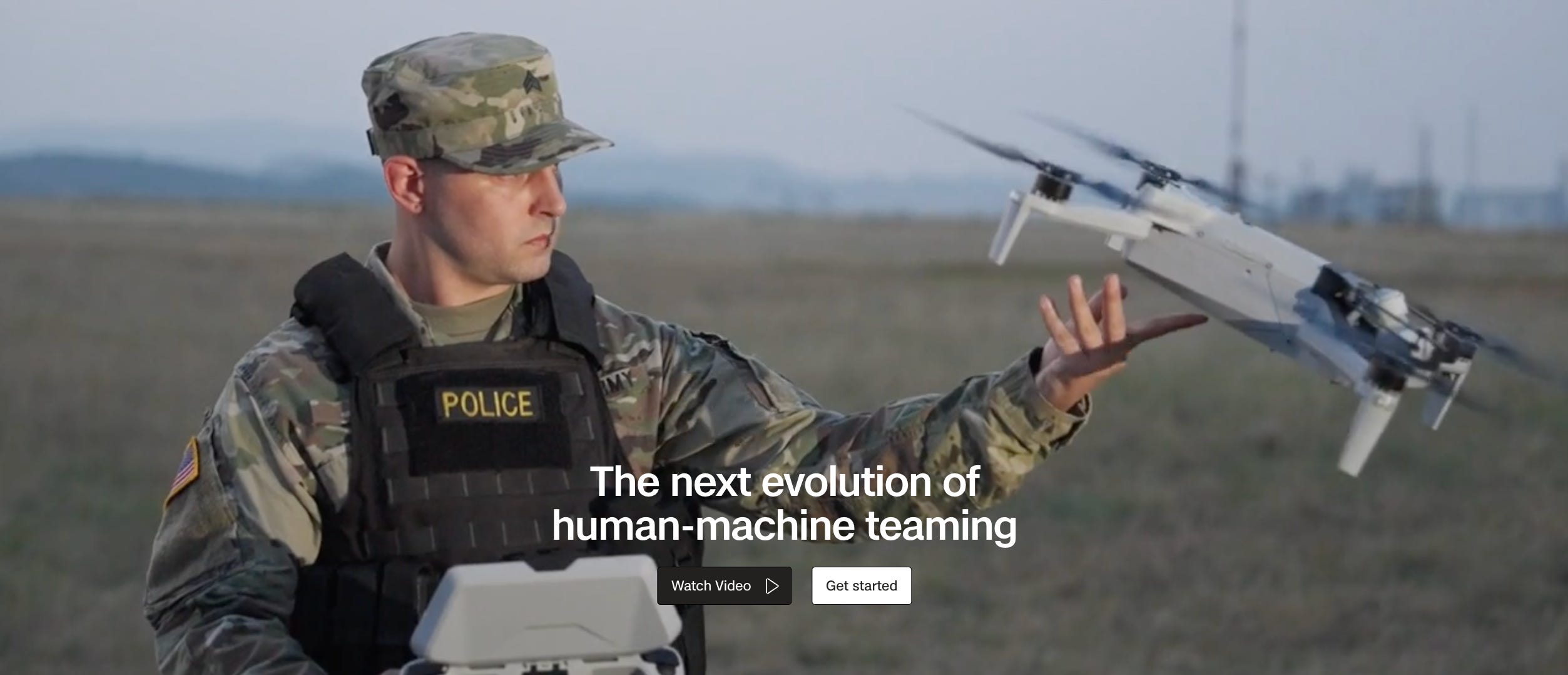
The R10 is the new indoor tactical drone, designed specifically for confined and dangerous spaces. Headlights for dark interiors, speaker and microphone for two-way communication, form factor small enough to fly through doorways. Adam framed the use case during a live flight: “you could have an armed suspect in there and rather than sending a cop in who’s either gonna get shot at and maybe have to shoot back, you send the drone in.” R10 is already in customer hands and enters general availability in the coming weeks.
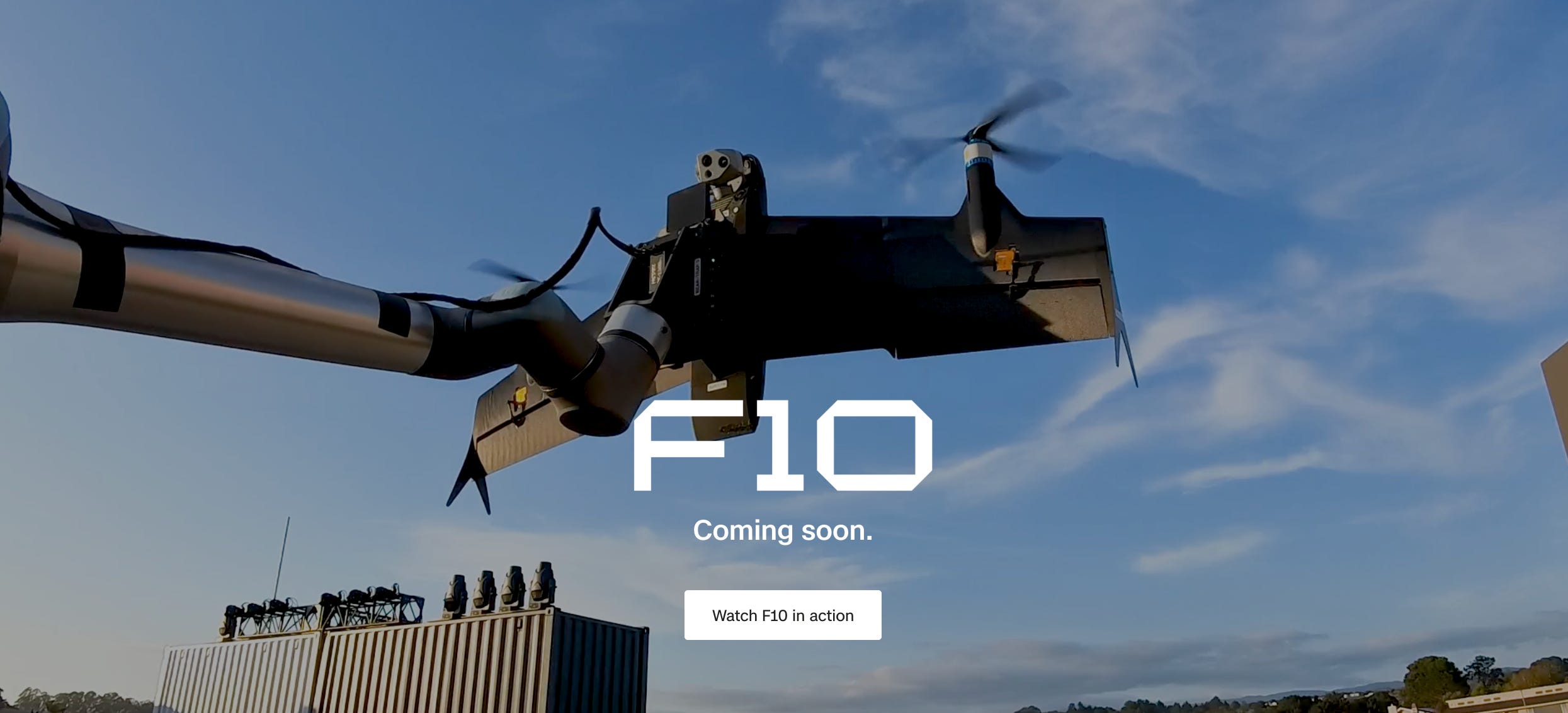
The F10 is the fixed-wing prototype built for long-range, high-speed missions such as utility line inspection and large-jurisdiction public safety. “If you want to go fast, if you wanna go far, you need a wing. It’s just a much more efficient way to generate lift.” The robotic arm launch-and-catch mechanism is how F10 stays inside the dock-and-remote-operation paradigm that makes the rest of the fleet economically viable.
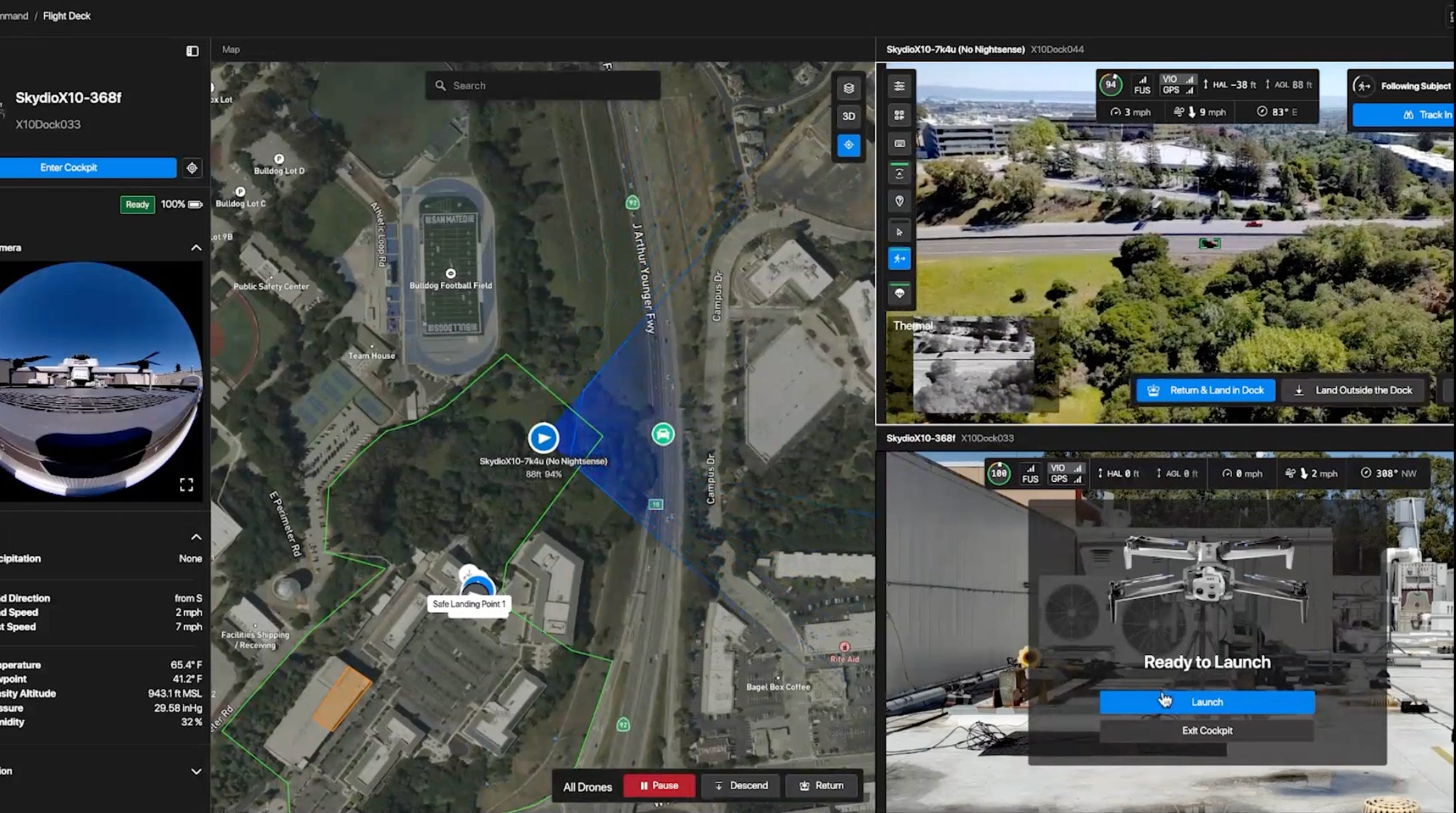
The platform layer underneath is where the unit economics diverge from legacy drone businesses. DFR Command is the software most public safety customers experience the product through: map-based incident dispatch, one-click drone launch, autonomous wayfinding via Skydio’s Pathfinder system, multi-drone operations from a single interface. The Transparency Portal lets agencies publish their flight logs to the public. Docks provide thermal regulation, network connectivity, and charging, turning drones into, as Adam put it, “a little bit just like using a cloud server.”
The horizontal nature of the stack matters: “It’s pretty horizontal technology. It’s like building a computer or something. You can use it for all different kinds of things. It’s really the software that defines how you interact with it and what the capabilities are.”

DFR: The Application Driving Adoption
Drone as First Responder is the fastest-moving deployment in the portfolio and the one producing the clearest outcome data. A Skydio internal analysis of 6,000 flights across 61 public safety agencies documented the drone arriving first on scene 71% of the time, 23% of calls cleared without dispatching a patrol unit, and helpful intelligence provided on 92% of flights. SFPD credits the program with a 42% reduction in auto theft, 500+ arrests, and a 30% drop in overall crime.
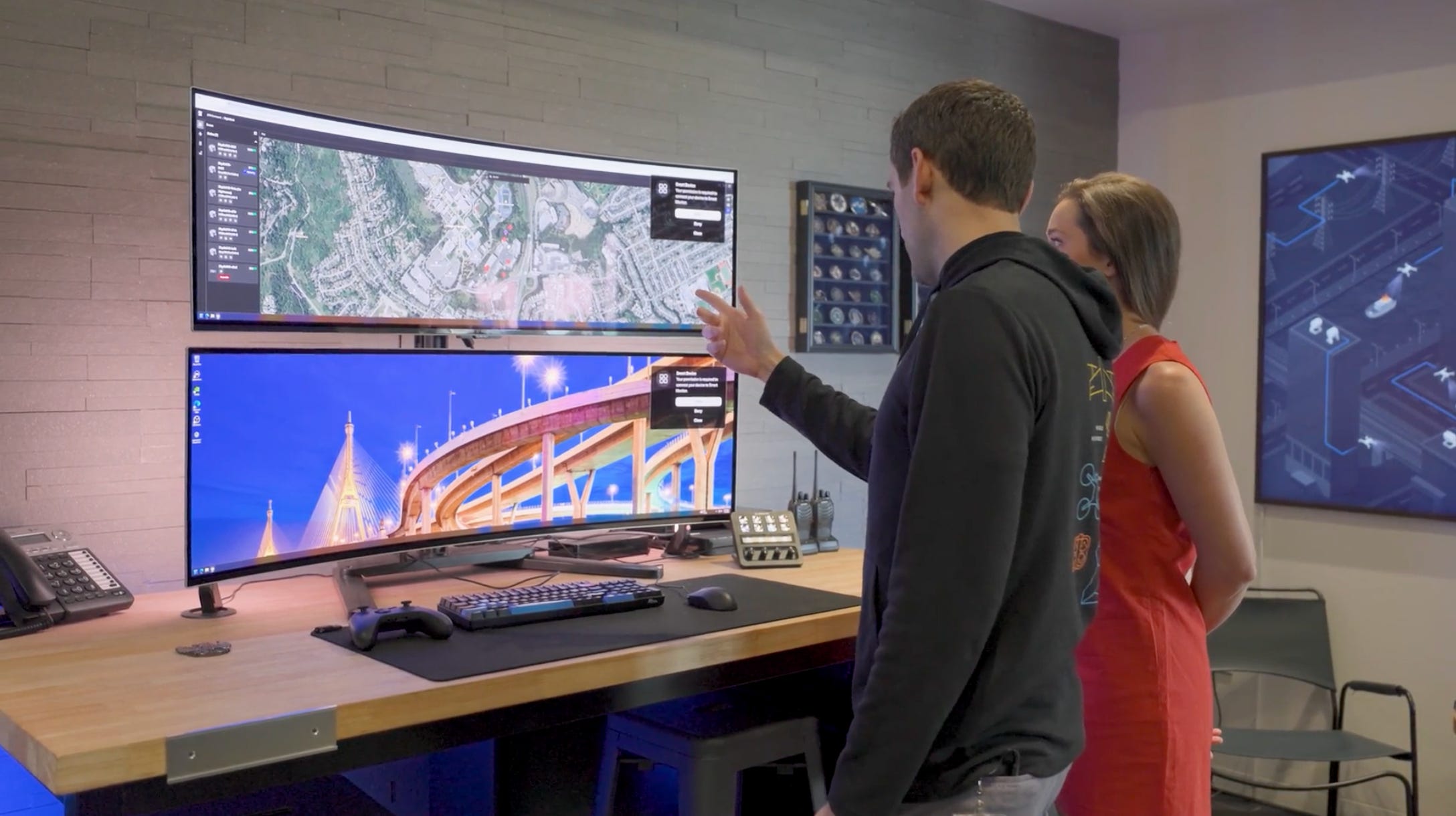
Lee County, Florida deputies located a missing elderly man in under ten minutes. Bernalillo County deputies de-escalated a call involving two armed children (ages 7 and 9) without resorting to deadly force. OKCPD and OKCFD located an injured man near a rail line in time to save his life.
Adam’s framing of the rate of deployment captures the inflection: “on average now in public safety, our customers are flying once every 30 seconds… this is across the nation 24/7.” That pace reflects a product category moving from pilot programs to default tooling. The agency count doubled year-over-year, from 600 to 1,200+, across 42 of 50 states. The addressable base continues to expand, and adoption compounds as neighboring agencies see results.
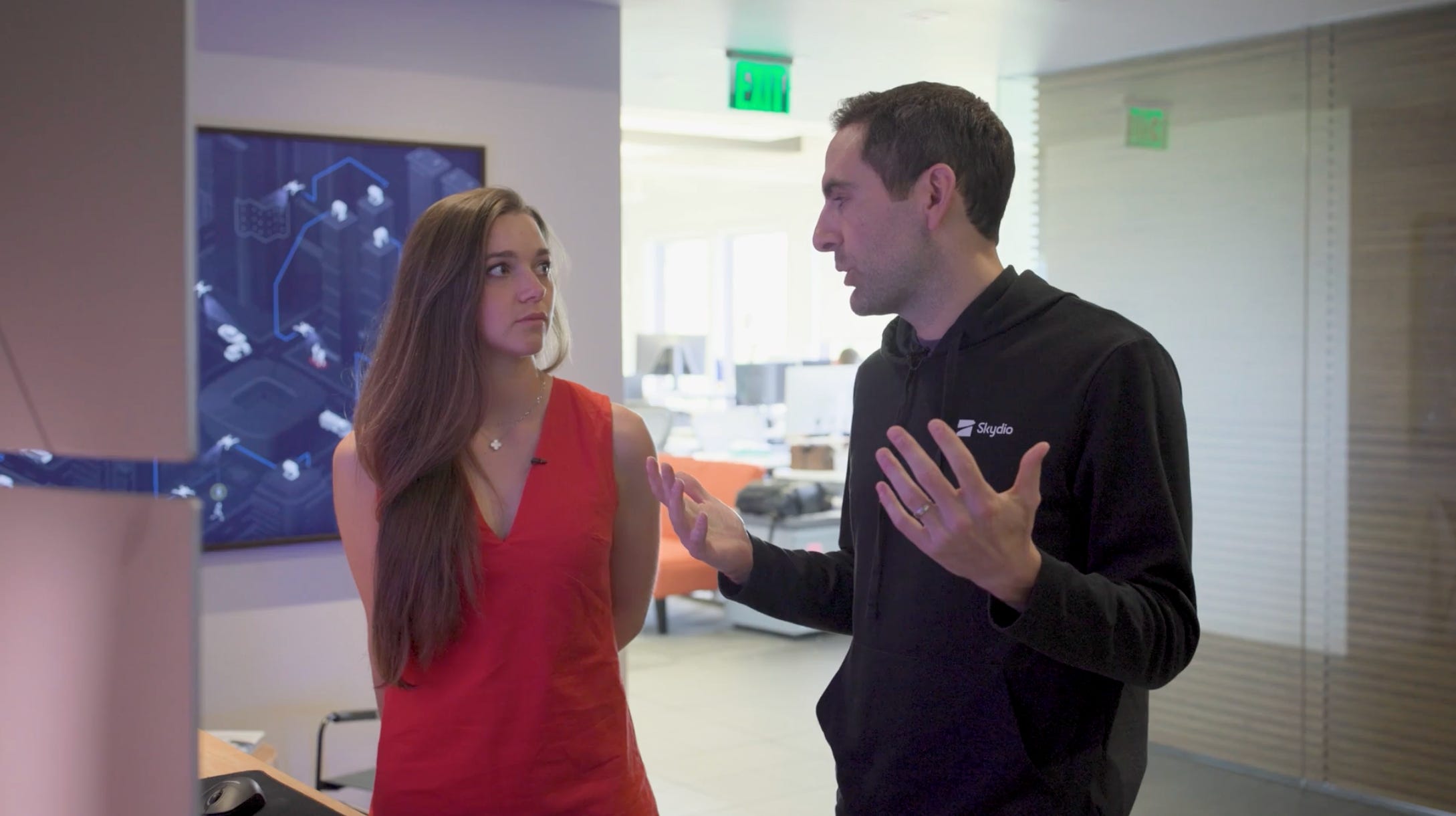
The non-obvious insight, and the one that matters most for market sizing, is that community acceptance has been the gating factor rather than technology. “Probably the single biggest, I would say, positive surprise that I’ve had over the last five years is the level of community acceptance and buy-in and really excitement for the law enforcement application of these things.”
Adam’s argument is that transparency is the unlock: “the best answer to privacy is actually transparency as well.” That policy wedge, expressed through the Transparency Portal and proactive agency communication, is not easily replicated by foreign competitors and represents a durable advantage in US public safety.
Site Security
The fastest-growing application in the Skydio portfolio is not public safety. It is site security, driven primarily by data centers and critical infrastructure operators. The reason matters for understanding the unit economics. A single docked drone at a data center can run incident response, perimeter patrol, and infrastructure inspection (power, cooling) from the same asset on the same day. That is one capital expenditure amortized across multiple revenue-generating jobs, which is structurally different from single-purpose hardware.
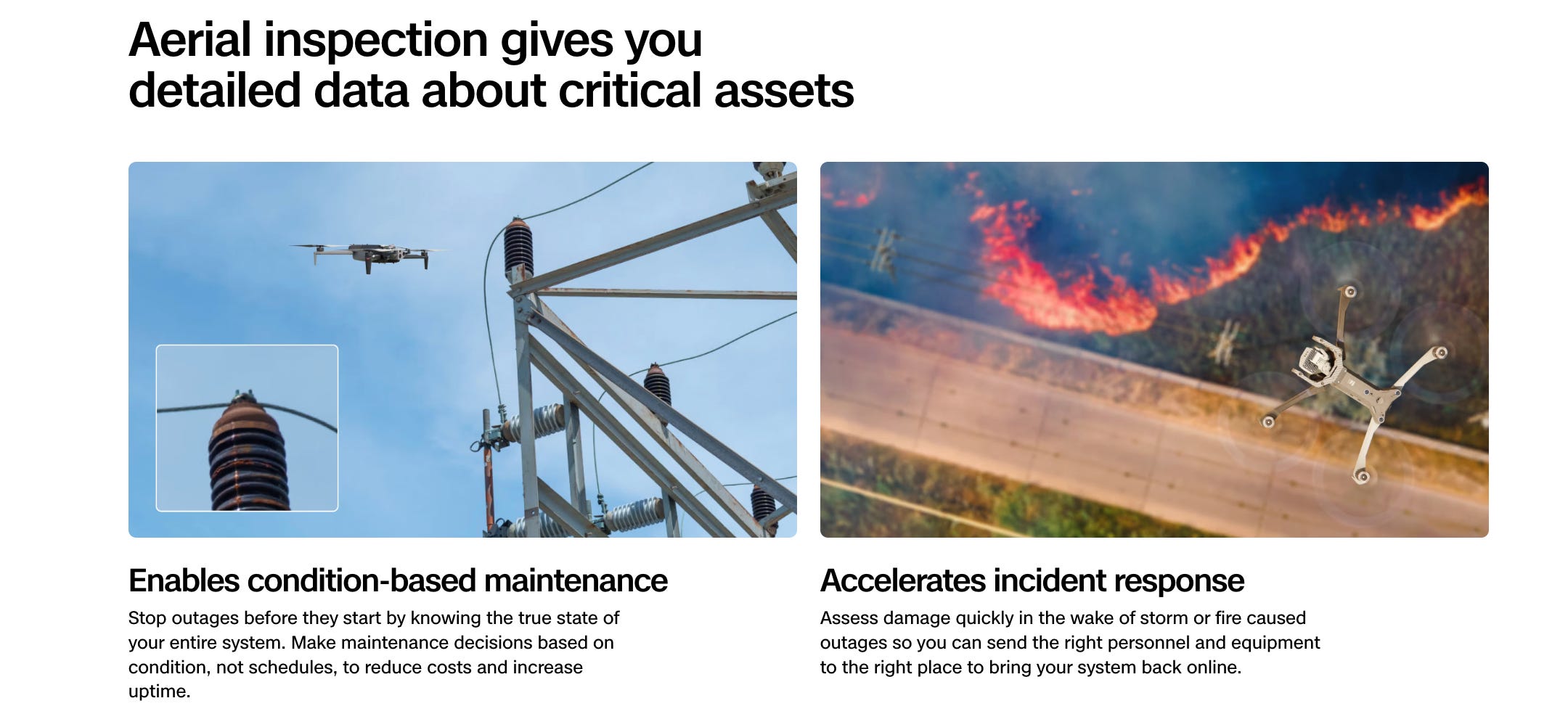
The same logic extends across the customer base. Utilities already using Skydio for transmission line inspection can add substation security as a software decision. Construction firms doing site documentation can add perimeter security without adding fleet. Every additional mission loaded onto an installed dock increases customer value without incremental hardware cost.
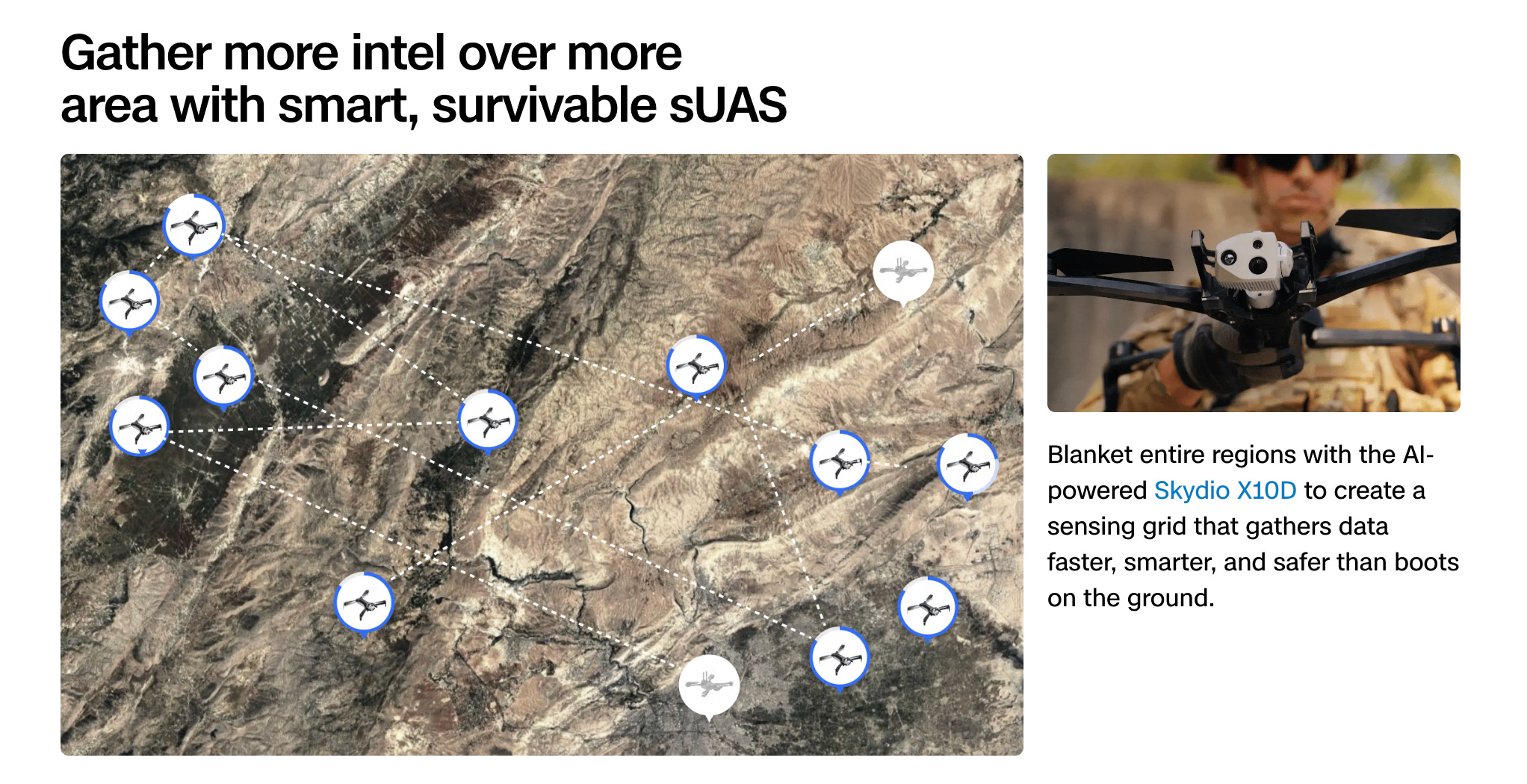
“These are unarmed drones. These are basically flying sensor platforms. And we sell very similar products to the military. Our class of drone to the military is what they call ISR, Intelligence Surveillance Reconnaissance.”
A flying sensor platform that can be redirected via software to new use cases is a different asset class than a drone that does one thing. Investors evaluating the company should be pricing the platform, not the individual airframes.

The National Security Thesis
The national security argument is the one that connects the $3.5 billion commitment to the broader strategic context. The US is investing billions in one-way attack drones, but as Skydio’s positioning states: “scale alone doesn’t deliver dominance. The missing piece is persistent, organic ISR at the tactical edge. Without a survivable ‘hunter’ platform maintaining target custody, adding more ‘killer’ effectors produces more sorties but fewer confirmed effects.” The X10D is positioned as that hunter: GPS-denied capable, autonomy-driven, integrated into ATAK.. “you can’t dominate what you can’t see.”
Commercial validation has arrived. The $52 million-plus US Army order for X10D under SRR Tranche 2 is the largest single-vendor tactical sUAS order in Army history. Combined with deployment across every US military branch and 29 allied nations, this establishes Skydio as the default Western alternative in a category where the default has been Chinese for a decade. The dual-use posture matters: the same autonomy stack, reliability discipline, and manufacturing scale that serve public safety and utilities are what the military is buying, which is why the R&D investment compounds across both markets.
Dronesville, USA
The closing frame from the tour applies as well to the investment thesis as to the product roadmap. “This campus is slowly evolving into Drone Mecca. Our goal is to just have this be the most exciting place in the world.” The $3.5 billion commitment, $110M investment at $4.4 billion valuation, Army contract, doubling DFR adoption, and the specialized product line are all expressions of the same underlying bet: that autonomous flying robots will become critical infrastructure for the industries that run America, and that the company furthest along the reliability curve wins the category. Skydio is making that bet visible, funded, and domestic.
→ Listen on X, Spotify, YouTube, Apple
The material presented on Molly O’Shea’s website are my opinions only and are provided for informational purposes and should not be construed as investment advice. It is not a recommendation of, or an offer to sell or solicitation of an offer to buy, any particular security, strategy, or investment product. Any analysis or discussion of investments, sectors or the market generally are based on current information, including from public sources, that I consider reliable, but I do not represent that any research or the information provided is accurate or complete, and it should not be relied on as such. My views and opinions expressed in any website content are current at the time of publication and are subject to change. Past performance is not indicative of future results.
Paid Endorsement. Brokerage services by Open to the Public Investing Inc, member FINRA & SIPC. Advisory services by Public Advisors LLC, SEC-registered adviser. Crypto trading provided by Zero Hash LLC, licensed by the NYSDFS. Generated Assets is an interactive analysis tool by Public Advisors. Output is for informational purposes only and is not an investment recommendation or advice. See disclosures at public.com/disclosures/ga. Matched funds must remain in your account for at least 5 years. Match rate and other terms are subject to change at any time.