

Why Skydio Raised Less Than Investors Offered
Today, Skydio announces a $110M Series F at a $4.4 billion post-money valuation. CEO Adam Bry joins Sourcery to dive into the oversubscribed funding process, scaling to over 9 figures in revenue (!!), commercial progress, military + public safety use cases, & their manufacturing edge at Skydio's Hayward factory.
→ Listen on X, Spotify, YouTube, Apple
ICYMI: Skydio is the largest drone factory in the US at scale production.
“The most significant fact in our Series F is how little we are raising. Despite investor demand to put substantially more into the company… our capital needs are rapidly decreasing.” – CEO Adam Bry
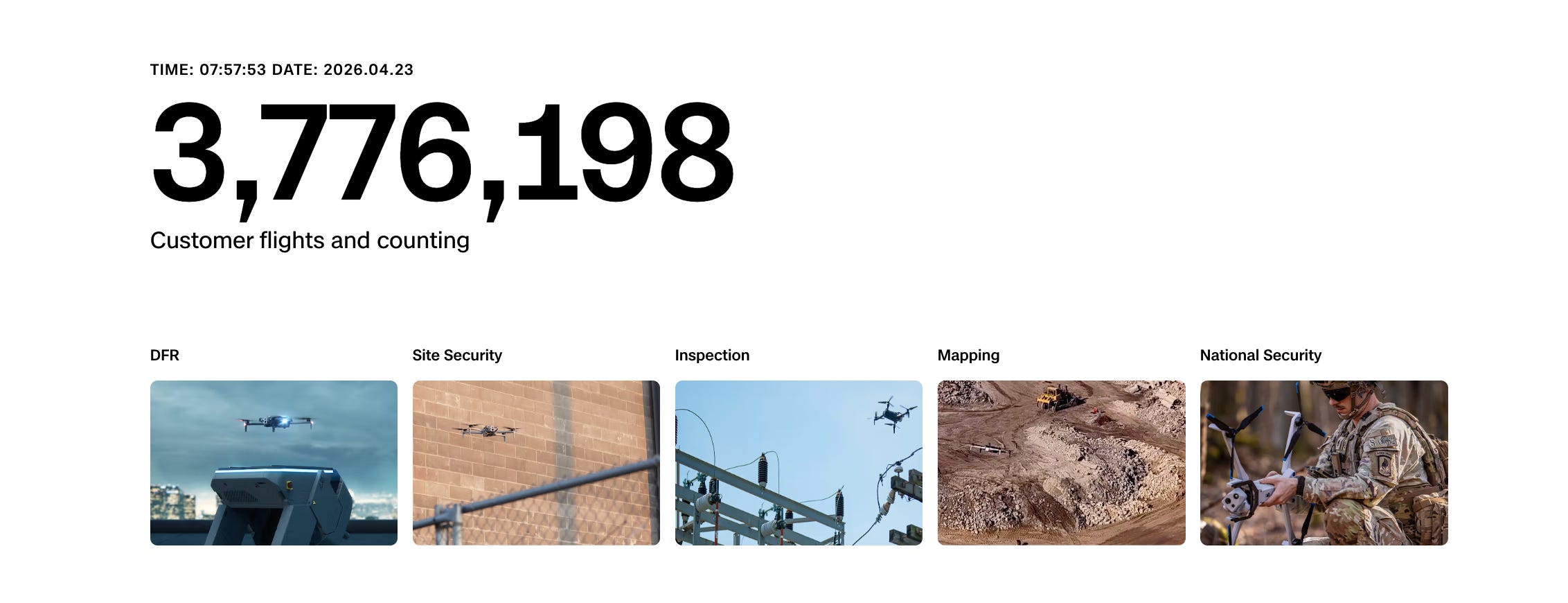
Skydio by the numbers:
$100Ms in annual revenue, strong unit economics
~900 employees
60,000 autonomous flying robots shipped
3.4M+ customer flights
3,800+ enterprise customers
1,200+ public safety agencies (doubled YoY)
45 of 51 state transportation agencies
Every branch of the US military plus 29 allies
11M+ Americans live within 2 miles of a Skydio DFR Dock
In this conversation, we cover:
$100M Series F & the unit economics behind a $4.4B valuation
$50M, 3,000 drone US Army contract and tripling production in 2026
R10 indoor drone & F10 fixed wing
Turning down DJI’s acquisition offer in 2014
Getting sanctioned by the Chinese government in 2024
Drone as First Responder: Public Safety customers in 42/50 states, 42% auto theft reduction in SF
Built a China independent supply chain & US manufacturing at scale
Flying agentic AI & the future of autonomous robotics
Adam’s hottest take on the robotics hype cycle
If you’re interested in reindustrializing America, drones, AI, robotics, & fundraising in hard tech, this one’s for you.
𝐓𝐈𝐌𝐄𝐒𝐓𝐀𝐌𝐏𝐒
(00:00) Adam Bry, CEO of Skydio
(00:54) Inside Skydio Factory
(01:31) Series F & Scaling
(03:17) Customers And Growth
(04:10) Origins & Reliability
(08:04) Civilian Missions Focus
(09:19) Drones For Public Safety
(12:29) Edge Compute & Partners
(14:20) Expanding Drone Lineup
(17:10) Beating China & DJI
(19:34) US Supply Chain Resilience
(21:33) Reindustrialization Timeline
(22:35) Hiring & Leadership
(27:12) AI Agentic Drones
(30:08) Metrics & Operating Model
(31:49) Hottest Take And Advice
Brought to you by:
Brex—The intelligent finance platform: cards, expenses, travel, bill pay, banking—wrapped into a high-performance stack. Built for scale. Trusted by teams that move fast. visit → brex.com/sourcery

Turing—Turing accelerates superintelligence by helping frontier AI labs improve model capabilities and enabling enterprises to deploy end-to-end AI systems inside mission-critical workflows. Visit: turing.com/sourcery
VCX—VCX is the public ticker for private tech, allowing investors of all sizes to invest in venture capital. View The Portfolio at GetVCX.com
Deel—Deel is the global people platform that helps startups hire, manage, pay, and equip anyone, anywhere. Trusted by more than 35,000 fast-growing companies, Deel is the people platform that just works, so teams can scale without the chaos. Visit: deel.com/sourcery
Public-–Investing platform Public just launched Generated Assets, which lets you turn any idea into an investable index with AI. With Generated Assets, you can build, backtest, refine, and invest in any thesis with AI. Gone are the days of one-size-fits-all ETFs. Try it today: public.com/sourcery
Merge—The leading provider of customer-facing integrations and agentic tools for frontier LLMs, Fortune 500 organizations, and B2B SaaS companies. Visit: https://merge.dev
The Flying Robot Company That Raised Less Than Investors Wanted
Conversation with Skydio CEO Adam Bry on Series F, Autonomy, & the New Physics of Robotics Capital

Most venture headlines in AI and robotics run the same way: more capital raised, more dilution accepted, more runway needed to chase receding horizons. Skydio’s announcement this week runs the other direction. $110 million at a $4.4 billion post-money valuation, a modest check by current standards, deliberately so.
Turns out, when you have strong unit economics + 9 figures in revenue you can think more critically about preserving equity & not taking money just for money’s sake.
→ Listen on X, Spotify, YouTube, Apple
Twelve years in, Skydio has moved from the first drone hype cycle, where “a bunch of capital was invested,” to being, in Bry’s telling, “really the only surviving company that’s building drone hardware from that era.” What makes the round interesting is how Bry himself frames it: “I really think the most significant fact in this whole thing is how small it is. We’re in the very rare and hard earned position amongst robotics and AI companies of actually having rapidly declining capital needs.”
It’s a philosophy he traces back to something older than the current cycle. “One of the frameworks I think about is get rich slowly,” Bry said. “Enduring value and enduring impact is built on a lot of patience and a lot of hard work... the signal trumps the noise. It always does.” What follows is our read on the business, the product thesis, and why the scarcity of this raise may be the loudest signal in the release.
A Humble Series F
The core business is funding the core business.. Skydio reports nine figures of annual revenue, 60,000 flying robots shipped, and roughly 4,000 enterprise customers, including every branch of the U.S. military, 1,200+ public safety agencies, and 45 of 51 state transportation agencies. In a sector pricing in optionality rather than operating income, that reads differently.
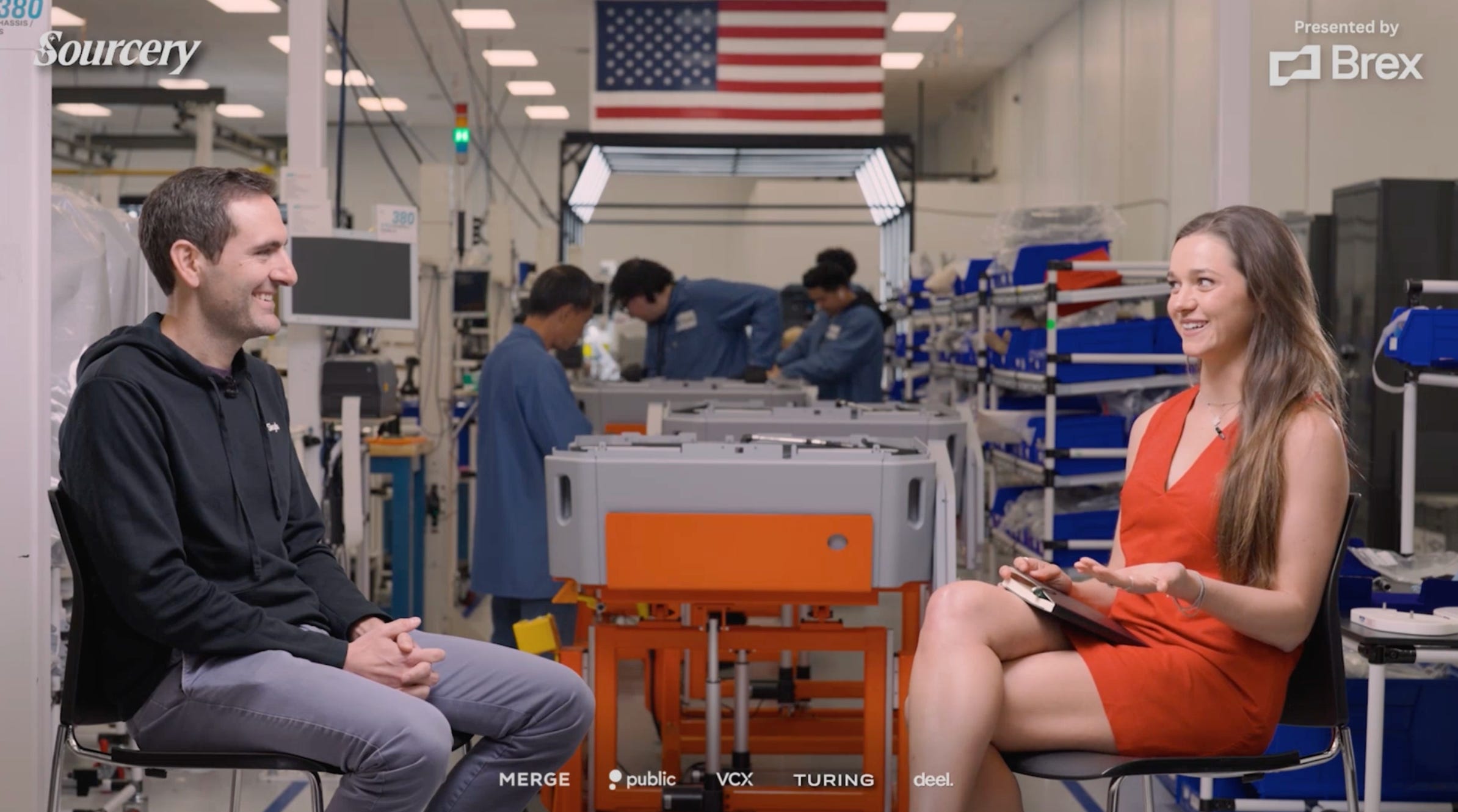
The capital is going to unglamorous work. “The number one constraint we’re facing right now is building more drones faster,” Bry said. “We will be tripling production over the course of this year.” A $52 million, 3,000-drone Army order, “actually not that much of an outlier for us these days,” tells you throughput is the bottleneck. Raising only what you need when the market would give you more is a rare signal in robotics.

Autonomy Bet, Compounding 12 Years Later
Skydio’s contrarian call was that drones needed to fly themselves. That bet nearly ended the company: DJI expressed acquisition interest in 2014. Bry declined because “we felt like they didn’t really understand the importance of autonomy and how much that was gonna change, who could use drones and how they could use them.”
The harder insight was about reliability, not capability. “It’s very easy to make a demo, like getting a drone to take off and fly around manually is like 0.1% of the way there,” Bry said. “What’s really hard is... making it work 90% of the time, 99% of the time, 99.9% of the time, like chasing those nines of reliability.”
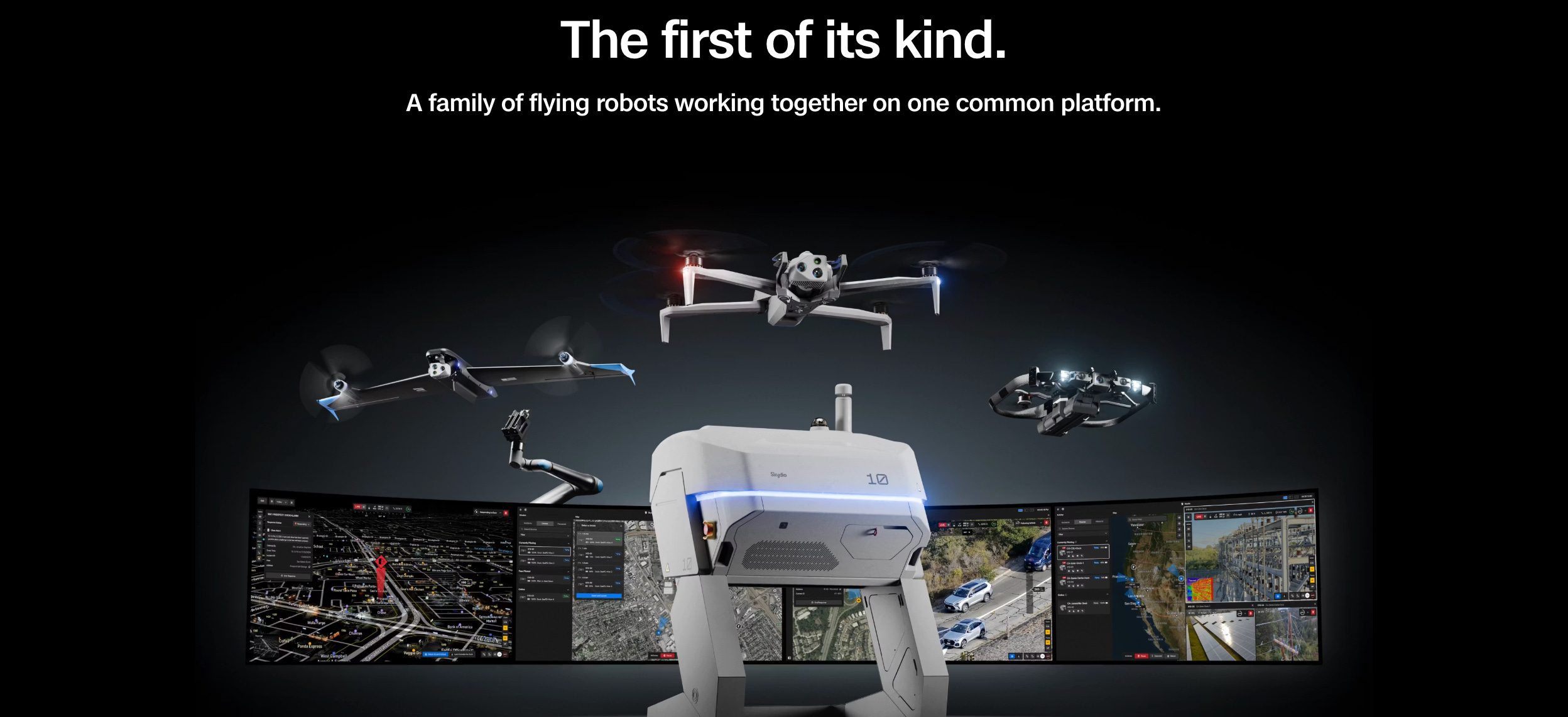
The analogy he reaches for is self-driving: “Google could demo a self-driving Waymo like 15 years ago, but it’s taken them 15 years to make that reliable.” Skydio’s nines, already “built on hundreds of thousands, millions of flights,” now power what Bry calls a “family of flying robots,” including an indoor drone and a fixed-wing aircraft. Twelve years of narrow focus produced a platform.

Public Safety: Business That Also Saves Lives
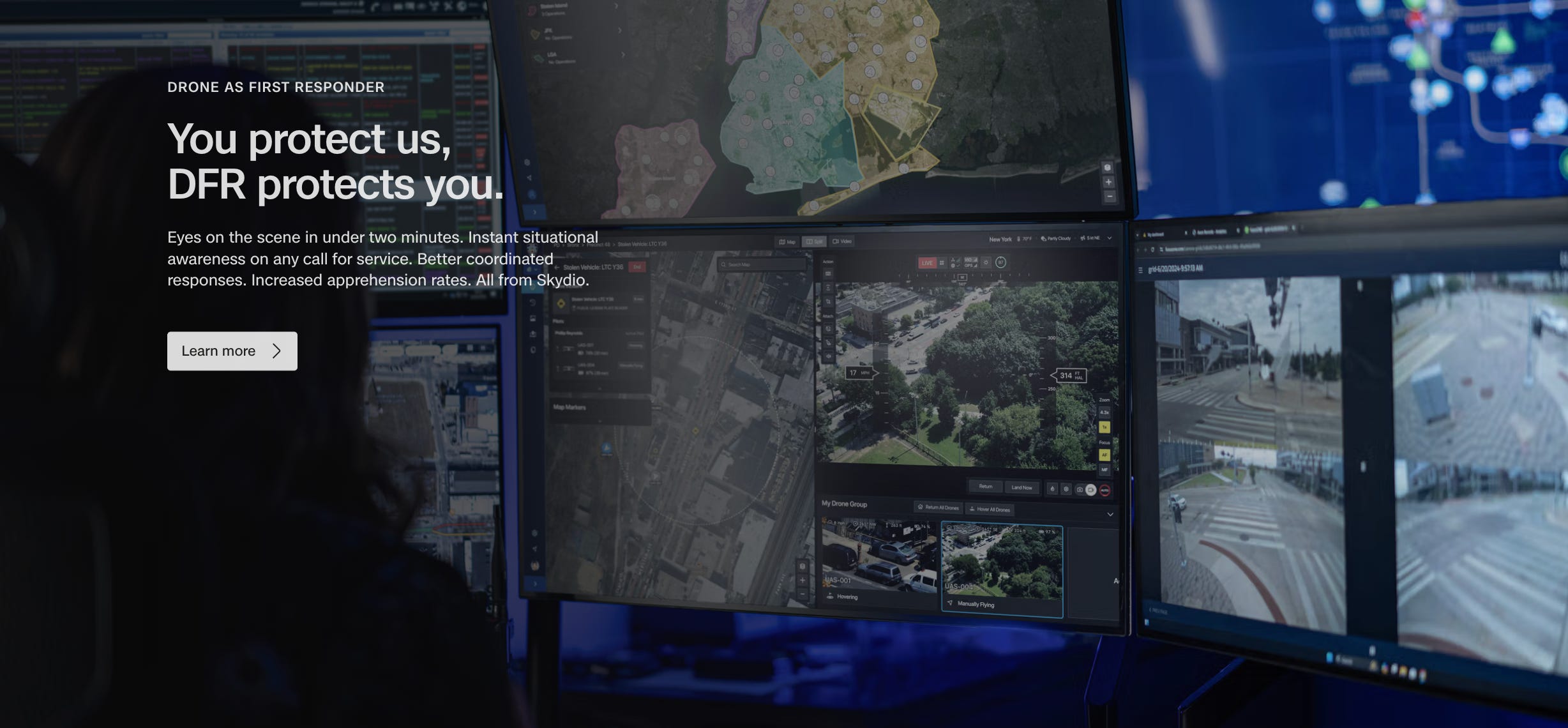
Skydio drones now sit in 1,200+ public safety agencies in 42 states, a customer count that doubled year over year. Internal analysis of 6,000 flights across 61 agencies found the drone was first on scene 70% of the time, 23% of calls were cleared without patrol, and the drone provided helpful intelligence 92% of the time.

Bry’s prediction: “I think a default expectation in five years is if there’s an emergency, you call 9-1-1, a drone shows up in a few seconds and that’s gonna be everywhere in the US, hopefully everywhere in the world. And that’s gonna change the way policing works.”
He frames these as transparency tools, not surveillance: “these things are essentially flying body cameras.” The evidence spans the stakes spectrum.
San Francisco has seen a 42% reduction in auto theft since launching its drone program. A rooftop call in SF reported a rifle; the drone arrived first and saw a broomstick. Less than 1% penetration against total 9-1-1 volume gives you a sense of the runway.

The China Problem, & Why the Supply Chain Became a Feature
“We have the great joy and we’ve had it for the last 12 years of being the US underdog against the best of Chinese industry, really state sponsored Chinese industry,” Bry said. Rather than trying to out-spec DJI on hardware, Skydio chose autonomy and end-to-end solutions as the competitive axis.
Then the geopolitics turned operational. “A year and a half ago, we had the great honor of being sanctioned by the Chinese government,” Bry said. “They announced the sanctions and then they showed up at the suppliers that we still had in China, shut them down, stopped them from doing business with us, really tried to, to kill us.” The result: “We now have by far, the most secure drone supply chain in the world, independent from China, that’s operating at increasing levels of scale.” In a market where critical-industry customers are writing Chinese drones out of procurement, being the non-Chinese manufacturer at scale isn’t a marketing line. It’s a category position.

Building “Shenzhen” in the East Bay
Reindustrialization is slower than the rhetoric suggests. “It’s not as fast as people might like,” Bry said. “But it’s not an impossibility. It really just is a matter of like getting the flywheel spinning.” His mental model is ecosystem density. “There’s some alternate universe where this looks like what Shenzhen looks like, and I don’t think there’s anything fundamentally that should stop us from getting there.”
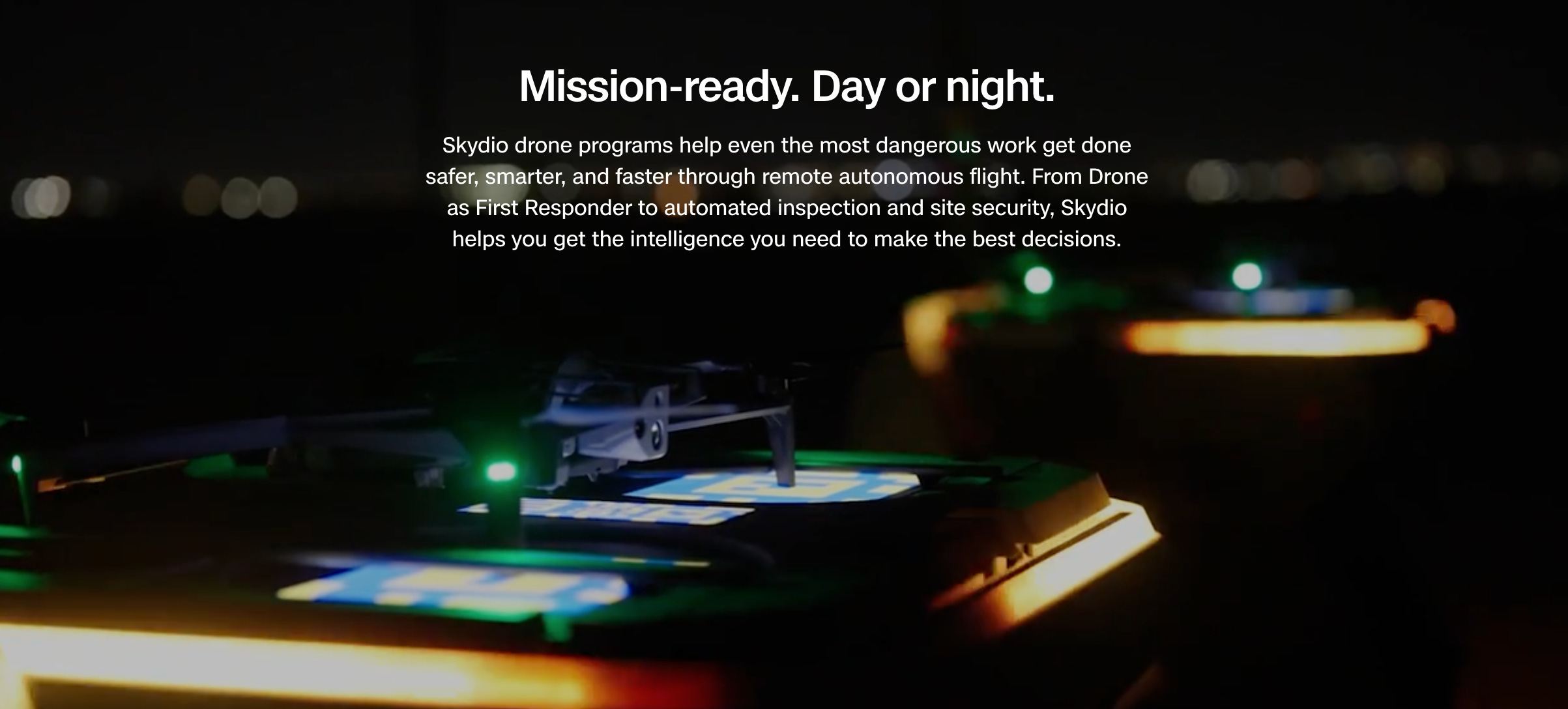
Skydio is positioning as an anchor tenant: an 80,000 square foot facility in Hayward, roughly 900 employees, and a US manufacturing bet placed in 2014, long before “reshoring” became a policy talking point.
The talent math is where it gets interesting. “The talent level’s great at every skill set you need,” Bry said. “There’s not as much of it as we might like, but the talent level is incredibly high.” A meaningful share comes from one familiar source:
“Tesla has generated some great alumni & we have a lot of fantastic folks that have come from forged in the fire of production hell on Model 3.” Seen throughout our interviews Tesla has served, time and again, as the involuntary training program for a generation of American hardware operators.
The hiring filter is unconventional by design. “We just focus on people that we think have enormous potential, whether or not they have sort of like the proven, exact right experience.”
What Bry screens for: “that sort of spark of capability... the combination of the fire and passion to do hard things and then the horsepower to get it done.” The closing pitch is structural: “There’s no other company in the world really, that has the combination of like true cutting edge sci-fi technology... in a real business that’s really working with customers that depend on this in like lifesaving critical missions.”
Flying Agentic AI, & Why Hardware Makes It Harder
The product roadmap, in Bry’s framing, points toward “our drones being like flying agentic AI, just like you have an agent that you interact with on your computer or in the cloud. This thing is an agent that can move & do work for you in the physical world.”
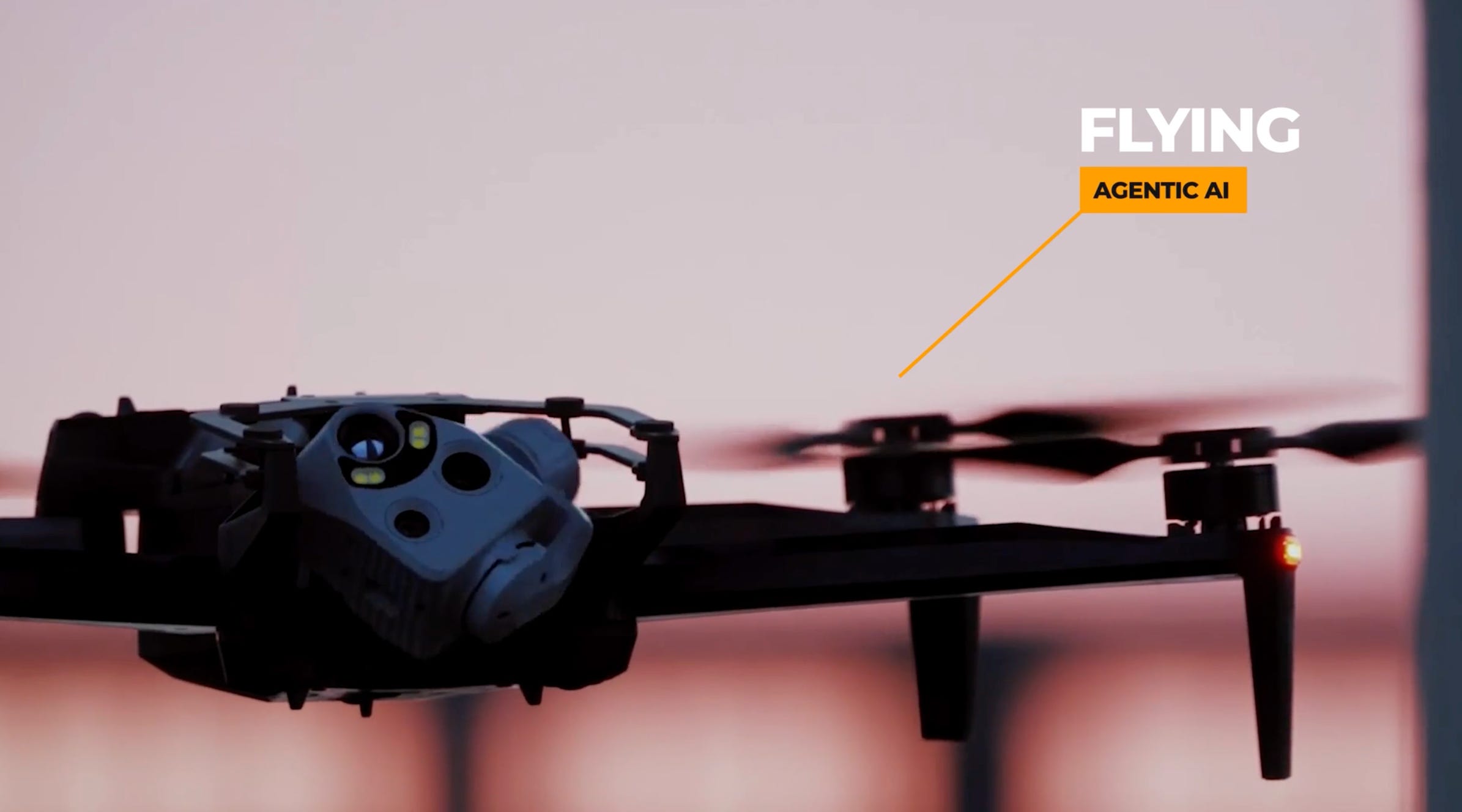
What makes this more than narrative is the underlying infrastructure, “a very rich simulation environment” that lets the team “test and iterate with the real physics that you care about in the loop. So you can do a lot of like the speed of software with hardware involved.” That last phrase is the thesis in one line.
Bry is unsparing about where the sector is heading. Asked for his hottest take:
“I think that we are gonna see a lot of pain and carnage on the investments and expectations that are being set in this sort of like most recent round of robotics companies. ‘Cause it’s just, the physical world does not work the way the software world works... The learning cycles are slower, they’re more expensive.”
A CEO who has already survived one drone trough of disillusionment naming the next one out loud is worth noting.

How Skydio Operates
Bry runs against cascading OKR culture. “I am not big on these like sort of like super granular cascading OKRs... organizing really small teams around them. You want the team to be as small as it possibly can be. And in the AI you can do pretty amazing things with pretty small teams.” The weekly executive meeting opens with customer success, “good, bad, and ugly.”
His advice to founders building into the same bubbly moment is pointed: “get really anchored in the customer problem that you’re trying to solve and building world class technology to solve it.” Easy to say. Much harder when the gravitational pull of fundraising milestones and vanity metrics is core to silicon valley culture.
What to Watch
Skydio’s Series F is a rare artifact in the current cycle: a priced round sized to operating reality, not market appetite. The thesis Bry laid out, autonomy as the compounding moat, public safety as the growth vector, US manufacturing as a structural advantage, and flying agentic AI as the frontier, is as coherent as any in robotics this year.
The risks are the ones Bry named himself: the physical world moves slower than software, reliability is earned one nine at a time, and a lot of peers in this cycle will learn that the hard way.
Near-term milestones are concrete.
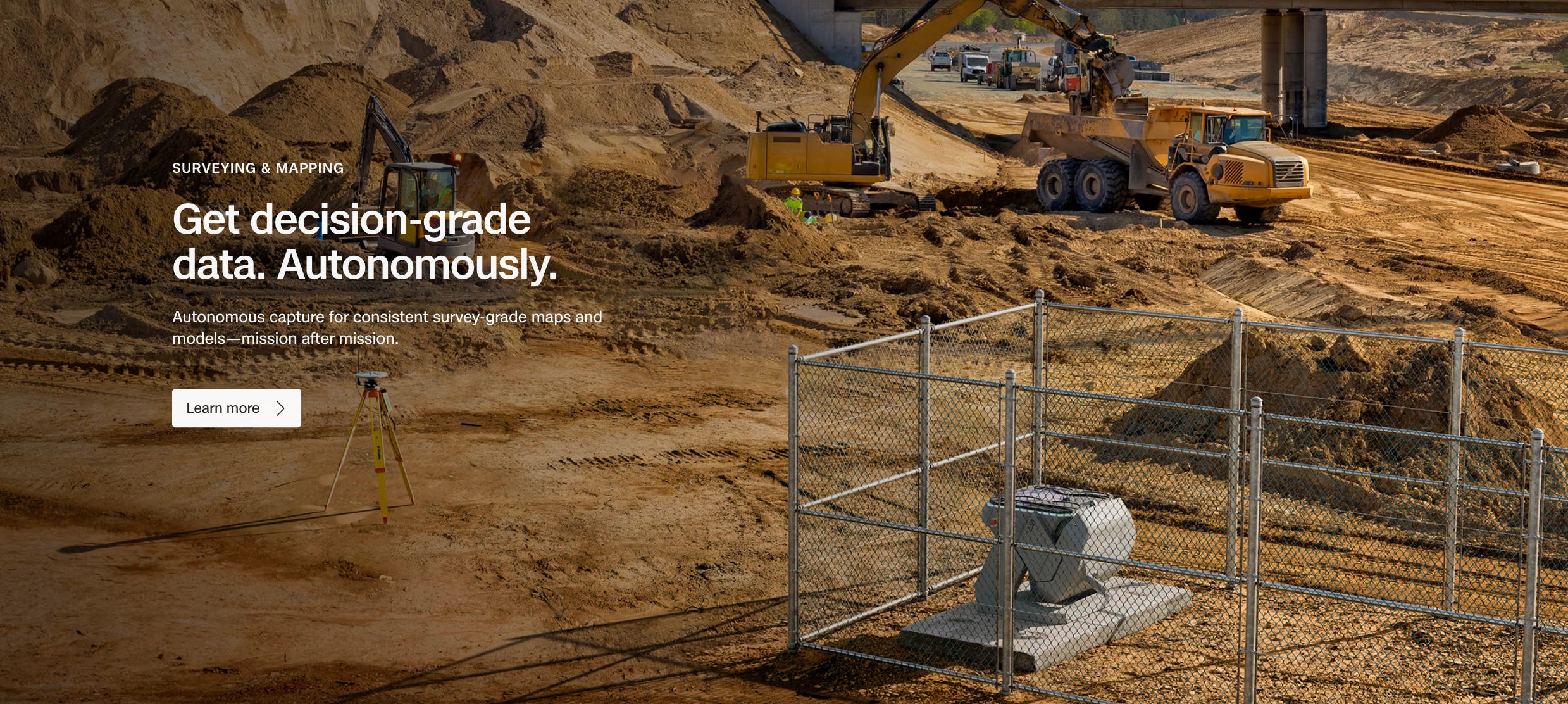
Triple production. Scale DFR 3x. Ship the indoor drone and fixed-wing. Extend the end-to-end playbook from law enforcement into site security, utility inspection, and battlefield ISR. If Bry is right that “the signal trumps the noise,” this raise and how it was constructed is one of the clearer signals the sector has produced in a while.
→ Listen on X, Spotify, YouTube, Apple
The material presented on Molly O’Shea’s website are my opinions only and are provided for informational purposes and should not be construed as investment advice. It is not a recommendation of, or an offer to sell or solicitation of an offer to buy, any particular security, strategy, or investment product. Any analysis or discussion of investments, sectors or the market generally are based on current information, including from public sources, that I consider reliable, but I do not represent that any research or the information provided is accurate or complete, and it should not be relied on as such. My views and opinions expressed in any website content are current at the time of publication and are subject to change. Past performance is not indicative of future results.
Paid Endorsement. Brokerage services by Open to the Public Investing Inc, member FINRA & SIPC. Advisory services by Public Advisors LLC, SEC-registered adviser. Crypto trading provided by Zero Hash LLC, licensed by the NYSDFS. Generated Assets is an interactive analysis tool by Public Advisors. Output is for informational purposes only and is not an investment recommendation or advice. See disclosures at public.com/disclosures/ga. Matched funds must remain in your account for at least 5 years. Match rate and other terms are subject to change at any time.