

The Next Move for New Media
Claire Zau is a pre-seed & seed investor at Lightspeed + co-host of Lightwork, Lightspeed’s new weekly AI podcast with CMO Josh Machiz. She also runs Zauey Talks, where she reaches 350K+ people and 10M+ monthly impressions explaining AI and startups to an audience that mostly does not work in tech.
→ Listen on X, Spotify, YouTube, Apple
How’d we get here?
Tech is racing to own direct distribution & auramax to save their lives.
a16z acquired Erik Torenberg’s Turpentine in 2025, OpenAI acquired TBPN in 2026, and Jack Altman’s Uncapped joined Benchmark. Lightspeed’s move was to bring in one of the strongest creators in the space and give her a dual mandate: keep building for the mainstream while investing at the earliest stages.
I sat down with Claire to talk about that split role, why Lightspeed bet on it, and what Lightwork will cover. We get into the gap between tech X/Twitter optimism and mainstream skepticism, the AI bubble question, the jobs narrative, and which AI leaders tell the story best.
Claire also breaks down the Lightspeed portfolio she’s digging into, from agent infrastructure to an AI-native audit firm.
About Lightspeed
Lightspeed is a global, multi-stage, venture capital firm managing over $40B in assets. Since its founding in 2000, Lightspeed has been the first investor and an early backer of some of the most innovative companies in the world including Abridge, Anthropic, Anduril, Castelion, Databricks, Glean, Mistral, Navan, Neko Health, Netskope, Thinking Machines, Reflection AI, Rubrik, Snap, Skild AI, Vinted, Wiz, & more.
𝐓𝐈𝐌𝐄𝐒𝐓𝐀𝐌𝐏𝐒
(00:00) Claire Zau, Partner at Lightspeed Venture Partners
(00:54) Inside Lightspeed's new podcast studio
(02:37) How Josh Found Claire on TikTok
(04:34) Why venture expertise is missing from the mainstream
(08:23) The content that actually works
(10:19) What TikTok comments taught her about AI perception
(13:01) Keeping editorial independence at a mega fund
(14:42) The split role nobody thought was possible
(17:20) The show built to bring mainstream audiences into venture
(20:43) The AI bubble question everyone's asking
(22:00) What Claire is most excited about covering
(23:39) Why Gen Z hating AI makes no sense
(28:50) How big tech companies can fix their image problem
(32:16) Who tells the AI story best
(34:14) The Lightspeed portfolio companies to watch
(38:40) Two creators compare notes on building in media
(43:31) Getting recognized in the wild
(45:43) Expanding beyond ed tech into AI frontier
Brought to you by:
Brex—The intelligent finance platform: cards, expenses, travel, bill pay, banking—wrapped into a high-performance stack. Built for scale. Trusted by teams that move fast. visit → brex.com/sourcery

Turing—Turing partners with frontier AI labs to improve model capabilities in coding, reasoning, tool use, & multimodality, as well as with Fortune 500 enterprises to build & deploy end-to-end agentic AI systems in mission-critical workflows Visit: turing.com/sourcery
VCX—VCX is the public ticker for private tech, allowing investors of all sizes to invest in venture capital. View The Portfolio at GetVCX.com
Deel—Deel is the global people platform that helps startups hire, manage, pay, and equip anyone, anywhere. Trusted by more than 35,000 fast-growing companies, Deel is the people platform that just works, so teams can scale without the chaos. Visit: deel.com/sourcery
Public-–Investing platform Public just launched Generated Assets, which lets you turn any idea into an investable index with AI. With Generated Assets, you can build, backtest, refine, and invest in any thesis with AI. Gone are the days of one-size-fits-all ETFs. Try it today: public.com/sourcery
Merge—The leading provider of customer-facing integrations and agentic tools for frontier LLMs, Fortune 500 organizations, and B2B SaaS companies. Visit: https://merge.dev
Lightspeed Hired a Creator
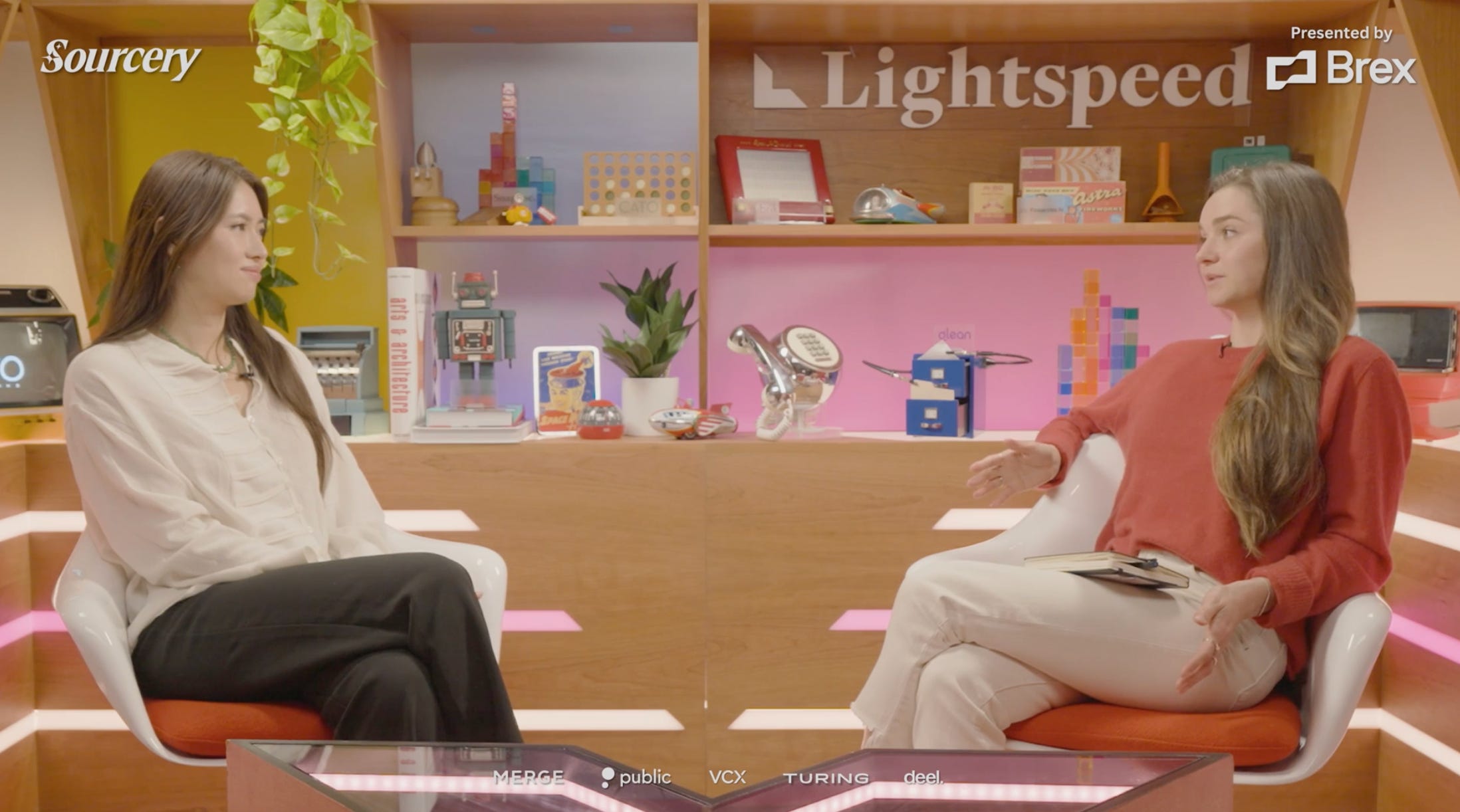
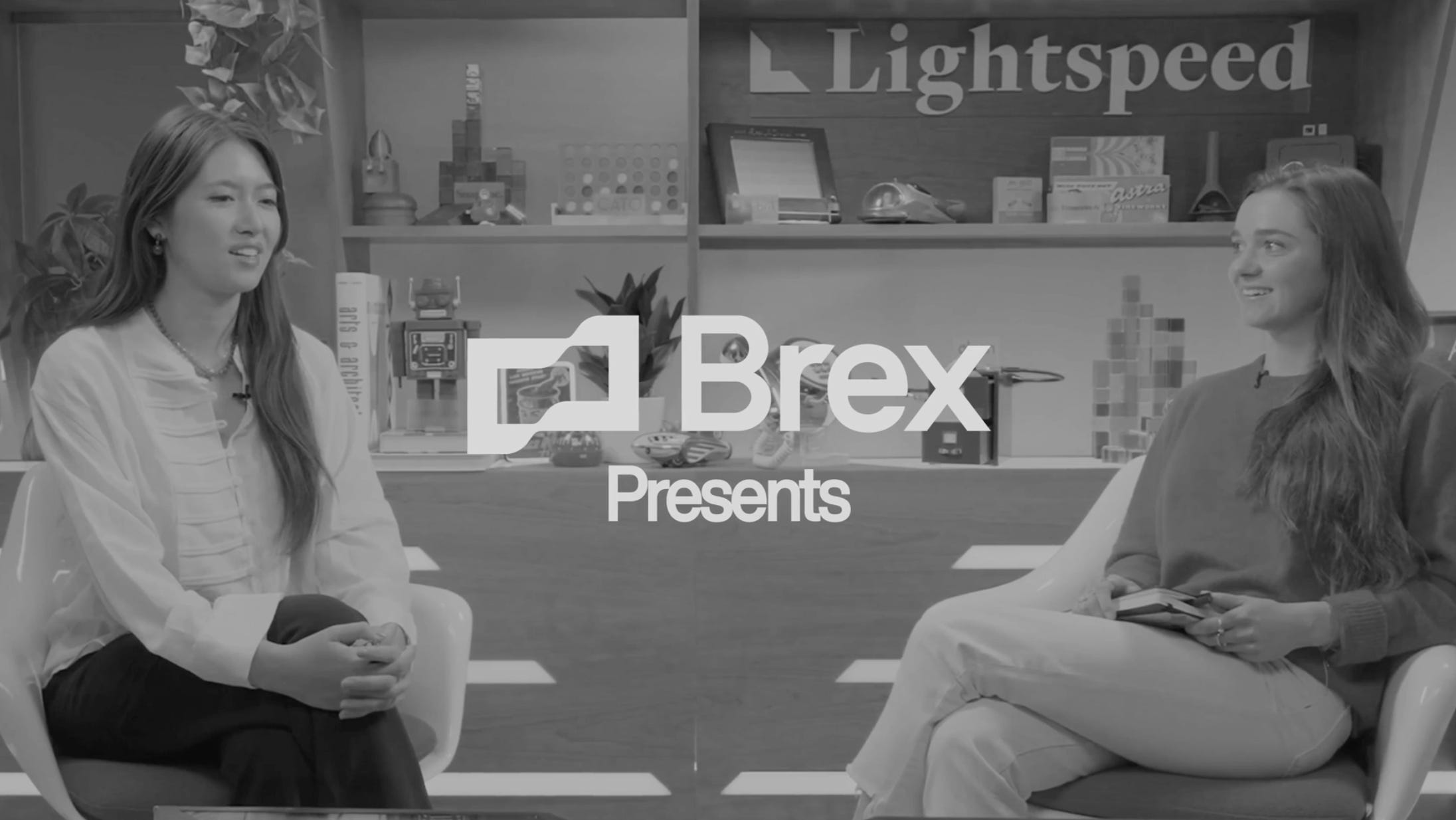
Claire runs the famous Zauey Talks, where she reaches 350K+ people & does 10M+ monthly impressions explaining AI and startups to an audience that mostly does not work in tech. We taped in the new Lightwork studio, where I was one of the first external guests.
→ Listen on X, Spotify, YouTube, Apple
When a Creator Becomes the Strategy
The framing I kept coming back to in our conversation is that tech is now racing to own direct distribution and yes, still aura, and venture is definitely no exception. a16z acquired Erik Torenberg’s Turpentine podcast network in 2025 and made him a general partner running media and network initiatives. OpenAI acquired TBPN in 2026 and placed it under its strategy organization. Jack Altman + his podcast Uncapped joined Benchmark.
The pattern is consistent: the firms and companies with the most capital are treating attention as infrastructure, not marketing.
Lightspeed’s version of that bet is different in one important way. Rather than acquire a show outright, the firm brought in a creator and gave her a split mandate across the investing and media teams. Josh Machiz, Lightspeed’s CMO, found Claire through TikTok, one of her earliest platforms. As she put it, the idea did not require much convincing internally. “The role of an investor is very narrative-oriented. You are often selling a startup, you are selling investors in your fund, you’re selling partners on why they should pick you.”
What makes the structure worth studying is the audience it targets. a16z has long described itself as a media company that monetizes through investments, and its newer New Media team and fellowship are built to deploy creators to portfolio companies. Lightspeed is aiming somewhere adjacent but distinct.. the mainstream. Claire’s thesis is that the white space is not more VCs talking to VCs, but the gap between Silicon Valley and everyone else, and that closing it is both a content opportunity and a sourcing one.

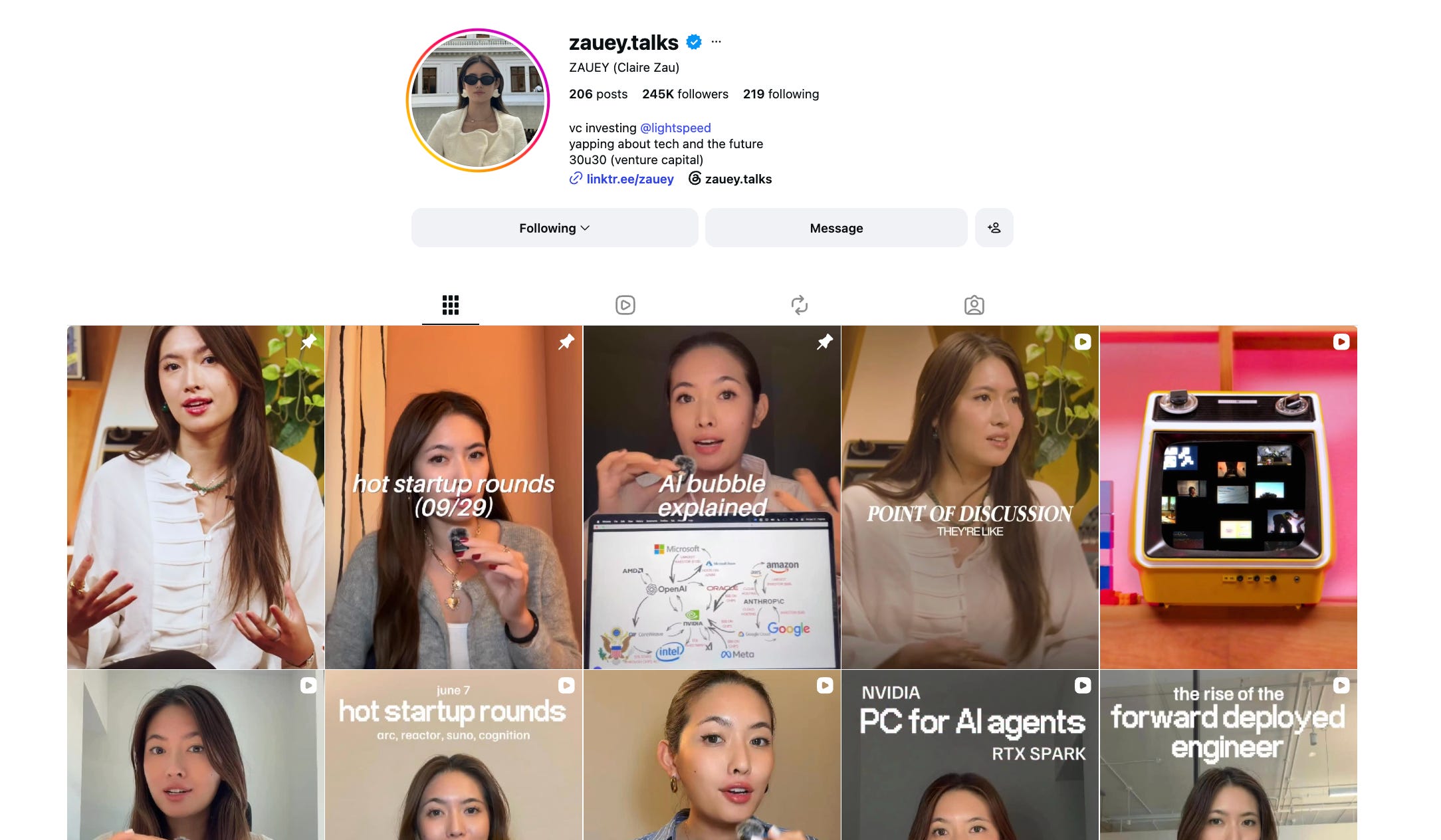
The Numbers Behind Zauey Talks
The growth curve is the first thing that stood out to me. Claire started posting on TikTok in March 2025 and on Instagram in June 2025. In roughly a year she has built to 350K+ followers across platforms and 10M+ monthly impressions, with 245K on Instagram alone. When I told her she had dominated the space, she pushed back on the scale of it, “part of me sometimes feels like it’s just this internet side quest that I have, and it’s not real.”
The output discipline is what built it. Claire committed to posting once a day, with a modest initial goal. “If I can just build this to 10,000, 20,000 people who care deeply about tech and innovation, I’ll be happy.” Her best-performing series, “Hot Startup Rounds,” surfaces two to three notable fundraises a week, providing insider insight to the outside world in a digestible way.
“A lot of people actually don’t feel like they have visibility into startup fundraises & where money is going.”
This is not her first audience, which I think explains the rapid ascent. Before Lightspeed, Claire spent 6 years investing at GSV Ventures & built a Substack to roughly 15,000 readers in parallel. Earlier than that, she ran a Tumblr following of around 20,000 as a middle schooler. The through line is a decade-plus of building community in digital spaces, then pointing that instinct at venture.
For context on Lightspeed’s own media reach, the firm’s Investment Memo podcast has over 12M views on YouTube, and its Cyber60 podcast wrapped a first season with over 400K views.

Two Universes
The most useful concept Claire gave me was the gap between two audiences consuming the same news.
Tech X/Twitter: AI is covered with techno-optimism.
Instagram and TikTok: the same developments read as skepticism, distrust of big tech, & anger about the future of jobs.
“It just felt like I was navigating two different universes.” Her edge is sitting between them and carrying context across.
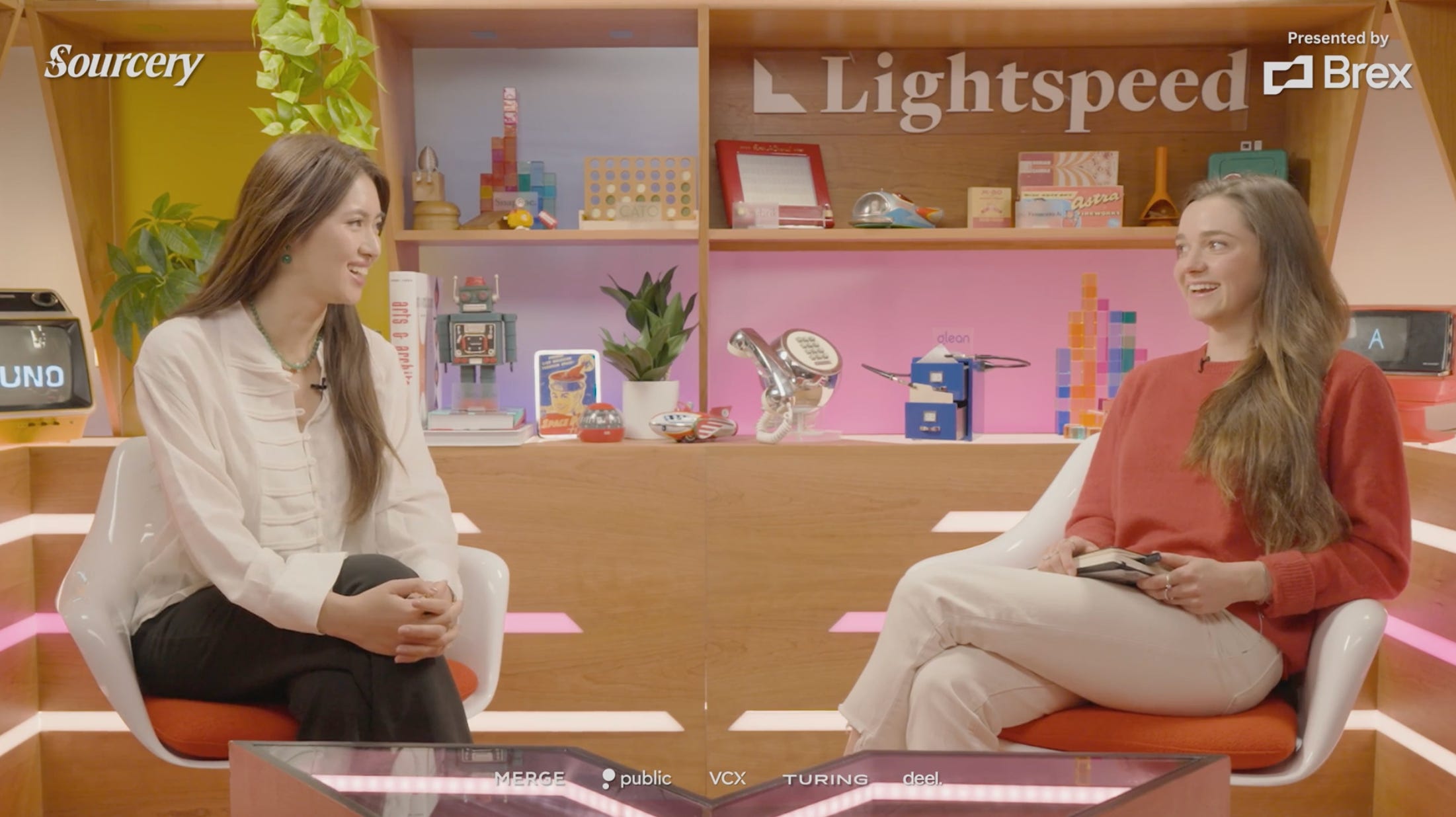
She is candid that being inside venture shapes the optimism. “I think you have to be pro-tech to be in venture, to believe in the promise of the technology leading to a collective net benefit for humanity.” The problem she identified is that this optimism does not travel. The mainstream sees the most extreme framings, the doom headlines, and the engagement-bait prompts, while the substantive work goes untranslated. As she put it, “the mainstream’s conception of tech and AI is limited to the very scary headlines, and less so the optimistic, exciting step changes that we’re making.”
I think this diagnosis is sharper than most coverage of the AI narrative problem, because it locates the issue in distribution rather than in the technology or the public. Claire’s point is that the industry is good at one audience and weak at the other. “Tech does a good job of marketing to each other, but they have a tough time spreading that narrative outside.” That is a solvable, educational / marketing gap, and it is the one her platform is built to close.
The Expectations Gap
We spent real time on the AI bubble question, because it is the thing her mainstream audience asks about most. Claire’s framing is that the industry has an expectations problem of its own making. Dramatic claims about white collar work disappearing or AGI arriving by 2027 create a credibility cost when each release still hallucinates.
“There’s almost like a boy who cried wolf dynamics coming out of the AI world sometimes.”
She walked through the mechanism clearly. Inside the field, every release feels like a step change, and the progress is legible. Outside it, the public hears that a system is about to become superintelligent, then opens a new model and finds it still makes obvious errors. The result is whiplash and distrust.
Her comparison point is crypto, which many people watched rise and fall without ever seeing it reach their lives, which primes them to doubt the next big claim. That skepticism is rational given what the mainstream has been shown.
Her prescription is less hype, more tangible proof. Benchmarks mean nothing to a person on the street, so the work is to externalize progress in concrete terms. The frame she returned to is an old one in technology forecasting and it held up well in our conversation. “It’s very easy to overestimate the short-term impact of technologies, and very difficult to actually remember the potential long term.” For an investor whose job is partly managing public perception of a category, that is a disciplined position.

The Jobs Question
The labor conversation is where Claire was most direct, and where she and I agreed most. We talked about the Stanford research on Gen Z skepticism toward AI, which I find hard to square with the fact that this cohort does not know a world without it.
Claire’s view is that the displacement story has tunnel vision. “Maybe for certain roles like coding, contact center work, where you do see one-to-one replacements, but most times you see that labor being abstracted to a higher, more useful level.”
Her historical examples made the point land. She brought up human alarm clocks, people whose job was to wake others before the alarm clock existed, and the women who manually plugged wires to process compute before the word computer meant a machine. Those roles evolved into more useful work. She applied the same logic to her own coverage of cloud finance agents and the fear around Wall Street analysts. “When analysts were staying up till 2:00 AM moving logos around and manually typing notes, was that a fulfilling task for them?” The more interesting work, she argued, is judgment and storytelling, which is harder to automate.
The deeper frustration she voiced is about how the category is understood at all. AI is not new to most people’s lives, even when they think it is. “Tech is often misinterpreted. AI itself is just this encompassing thing that people don’t recognize the ways that it’s used already,” from Siri to facial recognition. Her work tries to widen that definition so the public sees the full range, from personalized cancer vaccines to animatronics, rather than reducing AI to a chatbot or a companion app.

Who Tells the Story Best
When I asked which CEOs tell the AI story best, Claire’s answer was about translation, not charisma. She pointed to Demis Hassabis and Google DeepMind for making the technology tangible. “Demis does a pretty good job of actually translating the technology into more quantifiable and tangible ways for your everyday person.” Her examples were AlphaFold, AlphaGo, and AlphaZero work, where the step change is visible rather than abstract.
This is timely. Sebastian Mallaby’s biography of Hassabis, The Infinity Machine, came out in March 2026 and was an instant New York Times bestseller, built on more than thirty hours of conversation with Hassabis. The book’s reception underscores Claire’s point that the most durable AI narratives are the ones tied to concrete scientific results, like protein folding, rather than to leaderboard scores that mean little outside the field.
Her read of the mainstream comments is that the top concern is the industry moving fast and breaking things, which makes safety-forward communication a trust mechanism that needs to be creatively articulated to not induce more irrational fear.

Media as Top of Funnel
The part of our conversation that matters most for venture is how Claire frames the economics of her role. She does not think of media and investing as two jobs. She thinks of media as the top of the funnel. “Really my role is building that massive wide net, this top of funnel into the Lightspeed community,” reaching college students thinking about AI, Stanford PhDs who have never touched the commercial side, and operators who have not yet founded anything. The job after that is converting that attention into pre-seed and seed deal flow.
A precondition for taking the role was editorial independence, which I think is the most important term she negotiated. Zauey Talks stays hers. “You should always have an opportunity to hold your views independently and have editorial control.” She put it in a lineage that any investor will recognize, from Fred Wilson’s blog at USV to Brad Gerstner and Bill Gurley on BG2, independent outlets that feed a firm’s thinking rather than getting absorbed into it. That structure is what keeps the content credible to the audience it is trying to reach.

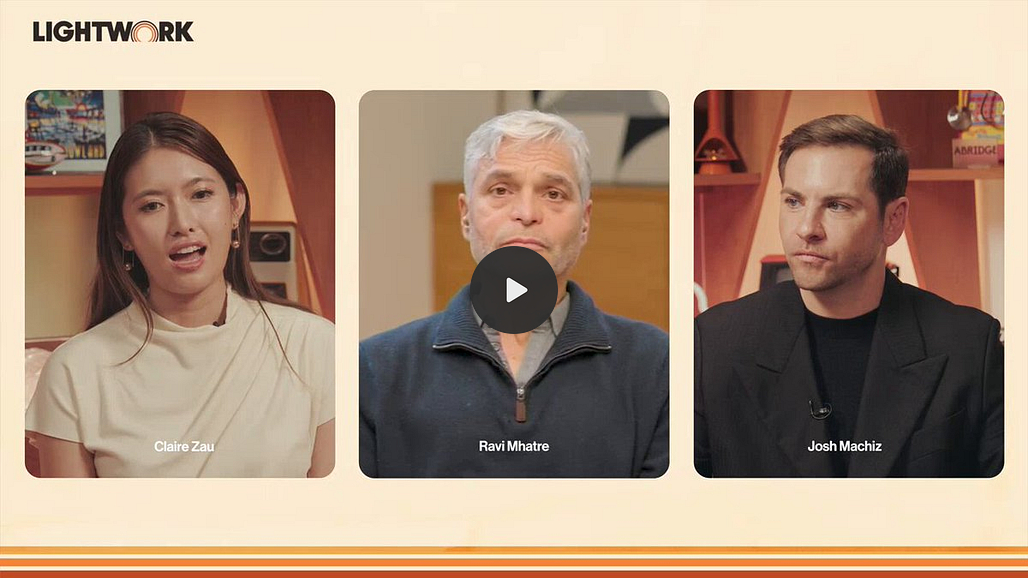

Lightwork is the formal expression of all of this. It is a weekly show hosted by Claire and Josh Machiz, roughly 45 minutes, taped in a newly built out gorgeously nostalgic NYC studio, airing Mondays. It will cover Lightspeed companies but not only those, and Claire is already digging into the portfolio, from agent infrastructure names like Sycamore Labs and Raindrop to Modus, which built an AI-native audit service by buying an actual audit firm, to Anthropic, where Lightspeed has been a key backer.
The bet underneath it is simple and, I think, correct.. in a market where capital is a commodity, valuable distribution & earned trust are the scarce assets.
Lightspeed is one of a couple serious forward-leaning firms actually investing time, energy, & high, HIGH, quality talent into new media. Something you can’t patch together, or remotely do half-ass. That’s the hardwork.
→ Listen on X, Spotify, YouTube, Apple
The material presented on Molly O’Shea’s website are my opinions only and are provided for informational purposes and should not be construed as investment advice. It is not a recommendation of, or an offer to sell or solicitation of an offer to buy, any particular security, strategy, or investment product. Any analysis or discussion of investments, sectors or the market generally are based on current information, including from public sources, that I consider reliable, but I do not represent that any research or the information provided is accurate or complete, and it should not be relied on as such. My views and opinions expressed in any website content are current at the time of publication and are subject to change. Past performance is not indicative of future results.
Paid Endorsement. Brokerage services by Open to the Public Investing Inc, member FINRA & SIPC. Advisory services by Public Advisors LLC, SEC-registered adviser. Crypto trading provided by Zero Hash LLC, licensed by the NYSDFS. Generated Assets is an interactive analysis tool by Public Advisors. Output is for informational purposes only and is not an investment recommendation or advice. See disclosures at public.com/disclosures/ga. Matched funds must remain in your account for at least 5 years. Match rate and other terms are subject to change at any time.
Love it. Two power Boss lady’s.