


The Great Wealth Transfer
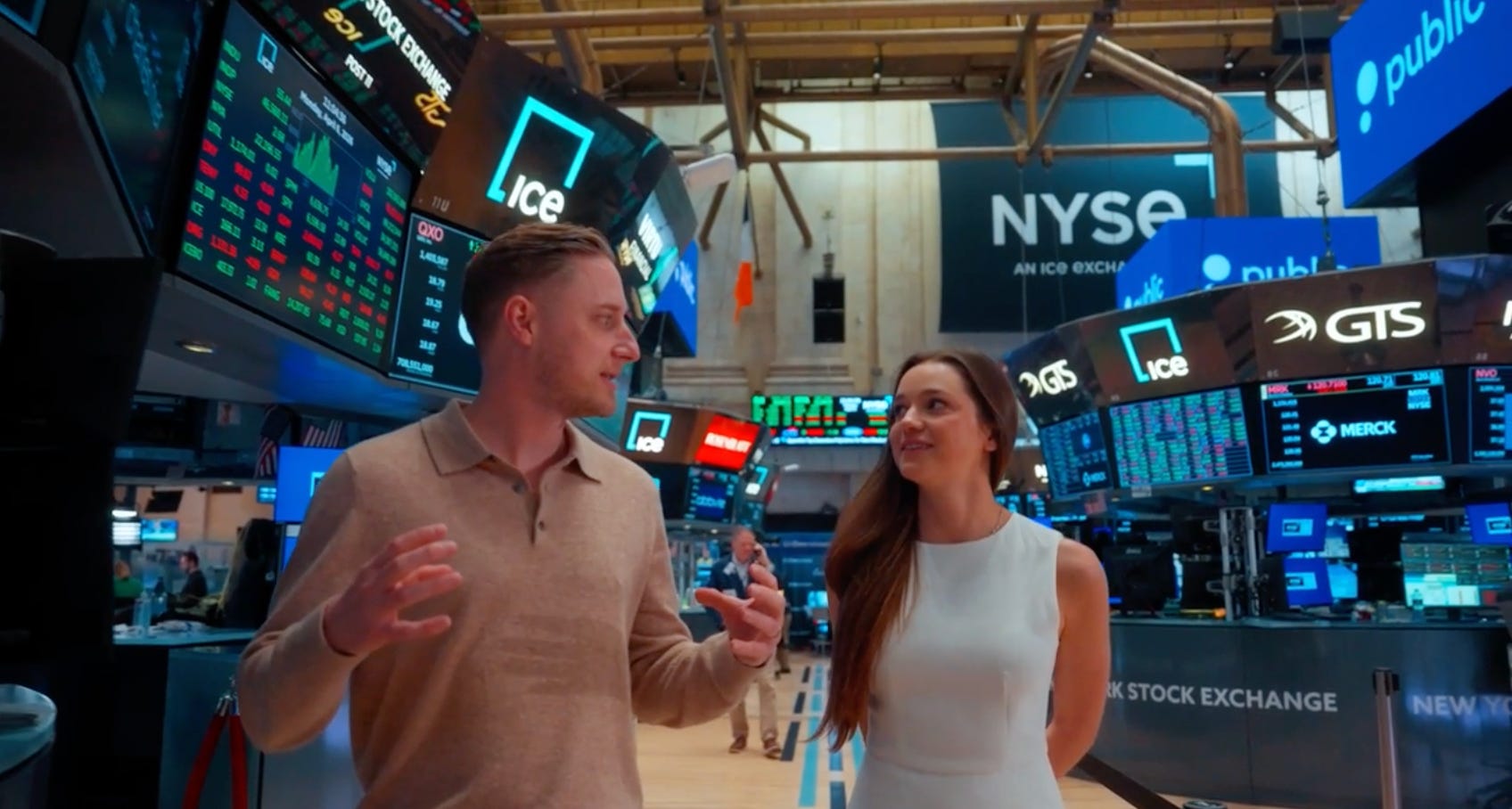
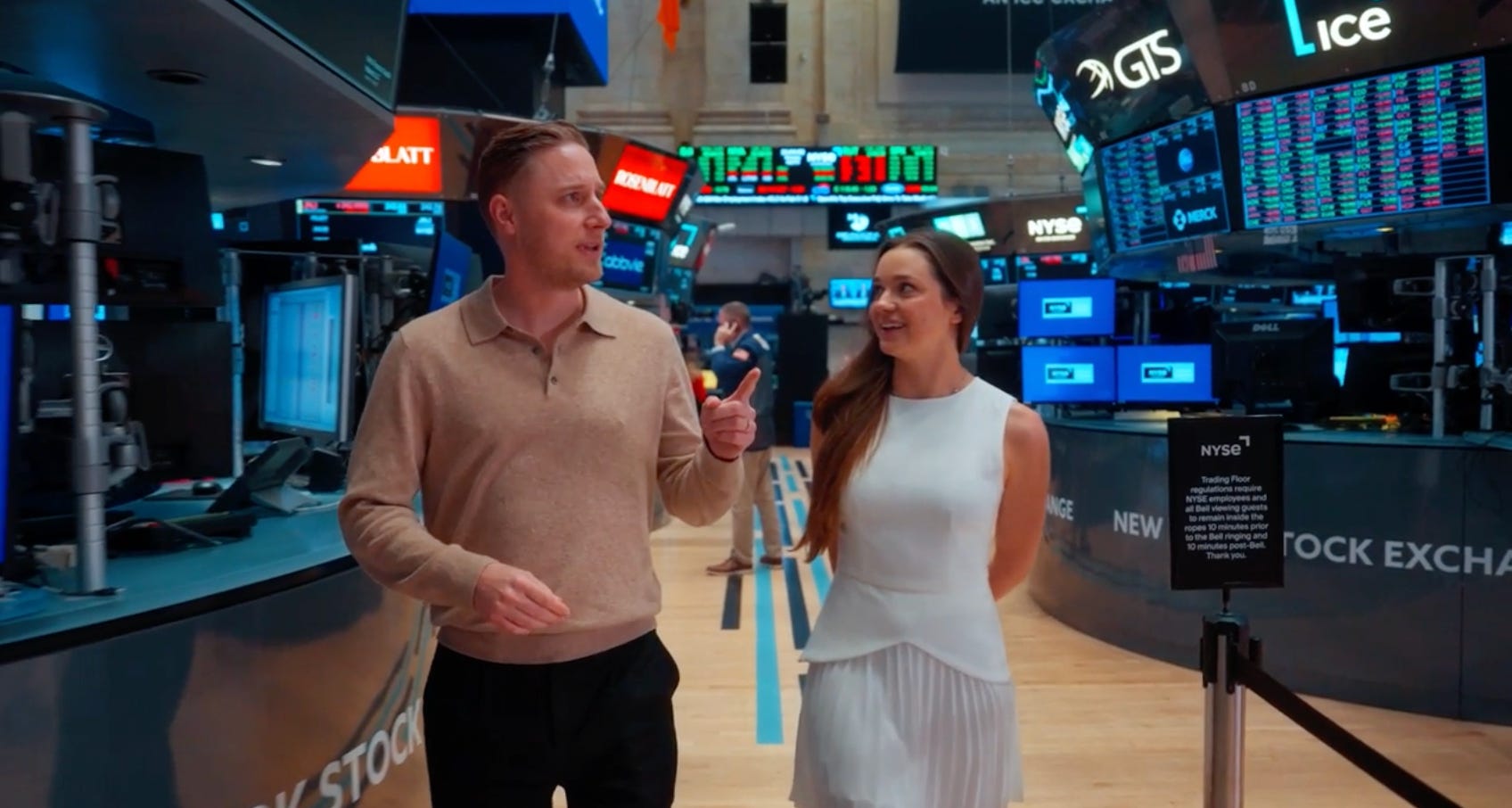
Leif Abraham, Co-CEO of Public, joins Sourcery at the New York Stock Exchange for one of the more fun discussions on finance & how Public is building the next-gen investing platform “for those who take it seriously.” Public represents the first modern alternative to Schwab, Fidelity, and Vanguard — platforms built on decades-old infrastructure that haven’t kept pace with today’s investors or technology.
→ Listen on X, Spotify, YouTube, Apple
The results speak for themselves: millions of users, billions in assets under management, billions in trading volume, and revenue doubling annually as they continue to capture market share.
Public’s differentiators include:
AI agents that automate complex investment strategies
AI-powered custom indices with “Generated Assets”
Comprehensive multi-asset trading across stocks, ETFs, crypto, options, treasuries, bonds
Sophisticated investors with real assets to compound

Leif and I explore how their AI-generated defense index hit 350% returns in one month (big surprise.. lol), the future of financial advisors in an AI world, and why their co-CEO structure works better than solo leadership. Leif explains why they focus on the top 25% instead of chasing mass market speculation, plus his thoughts on AI, wealth inequality, and what it means for society.
For investors seeking a serious platform that combines traditional financial services with cutting-edge technology, this conversation offers valuable insights into where the industry is already aimaxxxxing & what comes next.

𝐓𝐈𝐌𝐄𝐒𝐓𝐀𝐌𝐏𝐒
(00:00) Leif Abraham, Co-Founder & Co-CEO at Public
(01:10) Competing with traditional brokers
(03:45) AI agents for investing
(05:22) Are Public’s videos AI or real?
(06:31) Why the co-CEO model works
(09:34) The evolution of Public
(15:06) Growth, scale, and market cycles
(17:59) Breaking down the product ecosystem
(20:45) Public's design philosophy
(22:59) Building portfolios with AI
(26:33) Ideal customers
(30:20) The decline of financial advisors
(33:00) What AI replaces in wealth management
(35:45) Risks and limits of AI agents
(37:32) The “financial super app” debate
(42:39) Prediction markets vs real investing
(45:04) Will everything become tradable?
(46:22) Tokenization: the hype vs. the reality
(50:37) The future of financial platforms
(55:56) VCX, closed-end funds & speculation risk
(59:09) Would Public go public?
(01:02:22) What’s next for Public
(01:04:08) The dark AI prediction
(01:06:52) Wealth taxes vs. UBI
Brought to you by:
Brex—The intelligent finance platform: cards, expenses, travel, bill pay, banking—wrapped into a high-performance stack. Built for scale. Trusted by teams that move fast. visit → brex.com/sourcery

Turing—Turing accelerates superintelligence by helping frontier AI labs improve model capabilities and enabling enterprises to deploy end-to-end AI systems inside mission-critical workflows. Visit: turing.com/sourcery
VCX—VCX is the public ticker for private tech, allowing investors of all sizes to invest in venture capital. View The Portfolio at GetVCX.com
Deel—Deel is the global people platform that helps startups hire, manage, pay, and equip anyone, anywhere. Trusted by more than 35,000 fast-growing companies, Deel is the people platform that just works, so teams can scale without the chaos. Visit: deel.com/sourcery
Public-–Investing platform Public just launched Generated Assets, which lets you turn any idea into an investable index with AI. With Generated Assets, you can build, backtest, refine, and invest in any thesis with AI. Gone are the days of one-size-fits-all ETFs. Try it today: public.com/sourcery
Merge—The leading provider of customer-facing integrations and agentic tools for frontier LLMs, Fortune 500 organizations, and B2B SaaS companies. Visit: https://merge.dev
Public’s AI-First Challenge to Wall Street’s Old Guard
How Leif Abraham Is Building the Next-Generation Brokerage That’s Stealing Accounts from Schwab and Fidelity
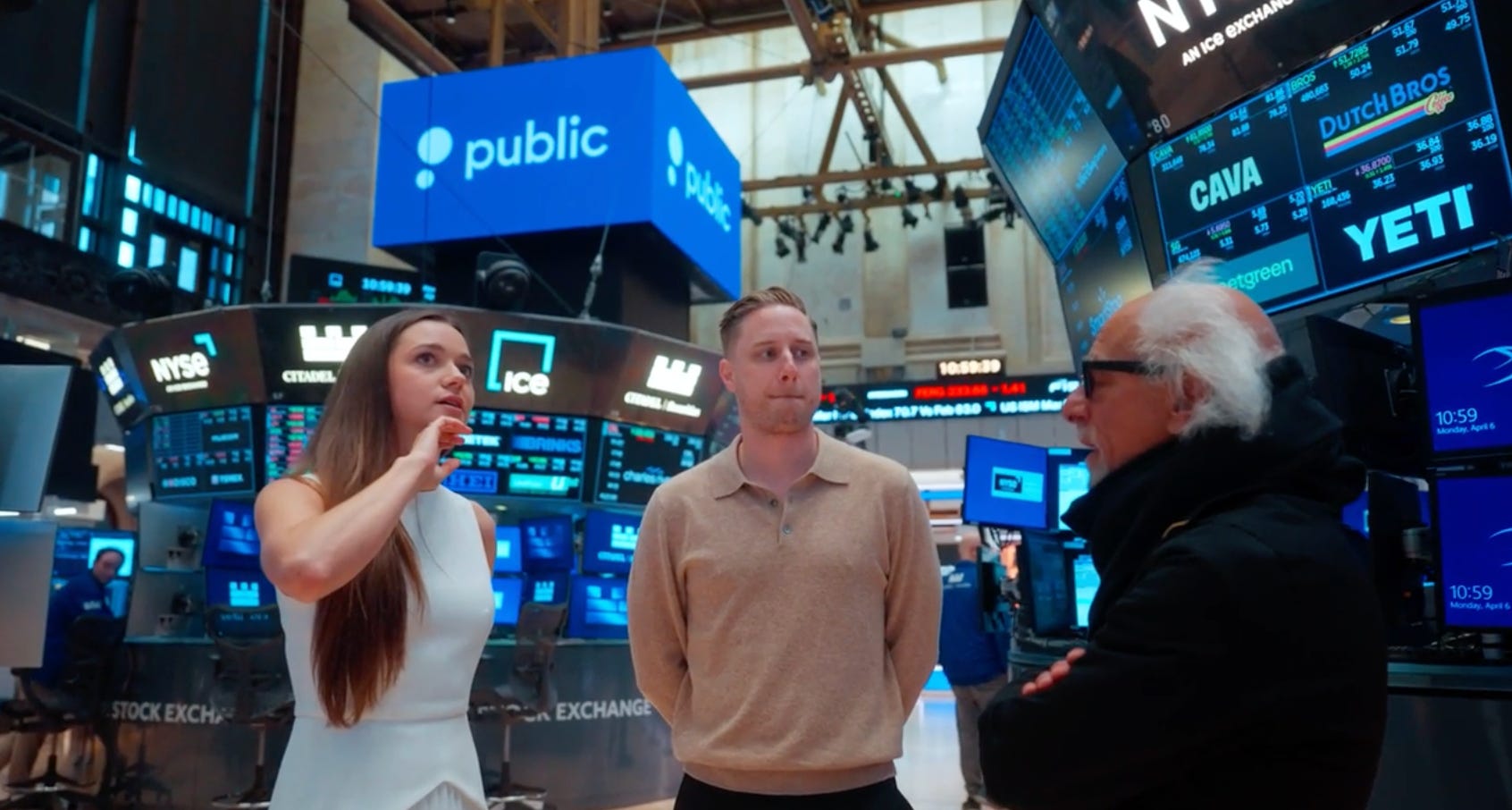
In a candid interview at the New York Stock Exchange, Public Co-CEO Leif Abraham revealed how his company is quietly disrupting the investment management industry.. not by chasing retail day traders, but by building a premium platform designed for serious investors in the AI era.
With $400 million raised across five funding rounds and a product suite spanning stocks, bonds, crypto, options, & innovative AI-powered tools, Public represents the first credible challenge to legacy giants like Charles Schwab, Fidelity, and Vanguard in decades. With millions of users, billions in assets under management, and revenue doubling annually.. they’re well on their way.
→ Listen on X, Spotify, YouTube, Apple
The Strategic Pivot: Targeting the Top 25%
Unlike most fintech startups that chase mass market adoption, Public made a deliberate strategic decision in 2022 to focus exclusively on affluent investors — what Abraham calls “the top quartile.”
“In the US, sadly, if you are in the sub 75%, you live paycheck to paycheck, credit card to credit card, you do not have money to compound in the markets. You just don’t,” Abraham explained. “And that’s also why you see the people who acquire those & build products for those [customers], and consumer FinTech, you have to monetize those through loan speculation or interchange or something.”
This “Level Up” strategy fundamentally changed Public’s approach. Rather than building a simplified app for mass adoption, they created a sophisticated platform for investors with real assets to compound. The competitive results are proving it out: Public’s ACAT (Automated Customer Account Transfer) data shows they’re winning established investors directly from legacy incumbents.
“Actually, if you look at where people ACAT accounts from, where they like consolidate brokerage accounts from, for us it’s Schwab, fidelity, E-Trade, Vanguard, and then Merrill, and Robinhood.”
This metric is particularly significant because ACAT transfers represent existing investors with established portfolios choosing to move their entire accounts — stocks, bonds, ETFs, and cash — from their current brokerage to Public. Unlike new account openings, these transfers require convincing someone that Public is superior enough to their current platform to justify the effort of moving. The fact that traditional giants like Schwab, Fidelity, and Vanguard top the list, with newer platforms like Robinhood trailing, demonstrates Public is genuinely disrupting incumbents rather than just competing for first-time investors.
“We’re not gonna build the money super app. We are rather gonna be the investing super app for lack of a better wording,” Abraham said, explaining why they reject the “super app” trend sweeping fintech.


Funding Journey: Social Investing to AI Unicorn
Public’s $400 million funding trajectory mirrors both the retail trading boom and the company’s strategic evolution toward AI-powered investing. The journey began modestly with seed funding of $2 million in 2017-2018, followed by a $9 million Series A in 2019 to establish their initial social investing product.
Momentum accelerated with a $15 million Series B in March 2020, led by Accel and Greycroft, featuring high-profile strategic investors including Will Smith (via Dreamers VC), Sophia Amoruso, and NFL star J.J. Watt. The timing proved fortuitous as retail trading exploded during the pandemic.
Public’s breakout moment came with a $65 million Series C in December 2020, again led by Accel alongside Lakestar and Greycroft, with additional participation from cultural investors like Tony Hawk and the Chainsmokers’ Mantis VC. This was quickly followed by the company’s unicorn round: a massive $220 million Series D in February 2021 at a ~$1.2 billion valuation, with backing from Accel, Greycroft, Tiger Global Management, and Inspired Capital.
After a quiet period during the 2021-2022 market reset, Public resumed fundraising with a $135 million Series D-2 round in December 2024, including approximately $105 million in equity and $30 million in debt. Accel’s continued leadership across multiple rounds signals sustained conviction from their earliest institutional backer.
The funding composition reflects Public’s positioning at the intersection of consumer fintech, media, and next-generation market infrastructure, consistently attracting both top-tier venture firms and culturally relevant strategic investors.
AI Agents: Future of Investment Management
Public’s most ambitious product launch centers on AI agents that automate complex investment strategies. Unlike simple robo-advisors, these agents can execute sophisticated workflows based on natural language instructions.
“What that helps you do is to essentially automate any type of workflow in your brokerage account. That could be a trading strategy. There can be money movements, that can be alerts you wanna set up,”
“It really moves the way you even just like interact with the platform away from just like clicking buttons to just expressing intent.”

The safety mechanism separates reasoning from execution — users collaborate with AI to design strategies, but the final implementation runs deterministically without hallucination risk. “We essentially separate the reasoning from the execution... once you approve it, it is a deterministic model where that can’t deviate,” Abraham noted.
This approach has enabled sophisticated strategies like covered call income generation, where users can simply ask: “Look at my portfolio. Show me if I could do, you know, five grand a month an income potential on it.”

Generated Assets: Custom Indices Through AI
Perhaps Public’s most innovative product, Generated Assets allows users to create custom investment indices through natural language prompts. The AI scans the entire US stock universe, evaluates companies against user criteria, and builds a tradeable index complete with backtesting data.


One particularly successful example caught attention: “I think the best performing generated asset on the platform right now is defense and weapons manufacturers. That is up ~350% in the last month.”
Beyond thematic investing, users leverage the tool for sophisticated portfolio construction. “Give me, you know, the NASDAQ 100, but truly take out anything that’s not tech,” Abraham cited as a common use case, allowing investors to remix existing indices with precision unavailable through traditional ETFs.

The Co-CEO Advantage
Public’s dual-leadership structure with Co-CEO Jannick Malling reflects European business practices but remains unusual in US venture capital. Abraham argues this creates better decision-making through balanced perspectives.
“I think the biggest thing is, I think first it helps really for more balanced decision making,” Abraham explained. “We’re all human to some regard. We’ll all have a time where we go to the office and we’ll feel anxiety or we’ll be in a bad mood or whatever... And it helps to have someone else who experiences everything the same way you do.”
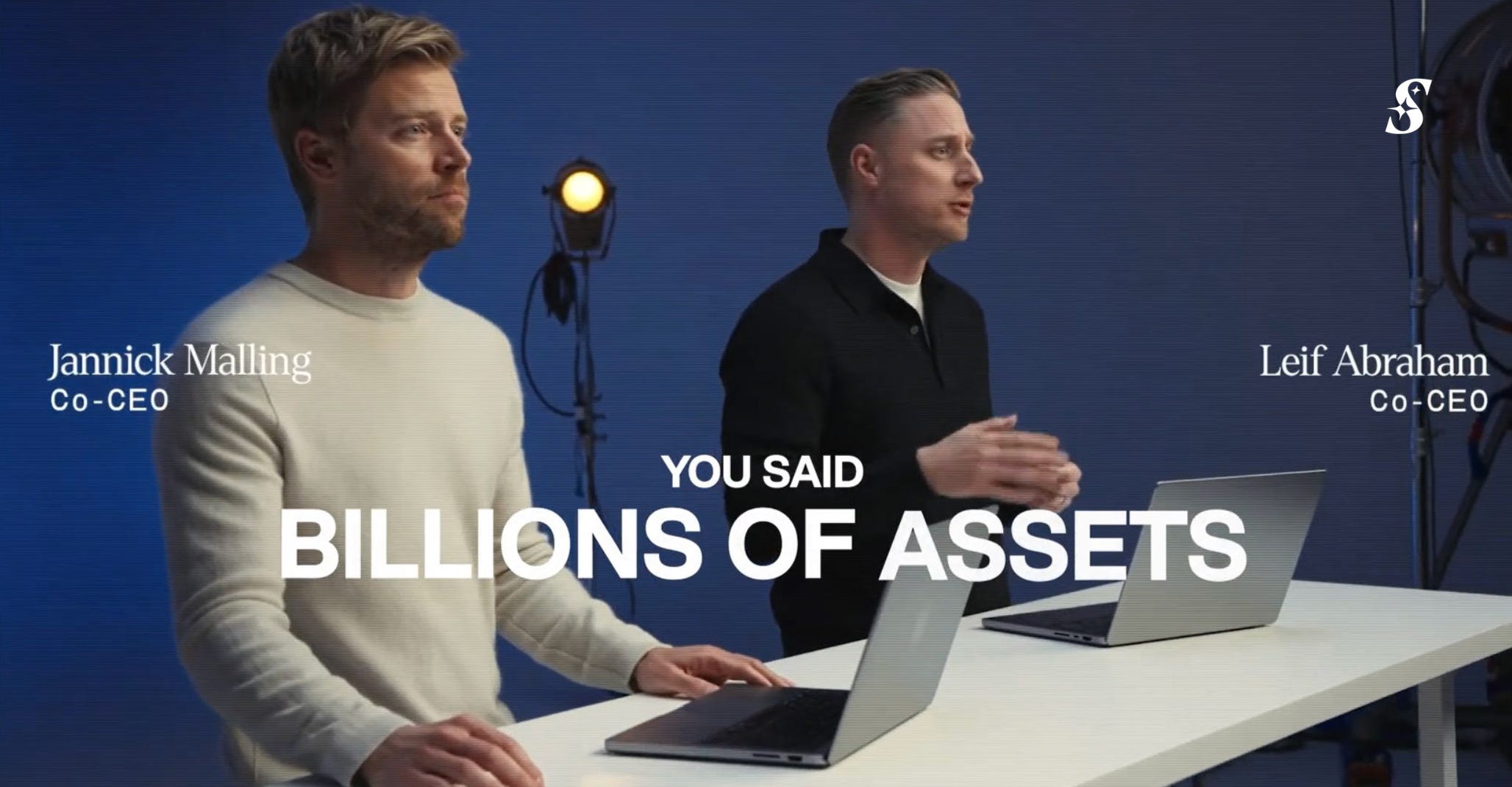
The structure divides responsibilities clearly: Malling oversees engineering and product design, while Abraham leads growth and business development. This allows each co-CEO to develop deep expertise while maintaining shared accountability for major decisions.

The End of Financial Advisors
Abraham predicts AI will systematically disrupt the traditional financial advisory model by replacing three core functions: grunt work, advice, and emotional support.
“If we look at what a financial advisor does for you, we break down these in these three things where it’s like,
#1 grunt work. So like doing the actual tax loss harvesting, setting up some strategy for you, etc.
#2 is advice, which is basically opinions on the back of news, data, reports
#3 is emotional support.”
AI agents already handle the first category. Abraham believes emotional support may actually be easier to replace than most assume: “Considering you have people having full relationships with AI already now... I think that part is actually easy to replicate.”
The advisory industry faces demographic headwinds that compound the AI threat.
“There’s less people becoming financial advisors now. New generations. The average age of financial advisor that goes up by year every year. I think the average age is actually roughly 60 or so already.”


Contrarian Views on Prediction Markets and Tokenization
While billions flow into prediction markets and tokenization projects, Abraham takes a measured skeptical stance on both trends.
On prediction markets: “I think prediction markets or event contracts... are very powerful tool. We’re gonna go into that somewhat ourselves, but I think right now, the use of events, contracts or the use cases are being stretched.”

He sees value in securities-focused contracts for sophisticated portfolio management but criticizes the expansion into entertainment betting: “Using it to essentially do sports betting... I would argue it’s kind of, you know, stretching the use case.”
Regarding tokenization, Abraham cuts through the hype: “Just because you wrap it in a token doesn’t mean it’s trading 24/7... it’s a fucking wrapper. The issue is liquidity. It’s not if there’s a wrapper of a token.”
The Dark Side: AI & Wealth Inequality
Despite his enthusiasm for AI’s potential, Abraham harbors serious concerns about societal implications. He predicts a difficult transition period before any utopian AI future.. hot take incoming..
“Before we live in this oasis where no one has to, where, where no one has to work anymore and whatnot... I think it’s gonna get really dark and it’s gonna get really dark because... The people that have access to the tools that can use them, that own the tools... the power disparity that’s gonna happen there is gonna be so massive.”
Abraham envisions stark societal changes: “New York is gonna feel more like São Paulo than it does like New York right now, I think... in your New York fancy apartment where you have your doorman, it’s not gonna be a doorman, it’s gonna be an armed security guard.”
The solution, he believes, could require both universal basic income and purpose creation: “It’s not just about creating UBI, it’s also about what can we, can we create that, uh, contingency gives people purpose.”
→ Listen on X, Spotify, YouTube, Apple
About Public: Founded in 2017 by Leif Abraham and Jannick Malling, Public has raised approximately $400 million across five funding rounds, with backing from Accel, Tiger Global, Greycroft, and Lakestar. The platform offers comprehensive multi-asset trading, AI-powered investment tools, and serves millions of users with billions in assets under management. Public’s tagline “Investing for those who take it seriously” reflects their premium positioning against legacy incumbents like Schwab, Fidelity, and Vanguard.


The material presented on Molly O’Shea’s website are my opinions only and are provided for informational purposes and should not be construed as investment advice. It is not a recommendation of, or an offer to sell or solicitation of an offer to buy, any particular security, strategy, or investment product. Any analysis or discussion of investments, sectors or the market generally are based on current information, including from public sources, that I consider reliable, but I do not represent that any research or the information provided is accurate or complete, and it should not be relied on as such. My views and opinions expressed in any website content are current at the time of publication and are subject to change. Past performance is not indicative of future results.
Paid Endorsement. Brokerage services by Open to the Public Investing Inc, member FINRA & SIPC. Advisory services by Public Advisors LLC, SEC-registered adviser. Crypto trading provided by Zero Hash LLC, licensed by the NYSDFS. Generated Assets is an interactive analysis tool by Public Advisors. Output is for informational purposes only and is not an investment recommendation or advice. See disclosures at public.com/disclosures/ga. Matched funds must remain in your account for at least 5 years. Match rate and other terms are subject to change at any time.
“Public represents the first modern alternative to Schwab, Fidelity, and Vanguard”? Is this a sponsored post? Robinhood, SoFi, and others were the first modern alternatives to those providers. I agree Public is doing some cool stuff with agentic skills, but let’s not pretend others did not disrupt this industry first.