

Is SpaceX Becoming a Hyperscaler?
SpaceX is now a $2 trillion company, but Christian Garrett believes its business is just getting started.
→ Listen on X, Spotify, YouTube, Apple
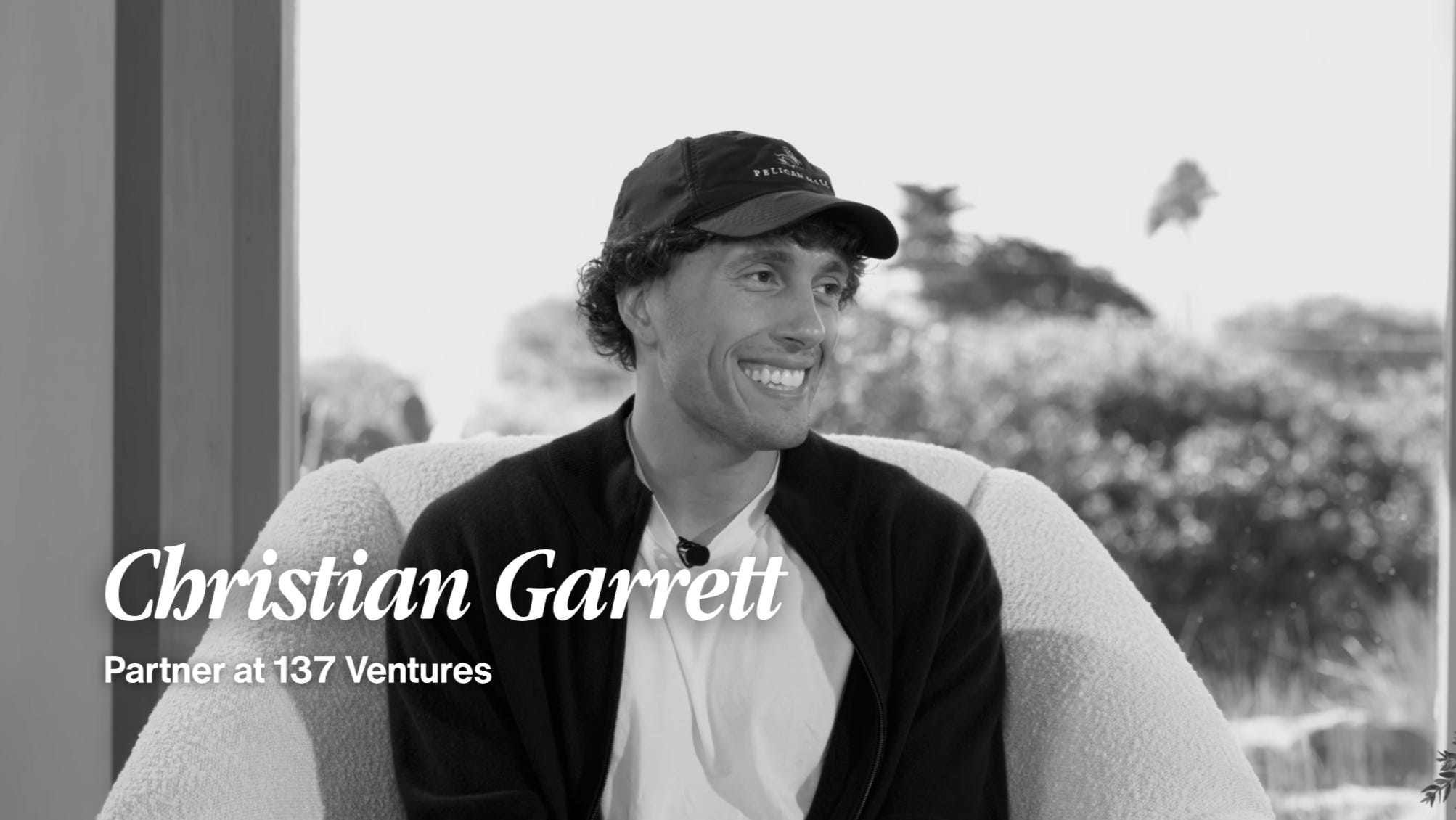
Christian Garrett is a Partner at 137 Ventures, an early investor in SpaceX for 16 years, and Co-Founder of Onodrim Industries, the European defense and industrial platform that just raised a $300 million Series A at a $1.3 billion valuation.
In this episode of Sourcery, we discuss SpaceX’s evolution from launch provider into an AI hyperscaler, the economics of Starship and orbital data centers, and why Christian believes the next generation of technology giants will resemble vertically integrated conglomerates.
We also break down 137 Ventures’ investments across SpaceX, Anduril, Ramp, Cognition, Hex, Hadrian, Applied Intuition, & General Matter, including how the firm evaluates growth, valuations, and long-term compounding.
Christian then shares the story behind co-founding Onodrim, which is acquiring and scaling Europe’s aerospace, defense, and industrial manufacturers through permanent capital, technology, and operational expertise.

𝐓𝐈𝐌𝐄𝐒𝐓𝐀𝐌𝐏𝐒
(00:00) Christian Garrett, Partner at 137 Ventures
(00:50) How SpaceX hit $2 trillion
(04:51) Is SpaceX now an AI company?
(07:52) When will compute move to space?
(12:40) The debt behind the AI build-out
(16:14) Why 137 backed Cognition and Hex
(19:29) SpaceX Compounded 40% for 20 years
(22:50) Is everyone overpaying for winners?
(26:08) The fintech graveyard
(27:25) Anduril and the return of the conglomerate
(33:24) Why Christian co-founded Onodrim
(36:51) 4,000 drone companies in Europe
(38:59) Hiring from Palantir to Rheinmetall
(42:44) From Investor to Co-Founder
(46:49) The annoying things VCs do
(53:39) Why tech isn’t zero-sum
(55:42) The political weaponization of tech


Brought to you by:
Brex—The intelligent finance platform: cards, expenses, travel, bill pay, banking—wrapped into a high-performance stack. Built for scale. Trusted by OpenAI, Anthropic, Vercel, Granola, Deepgram, & Sourcery.. teams that move fast AF. visit → brex.com/sourcery

Harvey—The AI platform built for legal work, is helping the best firms and companies close deals faster. More than 200,000 lawyers, 80% of the Am Law 100, and over 20% of the Fortune 500 build with Harvey. Visit: Harvey.ai
Zone—develops next-generation data center campuses, partnering with AI companies, site developers and technology leaders to bring compute online faster and at scale. Visit: zonefrontier.com
Mercor—The human intelligence behind frontier AI. Frontier labs and leading enterprises use Mercor to turn the knowledge of 5M+ experts into the data, evals and benchmarks that make AI better at real work. Visit: http://mercor.com/sourcery
VCX—VCX is the public ticker for private tech, allowing investors of all sizes to invest in venture capital. View The Portfolio at GetVCX.com
Deel—Deel is the global people platform that helps startups hire, manage, pay, and equip anyone, anywhere. Trusted by more than 35,000 fast-growing companies, Deel is the people platform that just works, so teams can scale without the chaos. Visit: deel.com/sourcery
Public—Investing platform Public is the world's first agentic brokerage. You can invest across stocks, options, bonds, crypto, event contracts, & more, then automate anything with AI Agents. Seriously, just tell an Agent what you want—from "Set up a buy-the-close, sell-the-open strategy for me" to "Automatically sweep any cash over $10k from my bank to my brokerage account." Agents can monitor markets, run strategies, & manage your cash 24/7. Get started: public.com/sourcery
Christian Garrett on SpaceX, Onodrim & the Return of the Conglomerate
→ Listen on X, Spotify, YouTube, Apple
Onodrim Raises $300M Series A at a $1.3B Valuation
On November 9, 2026, Onodrim Industries announced a $300M Series A led by Lux Capital at a $1.3B valuation. General Catalyst, Lakestar, Altimeter, Strike Capital, 137 Ventures, 8090 and Expeditions also participated. The round follows a $45M seed announced earlier this year.
Onodrim acquires controlling stakes in aerospace, defense and industrial manufacturing businesses across Europe and holds them with permanent capital. CEO Aistis Šimaitis and CTO Alexander Blessing lead the company. Both come from Palantir. Christian Garrett, a Partner at 137 Ventures, is the third co-founder.
Onodrim has offices in Amsterdam, London and Vilnius, and is opening Onodrim Germany in Munich and Onodrim Italy in Turin. The company expects to announce its first acquisitions in the coming months, along with partnerships with prime contractors and commercial companies.
“Europe needs a stronger industrial foundation to meet the security challenges ahead.” - Brandon Reeves, Partner, Lux Capital
“Every country needs to be in control of its own destiny, and that starts with what it can build.” - Jeannette zu Fürstenberg, President & Managing Director, General Catalyst

SpaceX Remains 137’s Largest Position
137 Ventures has been a SpaceX shareholder for 16 years, and SpaceX is the firm’s largest position. Sequoia, Valor and Founders Fund are among the other long-term investors in the company.
Garrett describes SpaceX as a company worth about $2T that leads several critical industries. He believes the market still undervalues it. Shaun Maguire has published his own SpaceX financial model, and now that SpaceX is public, more investors can study the business directly.
“It’s still the company we are most excited about, and I think the most important company in the world.”


SpaceX Moves Toward a Hyperscaler Model
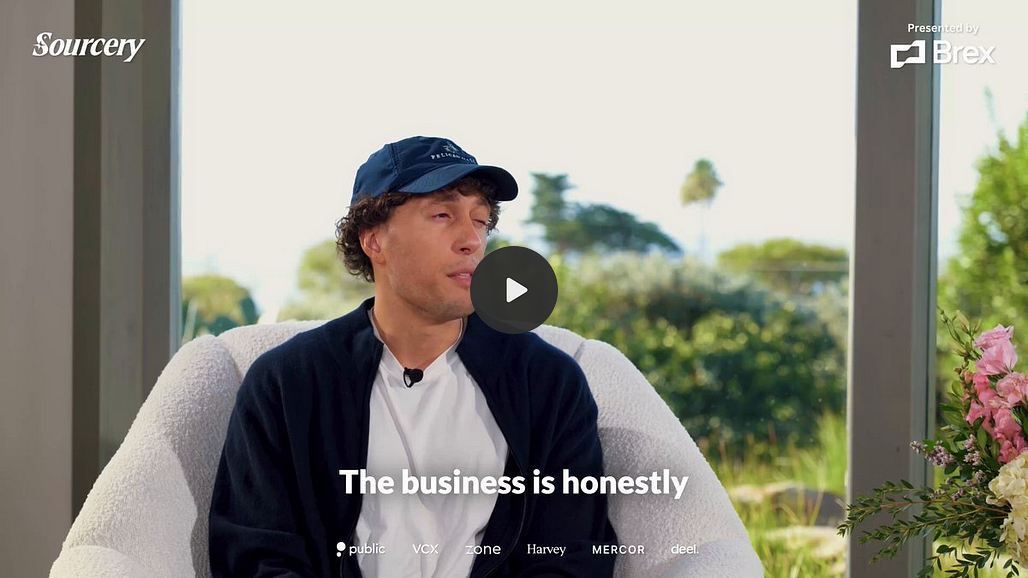
Garrett sees SpaceX’s AI business moving it into the hyperscaler category. The company is building software and services around its compute stack, using the capacity itself and selling it to customers. SpaceX monetizes at the app layer, the model layer and the compute layer.
“The company is clearly going the route of a hyperscaler. They’re building out more software and services around that compute stack, new infrastructure.”
Garrett argues that vertical integration protects SpaceX whichever way the model market goes. If open source models gain share, inference and compute economics change. If closed models keep winning, the compute layer still captures demand. He points to Google Cloud and AWS, which have grown regardless of the mix between model types.
SpaceX can also move capacity to its own products if outside demand slows. It builds data center capacity quickly, so its capital spending runs on shorter cycles.
“If you build these things fast, you can pull back on these things really fast. And so your CapEx investments are on shorter duration cycles.”


Starship and Starlink V3 Start New Growth Curves
Over 50% of SpaceX’s revenue is tied to AI. Garrett expects that mix to shift as launch and connectivity enter their next growth curves. Starship is now putting Starlink V3 satellites into orbit, and the next generation of the constellation is being built.
“That launch on just a handful of Starlink V3s delivered like 1% of the world’s internet capacity.”
SpaceX plans to deploy tens of thousands of V3 satellites. Starlink’s direct-to-cell business is growing faster than the core connectivity product.
SpaceX has publicly targeted the back half of next year for its first orbital compute satellites. Google has recently tested a version in orbit, and StarCloud is developing its own satellites, with StarCloud 3 designed to fly on Starship. Garrett sees data centers in orbit as the answer to power constraints on the ground.
Falcon 9 drove down launch costs and led to a sharp increase in launches. Companies such as Varda, a 137 portfolio company serving pharmaceutical and defense customers, were built on top of those lower costs. Garrett expects Starship to repeat that effect at a larger scale once it reaches full reusability.
“Starship will not just drive launch costs down an order of magnitude, which probably then will lead to an equal rise in the number of companies that can be built.”
Cost of Capital Shapes the Compute Build-Out
Public equity and debt markets have been volatile in recent months. Garrett links part of that to macro factors, the election cycle and the de-grossing that usually happens in October. Investors are also questioning where revenue will come from to cover spending commitments, and whether some companies can raise enough capital to meet them.
Most of the data center build-out is funded with debt. Garrett agrees with Elon Musk’s recent point that companies with a lower cost of capital will take a large share of demand at better rates.
“Speed and payback period is everything, and then cost of capital is a huge part of it because a lot of this is funded by the debt markets because it’s the most efficient form of capital to go do it.”
Several variables in AI market structure are still unresolved. These include model pricing, the mix of open and closed source, compute pricing, cost of capital, and access to power and data center sites. Garrett says this makes long-term earnings hard to underwrite.
“It’s hard to believe in the next two years of earnings, let alone the next 20.”


137 Ventures Underwrites Duration of Growth
137’s AI bets have focused on the harness and app layers. The firm has invested heavily in Cognition and recently co-led Hex’s round. Garrett says companies in coding, security and analytics are well positioned because customers want to route across models and avoid depending on a single lab.
Garrett calls OpenAI and Anthropic two of the most impressive businesses built in a generation. Family members and friends across age groups now use ChatGPT, Grok and AI agents, which he reads as a sign that adoption is still early.
The firm cares more about how long a company can keep growing than about its growth rate in any one year. SpaceX has compounded at roughly 40% a year for 20 years. 137 holds minority positions and does not control when it exits, so it concentrates in businesses it expects to own for decades.
“9% over 30 years is like a 13X. It’s incredible how really duration is what matters the most.”
Several 137 portfolio companies have raised at sharply higher valuations. Cognition was most recently valued at $48B and is reportedly raising at $60B to $70B. Ramp is at $60B and Anduril at $90B.
On private market pricing, Garrett cites his godfather, Teddy Forstmann, a private equity investor in the 1980s: investors routinely overpay while claiming to pay fair prices. Garrett would pay a 25% premium for a quality asset before buying a weaker one at a discount. Ramp keeps consolidating more of the back-office finance stack and still underprices several products.
Garrett expects power law outcomes to cover the capital flowing into growth-stage categories. During the COVID era, fintech drew heavy investment. Most of those companies have since shut down, while Stripe, Revolut, Nubank and Ramp produced outcomes of $100B or more, or are on track to.
“The Fintech category produced massive wins that have performed extremely well and that are all doing billions and billions of dollars of profit. So that capital was not wasted.”

Anduril and the Return of the Conglomerate
The conglomerates of the 1980s offered exposure to several industries, scale and cheaper capital. Their business units were unrelated and shared no operating platform. That made them hard to value on a sum-of-the-parts basis and led to diseconomies of scale.
“Today’s conglomerates look different. One, they actually have a core common operating tech platform, and so there actually is synergies and operations between them.”
Garrett calls Anduril a “lowercase c” conglomerate, meaning a multi-product defense company comparable in structure to the largest primes. Its products all run on Lattice, its shared software and AI backbone, so each additional product sold increases the value of the others. Anduril’s recent move into computer manufacturing is part of the broader effort to bring production back to the US.
He sees Palantir and SpaceX as the only current examples of “capital C” dual-use conglomerates, selling across commercial and government markets. Both now earn most of their revenue from commercial customers. Garrett notes that Chinese defense primes earn 60% to 80% of their revenue from commercial sectors, and that China’s leading naval shipbuilder is also the world’s dominant commercial shipbuilder.
“I think we need to return to the dual use conglomerates. General Mills made cereal and weapon systems.”
Commercial scale lets these companies maintain defense capacity and adjust it up or down as needed. Garrett argues that industrial policy alone cannot fund that level of capacity.

Onodrim Targets Europe’s Supplier Layer
In the US, supplier consolidators such as TransDigm, Teledyne, HEICO and Honeywell, along with acquisitive primes and private equity, have rolled up much of the defense supply base. Europe has seen very little of that consolidation. Defense was not a growth market there, and its fragmented national markets make it hard for suppliers to scale.
Defense spending in Europe is now rising. Most new funding has gone to neo-primes such as Helsing, Stark and Quantum Systems, along with a crowded field of drone makers.
“Now there’s 4,000 drone companies in Europe. This is overfunded and too crowded. What has not received as much support is the layer below. Who’s supplying all these companies?”
That layer includes component suppliers, aerostructure manufacturers, engine makers and services companies. Onodrim focuses on acquiring and consolidating suppliers and services businesses, and may also look at smaller complementary defense systems. It favors dual-use companies whose core business is commercial and that also sell into defense.
“We think that supporting the reindustrialization rearmament in Europe is the most important mission right now.”
Garrett points to Amca and Valinor as US companies working on other parts of the same supplier problem.

Onodrim’s Acquisition Criteria
Onodrim looks for durable businesses with high-quality revenue, a long operating history and low churn. A company needs capacity that matters to defense, even if most of its revenue comes from aerospace or industrial customers.
“Does it solve a critical bottleneck? That’s something we really focus on. Where are the bottlenecks for this build-out?”
Garrett says production is now the main constraint. Contracts have gone to the primes, but suppliers face scaling limits, the question of who takes on capital spending risk, and capacity that has moved out of Europe. Onodrim funds capital spending, develops new products with its own engineering team, and deploys technology into manufacturing and operations. The goal is to grow its companies into pan-European and global businesses.
The primes and large commercial companies that Garrett and 137 work with are usually customers of the businesses Onodrim acquires, and sometimes partners on deals. Many of them are US companies.
The team spans private equity, traditional aerospace and defense, government and technology. Staff come from Palantir, SpaceX, Rheinmetall and McKinsey, and represent 9 nationalities. Onodrim is recruiting engineering and operating talent from across Europe.

Garrett Becomes a Minority Co-Founder
Onodrim was formed in a similar way to Armada, which Garrett’s 137 partners Alex and Justin helped incubate. Alex and Justin pitched an idea to SpaceX. SpaceX thought it was viable but had too much else going on, and Dan Wright and John Runyon went on to found Armada.
Garrett had been spending more time in Europe working with 137 portfolio companies. He concluded that production capacity, more than the size of defense budgets, would decide whether Europe’s rearmament succeeds. He had relationships with both US and European primes and neo-primes, and he is half European. 137 has invested in Palantir for almost 20 years, which connected him with Šimaitis and Blessing.
“If there’s a great idea, most times you’re not the person to go do it. If it’s a weird case where you’re the person to go do it, then by all means, go and do it.”
Šimaitis and Blessing run Onodrim. Garrett works on it the way he works as an investor, getting deeply involved and helping where he can.
What Co-Founding Changed for Garrett as an Investor
Garrett says operating a company gave him more depth than venture usually allows, and that it makes him a better investor. He now understands how investors read a company during fundraising, and what founders are actually dealing with when they talk to their backers.
What founders want from investors usually comes down to revenue and talent. Garrett notes that many investors promise help in those areas and do not deliver. 137 places operating partner Ashley inside its portfolio companies. Garrett credits his partner Justin Fishner-Wolfson with a line he repeats often.
“A bad investor can destroy your company. A good investor won’t make your company.”
Working on Onodrim has also made Garrett more bullish on deploying technology in industrial manufacturing.
Software Moves Into Legacy Manufacturing
Palantir pioneered putting software into legacy manufacturing. Hadrian has since shown what modern tooling can do in industrial production. Garrett says faster integration with PLCs, the controllers that run factory machines, opens up work beyond automating paperwork.
Applied Intuition, a 137 portfolio company, sells software to automotive engineers. It is also simplifying vehicle processing units, controllers and wiring across automotive, construction, mining and trucking. General Matter, another portfolio company, is rebuilding uranium enrichment capacity that currently sits mostly with state-owned operators running Cold War-era technology.
“Just because you deploy software into a business doesn’t necessarily make it a technology business. But it has real impact.”

Tech’s Non-Zero-Sum Culture and Political Weaponization
Garrett sees the technology industry’s non-zero-sum culture as unusual compared with other sectors. It shows up in how people behave, how incentives are set and how business gets done. He attributes part of it to the industry’s high growth and part of it to culture. He is concerned by the infighting he sees within the ecosystem.
“Probably the pessimistic take is the only reason we are not zero sum is because we’re in a high growth industry, and many of these industries are not.”
He also points to rising political attacks on technology companies based on the views of their founders, from both sides of the political spectrum. Examples include calls to break up big tech, people burning Tesla cars and boycotts of Anthropic. Garrett notes that these companies employ people with a wide range of political views, are among the largest employers in the world, and are critical to national security and GDP growth.
“These companies are working on things that are nonpartisan. They’re benefiting the entire economy in the world.”
Garrett says consumers who disagree with a company can simply stop buying its products. He adds that his view is open to debate.
Hill & Valley Forum Returns in Spring
The next Hill & Valley Forum will be held in March or April, depending on the congressional calendar. The date is usually announced by the end of the year or early the following year. Garrett, Delian Asparouhov and Jacob Helberg have additional announcements in the works.
Disclosures. Not investment advice and not an offer to sell or a solicitation of an offer to buy any security or interest in any fund. Portfolio companies referenced are illustrative, do not represent all investments made by 137 Ventures funds, and were not selected based on performance; it should not be assumed that investments in these companies were or will be profitable. Past performance is not indicative of future results.
→ Listen on X, Spotify, YouTube, Apple

Check out prev content w/ Christian
→ Listen on X, Spotify, YouTube, Apple

→ Listen on X, Spotify, YouTube, Apple
SpaceX, Stripe, X, Ramp, Anduril: Navigating Liquidity in Private Markets
State of Liquidity Markets, SpaceX’s Funding History, Hill & Valley Forum, DC & VC, Europe’s Techno-Rise, Hot Takes
The material presented on Molly O’Shea’s website are my opinions only and are provided for informational purposes and should not be construed as investment advice. It is not a recommendation of, or an offer to sell or solicitation of an offer to buy, any particular security, strategy, or investment product. Any analysis or discussion of investments, sectors or the market generally are based on current information, including from public sources, that I consider reliable, but I do not represent that any research or the information provided is accurate or complete, and it should not be relied on as such. My views and opinions expressed in any website content are current at the time of publication and are subject to change. Past performance is not indicative of future results.
Paid Ad. Agents are an experimental AI tool. Its output may be inaccurate and is not investment advice. Public Holding’s, Inc. makes no guarantees about its accuracy or reliability—verify independently before use. Brokerage accounts & services provided by Open to the Public Investing, Inc. See additional disclosures at: https://public.com/disclosures/agenticdisclosures.
Can’t wait to listen. I recently wrote a detailed article on this topic in my newsletter. I’m calling them neoglomerates (neo + conglomerates) since they’re back for the different, AI age!