


Go Anywhere, Get Anything
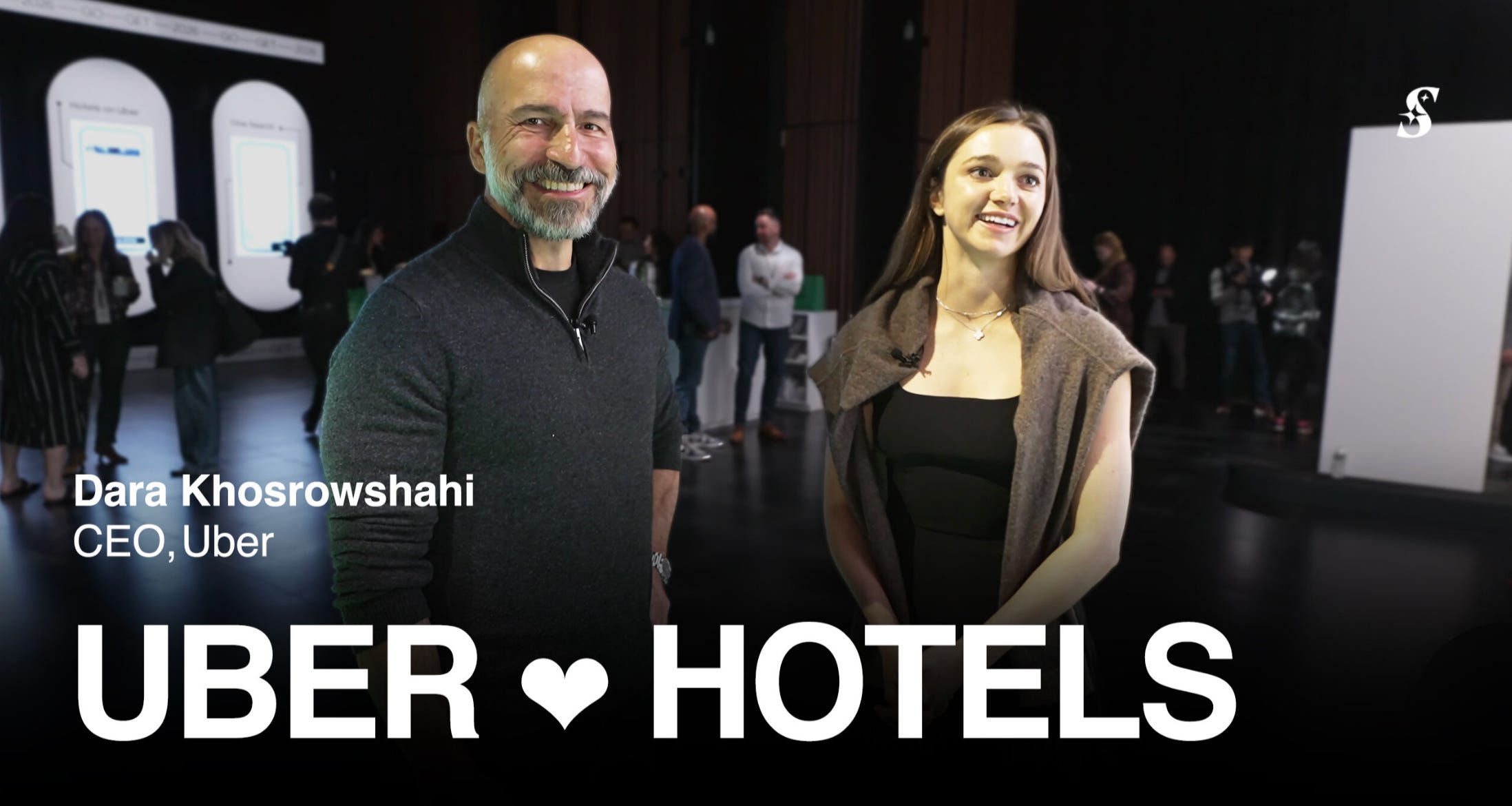
Uber (NYSE: UBER) CEO Dara Khosrowshahi joins Sourcery for a walkthrough of Uber’s newest product launches, the future of transportation, AI, delivery, travel, & autonomous vehicles.
→ Listen on X, Spotify, YouTube, Apple
At Uber’s Go-Get showcase in New York City, Dara breaks down how Uber is evolving from a rideshare company into a global “go anywhere, get anything” platform. We discuss Uber’s new Expedia hotel partnership, AI-powered shopping agents, Uber’s autonomous vehicle strategy with Waymo, Zoox and Joby Aviation, and how AI is fundamentally changing the company’s operations and engineering culture.
Dara also reflects on leading Uber through one of the largest corporate turnarounds in tech history, scaling the company from $4.5 billion in losses to nearly $10B in free cash flow.
Plus: how to actually raise your Uber rating.
Subscribe for more conversations with the CEOs, founders, and investors shaping the future of technology, AI, mobility, and infrastructure.
𝐓𝐈𝐌𝐄𝐒𝐓𝐀𝐌𝐏𝐒
(00:00) Dara Khosrowshahi, CEO at Uber
(00:48) The biggest bet of 2026
(02:04) The accidental feature
(04:16) Your next Uber might come with a Coffee
(05:54) Uber One’s global takeover
(06:32) Growth hack to outpace rivals
(08:04) Replacing overpriced room service
(11:25) The Expedia reunion
(14:10) The 10-minute airport hack
(17:05) The $10 billion comeback
(19:00) Barry Diller’s golden advice
(22:49) Uber’s internal AI shift
(26:59) Will AI make Uber apps obsolete?
(27:36) Self-driving cars
(28:47) AI’s biggest misconception
(29:39) Hack your Uber rating
(31:36) Junior Devs coding for millions
Brought to you by:
Brex—The intelligent finance platform: cards, expenses, travel, bill pay, banking—wrapped into a high-performance stack. Built for scale. Trusted by teams that move fast. visit → brex.com/sourcery

Turing—Turing accelerates superintelligence by helping frontier AI labs improve model capabilities and enabling enterprises to deploy end-to-end AI systems inside mission-critical workflows. Visit: turing.com/sourcery
VCX—VCX is the public ticker for private tech, allowing investors of all sizes to invest in venture capital. View The Portfolio at GetVCX.com
Deel—Deel is the global people platform that helps startups hire, manage, pay, and equip anyone, anywhere. Trusted by more than 35,000 fast-growing companies, Deel is the people platform that just works, so teams can scale without the chaos. Visit: deel.com/sourcery
Public-–Investing platform Public just launched Generated Assets, which lets you turn any idea into an investable index with AI. With Generated Assets, you can build, backtest, refine, and invest in any thesis with AI. Gone are the days of one-size-fits-all ETFs. Try it today: public.com/sourcery
Merge—The leading provider of customer-facing integrations and agentic tools for frontier LLMs, Fortune 500 organizations, and B2B SaaS companies. Visit: https://merge.dev
From Expedia to Uber and Back Again: Dara Khosrowshahi
At Uber’s GoGet 2026 showcase in downtown New York, Dara Khosrowshahi, CEO of Uber (NYSE: UBER), walked through a product lineup that included one announcement with personal weight behind it: a partnership with Expedia, the company he ran for twelve years before taking the Uber job in 2017.
I met with Dara after the event to walk through the announcements and talk about the philosophy behind Uber’s product expansion, the lessons that shaped him as an operator, and his vision for an AI and AV powered future.
→ Listen on X, Spotify, YouTube, Apple
A Full Circle Moment With Expedia
Uber (NYSE: UBER) started as a rides app, expanded into Eats, and is now staking a claim in travel, with hotels rolling out through a partnership with Dara’s former company.
“We sure did. So we announced actually now making hotels available on Uber.
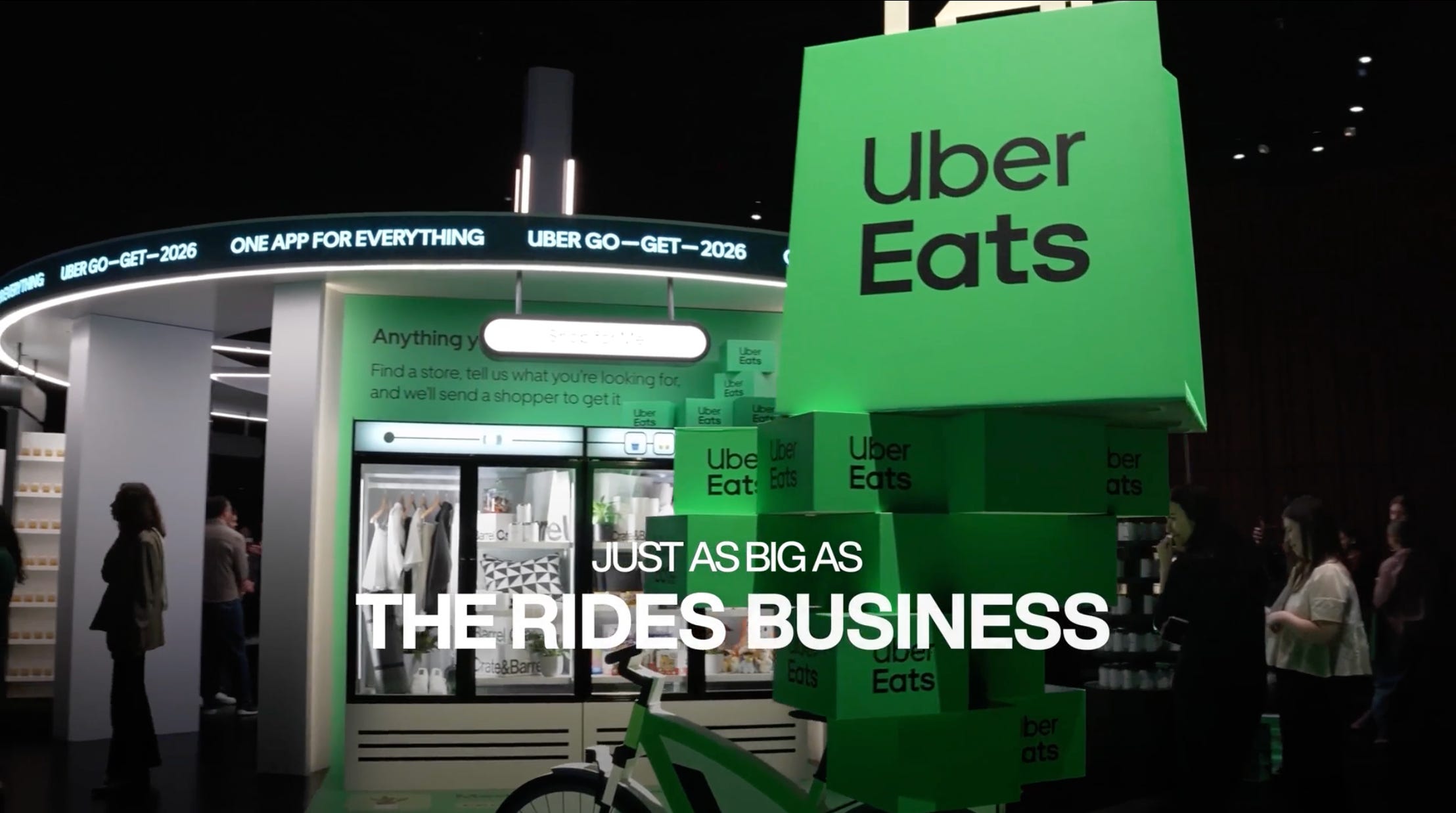
You know, we started as the Go App, just rides obviously. And then we went with Uber Eats and it was just an idea.
Now Uber Eats is just as big as their rides business. Now we’re going to travel.”
The Expedia tie up wasn’t something Dara could touch directly. Still on Expedia’s board, he had to recuse himself from negotiations entirely.
“I had to recuse myself from the process because really I’m still on Expedia board. So from a governance standpoint, it’s like, ‘Hey, Dara, you can’t.’”
The strategic logic was straightforward. Travel had always been a major use case on Uber, and hotels were a natural extension of a platform already wiring up everything that moves.

BIG Numbers: FY 2025 & Q1 2026
The product expansion is happening on top of one of the strongest financial setups in tech. Uber (NYSE: UBER), publicly listed on the New York Stock Exchange, closed out 2025 with five consecutive years of 20%+ growth and rolled into Q1 2026 with momentum that exceeded that pace.
Full Year 2025
Trips: 13.6 billion, up 20% YoY
Gross Bookings: $193.5 billion, up 19% YoY (20% constant currency)
Revenue: $52.0 billion, up 18% YoY
GAAP Income from Operations: $5.6 billion, up 99% YoY
GAAP Net Income: $10.1 billion
Non-GAAP Operating Income: $6.5 billion, up 50% YoY
Non-GAAP EPS: $2.45, up 35% YoY
Free Cash Flow: $9.8 billion, up 42% YoY
Q1 2026
Trips: 3.6 billion, up 20% YoY
Gross Bookings: $53.7 billion, up 25% YoY (21% constant currency)
Revenue: $13.2 billion, up 14% YoY
GAAP Income from Operations: $1.9 billion, up 57% YoY
Non-GAAP Operating Income: $1.9 billion, up 42% YoY
Non-GAAP EPS: $0.72, up 44% YoY
Free Cash Flow: $2.3 billion
Uber One Members: 50 million, now driving half of all Gross Bookings across Mobility and Delivery
CFO Balaji Krishnamurthy put it on the Q1 call:
“From this position of strength, we’re investing with conviction in the significant opportunities ahead, while taking a capital-efficient approach to AVs and embracing AI to drive growth and productivity.”

Inconic Turnaround: From $4.5B in Losses to ~$10B in Free Cash Flow
When Dara took over Uber (NYSE: UBER) in 2017, the company was bleeding cash and battling a culture crisis. By the end of 2025, it was generating $9.8 billion in free cash flow.
“A lot of people talk about Uber. You know, when I came there, obviously there was a lot of controversy in terms of the culture, et cetera. But the team had built a good business in terms of demand and the brand and our presence globally. So while things were not easy, I kind of was standing on the shoulders of giants.”
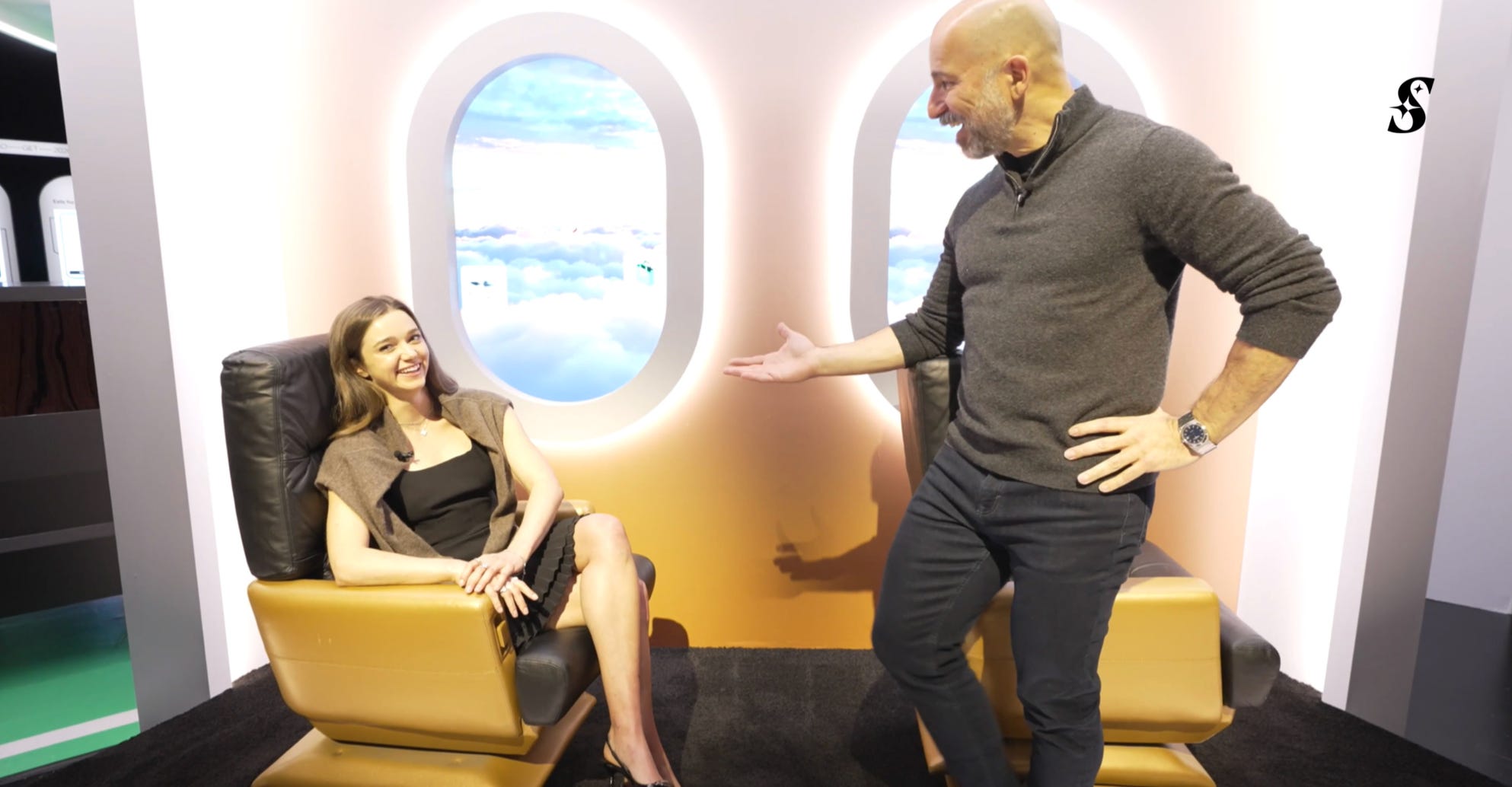
The strategy came down to supply, safety, and platform leverage. Being multi product turned out to be a structural advantage competitors couldn’t easily replicate.
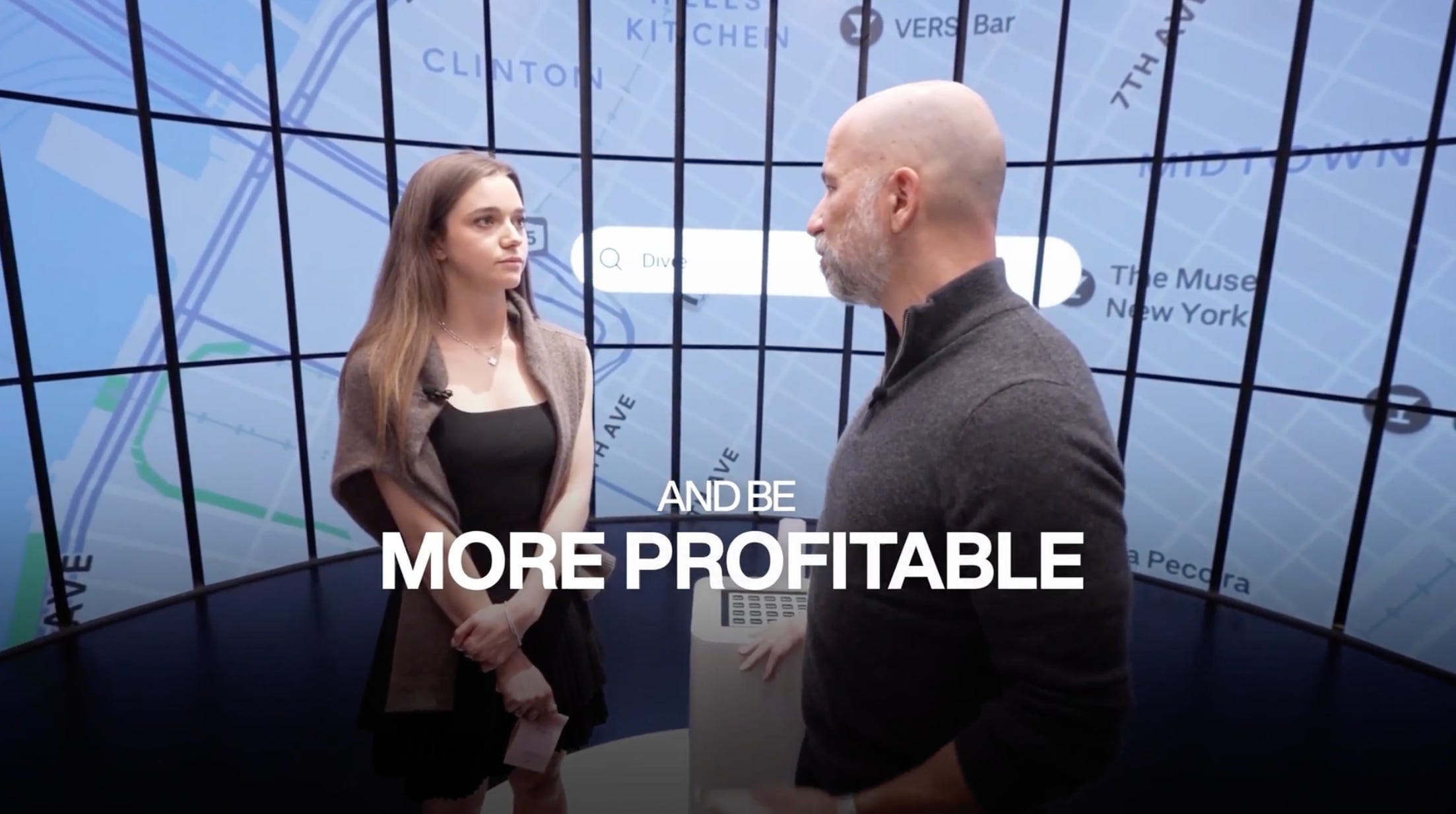
“We compete with lots of people, but most of our competitors are monoline.
They either have rides or they have eats.
The fact that we are a complete platform allows us to grow faster than our competitors and be more profitable than our competitors as well.”
That platform thesis is so durable that Dara wouldn’t be surprised if Eats overtakes Rides within a decade, especially as it expands beyond food into grocery and every other local business category. The Q1 numbers back that up. Delivery Gross Bookings grew 28% YoY to $26.0 billion, basically tied with Mobility’s $26.4 billion, and Delivery segment operating income jumped 43% YoY.
Lessons From Barry Diller
Long before Uber, Dara was an analyst at an investment bank when Barry Diller pulled him into the IAC orbit. Two lessons from Diller still anchor how he leads.
The first is being willing to go against the grain.
“Barry was the ultimate counter puncher. He kind of took on ABC, NBC, CBS… and he built Fox, which was a new product. I’ve always been comfortable going against the grain, and it’s one of the things that encouraged me to join Uber. From the outside, things looked really, really difficult.”
The second is being a relentless truth seeker, even when the org chart makes that hard.
“As you move up in organizations, while you get a broader view of the company, a lot of times you actually don’t understand what’s really going on in the company. And so you do have to be that truth seeker and it requires you not to manage in a way that you might be taught.”
In practice, that means skipping the decks and going several layers deep into the organization.
“I go and I sit down with engineers and product members two, three, four levels down.
We run no decks, really talk about what’s going on. And I’m very, very honest with them in terms of what our challenges are. I don’t talk corporate-speak to them.
Everyone has a pretty good BS meter. And if a senior member of the team is BS-ing his team, then they’re gonna BS you right back.”
Why Uber Was Built for the AI Era
Dara made the case that most companies are wired for certainty, and Uber (NYSE: UBER) never had that luxury. That turns out to be a major advantage now that the entire tech industry is moving toward probabilistic systems.
“Most companies want certainty, but in real life things can go wrong. You can order that Uber and we told you it’s a four-minute ETA, the driver cancels.
We have to actually get you another driver. So there’s all kinds of uncertainty that happens in the real world, and we have been built on top of that.
So everything that we built has been algorithmic in nature.”
Internally, AI is reshaping how Uber ships product. Engineers are using Claude and Codex, agents handle code reviews and debugging, and customer service is being rebuilt from first principles, training agents on outcomes rather than rigid policy trees.
“Now with our agents, we can train them on what’s my goal? My goal is to make Molly, who’s an Uber One member, a happy customer. And so the agents themselves can now reason around the outcome that you’re going after.”
But Dara is clear eyed about the public perception challenge ahead.
“The fears of job displacement are real… We need to bring out these AI products and surprise and delight consumers every day so that they see AI working for them, not replacing the work that they do.”

Shop For Me: A Feature Users Invented
One of the most distinctive launches at GoGet 2026 wasn’t dreamed up in a product offsite. It came from watching what users were already doing.
“This was actually inspired by our users who were hacking into essentially our system.
We have a service called Uber Courier… What we saw is people who are using Courier were hacking the system and they were asking couriers to go to a store for them and buy something for them.”
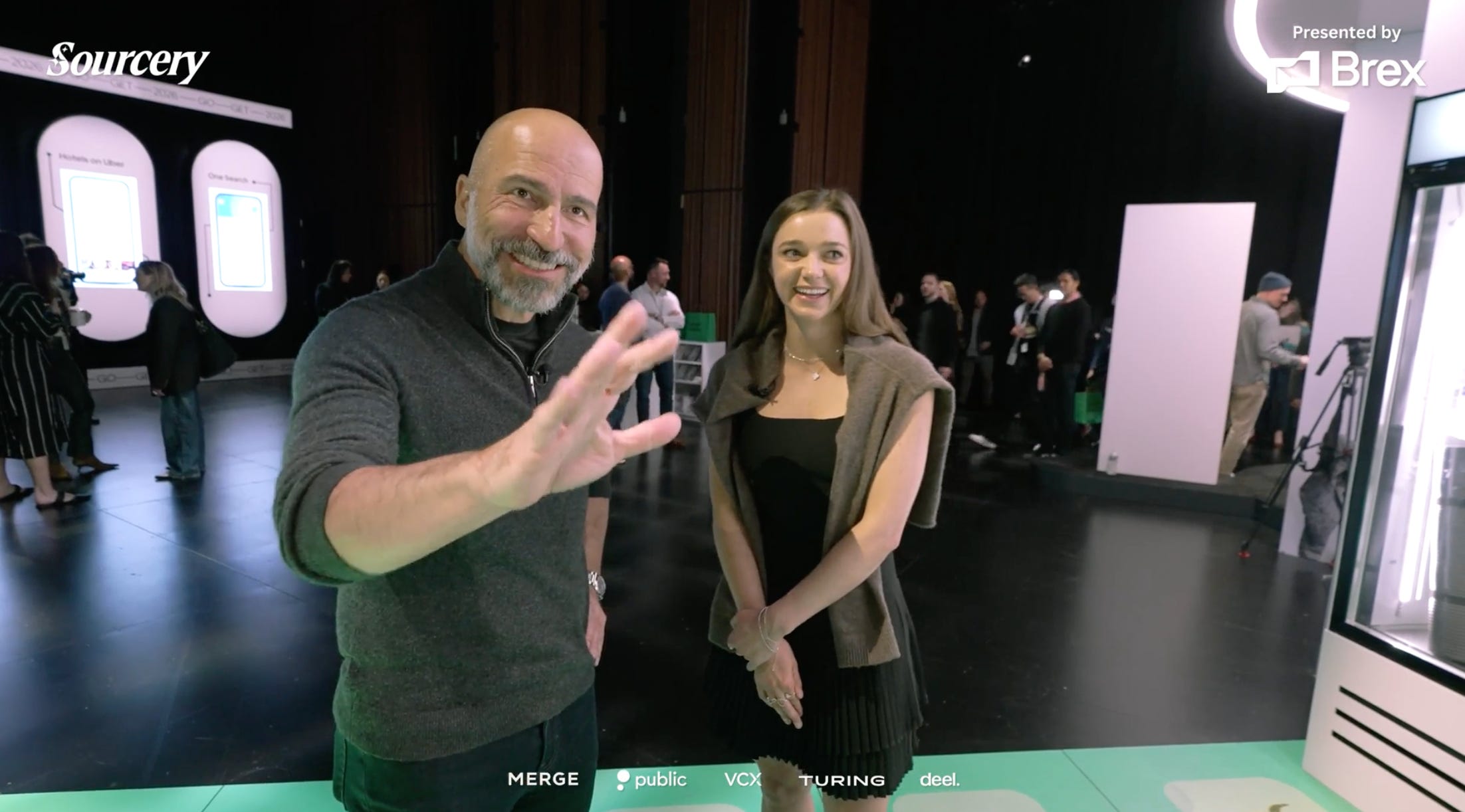
The result is Shop For Me. Upload a picture, describe what you want, and a vetted top rated shopper picks it up from any store, with approval and payment handled in app. It’s a clean illustration of Uber’s bias toward observation over assumption.
Coffee in Your Uber Reserve
Cross platform engagement is a core thesis at Uber. Riders who also use Eats spend roughly 3x more and are far more loyal. With Uber One members now driving half of all Gross Bookings, deepening that overlap is a real growth lever. Coffee delivery into Uber Reserve and Uber Elite rides is a small but pointed example of how the company is bridging its two main businesses.
“We have users who use Uber rides and we have people who use Uber Eats and we’re trying to create cross-platform interaction.
Consumers who use both services usually spend three times more. They’re much more loyal to the platform. So we want to introduce the different services in a delightful way.”
It’s a low friction way to nudge a rides only user into experiencing delivery without making it feel like an upsell.
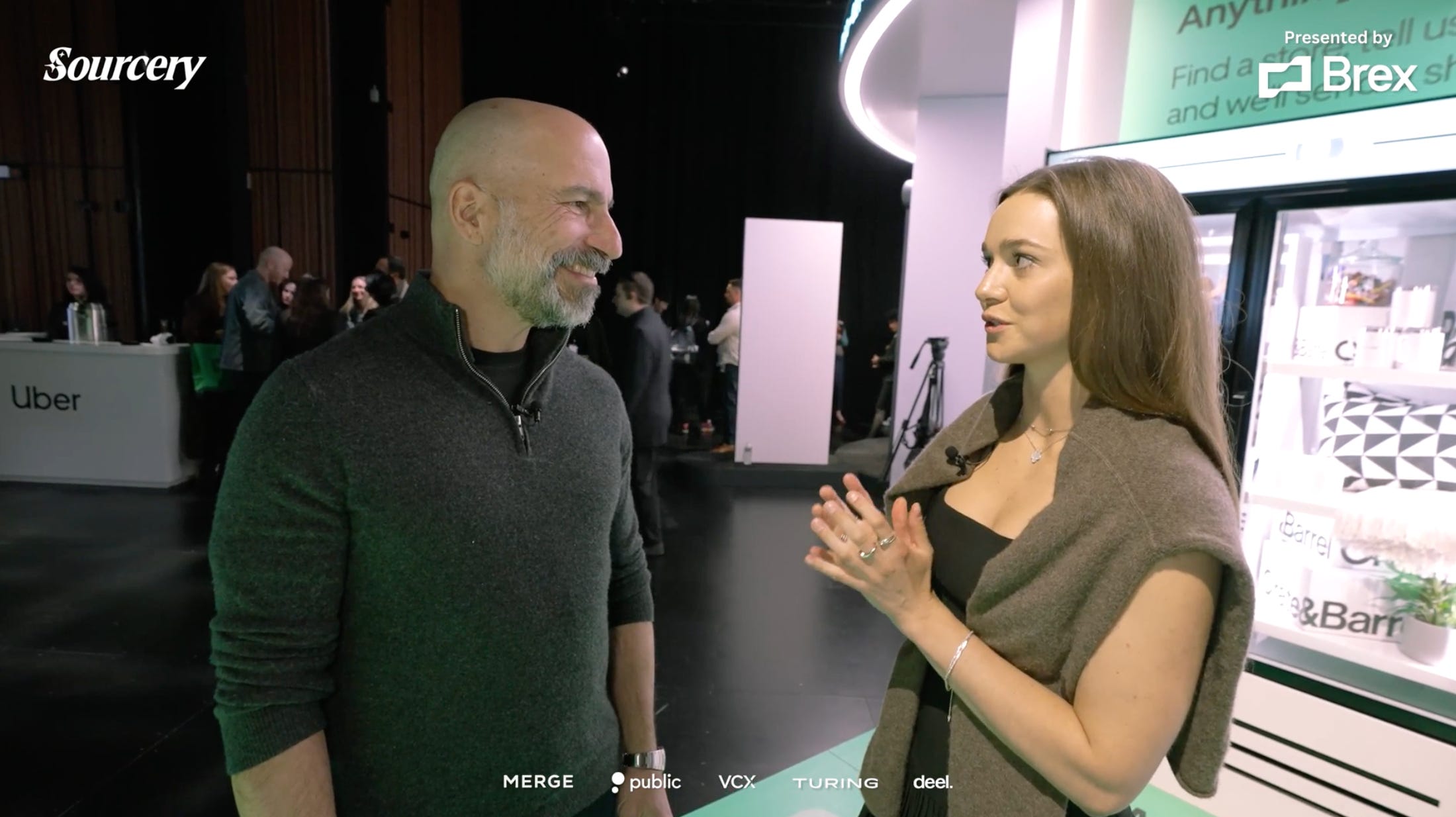

Uber One Goes Global
Uber One has grown to 50 million members, and one of the most consistent pieces of feedback was that benefits weren’t expanding globally. That changes now.
“People who use Uber tend to travel a lot… One of the additional benefits that they were asking for is, ‘I want to get Uber One credits and benefits when I’m traveling, not just when I’m at home.’ So of course we listen to our most valuable users.”
International credits and member discounts are now part of the package, deepening the value of the subscription for the travelers who use Uber most.
Uber Eats Travel Mode
Anyone who has stayed in a hotel recently knows room service has quietly fallen apart. Uber’s answer is to slot Eats into the gap with a dedicated travel mode.
“Room service at hotels has suffered over the past 10 years.
You never know if it’s gonna be available. You often have to wait for a long time. It’s often really expensive.”
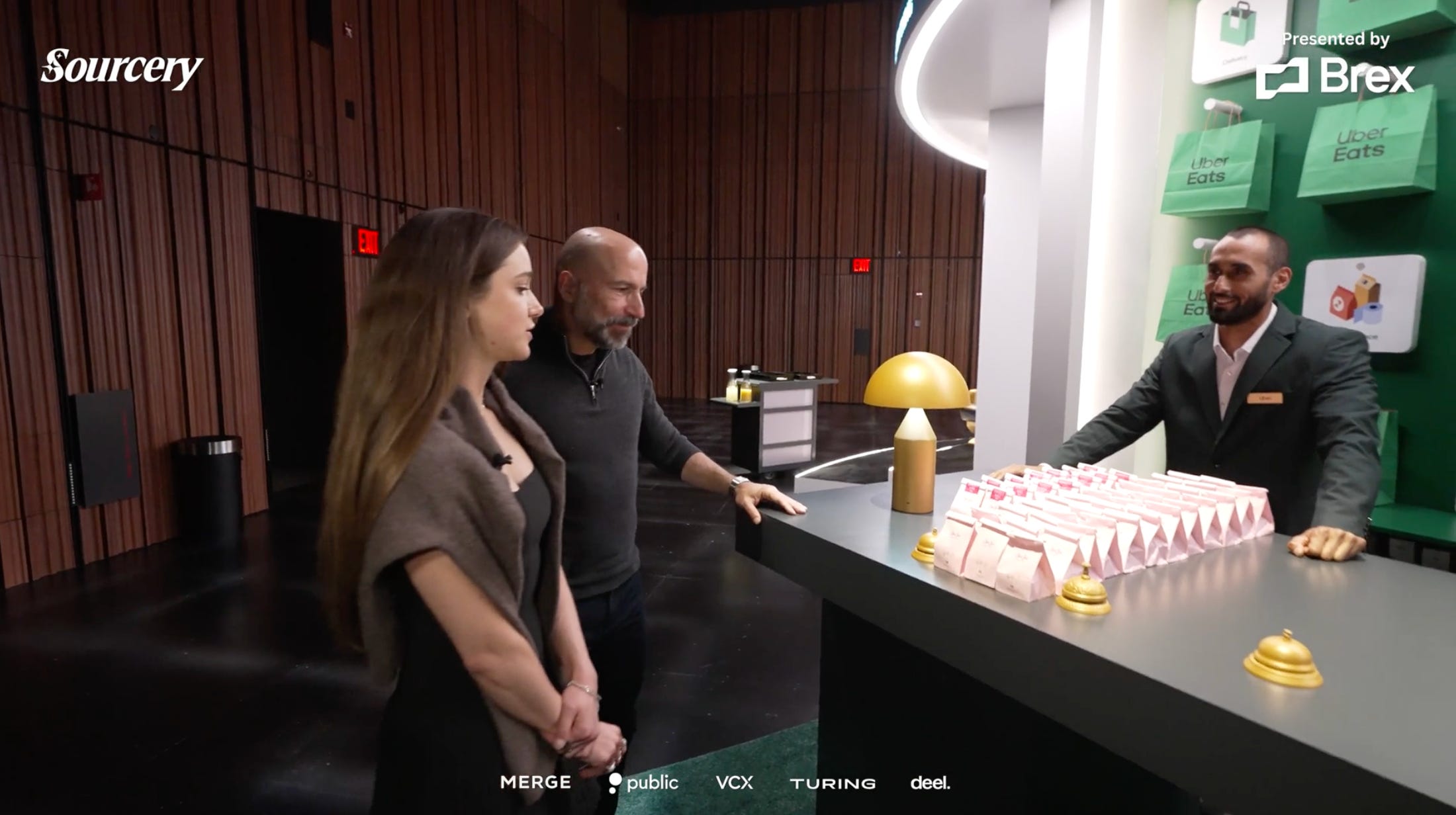
When Uber detects you’re in a hotel, the app shifts into travel mode, opening up the full local restaurant inventory and adjusting delivery logistics for hotel pickup, whether that’s the lobby or your door.
Hotels on Uber
The headline announcement of the day. Powered by Expedia, Hotels on Uber launches with 700,000 properties and VRBO vacation rentals coming next. The economics are designed to pull Uber One members in.
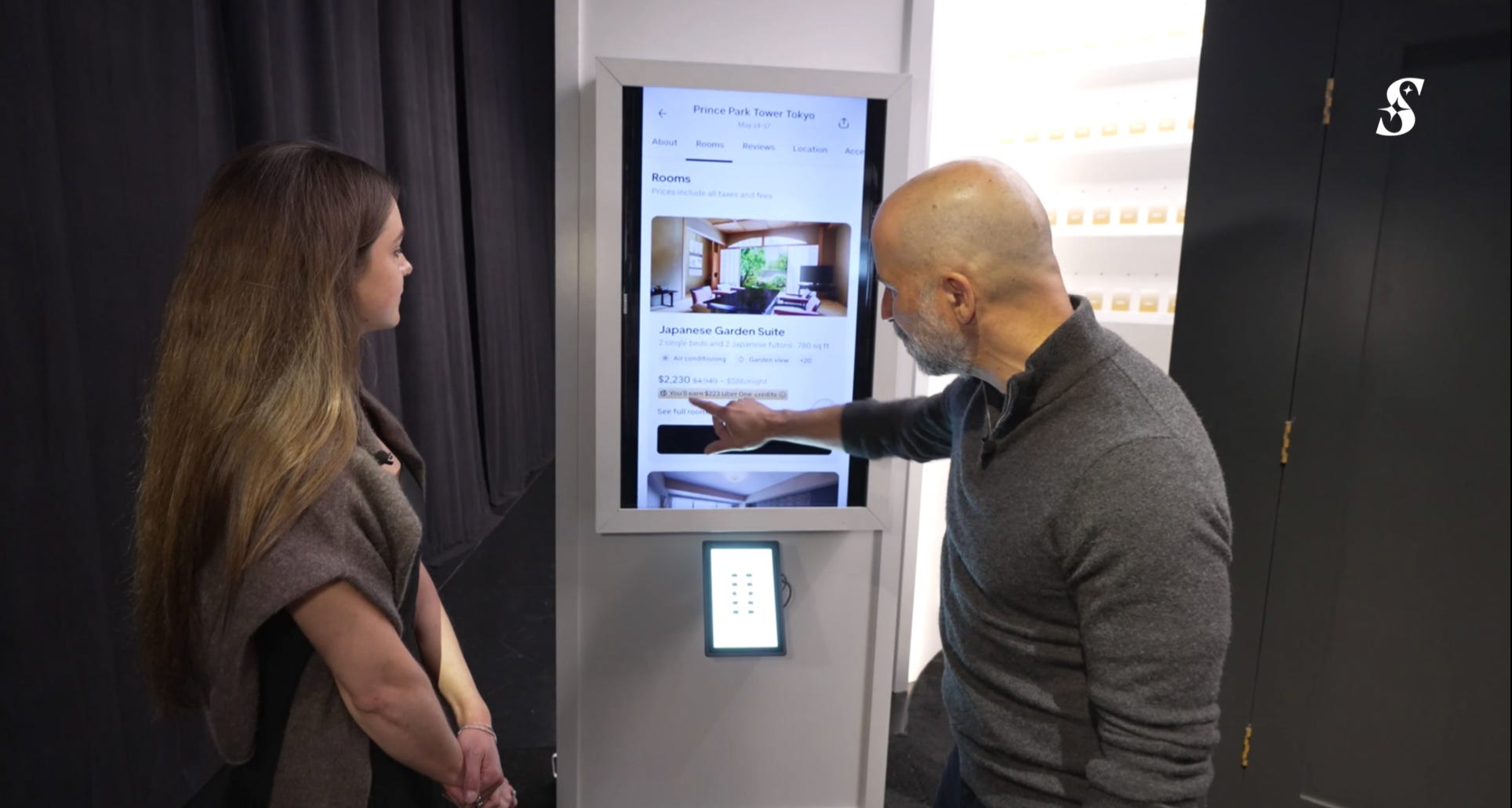
“Uber One members, when you book hotels on Uber, you get 10% back on all of your bookings, regardless of which hotels you book. And on 10,000 hotels kind of a rolling list, you get at least 20% off.”
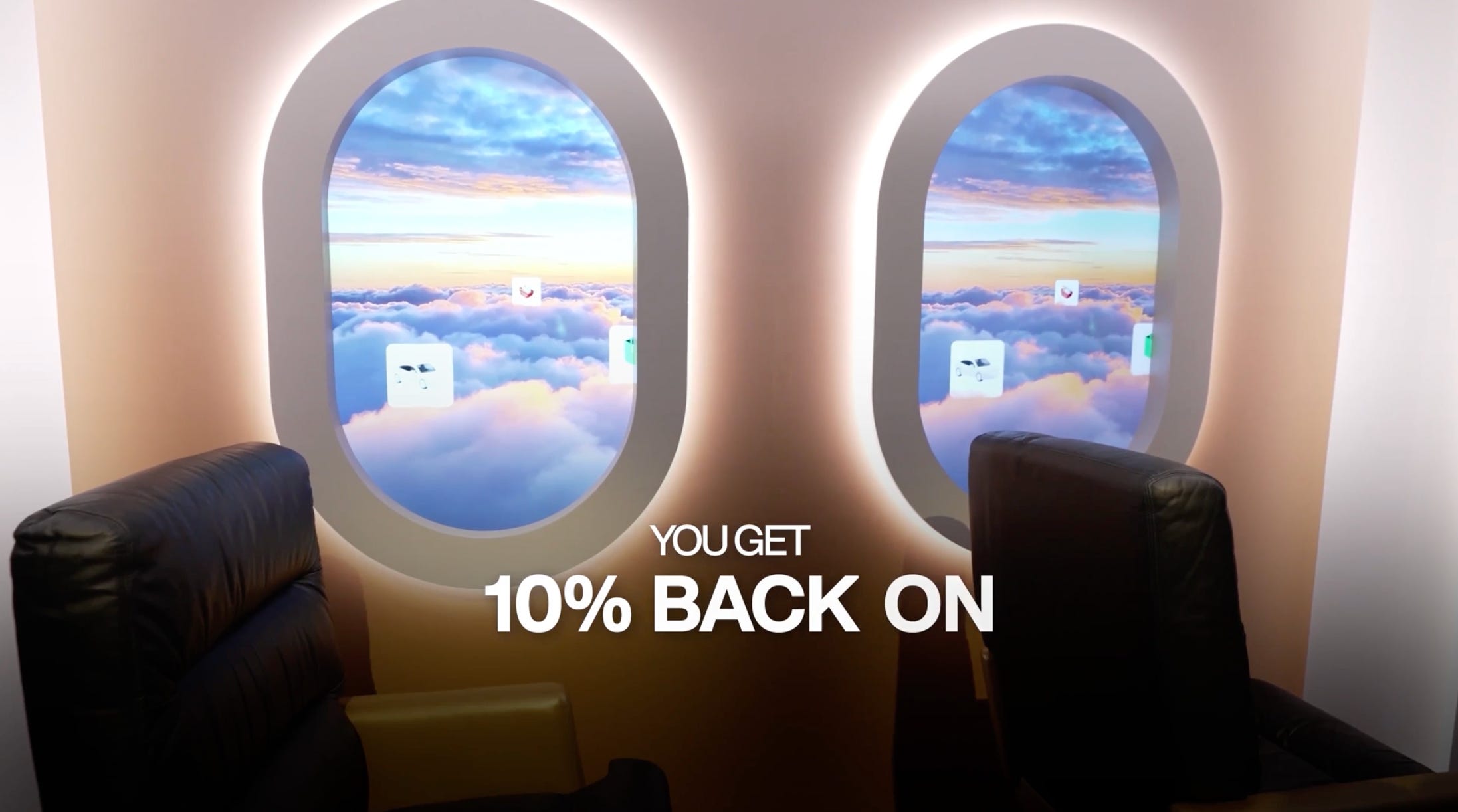
Combined with Uber’s existing payment and identity infrastructure, the booking experience compresses into something closer to ordering a ride than navigating a traditional travel site.

The AV Platform Strategy
Uber’s autonomous vehicle approach mirrors how it built the human driver network. Every safe driver welcome, regardless of who built them.
“We believe we have a platform strategy with AVs. Just like we want every safe human driver on the platform, we want every safe robot driver on the platform, whether it’s a Waymo or a Zoox or a WeRide.”
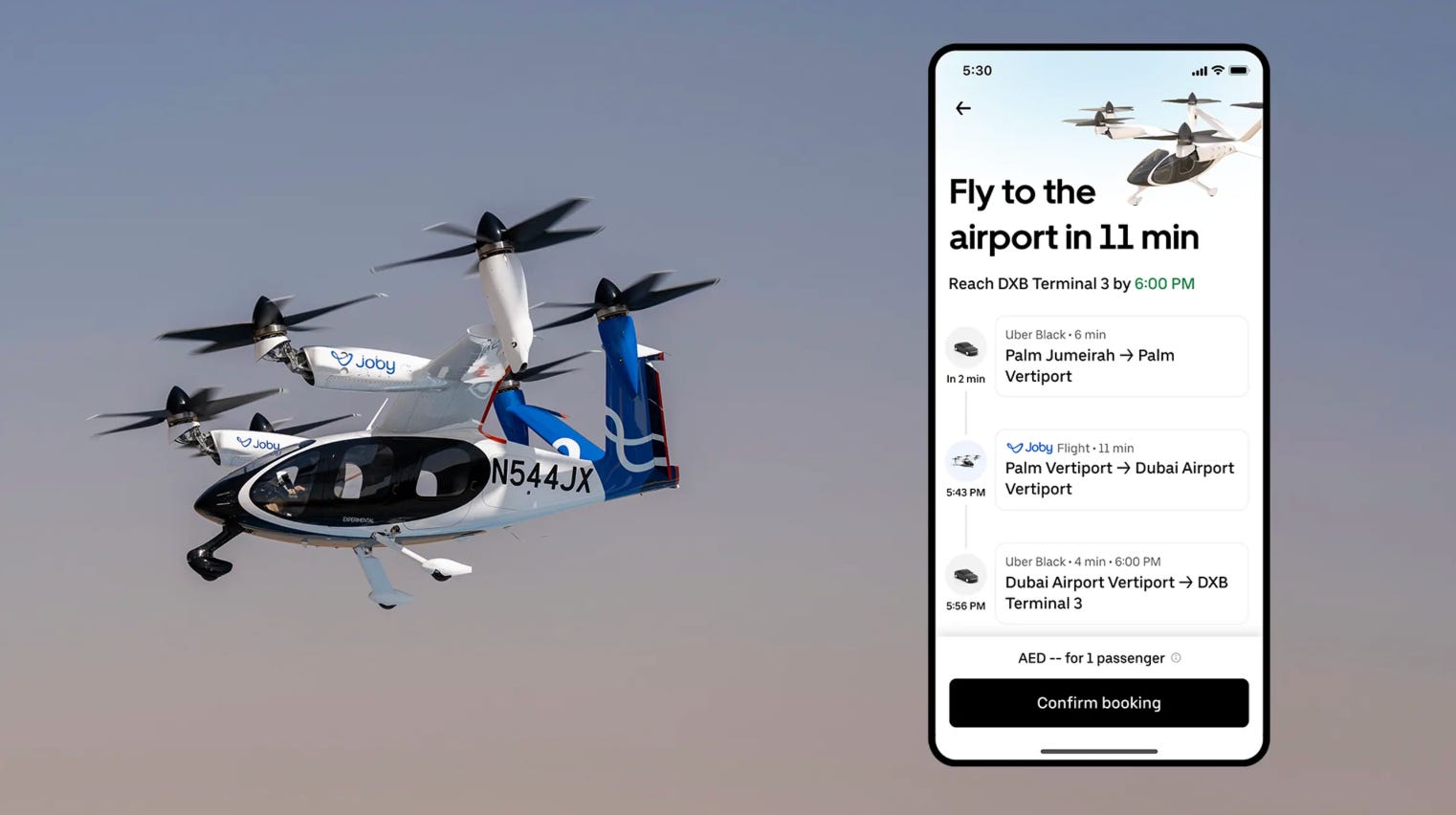
Uber is already live with Waymo in Austin and Atlanta, with Zoox, Wave, and WeRide launches in motion.
Joby Aviation is in the mix too, with the goal of eventually offering air taxi rides directly through the Uber app.
“There are a number of companies that are going to get to the finish line in terms of developing a digital driver that’s safer than a human driver. We think it’s going to be great for society. We want to help those companies get to market.”
What’s Next
Watching Dara walk through the showcase, the throughline was clear. Uber (NYSE: UBER) is leaning hard into building, shipping fast, and testing new ideas. As he put it,
“One of our philosophies is we just wanna build stuff. And if you’re not failing… we want to move faster. We want to take risks.”
From a full circle Expedia partnership to a platform built for both human and robot drivers, Uber’s next chapter is being written at the intersection of cross platform behavior, AI, and a willingness to ship before having all the answers. With $9.8 billion in free cash flow behind it and Q1 2026 already accelerating off that base, Uber has plenty of fuel to make those bets at scale.
→ Listen on X, Spotify, YouTube, Apple
The material presented on Molly O’Shea’s website are my opinions only and are provided for informational purposes and should not be construed as investment advice. It is not a recommendation of, or an offer to sell or solicitation of an offer to buy, any particular security, strategy, or investment product. Any analysis or discussion of investments, sectors or the market generally are based on current information, including from public sources, that I consider reliable, but I do not represent that any research or the information provided is accurate or complete, and it should not be relied on as such. My views and opinions expressed in any website content are current at the time of publication and are subject to change. Past performance is not indicative of future results.
Paid Endorsement. Brokerage services by Open to the Public Investing Inc, member FINRA & SIPC. Advisory services by Public Advisors LLC, SEC-registered adviser. Crypto trading provided by Zero Hash LLC, licensed by the NYSDFS. Generated Assets is an interactive analysis tool by Public Advisors. Output is for informational purposes only and is not an investment recommendation or advice. See disclosures at public.com/disclosures/ga. Matched funds must remain in your account for at least 5 years. Match rate and other terms are subject to change at any time.
This was one of your dopest interviews. I learned so much.