

USV Sizes UP
USV spent 20 years keeping its funds small on purpose. Its new $900M raise is the largest fund cycle in the firm’s history.
→ Listen on X, Spotify, YouTube, Apple
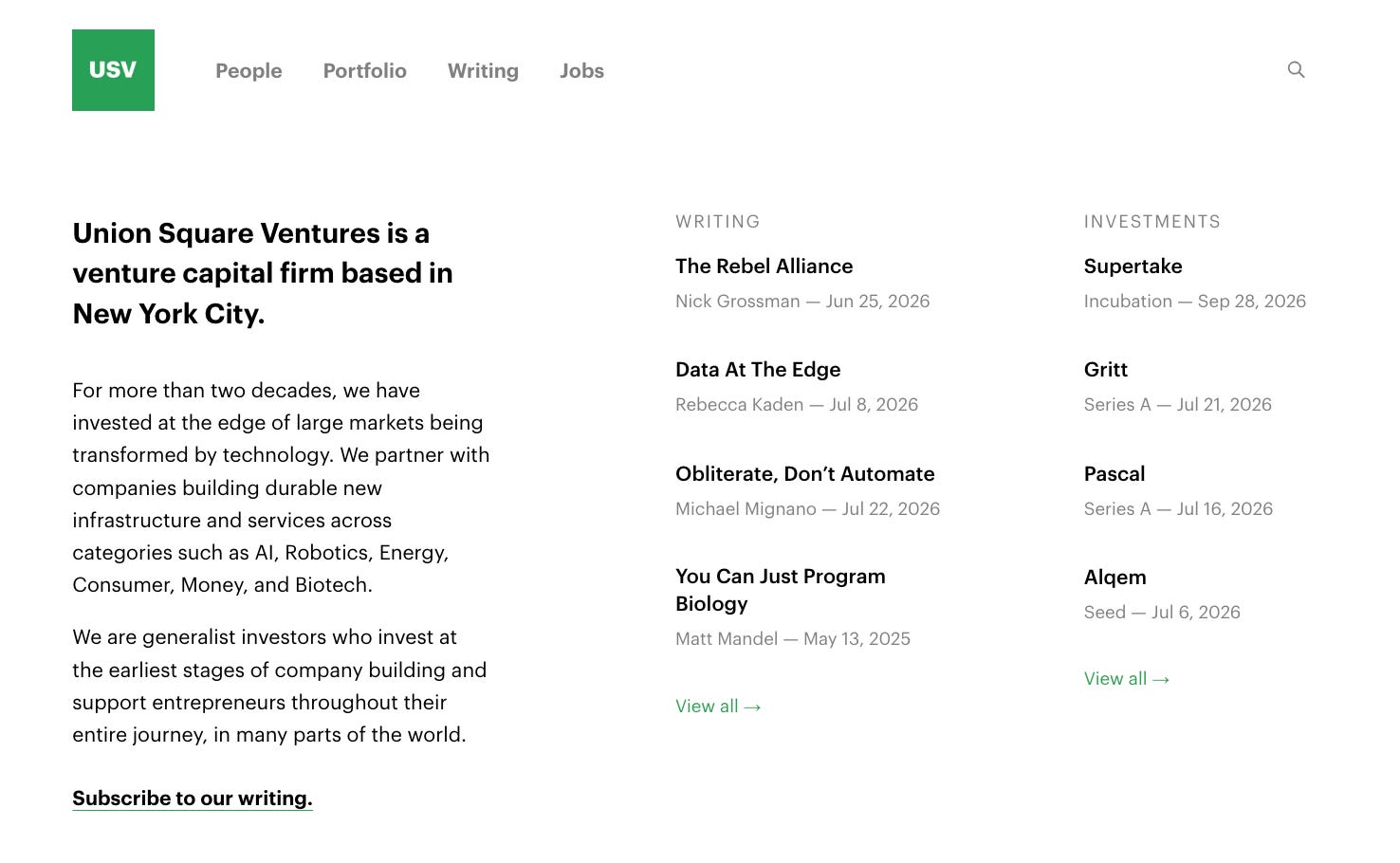
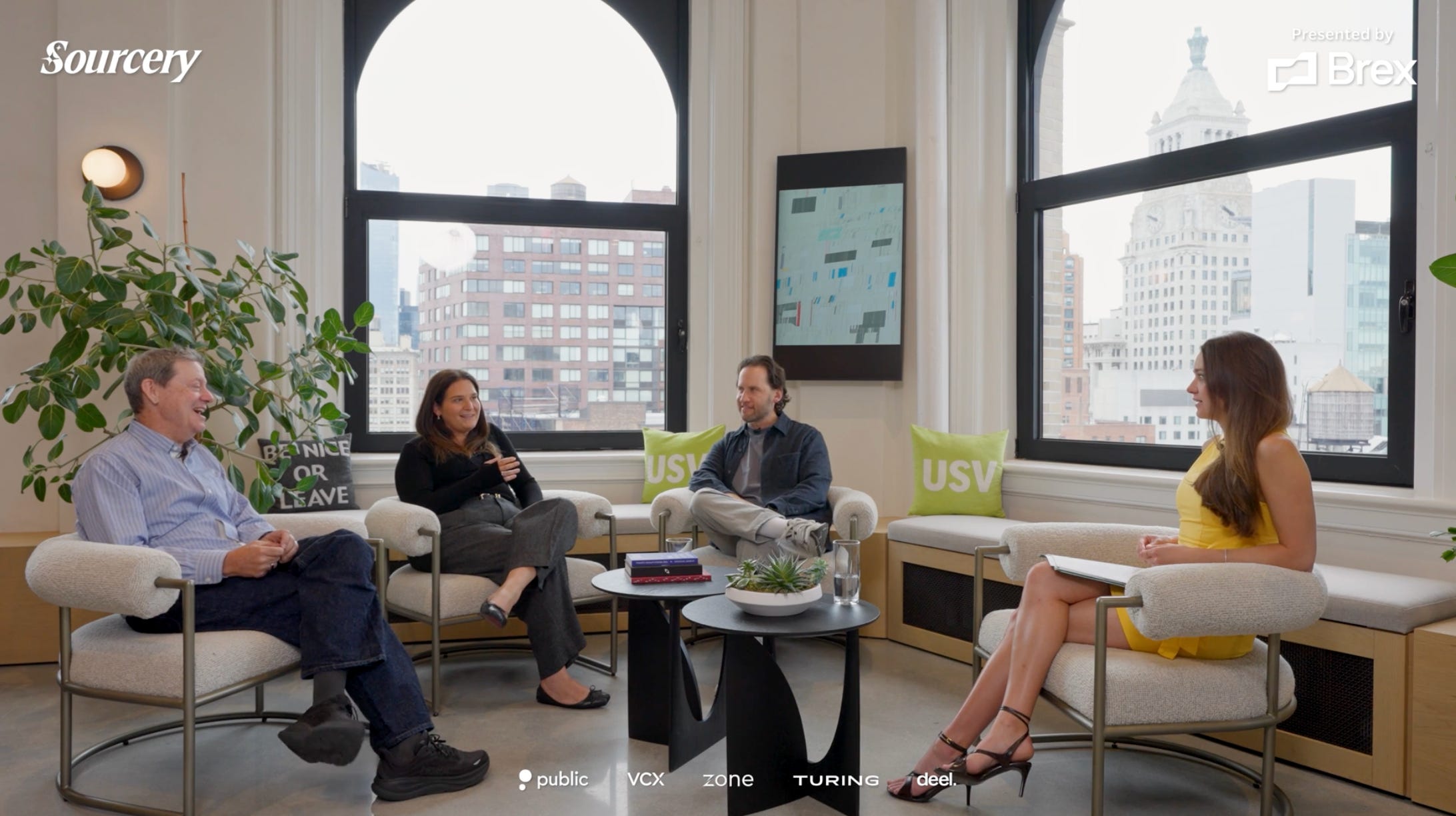
I sat down with USV General Partners Fred Wilson, Rebecca Kaden & Michael Mignano at the firm’s New York office to unpack why one of venture capital’s most disciplined early-stage firms is getting bigger now, and what they think the next era of AI will look like. Together with General Partner Nick Grossman, they’re leading USV into its next chapter.
USV was early to Twitter, Coinbase, Stripe, MongoDB, Twilio, Etsy, Duolingo and Abridge. More than 20 years after Fred Wilson and Brad Burnham laid out the firm’s original internet thesis, Fred believes AI today looks a lot like the internet in 2003. The infrastructure is here, but many of the defining applications have yet to be built.
We get into why AI is making products cheaper to build but breakout companies potentially more expensive to create, why ARR can hide weak retention, the growing importance of founder storytelling, personal AI agents, the “Rebel Alliance” around open AI infrastructure, and why energy may be one of the cleanest bets on AI.
At the center of USV’s new thesis is “obliterate, don’t automate.” Instead of making existing industries incrementally more efficient, AI could completely restructure them. Fred’s version is simple. Don’t hire a lawyer, use an AI lawyer. Don’t hire an accountant, use an AI accountant. Don’t hire a doctor, use an AI doctor.
𝐓𝐈𝐌𝐄𝐒𝐓𝐀𝐌𝐏𝐒
(00:00) Fred, Rebecca & Michael, GPs at USV
(01:12) USV's biggest fund ever: $900M
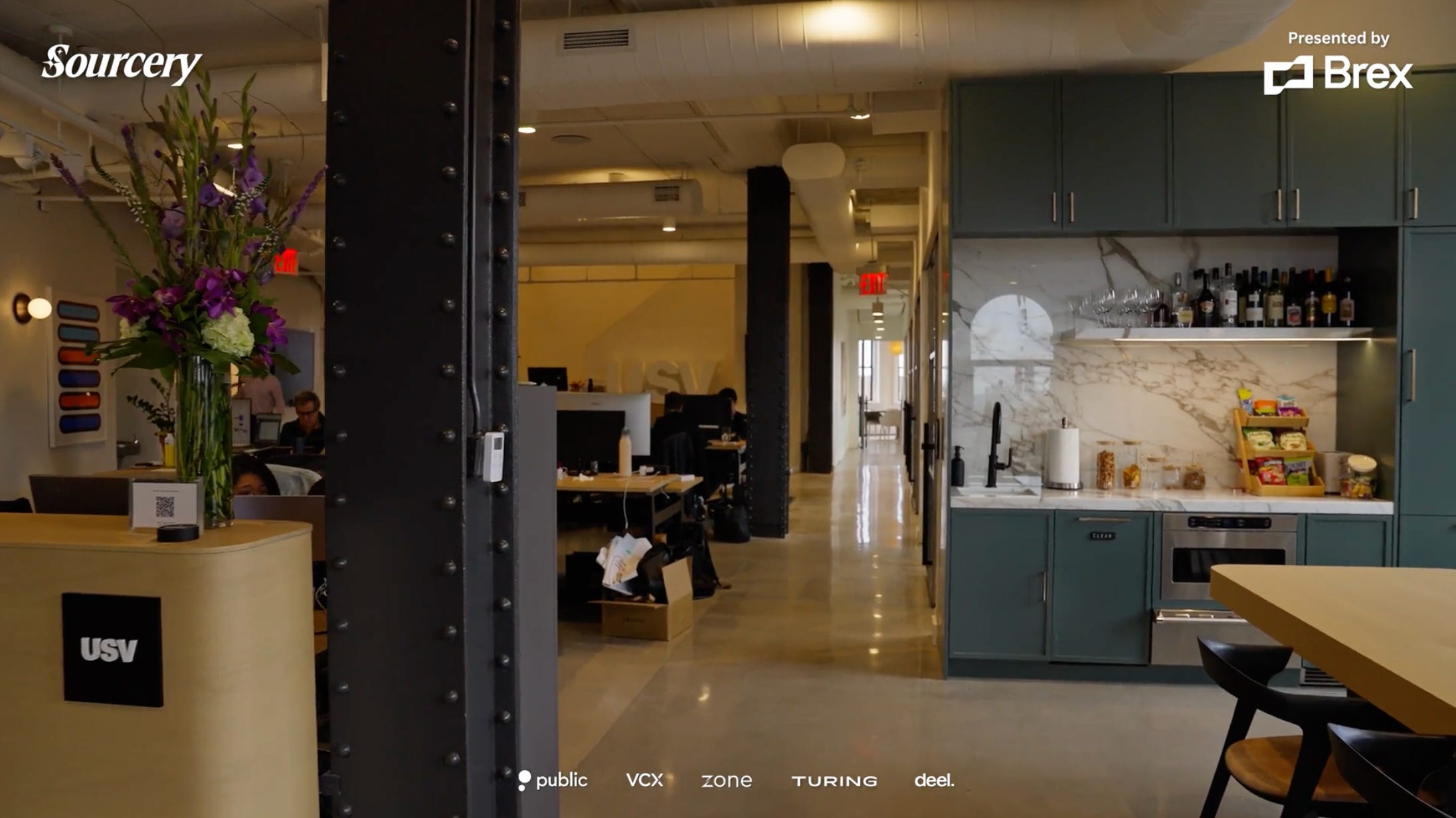
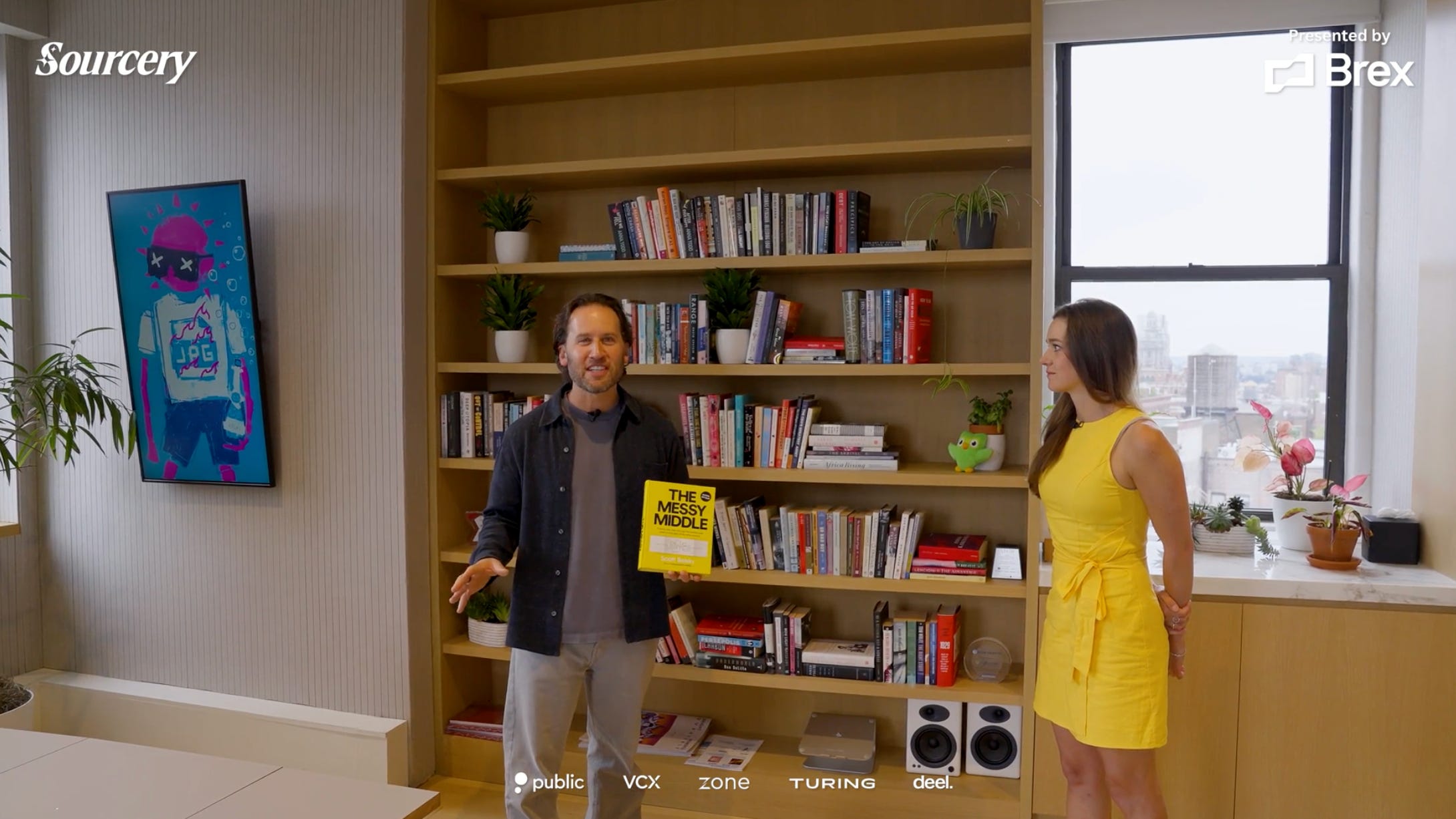
(02:13) Inside USV's New York office
(07:19) An AI agent that runs your portfolio
(12:38) Agents won't watch Netflix for you
(14:00) USV's new strategy for the AI era
(16:54) The real cost of building in AI
(21:03) The fight over monetizing Twitter
(23:54) Why Amazon is shutting out agents
(31:02) Why smaller funds pick better
(33:40) What Series A looks like now
(40:17) Is ARR a fake metric?
(46:00) 20 years of USV's biggest wins
(51:10) Why great founders still fail
(57:46) Will Anthropic compete with its customers?
(59:54) Why Coinbase moved off Claude
(1:01:44) An AI doctor that writes prescriptions
(1:04:09) Your AI lawyer is the worst it'll ever be
(1:08:29) Who protects you from your own AI agent?
(1:11:58) Fred Wilson's been hacked 4 times
(1:13:31) Coinbase: a security company in disguise
(1:16:28) Betting on markets that don't exist yet
(1:21:16) From first-time founder to Suno
Brought to you by:
Brex—The intelligent finance platform: cards, expenses, travel, bill pay, banking—wrapped into a high-performance stack. Built for scale. Trusted by OpenAI, Anthropic, Vercel, Granola, Deepgram, & Sourcery.. teams that move fast AF. visit → brex.com/sourcery

Zone—develops next-generation data center campuses, partnering with AI companies, site developers and technology leaders to bring compute online faster and at scale. Visit: zonefrontier.com
Turing—Turing partners with frontier AI labs to improve model capabilities in coding, reasoning, tool use, & multimodality, as well as with Fortune 500 enterprises to build & deploy end-to-end agentic AI systems in mission-critical workflows Visit: turing.com/sourcery
VCX—VCX is the public ticker for private tech, allowing investors of all sizes to invest in venture capital. View The Portfolio at GetVCX.com
Deel—Deel is the global people platform that helps startups hire, manage, pay, and equip anyone, anywhere. Trusted by more than 35,000 fast-growing companies, Deel is the people platform that just works, so teams can scale without the chaos. Visit: deel.com/sourcery
Public-–Investing platform Public just launched Generated Assets, which lets you turn any idea into an investable index with AI. With Generated Assets, you can build, backtest, refine, and invest in any thesis with AI. Gone are the days of one-size-fits-all ETFs. Try it today: public.com/sourcery
Inside USV’s $900M in New Funds: Fred Wilson, Rebecca Kaden & Mike Mignano
USV Closes $900M, Its Largest Fund Cycle on Record
Union Square Ventures has raised $900M in new funds, the largest fund cycle in the firm’s 23-year history. The raise includes $500M for its early-stage Core Fund and $400M for its Opportunity Fund, which USV uses for later-stage deals and follow-on investments in existing portfolio companies.
The Core Fund is up 82% from USV’s last early-stage fund, $275M raised in 2024. The Opportunity Fund is up 14% from its previous $350M fund. For comparison, the 2016 Core and Opportunity funds each closed at $175M, and the 2019 cycle closed at $200M for Core and $250M for Opportunity. Put simply USV’s early-stage fund has grown way past its ‘concentrated’ strategy from $175M in 2016 to $500M in 2026 to fit the new AI era.
→ Listen on X, Spotify, YouTube, Apple
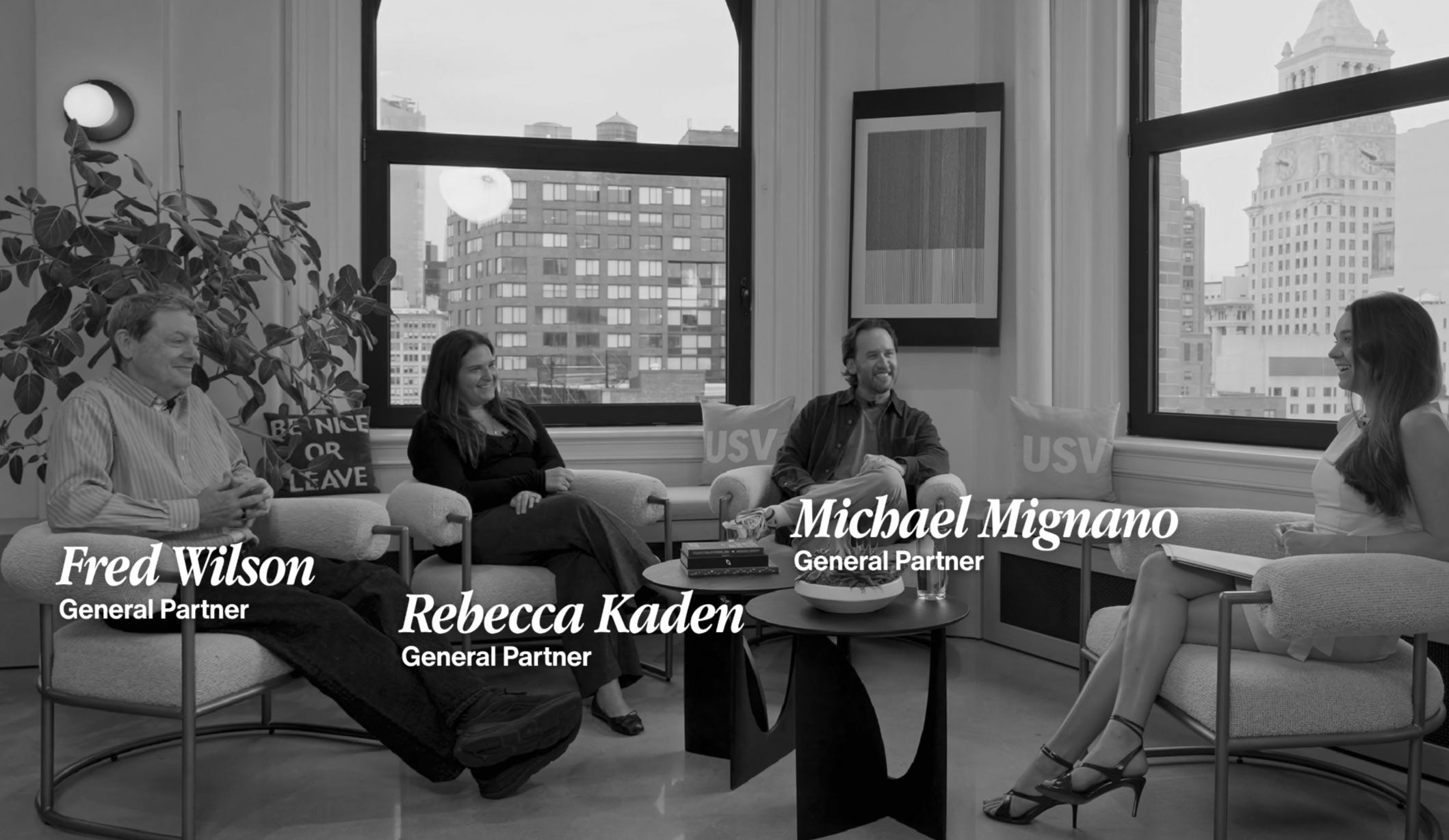
USV’s General Partners are Fred Wilson, Rebecca Kaden, Nick Grossman, and Mike Mignano. Fred, Rebecca, and Mike sat down at USV’s New York office for this conversation. Nick was out of town for the recording.
“The outcomes are bigger, the swings are bigger... and the rounds are bigger and more expensive and faster, and we are evolving our strategy to keep up with that and really be able to attack that market.” - Rebecca Kaden
The firm describes the size as an output of portfolio construction.
“We don’t raise funds as vanity metrics. It’s not like, ‘We gotta hit a billion,’ or, ‘We gotta hit two billion.’” - Mike Mignano
From a $125M First Fund to a 4-GP Partnership
USV was founded in New York in 2003 by Fred Wilson and Brad Burnham. Burnham came from AT&T Ventures, which he joined in 1993, and cofounded TACODA in 2001 before starting USV with Wilson.
The first fund took 18 months to raise. Wilson and Burnham went through more than 100 LP rejections before UTIMCO committed $25M of a $125M fund, which led to a first close within a few months. As of February 2023 (older data), UTIMCO reported a 13.8x return on that first fund and a blended 9.1x across 7 USV funds it backed from 2004 to 2014.
In 2004, Wilson and Burnham wrote a memo to their first LPs arguing that early stage companies building on now-ubiquitous internet infrastructure would generate superior returns.
The first fund backed Twitter, Etsy, & Indeed.
The second backed MongoDB & Twilio.
Later funds backed Coinbase, Duolingo, & Abridge.
Fred Wilson compared the current AI market to the period when that memo was written.
“The infrastructure was there. We had Google, we had Amazon, we had Yahoo, we had eBay, but we didn’t yet have Facebook, we didn’t yet have Twitter, we didn’t yet have YouTube, we didn’t yet have iPhone.” -- Fred Wilson
The partnership has expanded slowly. Rebecca Kaden left Maveron in October 2017 to join USV as a general partner, becoming the firm’s first female partner. Nick Grossman, previously USV’s general manager of special projects, was promoted to partner in 2019 with a focus on cryptonetworks and blockchain. Mike Mignano cofounded and ran Anchor, which Spotify acquired in 2019, and later was a Partner at Lightspeed, where he led early investments in Granola and Suno.
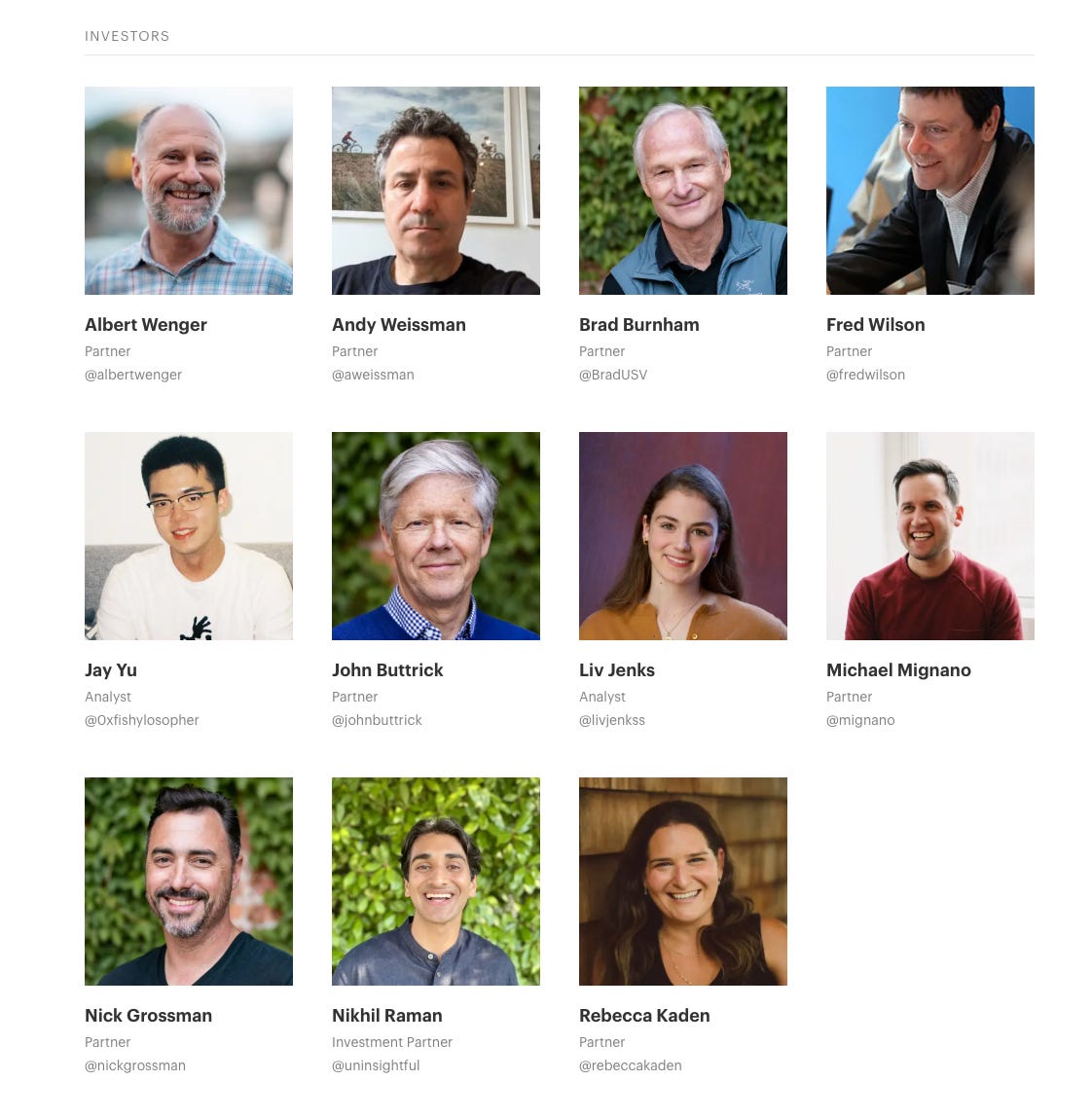
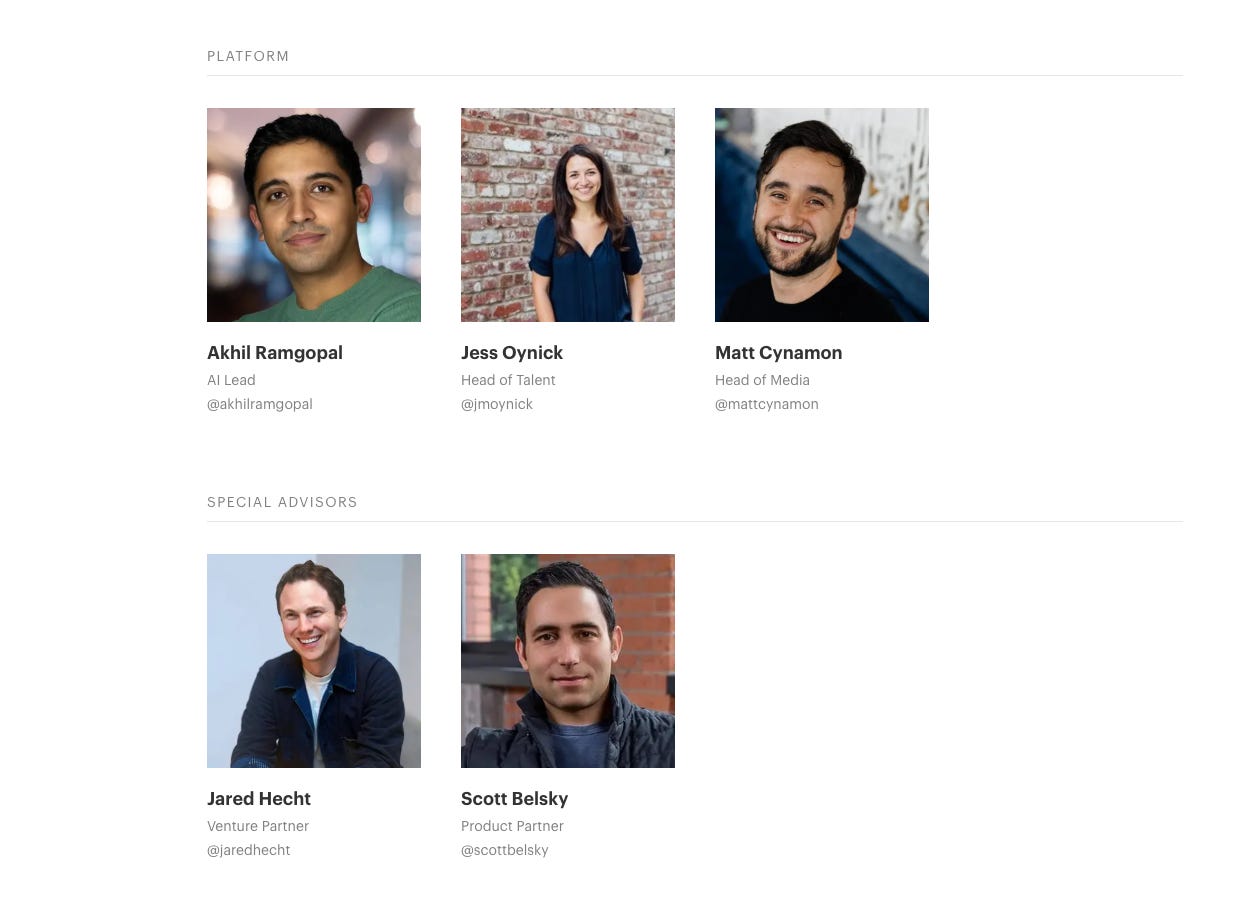
Over the past 18 months, USV also added Venture Partner Jared Hecht, cofounder of GroupMe and Fundera, and Product Advisory Partner Scott Belsky, cofounder of Behance and former CPO at Adobe. The core investment team is Fred Wilson, Rebecca Kaden, Nick Grossman, Mike Mignano, and Nikhil Raman. Andy Weissman, Albert Wenger, John Buttrick, and Brad Burnham continue to support the firm and its portfolio.

LPs Asked USV to Raise More
USV runs quarterly LP calls covering strategy, portfolio performance, and what is and is not working. The move from prior fund sizes to $900M was discussed with LPs well ahead of the raise. USV added new LPs alongside its existing base.
“I was a little surprised how many of them said, ‘Are you sure you shouldn’t raise more?’” -- Rebecca Kaden
USV kept the fund below the size LPs would have supported. The partners cite 3 reasons. A smaller fund is easier to return and reach carry. It allows USV to be selective without needing a set percentage of a market. It keeps incentives tied to portfolio company performance.
USV’s return math does not depend on trillion-dollar outcomes.
“If our biggest winners are in the single digit billions, given our fund size and our ownership, we can produce really, really healthy returns for our partners.” -- Fred Wilson
Several of USV’s largest winners have exited in the $10B range, with a few outliers at $50B to $100B.
Series A Checks Now Start at $10M
USV has focused on Series A since its founding, with some seed. When the firm started, Fred Wilson expected to write $3M Series A checks. A typical Series A today starts at $10M, and some are $100M or more.
USV plans to lead or co-lead its investments. Series A checks from the new funds are expected to range from $10M to $30M. Mike Mignano expects 30 to 40 companies from this fund cycle, with more seed deals than USV has done historically.
“The Series A checks in this fund will probably be $10-30M in order to do that. They don’t have to be the whole round, so the rounds could be bigger than that.” - Rebecca Kaden
The larger check size is a response to round sizes. USV’s stage focus, ownership targets, and deal count are unchanged.

Incubations & Proprietary Seeds Could Be Up to Half of Seed Deals
USV is adding 3 seed strategies the firm has rarely used. The first is pure founder bets. The second is incubation, where USV builds a product inside the partnership. The third is what Fred Wilson calls proprietary seeds, where USV develops an idea, recruits a founder, and writes the first 2 checks before the company raises from outside investors.
“I think maybe those will make up as much as a third to a half of all the seed investments we make.” - Fred Wilson
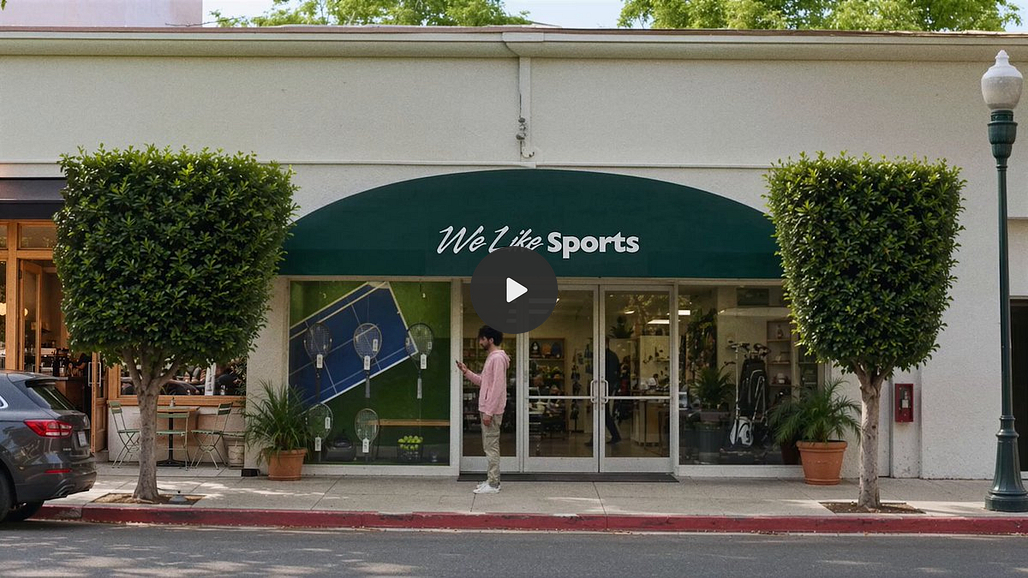
Supertake is the first incubation released. Mike Mignano introduced it on September 28 as a private-beta product that converts an investing thesis into a portfolio and can route trades through a user’s brokerage account. The agent invests through Robinhood or Coinbase accounts, monitors news on the positions, and rebalances automatically. Mignano described Supertake as a USV-incubated startup with cash in the bank and equity available for founding hires.
Jared Hecht, Scott Belsky, and Mike Mignano lead much of this work given their operating backgrounds.

Compute Costs & Subsidized Inference Change the Cost Base
Building software is cheaper than it was. Operating and scaling an AI company is not. Compute is now a major line item, and startups increasingly subsidize inference so customers can use products without paying up front.
“If you look at the fundamental cost that companies are spending on compute, it’s in a totally different hemisphere than it’s ever been.” - Rebecca Kaden
OpenAI, Anthropic, and Google still offer free tiers of their core chat products, which limits how startups can price.
“A startup can’t come in and charge for something that their competitor is giving for free.” -- Fred Wilson
Fred Wilson compared the current funding pattern to Twitter. Twitter’s original financing was $5M, followed by $25M a year later and $100M the year after. Multiplied by 10, that sequence is $50M, $250M, and $1B, which matches the round sizes in AI today.
The rest of USV’s portfolio carries its own capital needs. Energy companies and full-stack robotics companies building their own models have different cost structures than software and often require different types of capital.
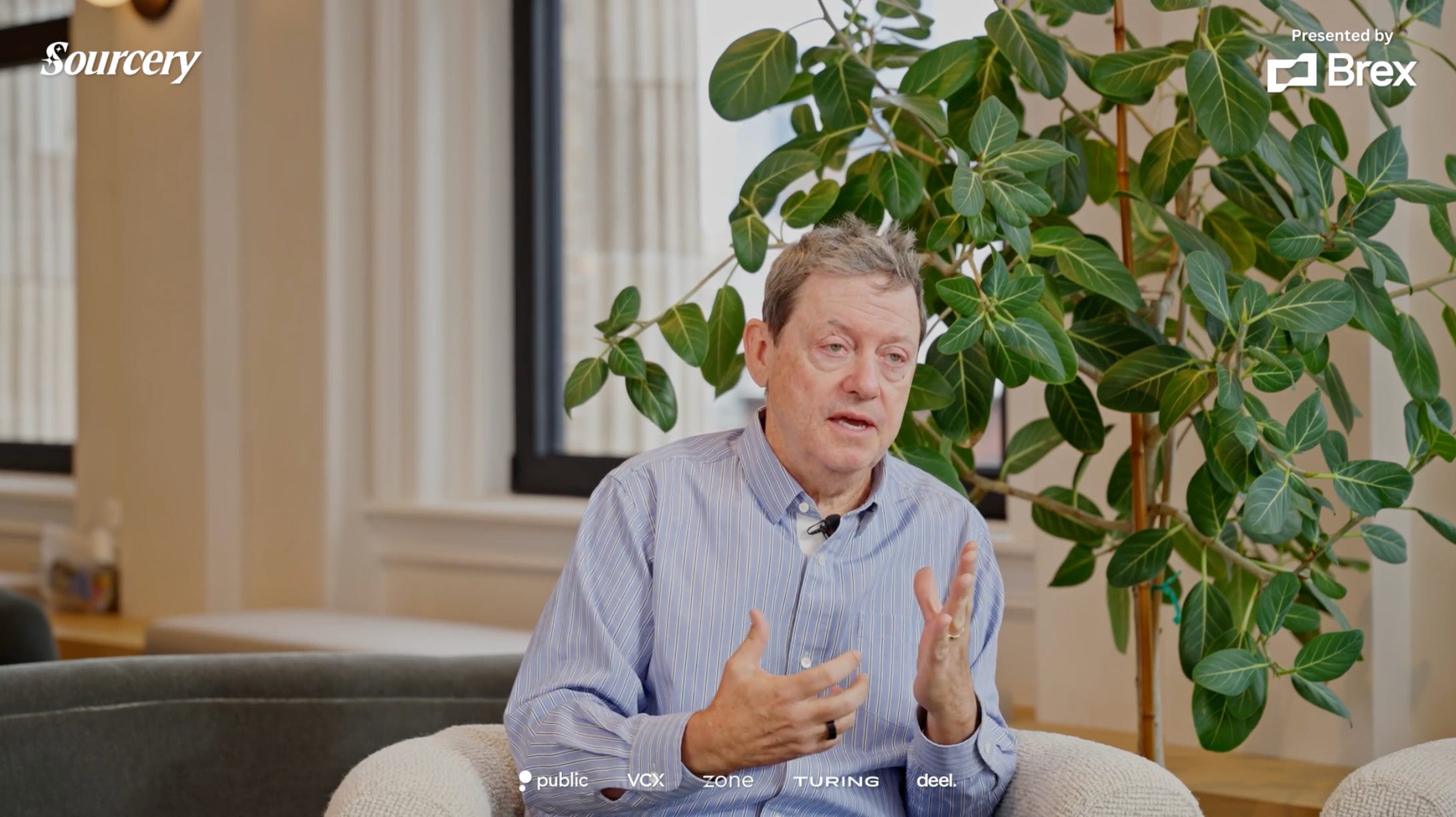

Retention Over ARR in a High-Trial, Low-Engagement Market
USV weights usage retention above revenue when evaluating consumer and AI application companies. Many AI products are sold on annual subscriptions, and many require payment before a user can try them. Revenue can hold for 1 to 3 years while usage declines.
“I think it’s easier than ever before to get somebody to pay for a product via subscription without knowing if they actually like that product.” - Mike Mignano
USV tracks how often users return, daily, weekly, or monthly, and whether they churn after the first month. The firm combines hands-on product use with cohort data and looks for agreement between the two.
“Trial behavior is at an absolute high and engagement behavior is at an absolute low.” - Rebecca Kaden
Because full retention data is rarely available at seed or Series A, USV looks for proxies, including how quickly a team ships product changes that keep users engaged. Rebecca Kaden also expects multiplayer features to be the source of network effects in AI applications, which USV has not yet seen at scale.


4 Theses, Including Energy at 20% to 30% of the Portfolio
USV is investing across 4 theses.
Obliterate, don’t automate: USV backs application-layer companies that replace existing markets with AI. Doctronic is one example, an AI doctor that can write prescriptions in some states. USV uses an internally trained legal model, and Fred Wilson said 20% to 30% of USV’s legal work, including term sheets, no longer involves a human lawyer.
“Don’t hire a lawyer, use an AI lawyer. Don’t hire an accountant, use an AI accountant. Don’t hire a doctor, use an AI doctor.” - Fred Wilson
Previously unreachable data: USV invests in companies aggregating data that could not be reached until now, through physical intelligence or AI that unlocks offline data. The thesis covers software businesses as well as robotics, manufacturing, sensor networks, and businesses that scale from online to offline.
The Rebel Alliance: USV expects consumers and enterprises to seek more powerful intelligence while demanding tighter incentive alignment on trust, security, memory, and cost. On tape, Fred Wilson tied this to developers building on open source models, open weight models, and harnesses to avoid dependence on a closed stack. He said the Coinbase CTO described moving its coding agent harness off Claude onto Pi, an open source harness from USV portfolio company Earendil, and that Shopify has done the same. Earendil, founded by Flask creator Armin Ronacher, acquired Pi from its author Mario Zechner on April 8. Pi's GitHub repository showed 54.5k stars and 209 contributors as of May 2026.

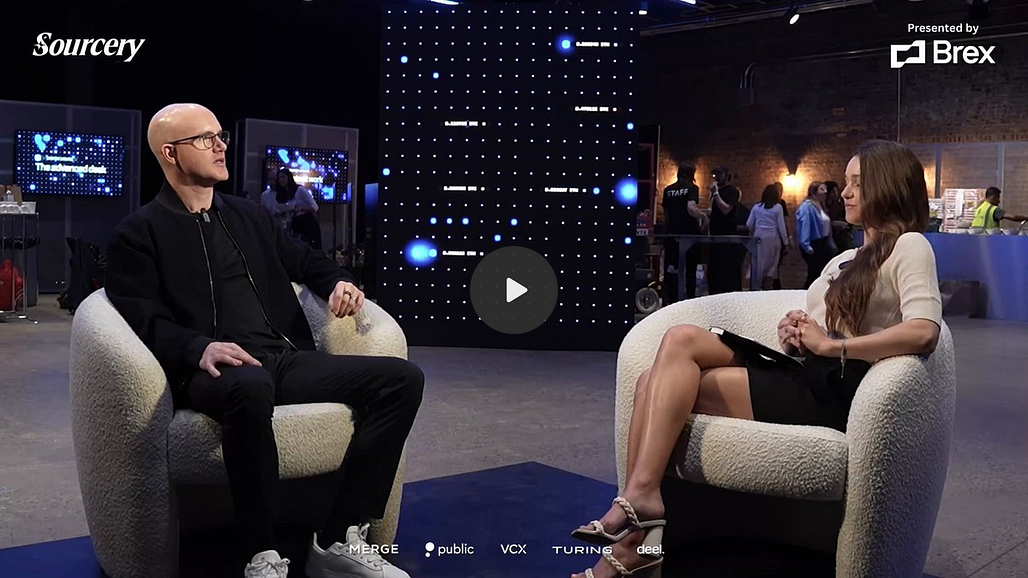
Energy: USV began investing in energy through a dedicated fund in 2021, and that thesis now merges into the Core Fund. Energy is 20% to 30% of the portfolio. USV invested in Radiant in 2021. Radiant raised more than $300M about 6 months after its $165M Series C to mass-produce Kaleidos, a 1MW microreactor selected for testing at Idaho National Laboratory's DOME facility beginning in summer 2026, with customer deployments targeted for 2028. The round was led by Draper Associates and Boost VC and funds a reactor factory in Oak Ridge, Tennessee.
“If you really want just a simple way to bet on AI, and not have to think about all this other stuff, just bet on energy.” - Fred Wilson
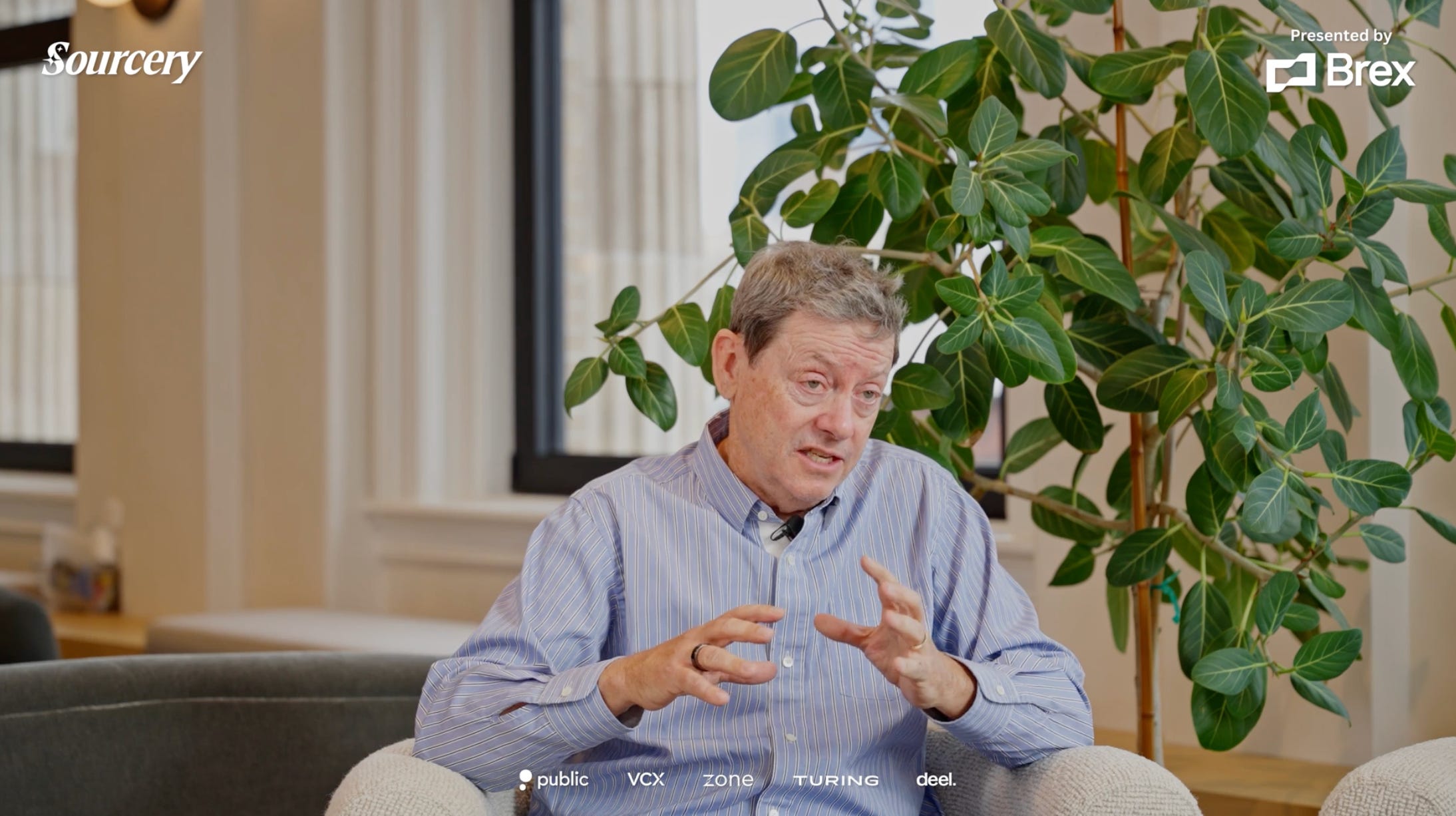

Personal Agents, Security, & the Coinbase Trust Model
Fred Wilson expects every major platform to offer its own agent, with consumers also running a personal agent that negotiates with platform agents on their behalf. Today, agents log into services as the user. Amazon recently blocked Muse from accessing its site.
“We do believe that people will want their own agents that represent them as opposed to my Amazon, only having my Amazon agent.” - Fred Wilson
Agents create new consumer security problems, with email access as one example.
“If you give your agent access to your email, which is where all your password reset emails go, they just automatically will be able to access literally every account you own.” - Mike Mignano
USV portfolio company Common Fabric builds a sandbox for agent permissions. Rebecca Kaden also pointed to on-device models, private models, and biometric proof of humanity as categories that may gain demand. A USV partner recently met a company running local models on phones.
Fred Wilson has held crypto for 15 years, has been hacked 4 times, and has kept roughly 99% of his holdings. Coinbase, where he remains on the board, built its brand on cold storage, two-factor authentication, and delayed withdrawals. Rebecca Kaden sees a similar opening for trusted brands in AI.
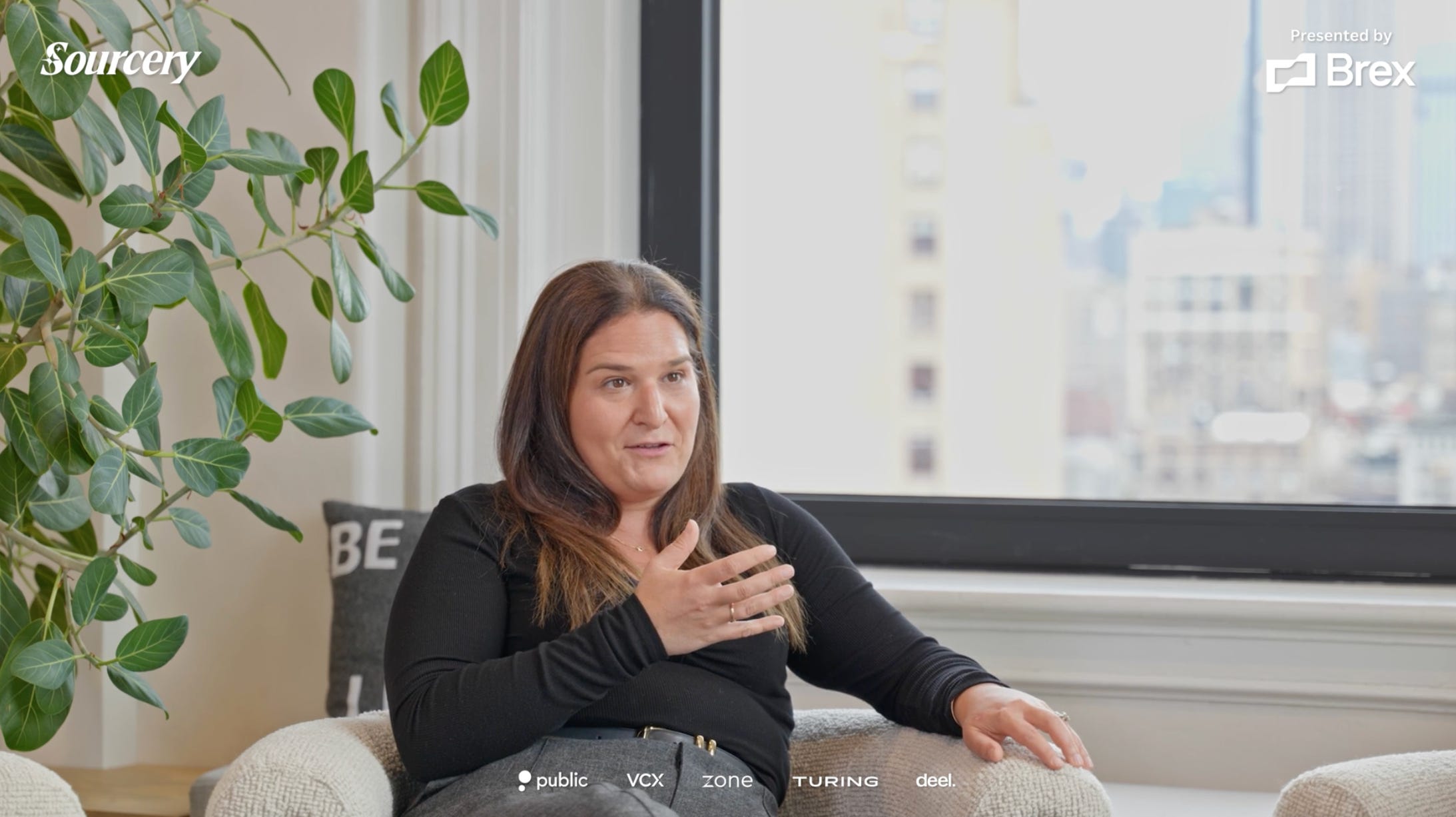
Abridge, Duolingo, & Coinbase Took Non-Linear Paths
Every USV early stage fund has produced 2 to 3 standout companies, and Fred Wilson counts 20 to 25 extraordinary companies across the firm’s history.
“It’s usually two or three, maybe four companies per fund end up being the stars of that fund.” - Fred Wilson
Abridge, a 2016 fund company, started as a consumer product for patients to record doctor’s appointments. The company moved to selling to physicians. CEO Shiv generated revenue from a single product for 5 to 6 years, then launched 2 new product lines in the last 12 months.
Duolingo’s first product translated foreign language documents. Coinbase grew in steps, with breakouts in 2017 and 2019 before going public. Indeed started with 2 founders and a few engineers and is now one of the largest hiring platforms in the world. USV sold its Indeed stake more than a decade ago.
“What you learn you’re backing is not that. You’re backing a team, a product sense, and a direction.” - Rebecca Kaden
USV’s diligence on founders centers on recruiting ability, speed of decision making, and control of the market narrative. Rebecca Kaden said hiring is harder than ever given compensation at labs and heavily funded startups, and that markets now designate category winners well before the business reflects it.
→ Listen on X, Spotify, YouTube, Apple
The material presented on Molly O’Shea’s website are my opinions only and are provided for informational purposes and should not be construed as investment advice. It is not a recommendation of, or an offer to sell or solicitation of an offer to buy, any particular security, strategy, or investment product. Any analysis or discussion of investments, sectors or the market generally are based on current information, including from public sources, that I consider reliable, but I do not represent that any research or the information provided is accurate or complete, and it should not be relied on as such. My views and opinions expressed in any website content are current at the time of publication and are subject to change. Past performance is not indicative of future results.
Paid Endorsement. Brokerage services by Open to the Public Investing Inc, member FINRA & SIPC. Advisory services by Public Advisors LLC, SEC-registered adviser. Crypto trading provided by Zero Hash LLC, licensed by the NYSDFS. Generated Assets is an interactive analysis tool by Public Advisors. Output is for informational purposes only and is not an investment recommendation or advice. See disclosures at public.com/disclosures/ga. Matched funds must remain in your account for at least 5 years. Match rate and other terms are subject to change at any time.