


Brought to you by:
Brex—The intelligent finance platform: cards, expenses, travel, bill pay, banking. Built for scale. Trusted by OpenAI, Anthropic, Vercel, Granola, Deepgram, & Sourcery.. teams that move fast AF. visit → brex.com/sourcery

Brad Gerstner Brings a $100 Calcium CT Scanner to the All-In Summit
Brad Gerstner & Jason Chang are trying to turn the CAC heart scan into the “mammogram for the heart.”
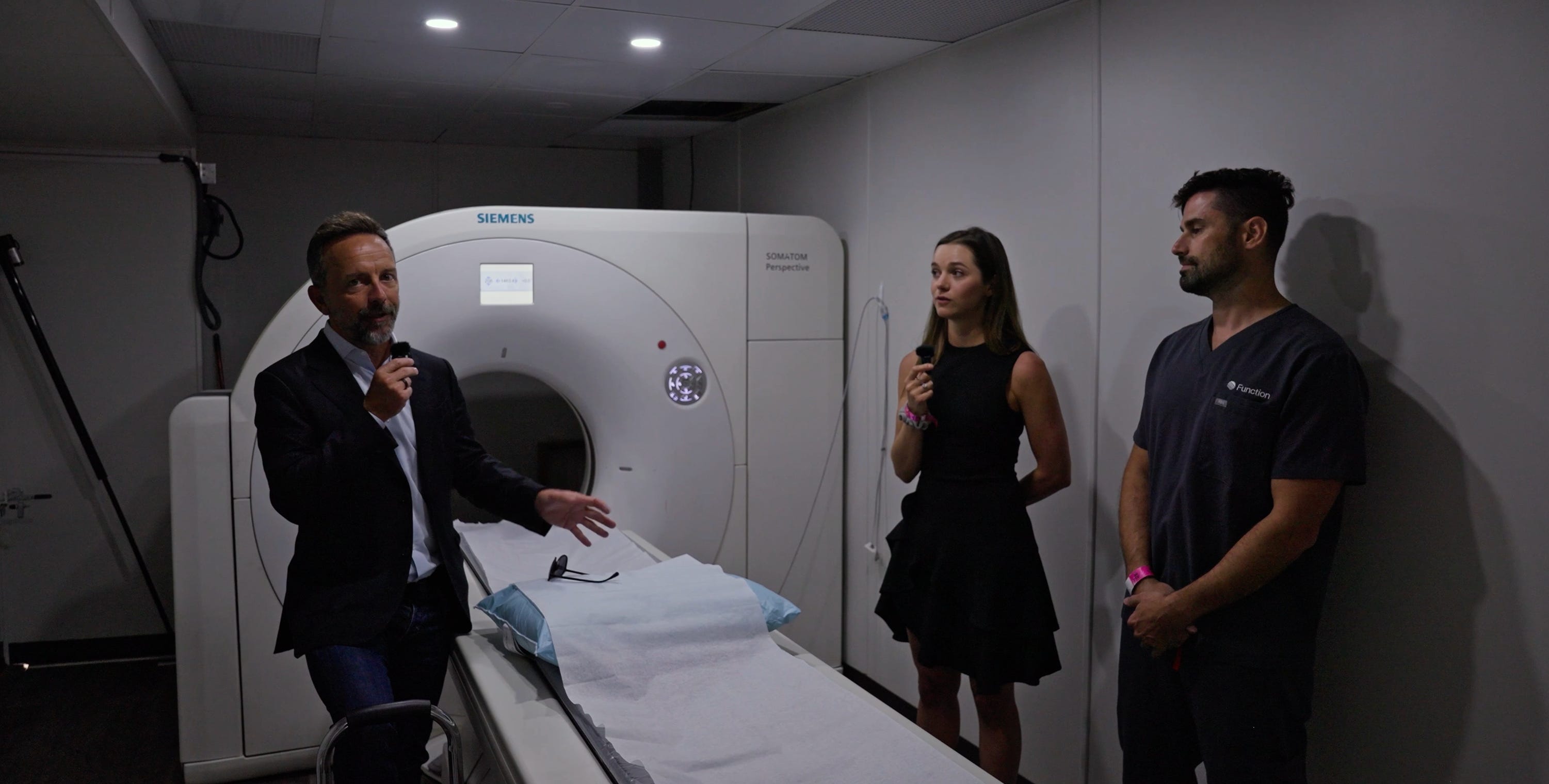
Altimeter founder & CEO Brad Gerstner parked a mobile calcium CT scanner at the All-In Summit and ran attendees through it over 2 days. He bought the trailer about a year ago. The scan costs ~$100, is non-invasive, and measures calcified plaque in the coronary arteries.
→ Listen on X, Spotify, YouTube, Apple
The trailer is part of Gerstner’s work with the Center for Heart Attack Prevention, which he founded alongside Jason Change to make the coronary artery calcium (CAC) scan a routine screening test in the US. He was joined on site by Rob Goldberg, whose brother, former SurveyMonkey CEO Dave Goldberg, died of undiagnosed heart disease at 47.
“My brother had passed a running EKG five months before he dropped dead from heart disease, from undiagnosed heart disease.”
Dave’s death became the foundation for Sandberg’s book Option B, co-written with Adam Grant, about grief, resilience & rebuilding life after devastating loss.
Now Brad Gerstner, Rob Goldberg, Jason Chang & the rest of the besties, & the team behind the Center for Heart Attack Prevention want to prevent more families from experiencing the same thing, pushing for earlier detection, broader access to CAC scans & changes to the standard of care.
We go inside the mobile scanner:
› Why Brad calls CAC scanning the “mammogram for the heart”
› The Goldberg family’s experience with undiagnosed heart disease
› Why cholesterol & traditional testing can miss cardiovascular risk
› What CAC scores actually tell you
› Difference between a calcium CT scan & an angiogram
› Why Brad bought his own mobile scanner
› The “buy one, give one” model for expanding access
› Brad’s push to bring CAC screening to 40 million Americans a year
› How a roughly $100 scan could potentially prevent thousands of premature deaths
› Why Brad believes health data gives people the power to take action
𝐓𝐈𝐌𝐄𝐒𝐓𝐀𝐌𝐏𝐒
00:00 Brad Gerstner & Rob Goldberg
00:10 CAC Scanner Moonshot
01:53 Rob’s Family Tragedy
04:39 Center Missions and Prevention
05:37 Why Cholesterol Became Standard
10:07 Overcoming Fear and Insurance
12:29 CAC vs Angiogram Guidance
14:43 Where the Trailer Goes Next
16:40 Inside the Scanner Demo
20:48 Why Labs Miss Risk
23:27 Final Call to Action
Goal: Reach 40M Scans a Year
→ Listen on X, Spotify, YouTube, Apple
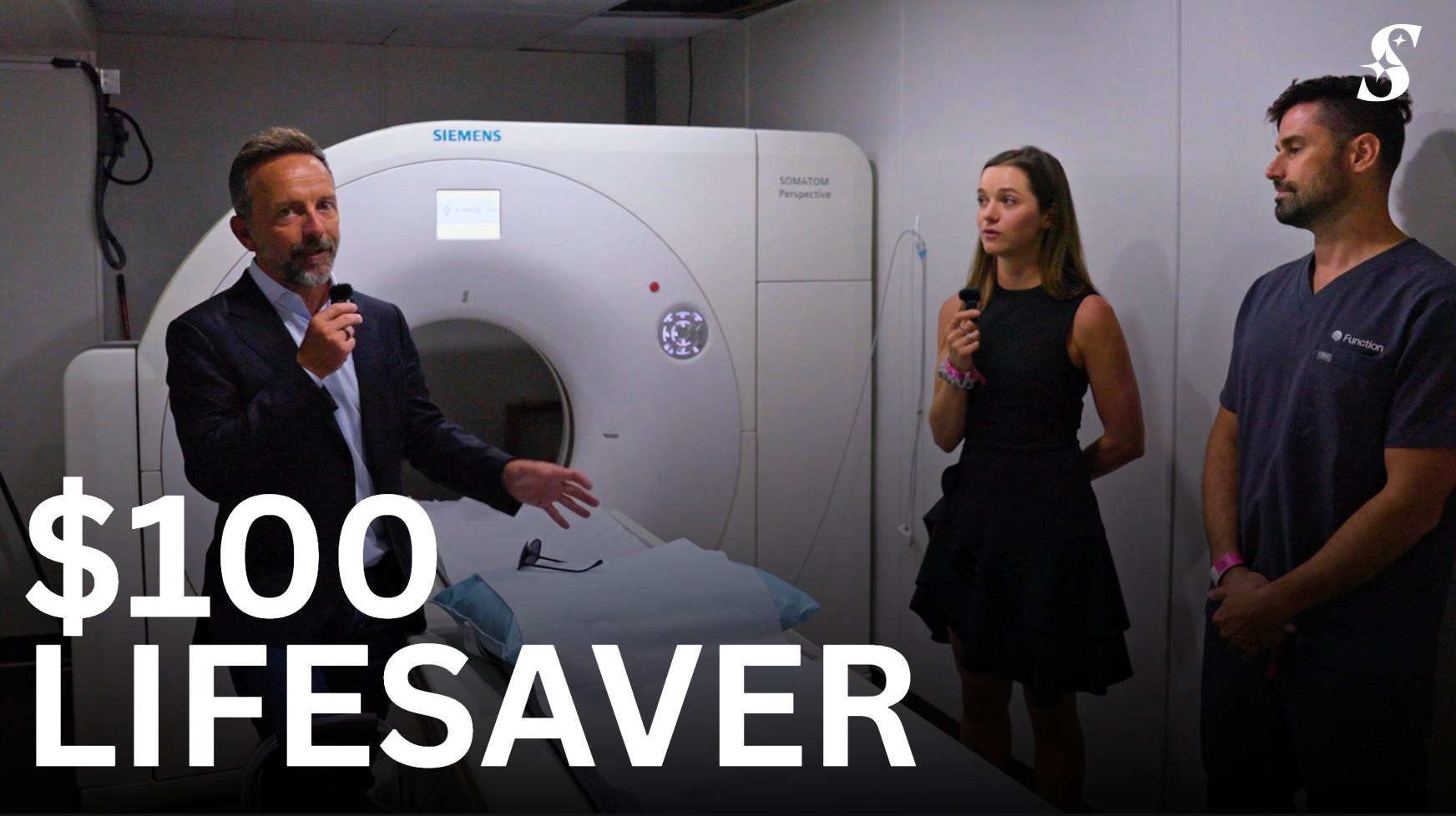
Gerstner cites 800,000 US deaths per year from heart disease, the leading cause of death in the country. The US performs roughly 40 million mammograms a year and about 1 million calcium CT scans. His target is 40 million CAC scans a year, which he estimates would save 50,000 lives and $20B in government spending on care.
If we turn the calcium CT scan into the mammogram for the heart, we will save 50,000 lives a year.
Breast cancer kills roughly 40,000 Americans a year by Gerstner’s count, against 800,000 for heart disease, and the country runs 40x as many mammograms as calcium CTs. He points to breast cancer screening as the model for heart health.
Mammograms, they invented the playbook for preventative medicine and I would like to copy that playbook for heart health.

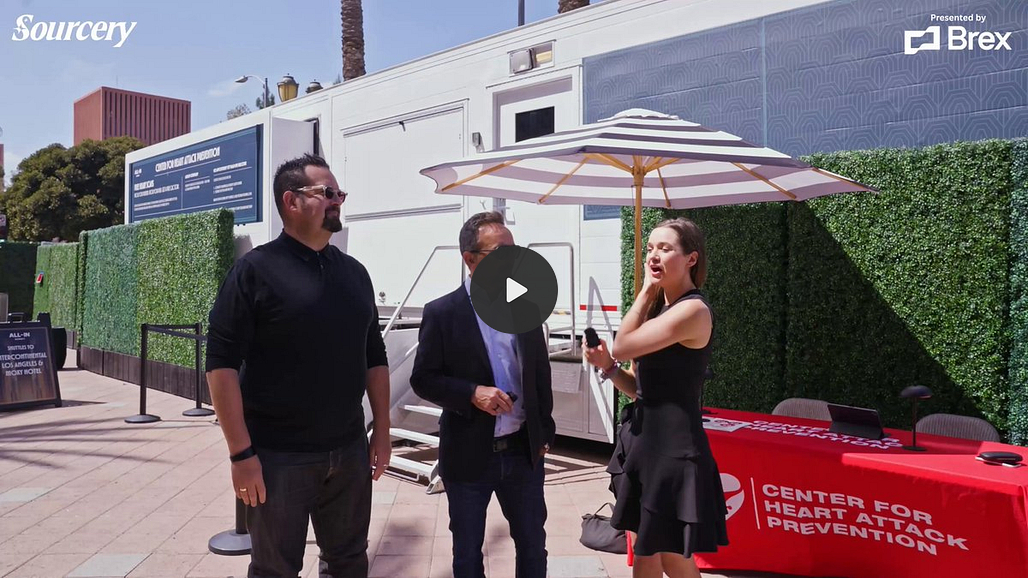
Rob Goldberg on the Loss of His Brother, Dave Goldberg
Rob Goldberg, his brother Dave, and a group of friends were in Mexico for the 50th birthday of Phil Deutch, another friend in the group. They spent the afternoon together by the pool. Early that evening no one could find Dave. Rob and his sister-in-law, Sheryl Sandberg, began searching and found him collapsed in the gym of the house. Rob performed CPR & Dave was taken to the hospital. He had died hours earlier.
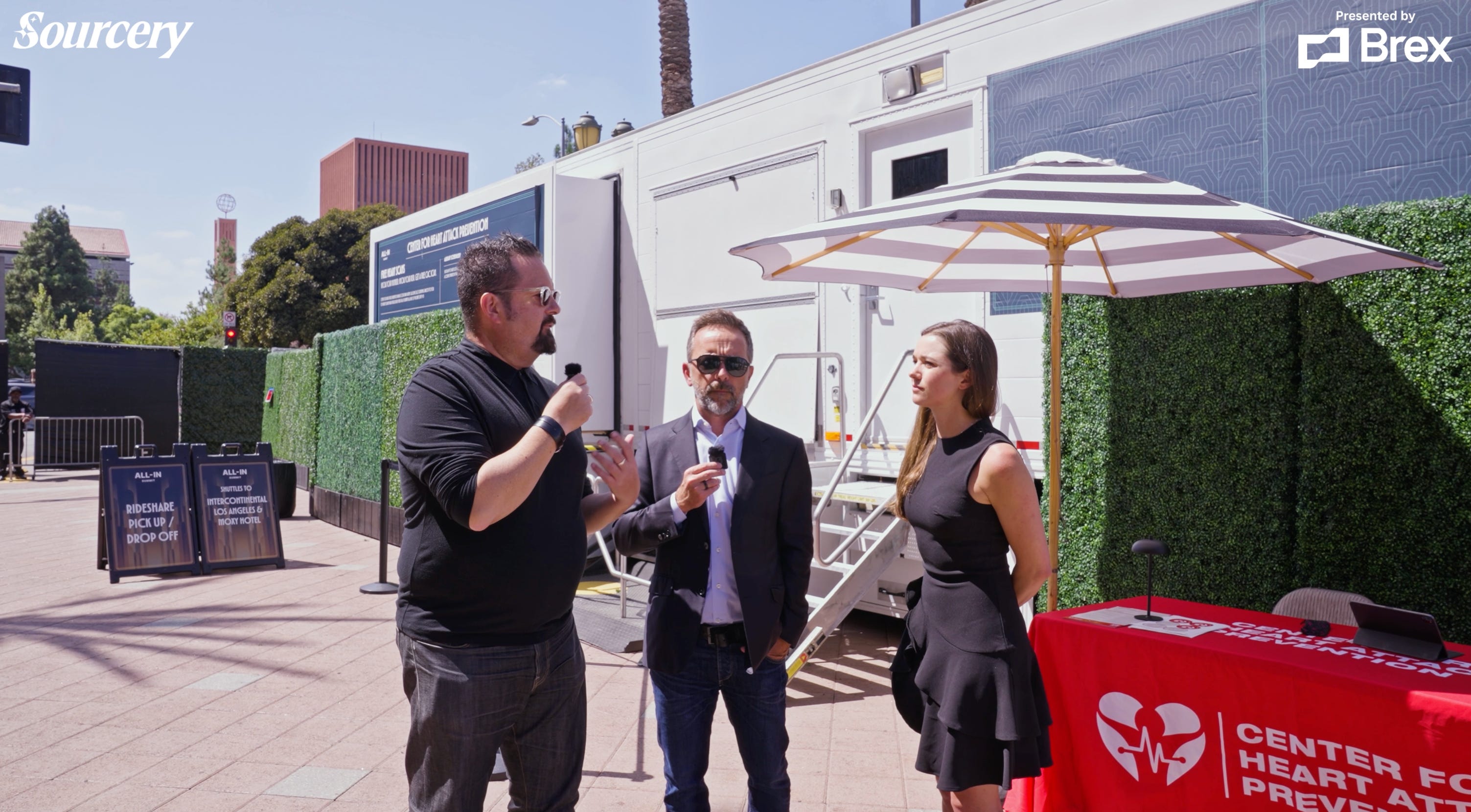
Dave died of ventricular arrhythmia caused by undiagnosed heart disease. Reports at the time said he fell off a treadmill. Rob said Dave was found next to the treadmill and that heart disease was the cause of death. With help from Sandberg, Chamath Palihapitiya, and others, the family arranged for Dave’s body to be returned for a full autopsy, which confirmed the heart disease. His children were 7 and 10 at the time. Sandberg later wrote Option B alongside Adam Grant about his death and grieving.


Traditional Tests Didn’t Find Anything..
One very critical point Rob brought up was that Dave was under the care of top concierge doctors & had passed a running EKG just 5 months before his death.
My brother had passed a running EKG 5 months before he dropped dead from heart disease, from undiagnosed heart disease.
Rob cites a 4% false positive or false negative rate for EKGs, and said Dave’s cardio training allowed his heart to compensate for the disease until it stopped. They called Dave an inspiration for All-In and the besties group, and said Palihapitiya would describe Dave as the original organizer of the group’s poker games. Gerstner credits the Goldberg family as a key inspiration for his heart health work.
We are losing people in the prime of their lives who have no need to die for something that is completely preventable and screenable.
50% of Heart Attacks Happen With Cholesterol in the Normal Zone
Gerstner traces cholesterol’s role as the primary cardiac marker to a policy fight roughly 50 years ago. In his account, the stent and the calcium CT scanner were developed as competing answers to heart disease, and the stent lobby won in Washington. Cholesterol tracking became the standard of care, with stents as the treatment.

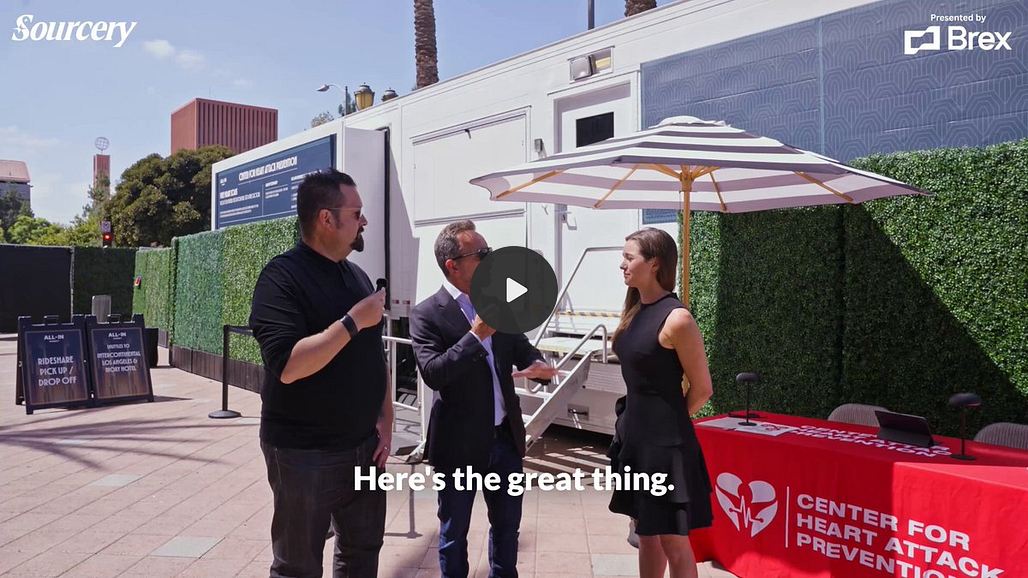
The standard “green zone” for LDL runs roughly 80 to 120. Gerstner was at 100. Patients in that range are often told by general practitioners that a CAC is unnecessary.
It turns out that half of the people who have heart attacks every year have cholesterol in the normal zone.
Cholesterol matters once plaque is present. A non-zero calcium score indicates a predisposition to gather plaque, and LDL is the carrier that moves it into the arteries.

What Cardiologists Actually Do for Their Own Families
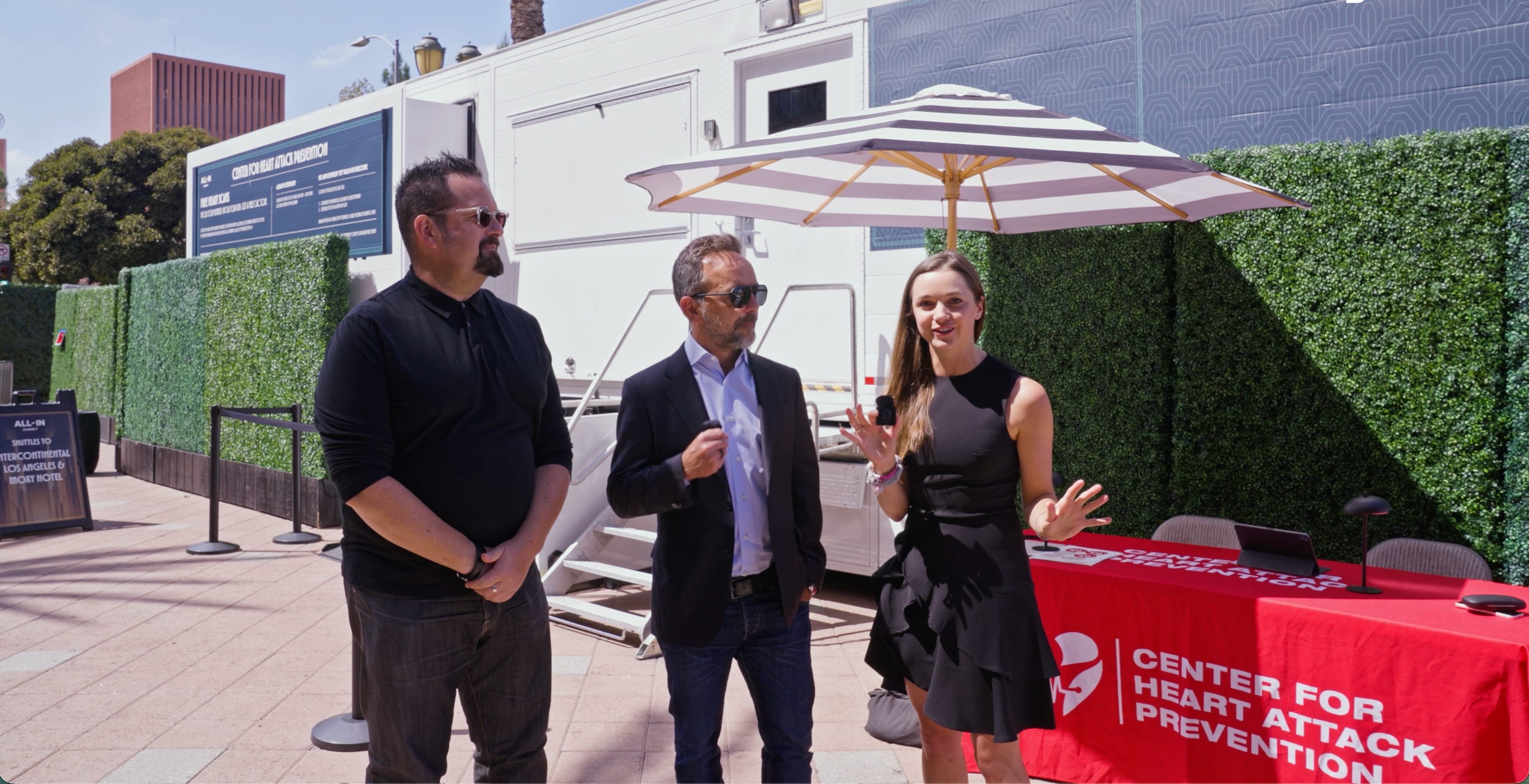
Gerstner met with the heads of preventive cardiology at Stanford, Harvard, and Columbia and asked each what they do for themselves, their friends, and their families. Each gave the same protocol.
At 30 or 35, I have them all take a CAC. If they have a non-zero score, I get them on a statin. I get their LDLs below 40.
An LDL target below 40 sits far under the national standard, and Gerstner notes the drugs to reach it were less available 5 to 10 years ago. Treatment options he cites include statins and ezetimibe to lower LDL and ApoB, and stents for severe blockage. He also asked the head of preventive cardiology at Stanford whether universal scanning would eliminate all heart attacks.
Of course not, but you’ll eliminate 80 to 90% of them.

CAC First, Angiogram on a Non-Zero Score
The most common question Gerstner gets is whether to take a CAC or an angiogram. The CAC takes about 2 minutes in the tube and involves no dye. A CT angiogram uses contrast dye to show stenosis and soft plaque, costs well over $2,000, and is not suited to mass screening.
His recommendation is a CAC for everyone over 35, and a must for anyone with family history or high cholesterol. A non-zero score leads to an angiogram for a baseline on soft plaque and blockage. AI radiology services such as Cleerly can then produce refined readings.
I’m not a doctor, and some people who are doctors think I have no business talking about this, but I’m an analyst. I can read all the information.
A zero score means no calcified plaque. The scan does not read soft plaque, which calcifies over time, so a zero is a strong indicator and does not guarantee a clean artery. Age changes the read. Plaque in a 30-year-old signals early accumulation, and in a 50 or 60-year-old the quantity determines whether it is a problem. Gerstner has almost no plaque and planned a repeat angiogram the Friday after the Summit, with plans to share the image publicly as he did after his first.

33 Scans in 9 Hours + a Buy One, Give One Model
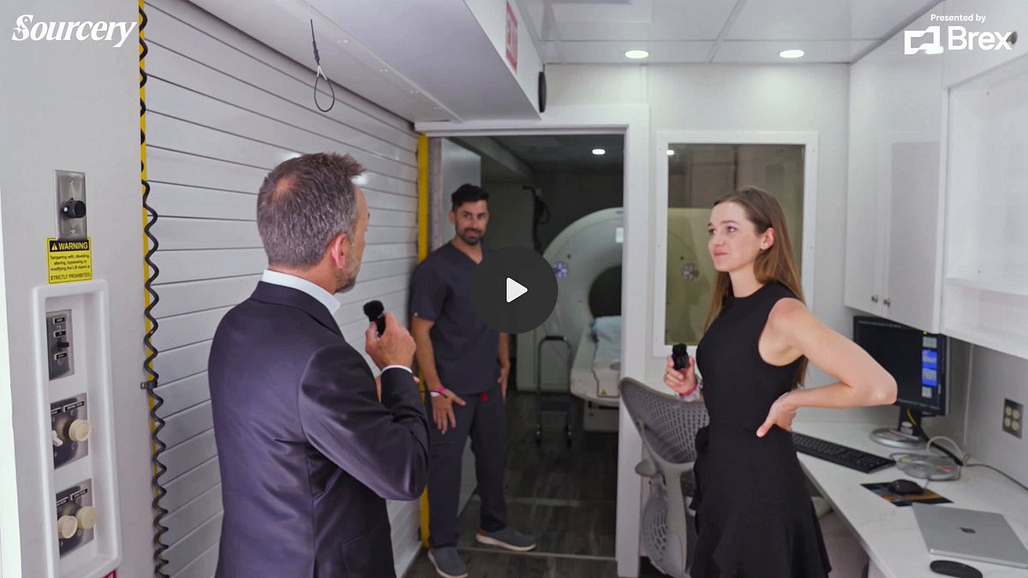
The trailer runs a Siemens calcium CT scanner. Patients are on the bed for about 5 minutes. On day 1 the team completed 33 scans in about 9 hours, with results ranging from zero to severe across men and women of all ages. Scores go to a cardiologist, who calls patients directly.
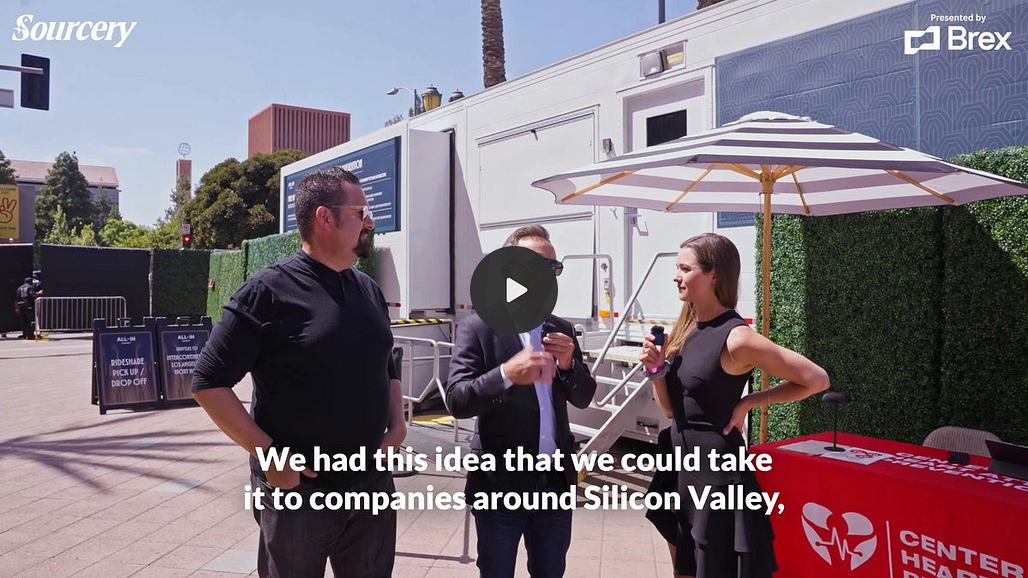
The trailer started with a rental for Altimeter’s investor day at the Rosewood on Sand Hill Road, where scans were free. Gerstner said several well-known Silicon Valley CEOs found 98% blockage there and had 3 stents placed within 3 weeks. After that he bought the trailer.
The operating model is buy one, give one. A company pays $200 per employee scan, and the second $100 funds a free scan in neighborhoods such as East Palo Alto. Major Silicon Valley companies are participating, and the trailer was brought to the NFL during Super Bowl week in the Bay Area. Gerstner has a tentative agreement to bring it to Capitol Hill and estimates he is responsible for 40 to 50 members of the House and Senate taking the scan.
I can tell you that they are a target-rich population.

Push for Medicare & Medicaid Coverage by Year End
The Center’s first mission is awareness. The second is access, which requires Washington to make the CAC a standard of care. Gerstner has met with CMS Administrator Dr. Oz several times and with leaders on Capitol Hill and in the White House. He expects CAC scans for diagnostic purposes to be approved and covered by Medicare and Medicaid by the end of this year.
Doctors ultimately treat standard of care based upon what’s covered by insurance.
→ Listen on X, Spotify, YouTube, Apple
Brought to you by:
Zone—develops next-generation data center campuses, partnering with AI companies, site developers and technology leaders to bring compute online faster and at scale. Visit: zonefrontier.com
Turing—Turing partners with frontier AI labs to improve model capabilities in coding, reasoning, tool use, & multimodality, as well as with Fortune 500 enterprises to build & deploy end-to-end agentic AI systems in mission-critical workflows Visit: turing.com/sourcery
VCX—VCX is the public ticker for private tech, allowing investors of all sizes to invest in venture capital. View The Portfolio at GetVCX.com

Deel—Deel is the global people platform that helps startups hire, manage, pay, and equip anyone, anywhere. Trusted by more than 35,000 fast-growing companies, Deel is the people platform that just works, so teams can scale without the chaos. Visit: deel.com/sourcery
Public-–Investing platform Public just launched Generated Assets, which lets you turn any idea into an investable index with AI. With Generated Assets, you can build, backtest, refine, and invest in any thesis with AI. Gone are the days of one-size-fits-all ETFs. Try it today: public.com/sourcery
The material presented on Molly O’Shea’s website are my opinions only and are provided for informational purposes and should not be construed as investment advice. It is not a recommendation of, or an offer to sell or solicitation of an offer to buy, any particular security, strategy, or investment product. Any analysis or discussion of investments, sectors or the market generally are based on current information, including from public sources, that I consider reliable, but I do not represent that any research or the information provided is accurate or complete, and it should not be relied on as such. My views and opinions expressed in any website content are current at the time of publication and are subject to change. Past performance is not indicative of future results.
Paid Endorsement. Brokerage services by Open to the Public Investing Inc, member FINRA & SIPC. Advisory services by Public Advisors LLC, SEC-registered adviser. Crypto trading provided by Zero Hash LLC, licensed by the NYSDFS. Generated Assets is an interactive analysis tool by Public Advisors. Output is for informational purposes only and is not an investment recommendation or advice. See disclosures at public.com/disclosures/ga. Matched funds must remain in your account for at least 5 years. Match rate and other terms are subject to change at any time.