


Brought to you by:
Brex, the intelligent finance platform: cards, expenses, travel, bill pay, banking—wrapped into a high-performance stack. Built for scale. visit → brex.com/sourcery

Stord's $250M Series F
A Bet on Physical Intelligence for Commerce
Inside the $250M Series F, the launch of Stord Labs, and the case for physical intelligence as the next durable moat in consumer commerce.
Stord just had a major Series F announcement raising $250 million at a $3 billion post-money valuation (~ 2x its valuation from 12mo ago) in a round led by Strike Capital, with continued participation from Kleiner Perkins, Founders Fund, Franklin Templeton, Baillie Gifford, G Squared, Bond, and Lux.
Alongside the financing, Stord announced Stord Labs, a physical-intelligence lab at its Atlanta headquarters where agentic AI, robotics, and advanced automation are validated against real orders before deploying across nearly 100 facilities.

The Business at a Glance
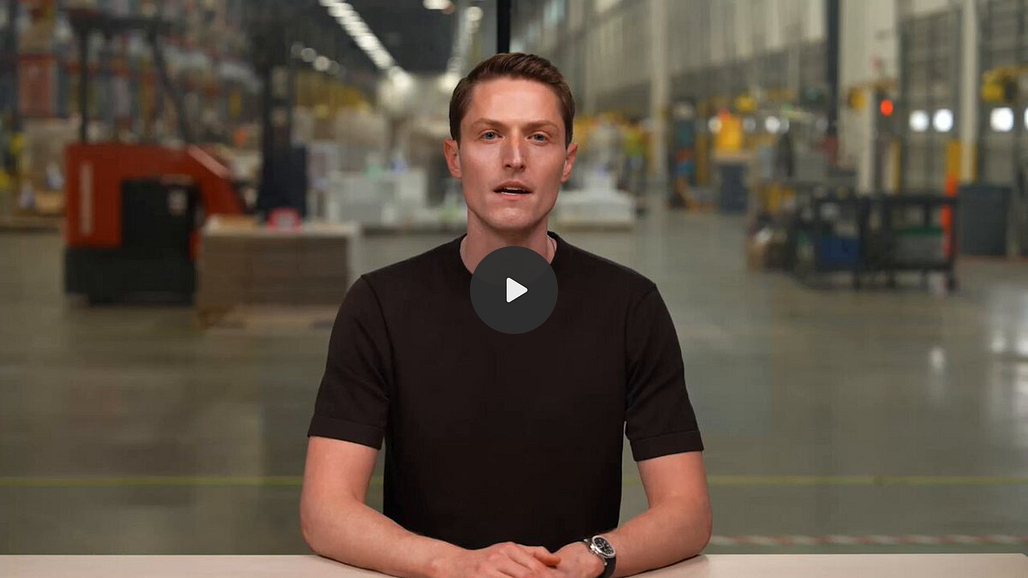
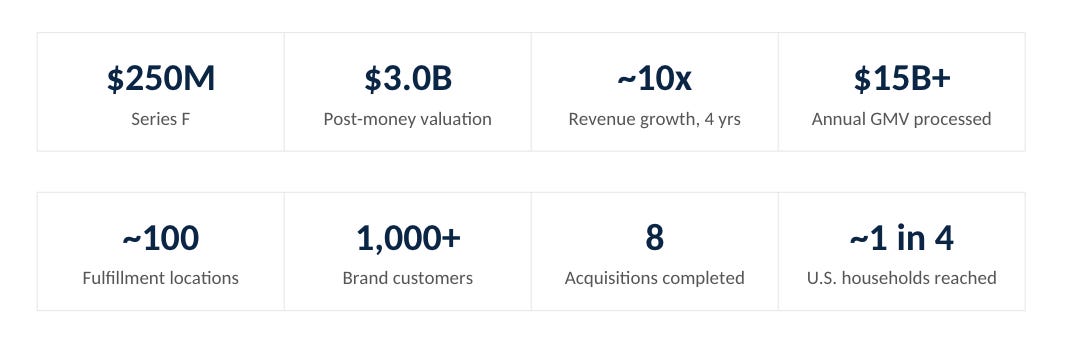
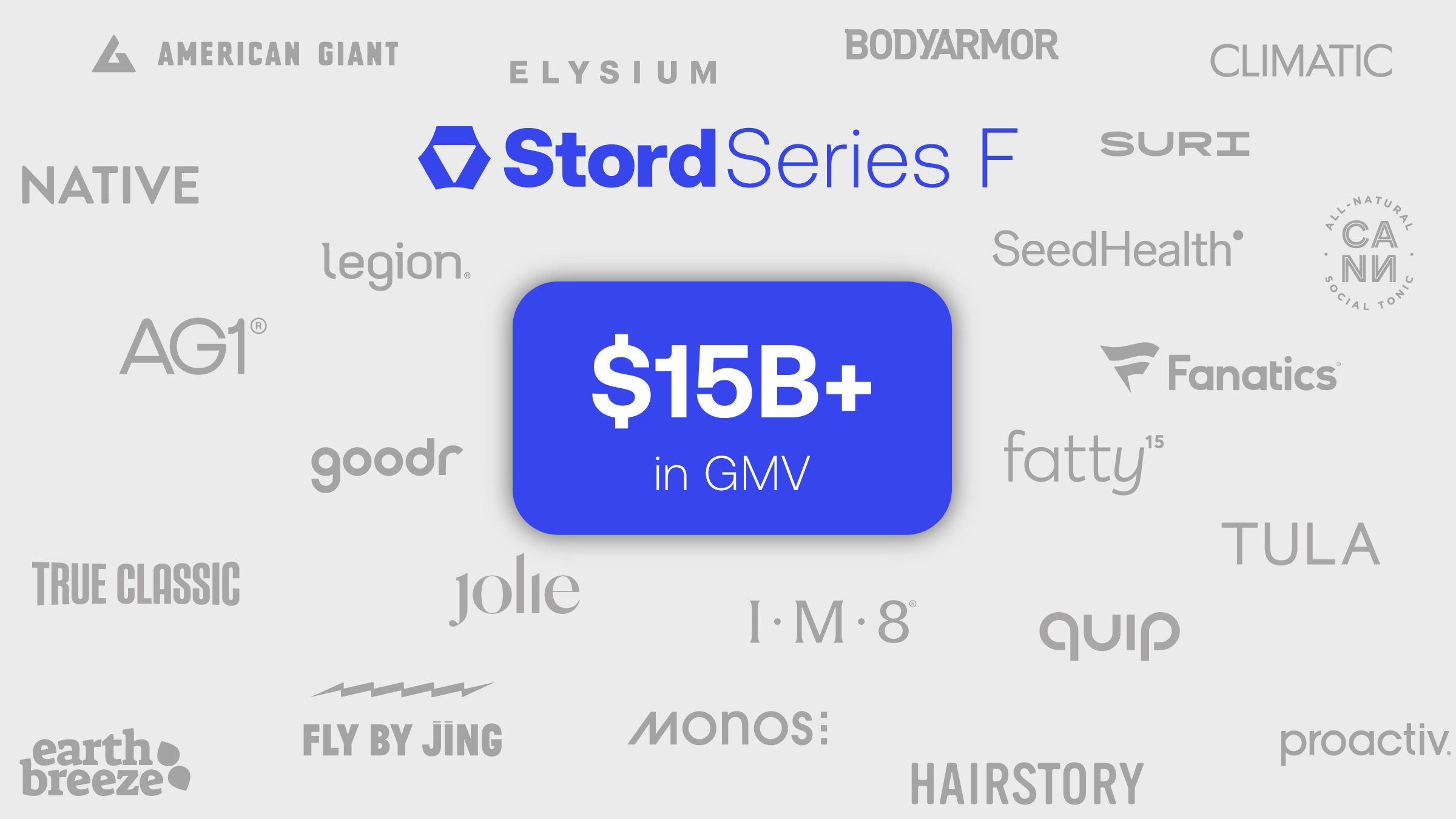
Stord operates a fulfillment and consumer experience platform for independent brands. The network powers $15B+ in annual GMV across 1,000+ brand customers and reaches roughly 1 in 4 US households per year. Revenue is approaching $1B, up about 10x over the past 4 years. The first $100M in revenue took 4 years; current run-rate adds more than $100M every 3 months.
The platform spans three layers: a physical network of nearly 100 fulfillment locations; a vertically built software stack (WMS, TMS, OMS, plus a consumer experience suite); and an AI layer that includes StordAI Chat, Search, and Feed. Headcount is 4,000+, with 200+ in software engineering, product, data science, and physical infrastructure and robotics.
Customers named in the round materials include AG1, True Classic, Seed Health, Fanatics, IM8, Hairstory, ALOHA, Monos, American Giant, goodr, Jolie, Native, Fatty15, doingwell, and Climatic Health.
Headline Metrics:
The Thesis
For a decade, the modern stack for online commerce has rested on three abstractions: Stripe for payments, Shopify for storefronts, Meta for discovery. One layer has been left unsolved: what happens after the checkout button is clicked. For 30 years, the post-checkout experience has been the most consequential battleground in commerce, and the one that no infrastructure platform has consolidated.
“The only way to surpass Prime is to build something that goes beyond it, built for everyone else, and that requires infrastructure that, until Stord, did not exist for independent brands.” — Sean Henry, Founder & CEO, Stord
Amazon controls more than 30% of U.S. online commerce, and the reason is not a superior storefront, superior payments, or superior ads.. the reason is Prime: a delivery promise consumers now treat as the baseline expectation against which every other checkout is measured. As Amazon’s relationship with both consumers and the brands it hosts grows increasingly fraught, the opportunity for independent commerce has never been greater.
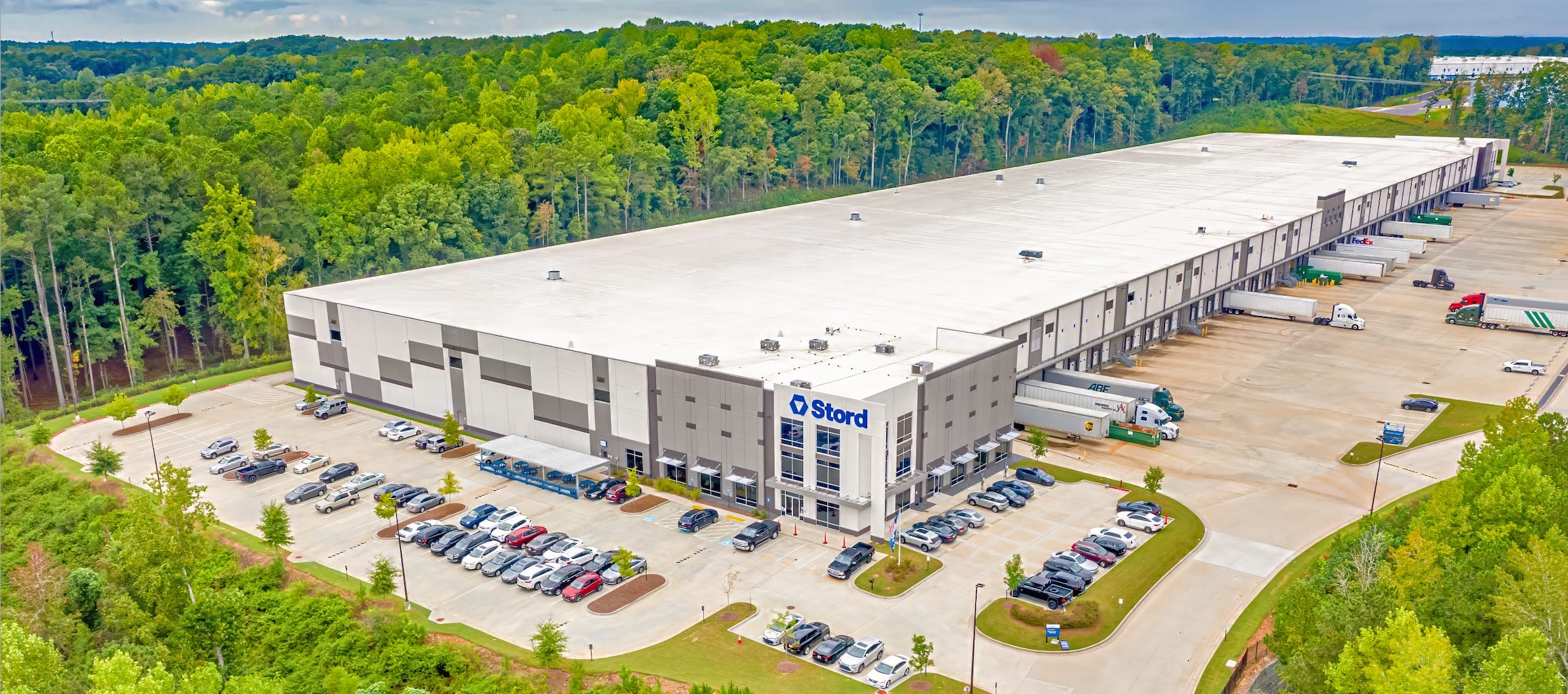
That expectation gap is the asset Stord is monetizing. For independent brands, the post-checkout experience has been left to a fragmented ecosystem of 3PLs, carriers, and bolt-on software vendors. Stord is collapsing that fragmentation into a single, vertically integrated platform.
Stord’s bet is that consolidating the post-checkout stack (3PLs, carriers, post-purchase software, returns, AI) into a single vertically integrated platform is the only way independent brands can match or exceed the Prime experience.
“Stord exists to level that playing field. We give independent brands the complete commerce stack: the fulfillment network, software, and AI, to deliver a consumer experience that surpasses Prime.” — Sean Henry, Founder & CEO, Stord
“I’ve run over $50M in product sales through Amazon FBA & watched 3 small 3PLs go dark on us with no warning. When we asked Stord to dekit a SKU so we could run a product test, something completely untestable inside Amazon’s system, they did it. The data drove some of the most important product decisions doingwell has made to date. Amazon makes you feel like a SKU. Stord makes us feel like a brand.” — Imran Jawaid, doingwell

Significant Growth
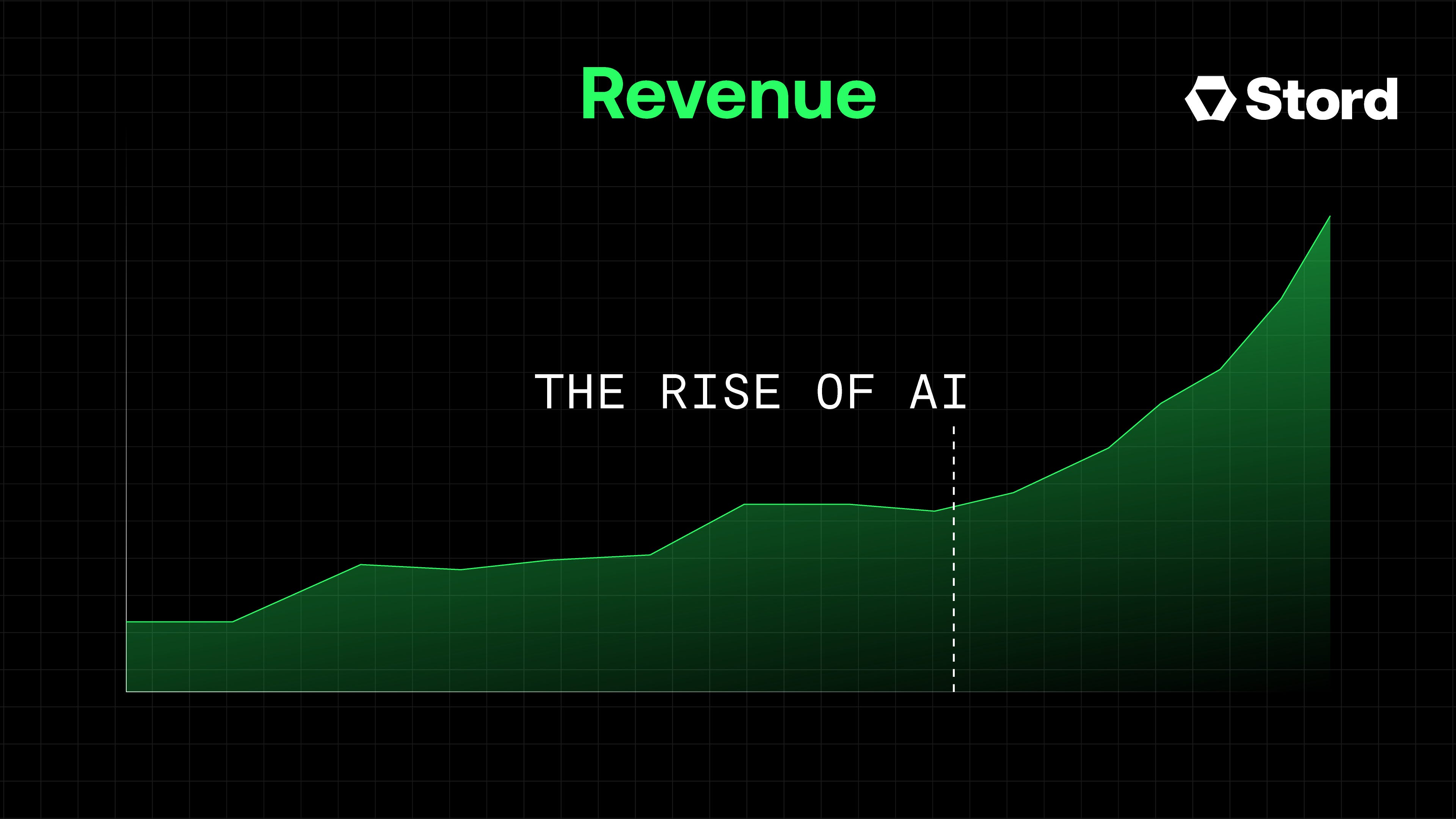
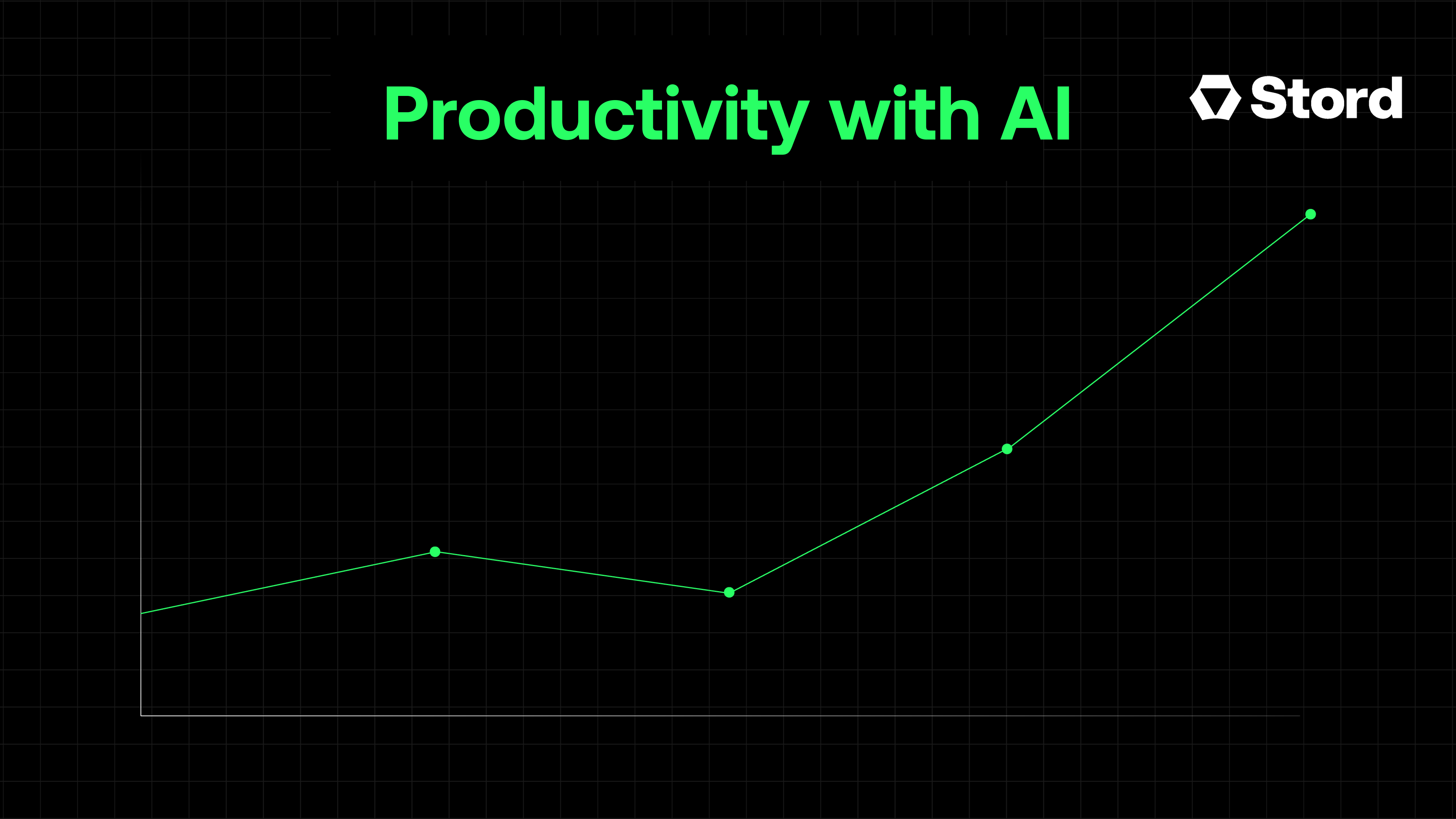
Revenue has compounded at roughly 10x over 4 years. The inflection point in Stord’s growth maps to early 2023, about 6 months after AI became a production-grade tool. Stord’s framing of that timing is that vertical integration across the physical network, software, and data layers positioned the company to apply AI to live operations faster than competitors that owned only one layer.
The software business is the fastest-growing piece of the company. It tripled in 2025 and is growing faster than the overall business. Software bookings more than doubled in Q1 2026, with 7 live products in market.
StordAI was launched in March 2026. As of the round, it has logged 100,000+ unique interactions across 350+ brands. The roadmap includes agentic experiences and an MCP server.
M&A has been a meaningful contributor: 8 acquisitions completed to date, each described by the company as exceeding its targets. Engineering headcount has nearly doubled while product delivery velocity has nearly tripled.
Brand Expansion
The 1,000+ brands on the platform skew toward category-leading independents that compete on the quality of the direct consumer relationship. The mix spans subscription health (AG1, Seed Health, Fatty15, ALOHA, doingwell, Climatic Health), apparel (True Classic, American Giant), eyewear (goodr), CPG (Native), premium home goods (Jolie, Monos), and licensed merchandise (Fanatics).
A consistent theme across customer commentary is that the platform changes how brands operate, not only where they ship from.
“The brands winning in direct commerce today aren’t just fulfilling orders faster. They’re operating with better intelligence. Through StordAI we are giving valuable time back to our team so they can focus on our customers. Stord is the only fulfillment partner we’ve worked with where the technology meets the needs of our global operation. That matters when you’re scaling across markets simultaneously.” — Danny Yeung, CEO and Co-Founder, Prenetics IM8
“Stord’s ability to manage complex kitting, multi-retailer compliance, and high-velocity D2C shipping from a single network gave us the operational backbone to grow without compromise. Meanwhile, we’ve become a top user of their AI features, which has accelerated our business insights and enabled our organization to move faster than ever.” — Josh Bultz, COO, True Classic
“As Jolie has scaled, Stord has been an integral partner in helping us deliver and maintain a premium customer experience while growing our volume so quickly. Their platform and team have allowed us to scale fulfillment across both direct and wholesale channels, improve reliability, and create a much stronger post-purchase experience for our customers. StordAI has added another layer: our team can get answers about inventory and order status instantly, which means we spend less time managing operations and more time building the brand.” — Arjan Singh, Co-Founder, Jolie
“What sets Stord apart is the combination of network scale and technology that’s honestly years ahead of the standard 3PL offering. During a period where supply chain disruptions have become the norm, that infrastructure has given Monos a level of operational certainty we can actually build around. StordAI has made that even more tangible: our team has real-time answers to questions that used to require back-and-forth with ops.” — Victor Tam, CEO and Co-Founder, Monos
“StordAI Chat is a CEO’s dream. I can quickly answer any question like ‘how much inventory do I have on my inbound?’ or ‘how many weeks on hand do we have in this queue?’ StordAI Chat is answering questions people don’t even know they have. It’s really powerful.” — Nick Stachel, Head of Operations, Climatic Health

Stord Labs & the Physical-Intelligence Bet
Stord Labs is the most strategic announcement attached to this round. The premise: the next generation of physical intelligence cannot be built credibly in simulation or vendor demos. It requires real operational complexity at scale, trained against live order data, validated against the same constraints that govern the production network.
Innovations are built and validated against real orders on the same operating system powering production, and proven changes deploy across nearly 100 facilities immediately. The strategic insight is that the moat is not the model; it is the data, the substrate, and the deployment surface.
The numbers underwriting that bet are non-trivial: training models on live fulfillment data across ~100 facilities, $15B in annual GMV, and 8 billion data points per year. The inflection in Stord’s revenue growth (~10x over four years, with the clearest break point coming roughly six months after ChatGPT’s launch) is causally tied to this vertical integration of physical infrastructure, software, and data.
“The largest companies in the world today (SpaceX, NVIDIA, Tesla) operate at the intersection of software intelligence and physical execution. Their advantages compound in a way that pure software cannot replicate.” — Sean Henry, Founder & CEO, Stord

Differentiation & Flywheel
Stord’s differentiation rests on three assets that are difficult to assemble in isolation and harder to assemble together:
A physical network of nearly 100 fulfillment locations (20 Stord-operated, 80 partner sites) running on a single operating system. Hard to replicate with software alone.
A vertically built software stack (WMS, TMS, OMS, consumer experience suite) built by engineers operating inside live warehouses rather than licensed from third parties.
A proprietary data corpus generated by the network itself: $15B in GMV, 8B operational events annually, packages reaching roughly 1 in 4 US households. This dataset cannot be acquired; it has to be generated.
CEO Sean Henry’s framing of the flywheel
“Every new brand that joins the Stord network improves outcomes for every brand already on it, and that compounding effect is showing up directly in how we compete and win.
More volume means better economies of scale for everyone. More facilities means more precise inventory placement and faster delivery times. More data means smarter routing, better demand forecasting, and more accurate delivery promises.
More accurate promises mean more consumer trust, which means more repeat purchases, which feeds more volume.”
“This is not a simple software network effect. It is a physical network effect layered with a software and data advantage, and the combination is what makes it durable. You cannot replicate a physical fulfillment network with code. You cannot replicate years of operational excellence and culture built from the ground up from behind a screen. You cannot substitute the billions of data points across our network continuously training our models. And you cannot hack your way to the tens of millions of U.S. consumers who have seen Stord on their doorstep.”
“The flywheel took a decade to reach the velocity it has today, & it is still accelerating. As the flywheel spins, our advantage accelerates, & is proven by our industry-shattering win rate.”
“The market has historically underestimated the complexity and defensibility of physical infrastructure at scale, and that underestimation is a meaningful part of what has allowed Stord to reach a position that is difficult to replicate. We prefer to be underestimated.”

Market Landscape & Competitive Context
The competitive set sits in three camps:
Traditional 3PLs and asset-heavy fulfillment networks (ShipBob, ShipMonk, Cart.com, legacy enterprise providers). Operational scale but limited integrated software and AI.
Pure-software providers offering OMS, WMS, or post-purchase tooling without a physical network to enforce it operationally.
Amazon FBA, which dominates marketplace fulfillment but by design does not serve independent brand-owned channels.
The lane Stord is consolidating, the integrated post-checkout stack for independent brands, sits between these three groups and has not had a scaled, vertically integrated incumbent.

Two macro factors are relevant to timing. First, warehouse robotics payback periods have compressed to 12 to 18 months in 2026, and operators with vertically integrated data are best positioned to capture that economic shift. Second, agentic purchasing (AI agents originating and completing commerce transactions on behalf of consumers) is likely to favor platforms where software and physical operations are deeply integrated, because agents will optimize on the variables fulfillment controls: speed, reliability, returns, and price.
“Commerce infrastructure gets built once. From our earliest conversations with Sean Henry, it was clear Stord was assembling something rare: software, physical infrastructure, and AI combined in a way that turns fulfillment into a competitive advantage rather than a cost center. We believe the rise of agentic purchasing will increasingly favor platforms where software and physical operations are deeply integrated. Stord is building that infrastructure. That is why Strike is proud to deepen our partnership in this round.” — John Lagomarsino, Strike Capital
“The next defining infrastructure layer has to connect the physical network, the software, and the intelligence layer behind every consumer experience. That’s what makes Stord so compelling. The company combines scaled fulfillment infrastructure, purpose-built software, and AI trained by the patterns of millions of deliveries. We believed in that vision when Kleiner Perkins first backed Stord in 2019, and our conviction has only grown.” — Ilya Fushman, Partner, Kleiner Perkins

The New Era of Supply Chain
Stord has now crossed the threshold from category challenger to category-defining infrastructure. The more interesting reading is that the company is one of a small number of late-stage businesses where the moat genuinely sits at the intersection of physical execution and software intelligence (something I love to cover), and where the data flywheel underwriting that moat is already in motion at the scale required to train the next generation of physical AI.

The question is not whether Stord becomes the consolidated infrastructure layer for independent commerce alongside Stripe, Shopify, and Meta. The question is how large that layer gets, and on what timeline.
“We are The Consumer Experience Company. The other two-thirds of online commerce has its infrastructure now. And we’re just getting into gear.” — Sean Henry, Founder & CEO, Stord
Brought to you by:
Brex—The intelligent finance platform: cards, expenses, travel, bill pay, banking—wrapped into a high-performance stack. Built for scale. Trusted by teams that move fast. visit → brex.com/sourcery
Turing—Turing partners with frontier AI labs to improve model capabilities in coding, reasoning, tool use, & multimodality, as well as with Fortune 500 enterprises to build & deploy end-to-end agentic AI systems in mission-critical workflows Visit: turing.com/sourcery
VCX—VCX is the public ticker for private tech, allowing investors of all sizes to invest in venture capital. View The Portfolio at GetVCX.com
Deel—Deel is the global people platform that helps startups hire, manage, pay, and equip anyone, anywhere. Trusted by more than 35,000 fast-growing companies, Deel is the people platform that just works, so teams can scale without the chaos. Visit: deel.com/sourcery
Public-–Investing platform Public just launched Generated Assets, which lets you turn any idea into an investable index with AI. With Generated Assets, you can build, backtest, refine, and invest in any thesis with AI. Gone are the days of one-size-fits-all ETFs. Try it today: public.com/sourcery
Merge—The leading provider of customer-facing integrations and agentic tools for frontier LLMs, Fortune 500 organizations, and B2B SaaS companies. Visit: https://merge.dev
The material presented on Molly O’Shea’s website are my opinions only and are provided for informational purposes and should not be construed as investment advice. It is not a recommendation of, or an offer to sell or solicitation of an offer to buy, any particular security, strategy, or investment product. Any analysis or discussion of investments, sectors or the market generally are based on current information, including from public sources, that I consider reliable, but I do not represent that any research or the information provided is accurate or complete, and it should not be relied on as such. My views and opinions expressed in any website content are current at the time of publication and are subject to change. Past performance is not indicative of future results.
Paid Endorsement. Brokerage services by Open to the Public Investing Inc, member FINRA & SIPC. Advisory services by Public Advisors LLC, SEC-registered adviser. Crypto trading provided by Zero Hash LLC, licensed by the NYSDFS. Generated Assets is an interactive analysis tool by Public Advisors. Output is for informational purposes only and is not an investment recommendation or advice. See disclosures at public.com/disclosures/ga. Matched funds must remain in your account for at least 5 years. Match rate and other terms are subject to change at any time.