


Space Factory Tour!
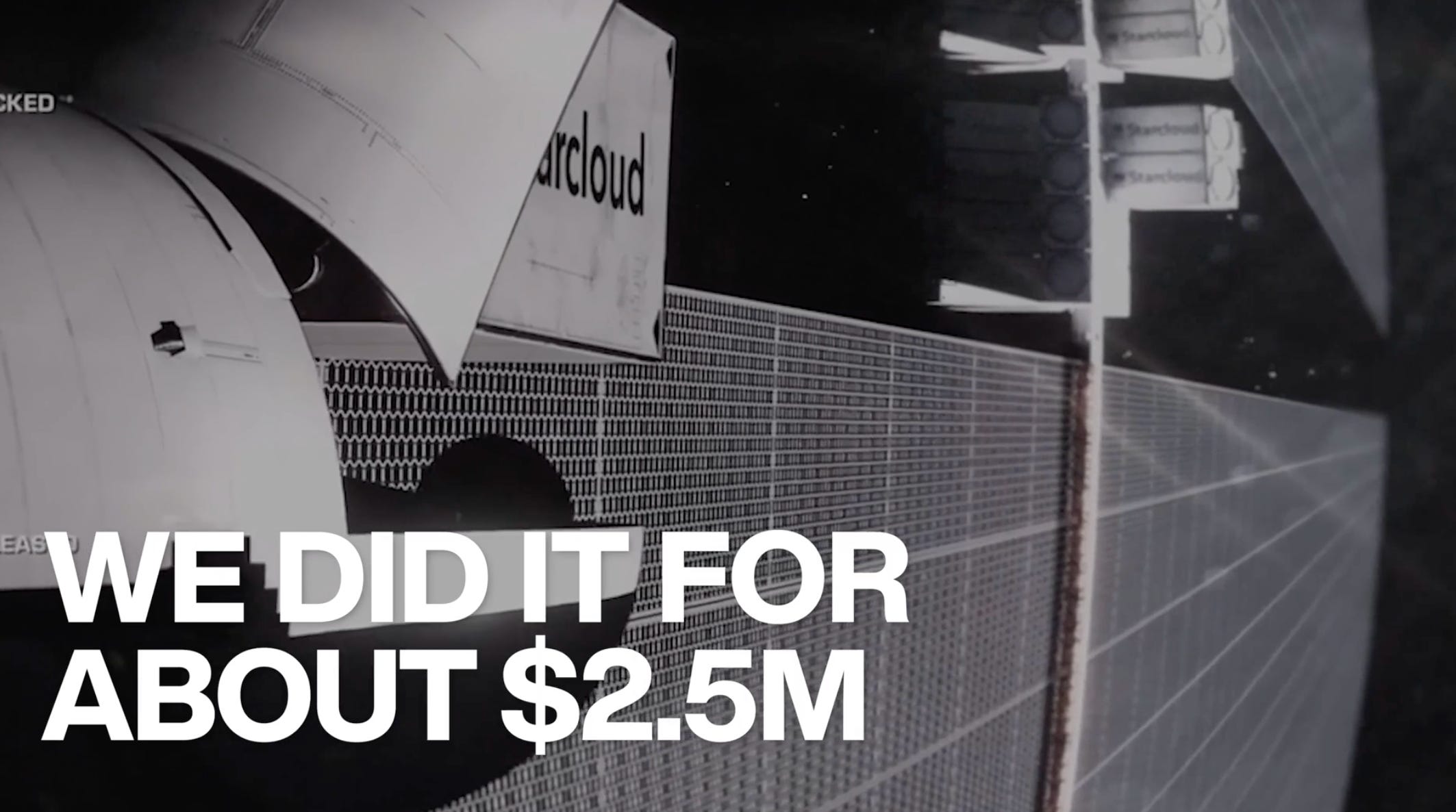
Primes quoted them $75M-$100M to build their first data center in space. They did it for $2.5M. In just 21 months, Starcloud is one of the fastest companies to go from founding to orbit.
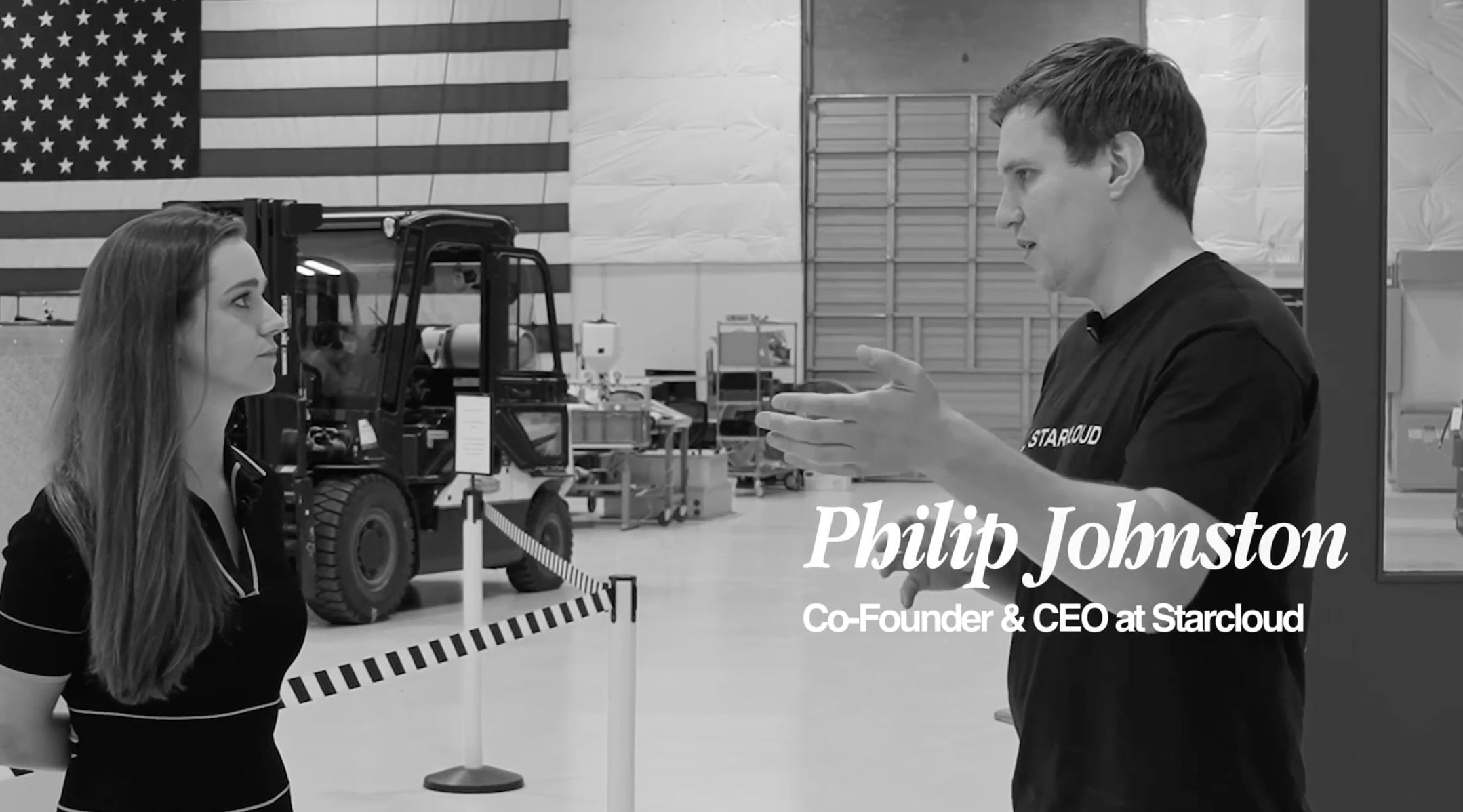
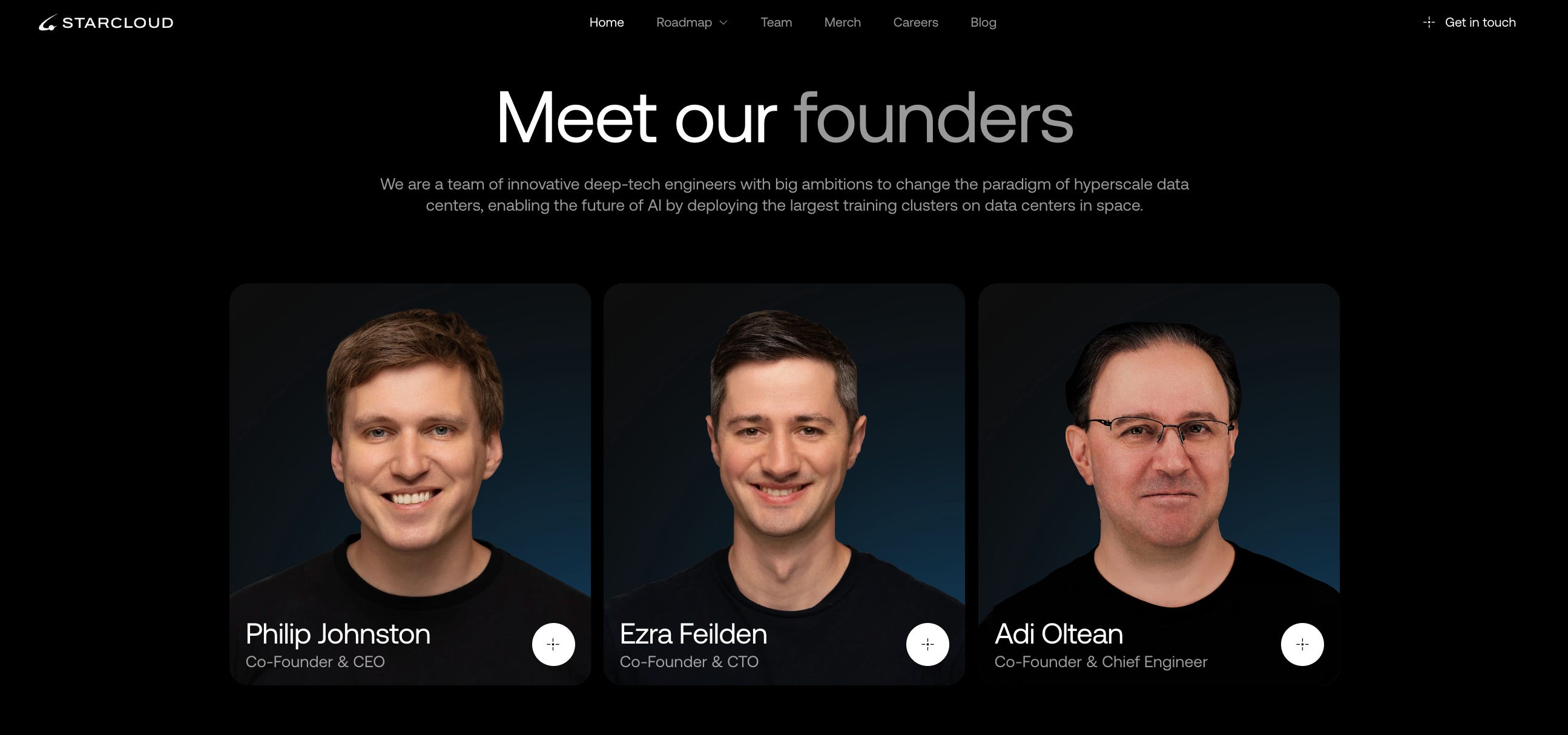
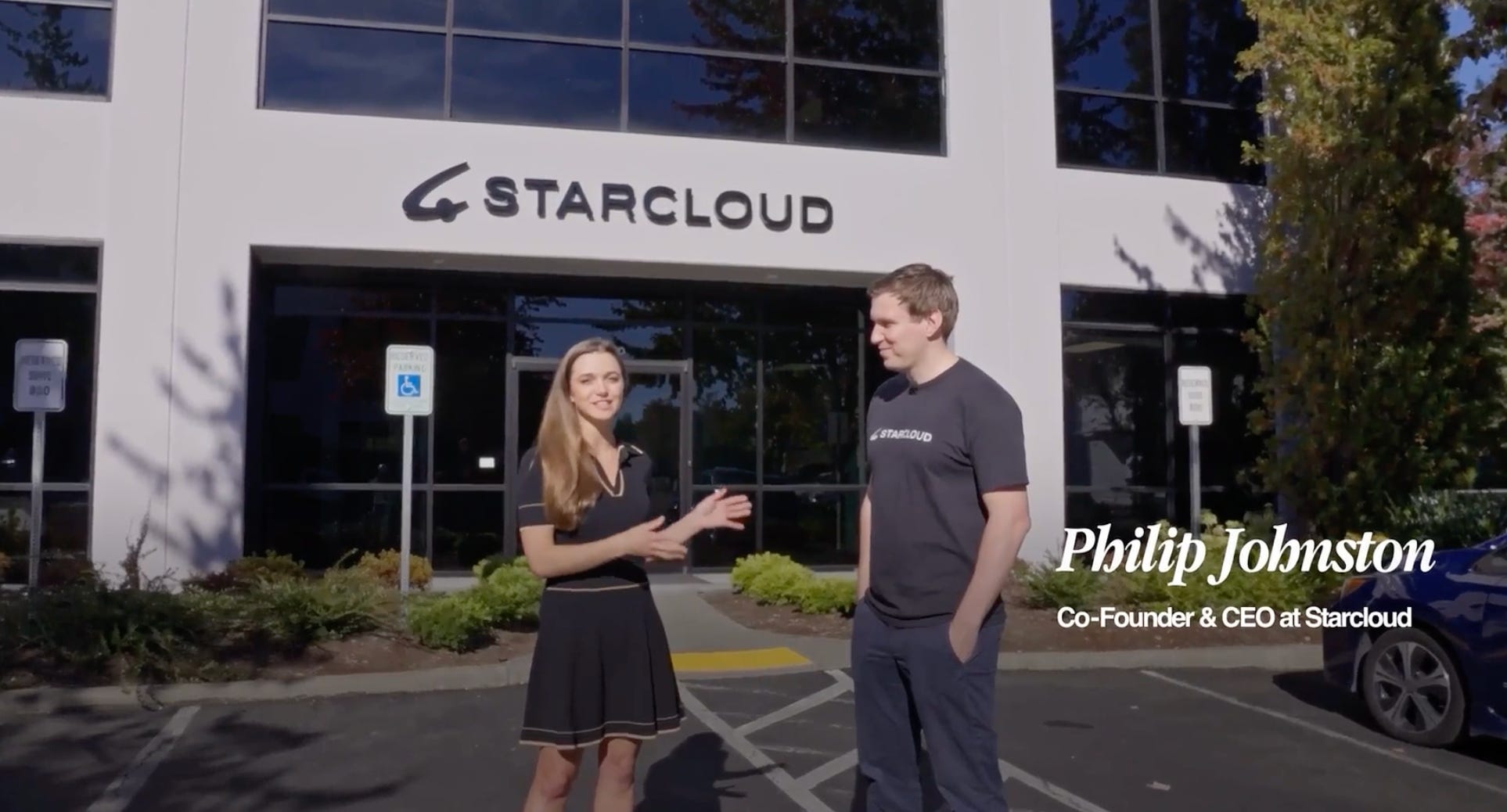
I toured Starcloud’s new HQ in Redmond, Washington w/ CEO Philip Johnston + co-founders Ezra Feilden & Adi Oltean, as well as Bailey Montaño, Miguel Rivera & Camilo Lopez from the engineering team.
→ Listen on X, Spotify, YouTube, Apple
Starcloud has raised $450M in total funding at a last valuation of $2.3B to put Nvidia GPUs, AI inference and eventually gigawatts of computing infrastructure into orbit. Its latest round was $250M, led by Manhattan West, with Nvidia, Cisco Investments, Benchmark and EQT. The team went from founding to orbit in 21 months. Starcloud 1 launched with the first Nvidia H100 in space. Starcloud 2 launches in January with 100x the power, and Starcloud 3 is designed to deploy up to 50 satellites per SpaceX Starship launch.
We cover the economics of orbital vs terrestrial data centers, the $500/kg launch cost threshold, SpaceX rideshare and Nvidia chips in space. We also get into liquid cooling and radiators, radiation and chip burn-in, edge inference for government customers and plans for an 88,000-satellite constellation.
We also go behind the scenes of spacecraft testing, including a rebuilt secondhand vibe table, plus laser fabrication and welding. We close with Philip’s take on SpaceX passing $100T and his mission to send a spacecraft to Alpha Centauri.
𝐓𝐈𝐌𝐄𝐒𝐓𝐀𝐌𝐏𝐒
(00:00) Philip Johnston, Co-Founder & CEO of Starcloud
(00:53) Tracking Starcloud 1 live in orbit
(02:46) Fixing a 16-ton vibration machine in one weekend
(06:59) From founding to orbit in 21 months
(08:17) From SpaceX to Microsoft to Starcloud
(09:49) Inside Starcloud 2
(13:12) A $15M mission to the nearest star
(17:49) What goes on a spacecraft to Alpha Centauri
(19:10) Why SpaceX could be worth $100 trillion
(20:41) “This isn’t a hot take, this is just a fact
(24:22) How big is Starcloud 3?
(26:41) How do you book a ride to space?
(30:11) How Starcloud tests in zero gravity
(33:49) Can GPUs survive space radiation?
(35:46) The first AI model trained in space
(38:40) Will solar satellites block the sun?
(40:57) How Starcloud tests a satellite for launch
(46:45) The paperwork behind a launch
(53:07) Molly puts her welding skills to the test
(1:00:18) The engineer behind Starcloud's radiators
(1:03:07) Inside Starcloud’s new campus
(1:05:55) Why launch slots are the new scarce resource
(1:06:45) Can someone shoot down a data center in space?

Brought to you by:
Brex—The intelligent finance platform: cards, expenses, travel, bill pay, banking—wrapped into a high-performance stack. Built for scale. Trusted by OpenAI, Anthropic, Vercel, Granola, Deepgram, & Sourcery.. teams that move fast AF. visit → brex.com/sourcery

Harvey—The AI platform built for legal work, is helping the best firms and companies close deals faster. More than 200,000 lawyers, 80% of the Am Law 100, and over 20% of the Fortune 500 build with Harvey. Visit: Harvey.ai
Zone—develops next-generation data center campuses, partnering with AI companies, site developers and technology leaders to bring compute online faster and at scale. Visit: zonefrontier.com
Mercor—The human intelligence behind frontier AI. Frontier labs and leading enterprises use Mercor to turn the knowledge of 5M+ experts into the data, evals and benchmarks that make AI better at real work. Visit: http://mercor.com/sourcery
VCX—VCX is the public ticker for private tech, allowing investors of all sizes to invest in venture capital. View The Portfolio at GetVCX.com
Deel—Deel is the global people platform that helps startups hire, manage, pay, and equip anyone, anywhere. Trusted by more than 35,000 fast-growing companies, Deel is the people platform that just works, so teams can scale without the chaos. Visit: deel.com/sourcery
Public—Investing platform Public is the world's first agentic brokerage. You can invest across stocks, options, bonds, crypto, event contracts, & more, then automate anything with AI Agents. Seriously, just tell an Agent what you want—from "Set up a buy-the-close, sell-the-open strategy for me" to "Automatically sweep any cash over $10k from my bank to my brokerage account." Agents can monitor markets, run strategies, & manage your cash 24/7. Get started: public.com/sourcery
Inside Starcloud, the $2.3B Startup Building Data Centers in Orbit From Redmond
21 Months & $2.5M to Put the First H100 in Orbit
Starcloud is building data centers in orbit, powered by near-constant solar energy & cooled by radiators designed in-house. The Redmond, Washington company was founded in 2024 by CEO Philip Johnston, CTO Ezra Feilden & Chief Engineer Adi Oltean. It went from founding to orbit in 21 months. Johnston says the previous fastest comparable effort took 4 years.
Starcloud 1 launched on a Falcon 9 rideshare in November 2025 carrying the first Nvidia H100 in space. One of the primes quoted Starcloud $75M to $100M to build it. Starcloud built it for about $2.5M.
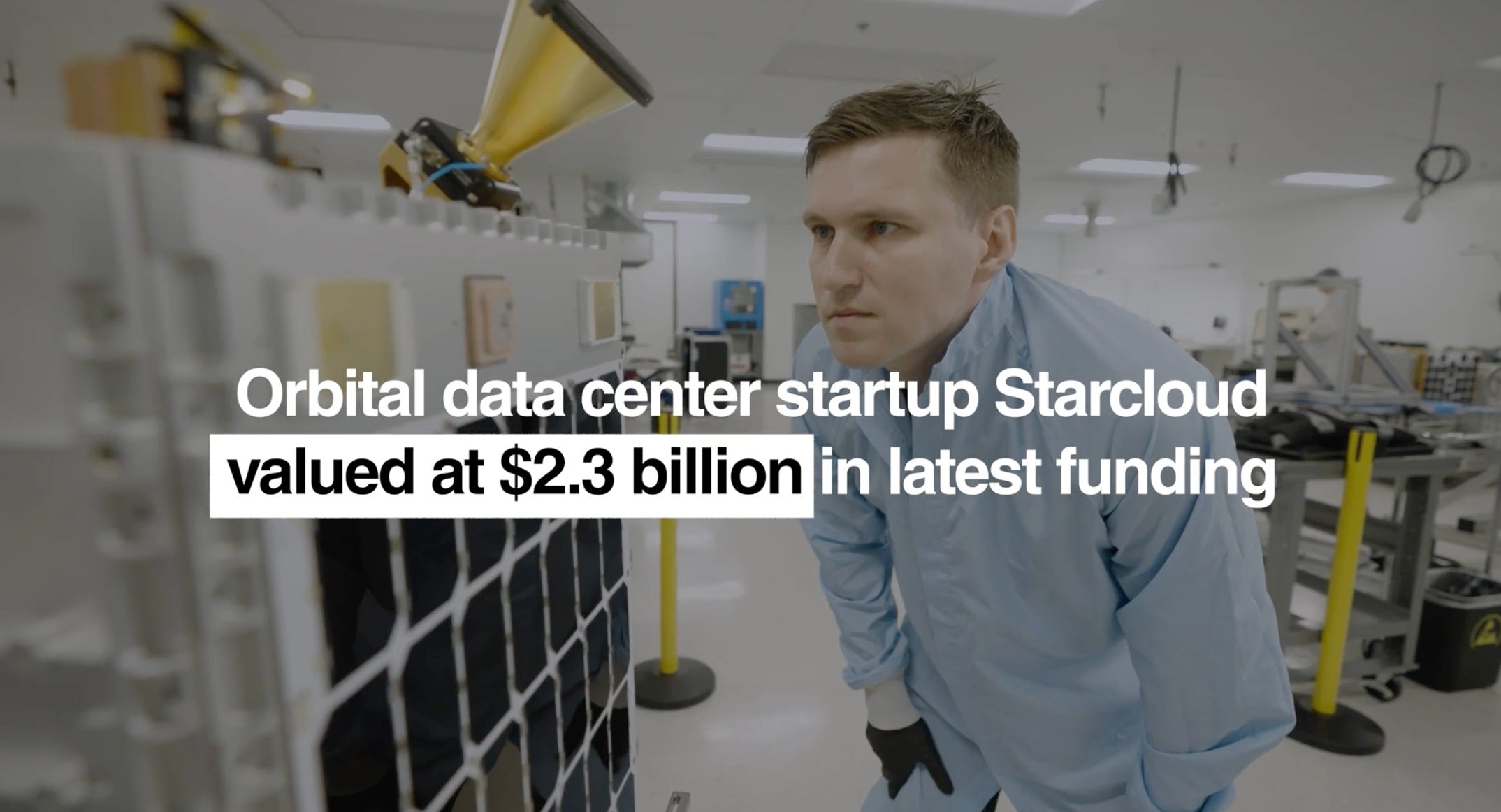
Starcloud raised $170M in March 2026 at a $1.1B valuation. It added $250M in August at a $2.3B valuation, in a round led by Manhattan West with Nvidia and Cisco Investments joining Benchmark and EQT. Total funding stands at $450M. The team is 30 people, 2 of them non-engineers, Johnston expects about 50 by year end & 100 by the end of next year. The company had moved into a new manufacturing facility days before this tour.
Why Starcloud Moved From El Segundo to Redmond
Johnston and Feilden spent the company’s first month in El Segundo, the center of the Los Angeles space industry. A search for engineers changed the plan.
“We were typing into LinkedIn like, okay, spacecraft thermal engineer, and it was literally going like Redmond, Redmond, Redmond, Bellevue, Seattle, Redmond, Redmond.”
Johnston says 90% of all satellites launched in recent years, by mass, were designed, built and tested in Redmond. SpaceX builds Starlink satellites there. Amazon runs its Amazon Leo broadband constellation, formerly Project Kuiper, from Redmond and produces its satellites in nearby Kirkland. Aerojet Rocketdyne, now part of L3Harris, makes spacecraft thrusters in Redmond, where Kymeta, RBC Signals and Microsoft Azure Orbital also operate. Blue Origin and Stoke Space are both based in Kent. Starfish Space builds satellite servicing vehicles in Tukwila, and Xplore operates hyperspectral satellites out of Bellevue.


Washington has about 60 space companies. A 2024 industry estimate puts the state’s direct space workforce above 12,000 people and its direct economic impact near $5B. Redmond alone accounts for more than 5,260 space jobs.
The region also brings Starcloud the other half of its workforce. About half of Starcloud’s team came from SpaceX. The other half came from the hyperscalers, with AWS and Azure nearby.
“For doing data centers in space, this is literally the best place in the world you could be.”

The $500/kg Launch Cost Threshold
Johnston compares orbital compute against a new terrestrial solar project, the cheapest power source on the ground. A solar project on Earth has 3 main costs. Permitted land is the largest, then battery storage and backup power, then the solar cells themselves. In a dawn-dusk sun-synchronous orbit, Starcloud needs no land and no batteries. Each square meter of panel produces about 8x the energy it would on the ground.
That leaves launch as the main added cost. Falcon 9 runs about $5,000/kg today. Starship is designed for internal SpaceX launch costs of $20 to $40/kg. Johnston says SpaceX charges 2x to 3x its marginal cost on Falcon 9, and Starcloud’s model still works if SpaceX charges up to 10x on Starship.
“If the launch cost gets below around $500 a kilo, then it will be much cheaper to do this in space than terrestrially.”
Starcloud’s current business runs at today’s launch prices because it sells to satellite operators. Competing with terrestrial data centers on energy and infrastructure cost depends on reaching the $500/kg line. Johnston expects Starship to reach upper stage capture within a year, and SpaceX to start selling Starship capacity to commercial customers from 2028.

Radiators at 10x Less Mass Than the ISS
Oltean spent about 2 decades at Microsoft running large-scale GPU deployments in production, working closely with Nvidia. He then spent 2 years at SpaceX as the responsible engineer for Tracking Beams, the feature that delivers Starlink to aircraft, cruise ships and Starship. He calls the cooling system and radiators the hardest technical problem at Starcloud.
“The engineering math is hard, but economic math is the one that truly matters in orbit.”
Starcloud uses liquid cooling in orbit, the same move terrestrial data centers made in 2025 to support higher compute density. The company builds its radiators in-house and assembles its own solar panels. It integrates everything except the compute boards.
The radiators fly as the first segments of a 120 ft deployable on Starcloud 2. Johnston says it will be the largest commercial deployable radiator in space, at least 10x less mass and about 500x less cost per watt of dissipation than the radiator on the International Space Station.
A 3-Month Burn-In to Manage Chip Risk
Johnston says Starcloud has solved cooling, and that chip reliability is now the bigger risk. The chips are the most expensive part of each satellite, and the satellites can’t be serviced after launch.
“If the chips have a 10% or 20% higher failure rate in space than they do on the ground, then the whole economics of the model fall apart.”
Starcloud tests chips in particle accelerators to qualify them for the radiation environment. It adds redundancy on critical systems such as pumps and over-provisions parts that degrade, such as solar panels, which lose a few percent a year. Most chip failures happen early in a chip’s life. Starcloud ran the Starcloud 2 chips at full power for a 3-month burn-in to catch those failures on the ground.

Starcloud 1 Is Running Government Inference Today
Starcloud 1 carries 3 Nvidia chips, 2 from Arm and AMD CPUs. It trained the first model in space, Andrej Karpathy’s NanoGPT, and ran an early version of Gemini. It is now running test workloads for government customers, doing inference on synthetic aperture radar and hyperspectral data.
Military satellites collect far more imagery than they can downlink. Data waits at least 90 minutes to reach a ground station, and only a fraction of it gets through. Starcloud’s satellites receive data over optical terminals in real time, run inference in orbit and send down the results.
“We can then downlink the coordinates of a vessel, for example, in minutes rather than hours and days, which is the current way that this works.”
The larger opportunity is inference for coding agents, back-office business agents and chatbot queries. Frontier model training needs tightly networked clusters, which orbital hardware won’t support until satellites can dock together.

Starcloud 2 & a $200K Secondhand Vibe Table
Starcloud 2 sits in the main assembly area ahead of its January launch. It is designed for 100x the power generation of Starcloud 1. During the tour, the team fired the hold-down and release mechanisms that deploy its solar panels. Oltean calls that the most important deployment event in orbit. A half-built zero gravity offloading rig nearby is used to test the 120 ft deployable.
SpaceX requires vibration testing before any satellite rides on a multi-tenant launch. Starcloud couldn’t find a vibe table in the US that would test a pressure vessel on its schedule. A new table costs about $1.5M and has a lead time of nearly 2 years. The team bought a 16-ton secondhand table at a surplus auction for $200K. It arrived filled with water and had a large internal leak, which the team found 2 days before the test. The country’s top vibe table expert said it couldn’t be repaired. The team rebuilt it over evenings and a weekend and completed the spacecraft-level test.
“When you have extremely tight timelines, when you’re trying to do new things very quickly, you often find yourself in these kind of situations where you have to get very creative and hustle and basically not take no for an answer.”
After vibe, Engineering Manager Bailey Montaño ran a leak check on the fully fueled electric propulsion system. Montaño spent 4 years at SpaceX working on Raptor and Merlin and later worked in fusion at Helion Energy. Montaño designed and fabricated Starcloud’s radiators and built the Starcloud 1 bus from scratch in 3 weeks at its bus provider’s facility in Colorado.
Starcloud 1 launched on a Falcon 9 rideshare in November 2025 carrying the first Nvidia H100 in space. One of the primes quoted Starcloud $75M to $100M to build it. Starcloud built it for about $2.5M.

Starcloud 3, 50 Per Starship & an 88,000-Satellite Filing
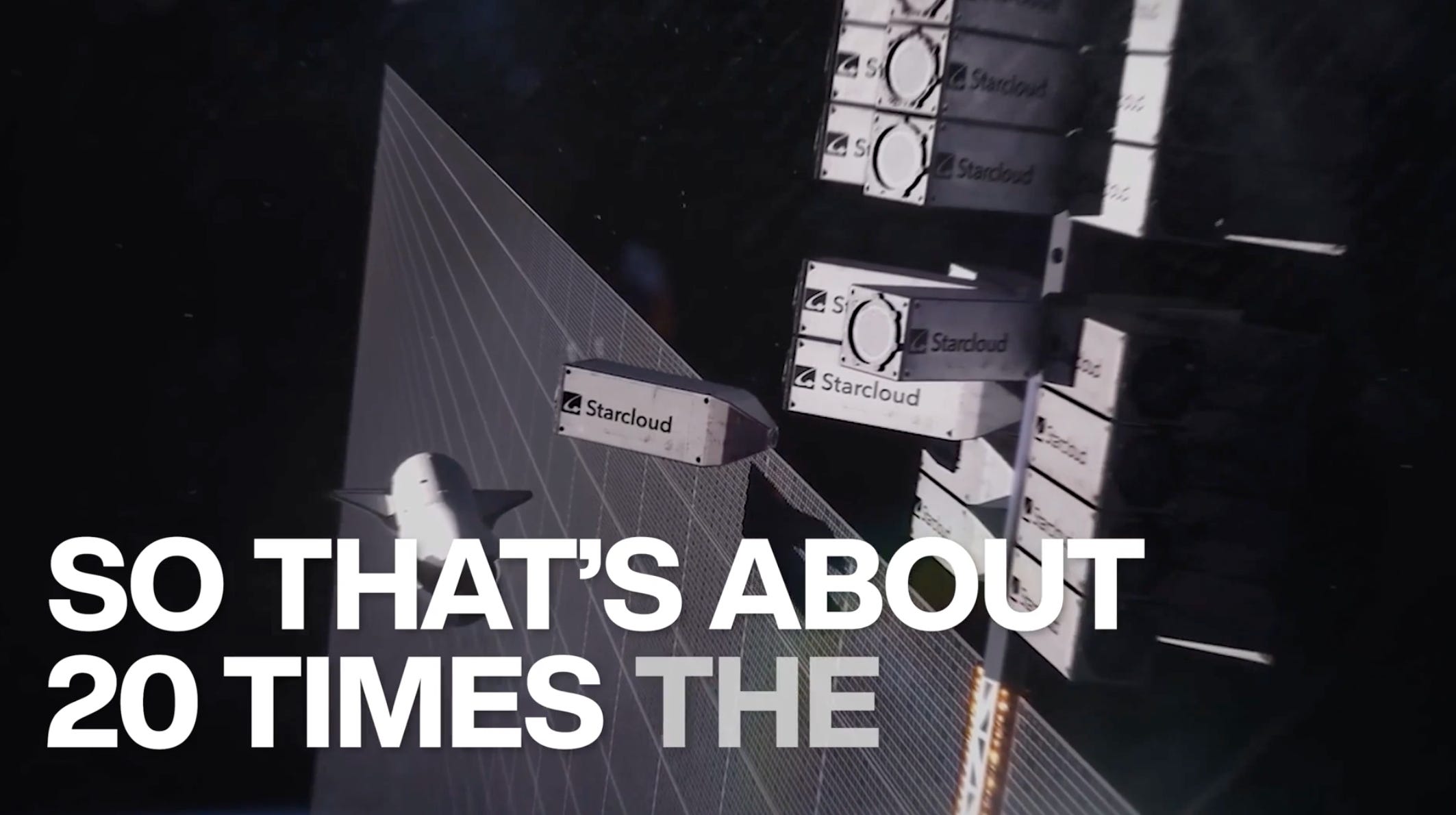
The fab shop handles sheet metal, MIG, TIG and laser welding for test equipment and some flight parts. It also holds the Starcloud 3 manufacturing demonstrator. Feilden describes Starcloud 3 as a vehicle of about 2 tons and 235 kW. Starship fits 50 of them, 2 wide and 25 tall, for about 10 MW of compute per launch.
Starcloud has filed for a constellation of 88,000 satellites, enough for the first 20 GW. Johnston estimates the dawn-dusk orbit can hold about 10 TW, roughly 20x the US power grid. Satellites in that orbit fly over the poles, so they never cast a shadow on Earth.
In the laser lab, Camilo Lopez demonstrated the XTool CNC laser cutter on stainless steel. Next is an Amada fiber laser for sheets up to 5x10 ft. Engineering Operations Lead Miguel Rivera runs a technician team of 4 to 5 on welding and fabrication. Rivera previously led welding and fabrication at Helion Energy and before that served a decade in the US Army.
The new campus adds about 100,000 sqft for Starcloud 3 manufacturing and is designed to produce 100 satellites a week on a line modeled on auto manufacturing. Starcloud 3 carries 400 ft deployables, part of why the floor space is needed. Finished satellites will be trucked to launch, the way SpaceX ships Starlink satellites from its Redmond facility to Florida.

Launch Slots, Capital & National Security
Starcloud booked its first launch about 21 months ahead with a credit card. Feilden says that era is ending, with Falcon 9 rideshare winding down before Starship rideshare is available.
“We’re definitely in a crunch time at the moment when it comes to launch.”
Starcloud has booked launches with Stoke Space and Firefly in addition to Falcon 9. Part of the $450M is going to reserve launch slots for 2028 and 2029, when capacity is tight. The rest is funding the new facility, hiring and materials. Johnston says the company earns about $1M a month in interest on its cash. Feilden says launch insurance covers a rocket failure or a failed separation but not the lost time, and he decides on insurance case by case.
On security, Johnston says a satellite moving at 17,000 mph is harder to strike than a data center in Virginia. Starcloud uses the same cryptography approach as Starlink, which has operated in Ukraine under active cyber and physical threats. Any object larger than a 1-inch cube can be tracked in orbit, so tampering would be visible, and under the Outer Space Treaty it would be an act of war against the US.
Launch Capacity Sets the Timeline for the Next Wave of Space Hardware
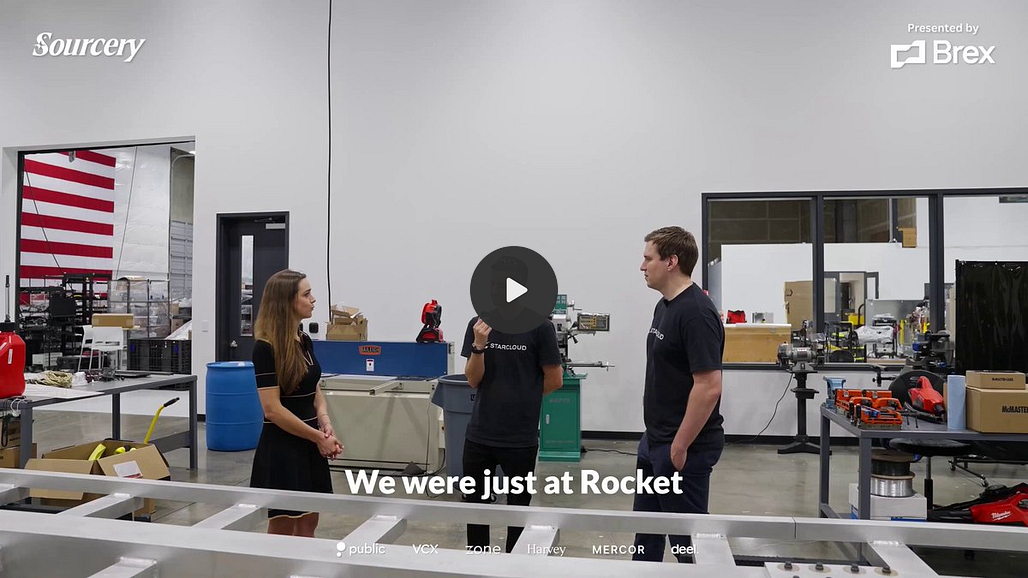
Launch capacity has come up on every recent Sourcery space tour. At Rocket Lab in Long Beach, the focus was Neutron, which now targets a first flight in 2027. Feilden says Starcloud is rooting for it, citing Rocket Lab’s record of more than 100 Electron launches.

At Northwood Space in Torrance, the focus was scaling ground station production for the satellites those launches will carry. Starcloud is at the compute end of the same chain. It has launches booked on Falcon 9, Stoke and Firefly while it waits for commercial Starship capacity.
The industry is also spreading beyond Los Angeles and Texas. El Segundo, Torrance and Long Beach remain the center of spacecraft and launch manufacturing in California. In Texas, SpaceX builds and launches Starship at Starbase, tests engines in McGregor and builds Starlink hardware in Bastrop. Firefly is based in Cedar Park, and Intuitive Machines and Axiom Space are in Houston. Redmond and Kent hold the satellite and propulsion workforce that SpaceX, Amazon Leo and Blue Origin built over the past decade. Starcloud chose its location based on where those engineers already live.
Starcloud 2 launches in January with the largest commercial deployable radiator in space and is the first test of the thermal system at power. Starcloud plans to fly an SC-1L compute payload to lunar orbit on Firefly’s Elytra no earlier than 2028. Starcloud 3 production is planned for the new Redmond campus at 100 satellites a week, timed to the commercial Starship capacity Johnston expects from 2028. The founders’ nonprofit, the Fermi Explorer Mission, plans to launch a spacecraft toward Alpha Centauri by the end of 2029.
Relevant Videos
The material presented on Molly O’Shea’s website are my opinions only and are provided for informational purposes and should not be construed as investment advice. It is not a recommendation of, or an offer to sell or solicitation of an offer to buy, any particular security, strategy, or investment product. Any analysis or discussion of investments, sectors or the market generally are based on current information, including from public sources, that I consider reliable, but I do not represent that any research or the information provided is accurate or complete, and it should not be relied on as such. My views and opinions expressed in any website content are current at the time of publication and are subject to change. Past performance is not indicative of future results.
Paid Ad. Agents are an experimental AI tool. Its output may be inaccurate and is not investment advice. Public Holding’s, Inc. makes no guarantees about its accuracy or reliability—verify independently before use. Brokerage accounts & services provided by Open to the Public Investing, Inc. See additional disclosures at: https://public.com/disclosures/agenticdisclosures.