


Are You Even a Human??
The Big Bot Scare is Here.
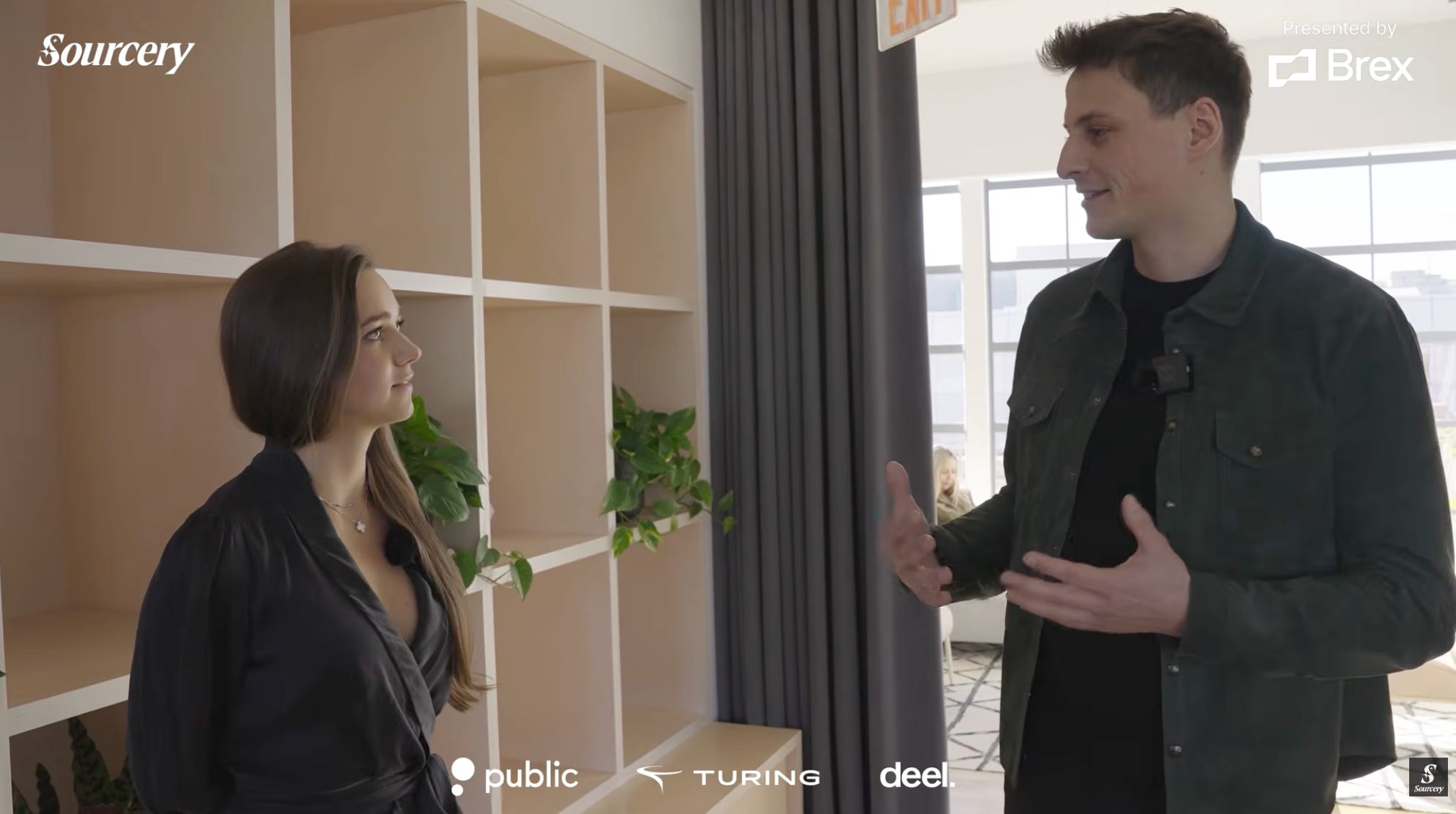
Alex Blania (Co-Founder & CEO of Tools for Humanity, World, & Co-Founder of Merge Labs) joins Sourcery to give a deeper look inside the companies he co-founded with Sam Altman, and explain why the internet is heading toward a severe breaking point: bots, deepfakes, scams, & autonomous agents scaling faster than trust.
“99.9% of internet traffic will be AI driven.”
“It’s not about combating the bots.. that will be a lost cause.”
→ Listen on X, Spotify, YouTube, Apple
World is building the largest “real human network” a proof-of-human layer for the AI era, and the numbers are getting serious:
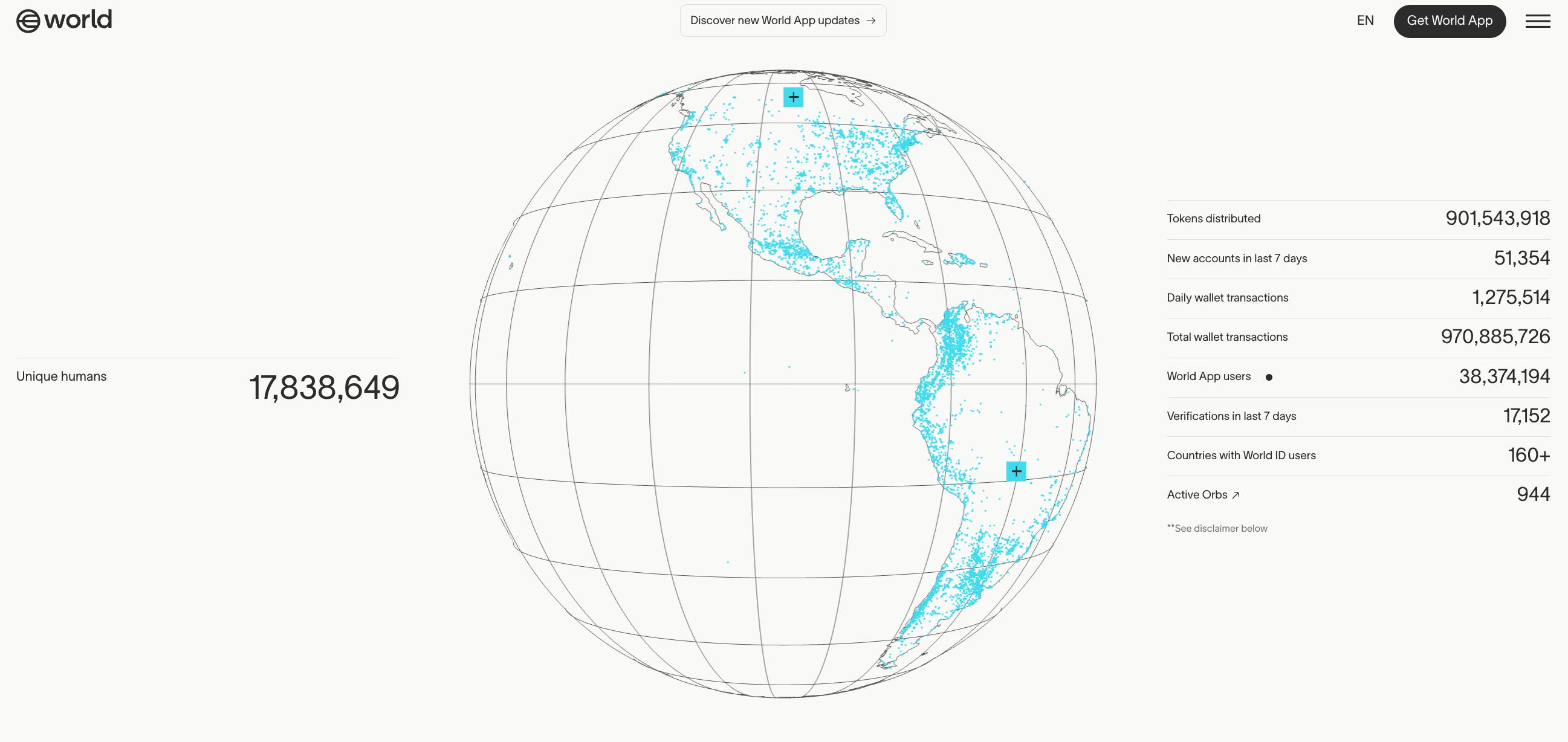
• 38,374,194 World App users across 160 countries
• 17,832,402 verified unique humans
• 970,885,726 wallet transactions
We talk about: how proof-of-human actually works, what happens when bots outnumber people online, why human verification becomes the bottleneck for markets and platforms, and what a “verified human internet” could look like.
TLDR: If bots can act human at scale, humanity becomes the ultimate infrastructure.
Then we go deeper into Alex’s second frontier bet: Merge Labs, a brain–computer interface research lab that raised $252M seed round at an $850M valuation, backed by Bain Capital Ventures, with OpenAI as an investor and research collaborator, plus Gabe Newell. Merge Labs is pursuing less-invasive, higher-bandwidth BCIs, exploring ultrasound-based modalities and molecular approaches to interface with more of the brain without implants.
This is the most in-depth look at World, Merge, & the breakthrough entrepreneur hand picked by Sam Altman to lead Tools for Humanity.

BREAKING: OpenAI Makes Strategic Acquisition: OpenClaw + its Founder Peter Steinberger.
As agents like OpenClaw explode & cause severe public market volatility to the order of multi-$100B corrections, Sam Altman sees an “extremely multi-agent” future and is moving quickly to ensure OpenAI is strategically positioned for long-term advantage.
The bot era is here. How do you prove you’re human online? What happens when you can’t? Who will it impact most? . . And does it even matter?
𝐓𝐈𝐌𝐄𝐒𝐓𝐀𝐌𝐏𝐒
(00:00) Alex Blania
(01:27) World Explained: ID, Chain, App — The Full Stack
(04:47) World Card, Stablecoins & Encrypted World Chat
(08:22) 37M Users, 17M Verified
(11:02) “Fail-Safe Privacy” — Why This Can’t Break
(12:18) Where Proof of Human Actually Wins: Social, Dating, Gaming
(14:04) Stop Fighting Bots
(16:49) How Alex Met Sam Altman
(22:25) Operating with Sam While Building Two Companies
(24:39) Inside Merge Labs — Why It Took 18 Months
(24:58) “Last Innings Before Superintelligence”
(32:38) Launching Merge Labs – $252M Seed Round
(34:01) OpenAI Funding + Collaboration
(37:30) Brain–Computer Interfaces 101 — Why Bandwidth Matters
(42:14) Mind Control? Privacy? The Real BCI Misconceptions
Brought to you by:
Brex—The intelligent finance platform: cards, expenses, travel, bill pay, banking—wrapped into a high-performance stack. Built for scale. Trusted by teams that move fast. visit → brex.com/sourcery
Turing—Turing delivers top-tier talent, data, and tools to help AI labs improve model performance, and enable enterprises to turn those models into powerful, production-ready systems. Visit: turing.com/sourcery
Deel—Deel is the global people platform that helps startups hire, manage, pay, and equip anyone, anywhere. Trusted by more than 35,000 fast-growing companies, Deel is the people platform that just works, so teams can scale without the chaos. Visit: deel.com/sourcery
Public-–Investing platform Public just launched Generated Assets, which lets you turn any idea into an investable index with AI. With Generated Assets, you can build, backtest, refine, and invest in any thesis with AI. Gone are the days of one-size-fits-all ETFs. Try it today: public.com/sourcery
Human as Infrastructure
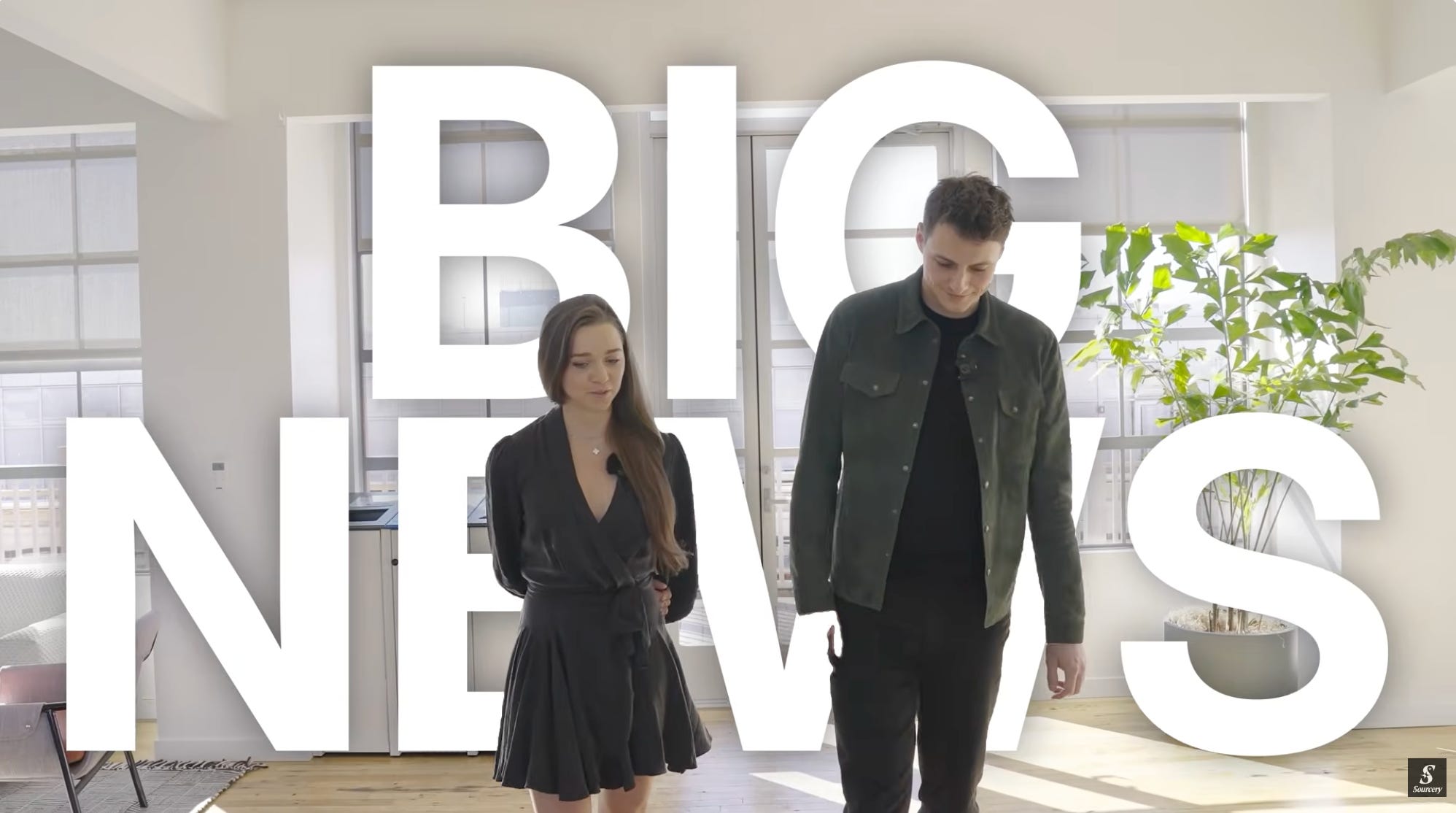
A Conversation with Alex Blania, CEO of Tools for Humanity
The conversation with Alex Blania took place at a moment when the AI ecosystem is shifting from model quality to autonomous execution. OpenClaw surpassed 200,000 GitHub stars within months of launch. OpenAI hired its creator and stated that the future will be “extremely multi-agent.” Similar systems are emerging across the ecosystem. The practical reality is that agents are increasingly interacting with software, services, and other agents at scale, without permission or constraints.
“AI passed the Turing test… it can talk like a human on the internet.” He added, “99.9% or something of all internet traffic will be AI driven.”
The exact percentage is less important than the direction. If automated systems become the dominant share of online activity, the assumption that digital accounts represent humans begins to break.
Co-Founding with Sam
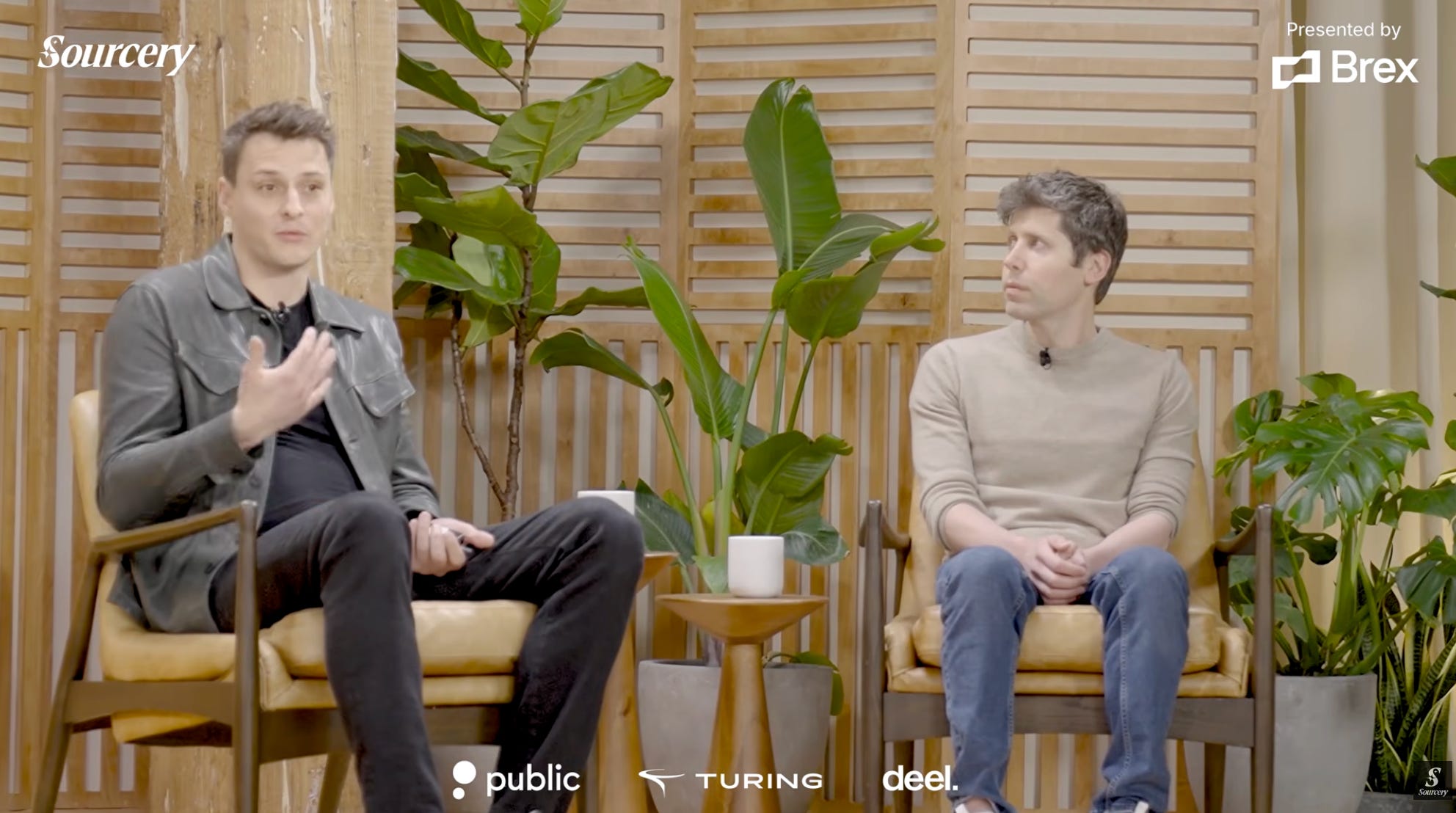
Blania described his close working relationship with Sam Altman as structured, consistent, and high trust. Despite Sam’s trillion-dollar ambition with OpenAI and Blania’s with TFH/World they maintain regular communication & remain aligned on major strategic decisions across both Tools for Humanity and Merge Labs.
“We operate with weekly updates… & we’re both involved in the major decisions.”
“This is such an infinitely leveraged moment in time where any contribution you can make might actually make a meaningful impact..”
From Combating Bots to Verifying Humans
Blania does not believe that suppressing bots is a viable long-term strategy. Model performance is improving, deployment costs are falling, and open frameworks are spreading. Instead of fighting automation, he argues platforms must verify humans.
“It’s not about combating the bots because that will be a lost cause,” he said. “Every human on these platforms will need some version of a proof of human.”
The shift is structural. Rather than asking whether bots should exist, the question becomes whether platforms can function without human verification infrastructure.
“Platforms like X will not be usable in a matter of months, maximum two years, if they don’t come up with completely new technical solutions.”
World: Architecture & Scale
Tools for Humanity builds World, a vertically integrated stack composed of World ID, World Chain, and World App. World ID provides proof of human through Orb verification. World Chain operates as the blockchain infrastructure. World App functions as the consumer interface and wallet.
The network reports roughly 38 million users globally, with more than 17.8 million verified humans. The ecosystem spans over 160 countries and has processed hundreds of millions of transactions.
Blania views these numbers as early relative to the objective. “Everything below hundreds of millions doesn’t mean much to us.”
The ambition is global scale. Human verification infrastructure must reach mass adoption to meaningfully stabilize digital systems.
Recent product updates include World Card, stablecoin integrations, expanded country and currency support, encrypted World Chat, and a mini app ecosystem. Tinder in Japan is testing World for human verification and age authentication. The strategy appears to be embedding proof of human directly into consumer use cases.

Privacy & Design Constraints
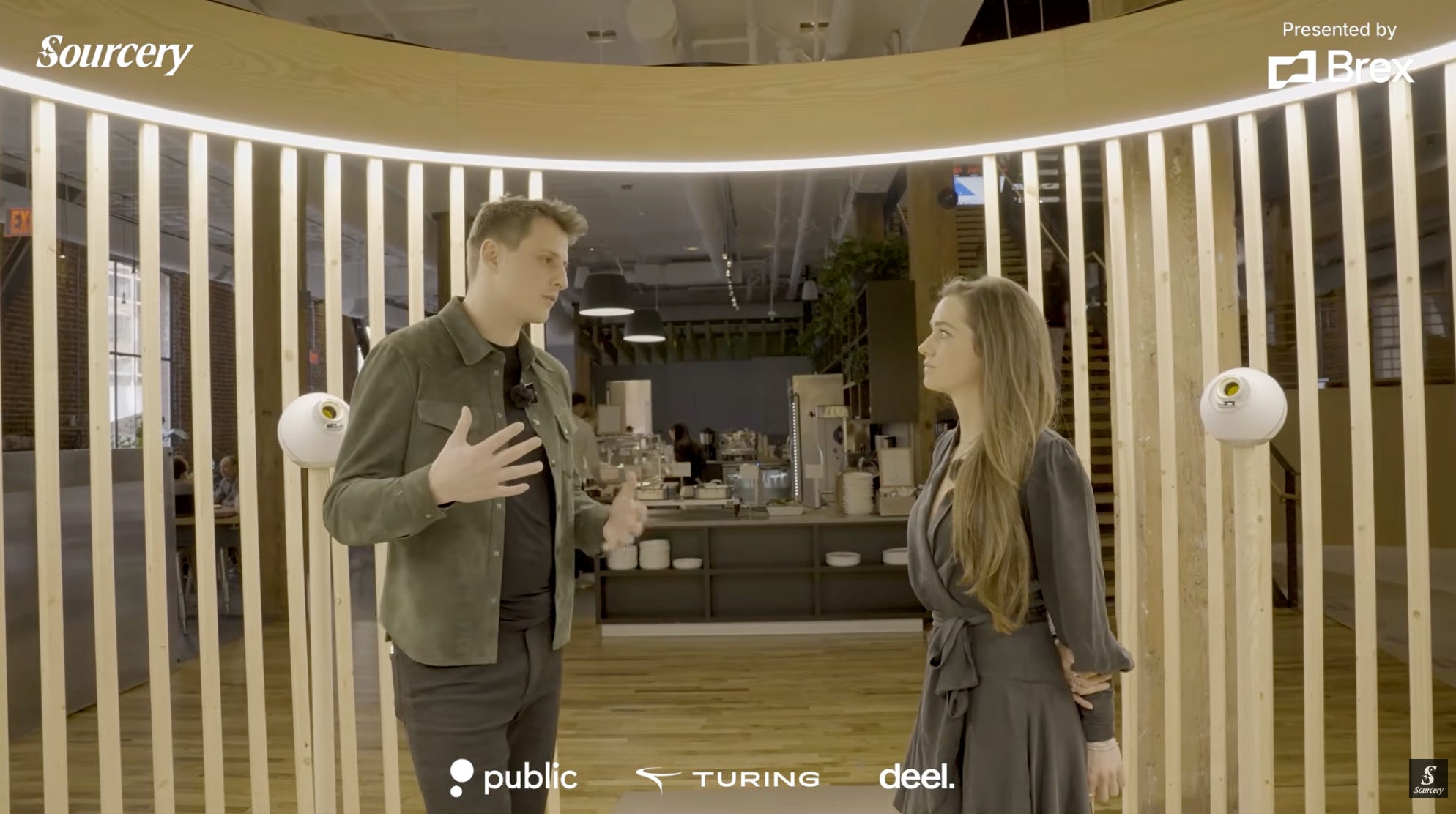
Biometric systems raise obvious concerns. Blania emphasized that the system is designed around cryptographic anonymity rather than centralized data storage.
“We have designed a system that can be fundamentally anonymous and is fundamentally anonymous and privacy preserving,” he said. He framed privacy as existential to the company’s survival: “Fail safe privacy… that’s the only way you could kill this company in a second.”
The design challenge is balancing uniqueness and anonymity. In a multi-agent environment, human verification must not require exposing sensitive personal data. The technical architecture is therefore central to the thesis.
Timeline Acceleration & Superintelligence
The discussion repeatedly returned to acceleration. Model capability, deployment velocity, and infrastructure spending have all increased over the past eighteen months. Blania suggested that the timeline toward highly capable systems may be shorter than many expect.
“We’re probably in the last innings before superintelligence.”
If autonomy and capability continue to scale, human infrastructure becomes more urgent. Verification cannot lag behind capability growth.
Agents, Bots, & the Structural Question
Whether labeled agents or bots, autonomous systems are expanding across digital platforms. The terminology is secondary to the structural issue. If machines can convincingly behave as humans at scale, authentication becomes infrastructure.
Blania’s position is consistent throughout the conversation. Verification is not optional. It becomes a prerequisite for stable digital interaction.
“Every human on these platforms will need some version of a proof of human.”

Merge Labs: Expanding the Interface Layer
In addition to World, Blania co-founded Merge Labs with Sam Altman. Merge is structured as a Public Benefit Corporation focused on brain–computer interface research. It raised a $252 million seed round at an $850 million valuation, with the largest check coming directly from OpenAI rather than its venture arm. Bain Capital Ventures and Gabe Newell participated.
The lab is exploring ultrasound-based modalities and molecular approaches designed to increase neural bandwidth without implanting hardware directly into brain tissue.
Blania described the mission as “bridging artificial and biological intelligence” and emphasized that “it’s about high bandwidth brain computer interfaces.” The roadmap begins with research and medical applications before considering broader deployment.

Mission, Team, & Structure
Merge Labs is structured as a research-first organization rather than a consumer startup. The founding team includes Alex Blania, Sam Altman, Mikhail Shapiro, Professor of Chemical and Medical Engineering at Caltech, Sumner Norman & Tyson Aflalo from Forest Neurotech, and Sandro Herbig. The team combines experience in neuroscience, ultrasound-based neural interfaces, hardware systems, and AI.
The lab is exploring ultrasound-based modalities and molecular approaches designed to interface with larger portions of the brain without implanting hardware directly into neural tissue. The focus is on increasing bandwidth while reducing invasiveness.
Blania described the objective as “bridging artificial and biological intelligence” and reiterated that the emphasis is on bandwidth and scalability. The roadmap begins with research and medical applications before evaluating broader deployment.
→ Listen on X, Spotify, YouTube, Apple

The material presented on Molly O’Shea’s website are my opinions only and are provided for informational purposes and should not be construed as investment advice. It is not a recommendation of, or an offer to sell or solicitation of an offer to buy, any particular security, strategy, or investment product. Any analysis or discussion of investments, sectors or the market generally are based on current information, including from public sources, that I consider reliable, but I do not represent that any research or the information provided is accurate or complete, and it should not be relied on as such. My views and opinions expressed in any website content are current at the time of publication and are subject to change. Past performance is not indicative of future results.
Paid Endorsement. Brokerage services by Open to the Public Investing Inc, member FINRA & SIPC. Advisory services by Public Advisors LLC, SEC-registered adviser. Crypto trading provided by Zero Hash LLC, licensed by the NYSDFS. Generated Assets is an interactive analysis tool by Public Advisors. Output is for informational purposes only and is not an investment recommendation or advice. See disclosures at public.com/disclosures/ga. Matched funds must remain in your account for at least 5 years. Match rate and other terms are subject to change at any time.