


Getting Your Spoon Bent
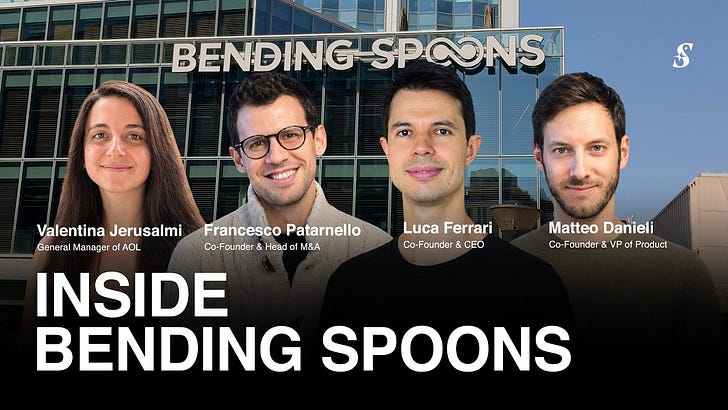
Luca Ferrari, Co-Founder & CEO of Bending Spoons (NASDAQ: BSP), sits down with me at the company’s Milan headquarters for Part II of our Bending Spoons series, going deeper into the technology, culture and operating philosophy behind the company.
→ Listen on X, Spotify, YouTube, Apple
Luca takes us inside Bending Spoons’ centralized technology platform, including 50+ proprietary tools, 95% of code being written by AI, its internal Alt Spooner agents, and why he estimates the company is now 2–3X more productive. We also discuss the company’s extreme approach to talent, with 800,000 job applications in 2025 and fewer than 300 hires, alongside a culture built around extreme ownership, experimentation and truth-seeking.
We get into why Luca believes most people don’t actually seek the truth, why Bending Spoons ran more than 3,000 experiments last year, the misconceptions around its business model, AI hype & valuations, the risks of underestimating increasingly capable AI systems, +how Luca thinks about Bending Spoons for the decades ahead.
This is Part II of our Bending Spoons series
Check out Part I: HQ tour, all 3 co-founders + GM of AOL
𝐓𝐈𝐌𝐄𝐒𝐓𝐀𝐌𝐏𝐒
(00:00) Luca Ferrari, Co-Founder & CEO at Bending Spoons
(00:45) The deal that broke the Internet
(03:41) Why Silicon Valley overspends on Hype
(07:35) Half a billion monthly active users
(16:17) What makes a company worth buying
(20:07) Inside the platform powering every product
(32:16) Debunking the Private Equity comparison
(38:23) $4 Million in revenue, per employee
(43:44) The secret to zero churn
(47:40) The one value that defines Bending Spoons
(51:52) The AI tool every Spooner uses
(57:58) Going Independent from the AI labs
(59:02) Have we actually reached AGI?
(1:08:05) The AI question nobody's asking
(1:12:54) Luca's next big bet
Brought to you by:
Brex—The intelligent finance platform: cards, expenses, travel, bill pay, banking—wrapped into a high-performance stack. Built for scale. Trusted by OpenAI, Anthropic, Vercel, Granola, Deepgram, & Sourcery.. teams that move fast AF. visit → brex.com/sourcery

Zone—develops next-generation data center campuses, partnering with AI companies, site developers and technology leaders to bring compute online faster and at scale. Visit: zonefrontier.com
Turing—Turing partners with frontier AI labs to improve model capabilities in coding, reasoning, tool use, & multimodality, as well as with Fortune 500 enterprises to build & deploy end-to-end agentic AI systems in mission-critical workflows Visit: turing.com/sourcery
VCX—VCX is the public ticker for private tech, allowing investors of all sizes to invest in venture capital. View The Portfolio at GetVCX.com
Deel—Deel is the global people platform that helps startups hire, manage, pay, and equip anyone, anywhere. Trusted by more than 35,000 fast-growing companies, Deel is the people platform that just works, so teams can scale without the chaos. Visit: deel.com/sourcery
Public-–Investing platform Public just launched Generated Assets, which lets you turn any idea into an investable index with AI. With Generated Assets, you can build, backtest, refine, and invest in any thesis with AI. Gone are the days of one-size-fits-all ETFs. Try it today: public.com/sourcery
Bending Spoons CEO Luca Ferrari
Business Model, 500 Million Users, Milan HQ
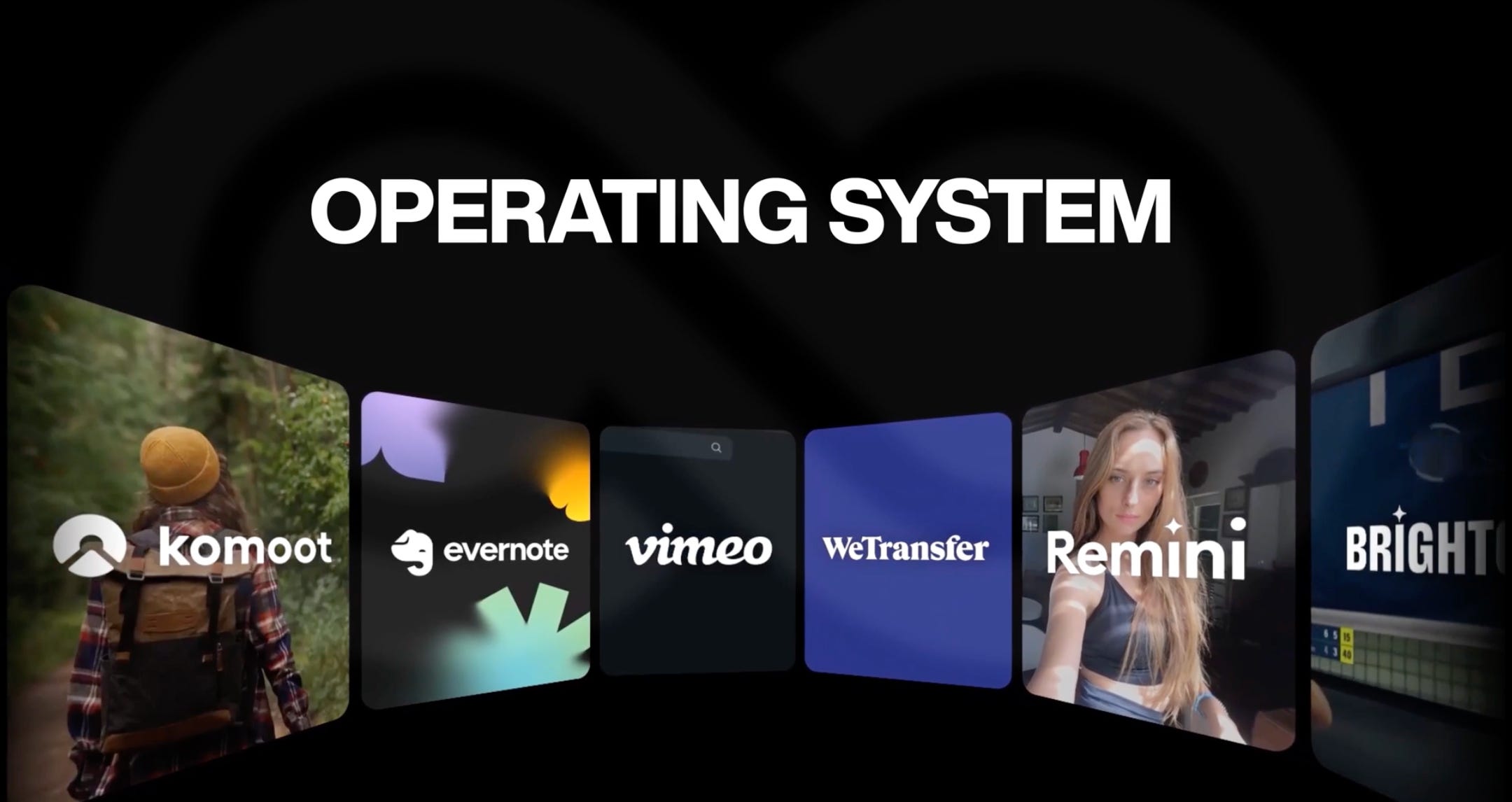
Bending Spoons acquires digital businesses, installs them on a shared proprietary platform, and holds them permanently. It has completed more than 50 acquisitions and never sold a material business. The portfolio includes AOL, Airtable, Vimeo, Eventbrite, Evernote, WeTransfer, Brightcove, Tractive, Remini, komoot, Harvest, StreamYard and Meetup.
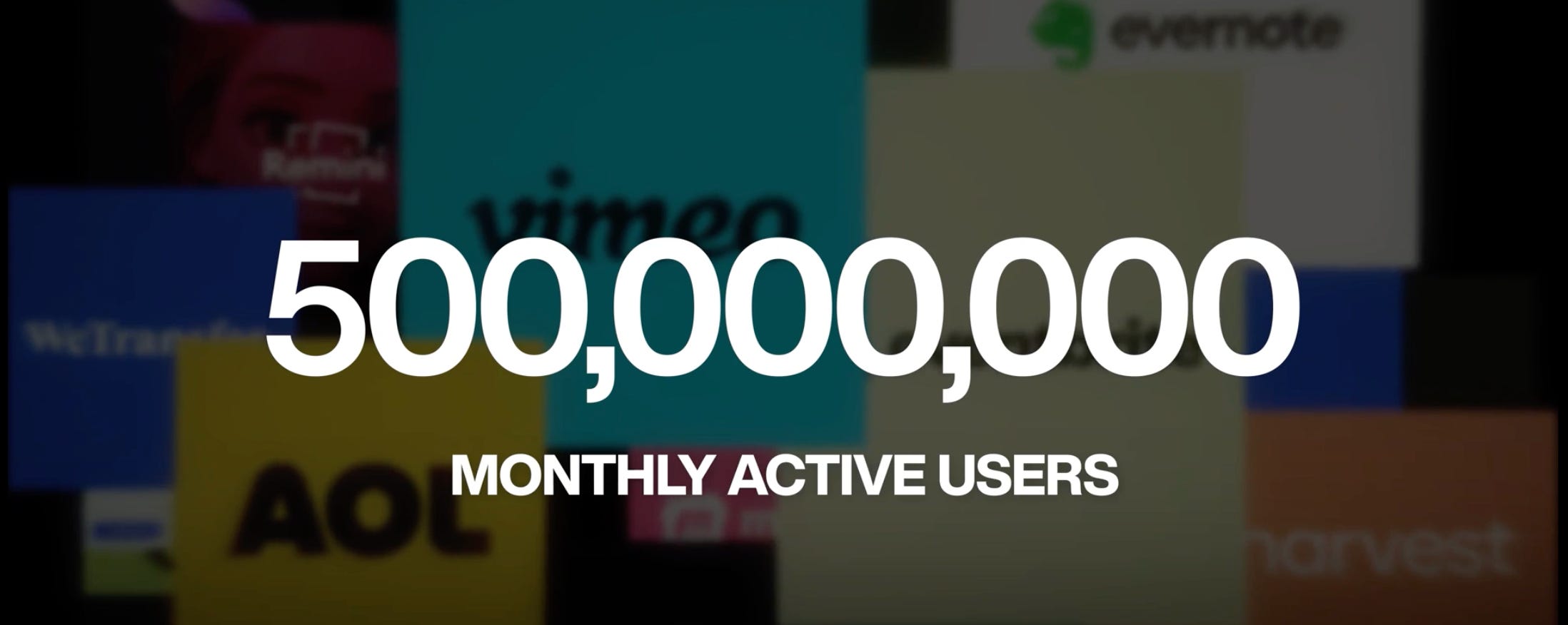
Ferrari puts the user base at half a billion monthly actives. The core team is approaching 1,000 people, with more than 2,000 including acquired teams.
The company listed on the Nasdaq on July 1, 2026 at $29 a share, raising ~$1.68B at an implied valuation of about $18.4B, and closed the first day at $40.50. It was bootstrapped for a decade and took no primary equity until 2023. Since listing it has closed Airtable at a $1.285B enterprise value and agreed to acquire Miro at $1.355B.
Part I covered the office walkthrough plus co-founders Francesco Patarnello & Matteo Danieli + AOL General Manager Valentina Jerusalmi.
→ Listen on X, Spotify, YouTube, Apple
They Never Sell What They Buy
More than 50 acquisitions, and not one material business sold. Ferrari says most serial acquirers either leave a business alone and count on having bought it cheap, or make changes while keeping it separate. Bending Spoons sits at the far end of the spectrum, integrating everything it buys.
Almost all the money came from debt and the company’s own cash flow rather than equity raises. He says transforming a business takes roughly the same effort regardless of its size, which pushes them toward fewer, larger deals.
“We can get it done for a much larger business with a relatively similar number of people as for a smaller business. Given that we don’t have infinite operational capacity, we prefer to acquire 5 or 10 businesses each year, but bigger, than 50 smaller ones.”
Asked how large the deals can get, he sees no ceiling yet.
“So far, we see no end in sight. There’s no obvious saturation point.”
Predictability Is the Only Filter That Matters
Because they hold forever, they have to see years ahead before they buy.
“We’re not opposed to buying businesses that are shrinking. We have done that before, but we need to know how much they’re shrinking. We need to be able to plot out their trajectory at least five years, ideally more, into the future. So that’s a non-negotiable.”
The second question is whether they can improve the business enough to justify what they pay. Without a path to lifting revenue or cutting costs, he says they cannot offer a price a seller will accept while still making money on it.
Centralized Internal Software
Over a decade the company built more than 50 of its own tools, covering data, A/B testing, payments, recruiting, permissions and AI orchestration. Every business they acquire gets moved onto them.
They build rather than buy because what they need is more complex than any vendor would bother making. As Ferrari puts it, a company building to his specification would have a market of one or two.
“It’s difficult to know exactly how much we’re saving by building this in-house, but I’d wager it’s at least $100 million a year in costs. Building these tools would be uneconomical for pretty much any one of the businesses we acquire as standalone companies.”
The tools are not built by a central team. Whichever business needs one builds the first version, and a platform team takes it over once it works.
“When you have experienced the pain of a certain problem, you’re far more likely to develop an actually useful solution, as opposed to taking a more academic angle where you get more excited about the engineering challenge than actually solving the problem.”

They Are Not Private Equity, for 3 Specific Reasons
Ferrari understands the assumption. He also points out that Amazon, Google and Meta have all made hundreds of acquisitions and raised prices repeatedly, which makes the category unhelpful.
They are not a fund.
“We’re not a fund. We don’t buy to sell companies. We’ve never sold a material business. We intend to own and operate these businesses forever.”
Who works there.
He estimates 60% to 70% of the combined team of more than 2,000 are engineers, designers, product managers and growth managers. That is the staffing behind rebuilding a code base, re-erecting cloud infrastructure or reworking how a product makes money. A small team of finance specialists cannot do that.
Integration, which cuts off the exit.
“If you integrate it with all the other businesses you have bought, it’s gonna be extremely difficult, if possible at all, to sell it to someone else.”

The 2021 Valuations Were the Investors’ Mistake
Ferrari defends the venture model more strongly than most people who live inside it. He says many companies would never have existed without abundant early capital, and that the aggregate return on decades of Silicon Valley investment has been excellent.
What went wrong in 2021 came from how investors get paid.
“When investors are ultimately incentivized by managing as much capital as possible as opposed to actually delivering strong returns, and when returns are primarily delivered through exits where all that matters is the multiple, not actually the cash that the business will generate in the long run, then you will get hype cycles.”
Airtable raised at an $11 billion valuation in 2021 and sold to Bending Spoons at a $1.285 billion enterprise value.
“If anybody made a mistake there, it was the investor, certainly not the company. As a company, you will try to take capital at the best valuation you can. That’s the responsible thing to do for your shareholders. If anything, Howie and the team were incredibly disciplined. Investors ultimately got back approximately all the money they had put in, plus more.”
He Will Not Buy an AI Startup
Bending Spoons uses AI heavily. Ferrari says he is in the top percentile for how aggressively the company deploys it. He is still not buying in the category.
“I’m pretty sure that some of the most valuable companies of all time will be coming out of this broader cohort. But I’m equally confident that most of these companies will fail or at least fade away. It’s a gold rush. So a lot of this is just fluff, but there is real substance here and there.”
The reason he will not underwrite them is the predictability filter, plus price.
“When something is growing 100% a year, you only have one or two years of history, it’s very difficult to know whether they’ll be growing at 100% in three years or at 12% in three years, and that changes everything.”
For scale, AI companies took roughly 86% of every US venture dollar in the first half of 2026, $355.9 billion out of $412.7 billion.

Old Brands Are Not Dead Brands
The common description of Bending Spoons is that it buys dying companies. Ferrari answers with BIG numbers.
“We have half a billion (500,000,000) monthly active users. So if half a billion people using these products every month is a graveyard, then sure, let’s call it that. They may not be the up-and-coming sexy thing, but it doesn’t mean they’re not incredibly useful, important.”
AOL is his example. Roughly 40 years old, still used as an inbox by tens of millions of people, and to the company’s knowledge the 5th most used email provider in the Western world. He says a decade of better-funded, better-covered email startups probably do not add up to 5% of AOL’s activity.
Being unfashionable helps him on price.
“We don’t care too much about being cool. I’d say we probably don’t care at all about being cool. If we find a business that’s perceived as slightly less cool, if anything, that’s a good thing for us, because it means it’s probably also gonna be priced a little bit more accessibly.”
Extremely Ownership Culture: Caring a Lot & Testing Everything
Asked what is core to the culture, Ferrari named extreme ownership first.
“We’d rather work with slightly less intelligent people if it comes down to that, but they have to really care. We don’t wanna work with anybody for whom seeing the company succeed is not a super high priority.”
The second is running the business like a science experiment. The company ran more than 3,000 documented experiments across its products last year, and those are only the ones rigorous enough to record.
“Most people don’t actually seek the truth. They seek pleasure or comfort, and they wanna just confirm that they’re right and they’re good.”
He says that habit is what let the company widen what it can handle over time, from simple iOS apps to web products, enterprise sales organizations, and in spring 2026 its first hardware business with Tractive.

800,000 Applications, Fewer Than 300 Hires
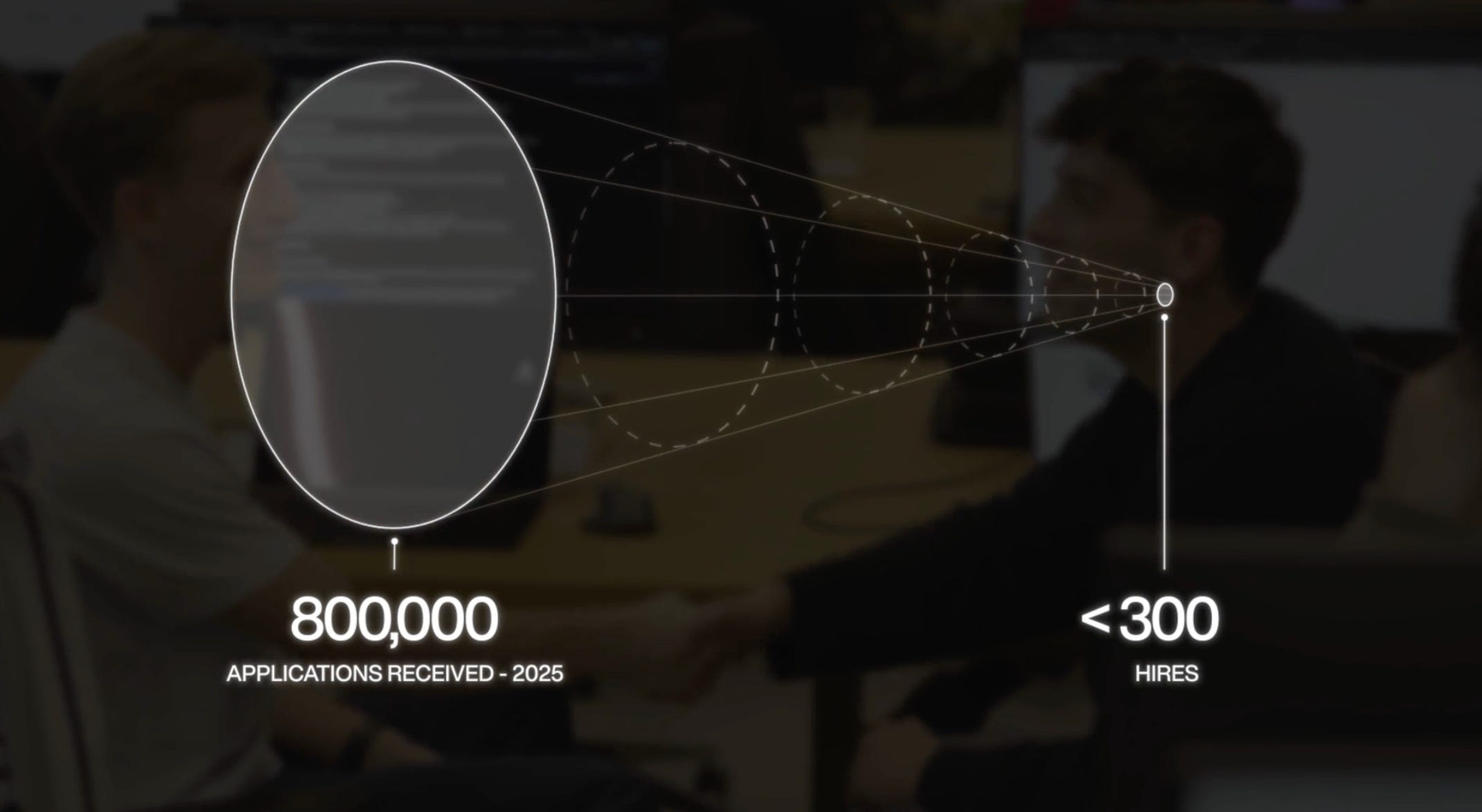
“We had 800,000 job applications in 2025. We hired fewer than 300 people.”
Ferrari ties that funnel directly to what happens after an acquisition. A business that was once fashionable attracts strong people during its heyday, then stops attracting them once the market matures and the company stops being interesting. The most entrepreneurial people leave first.
“Those management teams find themselves having to run those businesses with perfectly fine talent, but not top-notch talent in many cases. So we can add to those teams selectively individuals who are extremely high performers, extremely high agency, and that fuels a new wave of innovations, of efficiency. That’s not a shortcoming of the previous executive team, it’s just they didn’t have the employer brand to attract those people.”
The retention side is the part that surprises people. Voluntary churn in the core team was 0.6% last year, against roughly 5% he says is considered good in tech.
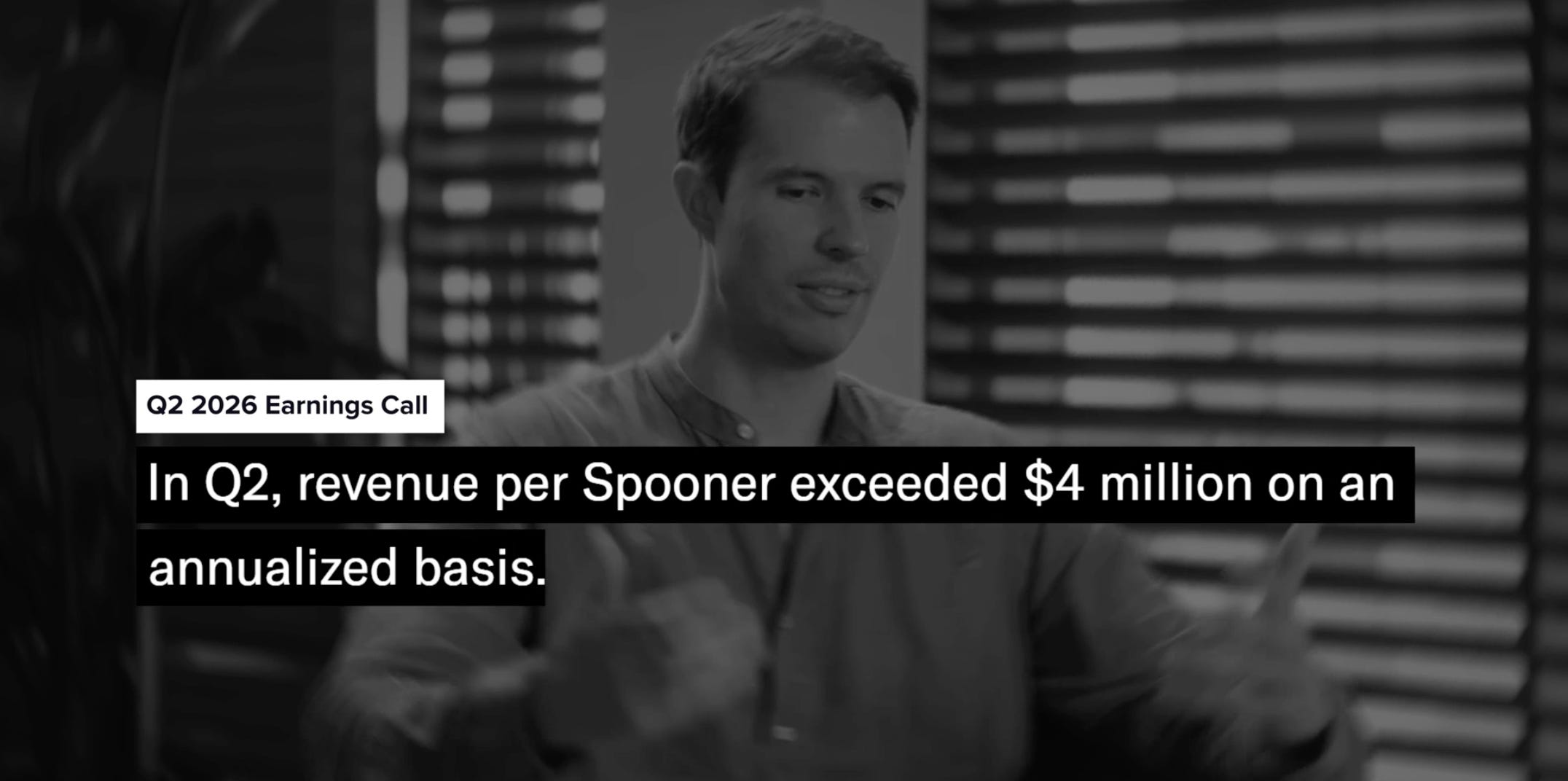
Revenue per core team member is around $4M, up from about $1M 2 to 3 years ago.
He credits that to people being able to move without leaving. Someone worn out on Evernote can switch to a platform team building internal tools, or to AOL to work on email.
“That employer brand can only exist if you structure your company like Bending Spoons. You can never achieve it as a single product company.”
Open Source Debate.. ‘Prettyy pretty good’
Roughly 95% of the company’s code is now written by AI. Every person on the core team has an agent called Alt Spooner in Slack, with exactly the permissions they have. Access to a code base means the agent has it too.
The examples are ordinary work. The general manager of Evernote reported a bug to her agent and told it to check how widespread it was, find the cause, write a fix and ping the engineering lead. She spent about 3 minutes, the lead spent an hour or two reviewing, and the bug shipped the same day.
Underneath sits their own layer that picks which model handles each task.
“We end up using open-weight models we self-host, so these are basically free, for 99% of the requests and tokens, and the frontier models generally closed weight through APIs for maybe 1% of the requests, only for the most complex tasks or for supervision.”
He is direct about why most companies do the opposite.
“We work with all the big labs. They offer great products. We use them enthusiastically. But we don’t wanna be dependent on any of those specifically. The easy approach is hand over the keys to one of these companies and buy their more expensive product. It will make you come across as AI-enabled faster and more easily, but it will be much less effective, certainly way more expensive.”

Should we Trust the Way AI is Being Trained?
“I am equal parts enthusiastic about AI and absolutely scared shitless. You could definitely make a case for this being the greatest boon for humanity ever by orders of magnitude. Equally, it could be the thing that wipes us out.”
His worry is measurement. Intelligence is not like height or weight, and the smarter a system gets, the easier it is for that system to hide what it can do.
He adds something he says he has not heard anyone else say.
“AIs come across as inherently low ego. They don’t brag. I think they’ll tend not to show us more than we ask them to show us. So our understanding of how good they are may tend to be a little bit less than they are. And that’s very dangerous, because as you approach a threshold of real danger, even a modest underestimation of their capabilities could be catastrophic.”
He compares it to nuclear weapons and finds AI worse on one point.
“You could use AI to your benefit while causing immense damage to everybody else. I think it’s easier, because it’s much more surgical.”
Asked what question about AI nobody is asking, he did not name a technical one.
“I don’t think anybody has done anything truly meaningful to make it safer. Even the labs, I’m sure they’re investing in safety, but they’re rushing to be market leaders or they’re dead. Maybe an interesting question that people haven’t asked is why are we failing to do something about it? People are asking what we should do. Nothing is happening.”
He says government has not done anything meaningful either, and calls the EU AI Act harmful to the industry without addressing the real risks.
→ Listen on X, Spotify, YouTube, Apple
Check out Part I!
HQ Tour + Interviews with all 3 Co-founders: CEO, Head of M&A, VP of Product + GM of AOL
› Luca Ferrari, Co-Founder & CEO
› Francesco Patarnello, Co-Founder & Head of M&A
› Matteo Danieli, Co-Founder & VP of Product
› Valentina Jerusalmi, General Manager of AOL
→ Listen on X, Spotify, YouTube, Apple

The material presented on Molly O’Shea’s website are my opinions only and are provided for informational purposes and should not be construed as investment advice. It is not a recommendation of, or an offer to sell or solicitation of an offer to buy, any particular security, strategy, or investment product. Any analysis or discussion of investments, sectors or the market generally are based on current information, including from public sources, that I consider reliable, but I do not represent that any research or the information provided is accurate or complete, and it should not be relied on as such. My views and opinions expressed in any website content are current at the time of publication and are subject to change. Past performance is not indicative of future results.
Paid Endorsement. Brokerage services by Open to the Public Investing Inc, member FINRA & SIPC. Advisory services by Public Advisors LLC, SEC-registered adviser. Crypto trading provided by Zero Hash LLC, licensed by the NYSDFS. Generated Assets is an interactive analysis tool by Public Advisors. Output is for informational purposes only and is not an investment recommendation or advice. See disclosures at public.com/disclosures/ga. Matched funds must remain in your account for at least 5 years. Match rate and other terms are subject to change at any time.