

$10 Trillion to Move Data Millimeters
Everyone talks about Nvidia GPUs. Few people talk about the lasers connecting them.
Michael Hurlston is the CEO of Lumentum (NASDAQ: LITE), one of the world's leading suppliers of optical networking and laser technologies powering AI data centers. Before joining Lumentum in 2025, he served as CEO of Synaptics & previously led Finisar, making him one of the few executives to lead three public technology companies.
→ Listen on X, Spotify, YouTube, Apple
In this conversation from the RAISE Summit in Paris, Michael explains why AI is forcing a once-in-a-generation shift from copper wiring to fiber optics, why hyperscalers are demanding millions of optical components, and why manufacturing these systems has become one of the biggest bottlenecks in AI infrastructure.
“We’re being asked by hyperscalers to deploy in millions, tens of millions of units.”
He also discusses optical networking inside GPU clusters, the future of "optical scale-up," & how the same laser tech could eventually power internet connectivity in space.
"You're not gonna have birds burning up as these lasers shoot data down to the Earth, right?"
We cover:
› Why AI data centers are replacing copper with fiber optics
› The manufacturing bottlenecks facing optical infrastructure
› Why hyperscalers need millions of optical components
› The coming transition to "optical scale-up"
› Space lasers and the future of internet connectivity
› AI infrastructure, geopolitics, and U.S. manufacturing
› Michael's journey leading Finisar, Synaptics, & now Lumentum
Special thank you to Brex, MongoDB, & AssemblyAI for helping make this RAISE AI Summit mini-series in Paris, France happen.

𝐓𝐈𝐌𝐄𝐒𝐓𝐀𝐌𝐏𝐒
(00:00) Michael Hurlston, CEO at Lumentum Holdings
(00:58) Backstage with Tony Kim at RAISE Summit
(01:53) What optical connectivity actually means
(03:31) The $10 trillion irony of the data center build-out
(05:37) Scaling up inside a data center
(08:38) Tripling revenue in 5 quarters
(10:13) From Finisar to Synaptics to Lumentum
(11:51) Why Lumentum went all-in on data centers
(13:10) Why space is the next big market for optical lasers
(14:06) Debunking laser myths
(16:40) Why copper is about to disappear from the server rack
(19:00) The geopolitics of the optical supply chain
(20:16) The advice that shaped Michael's path
Brought to you by:
Brex—The intelligent finance platform: cards, expenses, travel, bill pay, banking—wrapped into a high-performance stack. Built for scale. Trusted by OpenAI, Anthropic, Vercel, Granola, Deepgram, & Sourcery.. teams that move fast AF. visit → brex.com/sourcery

MongoDB–Millions of developers and more than 65,200+ customers across industries – including ~75% of the Fortune 100 – rely on MongoDB for their most important applications. With integrated capabilities for operational data, search, real-time analytics, & AI-powered data retrieval, MongoDB helps organizations everywhere move faster, innovate more efficiently, & simplify complex architectures. visit → mongodb.com/ai
AssemblyAI–Millions of developers use AssemblyAI to power their voice ai apps & features. One API gives you access to best-in-class speech-to-text, voice agent, & speech understanding models for both pre-recorded and real-time audio. Granola, ClickUp & HeyGen are scaling with AssemblyAI - get $50 of free credits today → AssemblyAI.com/sourcery
The Stock That Went Up 1000%
Michael Hurlston became President and CEO of Lumentum (LITE) on February 7, 2025. Fifteen months later the company reported record quarterly revenue of $808.4M, up 90% year over year, joined the Nasdaq-100, and took a $2B investment from Nvidia. This conversation was recorded at the RAISE Summit in Paris, where he had just come off a keynote with BlackRock’s Tony Kim.
→ Listen on X, Spotify, YouTube, Apple

Copper is so over.
The case for optics inside the data center is a physics argument before it is a business one. Fiber replaces the copper wire with glass and the electrical signal with modulated light.
“Obviously, there are fibers, and fibers are essentially glass. They’re just conductors. Instead of having wires, copper wires, you have fibers, and fibers basically contains the light just like a wire or a copper strand contains electricity.
And so what you get with fiber optics is the ability to move data faster over longer distances with less heat and less power than you get with electricity.”
Copper carries a resistive property that turns into heat as data moves across the wire, and that resistance limits how far a signal can travel before it degrades. Data center architecture today is still built mostly on copper, and Ethernet cables are copper.
“The physics of copper is there’s a resistive property. So as data tries to move across the wires, it gets hotter, and the resistance prevents it from going all that far. And so now inside the data center you have speeds are increasing, bandwidths are increasing, and copper can no longer carry these signals the distances they need to go.”
Fiber optics has been the backbone of the internet for decades. The first wave of optical companies grew up around digging up streets in the United States, Paris, and London and laying cable, and later around the submarine cable that carries traffic between continents.
Those deployments ran at volumes Lumentum measures in the low thousands of units per quarter. The shift now underway moves the same technology from between buildings to inside them.


3 Public Companies & the Competitor Built From One of Them
“I think if you look at most CEOs, they either retire or somebody retires them for them. You don’t see too many CEOs change jobs, and I’ve actually been lucky enough now to be CEO of three different public companies.
The first public company I was a CEO of is a company called Finisar that was optical. That’s now the heartbeat of one of our biggest competitors, but also one of our biggest partners in Coherent. Coherent’s built around the engine that was Finisar that we ended up selling to them.
Then I was a CEO of a semiconductor company. I’m mostly a semiconductor guy, and I was CEO of a company called Synaptics for five or six years.”
“We’ve just hit the company with the right products at absolutely the right time. Our team before I got there, the previous CEO set it up well. Right products, right road map, and we have all of the goods that people are looking for now as they convert their data centers to more and more of the fiber optics.”
Why Optics Cannot Be Outsourced
Nvidia and Broadcom manufacture at TSMC. The optical industry has no equivalent, because the material optics depends on sits outside the CMOS (yes, it sounds like sea moss, don’t fret little LA Erewhon fangirl, no sea moss gel being manufactured here) supply chain the rest of semiconductors is built on.
“When you talk to companies like Nvidia and Broadcom, they manufacture most of their products at TSMC, so they essentially outsource the manufacturing problem. The optics industry doesn’t have that luxury.
It’s a very sort of niche industry. It’s one that’s grown up over multiple decades. And so for us, we actually operate our own fabs. So in some respect, we’re like the TSMC of the optical industry.”
Semiconductors run on CMOS. Memory is built on CMOS, TPUs are built on CMOS, and the Nvidia GPU is built on CMOS. Lasers and fiber optics are built on indium phosphide, a boutique material with a narrow supplier base, which means Lumentum has to manufacture its own.
“We actually have to make our own indium phosphide products. We have to manufacture those ourselves, and that requires pretty long lead times. It takes us multiple years to build a fab, and it requires a lot of expense.
So we’re a very CapEx-heavy company. We spend a lot in trying to build out and manufacture our products, and it takes a while. So there’s a bottleneck that’s developing. As these fiber optics becomes more and more prevalent in the data center, it’s creating an ever tighter noose around the industry because there’s only so much we can do so quickly.”

Dark Fiber, Nvidia, & Why the Constraint Runs the Other Way
Lumentum was spun out of JDS Uniphase in 2015. That lineage matters, because JDSU sat at the center of the last time optics got repriced.
Between 1996 and 2001, carriers buried roughly 80 million miles of fiber across North America and Europe against projections of exponential internet traffic. Most of it was never turned on. Estimates of how much sat unlit range from 85% to 97%, and less than 5% of what was laid carried traffic between 1999 and 2004. The industry named the leftover capacity dark fiber. More than 60 telecom bankruptcies followed. JDSU acquired E-TEK for roughly $15B in stock in early 2000 and SDL for roughly $41B later that year, then reported a net loss of $50.6B for the fiscal year ended June 2001, the largest annual loss by a US corporation at the time. The stock went from about $153 to under $2. Headcount went from roughly 29,000 to about 5,300.
They weren’t wrong. The traffic did arrive. It arrived five years late, to companies that had financed the wait with debt.
What made that overbuild possible was a specific property of fiber. Almost all the cost of laying it is the trench, the permits, and the labor. The glass itself is close to free once the ground is open, so the rational move was always to lay far more strands than anyone needed. Overbuilding was nearly costless at the margin, which is exactly why it happened at that scale.
Optical components do not work that way. There is no trench to fill. Every transceiver and every laser has to be fabricated on indium phosphide in a fab that takes years to bring up, and nobody can build a spare decade of inventory while the equipment is already running. That inverts the shape of the risk. In 2001 the industry had capacity sitting idle waiting for demand. Today the constraint runs the other direction. Lumentum’s wafer fab capacity in Japan is fully allocated, lead times run in years, and the company is supply constrained into a demand curve it cannot currently serve.
The financing is also structured differently. The last buildout was debt raised by carriers against traffic forecasts, with suppliers manufacturing into orders that could evaporate. This one has the customer funding the supplier directly. Nvidia committed $4B across Lumentum and Coherent in March 2026, $2B to each, structured for Lumentum as Series A convertible preferred stock and paired with multi-year purchase commitments. That is demand prepaying for capacity rather than capacity betting on demand.
None of which makes the demand itself certain. The 2001 buildout also looked demand-led from inside it, with real contracts against real traffic growth that simply arrived slower than the capital structures assumed, and today’s demand sits with a handful of hyperscalers whose capex plans are revisable. What has genuinely changed is the direction of the constraint and the physics of the product, not the reliability of the forecast.
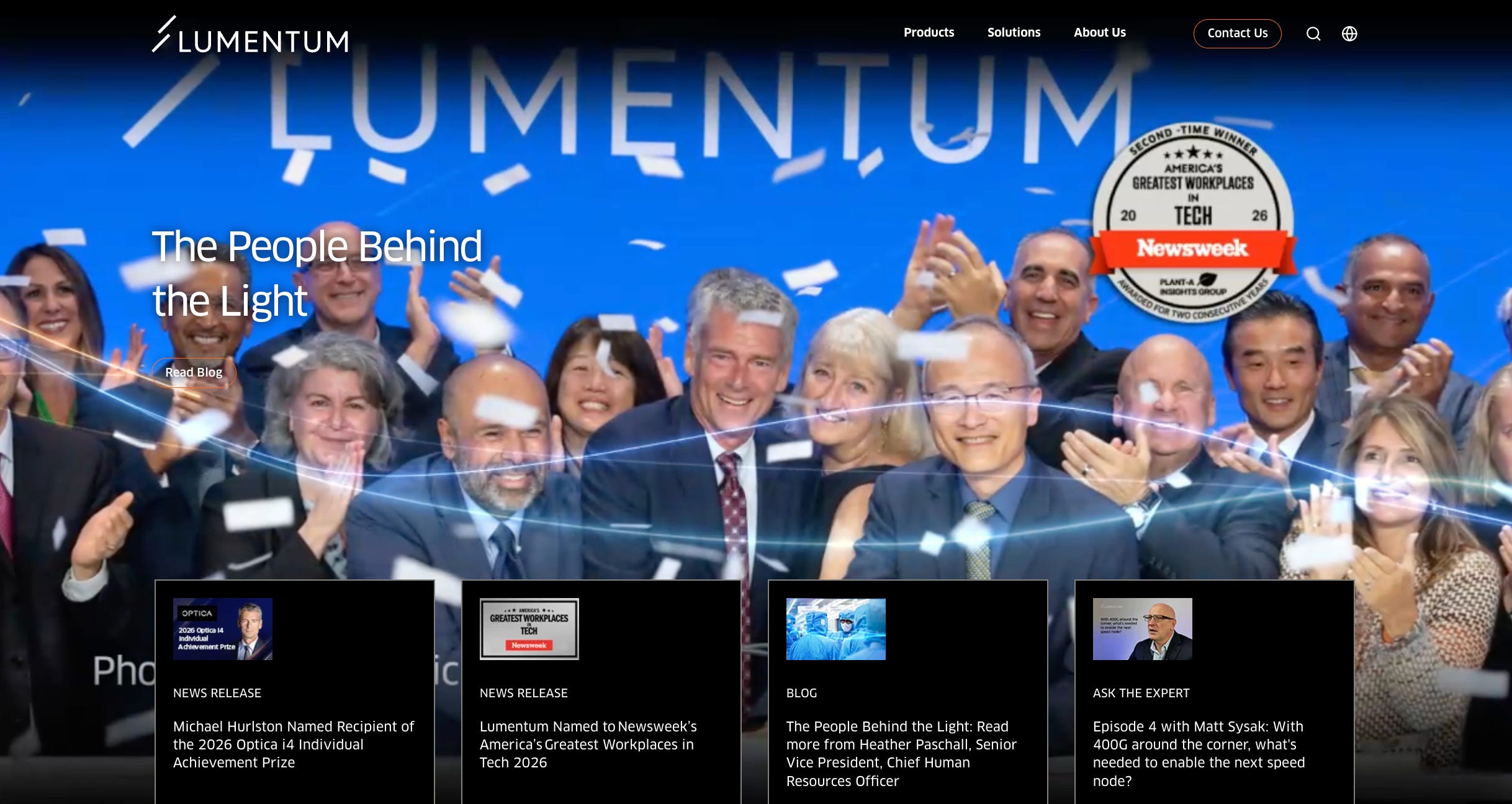
The capacity being added is going onshore. Lumentum announced the Greensboro site on March 26, 2026, a 240,000 square foot facility acquired from Qorvo, already operational and being retrofitted for indium phosphide on 6-inch wafers. It will produce continuous wave and ultra-high-power lasers, with Nvidia named as a customer, more than 400 US manufacturing jobs planned, and hundreds of millions of dollars of investment. Production ramps in mid-2028, which is another way of saying the shortage has roughly two more years to run before that capacity touches it.
The Bubble Question
Every conversation about AI infrastructure eventually arrives at whether the buildout is real. The optical answer is structurally different from the GPU answer, because a large share of the demand does not depend on new construction at all.
“The question we get all the time is, is this a bubble? What’s interesting about the optical industry is if there are no more data center build-outs, if you don’t see this crazy rate of construction that we’ve seen over the past three or four years, still you’re gonna have a shift within the existing properties from electrical signaling to optics.”
The stock has moved on that thesis. LITE traded in a 52 week range of $95.18 to $1,085.68, crossing $1,000 for the first time on Nasdaq-100 inclusion in May 2026. Fiscal Q3 2026 delivered 47.9% non-GAAP gross margin and $2.37 non-GAAP EPS, with June quarter guidance of $960M to $1.01B.

The internal forecast has been beaten by a wider margin than the external one.
“The board of directors showed me a forecast, and they said, here’s what we think the company is gonna do. And I, of course, as one does, discounted it by about 50%. And it’s been probably 4X over what they even showed me.”
Hurlston has narrowed the company toward that demand, moving away from legacy telecom products sold to AT&T and Verizon and from industrial lasers used to cut metal and machine parts.
“Let’s focus our efforts on the data center. There’s enough here going on that we really wanna simplify our business as much as we possibly can, focus on where we think the biggest opportunities are, and that’s the data center.
So we’ve almost become a pure play data center. Got some risk. If the data center ends up rolling over and that market hiccups a bit, we’ll be caught. But I don’t think that that’s gonna happen.”

Space Lasers
The same technology extends past the data center. Lasers already carry traffic across the Pacific through submarine cable, and the physics carries into orbit.
“Our buddies at SpaceX are trying to do these build-outs, and obviously lasers are super important for all the same reasons.
If you can put a laser in the ocean and transmit across the Pacific, you can certainly put lasers in space and create this reality of an internet in space. It’s gonna be necessary.”
Power level is what separates the applications, and it is also the answer to the concern that satellite optical links pose a risk to wildlife.
“It’s all about power. The iPhone with the Face ID, that’s a laser product that beams lasers onto your face. And one of the concerns of course Apple had was, ‘hey, I don’t want to have people’s eyes burning out.’
So the power of those lasers are relatively modest, and you’re never gonna burn somebody’s eye out.
Similarly, you’re not gonna have birds burning up as these lasers shoot data down to the Earth. You can have these super high-power lasers that can shoot down missiles, that can cut through metal. You can have modestly powered lasers that power the internet backbone, and you can have these super low-power lasers that do things like the Face ID.”

Geography of Supply
Demand is concentrated on the customer side and split on the manufacturing side. Lumentum’s business is heavily weighted to US hyperscalers, and the trade in optical components does not run symmetrically.
“China is a difficult market. The geopolitics of China are very tricky. We don’t supply very much gear into the Chinese data centers, whereas Chinese optical component suppliers, some of our competitors, have a pretty big footprint in US data centers.
So there’s been a lot of push and pull around the geopolitics of the situation. Are we gonna see a world where it gets mandated by either the government or by the customers themselves to use more US content? We’ll see.”

Optical Scale Up & the Volume Step Change
The optics already inside the data center handle connections that leave the rack, which the industry calls scale out. The back of the rack itself is still copper, filled with Ethernet cables running between servers. Moving that layer to optics is what Hurlston calls optical scale up, and he expects the first deployments within 12 months.
Cost is the reason it has not happened already, and physics is the reason it will.
“Optics is more expensive, so people don’t wanna do it if they don’t have to. It’s a more expensive medium than is copper. Copper is a well-trod path. People understand it. People understand the expense that there is. And generally they’ll try to avoid using optics, but it’s getting to a point where the physics of the back of that rack, that connectivity that sits in the back of the rack, is such that you have to do it.”
The volume implication is the part that reprices the industry.
“You’re talking about volumes of, let’s say 1,000 units a quarter. And now we’re being asked by these hyperscalers to deploy in millions, tens of millions of units.
So it’s really changed the dynamic in our industry, not just for Lumentum, but I think every single optical company now is dealing with different scales than we ever had before.”
→ Listen on X, Spotify, YouTube, Apple

Want More on AI Macros?
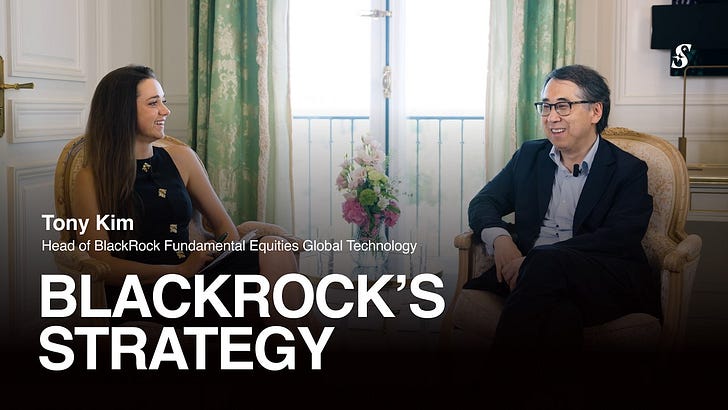
Check out our pod w/ BlackRock’s Tony Kim
AI’s $10T Systemic Rebuild of Tech: Chips, Memory, Robotics, Quantum
Tony Kim is Managing Director & Head of the Global Technology Team within Fundamental Equities at BlackRock.
→ Listen on X, Spotify, YouTube, Apple
The material presented on Molly O’Shea’s website are my opinions only and are provided for informational purposes and should not be construed as investment advice. It is not a recommendation of, or an offer to sell or solicitation of an offer to buy, any particular security, strategy, or investment product. Any analysis or discussion of investments, sectors or the market generally are based on current information, including from public sources, that I consider reliable, but I do not represent that any research or the information provided is accurate or complete, and it should not be relied on as such. My views and opinions expressed in any website content are current at the time of publication and are subject to change. Past performance is not indicative of future results.
Paid Endorsement. Brokerage services by Open to the Public Investing Inc, member FINRA & SIPC. Advisory services by Public Advisors LLC, SEC-registered adviser. Crypto trading provided by Zero Hash LLC, licensed by the NYSDFS. Generated Assets is an interactive analysis tool by Public Advisors. Output is for informational purposes only and is not an investment recommendation or advice. See disclosures at public.com/disclosures/ga. Matched funds must remain in your account for at least 5 years. Match rate and other terms are subject to change at any time.
really enjoyed it