


Conviction in Compounding
Justin Fishner-Wolfson is Co-Founder & Managing Partner of 137 Ventures, the firm that turned a contrarian read on private markets into a $15B platform & one of the largest SpaceX positions in venture. His firm now owns more than 1% of SpaceX, a stake worth roughly $20B at the company’s $1.77T listing valuation.
→ Listen on X, Spotify, YouTube, Apple
He was on the SpaceX deal team at Founders Fund in 2008, left to start 137, and has since bought into the company roughly two dozen times, mostly through secondaries and tenders, without selling a share. He has been buying since SpaceX was valued at $1B. In this conversation he walks through the thesis that companies would stay private longer, why partial liquidity sharpens founder focus rather than dulling it, and how 137 concentrates capital in durable companies instead of chasing sectors.
We cover SpaceX’s shift from cost-plus to fixed-price economics, the Falcon 9 reusability that made launch profitable, when Starlink became underwritable, the $240B secondary market, why he backed Cognition over the foundational models, his cash on cash discipline over ownership targets, and what he plans to do with the stake once the lockup lifts.
𝐓𝐈𝐌𝐄𝐒𝐓𝐀𝐌𝐏𝐒
(00:00) Justin Fishner-Wolfson, Co-Founder & Managing Partner at 137 Ventures
(00:51) The story of SpaceX
(02:50) Why companies are staying private longer
(04:15) What Liquidity actually means for Founders and Employees
(05:38) Why he left Founders Fund to start from scratch
(06:23) $240B Secondaries market
(07:01) What made SpaceX a generational bet
(07:52) How the Falcon 9 made the entire Space Industry obsolete
(10:59) When Starlink became the obvious winner
(13:29) How 137 Ventures turns Conviction into Compounding
(14:09) Backing SpaceX alumni: the Impulse investment
(14:32) Will the secondary market keep growing?
(15:15) Companies vs. Categories
(16:25) Separating AI hype from long-term durability
(17:47) How 137 Ventures is structurally different from traditional VC
(22:19) SpaceX made blue collar workers rich
(23:24) Ownership percentage vs. Cash on cash returns
(24:31) The most memorable moments
(25:43) The Third Falcon 1 Launch
(26:55) Why test failures are actually a good sign
(28:32) The biggest lessons from Elon and Gwynne
(29:07) What's next for 137 Ventures
Brought to you by:
Brex—The intelligent finance platform: cards, expenses, travel, bill pay, banking—wrapped into a high-performance stack. Built for scale. Trusted by teams that move fast. visit → brex.com/sourcery

Turing—Turing partners with frontier AI labs to improve model capabilities in coding, reasoning, tool use, & multimodality, as well as with Fortune 500 enterprises to build & deploy end-to-end agentic AI systems in mission-critical workflows Visit: turing.com/sourcery
VCX—VCX is the public ticker for private tech, allowing investors of all sizes to invest in venture capital. View The Portfolio at GetVCX.com
Deel—Deel is the global people platform that helps startups hire, manage, pay, and equip anyone, anywhere. Trusted by more than 35,000 fast-growing companies, Deel is the people platform that just works, so teams can scale without the chaos. Visit: deel.com/sourcery
Public-–Investing platform Public just launched Generated Assets, which lets you turn any idea into an investable index with AI. With Generated Assets, you can build, backtest, refine, and invest in any thesis with AI. Gone are the days of one-size-fits-all ETFs. Try it today: public.com/sourcery
Merge—The leading provider of customer-facing integrations and agentic tools for frontier LLMs, Fortune 500 organizations, and B2B SaaS companies. Visit: https://merge.dev
Patient Money: How 137 Ventures Built a 1% SpaceX Position
SpaceX priced its IPO on June 11, 2026 at $135 a share, raising $75B in the largest public offering on record and topping the mark Saudi Aramco set in 2019. When shares began trading on the Nasdaq the next day under the ticker SPCX, the stock opened at $150, ran into the $160s within the first hour, and closed up about 19%, pushing market capitalization above $2T on the first day.
Among the firms with the most at stake was one few have heard of: 137 Ventures
137 owns more than 1% of SpaceX. At the company’s expected $1.77T listing valuation, the New York Times put that position at roughly ~$20B. Fishner-Wolfson started buying when SpaceX was worth $1B, and across 16 years he has never sold a share. This is the story of how that position was built, why the strategy behind it was treated as second-class for most of the last decade, and what it says about a firm that thinks about venture differently than almost anyone else.
→ Listen on X, Spotify, YouTube, Apple
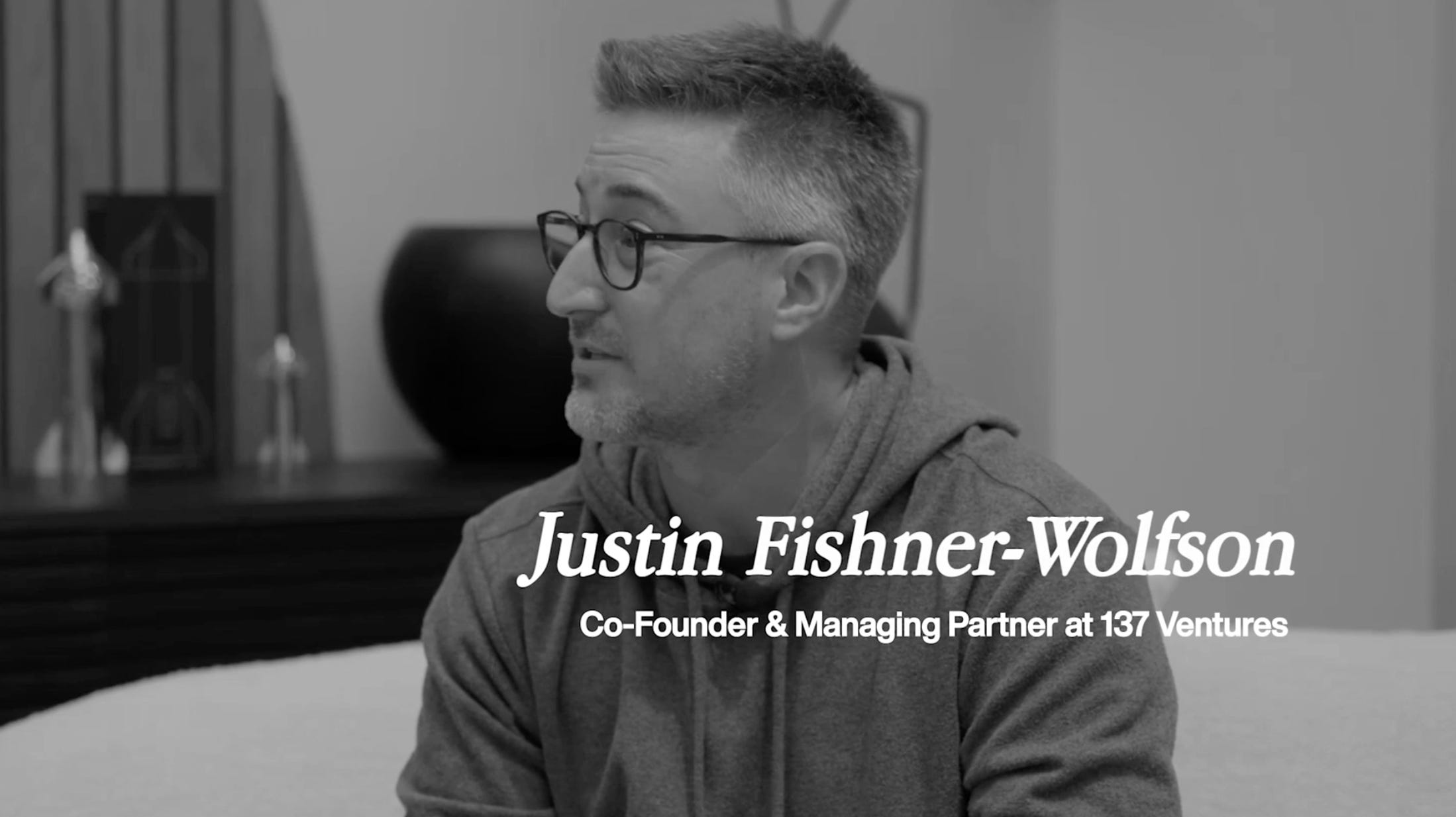
The ~$20 Billion Position
A low-profile firm with a high-conviction bet
137 Ventures crossed $15B in AUM in April 2026 after closing more than $700M across two new funds. The firm deployed more than $1.7B over the prior 12 months. It has backed nearly 60 portfolio companies over its history and currently holds positions in more than 40. The marquee names are SpaceX, Palantir, Uber, Anduril, Brex, Gusto, Cognition, Ramp, and Hadrian.
The firm sits behind those numbers without much public footprint. With offices above a tailor shop, no receptionist, and in the entryway, a famous Merlin engine from a SpaceX rocket (a crane was needed to knock out a window to get it inside). The firm runs with 25 employees.
JFW
Justin Fishner-Wolfson is a Texas native who skipped the second grade and enrolled at Stanford at 16. He is quick to note he was rejected from Harvard, and to separate himself from Silicon Valley stereotypes. On the SpaceX position, he told the NYT: “This will most likely define my career.”
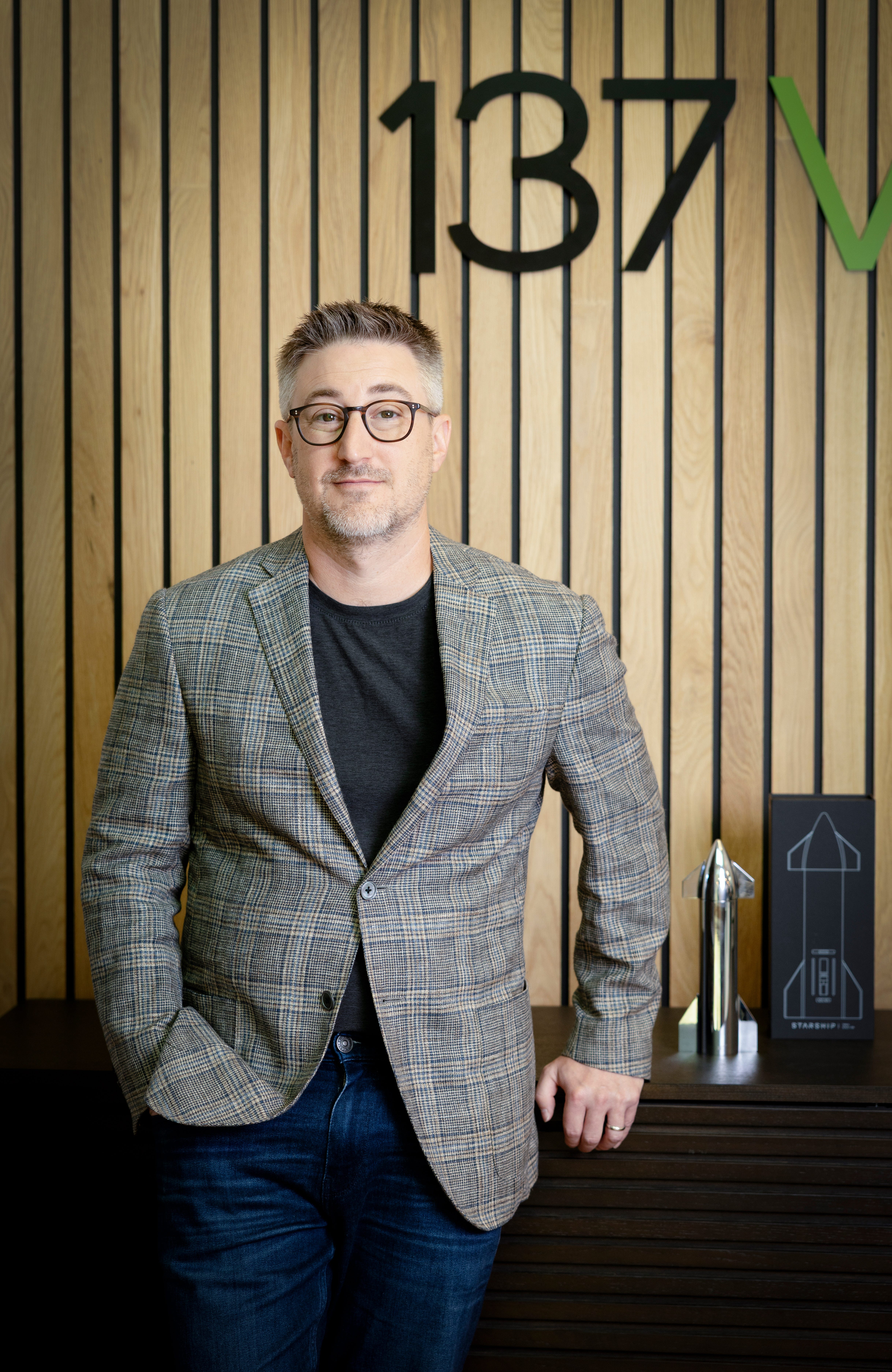
Credit: Kim White, Getty
What the IPO actually unlocks
The listing does not immediately convert paper into cash. Like other pre-IPO investors, Fishner-Wolfson and his firm are barred from selling until just after the first earnings report, expected in August, and cannot unload the full position until six months after the IPO. He has said he will distribute most of the SpaceX shares to the firm’s investors at the earliest opportunity, letting each decide whether to sell or hold. His own posture is patient. He expects SpaceX could be worth 10x its offering price before long. “It’s still a company I believe in,” he said.
Origin: Founders Fund to 137
The 2008 initiation
Fishner-Wolfson’s exposure to SpaceX traces to 2008, when he was 26 and, by the NYT’s account, the most junior of five investment employees at Peter Thiel’s Founders Fund. He describes the firm’s role plainly: “back at Founders Fund, we did the deal in 2008. That was sort of the beginning ‘cause at that point, Elon had mostly funded it himself, and we were really the first outside institutional capital.” He was assigned to monitor the investment after the partners committed roughly $20M, about 10% of their most recent fund at the time.
That assignment included a formative moment. In August 2008, Fishner-Wolfson stood in the control room next to SpaceX president Gwynne Shotwell to watch the third launch attempt, which crashed after roughly two minutes of flight. He recalled asking her, “What are you going to do?” Her answer pointed to a ‘possible software timing issue’ and a plan to build another rocket and try again. “That’s it?” he responded. Founders Fund stuck with the company. That $20M stake is now worth well into the tens of billions. “Nobody could have expected this 20 years ago,” he said.
The Facebook favor that became a strategy
The model that became 137 started as a favor. A group of his friends working at Facebook asked for help getting liquidity from their private shares. That request surfaced a structural gap: a generation of paper-wealthy employees at companies that were staying private far longer than the prior norm, with no clean way to access their equity.
Building the firm and the name
Fishner-Wolfson left Founders Fund and started 137 Ventures, with co-founder Alexander Jacobson, whom he met there. The first SpaceX investment under 137 dates to 2011, though some firm materials and databases cite 2010 for the entity. The name comes from the seat his grandfather held at the New York Stock Exchange, number 137, a figure that also sits close to the inverse of the fine-structure constant in physics. Before venture, Fishner-Wolfson served in the U.S. Department of State and was selected as a Kauffman Fellow.
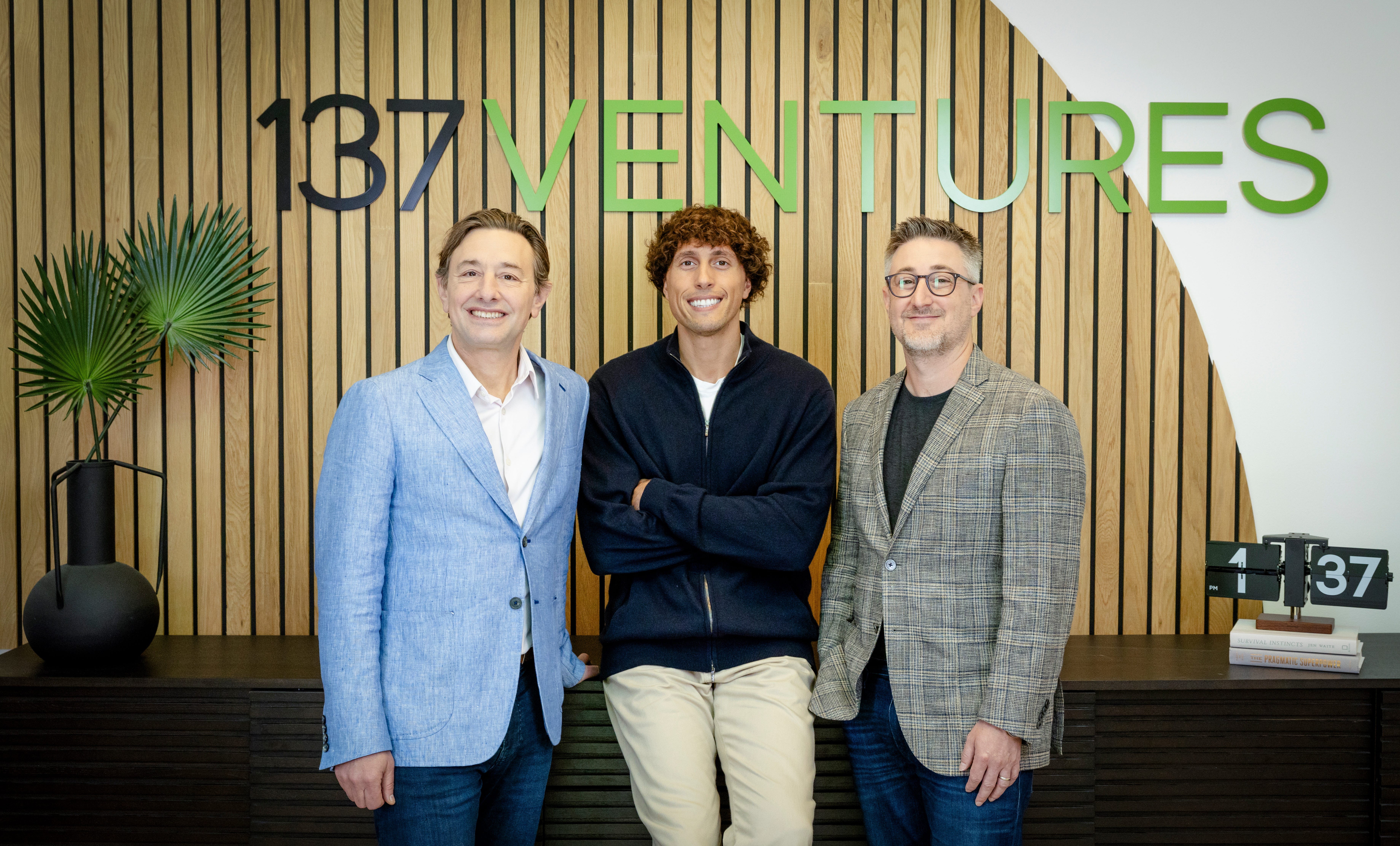
Pictured: Alexander Jacobson, Christian Garrett, Justin Fishner-Wolfson; Credit: Kim White, Getty

The Contrarian Read on Private Markets
Companies would stay private longer
The thesis underneath the entire firm is a single forecast made around 2011. As Fishner-Wolfson frames it: “our belief was companies were gonna stay private longer.” The reasoning hung on a regulatory detail. Facebook was forced toward its IPO by the 500-shareholder rule, which required companies past a certain holder count to report publicly. In his words, “it was sort of all the negatives of being a public company with none of the positives, and ultimately, that’s why Facebook went public.” The JOBS Act removed that pressure, and with it the main forcing function pushing great companies onto public markets.
The investment implication followed directly: “what that meant was there’d be a lot more opportunities to invest in those businesses, and especially if they were great companies, then that was just a lot more time they could compound.”
SpaceX, Stripe, X, Ramp, Anduril: Navigating Liquidity in Private Markets
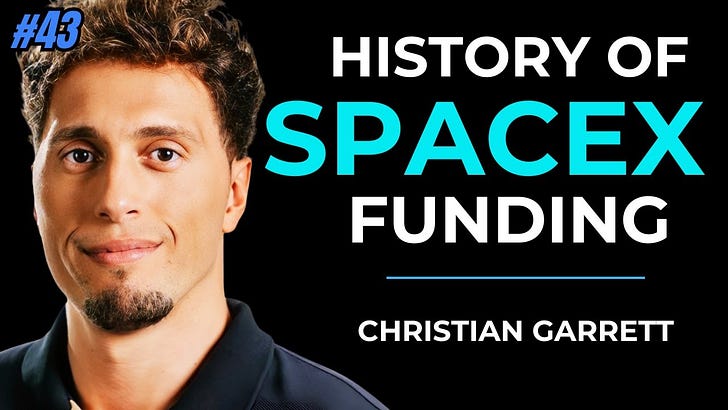
State of Liquidity Markets, SpaceX’s Funding History, Hill & Valley Forum, DC & VC, Europe’s Techno-Rise, Hot Takes
The data caught up
The forecast was not consensus when he made it. “When we went out and talked to institutional limited partners, they were not necessarily of the mind that the industry was changing and this was going to be a thing.” His summary today: “at this point, we’ve more or less won the argument, but that was not true 16 years ago.”
The market data validates the read. Global secondary volume reached $240B in 2025, up 39% year over year and nearly double the 2021 peak, climbing from $84B in 2019 through $152B in 2024.

Secondaries now account for 31% of all venture deal activity, up from 16% in 2020.

Pricing has recovered alongside volume, with average secondary bids reaching 106% of NAV in Q1 2025, the first premium since 2021, after bottoming near 60% of NAV in 2022. (Brad Gerstner of Altimeter at All-in Summit)

Why partial liquidity sharpens focus
The firm’s counterintuitive claim is that selling some shares makes founders better, not lazier. Fishner-Wolfson pushes back on the idea that liquidity is fun money: “I don’t think I’ve ever seen anyone take money for fun money.” He frames it as removing personal financial pressure so operators can play a longer game. The use cases he cites are buying a first house, paying off student loans, and covering medical events.

Buying the Tender: How the 1%+ SpaceX Stake Was Built
Two dozen checks, not one
The defining feature of the SpaceX position is its construction. 137 did not buy once and hold. It bought repeatedly. “We continued to invest, really many times over the last 16 years, so I don’t actually know what the total count is, but we’ve probably made two dozen investments in the company.” That cadence is the strategy, not an accident of access.
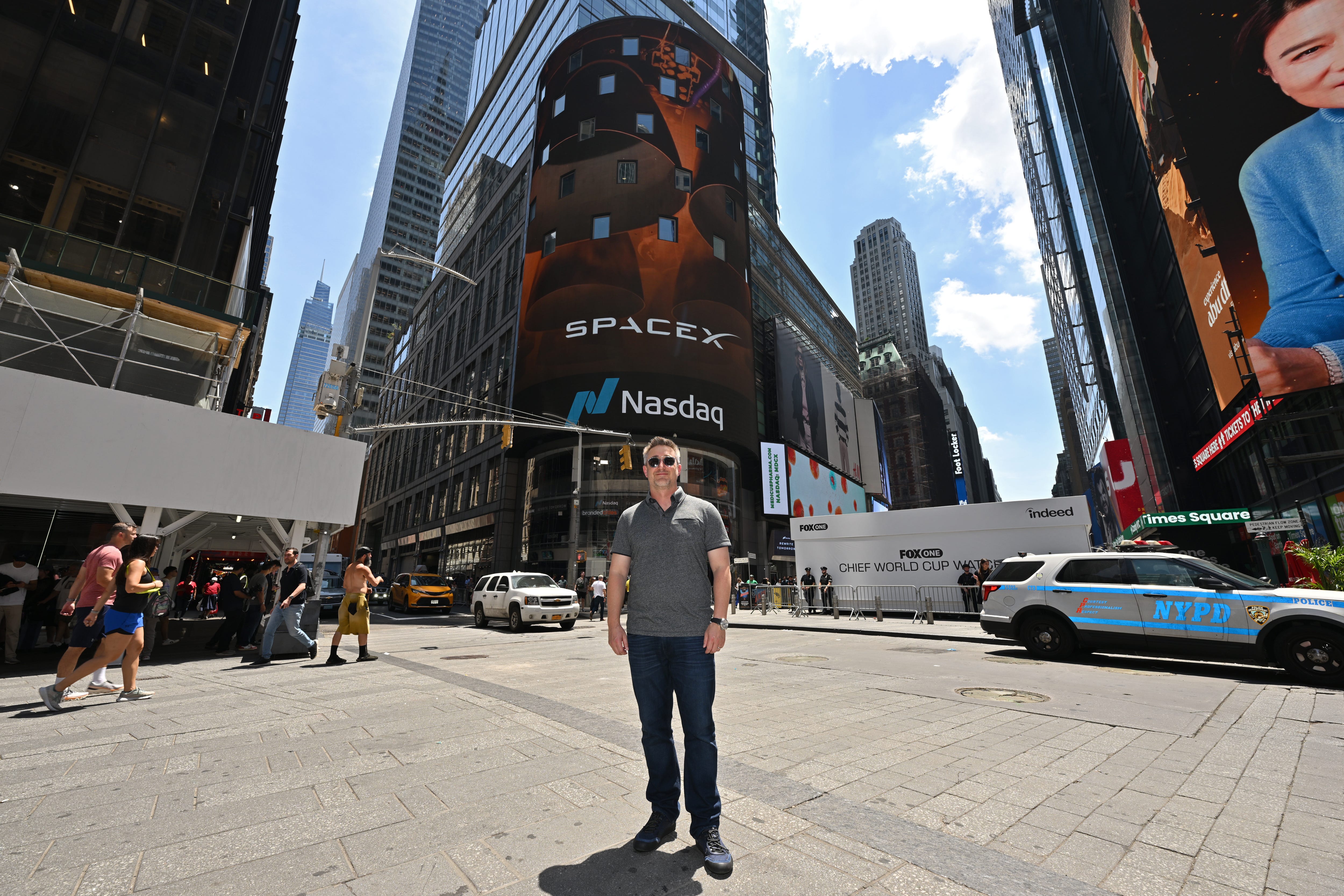
Credit: Roy Rochlin, Getty
The tender as an accumulation channel
SpaceX has long run company-organized tenders, first roughly once a year, later twice a year, letting employees sell into a structured process rather than to random buyers. Fishner-Wolfson describes these as relationship-driven: “you’re just dealing with the founders and executives of these businesses who are trying to facilitate liquidity for people.” Buying into that recurring cadence let 137 add to the position on a predictable schedule, on the company’s terms, at the company’s cap table.
He is candid that the mechanics matter and that running tenders well is its own discipline: “if you run a tender, turns out your employees are gonna assume that you’re gonna run another tender, right? And for the most part, people don’t really like it when prices go down.” The contrast he draws is Facebook’s early failure to manage this, where the company “basically started telling people ‘If you sell shares, we’re gonna fire you,’” creating a perverse incentive for employees to quit in order to sell.
Buybacks and a no-sell discipline
SpaceX has repurchased shares along the way, which Fishner-Wolfson reads as ordinary dilution management rather than a signal of distress: “the company has bought back shares, I think, just to manage dilution, right? If you look at public companies, they buy back shares, and that’s relatively normal.” Against that backdrop, 137’s own discipline stands out. The firm has not sold a single SpaceX share since its first investment, resisting the temptation to lock in profits at earlier valuations, including through the long stretch when SpaceX moved from $1B to a $1.77T expected listing valuation.. which reached over $2T on IPO day.
When the firm nearly blinked
The conviction was not frictionless. About 10 years ago, when SpaceX began raising for Starlink, the firm debated whether to keep going. “There was a lot more risk on the table,” partner Alex Jacobson told the NYT. They kept investing.

Underwriting SpaceX
The business model shift
The reason the position could compound is operational, not promotional. Fishner-Wolfson points to two structural changes.
Pricing model: “historically it had been cost plus, and they had transitioned to a firm fixed price model.”
Reusability: “making the Falcon 9 partially usable fundamentally changed the economics of the business.”
The result was a launch business that was profitable for a long time, which meant the company rarely needed to raise large amounts of outside capital.
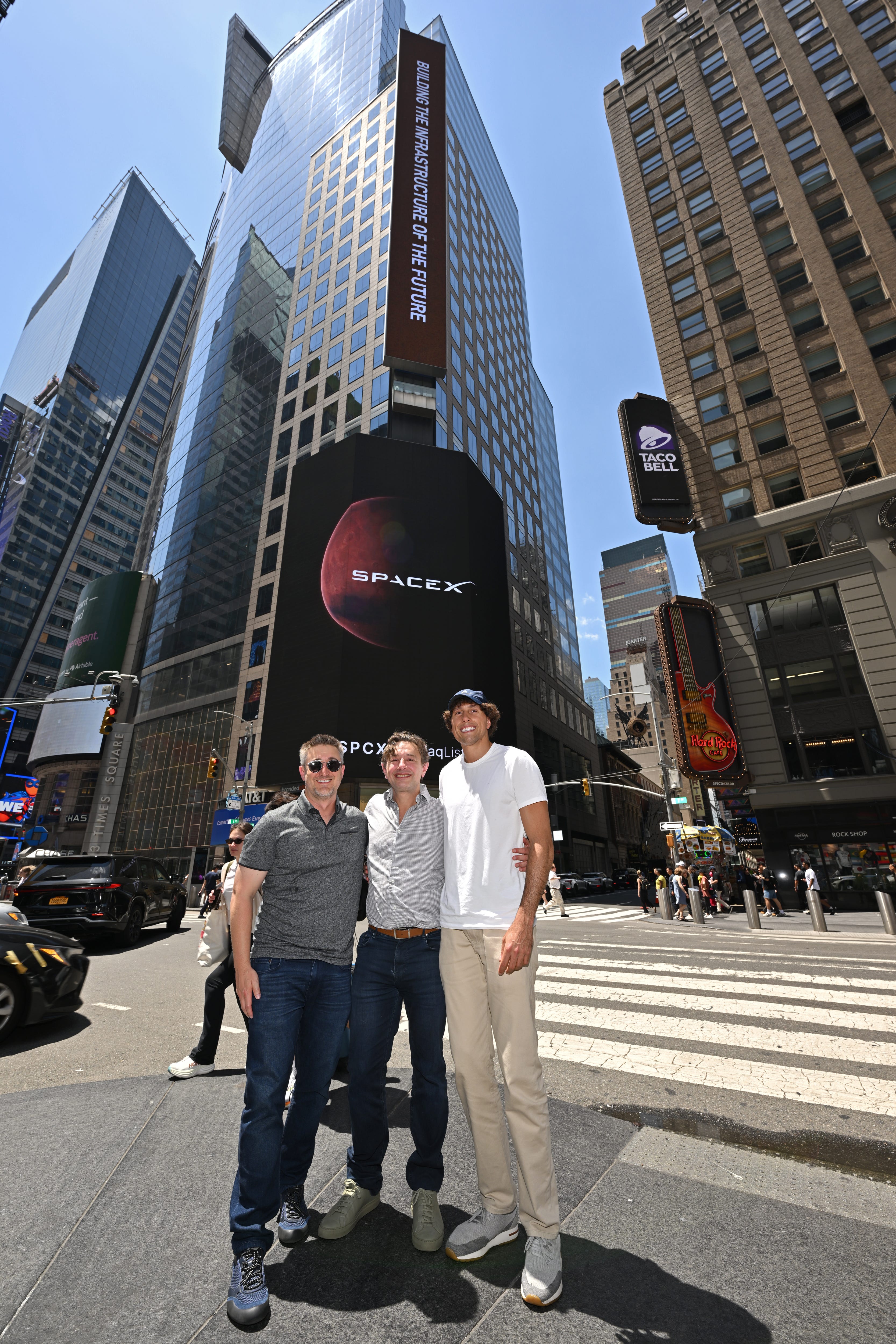
Pictured: Justin Fishner-Wolfson, Alexander Jacobson, Christian Garrett; Credit: Roy Rochlin, Getty
Launch cadence as a moat
The efficiency shows up in volume. “They were launching not just cheaper, but way more frequently.” He expects SpaceX to launch close to 200 times this year, against an industry where “no one else in the world is launching even 15, 20 times.” That frequency widens access to space on two axes at once, cost and speed.
When Starlink became underwritable
The Starlink call had a specific inflection. The open question was never demand, it was whether the constellation could be built economically. Fishner-Wolfson dates the answer to “probably 2019 or so” once early satellites were up and the unit economics became modelable. From there the addressable market was straightforward to size: tens of millions of people in the U.S. alone who cannot buy high-speed internet, before counting the global market. He frames the impact in terms of access to healthcare and education, with COVID as the proof point that “the internet really was everything.”
The team as the constant
The underwriting also rests on continuity at the top. Fishner-Wolfson notes the leadership has been together for 15 to 22 years, calling the group “absolutely fantastic.” His read on the people compounds the read on the numbers, and the two are hard to separate in his account of why the firm kept adding.
Companies, Not Categories
The core philosophical break
The clearest articulation of how 137 diverges from the industry is one line: “a lot of people, they think about categories, we think about companies.” His worked example is space itself. “We looked at probably every SpaceX or every space investment for, I don’t know, 15, 20 years, and the good investment was SpaceX.” The lesson he draws is to resist spreading capital across lookalikes chasing a small slice of a market, and instead concentrate in the single durable winner: “what you don’t wanna do is have 1,000 different companies that kinda all sound the same, and they’re all duking it out to end up with like a small piece of the market.”
Cash on cash over ownership percentage
137 also rejects the ownership-target heuristic that governs much of venture. “For us, all I care about is cash on cash returns.” He treats ownership percentage as a distraction inherited from a fund-math shortcut, and points to Thiel’s willingness to take 10% of Facebook as evidence that adjusting return expectations beats fighting for ownership: “you don’t really wanna get dogmatic on the things that don’t matter. You wanna stay focused on things that do matter.”
Flexibility between primary and secondary
The mandate is deliberately format-agnostic. “Whether or not it’s a primary investment or a secondary investment, it honestly doesn’t matter that much.” What matters is the ability to keep building. The Hadrian position, for instance, is “four, maybe five checks” deep. The firm’s edge is the willingness to follow on and concentrate over time, where most managers write one large check, hit a target ownership, and at most take their pro rata.
Reading the AI field
The same company-first lens explains where 137 has and has not played in AI. The firm passed on the foundational model labs. “It was just always sort of hard for us to understand which one was going to be the best model... in the long run.” It backed Cognition instead, on a lock-in thesis: “these are the only guys who can give you access to all the underlying models without the lock-in,” which he likens to enterprises’ early reluctance to commit to a single cloud provider.
On lessons from the operators he has watched closest, he credits Elon Musk with “a first principles approach to everything and a flexibility that when you have new data you can easily change your mind,” and Shotwell with being “the calm person in the middle who can just help people get to the right answer.”

The Portfolio and the Road Ahead
Beyond SpaceX
The portfolio leans toward capital-intensive, defense-adjacent, and enduring-software names. Aerospace runs through SpaceX, Varda, and Impulse Space. Defense includes Anduril and Hadrian. Enterprise software covers Palantir, Gusto, and Figma. Fintech spans Brex and Ramp. Consumer and marketplace names include Uber, Airbnb, and Flexport. Realized public exits include Airbnb, Palantir, Coupang, Wish, and DiDi. Recent frontier deployments concentrate in AI, defense, and industrial systems: Cognition, Impulse Space, Hadrian, and Physical Intelligence.
The Impulse Space bet
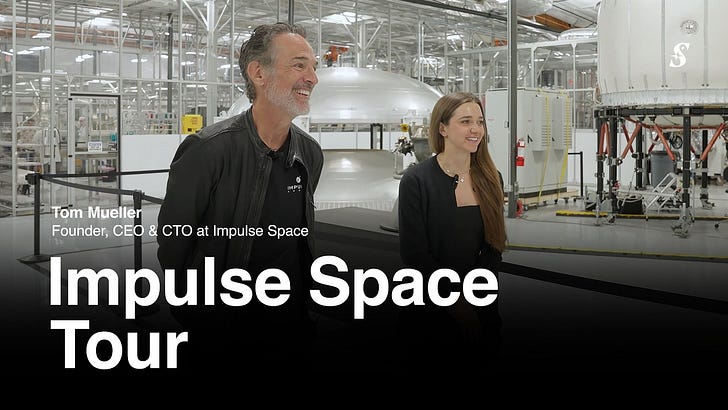
In June 2026, 137 co-led Impulse Space’s $500M Series D with BANNER VC, pushing the company past $1B raised at a $4B valuation. The lineage is direct founder Tom Mueller famously built propulsion at SpaceX, the very engine, Merlin, that sits in 137’s office.
Fishner-Wolfson frames the investment as a read on unique capability rather than category heat: “we got excited about what they were doing and kind of the unique capabilities that they had... how that was specifically relevant for commercial but also for government as well.” It is the company-over-category thesis applied to in-space mobility, the problem set that follows once launch is solved.
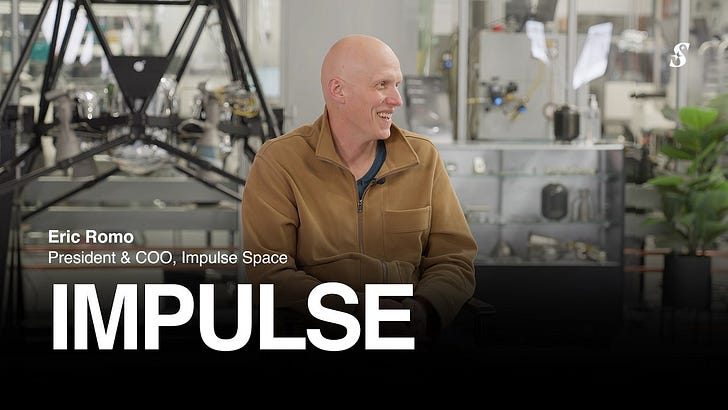
The view from Impulse
The endorsement reads differently from the other side of the table. Eric Romo, an early Impulse Space operator, framed 137’s decision to lead as a signal rather than just a check. “137 has known us for a while. They were a relatively small shareholder before this round and decided this was the right time to step up.” He cast the timing as a moment of arrival for the firm itself: “As I like to joke to them and to other board members, they’re not exactly a household name yet, but they’re kind of about to be. They’re a very large SpaceX shareholder, have been investing in that company for a long time, and are about to deliver an amazing return to all of their investors.”
Romo placed the Impulse bet inside 137’s broader pattern, noting the firm’s SpaceX, Anduril, and Brex positions and the $700M it raised weeks earlier, then tied the lead position back to credibility:
“It was exciting to see them essentially decide that we were the next big ones in space. That’s a real big endorsement coming from somebody who owns more than 1% of SpaceX.”
For a firm that thinks in companies rather than categories, leading the round is the clearest statement of which company it believes wins the category.
The IPO wave
Fishner-Wolfson does not read the SpaceX listing as the end of the secondary opportunity, but as the late stage of the same cycle that built it. The secondary market has grown enormously over the firm's life: "the market has expanded by a couple orders of magnitude since when we started the business." As companies stay private, the set of holders needing liquidity keeps widening, starting with employees and eventually reaching investors. Secondaries served that demand for a decade.
Now those same companies are reaching the lifecycle stage where they finally go public, with SpaceX leading. "SpaceX is the big one to kinda start this, but I mean, as you mentioned, OpenAI & Anthropic both filed their S-1s confidentially." In his view, these IPOs do not end the secondary market. They are the ‘final’ liquidity event after years in which secondaries gave employees & investors the only way to cash out.
→ Listen on X, Spotify, YouTube, Apple

The material presented on Molly O’Shea’s website are my opinions only and are provided for informational purposes and should not be construed as investment advice. It is not a recommendation of, or an offer to sell or solicitation of an offer to buy, any particular security, strategy, or investment product. Any analysis or discussion of investments, sectors or the market generally are based on current information, including from public sources, that I consider reliable, but I do not represent that any research or the information provided is accurate or complete, and it should not be relied on as such. My views and opinions expressed in any website content are current at the time of publication and are subject to change. Past performance is not indicative of future results.
Paid Endorsement. Brokerage services by Open to the Public Investing Inc, member FINRA & SIPC. Advisory services by Public Advisors LLC, SEC-registered adviser. Crypto trading provided by Zero Hash LLC, licensed by the NYSDFS. Generated Assets is an interactive analysis tool by Public Advisors. Output is for informational purposes only and is not an investment recommendation or advice. See disclosures at public.com/disclosures/ga. Matched funds must remain in your account for at least 5 years. Match rate and other terms are subject to change at any time.