

Brought to you by:
Brex—The intelligent finance platform: cards, expenses, travel, bill pay, banking. Built for scale. Trusted by OpenAI, Anthropic, Granola, Deepgram, & Sourcery.. teams that move fast AF. visit → brex.com/sourcery

How Bending Spoons Actually Works, & Why It Comes Down to Talent
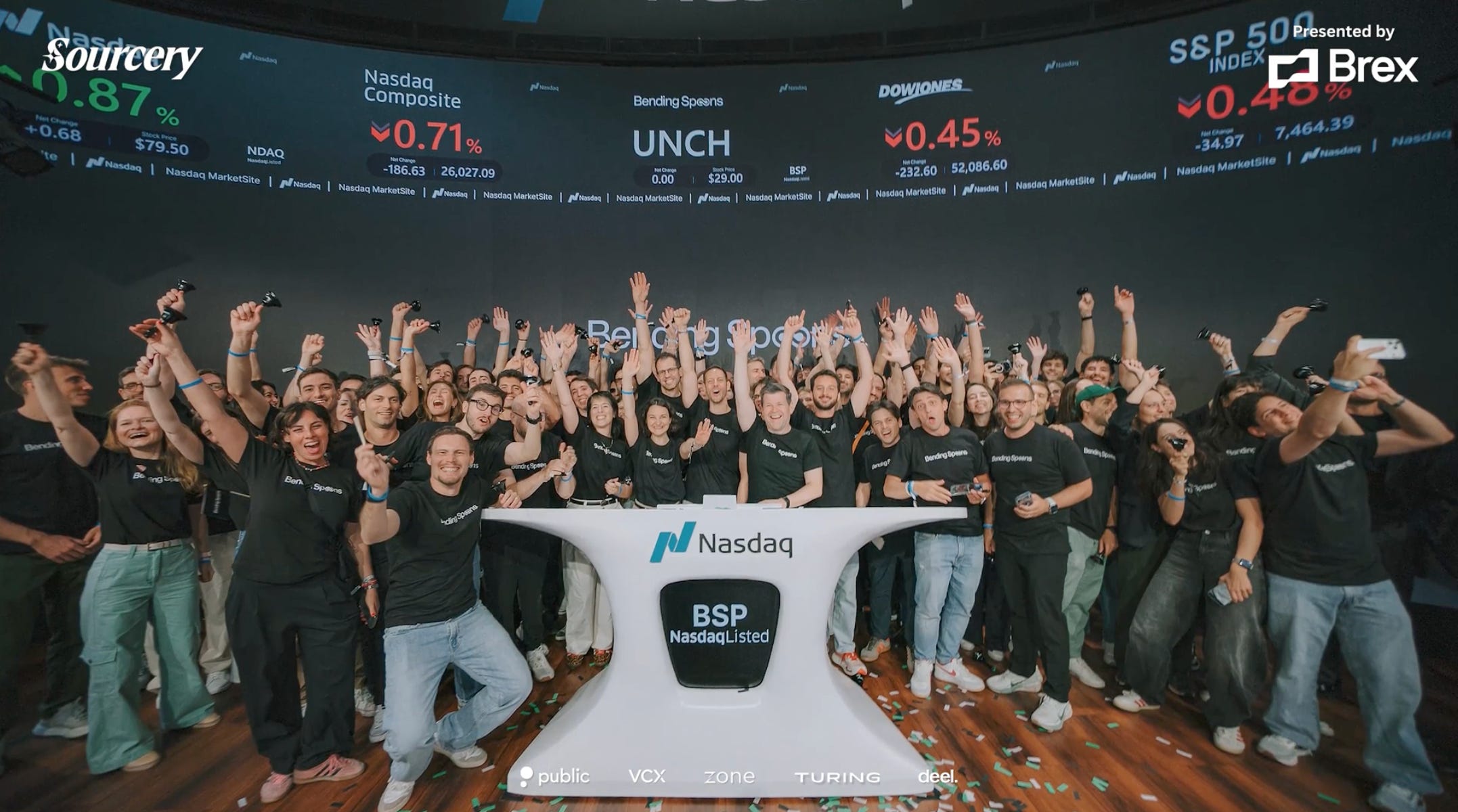
Bending Spoons (NASDAQ: BSP) has bought more than 50 companies and sold none of them. It owns AOL, Airtable, Vimeo, Eventbrite, Evernote, WeTransfer, Brightcove, Tractive, Remini, komoot, Harvest, StreamYard and Meetup, and listed on the Nasdaq on July 1, 2026.
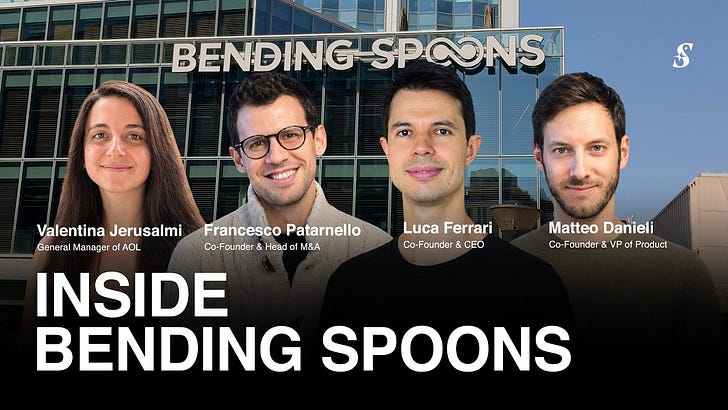
Across sit-downs with all 3 co-founders and the general manager of AOL, the same answer kept coming back to a question about acquisitions, financing and product. The model runs on who works there.
› Luca Ferrari, Co-Founder & CEO
› Francesco Patarnello, Co-Founder & Head of M&A
› Matteo Danieli, Co-Founder & VP of Product
› Valentina Jerusalmi, General Manager of AOL
P.S. it’s no surprise the company runs on Deel.
Deel helps startups hire, manage, and pay anyone, anywhere. Set up payroll in 150+ countries in minutes, stay compliant with local laws, manage benefits and IT access, and handle visas in one platform. Now your team just focuses on building.
The Hiring Funnel Is the Whole Model
“We had 800,000 job applications in 2025. We hired fewer than 300 people.”
CEO Luca Ferrari connects that number directly to what happens after a deal closes. A business attracts strong people during its heyday, then stops once the market matures and the company stops being interesting. The entrepreneurial ones leave first.
“Those management teams find themselves having to run those businesses with perfectly fine talent, but not top-notch talent in many cases. So we can add to those teams selectively individuals who are extremely high performers, extremely high agency, and that fuels a new wave of innovations. That’s not a shortcoming of the previous executive team, it’s just they didn’t have the employer brand to attract those people.”
Head of M&A Francesco Patarnello saw the same point land with exactly one investor during the IPO roadshow. Most asked about organic growth and retention.
“I remember this specific investor almost spent like an hour and a half only focusing on that, and asked thoughtful questions about our hiring process, how we retain talent, what the culture is, how we develop the culture. It was the only time that happened.”

Two Traits, Not Role-Specific Skills
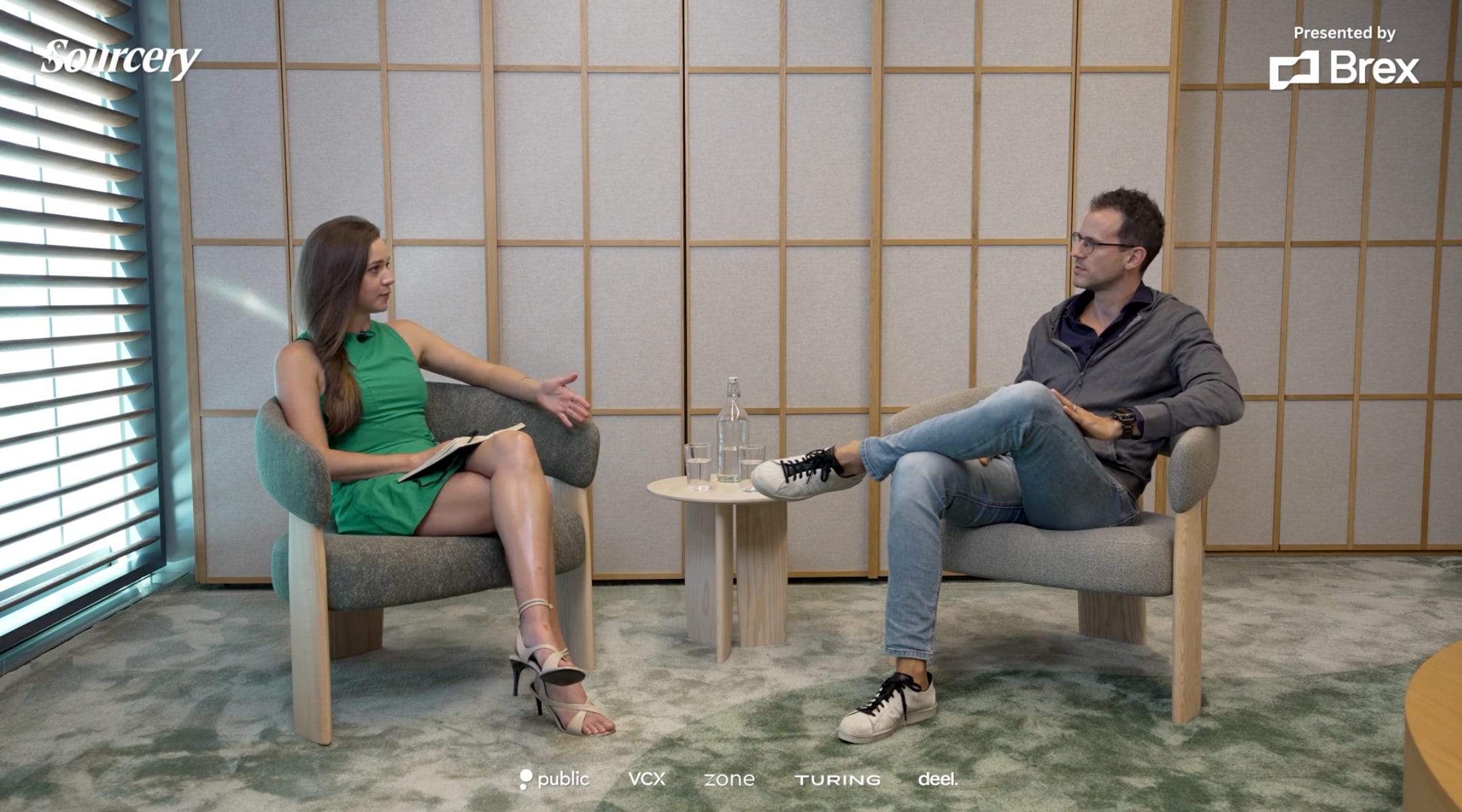
Ferrari screens for 2 things, and neither is domain expertise.
“It boils down to looking for people who are smart and who care. Smart means people who can learn quickly. Even if they don’t have the knowledge, they’ll pick it up rapidly. And then who care means they care tremendously about being amazing at what they do, delivering the greatest possible impact for the team and the company.”
He is willing to trade in one direction but not the other.
“We’d rather work with slightly less intelligent people if it comes down to that, but they have to really care. We don’t wanna work with anybody for whom seeing the company succeed is not a super high priority.”
VP of Product Matteo Danieli describes the compounding effect. Better-known products build a stronger employer brand, which attracts better people, which raises what the company can acquire next. The selection process itself gets tuned on outcomes, feeding signal from who succeeds back into how candidates are tested.
Valentina Jerusalmi Applied 3 Times
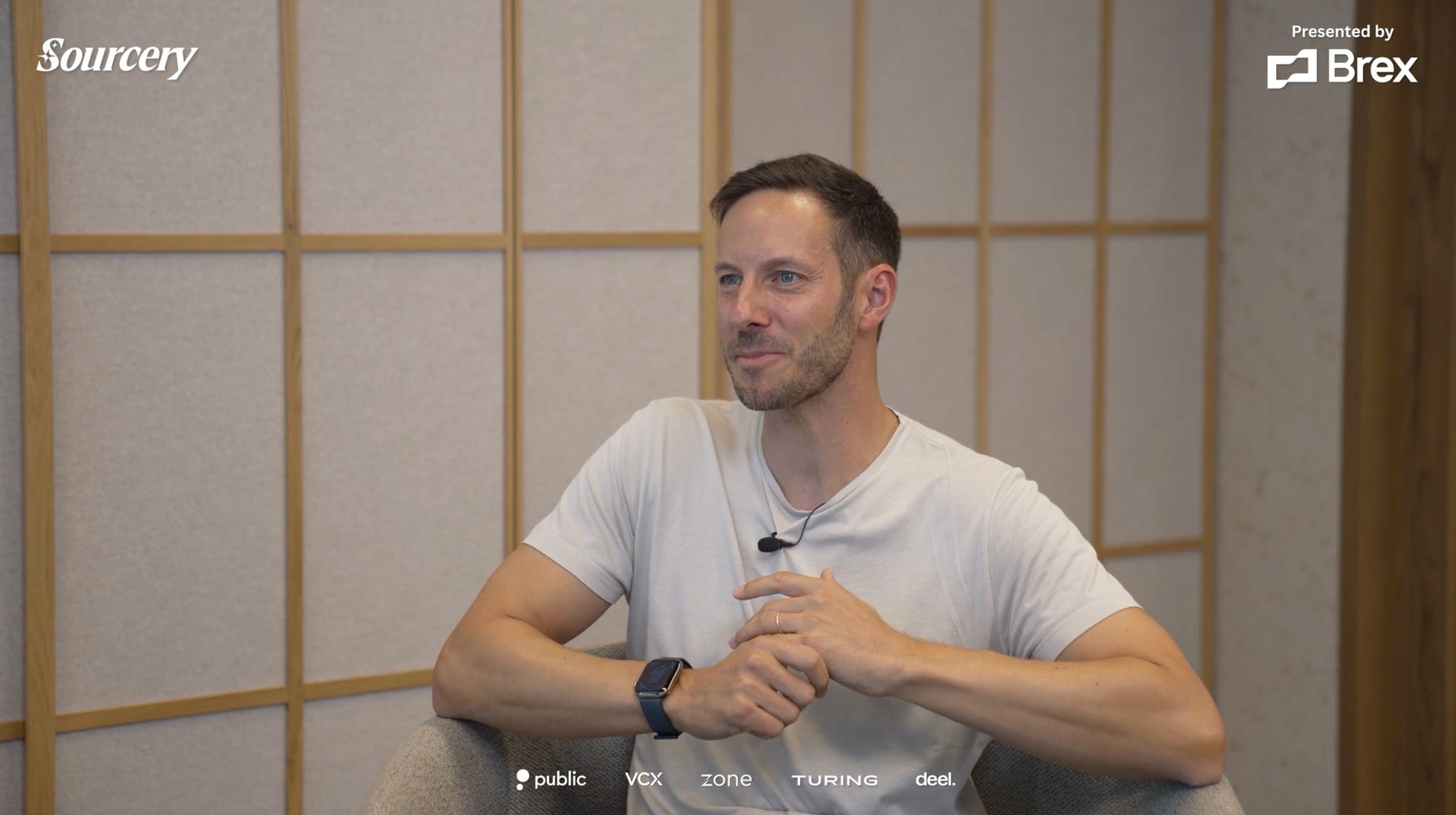
The AOL general manager was rejected twice before getting in. First at CV screening for a summer internship, then late in the process for First Ascent, a program the company runs for high-potential students.
“After that, I just said, I want to get in now. I was rejected too many times, and I was like, now I have to prove myself that I can get in. So I tried again, and the third was the charm.”
She joined at 25 as a data analyst, placed on a small acquisition where she was the only non-technical person alongside one engineer. That forced her across every function at once, customer support, design, product management and growth.
“I got to get a bit of everything that we do here and understand more hands-on what everything is really about. This approach was really a privilege for me because it got me to understand all the roles, all the functions here, who does what, how things link together.”
Five years later she runs AOL, a deal reported at roughly $1.5 billion, while overseeing Mosaic and Remini through other managers. She volunteered for AOL after reviewing how hard the carve-out from Yahoo would be.

A Co-Founder Fired Himself
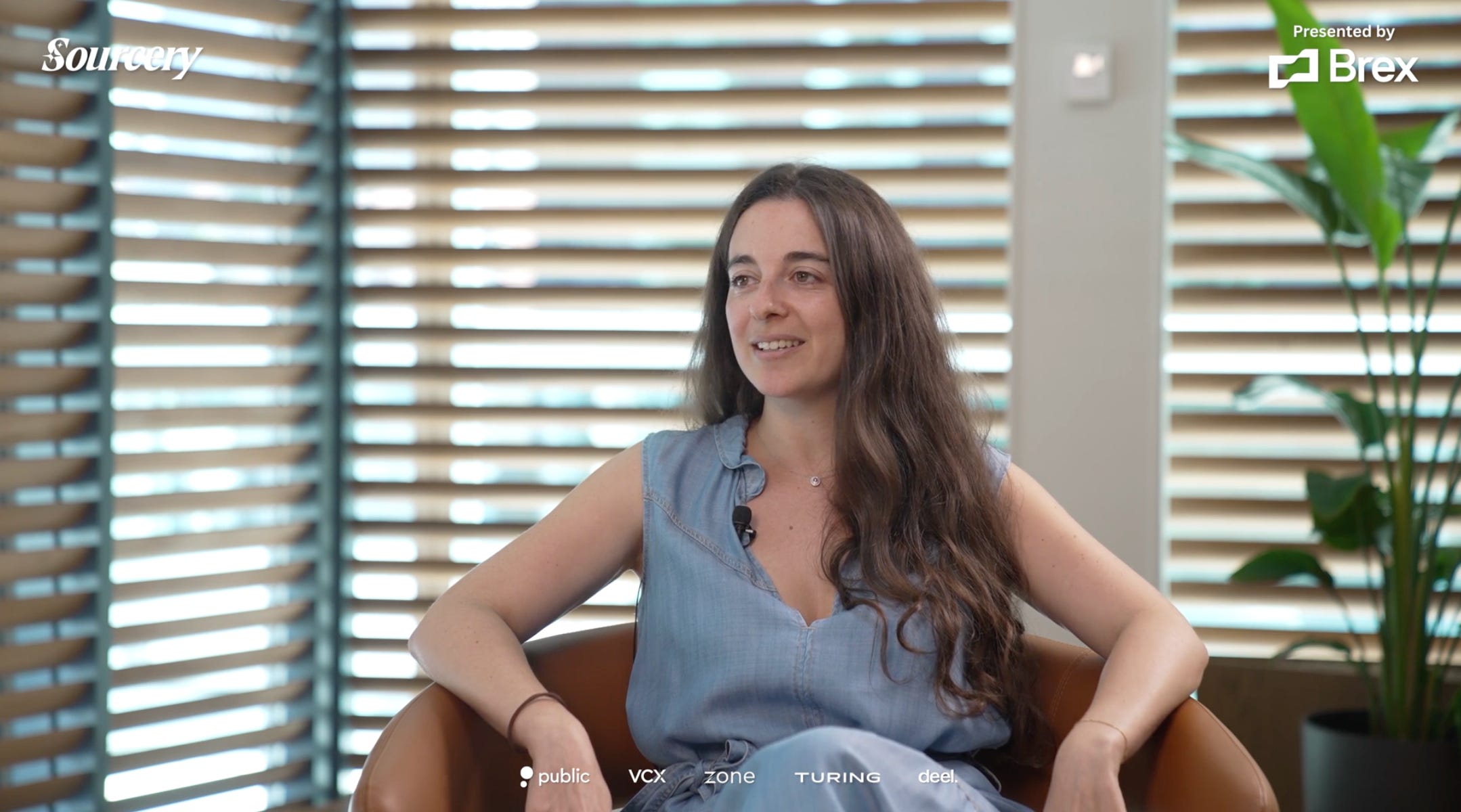
Danieli was Chief Product Officer until a product manager who joined years after him became the better candidate for the role. He stepped down. Lorenzo took the job. Danieli is now VP of Product.
He frames it as arithmetic rather than sacrifice. If you want an organization to be as effective as possible, every position has to be filled by the best available person, and a rising hiring bar guarantees that eventually someone below a lead outgrows them.
“Going to a lead, to a professional, and telling them, look, some of the people in the organization grew so much and showed such an impressive trajectory that we believe that it’s best for you to step down, that’s one of the toughest things you can tell someone.”
He had delivered that message to others before receiving it himself. The reason he counts his own version as more valuable is that it removes the obvious exception.
“You’re basically communicating to everyone in the company that every position is up for grabs, that there’s no position that if they work hard enough and if they’re talented enough, they won’t be able to fill.”
Every December, Ferrari circulates a form to people he trusts asking whether someone else would be better positioned to lead the company. Danieli says it is not performative, and that Ferrari would move first if the answer came back yes.

Equity With No Vesting, 0.6% Churn
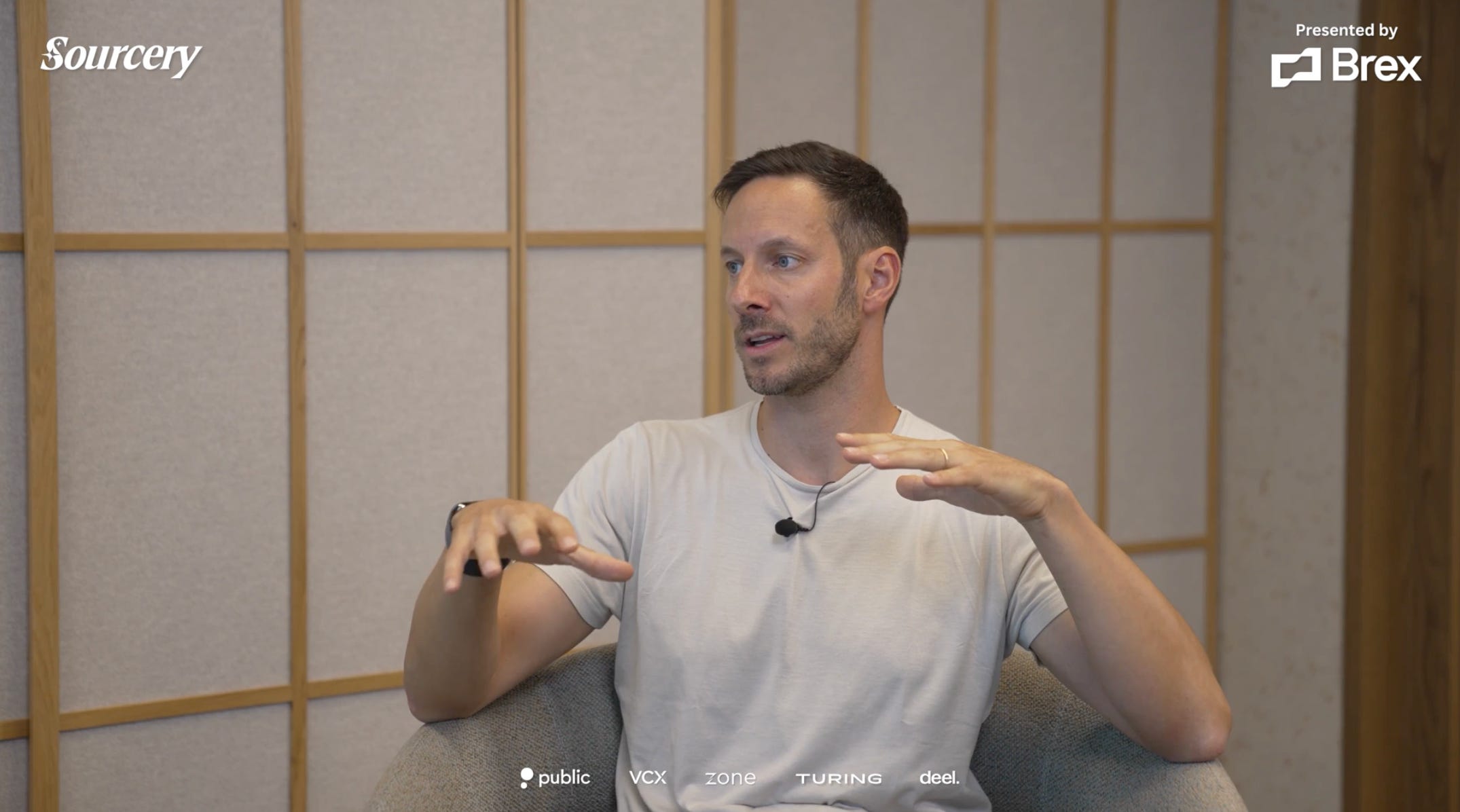
Compensation is a fixed annual number with no variable component. Each employee decides how much to take in cash and how much to convert into equity. Annual tenders, which ran for years before the IPO, set a real price for that equity at the moment of the decision.
Then they removed vesting entirely.
“You created a value within a certain year, and you’re going to be rewarded for that. And then if you leave the day after, you’re still being rewarded because of the work you’ve done before,” Patarnello said.
Retention did not move. Ferrari puts voluntary churn in the core team at 0.6% last year, against roughly 5% he says is considered good in tech. Patarnello puts it under 1% and credits hiring young.
“If I hire only people that have already 15 years of experience, they don’t have that feeling of being part of this family, this culture, this company, and it’s gonna be a lot easier for them to flip to the next company afterwards.”
Several Careers Without Changing Employers
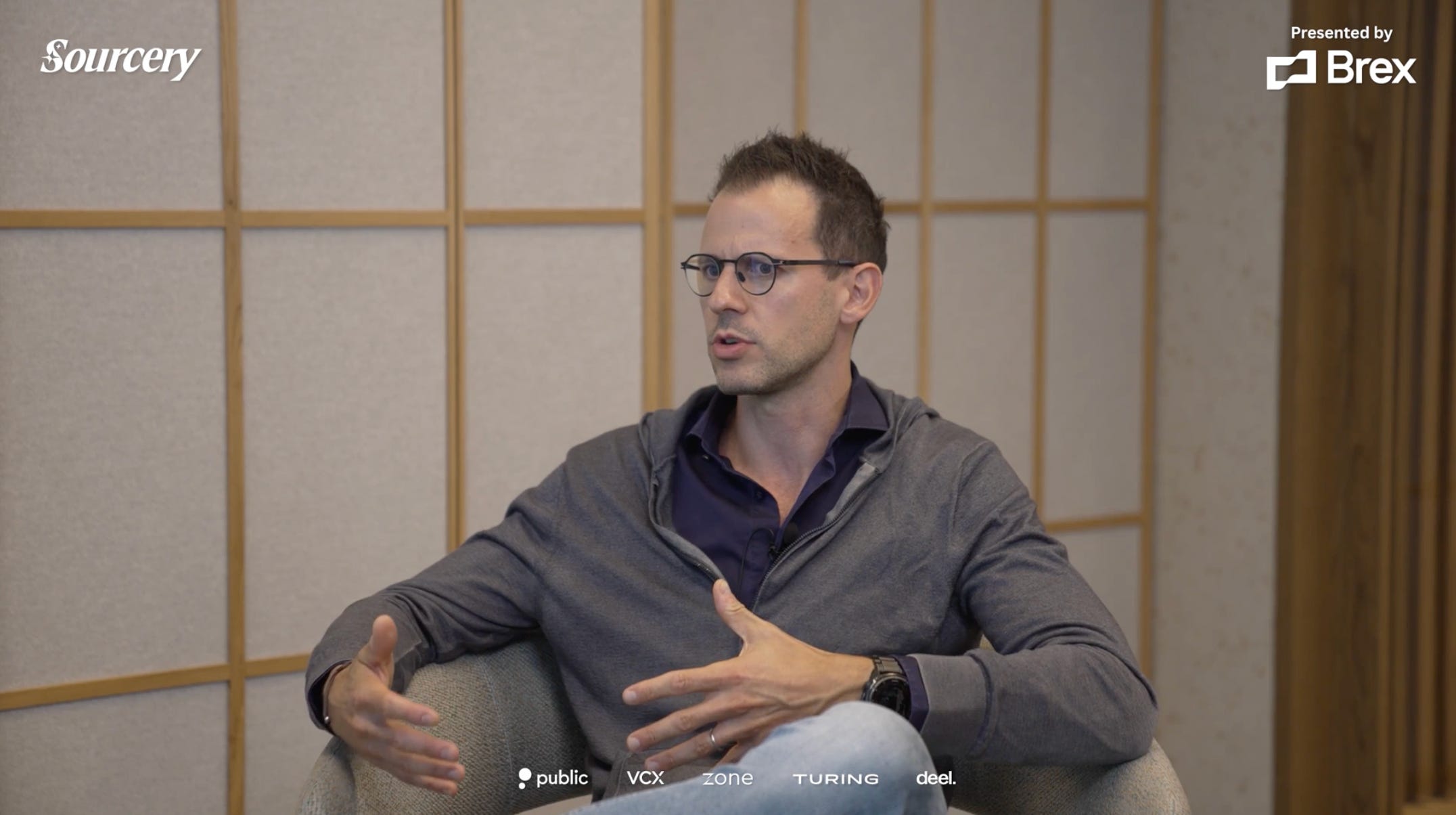
The structural reason people stay is that the portfolio gives them somewhere to go. Ferrari describes the trap a single-product company cannot escape.
“If you’re working on Evernote, maybe it was exciting the first couple years, but then after a while, refining and refining the note-taking, it can grow stale. You like the company, but ultimately you have to look for a different employer to take another step. At Bending Spoons, you just raise your hand. We may put you on a platform team to build an internal technology. You could move to AOL and try to improve email UX.”
Danieli makes the same argument from the recruiting side.
“They can have the same CV that they would get by jumping from one company to the next every couple of years, but without the need to go through another hiring process, learning the culture in a company, and proving themselves to demonstrate that they deserve certain positions.”
Jerusalmi is the worked example. Data analyst, then multi-function operator on a small acquisition, then lead on a suite of roughly 90 products, then general manager of a billion-dollar-plus business. All inside one company.

Small Teams, & the Argument for Them
The standard criticism of a Bending Spoons acquisition is that headcount falls, so the product must get worse. Danieli disputes the premise directly.
“Our argument is that that correlation is mild at best, and there are examples of the opposite.”
His account of what goes wrong at scale is specific. Adding people forces sub-teams and split ownership. Different groups own different parts of the product, so nobody holds the whole picture. Someone with an idea needs 4 teams to act on it. Management layers get added to handle the communication load. Incentives drift as managers optimize for team size.
“What used to take days takes weeks, takes months.”
Post-acquisition, the company allocates a small team and restores fluid ownership. On sales-led products, a single product manager often owns both the roadmap and the customer relationship, which removes intermediaries between the buyer and the product decision.
Ferrari’s version, drawn from every deal to date, is that a small team of high-caliber people with near-complete autonomy beats a larger organization carrying process and diluted accountability. He says the magic happens almost every single time.

Testing Everything Instead of Arguing
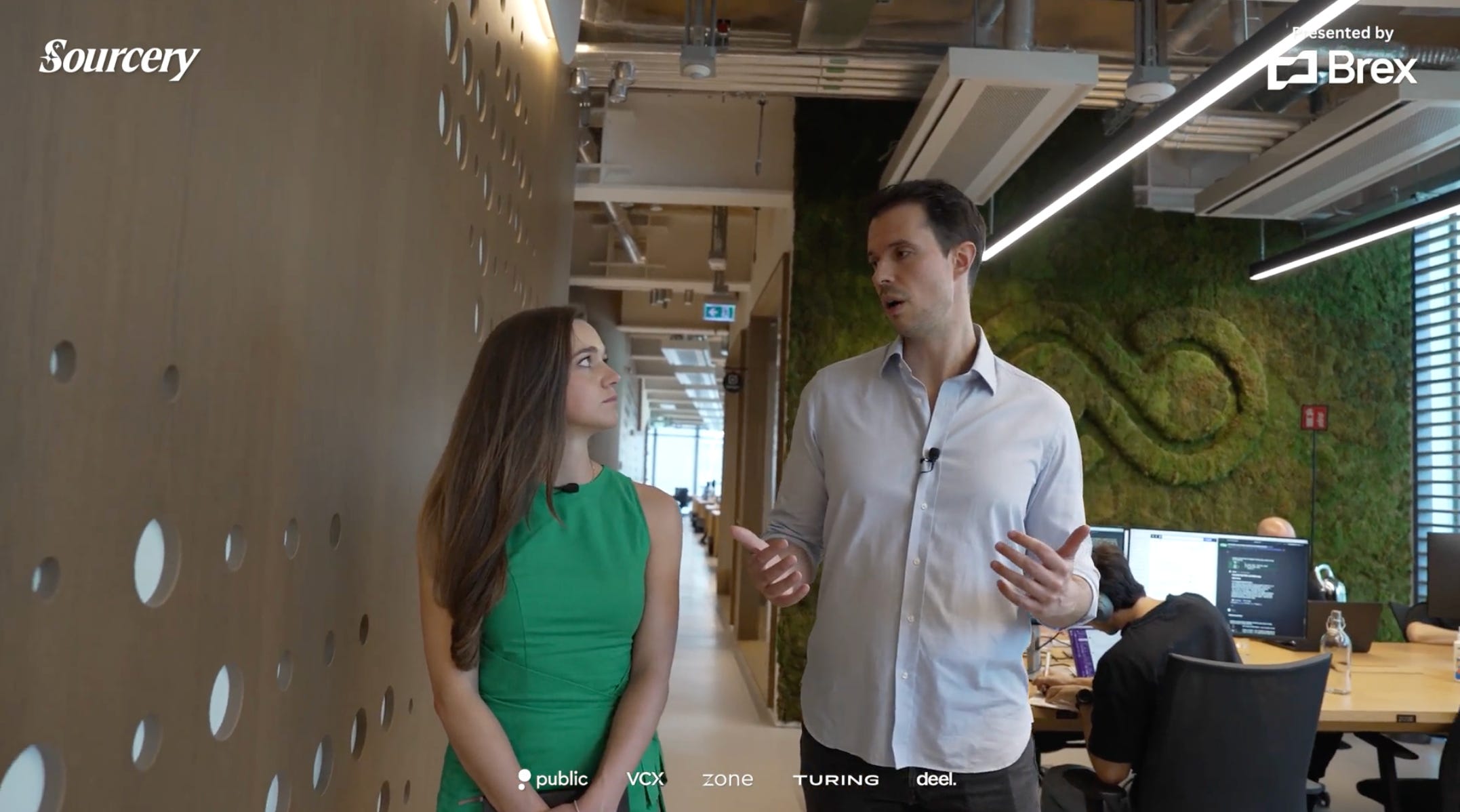
Talent density only works if decisions get settled by evidence rather than seniority. Jerusalmi runs AOL that way.
“We A/B test everything we release because we never want opinions to get in the way of success. Unless there are KPIs that are really responding to what we’re doing and that are indicating clear success, we don’t release anything.”
The company ran more than 3,000 documented experiments across its products last year, and Ferrari treats the whole operation as a machine for correcting itself.
“Most people don’t actually seek the truth. They seek pleasure or comfort, and they wanna just confirm that they’re right and they’re good.”
Jerusalmi’s diagnosis of what kills products elsewhere is the opposite habit. Teams obsess over perfection and miss chances to ship and test, while approval lines and constraints accumulate until nobody can act on the product at all.
Under 30 & Running Billion-Dollar Products
Danieli points out that several people filling high-leverage roles across business units and products are under 30 or have just turned 30. He flags it as unusual anywhere and especially in Italy, where long tenure tends to entrench position holders.
Jerusalmi says the thing that changed her trajectory was a colleague refusing to accept her limits. Every time she said she was not sure something could be done, CTO Francesco Mancone told her it was easy.
“Once you click and you think that everything is easy to achieve, then impossible becomes really, really possible. Every time thinking nothing is too hard to be achieved, which I think is also in our motto, because our motto is, impossible, maybe.”
Asked whether she expected to run a large American company, her answer was no.
“If you told me this even three years ago, I would say impossible. But again, impossible, maybe.”
Watch the whole $BSP series:
Inside Bending Spoons ($BSP)
Milan, Italy | 3 Co-founders: CEO, Head of M&A, VP of Product + GM of AOL
Bending Spoons (NASDAQ: BSP) is building one of the most aggressive acquisition machines in technology.
→ Listen on X, Spotify, YouTube, Apple
Luca Ferrari CEO of Bending Spoons
Everyone wants to sell to $ BSP
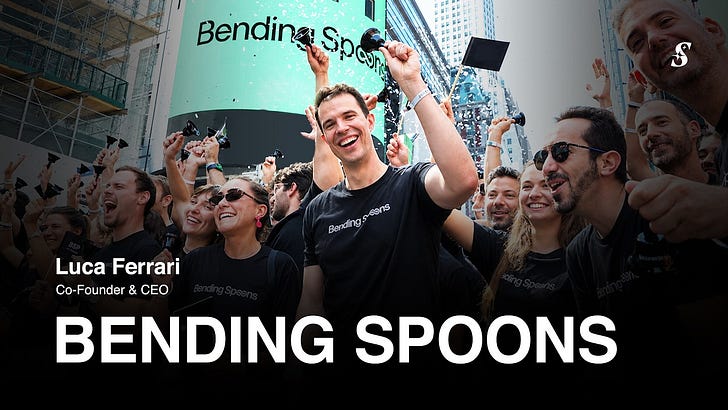
Luca Ferrari, Co-Founder & CEO of Bending Spoons (NASDAQ: BSP), sits down with me at the company’s Milan headquarters for Part II of our Bending Spoons series, going deeper into the technology, culture and operating philosophy behind the company.
→ Listen on X, Spotify, YouTube, Apple
Brought to you by:
Zone—develops next-generation data center campuses, partnering with AI companies, site developers and technology leaders to bring compute online faster and at scale. Visit: zonefrontier.com
Turing—Turing partners with frontier AI labs to improve model capabilities in coding, reasoning, tool use, & multimodality, as well as with Fortune 500 enterprises to build & deploy end-to-end agentic AI systems in mission-critical workflows Visit: turing.com/sourcery
VCX—VCX is the public ticker for private tech, allowing investors of all sizes to invest in venture capital. View The Portfolio at GetVCX.com
Deel—Deel is the global people platform that helps startups hire, manage, pay, and equip anyone, anywhere. Trusted by more than 35,000 fast-growing companies, Deel is the people platform that just works, so teams can scale without the chaos. Visit: deel.com/sourcery
Public-–Investing platform Public just launched Generated Assets, which lets you turn any idea into an investable index with AI. With Generated Assets, you can build, backtest, refine, and invest in any thesis with AI. Gone are the days of one-size-fits-all ETFs. Try it today: public.com/sourcery
The material presented on Molly O’Shea’s website are my opinions only and are provided for informational purposes and should not be construed as investment advice. It is not a recommendation of, or an offer to sell or solicitation of an offer to buy, any particular security, strategy, or investment product. Any analysis or discussion of investments, sectors or the market generally are based on current information, including from public sources, that I consider reliable, but I do not represent that any research or the information provided is accurate or complete, and it should not be relied on as such. My views and opinions expressed in any website content are current at the time of publication and are subject to change. Past performance is not indicative of future results.
Paid Endorsement. Brokerage services by Open to the Public Investing Inc, member FINRA & SIPC. Advisory services by Public Advisors LLC, SEC-registered adviser. Crypto trading provided by Zero Hash LLC, licensed by the NYSDFS. Generated Assets is an interactive analysis tool by Public Advisors. Output is for informational purposes only and is not an investment recommendation or advice. See disclosures at public.com/disclosures/ga. Matched funds must remain in your account for at least 5 years. Match rate and other terms are subject to change at any time.